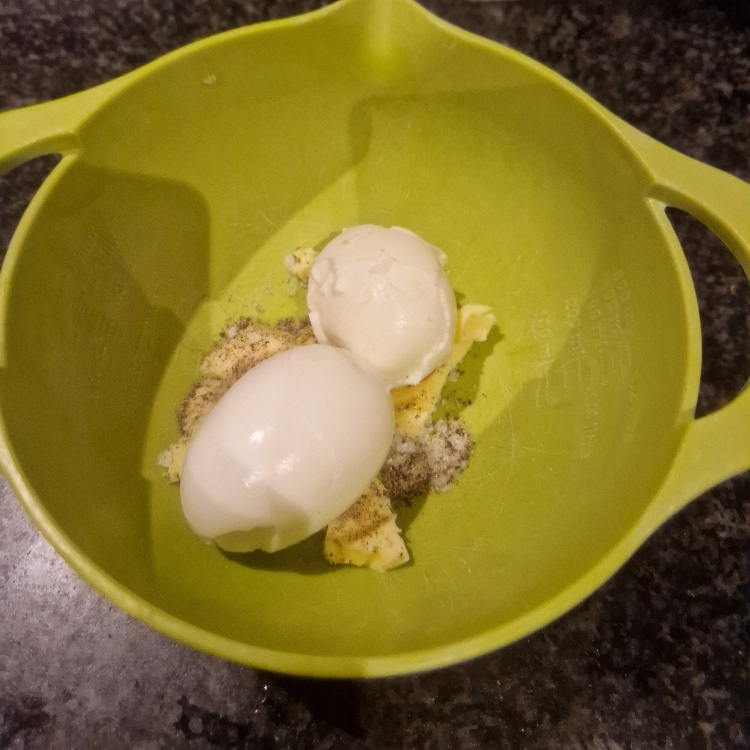


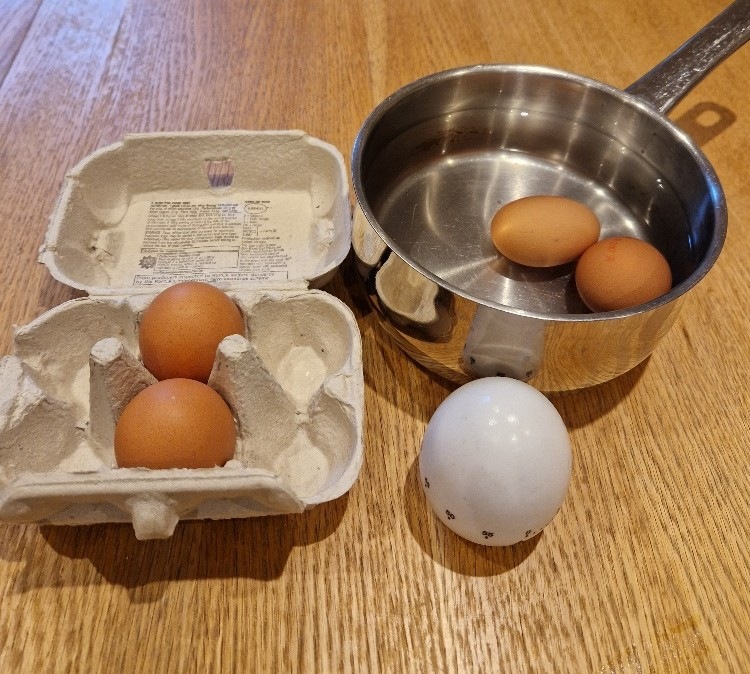
Eggs can be boiled to various points across a spectrum from very soft (or ‘dippy’) to hard-boiled. The method is the same, it is just the timing that varies. You will need a small saucepan and something to time with.
Most often for egg recipes you will also want to peel them, which again is easy to do and we show later in this tip. But you can of course just eat the boiled egg from the shell with toast or soldiers!
First place your eggs in a saucepan – use the smallest one that will fit the number of eggs you need. Cover the eggs with cold water, you need them to be completely submerged. Put the pan on a high heat and bring to the boil. You start timing only when the eggs have reached a really good rolling boil – the water will bubble and spit, as below. Allow time to get to this point. You will have quite a lot of cold water to bring to the boil, and how long this takes varies, but it can take a while – allow at least 5 mins and possibly a little more if you have a lot of water or it was really cold. Set your timer for the desired cooking time (see timings below) – today we used this fun little mechanical egg-timer, but often we just use the timer on our phones.
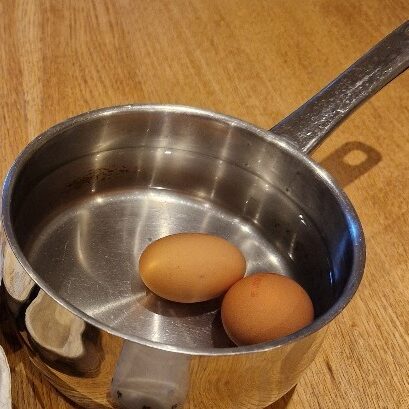
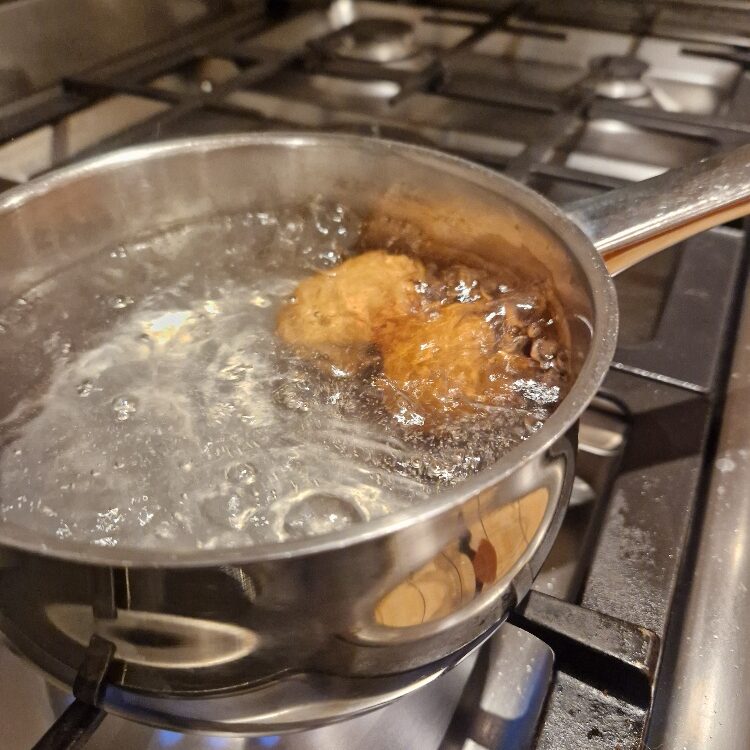
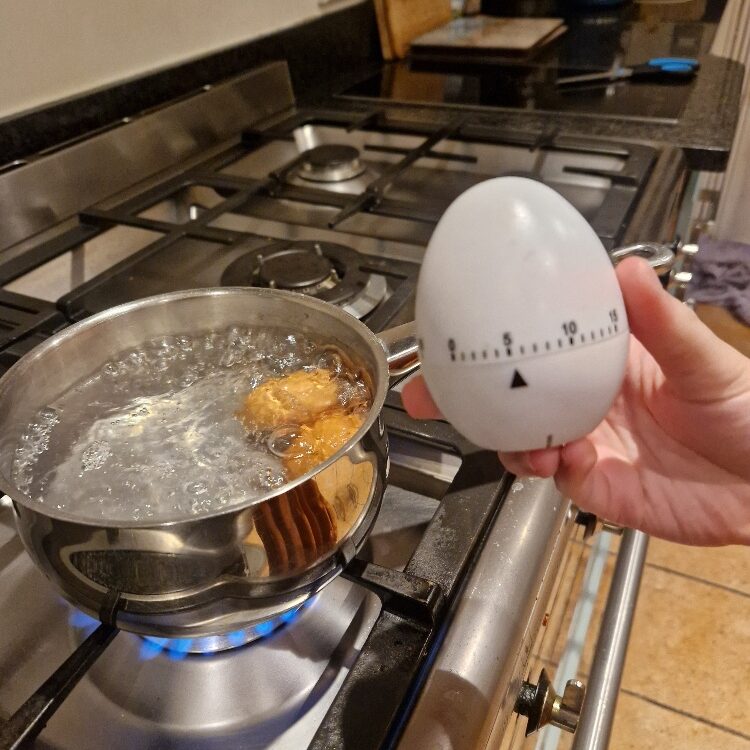

Jake sticks his nose in
It’s important for this method to use cold water, and bring the eggs up to the boil in it. Don’t put eggs in boiling water instead – your timings will be off and your eggs may crack. Your eggs should also be at room temperature ideally, not fridge cold.
Boil for the appropriate time to get to the desired doneness. Strangely we find opinions on this vary, we guess because of slight variations in the cooking method. But we find the below timings work if you keep your eggs at a rolling boil, i.e. don’t turn down to simmer.
- 3 to 4 mins – just set white and very runny, dippy yolk. The shorter the time, the runnier the egg. This would be called ‘soft-boiled’.
- 4 to 5 mins – set white and ‘jammy’ yolk. This can vary from partly liquid yolk to soft but non-liquid yolk, depending on time. This would be also still be classed as ‘soft-boiled’.
- 5 to 6 mins – set white and soft, ‘fudgy’ yolk, how firm depending on timing. This would be called ‘medium-boiled’.
- 9 to 10 mins – firm white, and firm yolk. This would be called ‘hard-boiled’.
But do play around and see what timings you like best for your eggs!
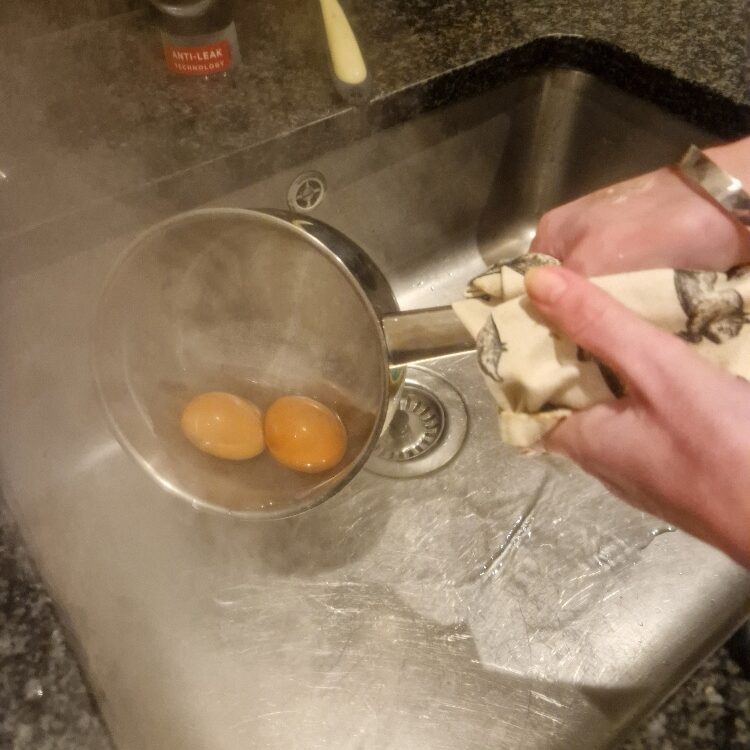
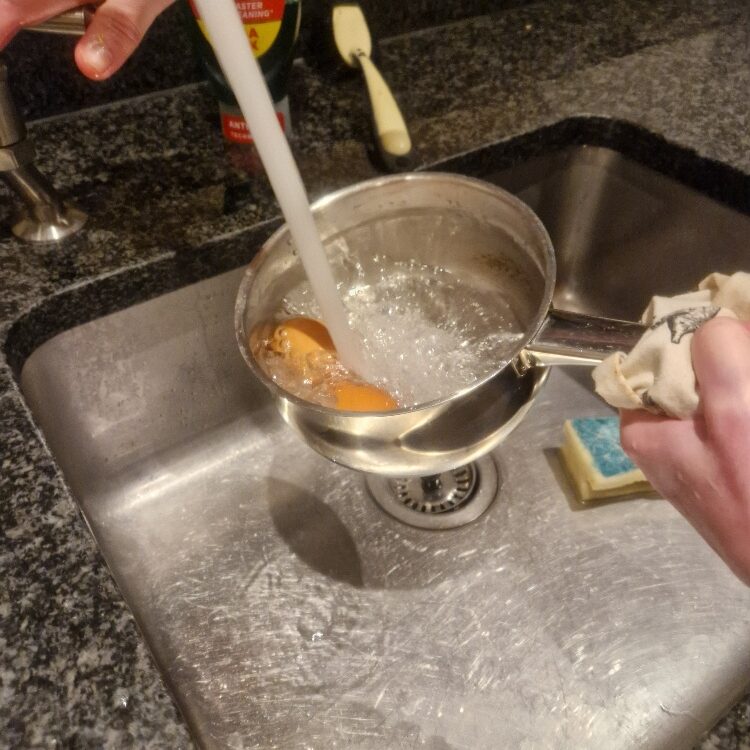
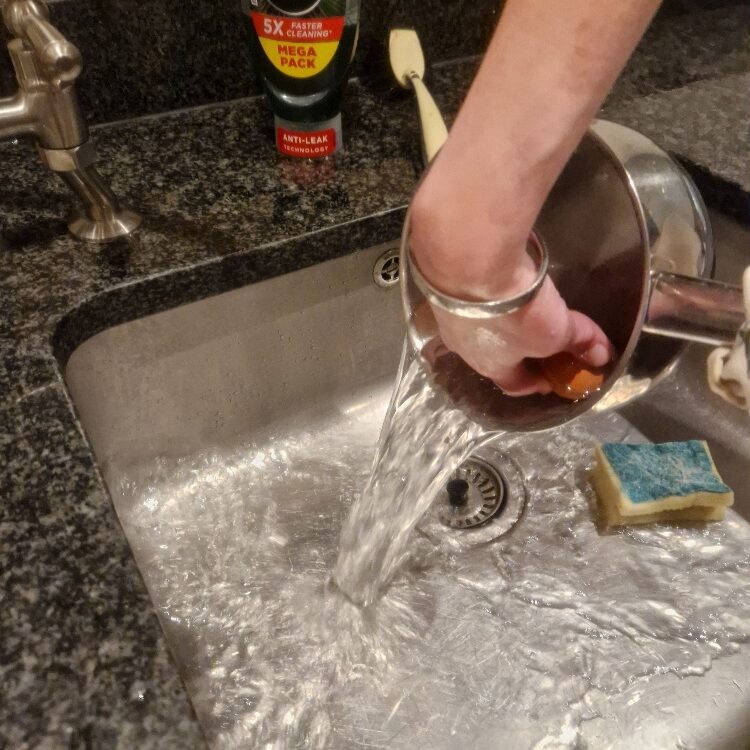
Once the cooking time is up, drain the eggs. If peeling, or using in a recipe, plunge the eggs into cold water, drain again, and plunge in cold water again. This both prevents further cooking and makes the eggs cool enough to handle. However if you are serving as a boiled egg in an eggcup, you can of course serve hot – just remove from the boiling water, set in the cup and slice the top off.
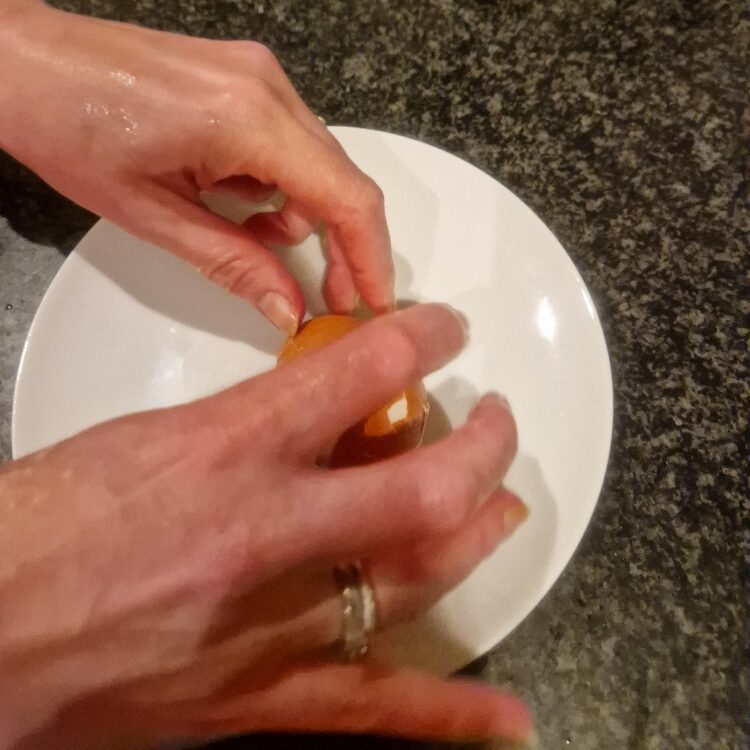
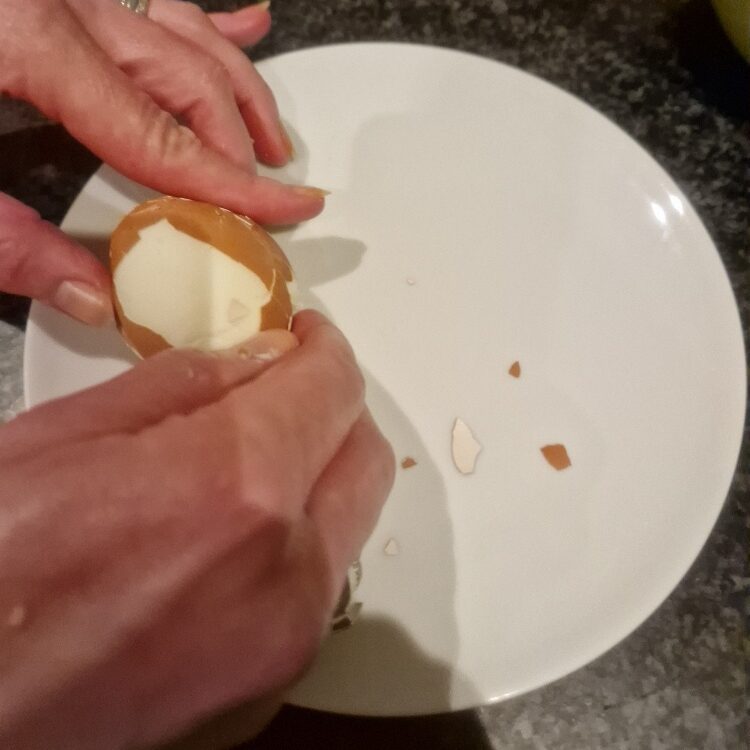
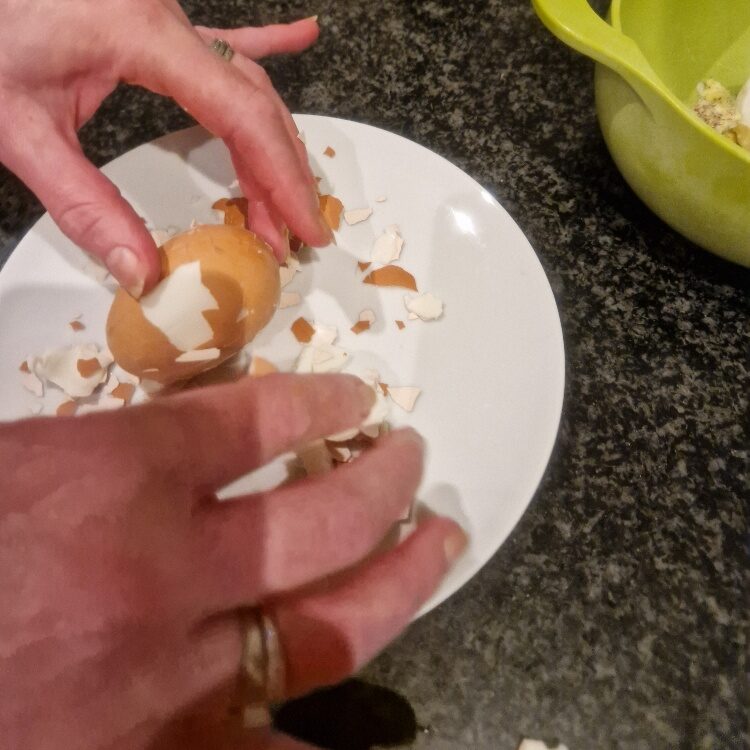
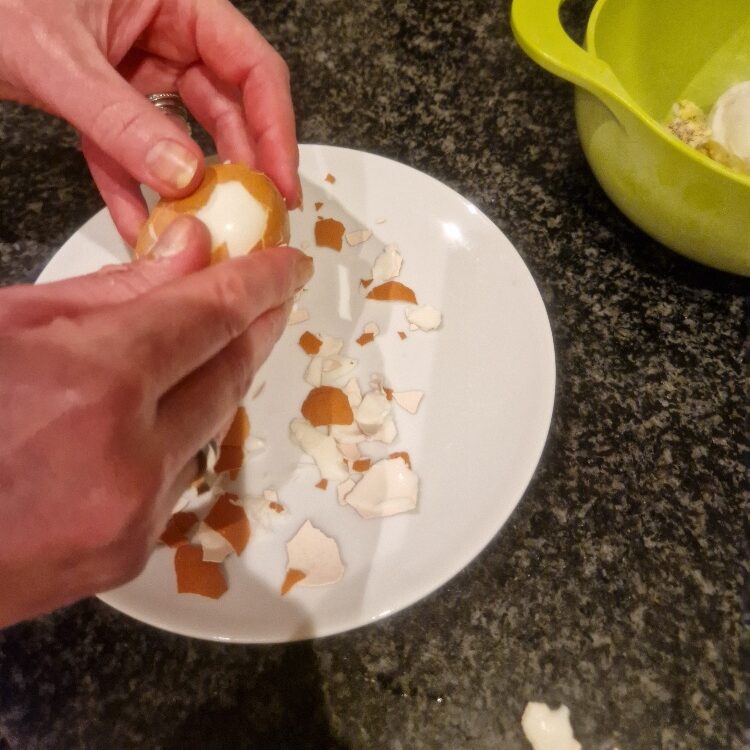
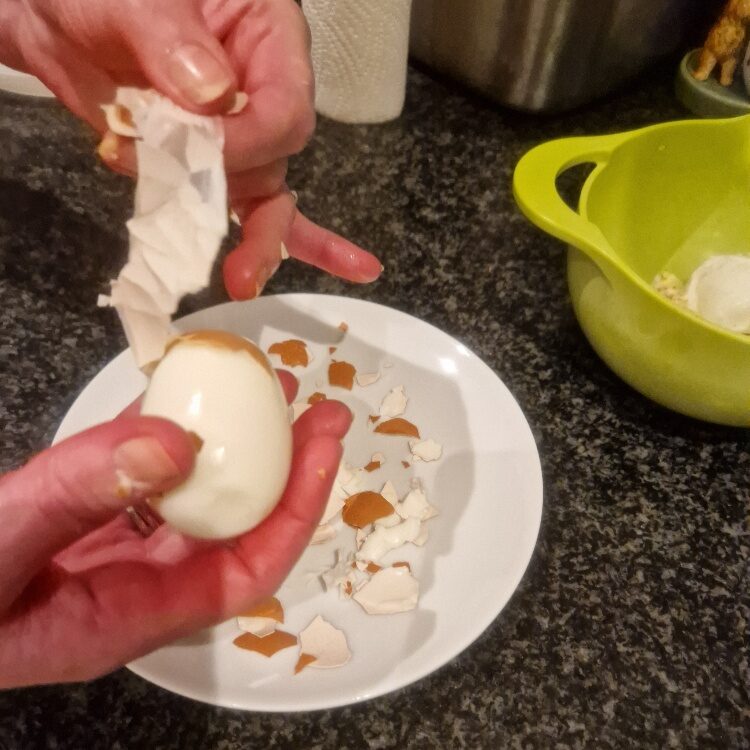
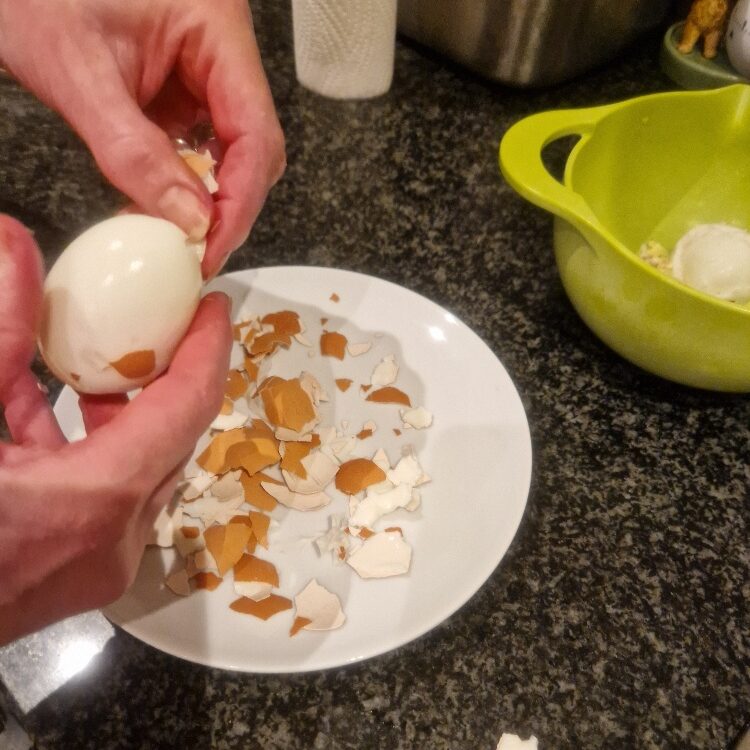
To peel your egg, tap it carefully but firmly on a small plate so the the shell just cracks. Do this on all sides of the egg. Now carefully peel away the shell. On some eggs this is trickier than others, it depends on the thinness of the shell and type of egg. Just beneath the shell there is a very thin, transparent membrane. If you can peel under this membrane you’ll find your shell will come off more easily, and in much larger pieces or sheets, as in the bottom middle picture below.
You now have perfectly boiled, peeled eggs to use in your sandwich or dish!