
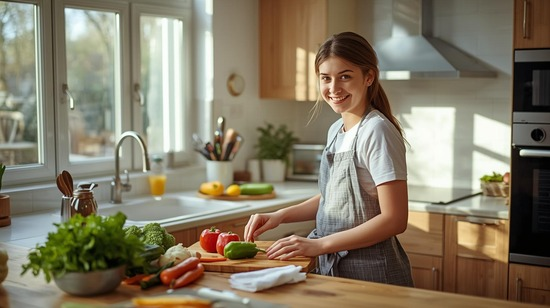
Learning cooking skills for teens is one of the most empowering activities for a young person. Are you a young adult getting ready for college, a teen who wants to be independent or just someone who wants to get a good impression from family and friends? If you learn basic techniques early, it will be a great advantage for the rest of your days of confident cooking.
Starting with these basic cooking fundamentals makes learning new recipes much easier for first-time teen cooks.
Understanding the recipe is important but so are the ingredients, timing and flavors, and above all, enjoying the process. This is the reason why teaching cooking skills to students and teens in a supportive, family-led environment is so important. By learning in a relaxed home setting, teens build confidence, creativity, and independence while still having fun.
Why Cooking Skills for Teens Matter
Young people typically encounter difficult situations when it comes to having meals throughout the day, relying on junk food or not being able to prepare something for themselves. The process of getting the basic cooking skills for teenagers has several benefits:
- Freedom: The young ones are aware of what to eat and when to eat as well as what to make of their food.
- Well-being: The practice of cooking actually invites eating in a healthy, dietary manner.
- Self-esteem: Independently preparing food gives a sense of being able to solve the problem.
- Inventiveness: Trying out different flavors and ingredients is one of the things a teenager can do in the kitchen.
Adolescents who start cooking early will keep these skills throughout their lives, thus, lessening the burden of a new situation and improving their confidence.
These practical beginner cooking tips help teens avoid common mistakes and feel more comfortable cooking on their own.
Essential Cooking Skills Every Teen Should Learn
A beginner teen cook doesn’t need to master complicated recipes right away. Focus on fundamental skills, including:
- Knife skills: Proper chopping, slicing, and dicing for safety and efficiency.
- Cooking methods: Boiling, sautéing, baking, and roasting basics.
- Reading recipes: Understanding steps, timing, and ingredients.
- Seasoning and flavoring: Learning how to use herbs, spices, and salt correctly.
- Food safety: Hygiene, proper storage, and cooking temperatures.
These cooking skills for students provide a foundation that makes every future recipe easier to tackle To build these skills in the right order, follow this step-by-step beginner’s guide to learning how to cook..
Teenager Cooking: Making It Fun
Learning should be enjoyable, not intimidating. Teenager cooking can be fun and engaging when approached in a home kitchen setting:
- Start with simple recipes: Pasta dishes, stir-fries, and omelets build confidence quickly.
- Cook with family: Like we do in our kitchen, learning alongside someone experienced is motivating.
- Experiment safely: Encourage trying new ingredients and techniques within limits.
- Celebrate achievements: Every dish completed successfully boosts confidence.
The goal isn’t perfection, it’s to enjoy the process and gradually improve.
Basic Cooking Skills for Young Adults
For teens moving towards university or living independently, mastering basic cooking skills for young adults is essential. These include:
- Meal planning: Knowing what to cook and when to save time and money.
- Portion control: Prevents waste and ensures balanced meals.
- Batch cooking: Cooking in larger quantities for multiple meals.
- Adaptability: Using leftovers creatively or substituting ingredients when needed.
These foundational skills make everyday cooking manageable and enjoyable for young adults.
Cooking Skills for Students: Start With Confidence
Many teenagers and students feel nervous about cooking alone. That’s normal! Focusing on small, achievable goals builds confidence:
- Learn one new skill per week: chopping, boiling, or seasoning.
- Practice recipes you love to eat that keeps motivation high.
- Ask for guidance when needed, but challenge yourself to try new techniques.
- Reflect on mistakes as learning opportunities; even failed dishes teach valuable lessons.
By building skills gradually, teens gain confidence to cook independently and creatively.
How Family Traditions Help Teens Learn Cooking
Family recipes and traditions can make learning cooking skills for teens even more enjoyable:
- Recipes passed down from parents or grandparents teach technique and history.
- Cooking together strengthens family bonds and provides guidance.
- Teens learn that mistakes are normal even experienced cooks make them!
This approach ensures that skills are learned in a supportive, encouraging environment.
Cooking Skills That Stick: Practice Makes Perfect
The key to mastering cooking skills is repetition and practice:
- Start with simple meals like stir-fries, sandwiches, and pasta.
- Gradually tackle more complex dishes as confidence grows.
- Combine skills for example, practice sautéing vegetables while cooking grains.
- Take notes and observe what works, what needs improvement, and how flavors develop.
The more teens cook, the more natural and intuitive these skills become.
Cooking Lessons London vs Home Cooking for Teens
While cooking lessons in London or other professional classes can teach techniques, practicing at home gives teens the chance to:
- Cook at their own pace
- Use accessible, everyday ingredients
- Experiment and learn from mistakes
- Build practical life skills for independence
Home cooking offers both skill-building and confidence that formal lessons alone may not provide A structured beginner cooking course for real life can further strengthen these home cooking skills step by step..
Cooking Skills for Teens: Summary and Next Steps
Mastering cooking skills for teens provides more than tasty meals it builds independence, confidence, and lifelong habits. Starting with simple recipes, practicing fundamental techniques, and enjoying the learning process creates a strong foundation.
Cooking is a journey. With guidance, patience, and practice, every teen can become confident in the kitchen, ready to tackle any recipe life throws at them.
For more guidance on getting started in the kitchen, check out our cooking tips for beginners, full of easy-to-follow advice and helpful tricks to make learning how to cook fun and stress-free.