

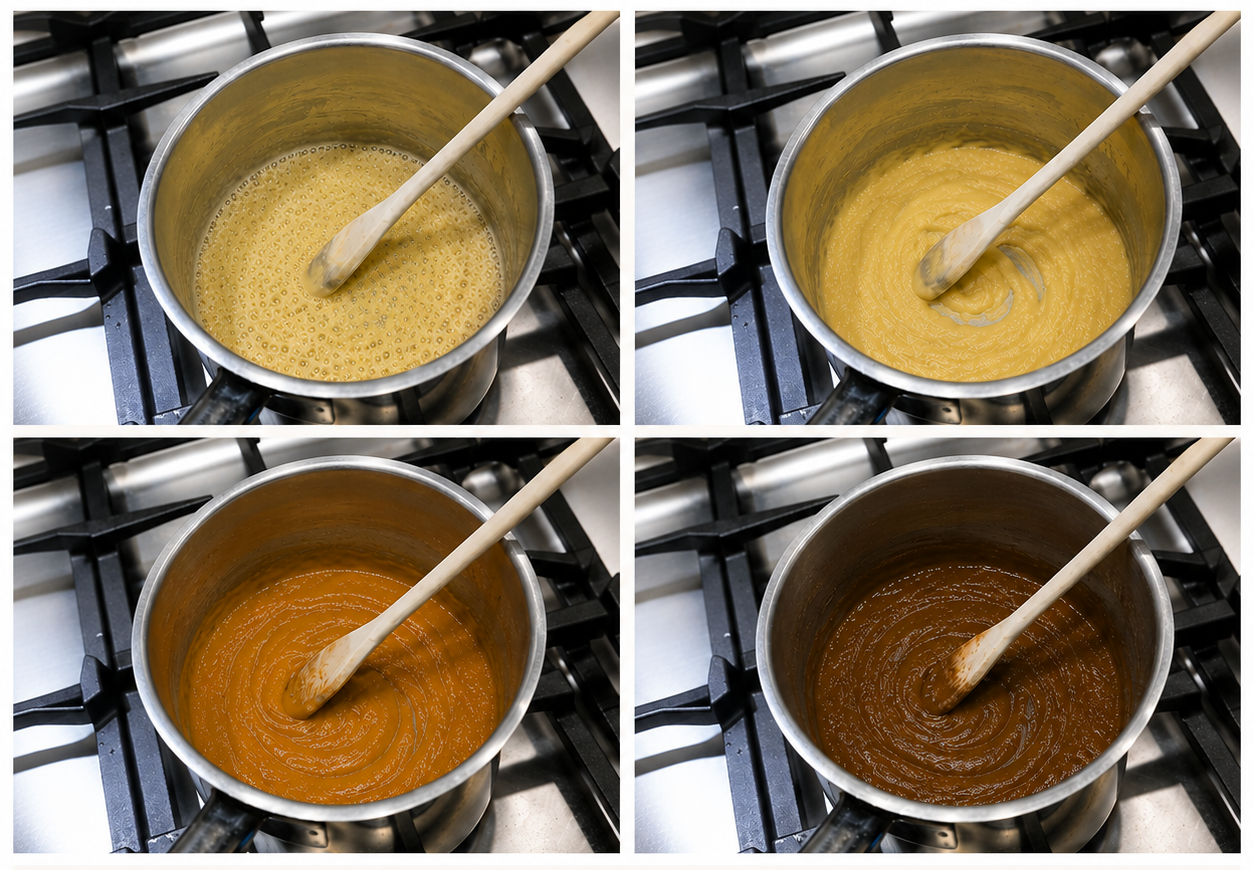
Making a roux was one of the first more advanced skills that Bibi taught Emily. A roux is a mixture of flour and butter, used as a base of many classic sauces – so it’s a very useful technique to have in your skill set. The roux serves to thicken the sauce and make it rich & glossy.
Types of roux
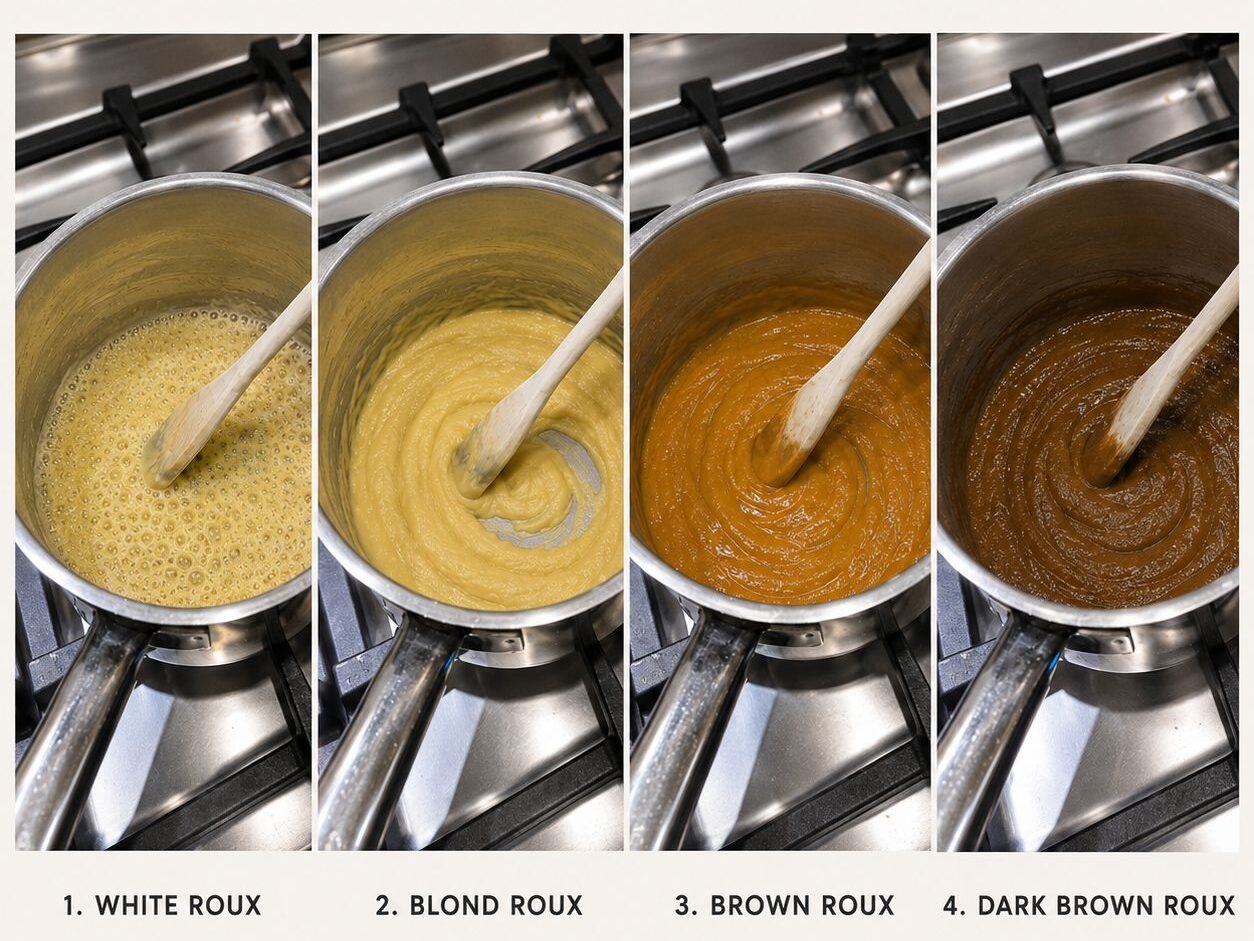
There are four main types of roux, though we personally only use two of them that frequently. They vary only in cooking time and colour, though their uses are different. The types are white, blond, brown (or peanut), and dark brown.
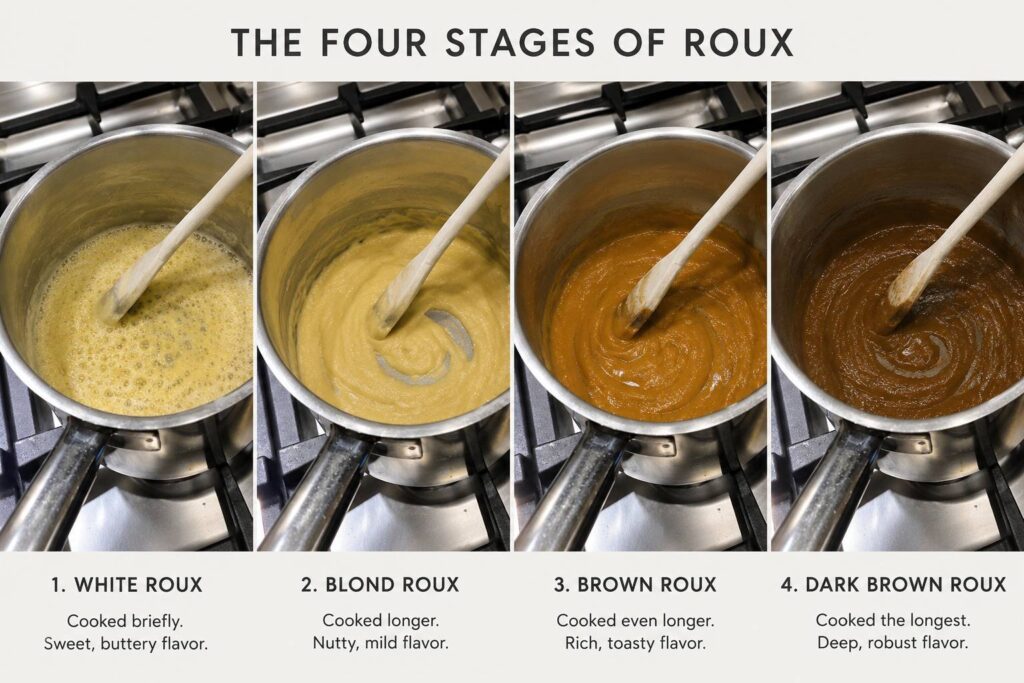
We commonly use a white roux as a base for white or cheese sauces; we also quite frequently use the blond roux for gravy and chicken or fish sauces. We less frequently make brown roux, for dark gravies & sauces, or dark brown roux, which is mainly seen in Cajun & Creole dishes.
- White roux: Cooked for only 2 to 5 minutes, so it stays pale. Used for white sauces such as béchamel, cheese sauce & creamy soups; also as a thickener for casseroles etc. Thickens well; has a sweet, neutral flavour.
- Blond roux: Cooked for over 5 minutes, or until it becomes slightly golden and smells nutty (up to about 8 minutes). Used for gravies, sauces for chicken or fish and veloutés (made with stock). Mild & nutty in flavour, and still thickens well.
- Brown roux: Cooked for longer than blond, until it resembles peanut butter or milk chocolate. Used for brown sauces or richer gravies, and espagnole and demi-glace sauces. Has a rich, toasty, nutty flavour but thickens less well than the lighter roux.
- Dark brown roux: Cooked long & slow (circa 30 to 45 minutes) until it becomes dark chocolate brown and smells toasty or slightly charred. Has a robust, smoky, toasty flavour. Primarily used in Cajun & Creole dishes like gumbo and étouffée.
Making a roux
Most roux start with the same two ingredients – equal quantities of butter & plain flour. Today we were making a light roux as the base for some cheese sauce for our Macaroni Cheese, so made a roux somewhere between white and blond.
To make a roux you’ll need a saucepan, ideally non-stick, and a wooden spoon or spatula, ideally with a flat, pointed end and even more ideally with a hole in. You’ll also need some weighing scales.
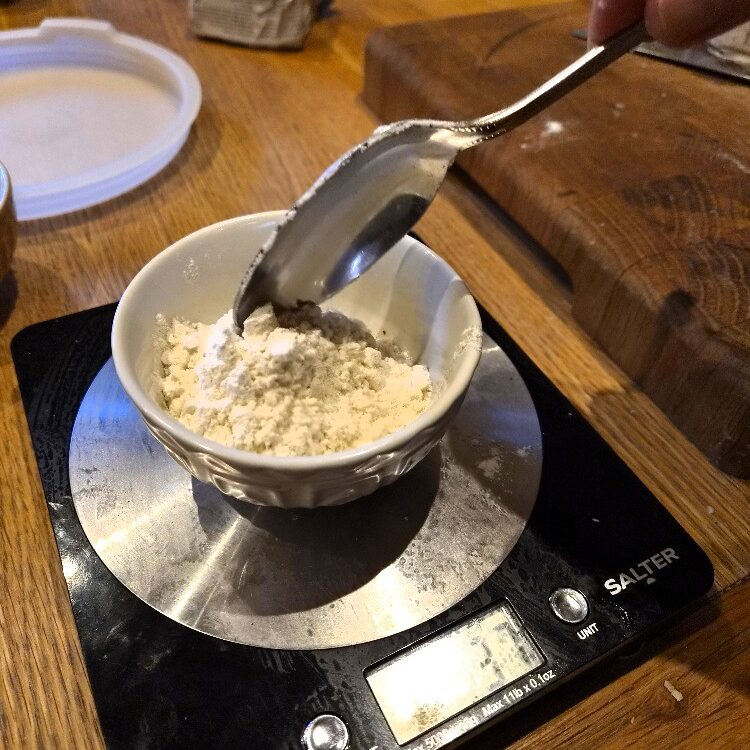
Weigh out the butter & plain flour accurately. Today we used 50g of flour and 50g of butter. The butter can be salted or unsalted, though you may want to try first with a pale unsalted butter first so you can really see the colour changes in the roux.
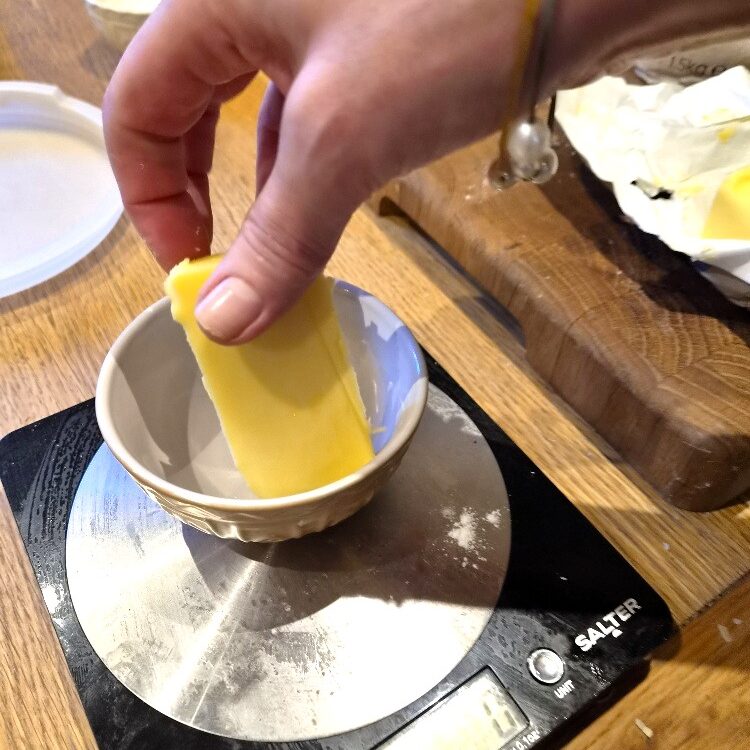
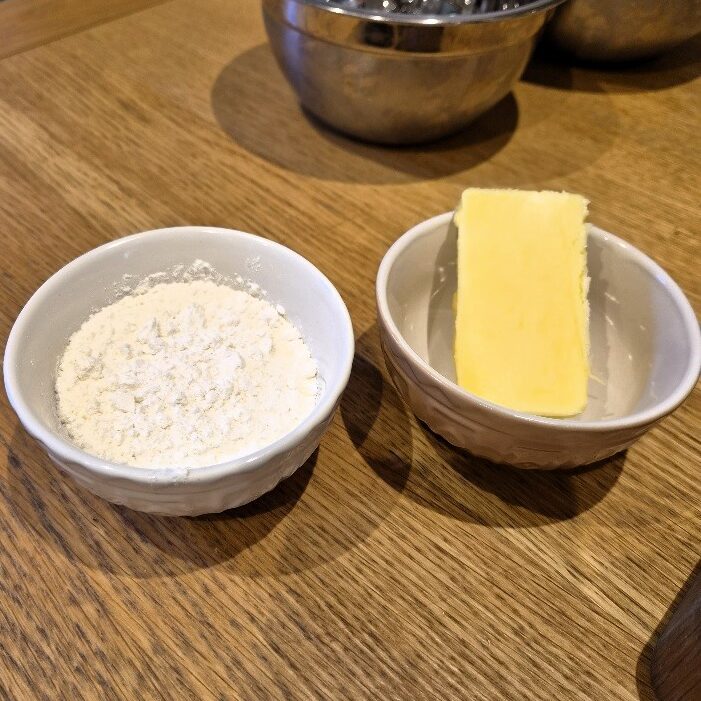
Melt the butter in the pan over a medium-low heat; it should just very slightly sizzle.
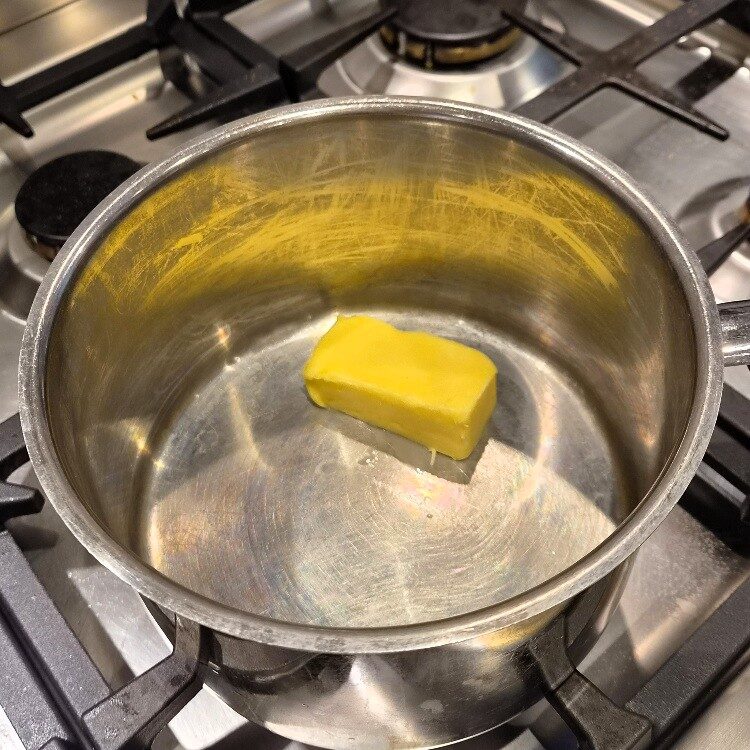
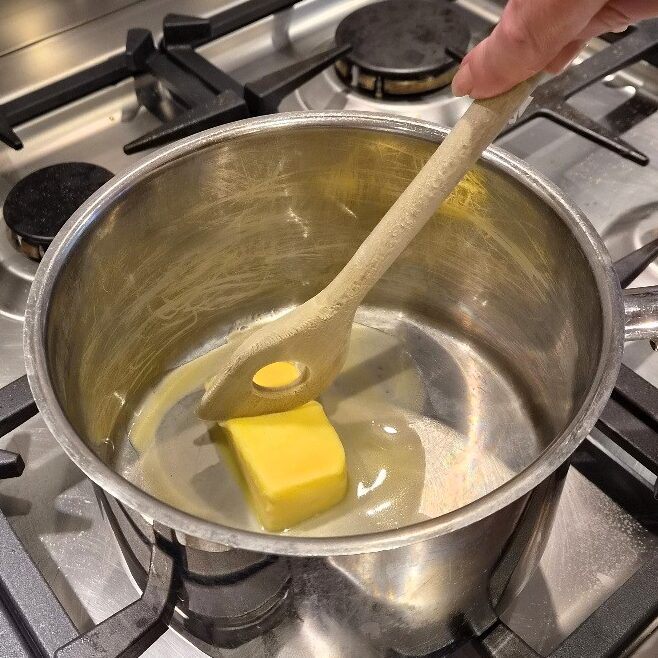
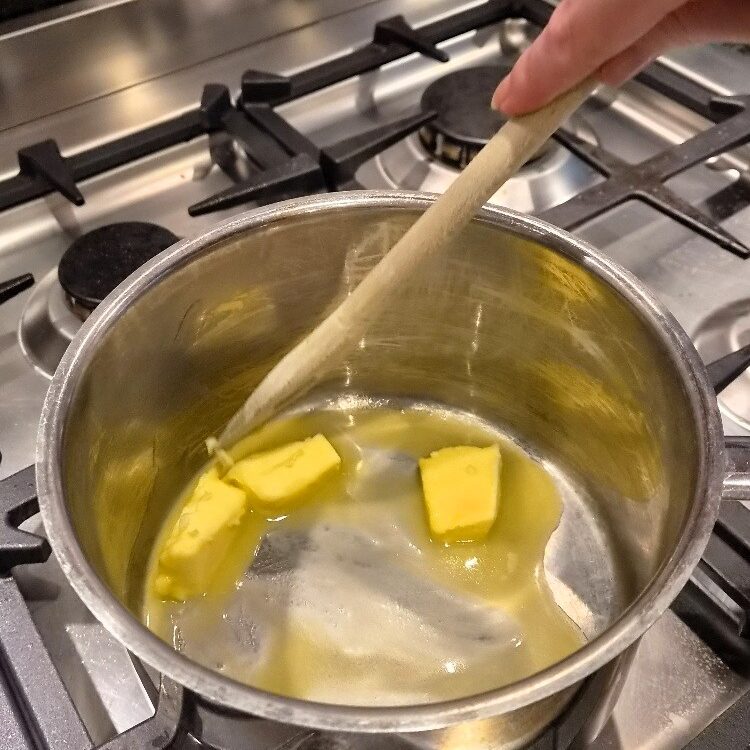
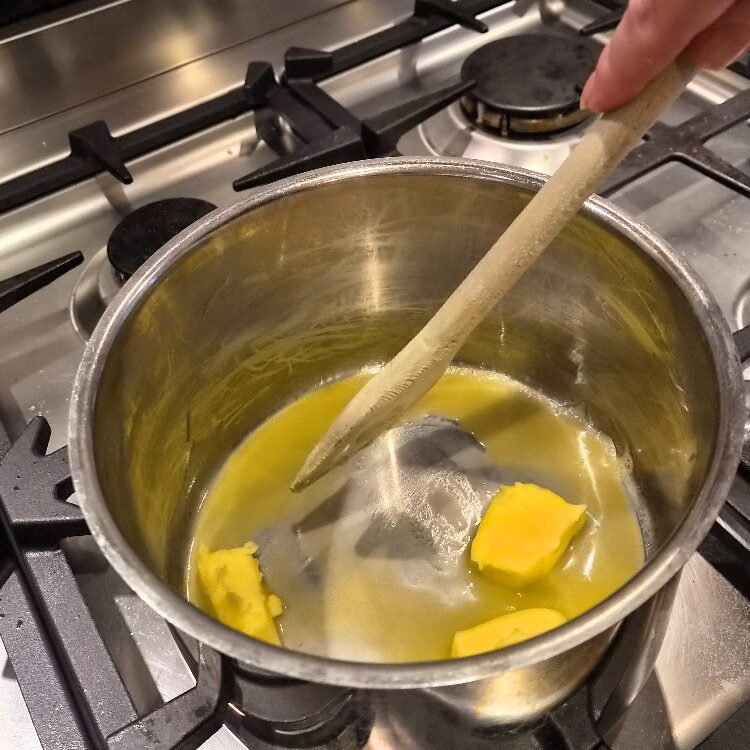
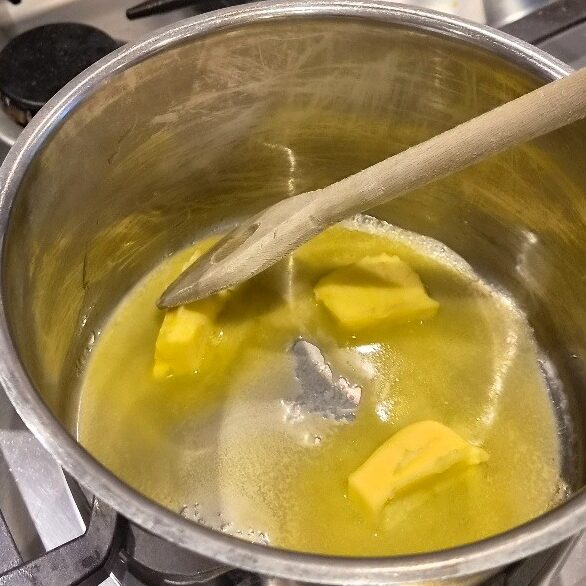
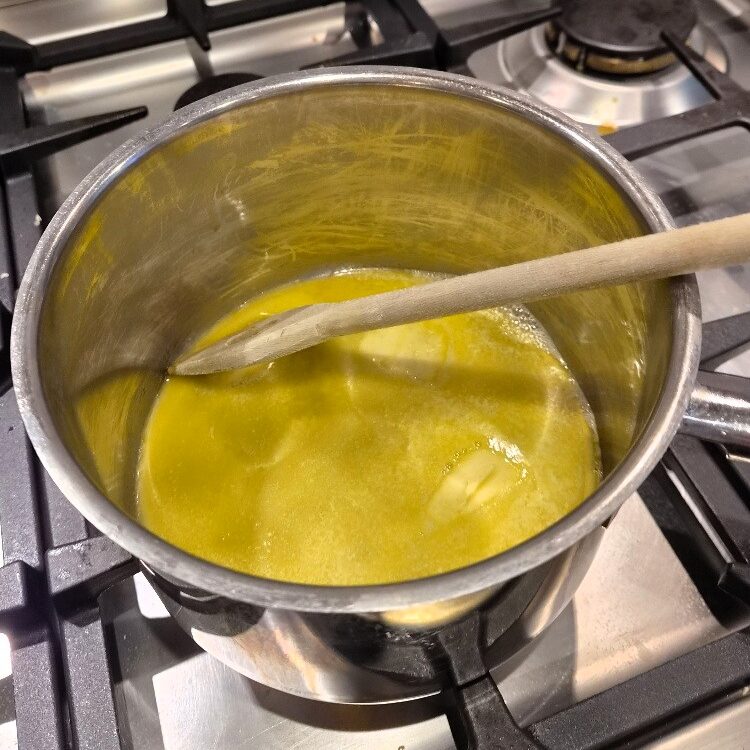
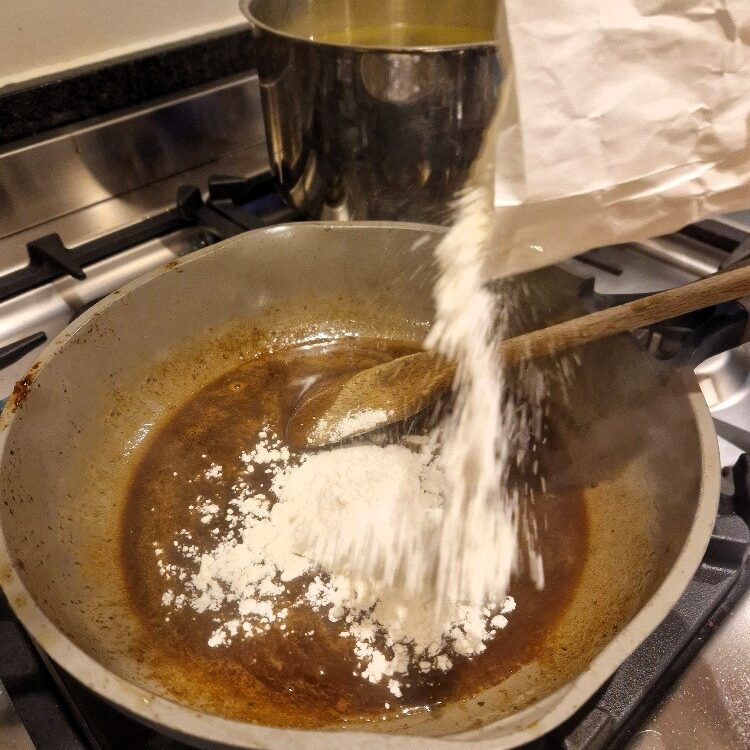
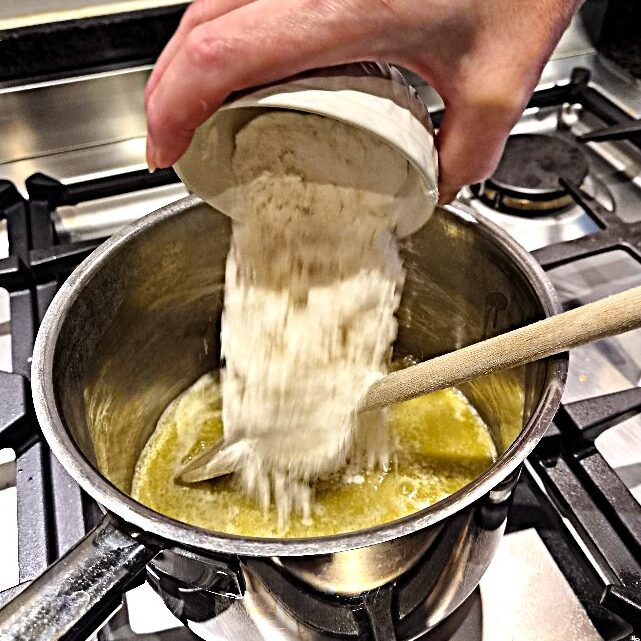
Once the butter has melted, turn the heat low and add the flour, all at once. Stir immediately & constantly while you cook. The idea is to keep the roux moving, and to cook it evenly so it becomes smooth with few or ideally no lumps.
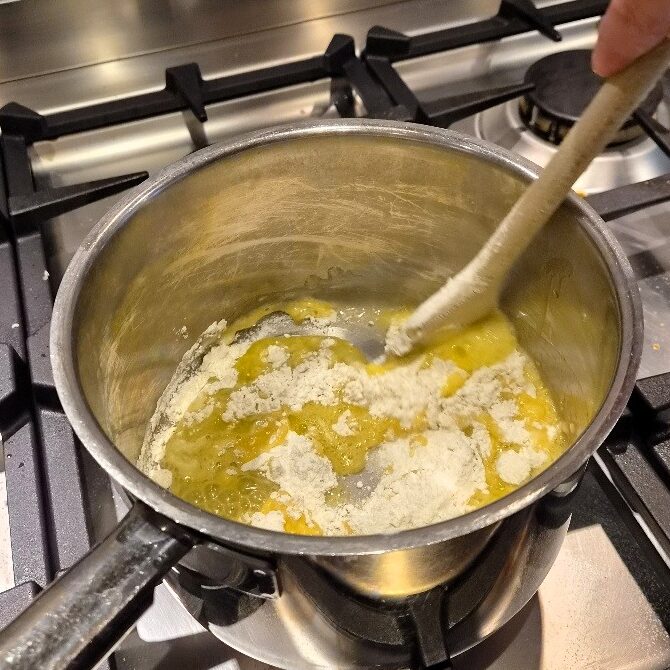
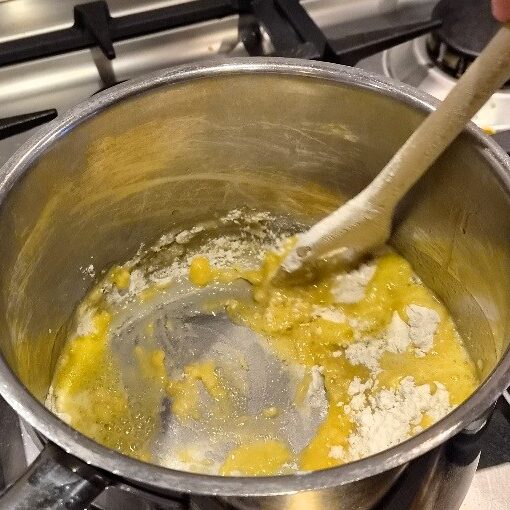

Jake sticks his nose in
Keep stirring and making sure you get all the flour – it can hide in the sides of the pan and burn. Scrape the bottom and edges to prevent this. This is why a pointed spoon with a flat side is best. You can also use a whisk, but we like a wooden spoon or spatula better.
Whatever colour of roux you are making, it is important to cook the flour out. This means cooking it enough that you don’t get a raw flour flavour in your roux and sauce, and so you avoid any grittiness or lumps. In practice this means at least two minutes of cooking, stirring constantly, and longer if you are making darker roux.
As you get more experienced making roux you’ll get to spot when the flour is cooked. The roux will start to look smooth & slightly glossy. But we tend to go mainly by smell. When a nutty smell starts to rise, the flour is cooked. If your roux doesn’t seem to be going nutty you can turn the heat up very slightly. But roux should always be made over a low heat so the flour cooks before it can burn.
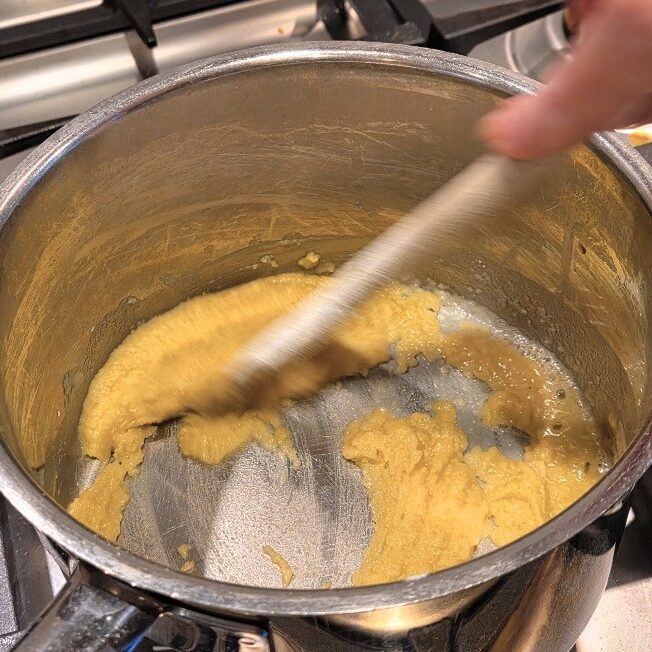
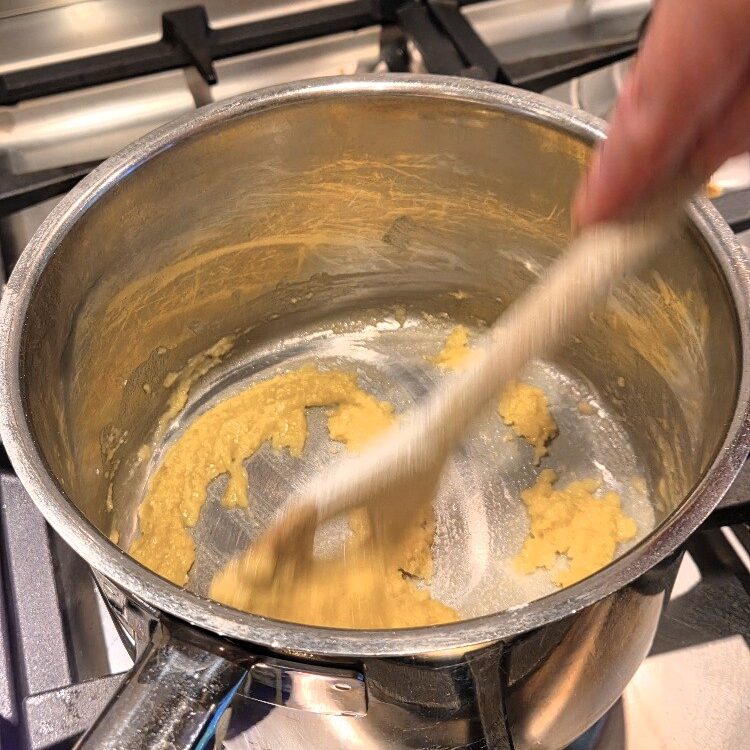
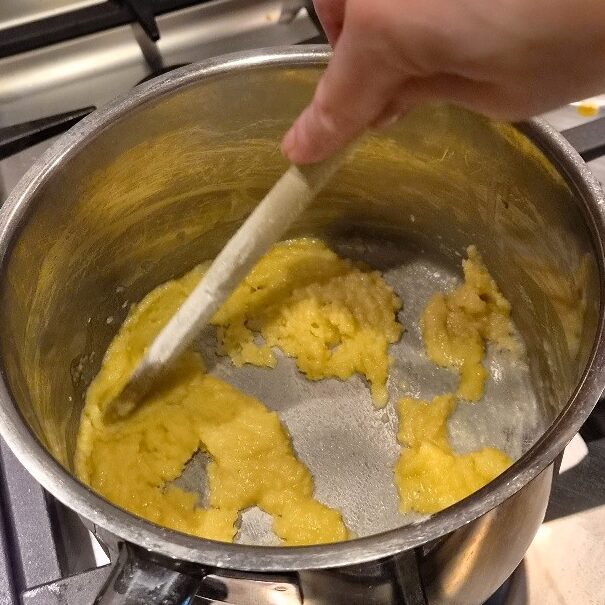
If you want a white roux, you can stop as soon as the nutty smell rises, about 2 to 5 minutes. The roux should still be quite pale (though a yellow butter may mask this). Remove from the heat immediately you are happy – the colour changes can happen quite quickly from this point.
Today we cooked a little longer, for a roux that was just starting to go blond, about 5 or 6 minutes. But you can keep going until you reach the colour you need for your recipe – just remember to keep the heat low and stir!
That’s it – you can now make a roux!
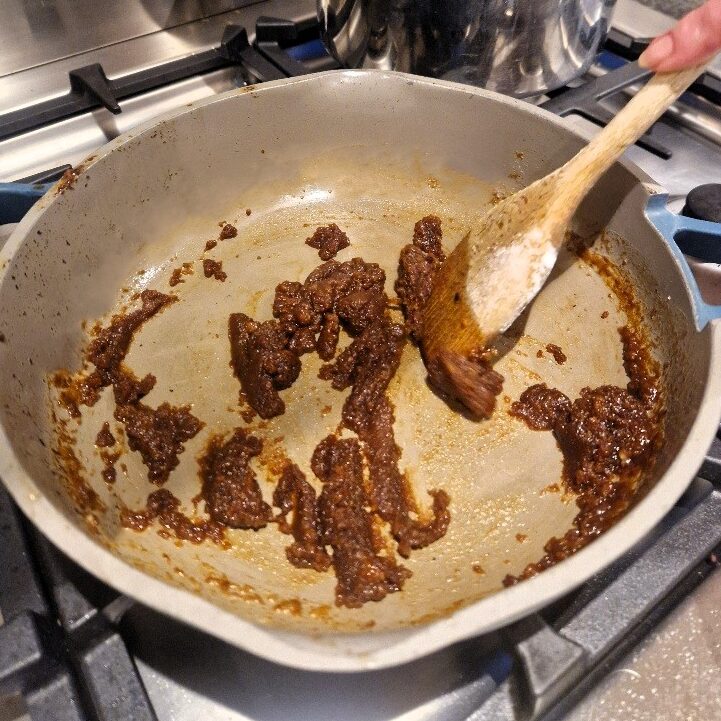
And finally here’s a brown roux we made recently for some gravy! This one we made with both butter and a little fat from the roast lamb we served with the gravy.