
We love potatoes and while they may seem a very basic ingredient, there are literally thousands of varieties of them with lots of different textures and flavour profiles. But they generally fit into three main types – waxy, floury and all-rounders, which are somewhere in between.
Generally speaking, waxy potatoes are best when you want plain boiled or to use in salads, and floury make good fluffy mash, chips and roasts. In this tip we’ll run through some of our favourite common varieties and their uses, plus show you how best to boil them, which is the first step in many cooking methods, and how to shallow fry them for lovely crispy cubes.
Varieties
Most supermarket packets will state the variety, plus the best suited cooking methods, for the various potatoes they sell, but these are some of our go-to favourites – and how we prefer to use them.
Maris Piper – commonly found, versatile floury potato, particularly excellent for chips but good for mash and roasting too
King Edward – another very common floury potato, great for roasting, baking and chips
Jersey Royal – our favourite for plain boiling, but with a short peak season (April to June), this is a waxy potato with a very creamy, sweet taste
Vivaldi – our favourite variety for baked potatoes, these buttery potatoes also make good mash if you want it more creamy than fluffy
Desiree – another commonly found, good all-round potato that can be used for most cooking methods, and particularly good for mash
Rooster – another great, fluffy all rounder, again good for most methods, but we like them for baking and roasts
Charlotte – a common waxy potato, good for plain boiling and for salads
Anya – another good waxy salad potato with a distinct nutty flavour
Kestrel – another good all rounder, but particularly good for boiling and roasting
Jazzy – great waxy salad potato, and an alternative to Jersey Royals for plain boiling
Marfona – good all-rounder, suitable for most methods, we like them for baking
Cooking potatoes
Many cooking methods will need you to boil or par-boil potatoes first. Small potatoes can be boiled with their skins on (wash or scape them down with a table knife first if they are dirty or have lots of loose skin); for larger potatoes it is normally better to peel them before boiling, particularly if you are making mash or want crisp roasts. As well as simple plain boiled potatoes, or potatoes for using in salads, mashed, roast and fried potatoes all need some degree of boiling first.
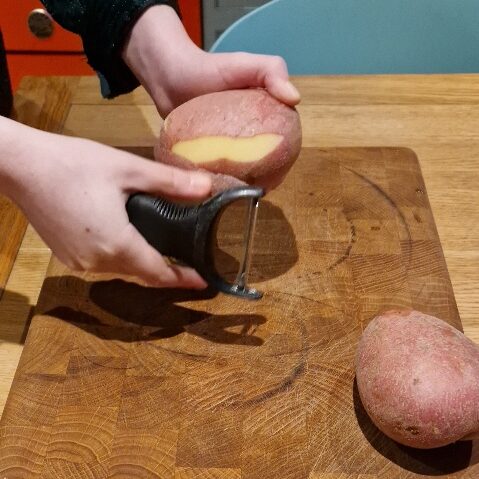
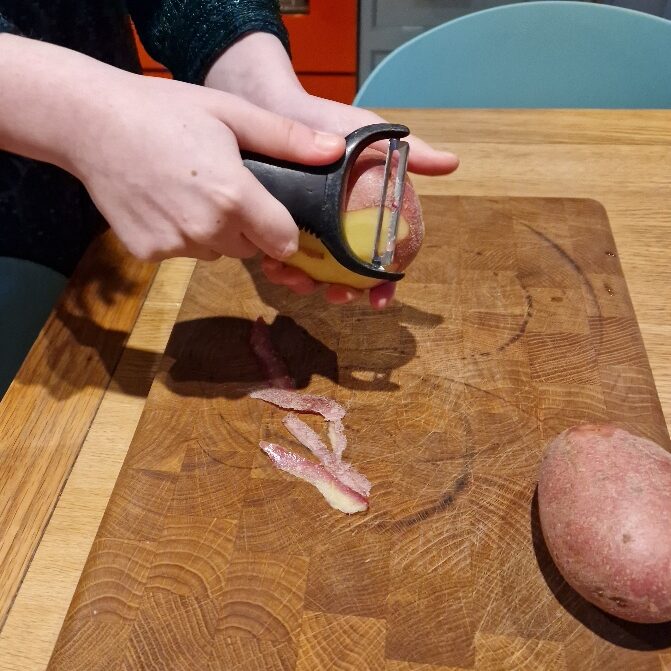
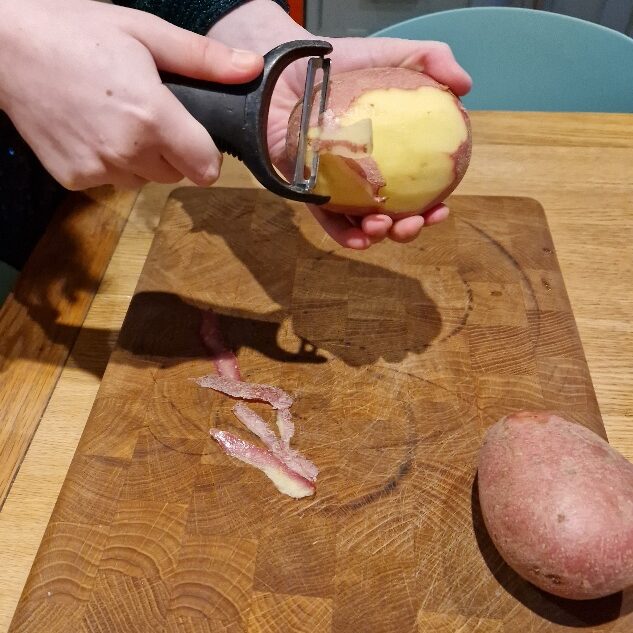
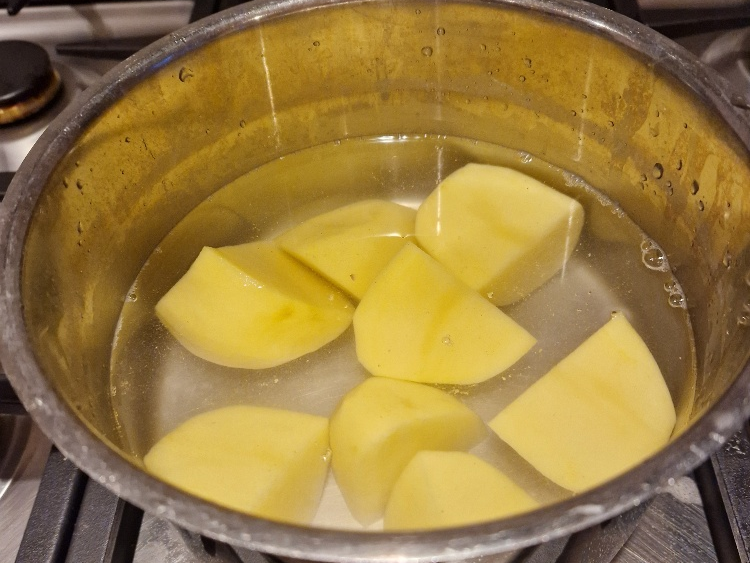
Peel your potatoes if they are large or thick skinned, as our red ones were today.
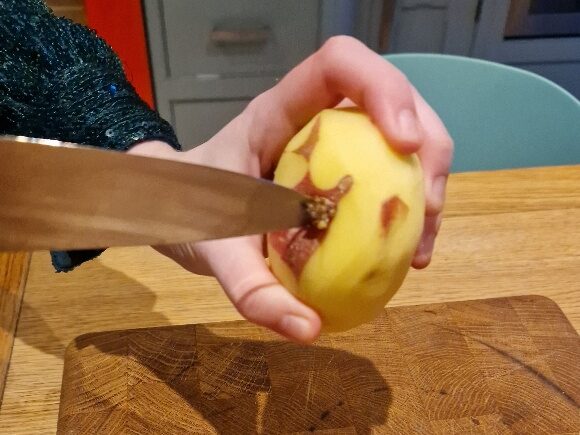
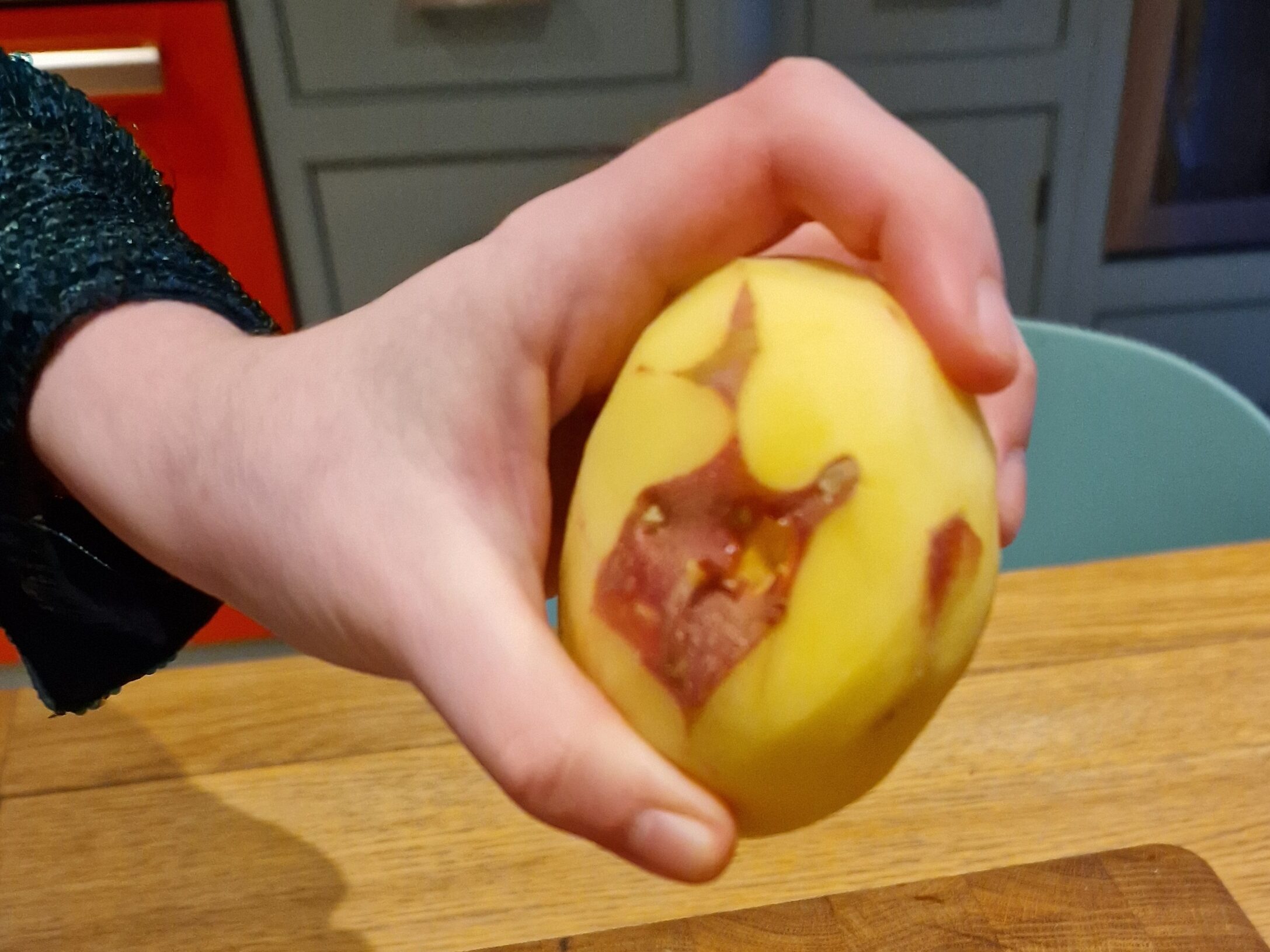
Remove any dark spots or ‘eyes’ by coring out with the tip of your knife.
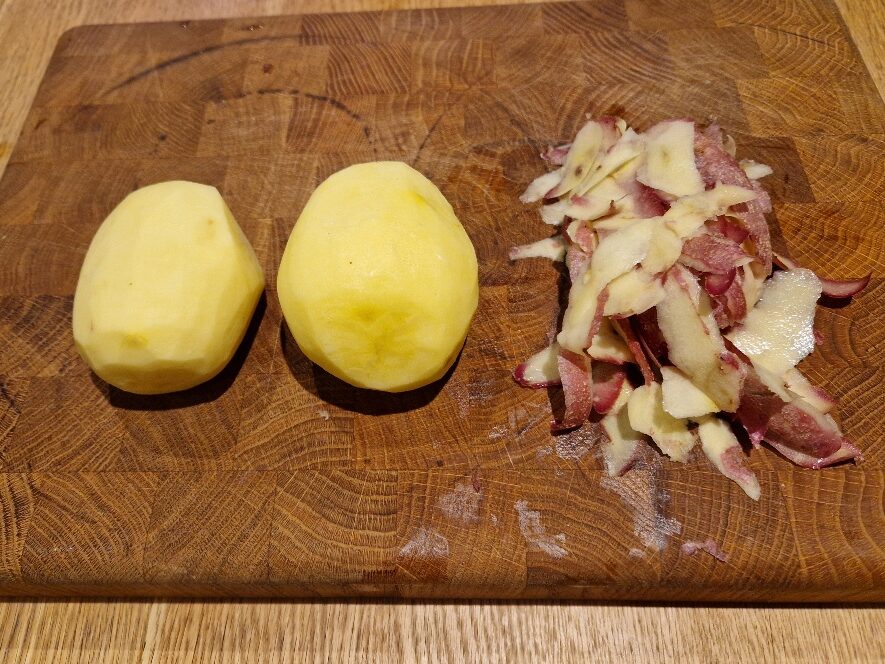
Cut into evenly-sized pieces if your potatoes are large (small potatoes can be boiled whole).
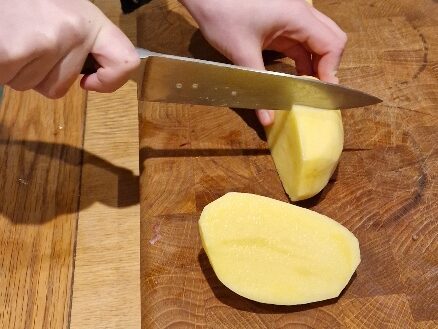
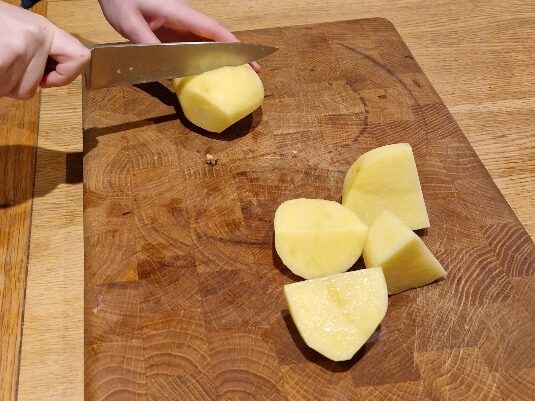
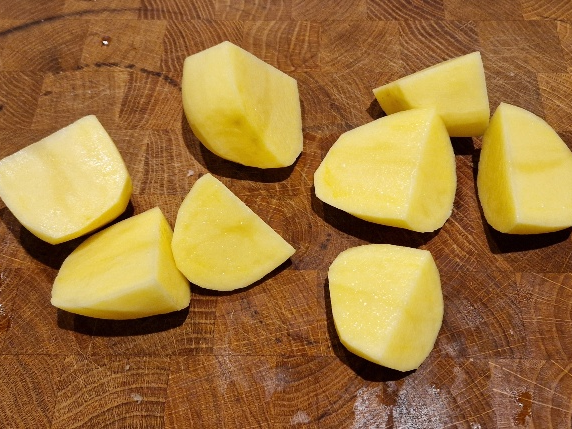
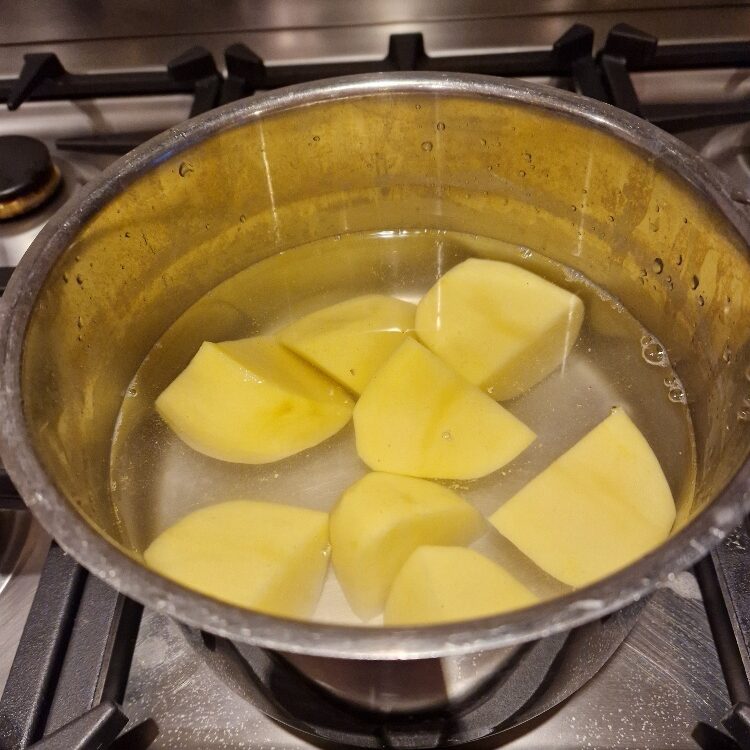
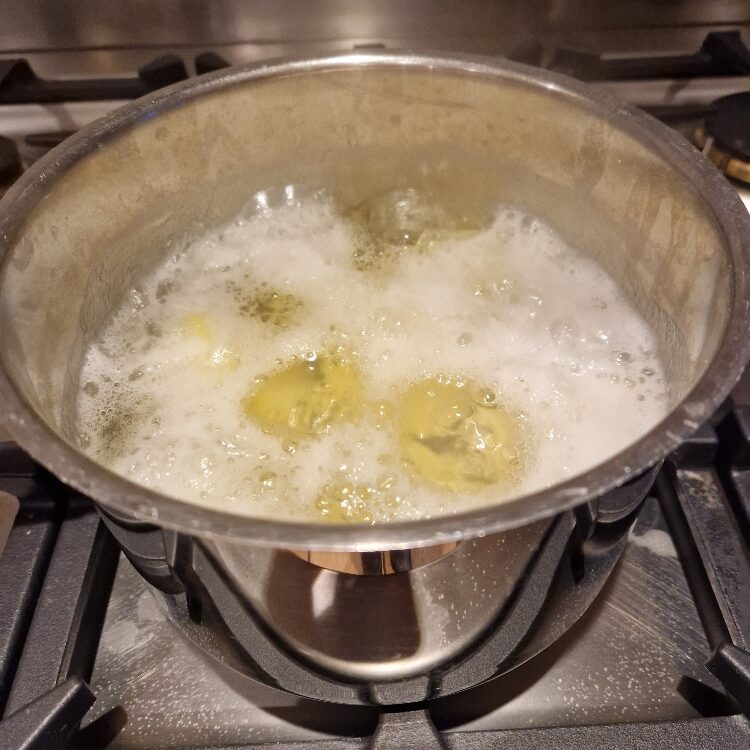
Place in a deep saucepan and cover with cold water. Bring to a rolling boil over a high heat, then turn down to simmer. You can add salt too, but today we were going to be seasoning when we fried them later, so we didn’t.
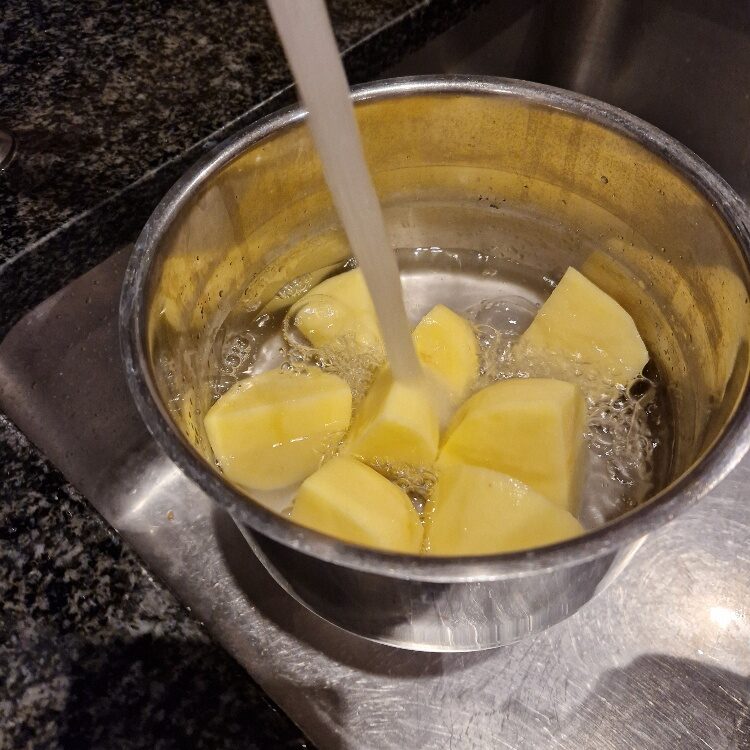
Jake sticks his nose in
It is important to boil potatoes from cold, not try to do them in already boiling water. Starting from cold means the potatoes will cook evenly, and not go mushy on the outside before the centre cooks.
How long to boil potatoes for will depend on what you plan to do with them next, plus the variety and how large your potatoes/pieces are. Cooking all the way through for serving as boiled or for mashing generally takes about 20 to 25 mins from when they have come to the boil, but it is best to check for doneness by testing a potato with the tip of your knife. If the potato feels soft and the knife goes in easily with no feeling of hardness to the potato, they are done. When done, drain in a colander or large sieve.
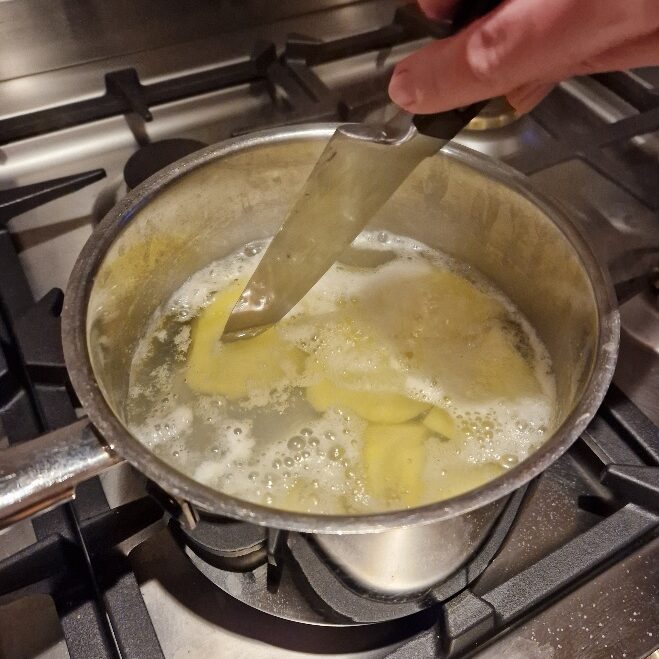
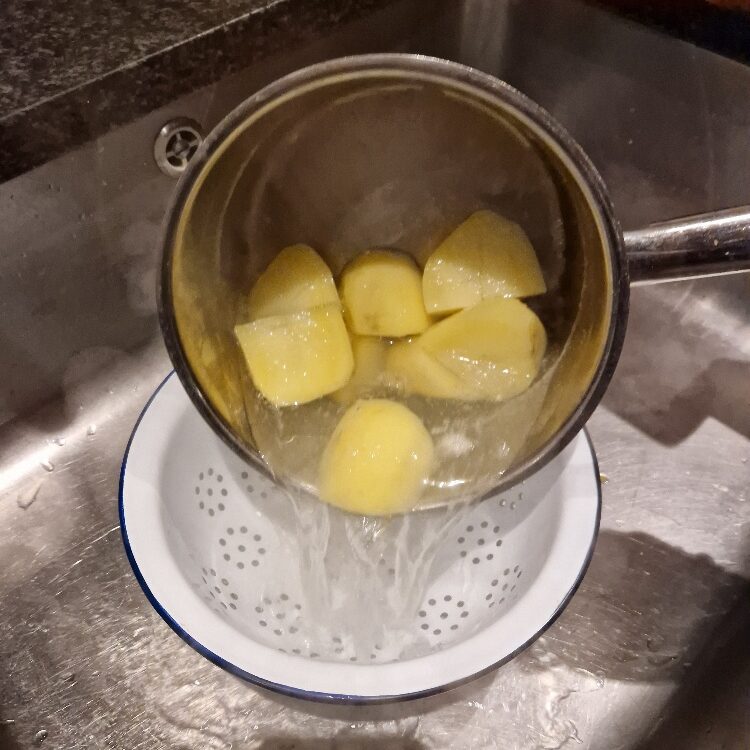
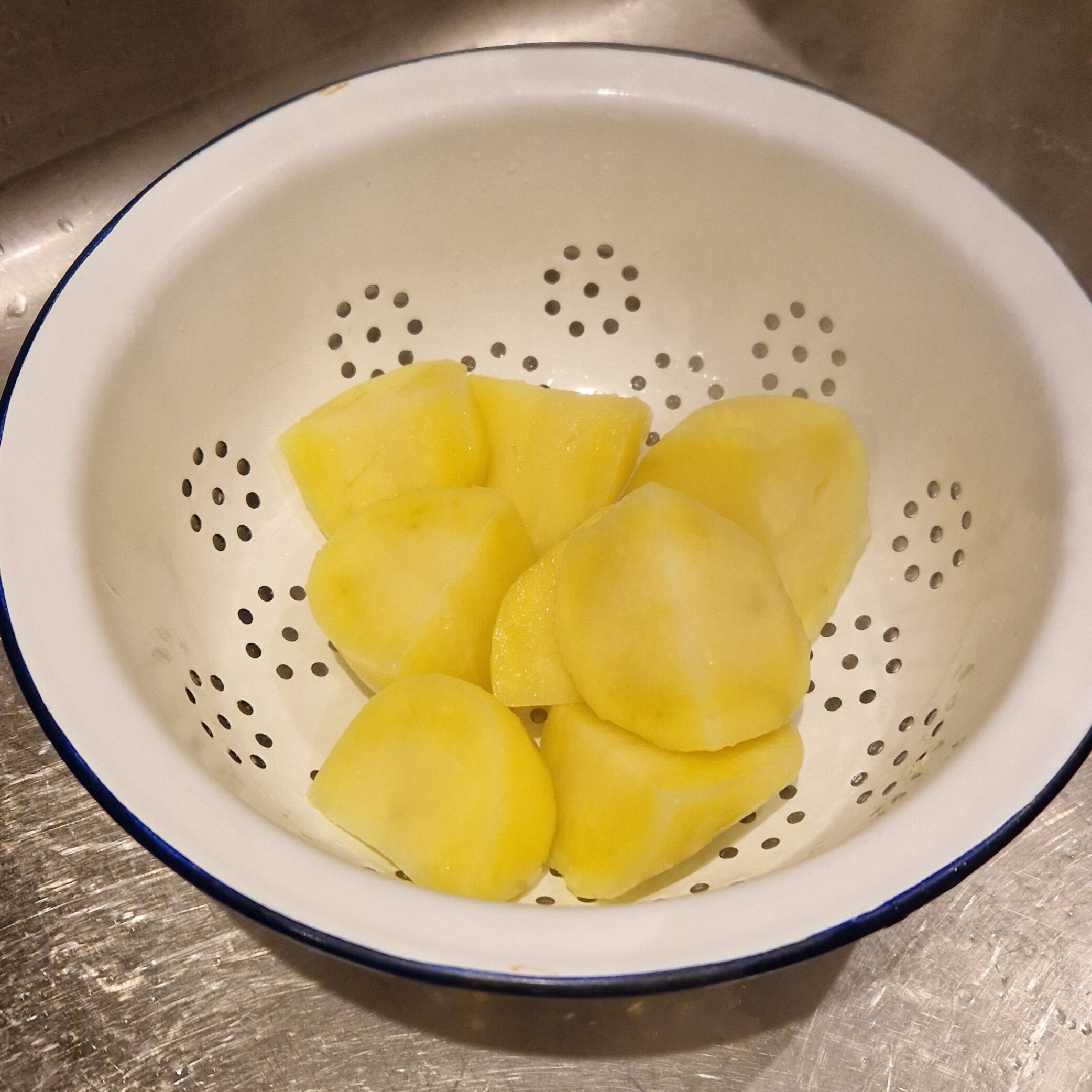
You can serve your fully boiled potatoes as they are, or make mash by adding butter, seasoning and a little cream or milk before mashing well – our tip for creamy mash is to whip them with a wooden spoon after mashing.
Today we were making fried potatoes so we par-boiled them i.e. boiled them until slightly tender, but with still a little firmness in the middle. This is also the first step for making roasts. How long depends on the variety and size, but about 10 to 15 mins is generally good for roasts, a little longer for fried – ours today took 18 minutes.
Shallow frying is a lovely way to get crisp potatoes, and a little easier than making chips too. First cut your par-boiled potatoes into nice bite-sized pieces.
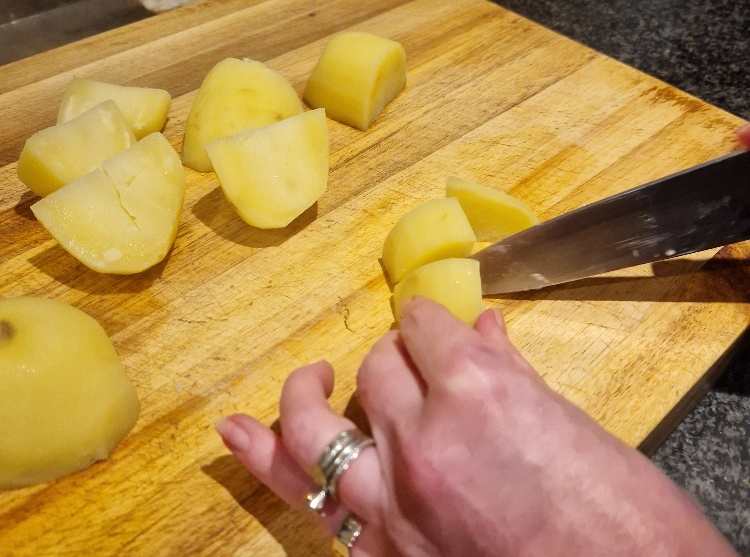
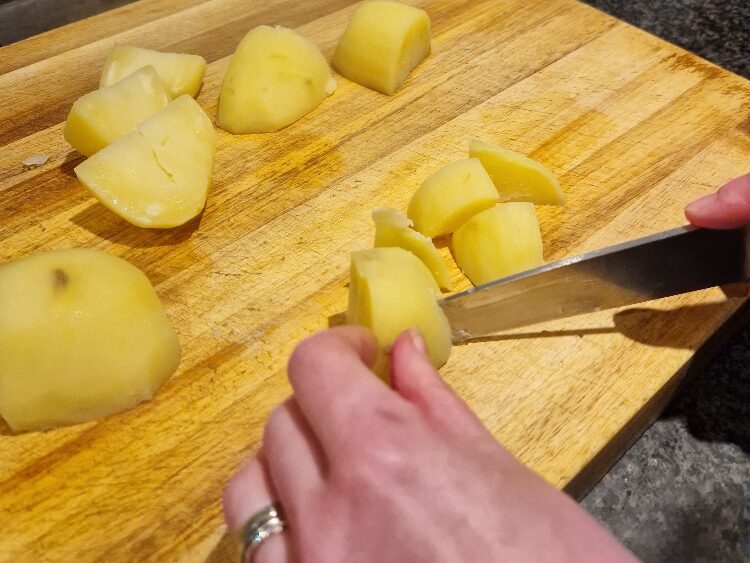
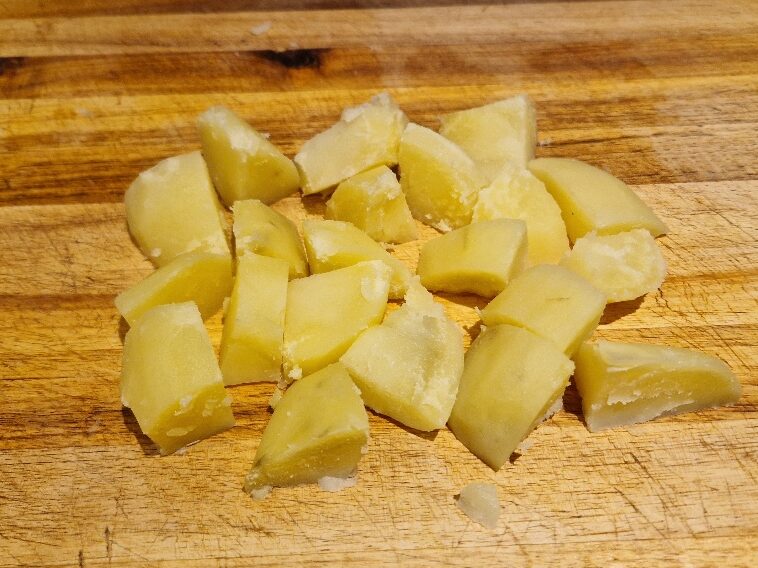
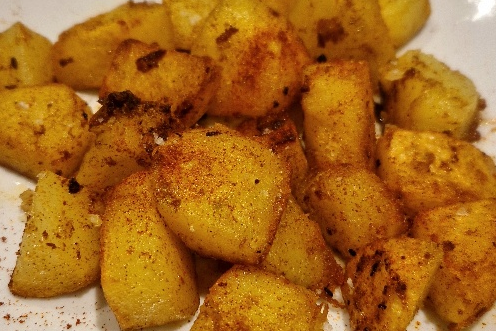
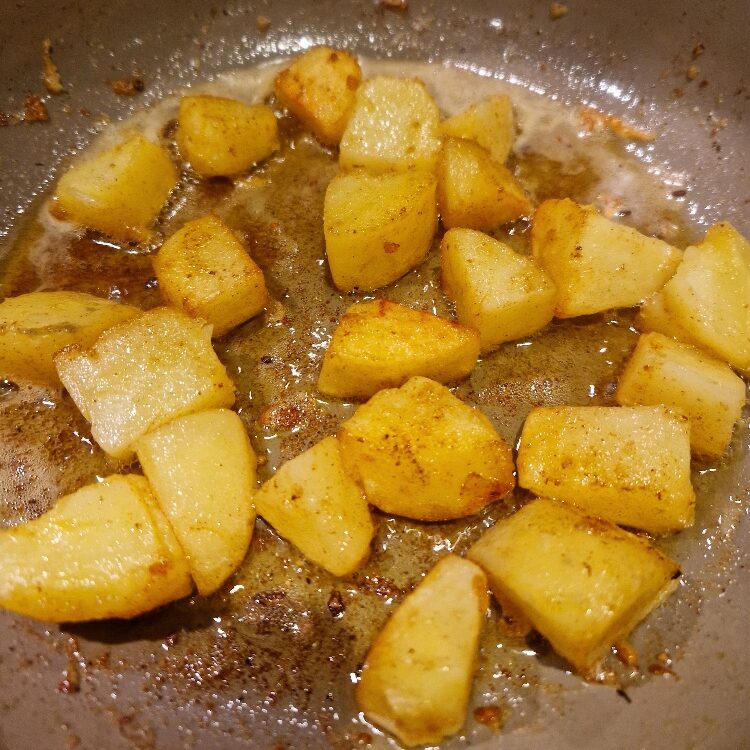
Place a generous knob of butter and a little olive oil in a shallow frying pan, and heat until the butter melts. Add the potatoes and stir gently over a medium to high heat until they crisp and go golden with some browning.
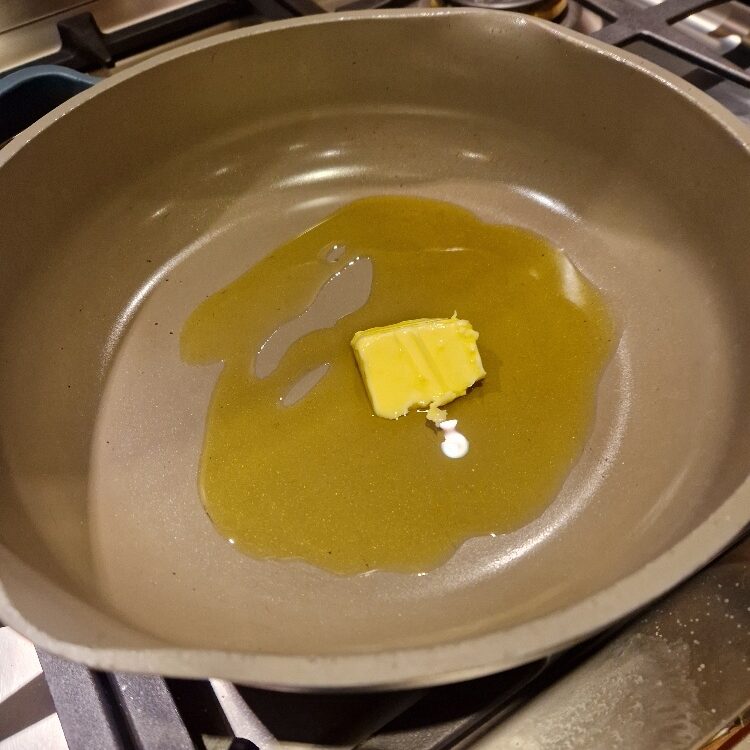
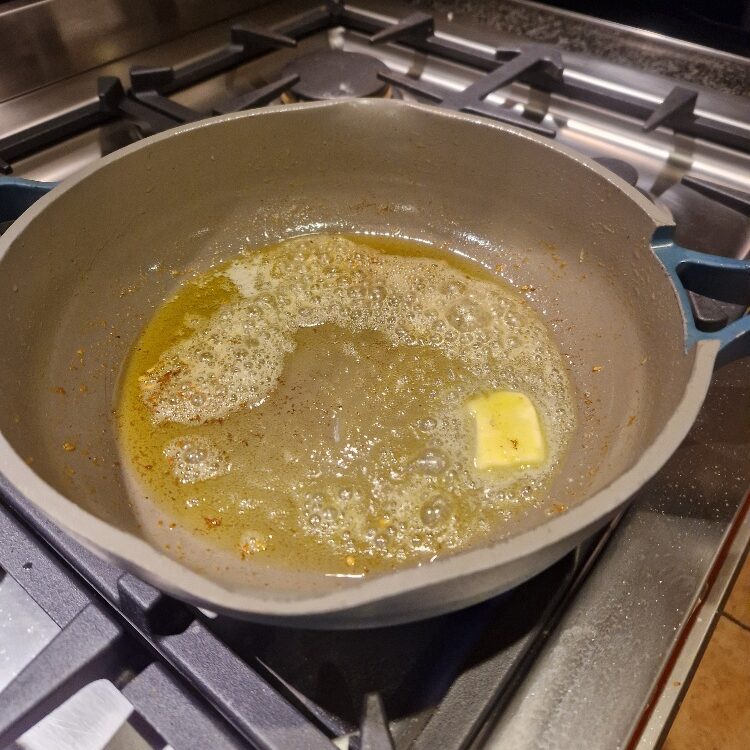
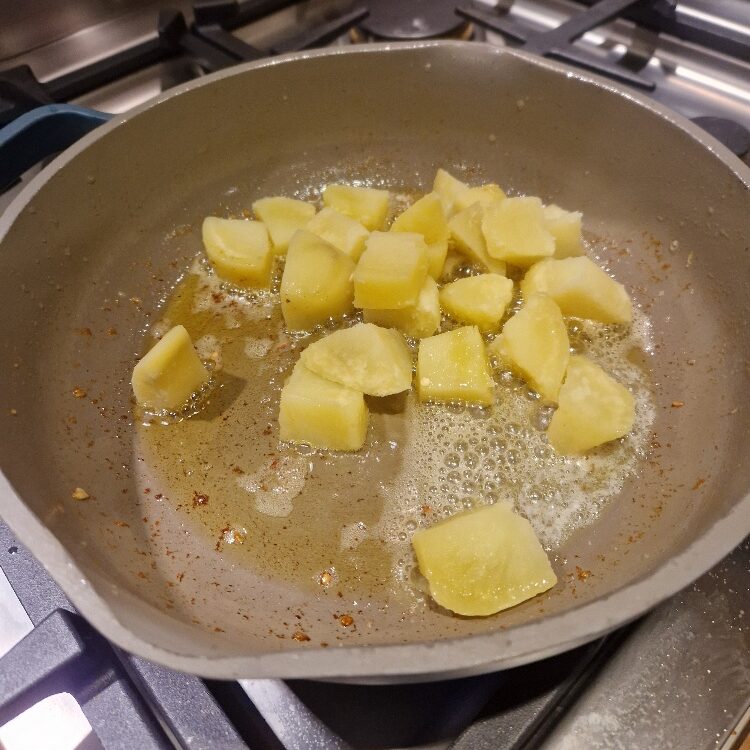
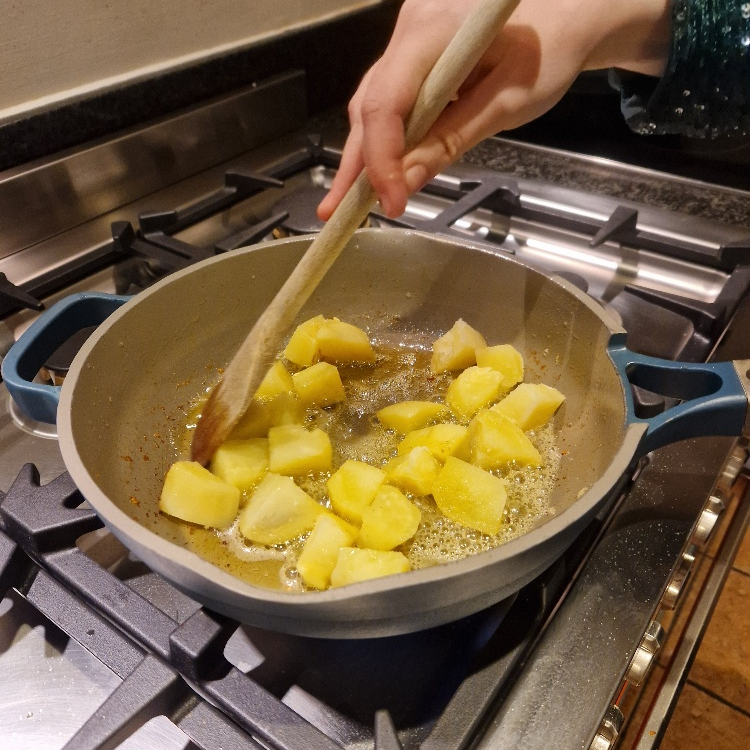
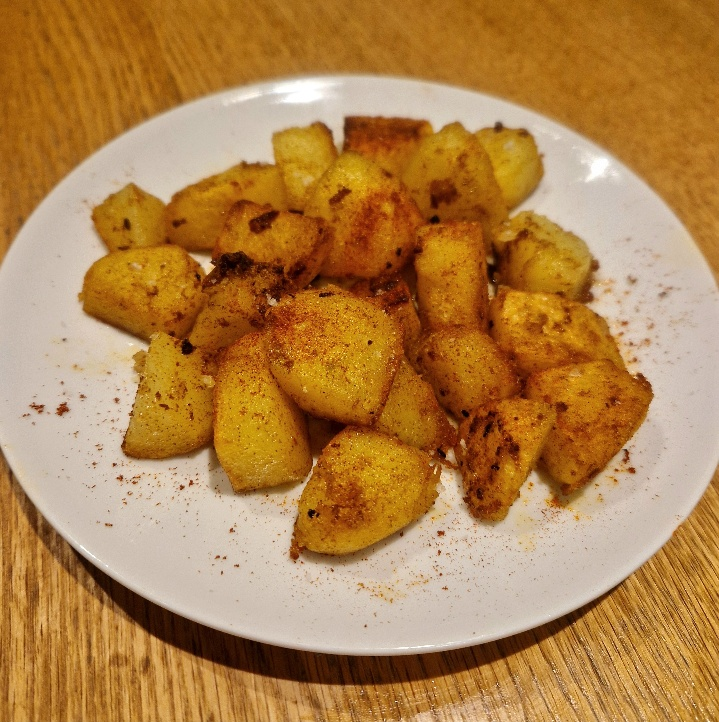
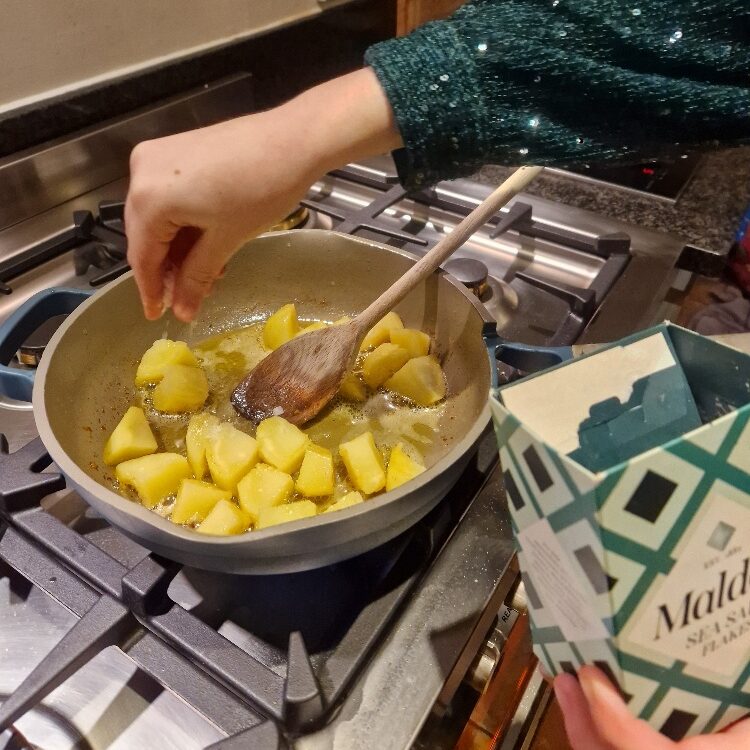
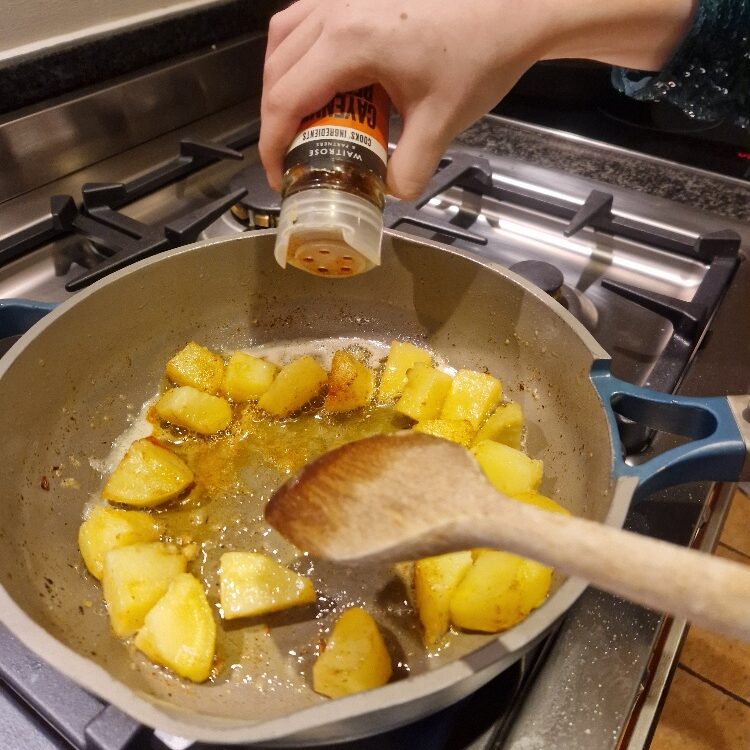
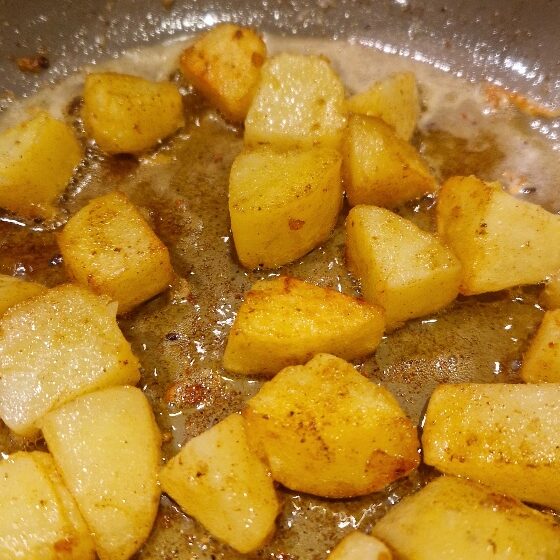
There is no set frying time, the potatoes are done when they feel crisp and look well browned as below. Ours today took just less than 10 minutes. Season with salt – be generous! You can also add pepper or other flavourings. Today we used cayenne pepper which works really well, but paprika, chilli or garlic seasoning are good too. Be careful with cayenne, it is quite hot so a little goes a long way.
Sometimes the simplest things are the most delicious! We hope you enjoy!