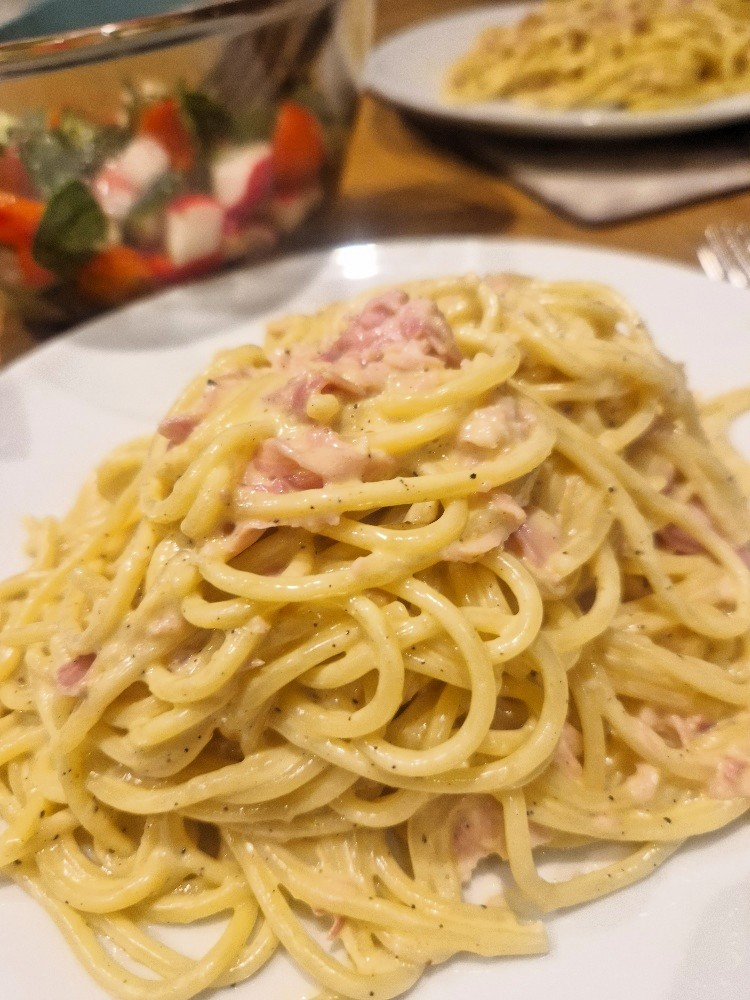


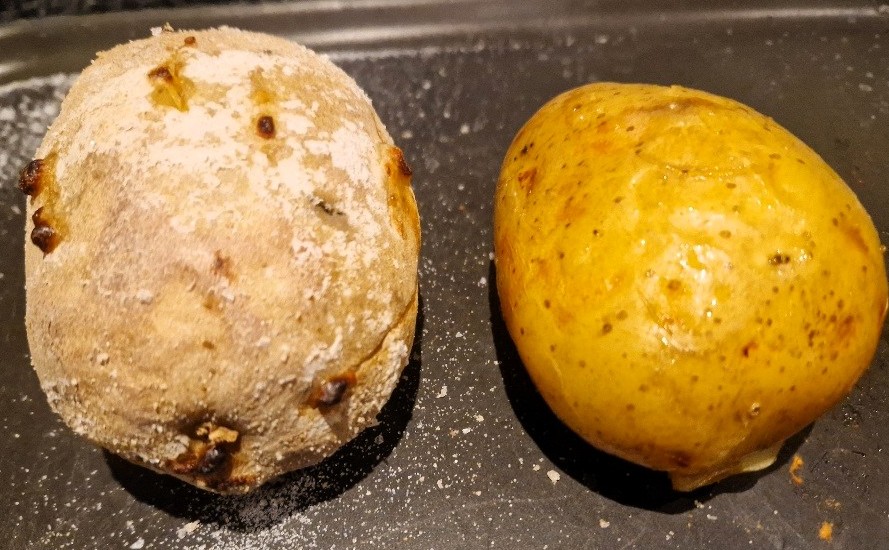
Do you like your baked potatoes with crispy skin or soft? Bibi always did soft skin. Emily & Estella like them crisp. See which one you like best! Either way, follow our step-by-step guide to get the perfect baked potato every time.
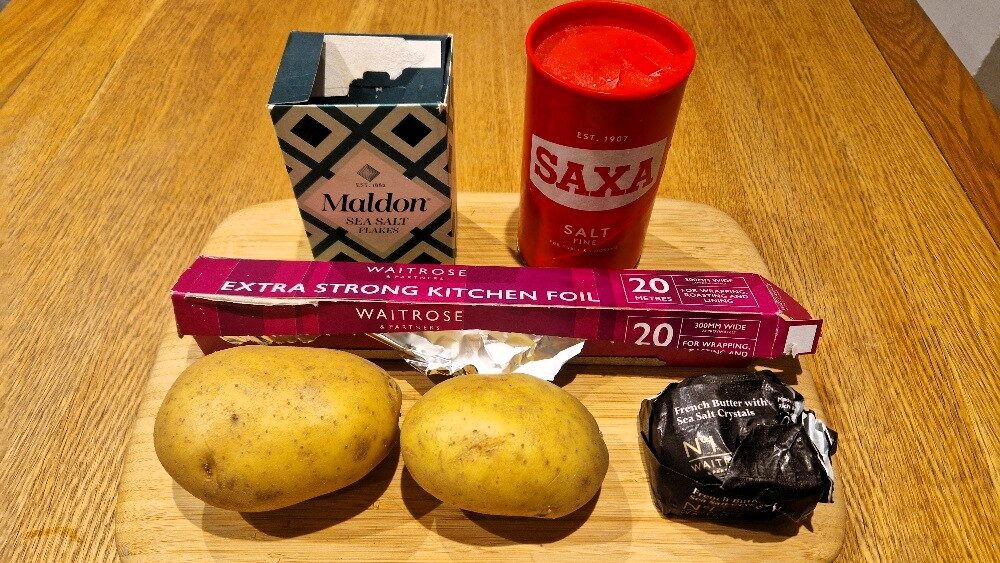
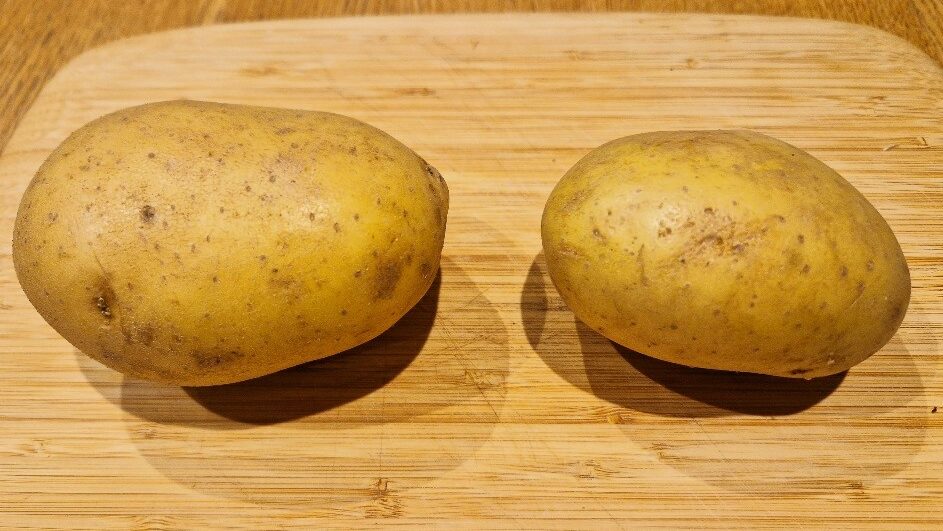
Most medium or large potatoes can be baked successfully, but some varieties are more suitable than others. We particularly like Marfona, Vivaldi and Rooster, but the commonly found King Edward and Desiree are good too. But just look for a potato labelled as suitable for baking in your local shop. Today we had Roosters.
Crisp skin method
If you put potatoes in a hot oven for long enough the skin will naturally crisp. But some tips can help you achieve a crisp, but still enjoyable to eat, skin and a fluffy, moist interior.
Heat your oven to 200C (180C) fan. Baked potatoes are quite forgiving, they can be cooked quicker in a hotter oven, or cook over a longer time in a cooler one. But plan ahead – a large potato will take between 1h and 1.30h in a 200C oven. If your potatoes cook faster they can also be kept warm for a long time in a cool oven (60C to 80C).
For crisp skin use salt. Take a baking tray and dust with a generous layer of salt. We find a combination of fine (table) salt and coarse (sea or rock) salt gives the best finish, but any salt you have to hand will do fine.
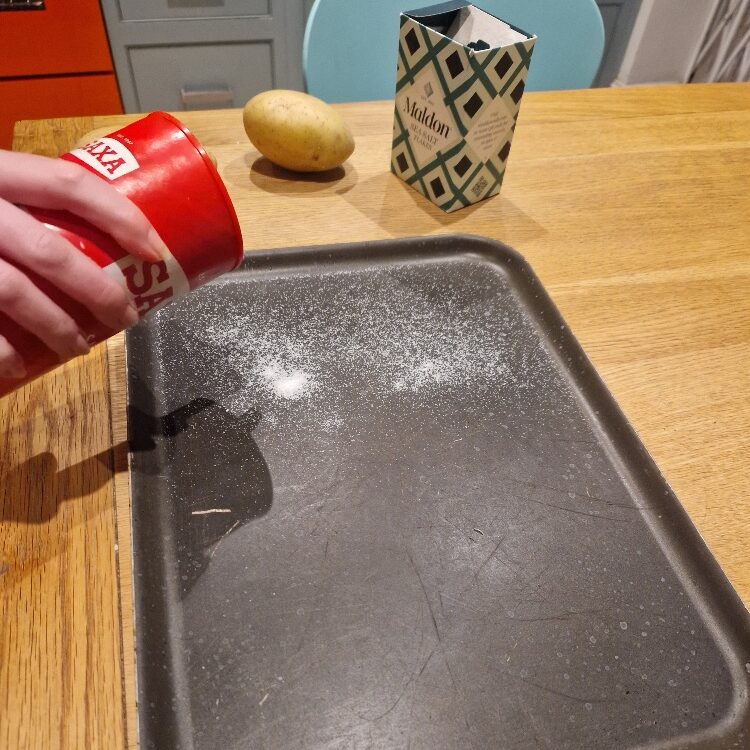
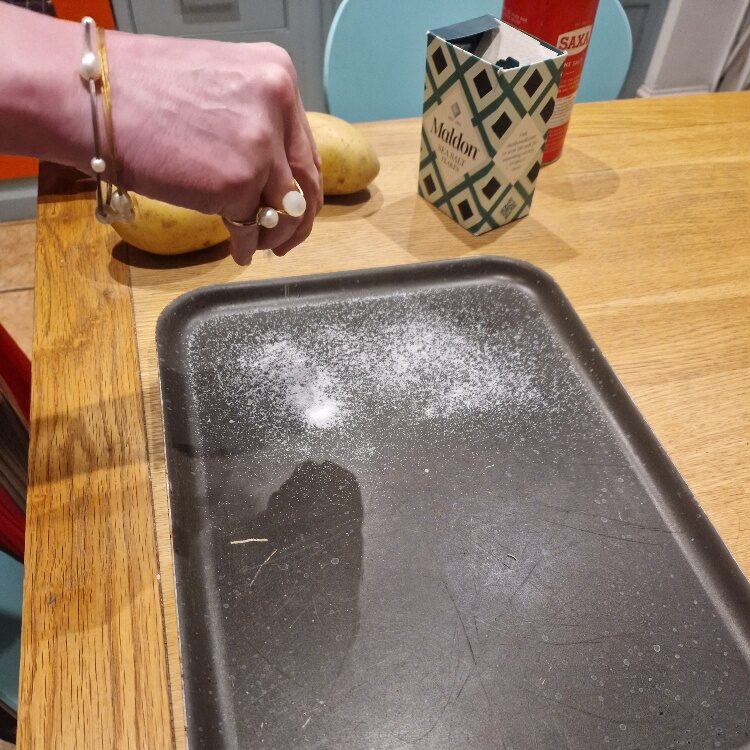
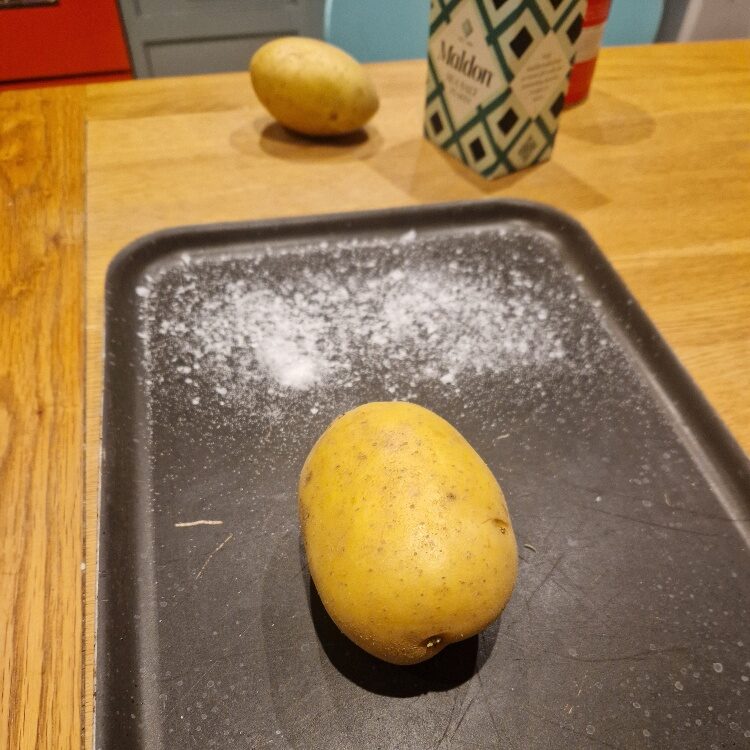
Now pierce your potato all over with a fork. This is important whichever method you use to bake potatoes as ones that are not pierced can burst – pricking with a fork will let some steam out and leave you with a moist, fluffy interior and no potato explosions! Be diligent – you need to get the fork right in several times on each side, including the ends. It can need a bit of force!
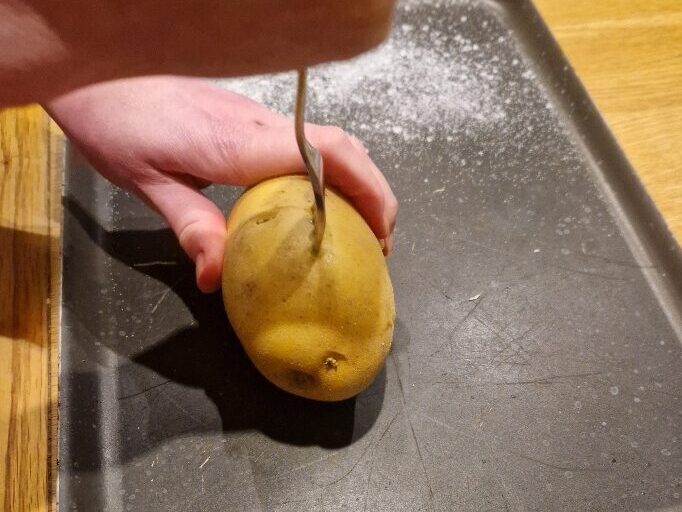
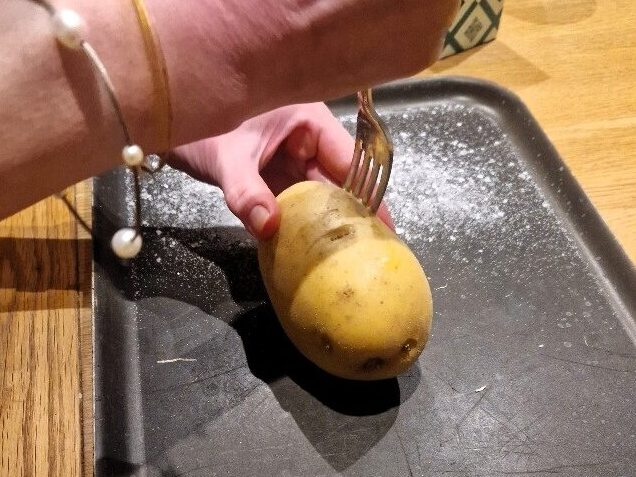
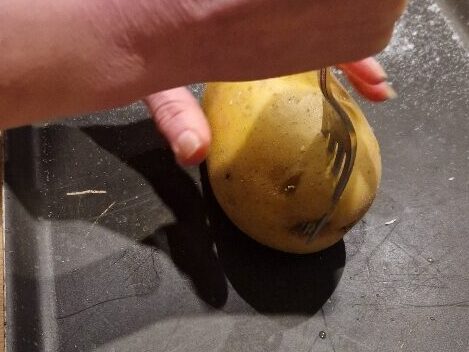
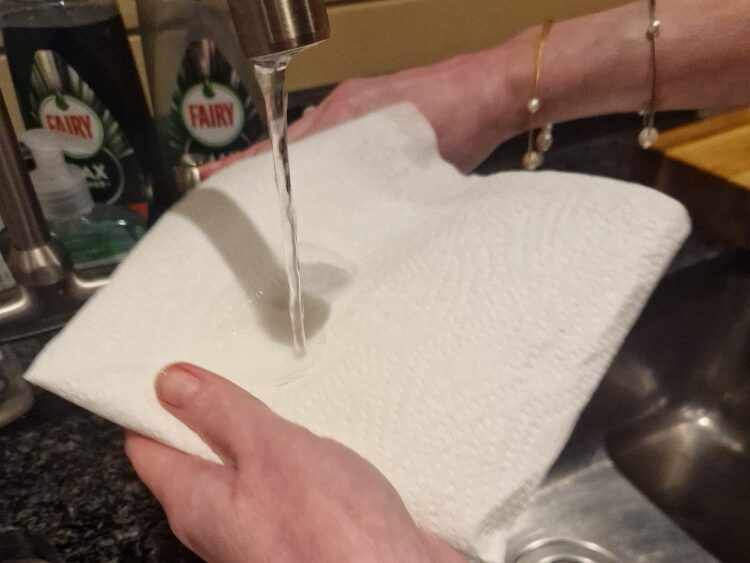
We find that salt sticks better to a slightly damp potato. Some juices will naturally come out of the potato when you stab it, but rub the skin with a piece of damp kitchen paper if it doesn’t seem moist enough. Don’t get your potato too wet though – it will dissolve the salt.
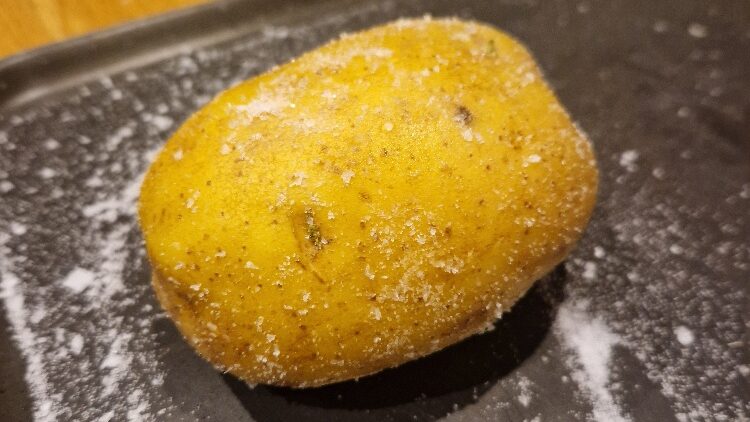
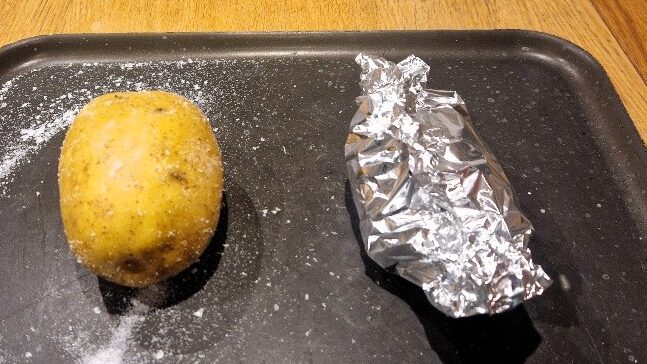
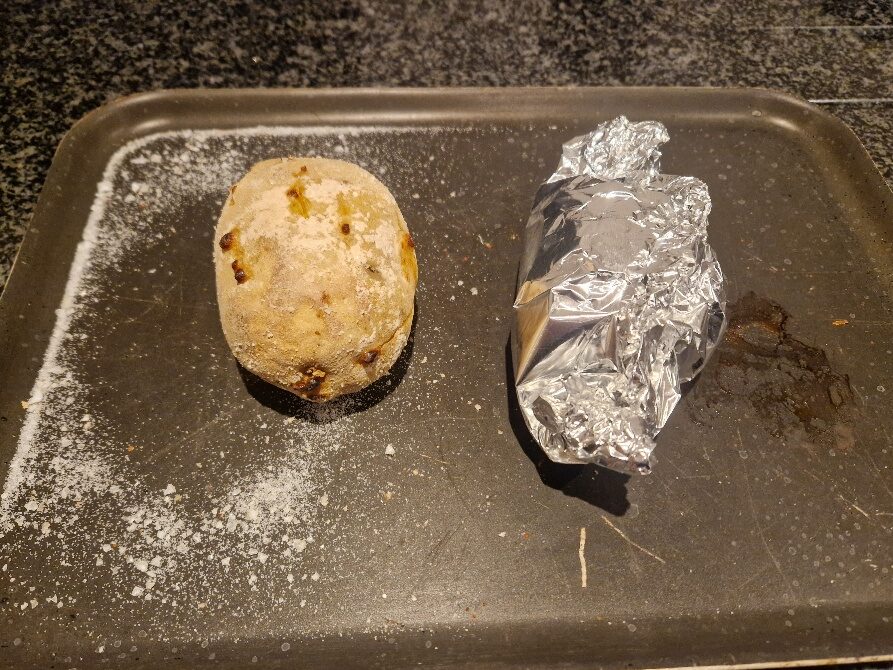
Now roll your potato over and over in the salt, sprinkling on more if you need, until it is nicely coated in salt, as below.
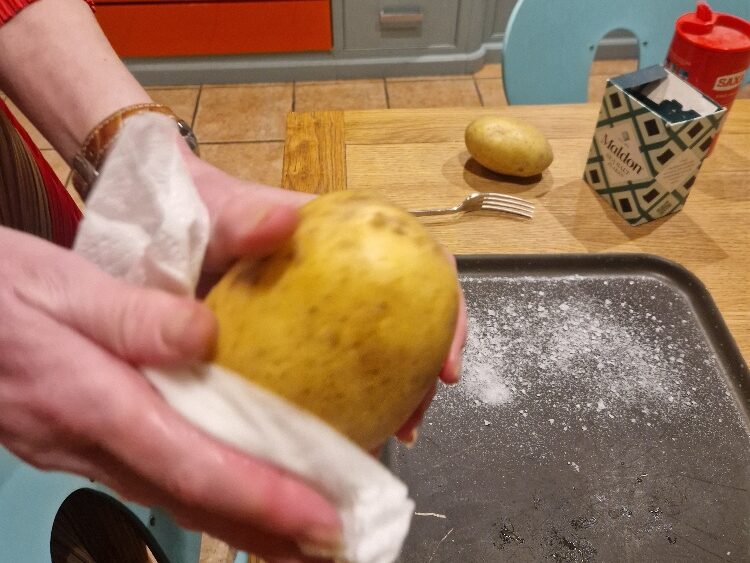
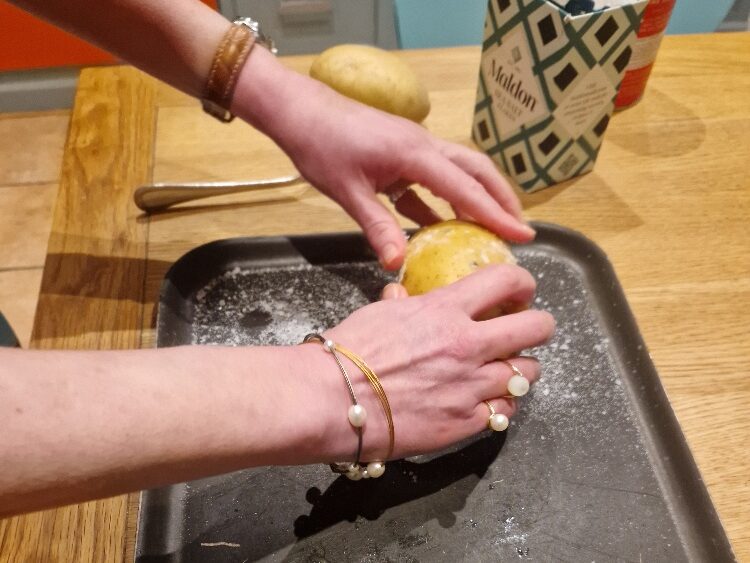
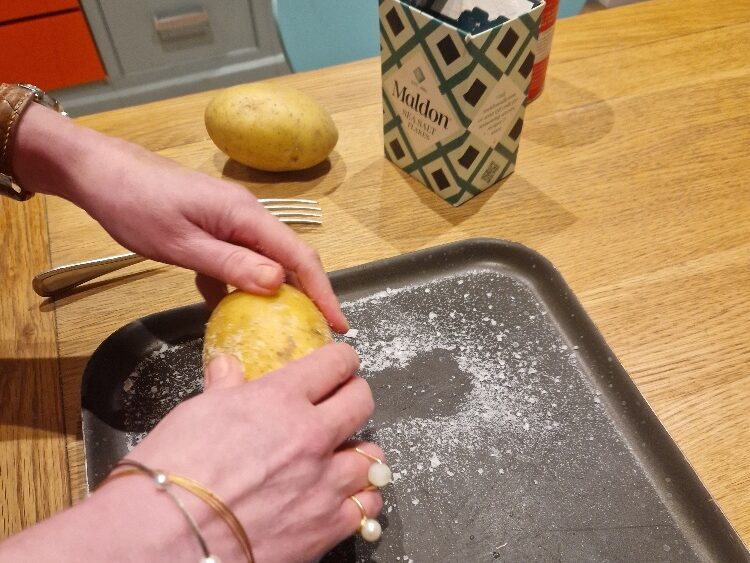
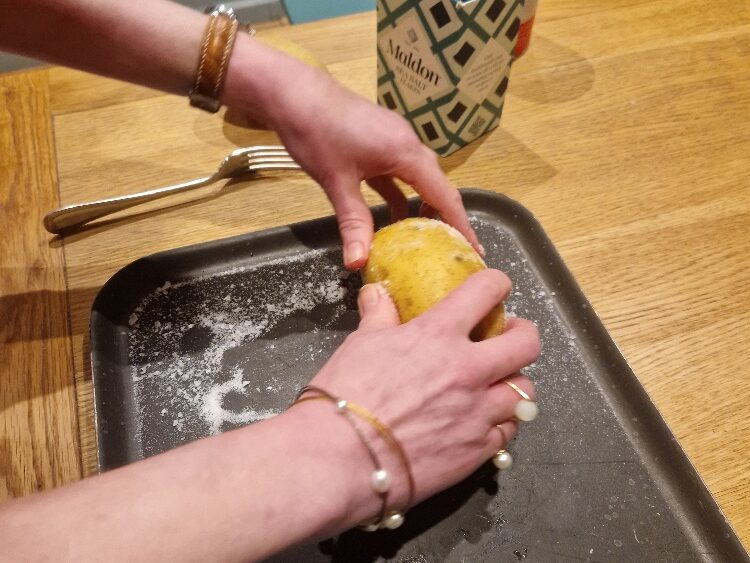

Your potato is ready to bake!
Soft skin method
Heat your oven to 200C (180C fan) as before, and also pierce your potato with a fork as you did for the crisp skin method. Rip off a piece of kitchen foil large enough to wrap your potato, and have some butter to hand.
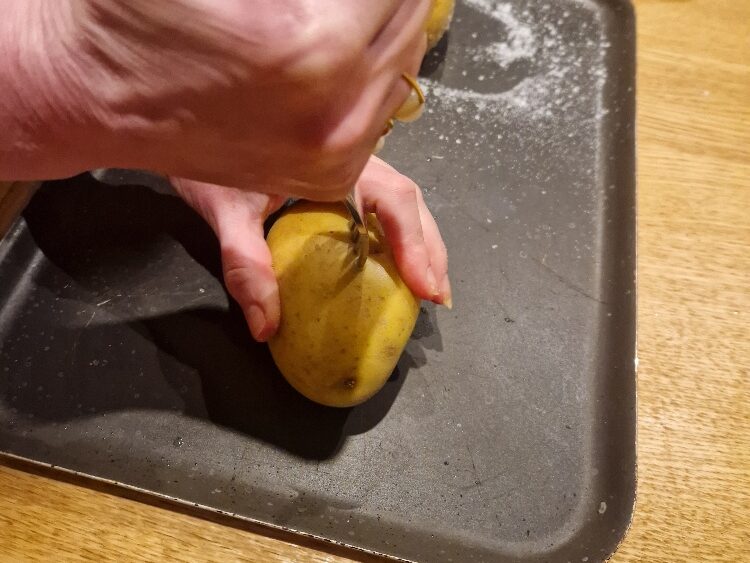
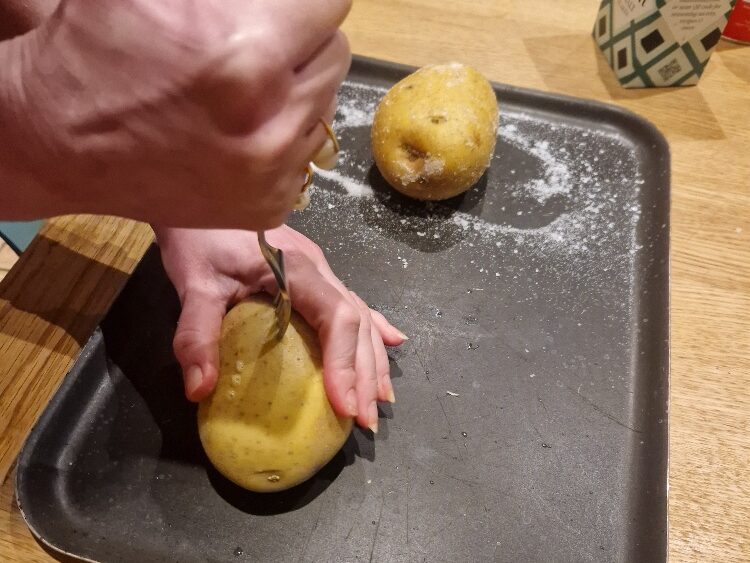
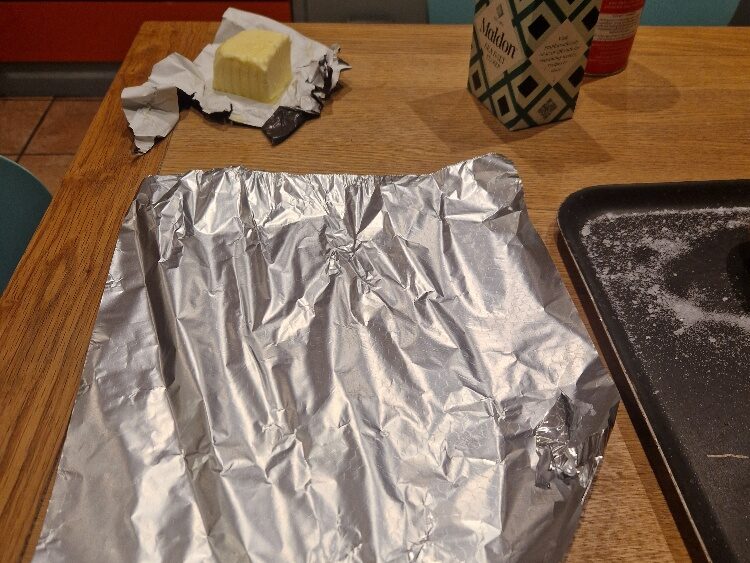
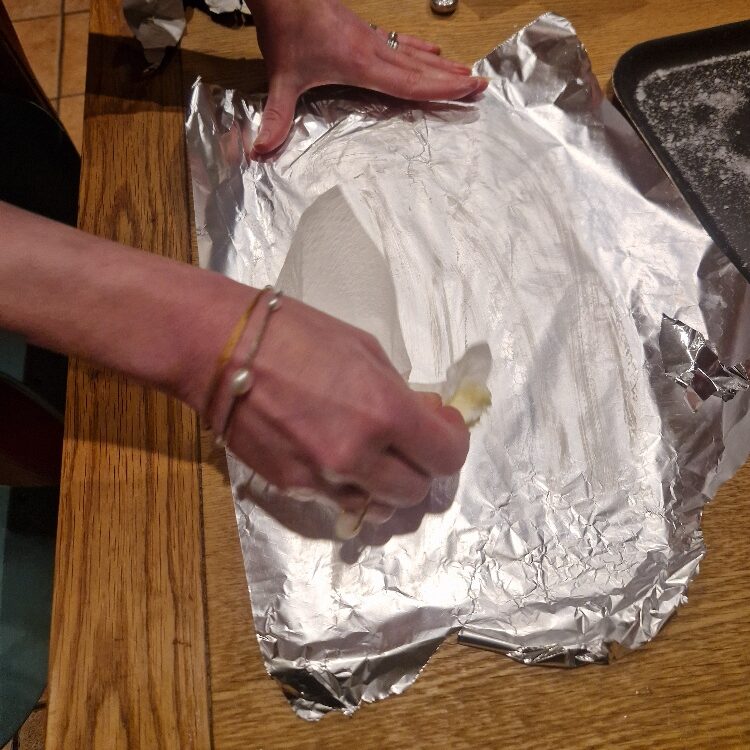
Butter the foil generously, then rub butter all over the potato skin. It may not want to stick, but just leave some on the skin – it will melt over the potato in the oven.
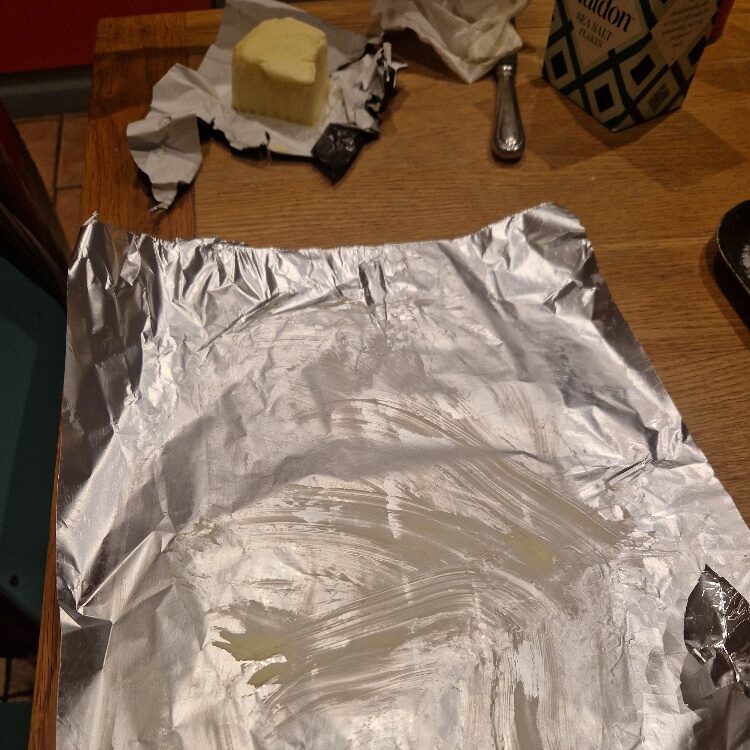
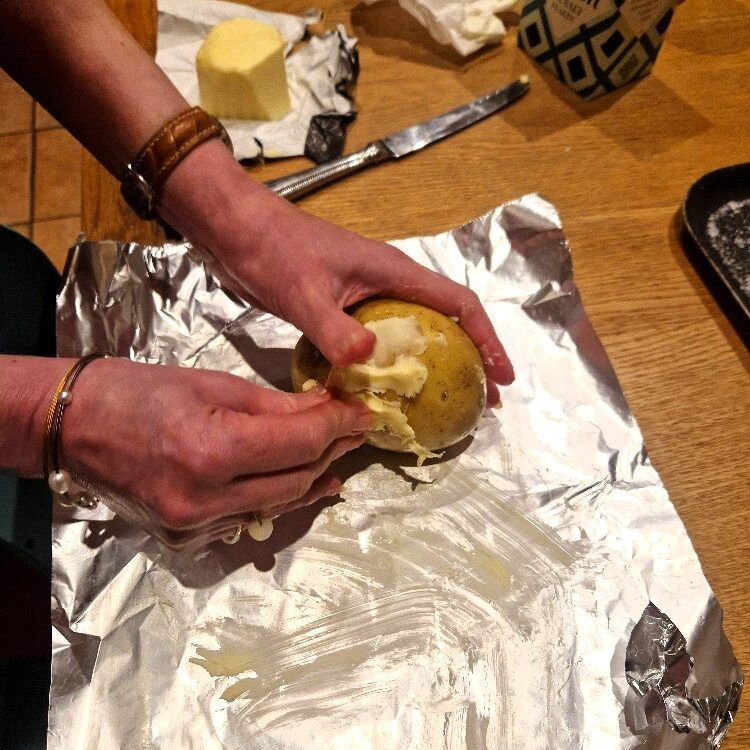
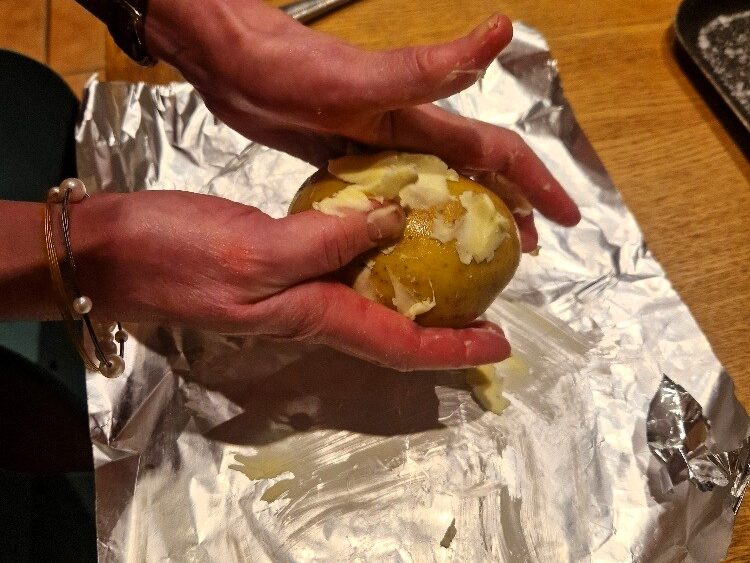
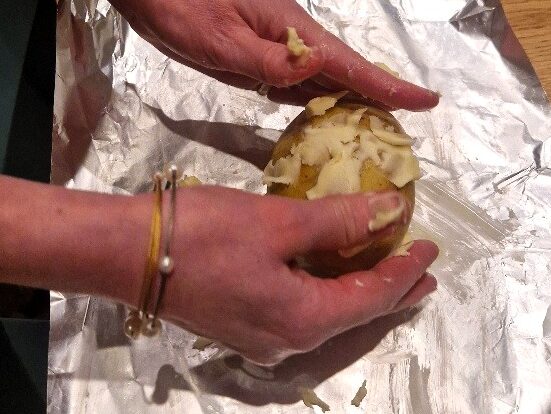
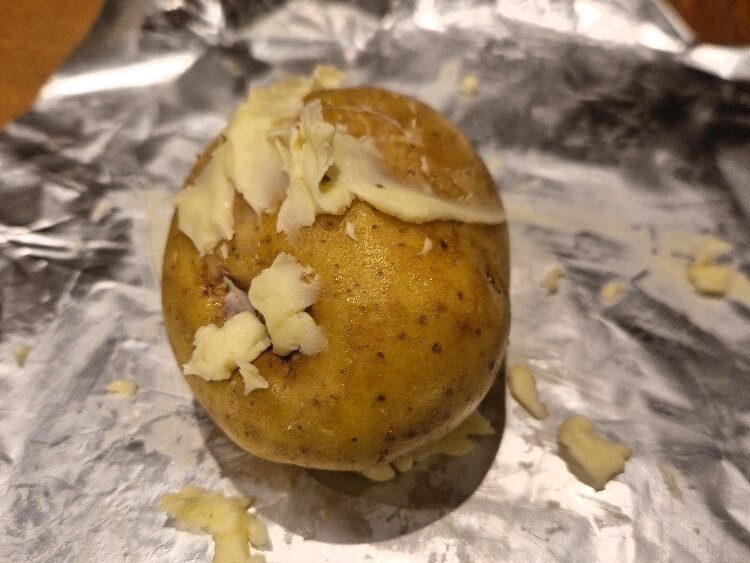
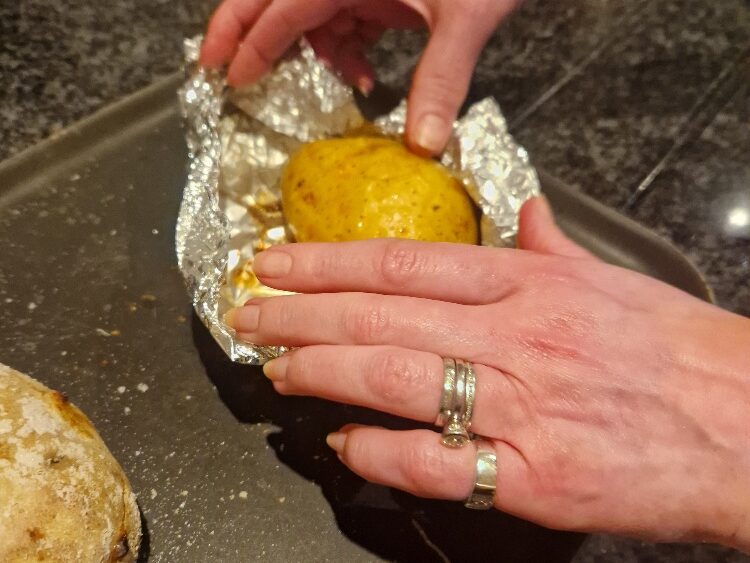
Wrap the potato in the foil, making sure it is fully sealed – you want the steam to stay in the foil to get the skin nice and soft. Fold the top edges of the foil together and roll over to seal, then twist and fold in the ends to make a neat parcel.
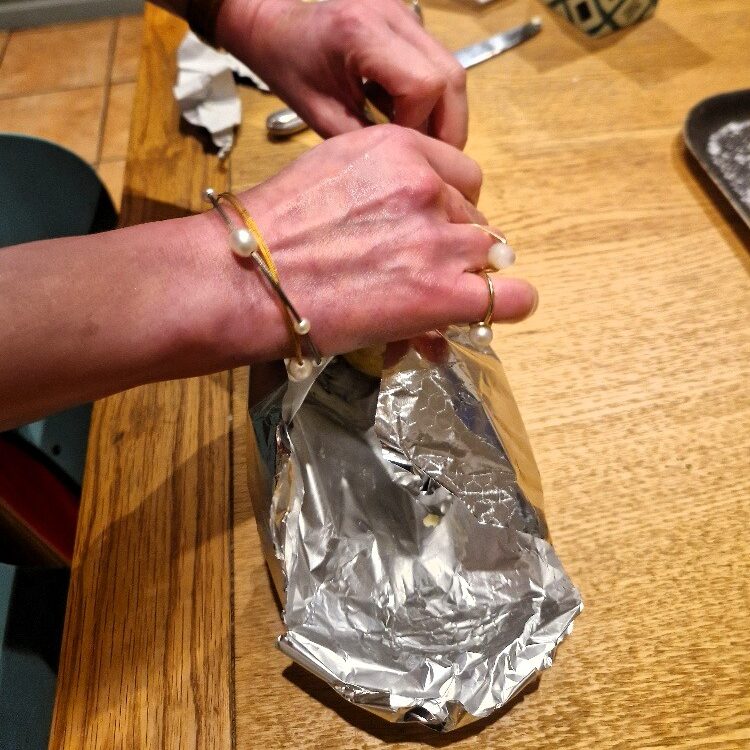
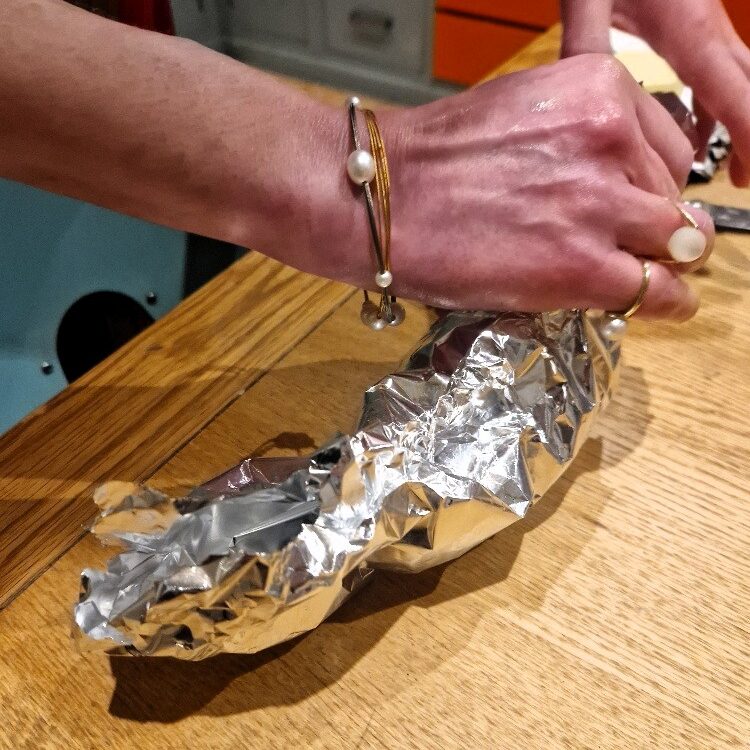
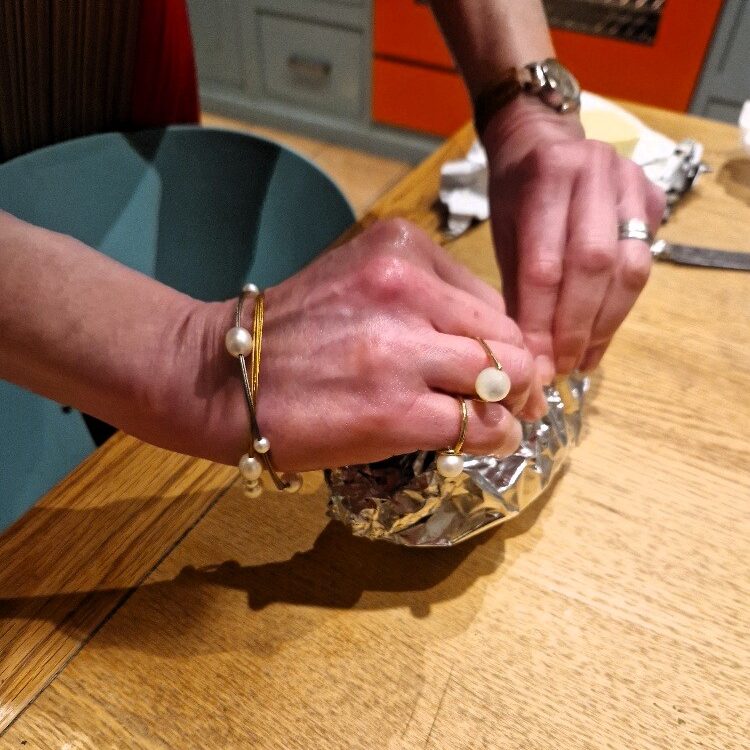
Your potatoes are ready to bake!
Baking
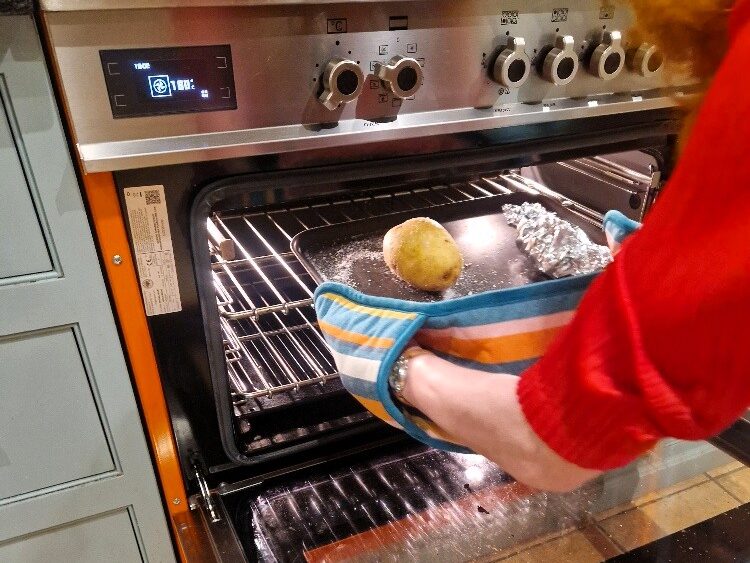
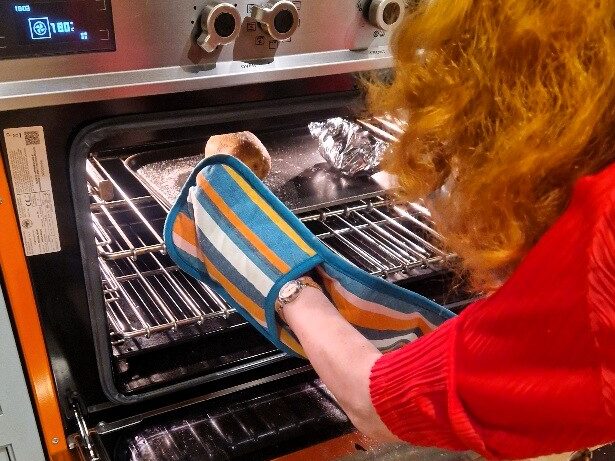
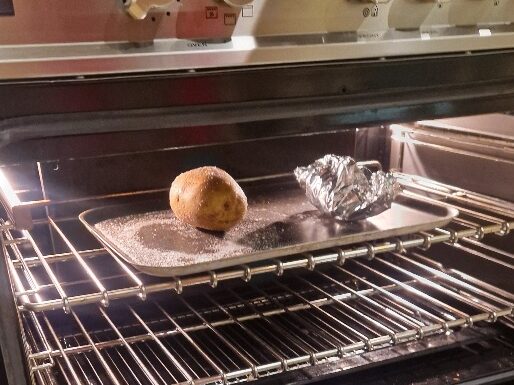
Put the potatoes into the hot oven and bake until done – how long will depend on the size and variety of potato. 45 minutes is the minimum for a small potato. But for most potatoes it will take at least an hour – probably more like an hour and a half. Be patient – cooking longer is normally better than taking out too soon. Today ours were done in just under 90 minutes. Plan ahead and err on the side of caution – if your potatoes cook faster you can reserve in a cool oven (60C to 80C) until needed.

Jake sticks his nose in
If you want to speed up the cooking process, microwave the potatoes for about 5 mins to soften, then put in a hot oven for about 30 to 40 minutes until done. You can of course just microwave them until ready, about 4 mins per side, turning over once, for a medium potato; longer for larger or more. But we don’t like the result as much. Pierce and rub with salt if microwaving and do NOT wrap in foil! For soft skins, rub with oil instead.
After about an hour, check the potatoes. The best way to test a crispy potato for done-ness is to tap it with your fingernail. If the skin is crisp and the potato sounds hollow it is done. You can also test with a sharp knife – if it goes in smoothly and the potato feels soft, it is ready. Don’t do this too soon though – a slit in the potato will let too much steam out and dry the flesh, so leave this test until you think it is nearly ready.
Testing a soft potato is trickier – you don’t want to open the foil too early and let out all the steam. But when you get to the hour or so point, open one end of the foil and test with a knife. Wrapped potatoes do tend to cook a little faster than unwrapped ones, and you can also press them with your hand to feel if they are soft inside, rather than pierce and let all the moisture out of the potato.
The results
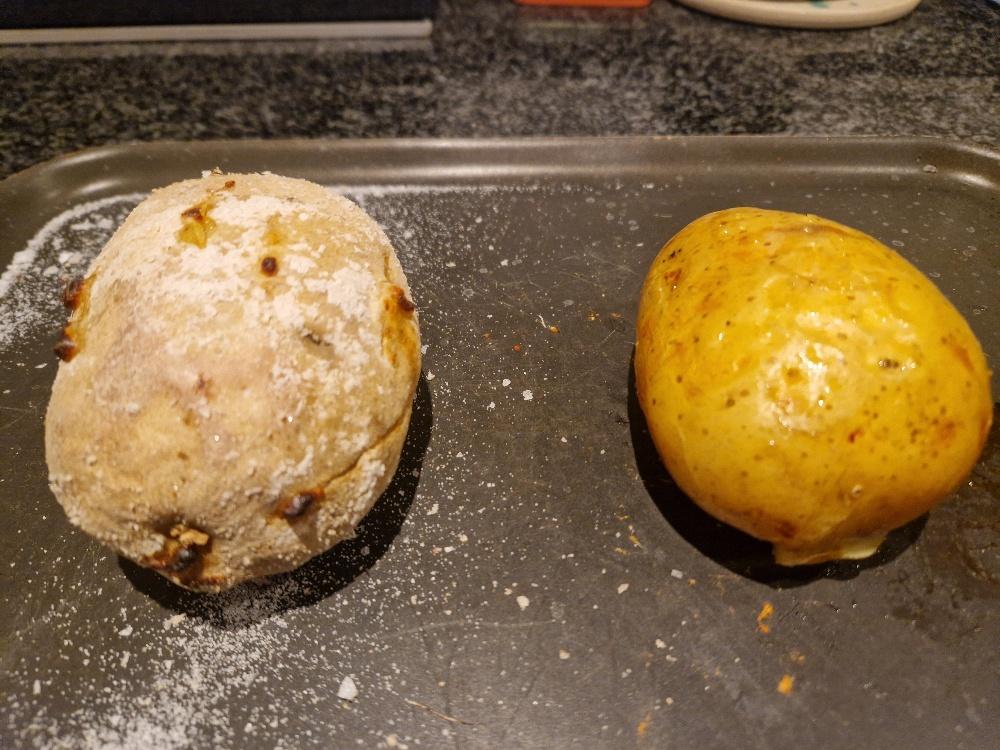
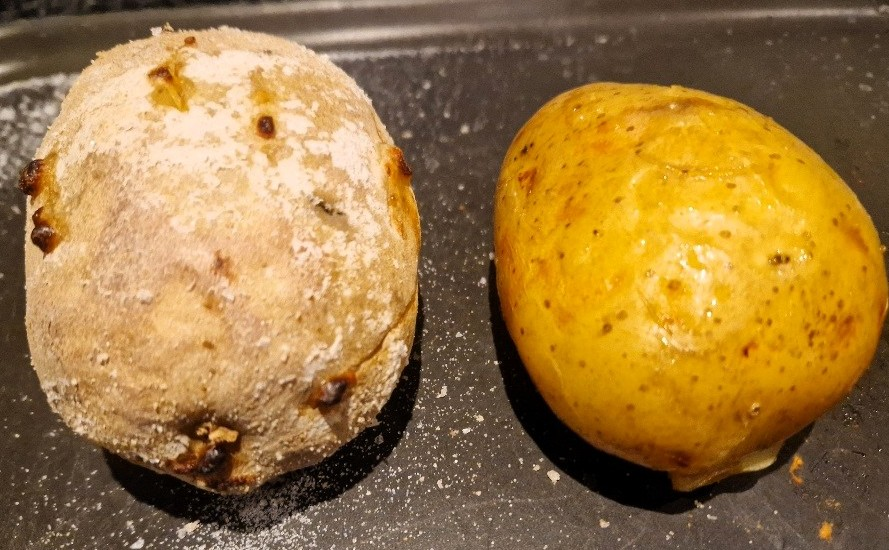
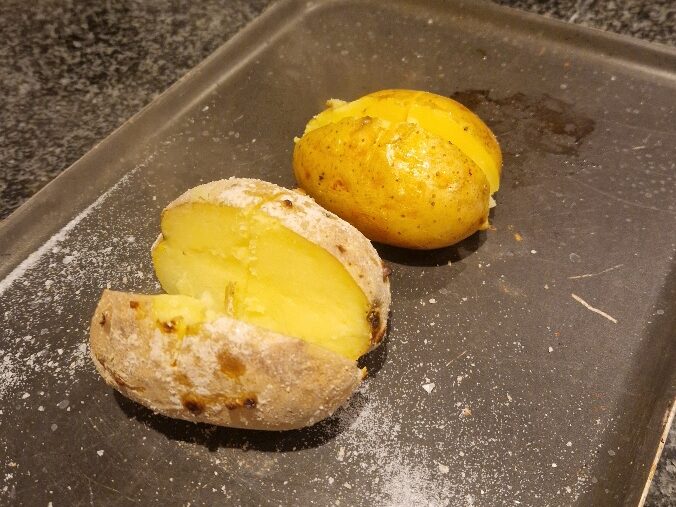
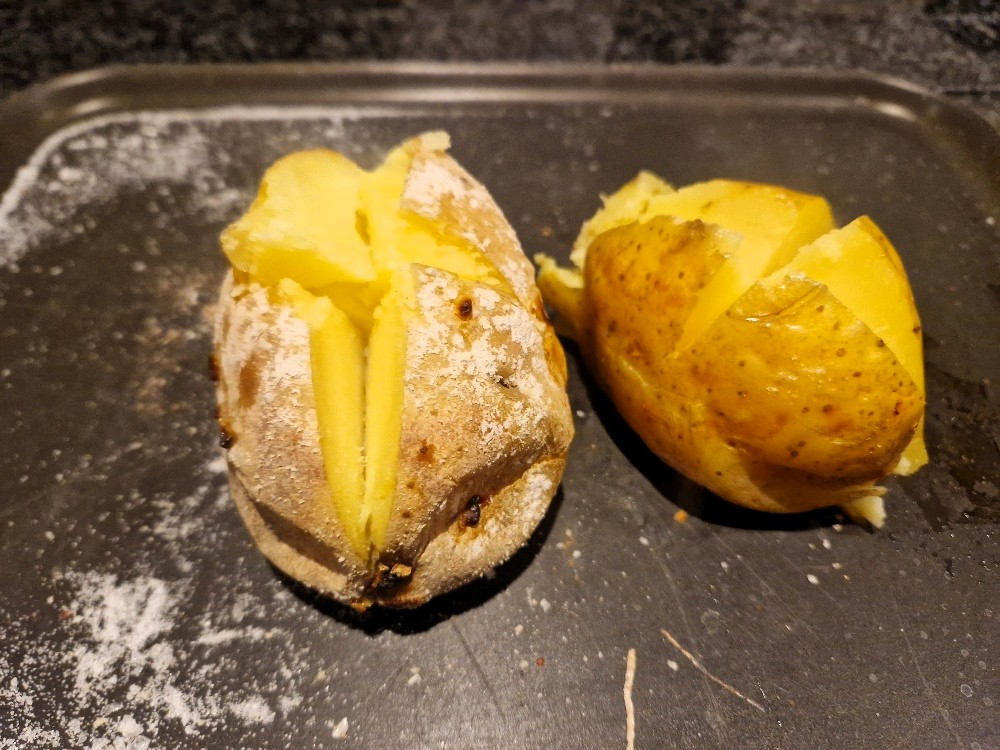
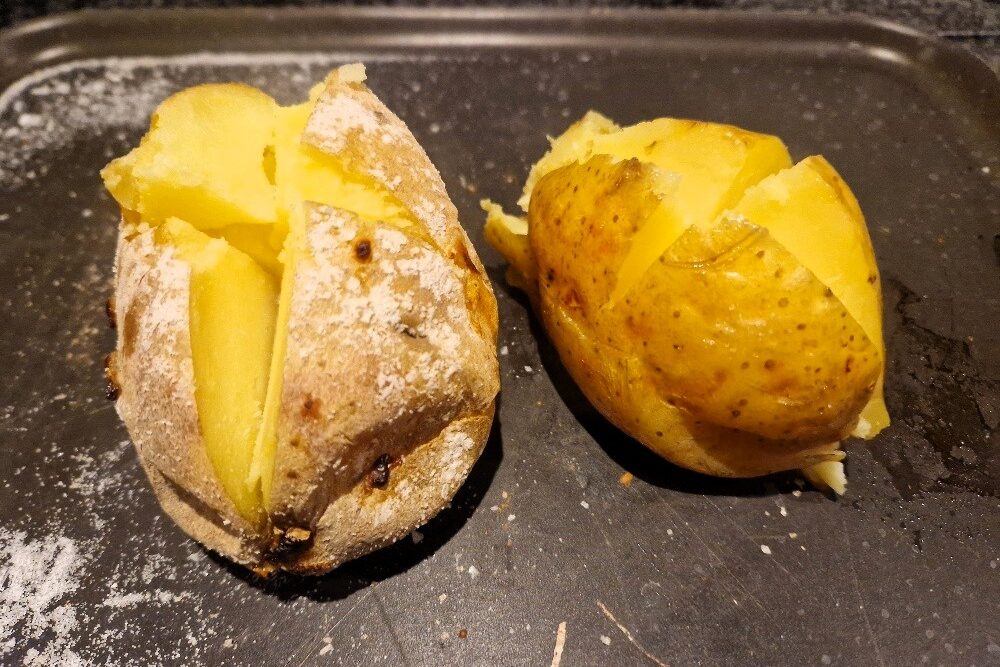
You can really see the difference in the two potatoes below. One has a lovely dry, crisp skin; the other a buttery, soft one. Both are great, choose the one you like!
Serving
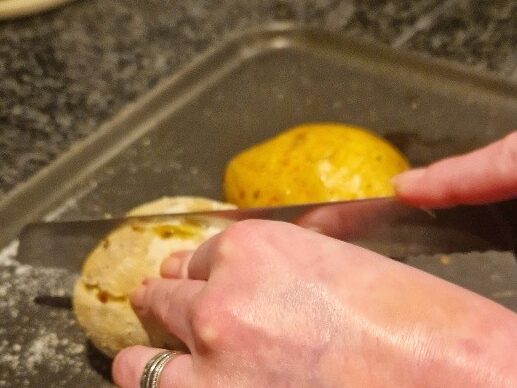
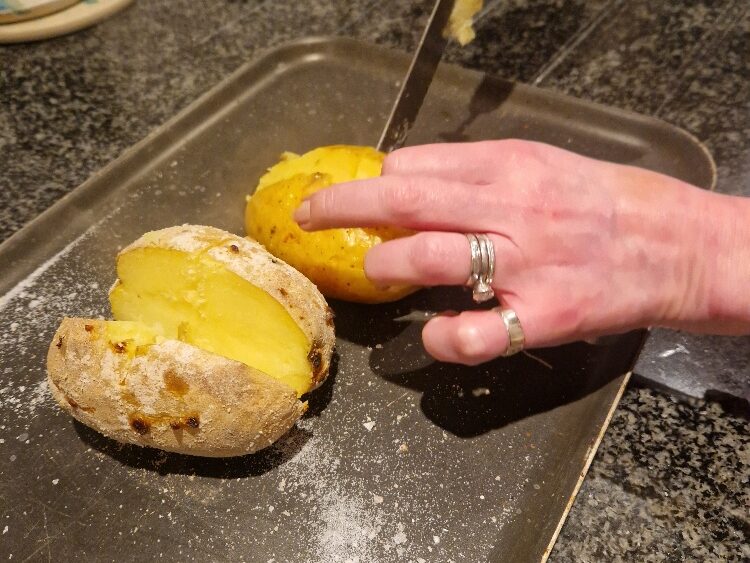
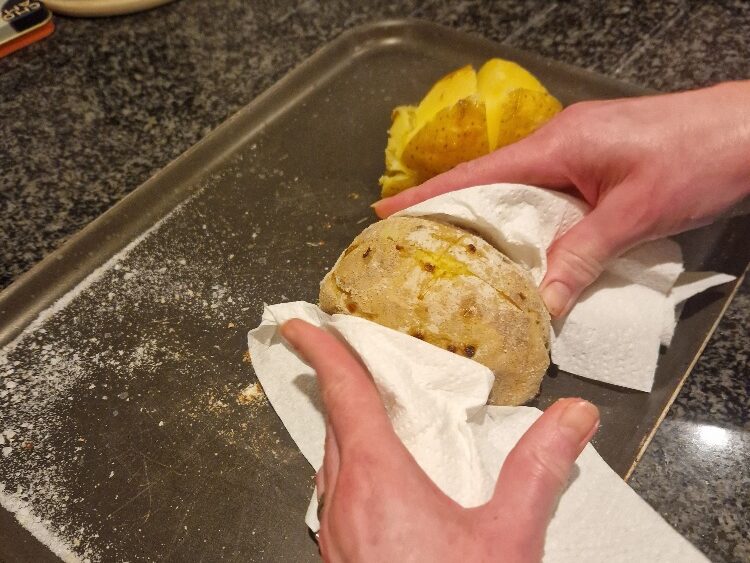
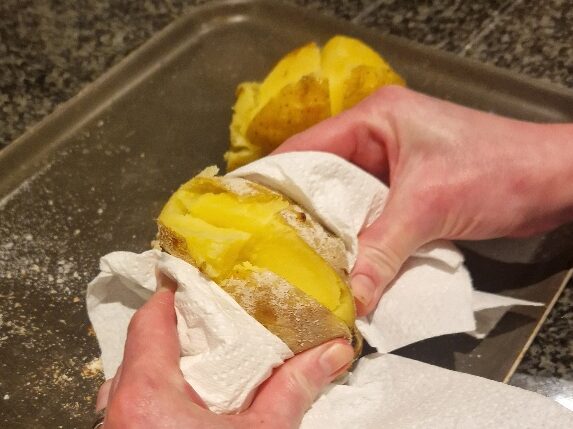
To serve the potatoes, cut a cross shape partly through the skin and into the flesh – one cut along the length, and one across the mid section. Then gently press the sides together so the fluffy flesh pops out and you have a nice, appetising-looking potato to fill or serve as a side.
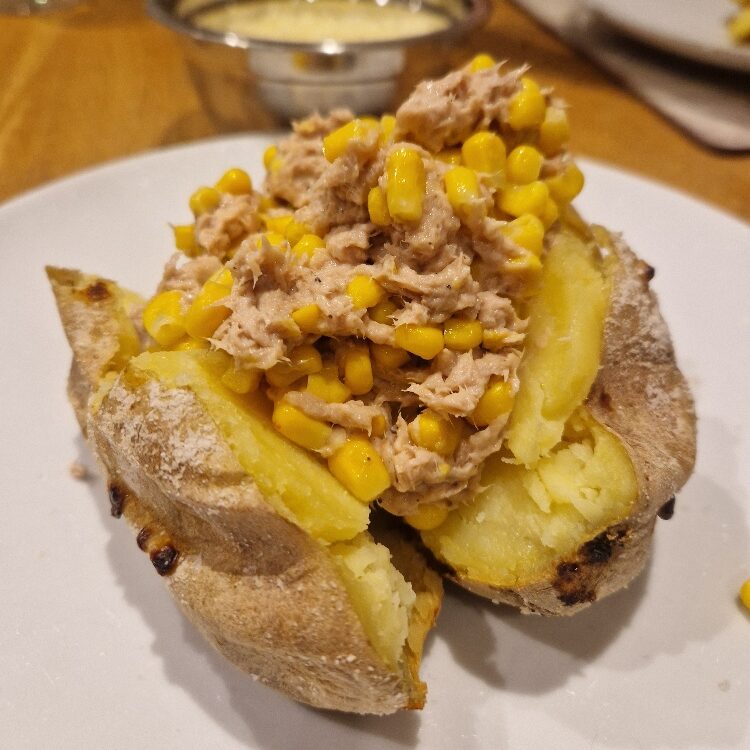
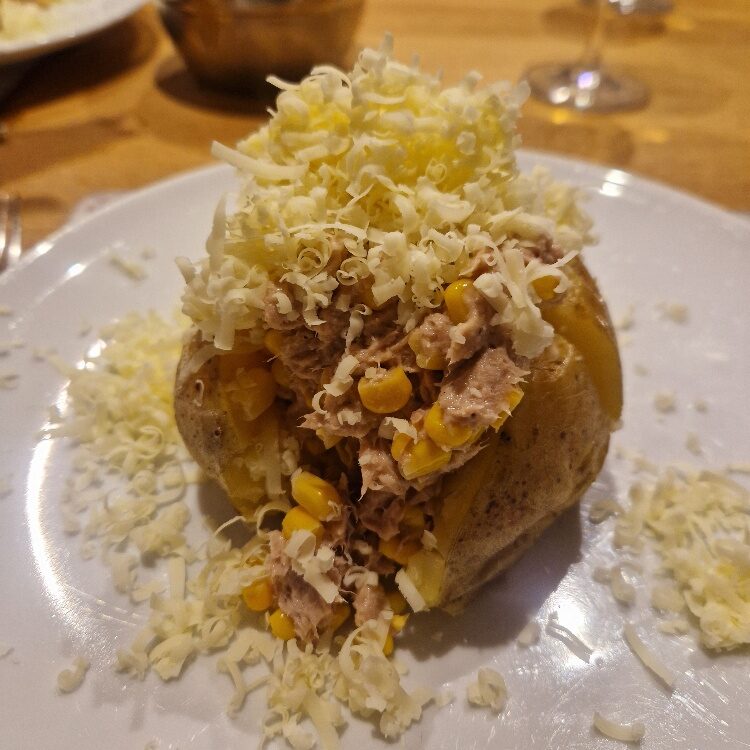
Top with butter or crème fraiche as a side dish, or stuff with your favourite filling. Today we had ours with our go-to potato filling – tuna mayonnaise with sweetcorn and cheddar.
Choose your method and enjoy!
Leave a Reply