


Skills you will learn in this recipe
Chopping chillies; grating ginger; making a dressing; zesting and juicing citrus; prepping spring onions; frying noodles
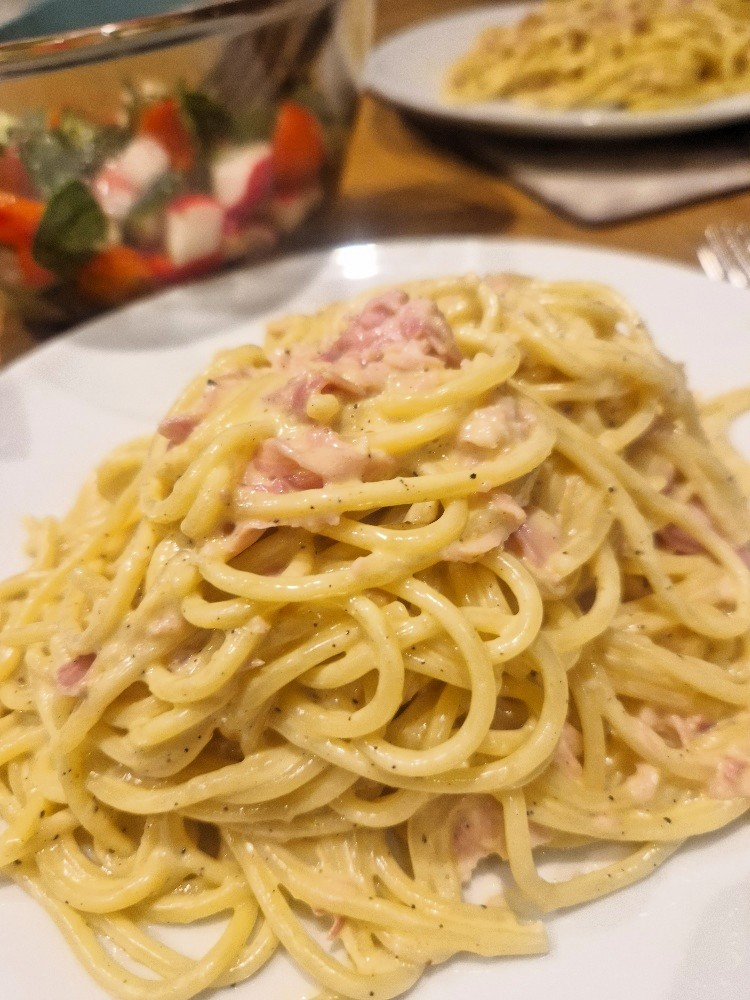
Links to the last recipe
Cooking with mince; chopping herbs; prepping garlic
We’ve only recently started to cook this but it has already become a real family favourite. These chilli beef lettuce wraps are very similar to ones that Bibi and Emily would have at their favourite Chinese restaurant, and that Bibi would sometimes re-create at home. This one isn’t her original recipe, but a spicier one we love.
The crispy noodles are fun to make and easy enough if you follow our steps and tips, particularly to get the oil hot enough, and they add a lovely crunch to the dish. However you could do the wraps without them, or use soft noodles instead, if you don’t fancy working with hot oil. We’d encourage you to give them a try though!
The flavour combinations in the dish are knockout – spicy chilli, savoury soy, zesty lime – and the crunch of the noodles and juiciness of the lettuce work so well with the meat. We use a combination of beef and pork mince, just as we did in the spaghetti Bolognese, but you could do it with just one of the two, or indeed any type of mince you like, including plant-based.
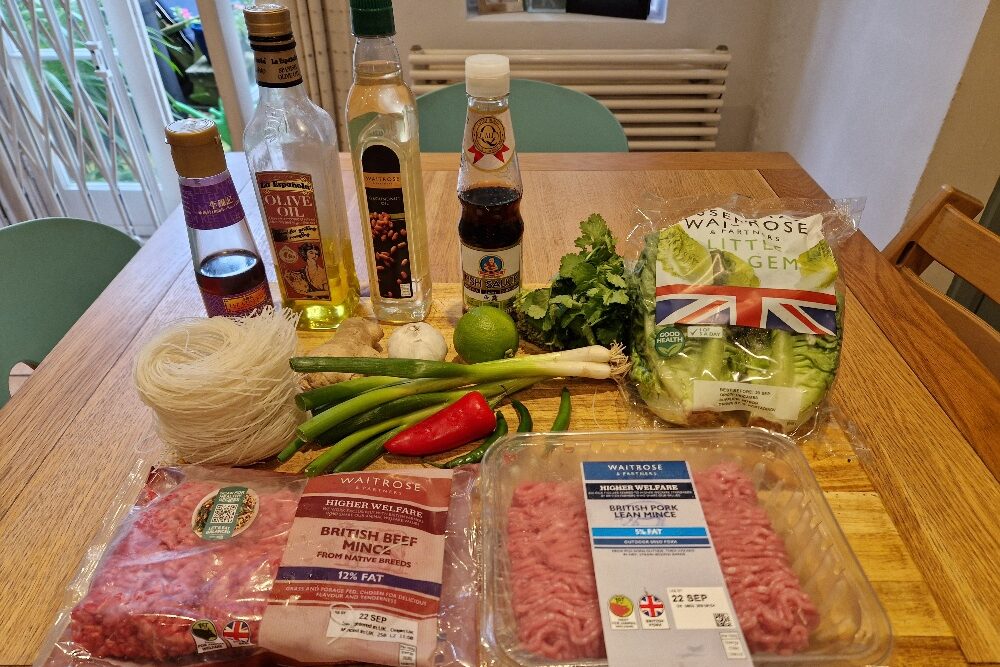
Many of the techniques you’ll learn are ones that we have broken out as specific Tips, which is one of the reasons it comes so early in the series – you’ll reuse many of the skills you’ll learn here in future recipes.
You should start by prepping your key ingredients. Chilli plays an important role in this dish, and the mince should be properly spicy – it should have a lovely, clean heat that is almost addictive. We do like hot food, so today we used a combination of the small but super-hot bird’s eye type (today’s were green, but red are fine too) plus a larger, milder red chilli. If you are worried about adding too much, use a small amount at first, taste your dish, and add more until you like it. As we often say, you can always add more of a flavour, but it is much harder to take it away!
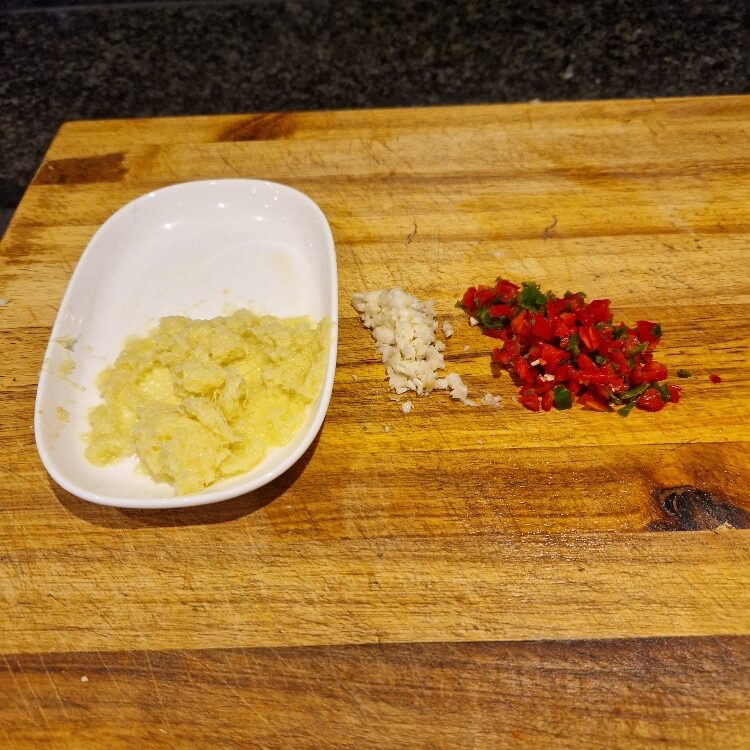
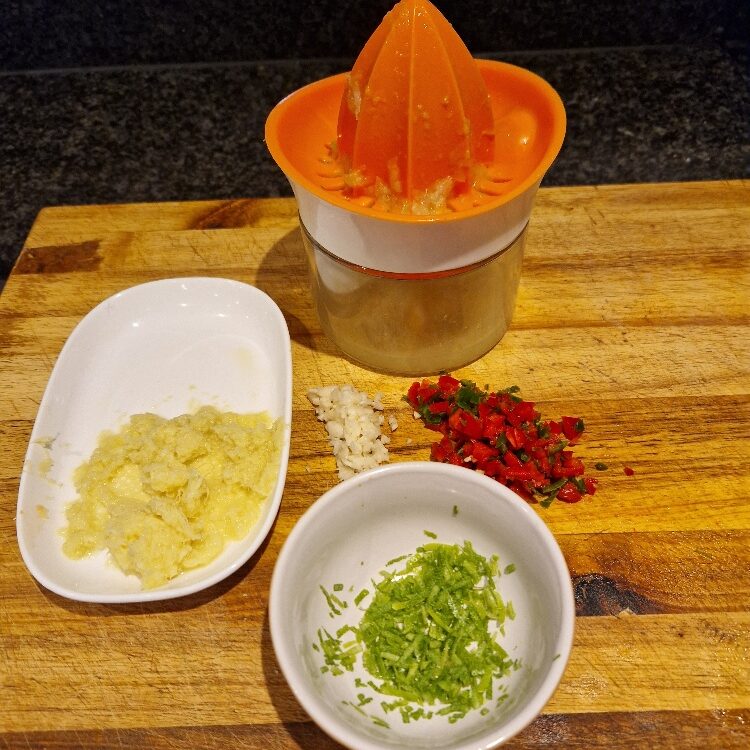
You need to chop your chillies quite fine for this dish, find out how in our chilli Tip. You’ll also need to chop your garlic, as you did for the spaghetti, and you’ll find how in the same Tip. You’ll also need to use about a thumb-sized piece of root ginger, which should be peeled and grated, again you’ll find out how in our ginger Tip. And you’ll need to both zest and juice one lime (if large, two if very small), which is in our citrus Tip, then cut the zest finer. These are all really useful skills and very easy to do. You should end up with the below.

Jake sticks his nose in
Always take care when working with fresh chillies., especially hot ones – the heat can last on your hands. Wash them thoroughly, and don’t touch your face or rub your eyes until your hands are clean. You might want to wear vinyl gloves while chopping.
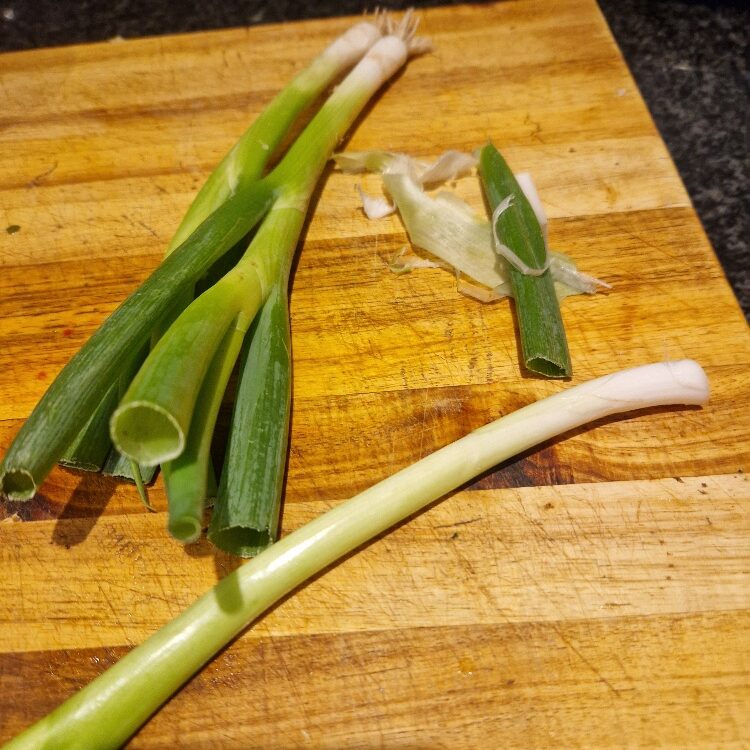
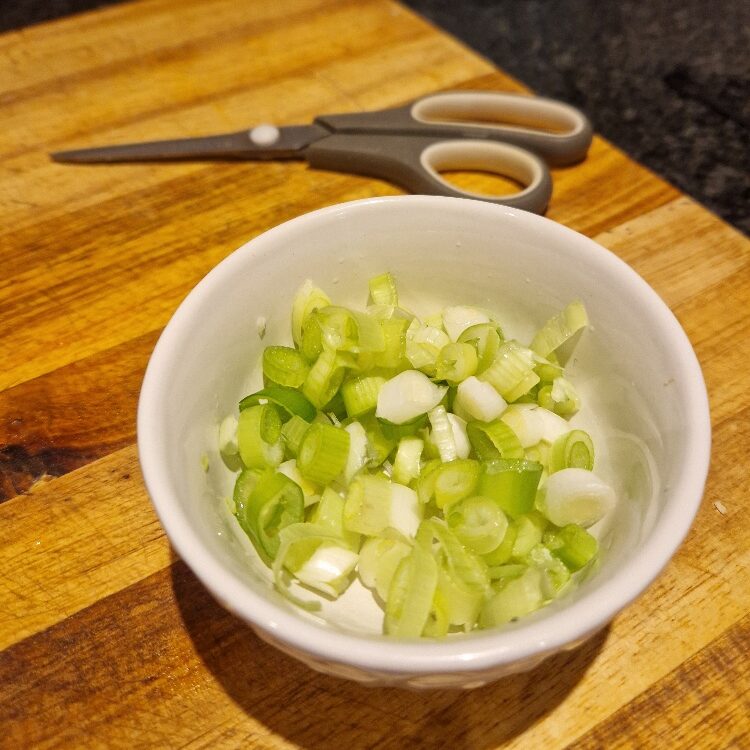
Next, prep the spring onions. To do this, cut off the bushy root end, and remove the outer layer and discard. Now cut the spring onions into quite fine rounds – this is easiest to do with sharp scissors.
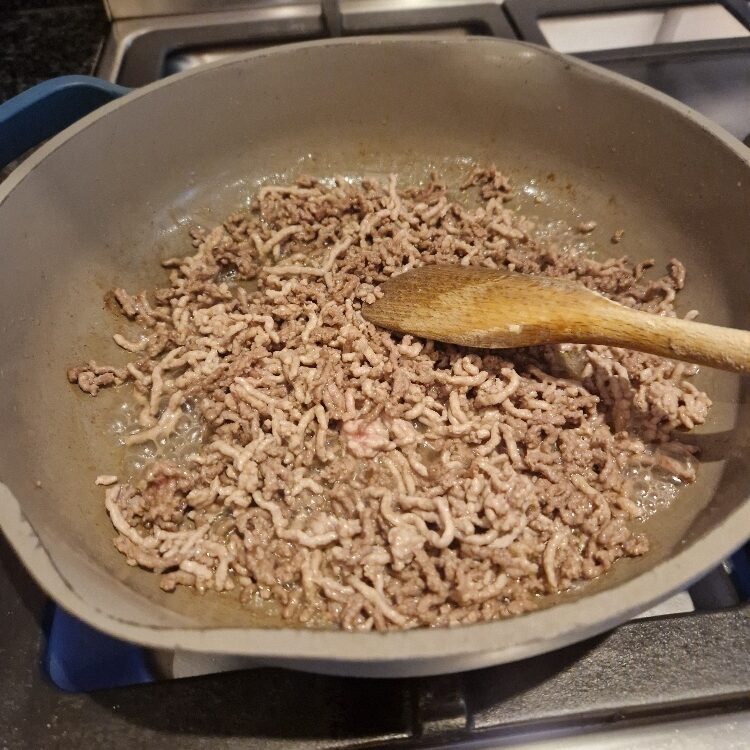
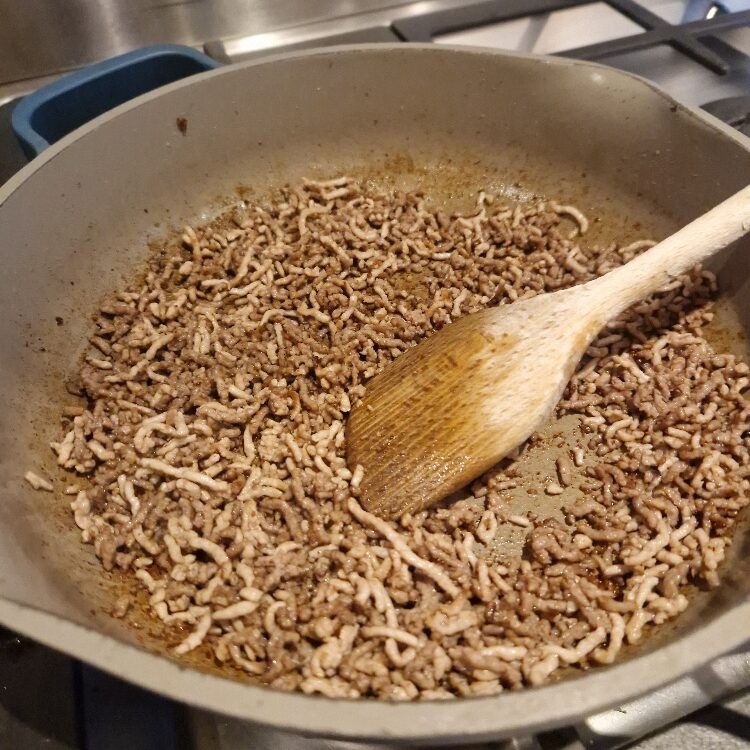
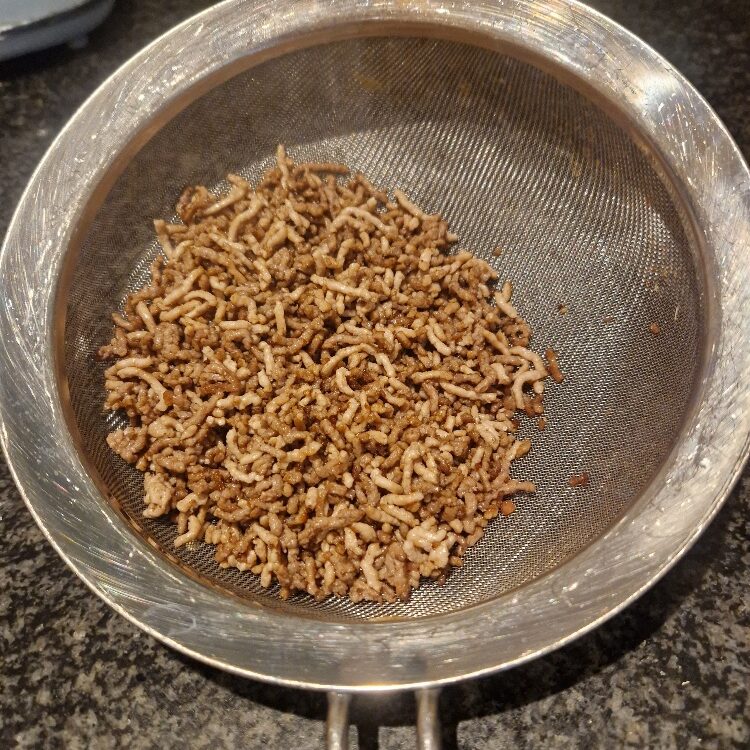
You are now ready to cook the meat. The method for this is very similar to what we did in the spaghetti recipe, but in this dish we want the meat really dry and almost crispy, so we will fry it drier, hotter and longer.
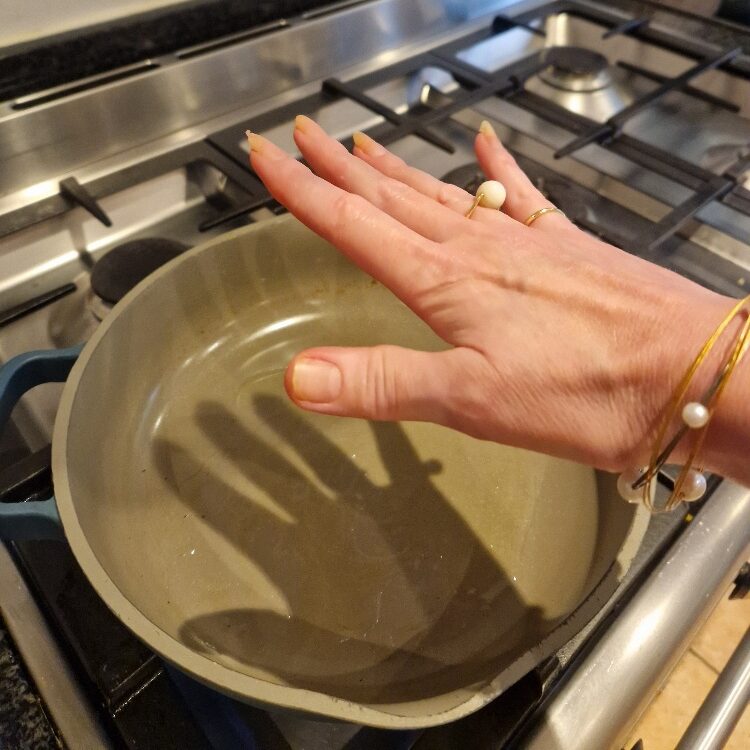
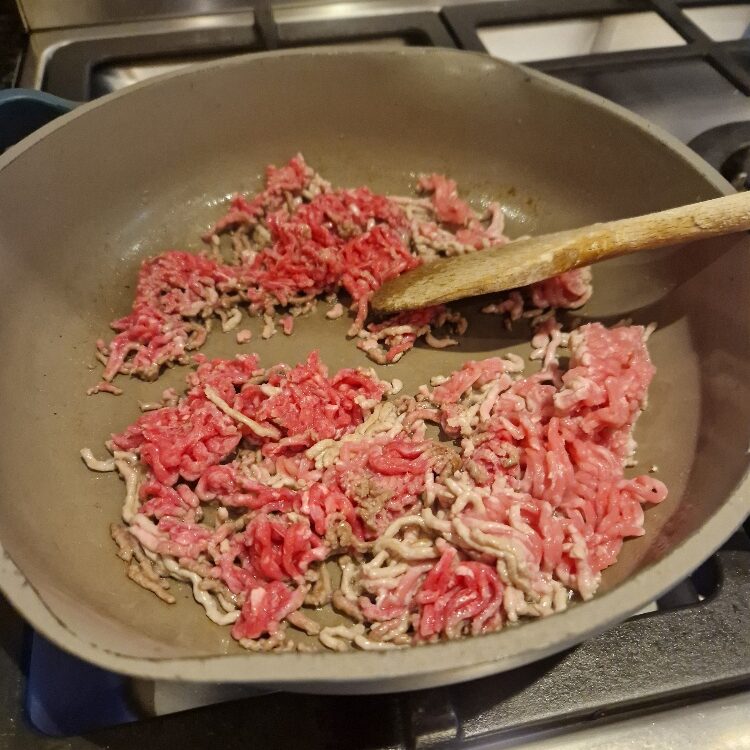
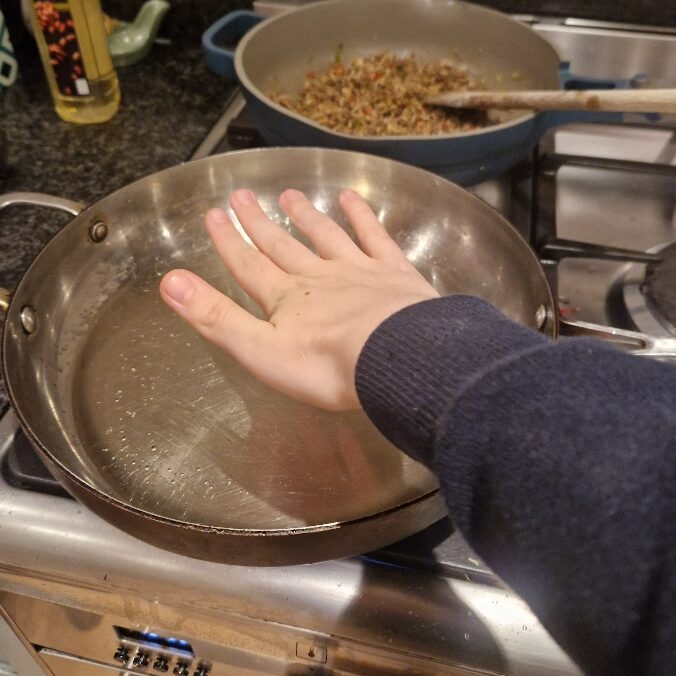
Put a large, preferably non stick, frying pan over a high heat and add a little oil. Test the pan’s heat by holding your had over it – it is hot enough for this dish when you feel you want to move your hand away, and the oil should be sizzling slightly. Add the meat, and keep stirring it until the it is all fully browned and also dry and crumbly looking, as in the final pictures below. This will probably take at least 7 to 8 minutes, possibly a little more. The meat should be slightly crisp. Once it is ready, drain in a sieve to help keep it dry, and set aside until you just before you are ready to serve.
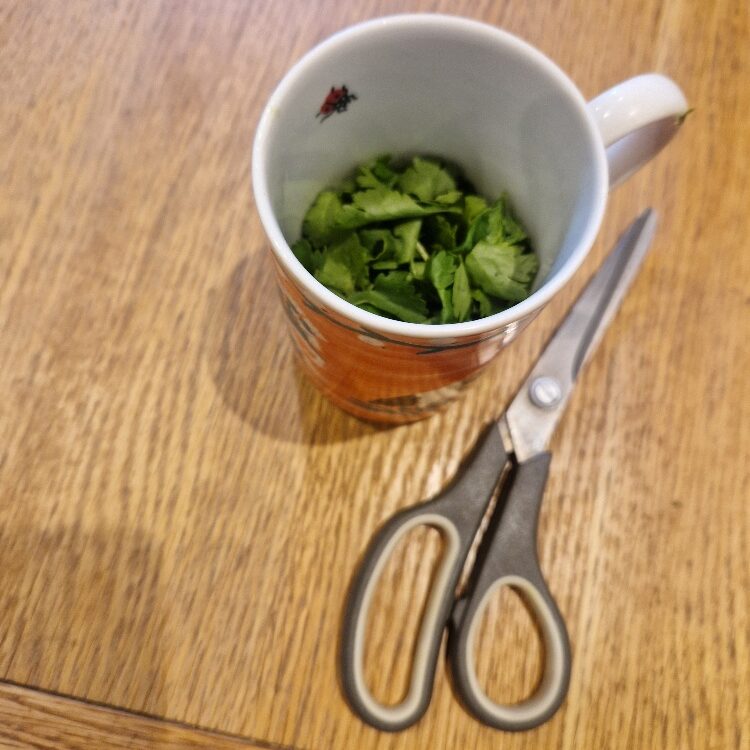
You are now ready to make the dressing. Start by chopping the fresh coriander, just as we did for the parsley in the spaghetti recipe. You can find out how in our herb Tip. You only need a relatively small amount, about a medium handful, and it should be chopped quite fine.
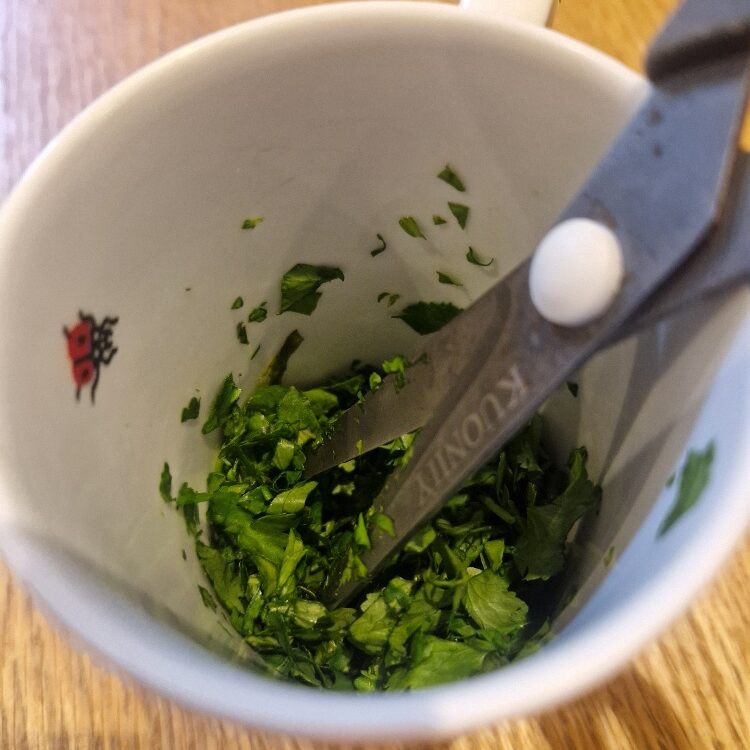
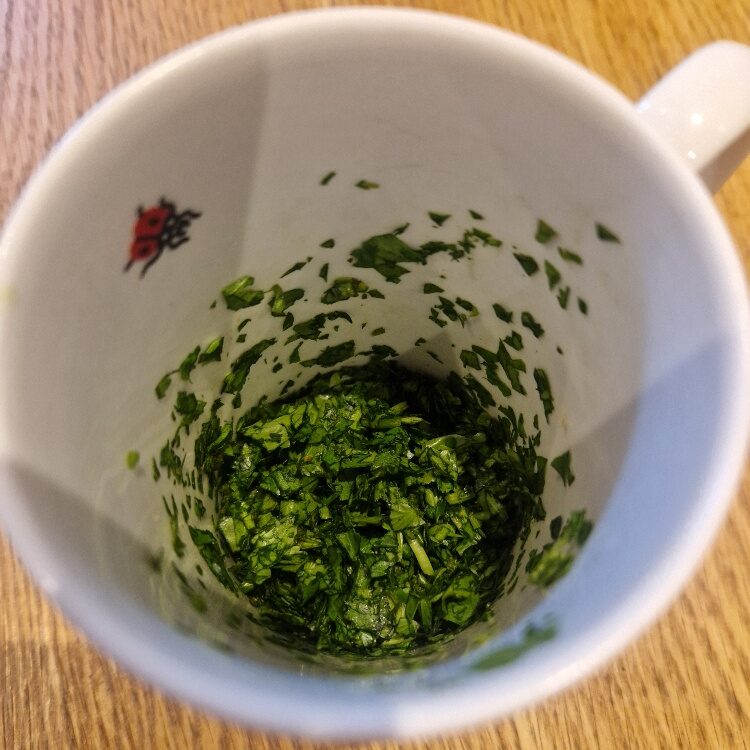
You can now prepare your dressing. For this dish we are making a very simple but very flavoursome dressing with soy, lime, coriander and sesame oil.
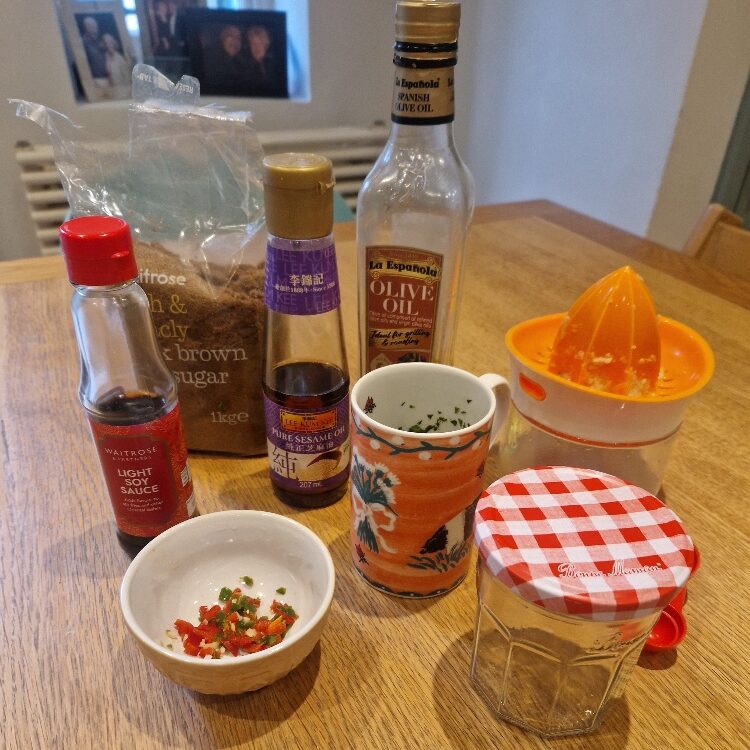
The base of this dressing and the technique are quite similar to our classic vinaigrette, which you’ll meet versions of in later recipes and in our vinaigrette Tip. We find it easiest to make dressings in a clean dry jam jar, but you can do in a small bowl if you don’t have one to hand.
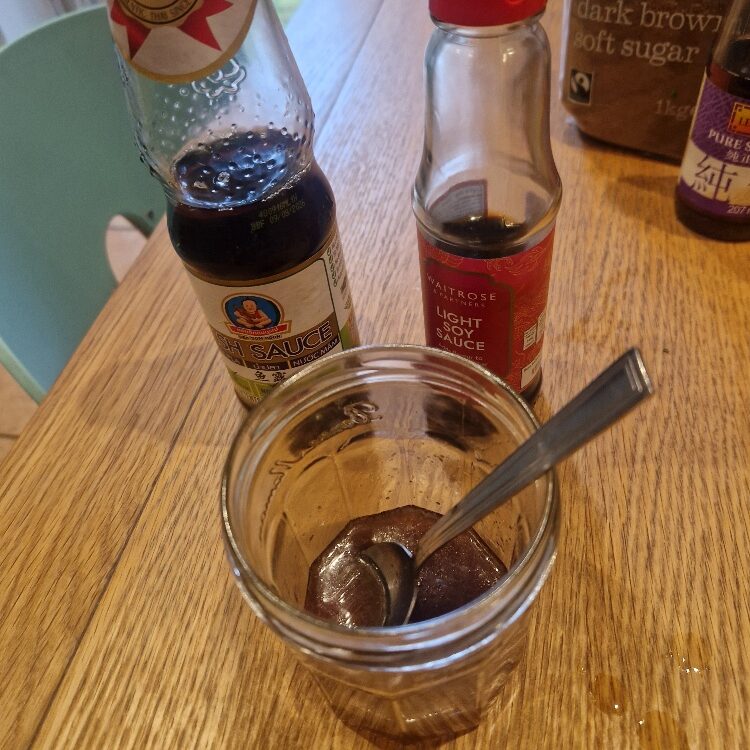
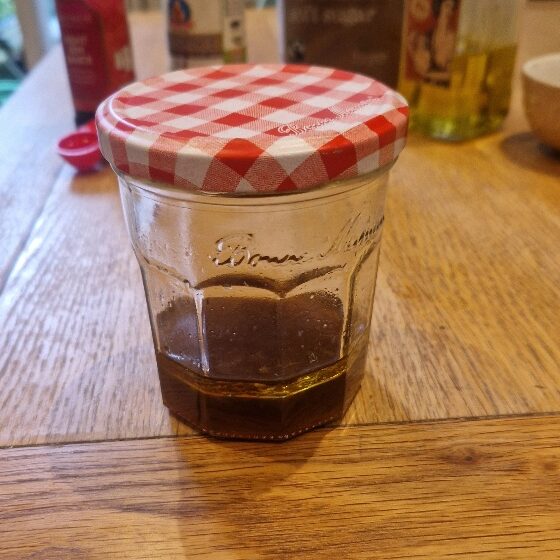
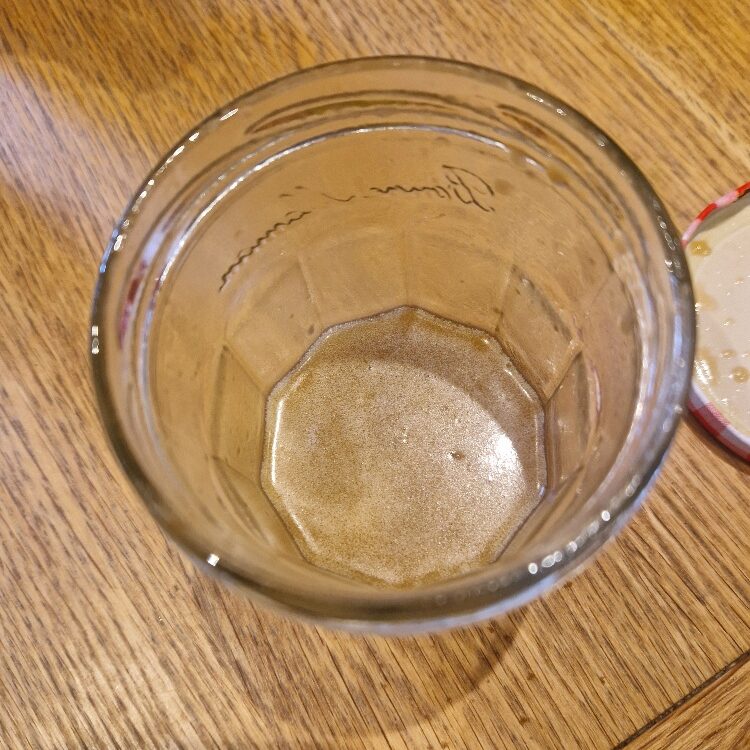
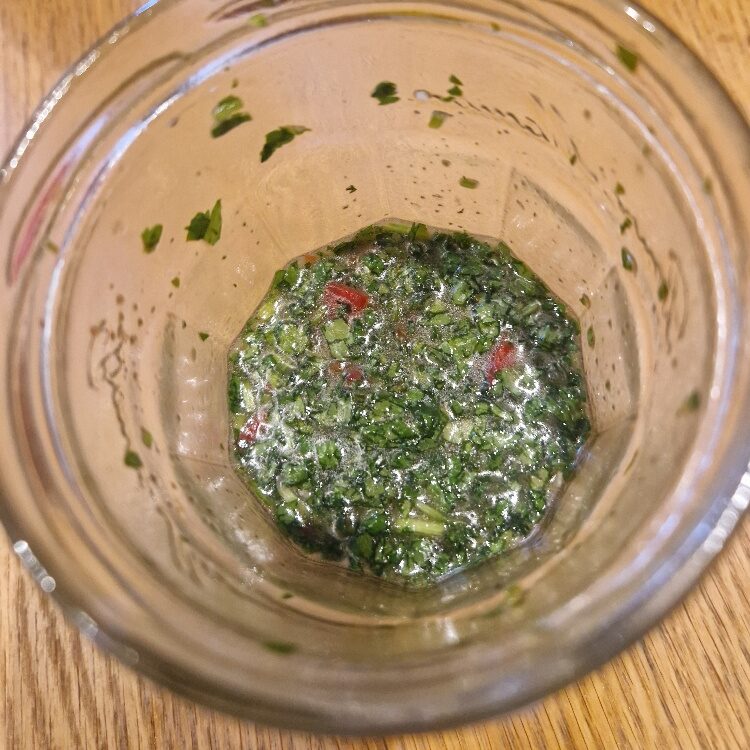
First, add a teaspoon of brown sugar and a generous tablespoon of the lime juice plus a tablespoon of light soy sauce to the jar, and stir with a teaspoon until the sugar is fully dissolved. If you don’t have brown sugar you can use caster or any other sugar, but brown gives the dressing a nice caramelly richness. Add one teaspoon of sesame oil, one tablespoon of olive oil and a teaspoon of fish sauce, put the lid on the jar and shake vigorously until the oil and liquid emulsify – it will look thick and creamy. Add two more generous tablespoons of olive oil, and shake the jar vigorously again until the dressing looks pale and glossy as in the fourth picture below. See more about the basic method in our Tip. If you are making the dressing in a bowl you’ll need to use a small whisk as a substitute for shaking to emulsify.
Stir in the about a teaspoon of the chopped chillies (or to taste), and the coriander. Taste and adjust with any of the flavours – lime, soy, fish sauce, sugar etc until you like it. Your dressing is ready!

Jake sticks his nose in
Both fish sauce and sesame oil have very strong, distinctive flavours, and a little goes a long way, especially the oil. Don’t add too much or they will overpower your dish.
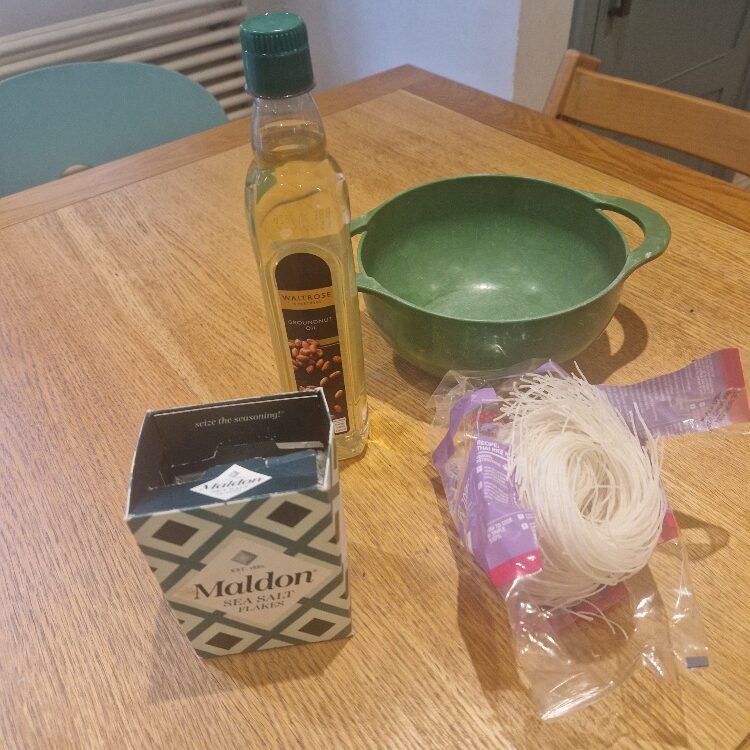
You can now prepare the noodles. The noodles you need for this are the dried thin rice noodles, also known as vermicelli noodles. You can sometimes find packets of straight folded ones, which are slightly easier to work with for this dish, but most often you’ll find them as nests like ours were today. You’ll also need an oil for frying that heats up well – we find groundnut works very well, and has a nice neutral flavour.
Jake sticks his nose in
You can use many oils for hot frying, but don’t use olive as this is better for dressings and lower heat frying, and is generally more expensive. Other good oils for hot or deep frying are rapeseed, grapeseed or sunflower.
Whichever shape of rice noodles you have, you’ll need to pull them apart and break into long strands, as below.
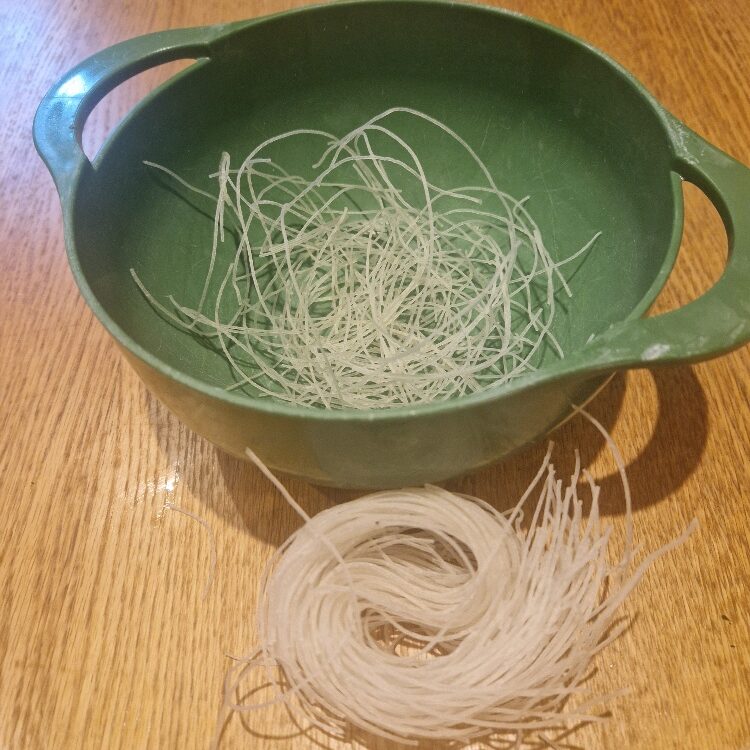
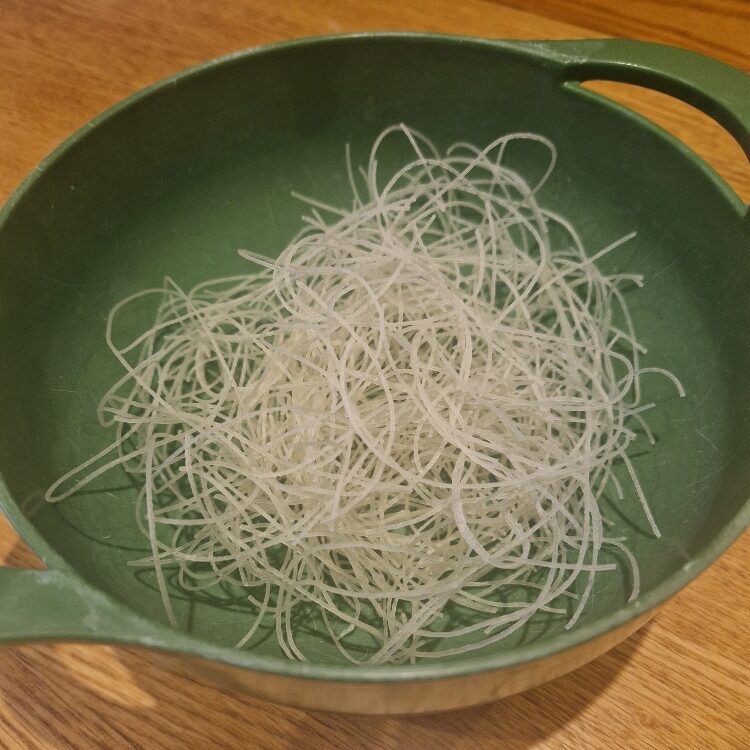
You won’t need many noodles for this dish as even one nest will puff up to make a lot of crispy noodles. But we tend to cook the whole nest, as the leftover crispy noodles make a great snack if sprinkled with a little salt.
First, set a deep frying pan over a high heat and add a generous slug of groundnut oil, today we used about 3/4 cup of oil for our size of pan – if yours is larger or smaller you’ll need to adjust. You need a definite pool of oil into which to submerge your noodles.
The key to getting the noodles to puff up and crisp is oil that is hot enough. Keep testing with your hand until you think the oil is really hot (it may also smoke slightly when ready) and then you are ready to do a noodle test.
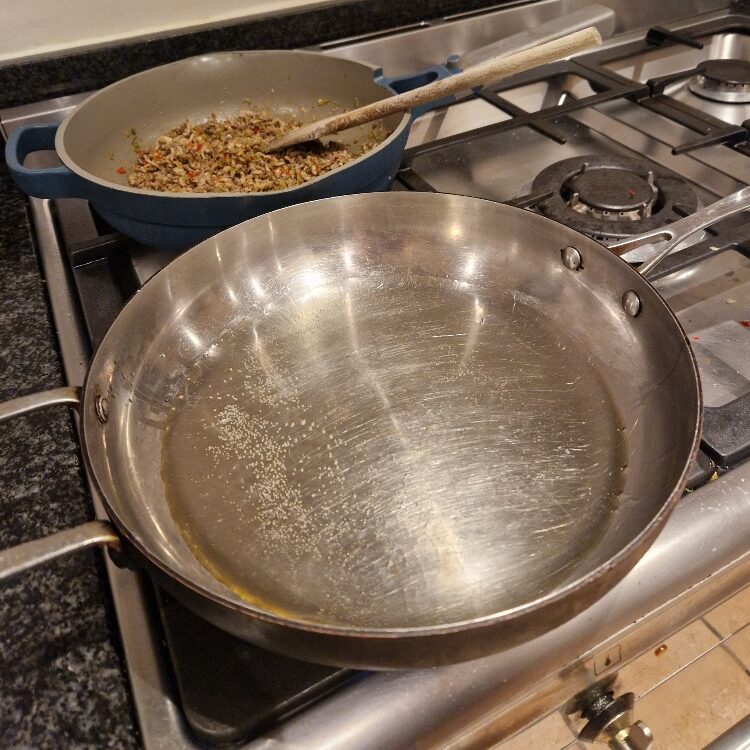
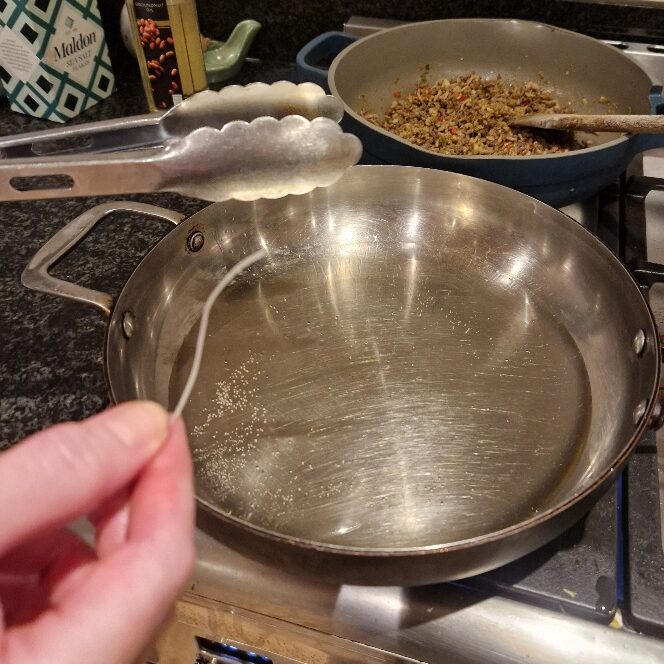
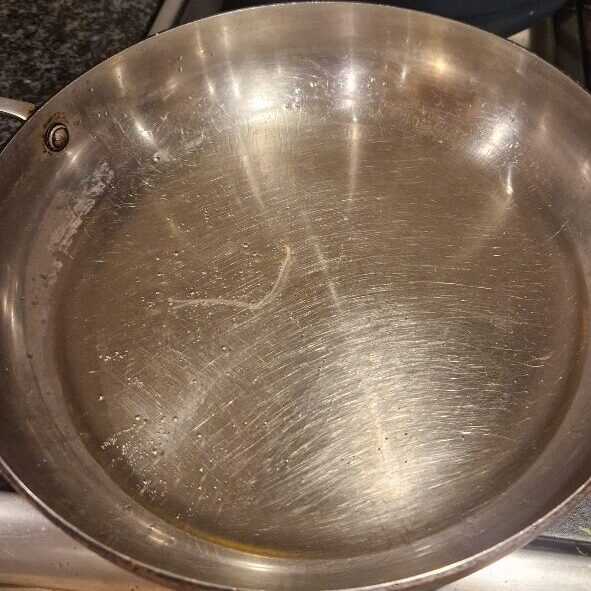
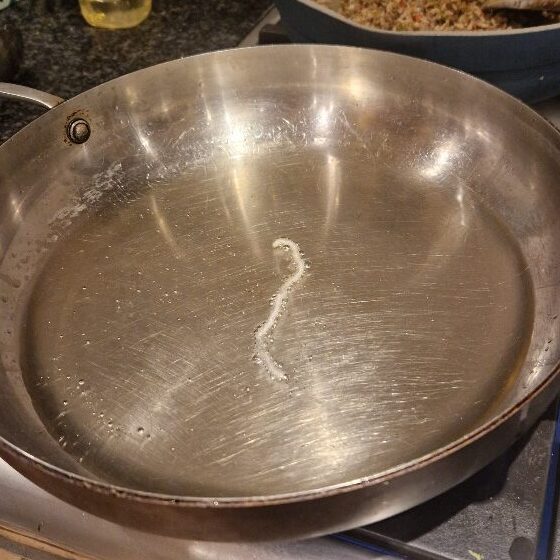
To test if the oil is hot enough, take one strand of noodle and put it into the oil – you can either use one long noodle, and hold onto one end as you test, or break off a smaller piece and drop into the pan. If the oil is hot enough, as soon as the noodle touches the oil it will immediately ‘bloom’ and puff up. If this doesn’t happen, remove the noodle and discard. Wait a little longer for the pan to heat and then test again. A none puffed noodle (oil not hot enough) is on the left, a puffy one is on the right:
You are now ready to fry! You’ll be frying in batches so have some tongs handy, and also a plate covered in kitchen towel to keep the fried noodles on and soak up any excess oil. Place a handful of noodles into the pan, they should start to puff immediately, and then turn them at least once with the tongs so all parts of the noodles have touched the oil – we tend to just keep them moving. When all (or most) of the noodles have puffed up, and before they start to brown, remove from the heat to drain on the kitchen towel. Repeat until all your noodles are fried.
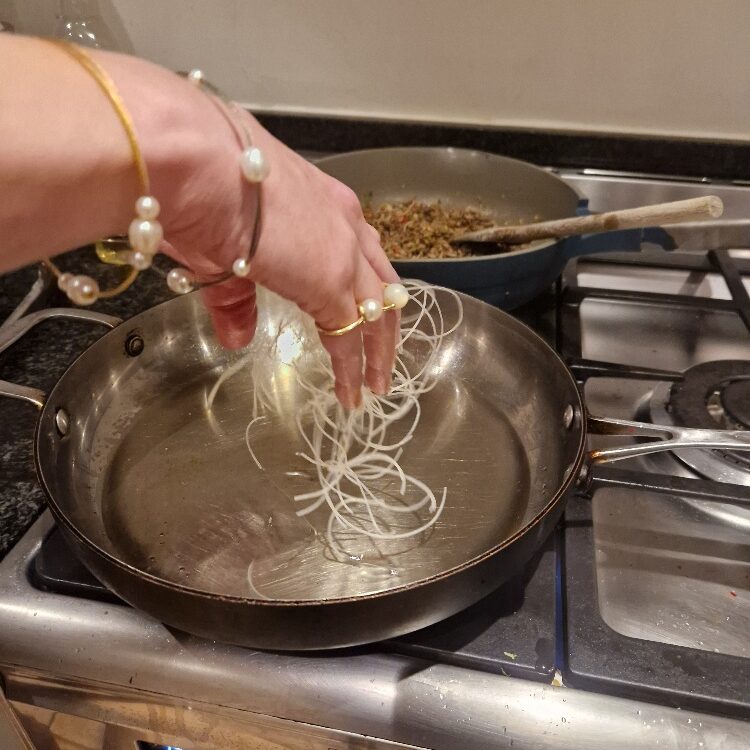
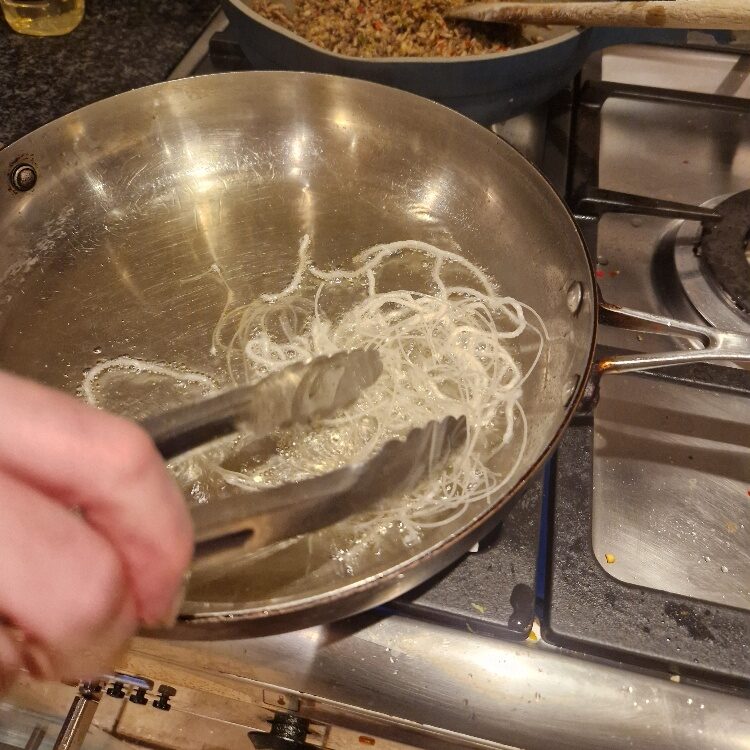
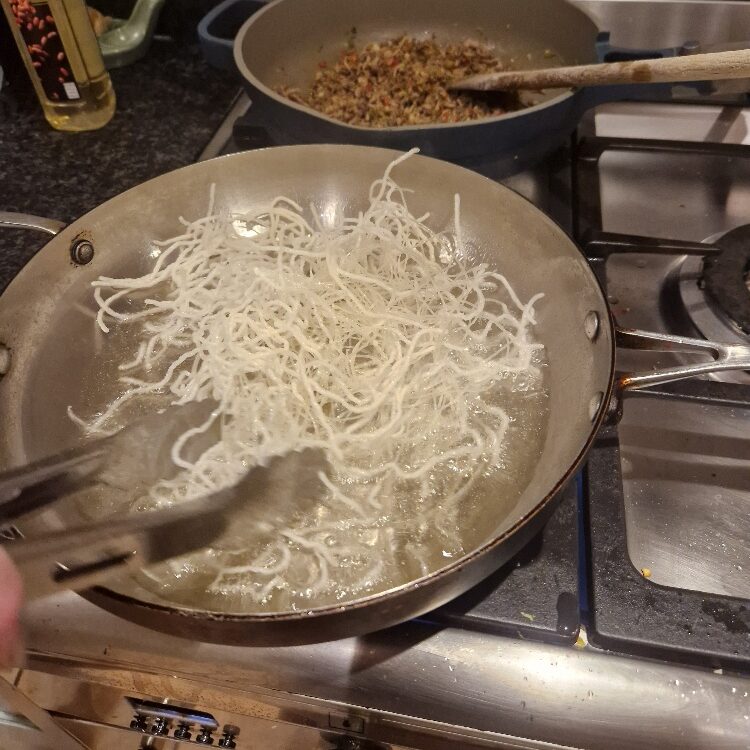
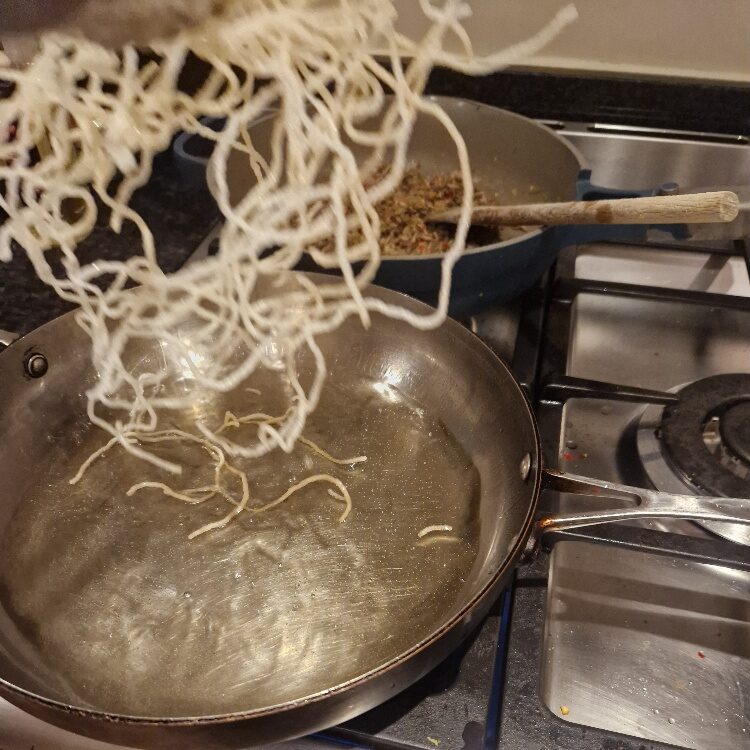
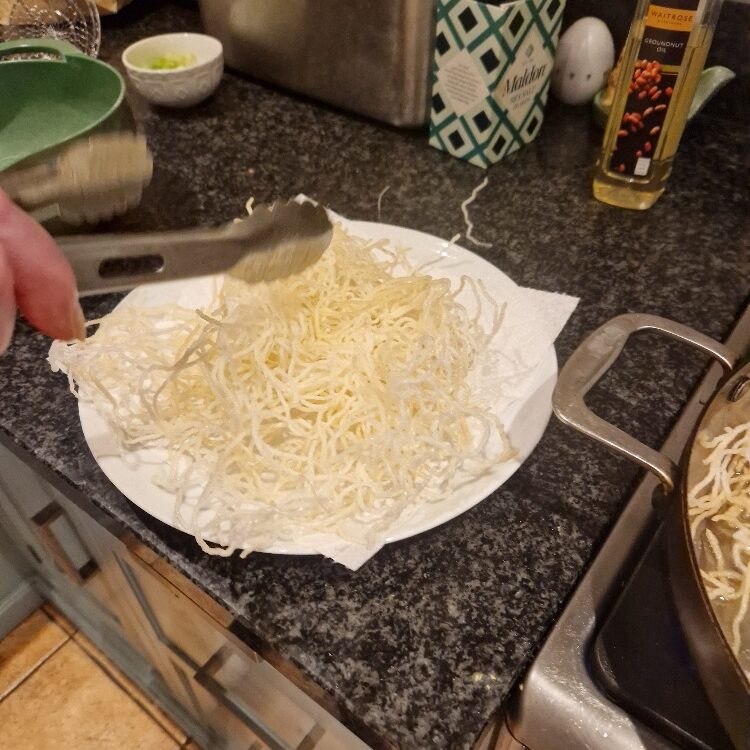
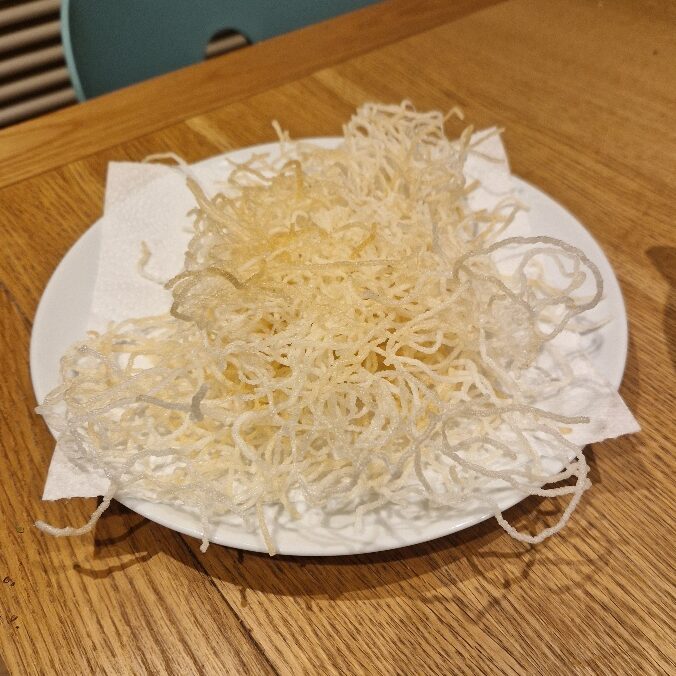
Don’t worry if not all your noodles puff up completely, or if some of them are a bit brown – both these things very often happen and did to us today! You’ll have plenty, so you can discard any that are not properly puffed, or are too brown or burnt (pale brown or golden ones should be fine).
Next prep your lettuce. You’ll want to cut the bottoms off and separate into leaves. Any crisp lettuce will work, but today we used little gem. Romaine or cos would also work, and iceberg is very traditional for Chinese wraps, but the leaves are harder to separate. Reserve in a bowl until you are ready to serve.
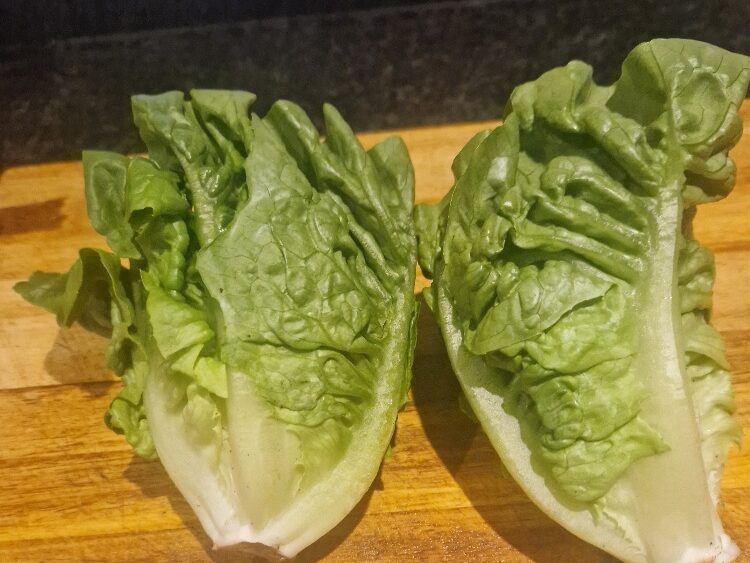

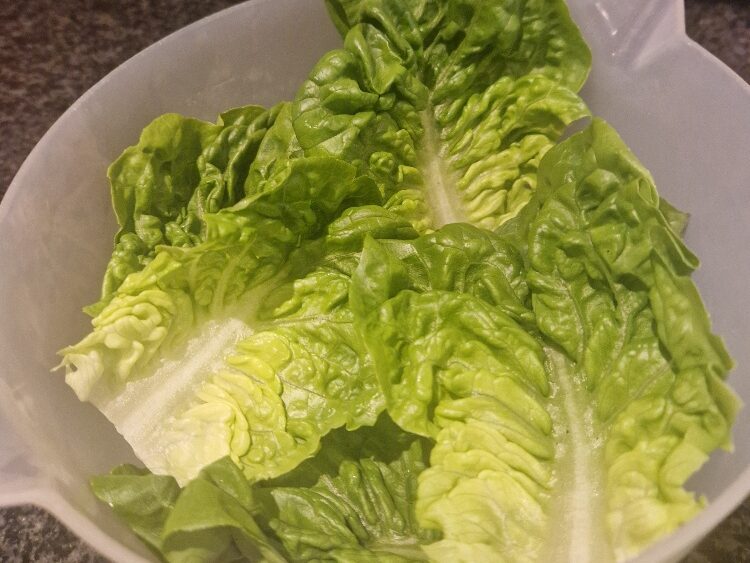
You are now ready to finish frying your meat, and then serve for everyone to create their own wraps.
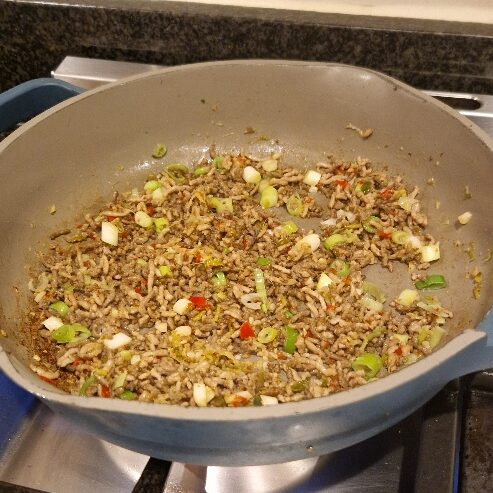
First place your frying pan over a medium heat and add a little oil (about one tablespoon will do). When the oil is warm, add the garlic, ginger and the rest of the chillies and fry until slightly softened and their scent rises, about two minutes. Add a pinch of salt and a little brown sugar (a teaspoon or so), then raise the heat slightly and add the meat, stirring to combine. Once the meat is heated through, add a splash of fish sauce (don’t add more than about a tablespoon, add less first and taste if unsure), the chopped lime zest, and a splash of lime juice. Stir to heat through and combine, then taste and adjust any seasonings, or add more lime juice, as needed. Then add the chopped spring onions and cook, stirring, for about another minute. You are ready to serve.
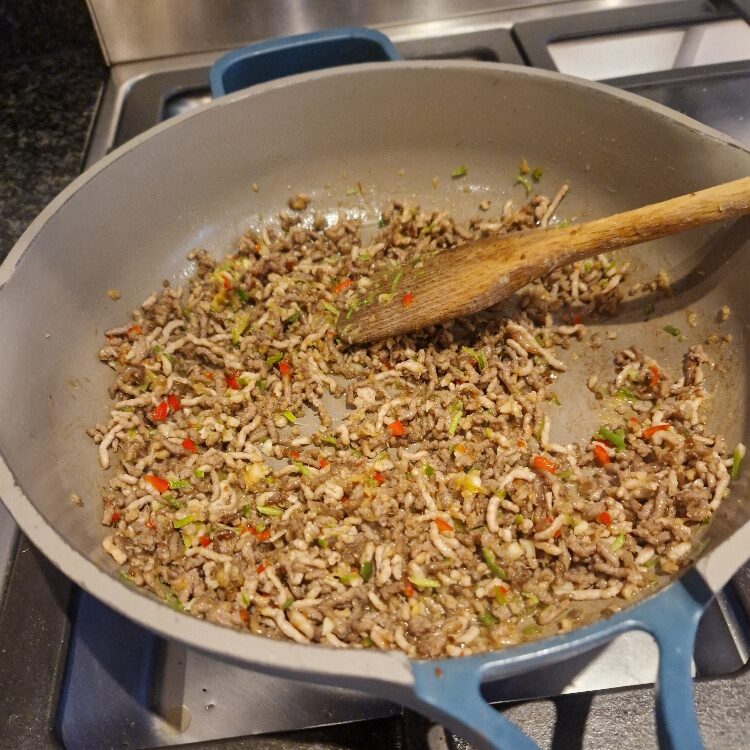
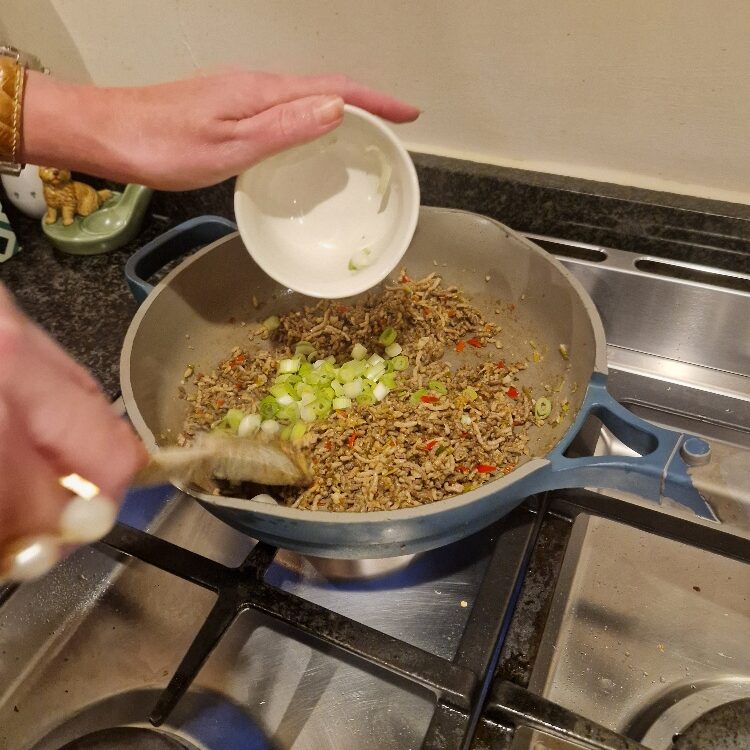
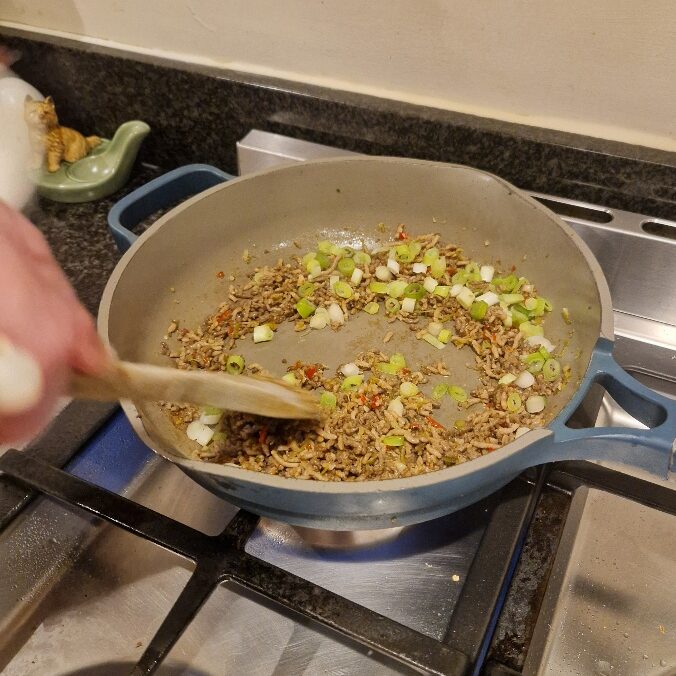
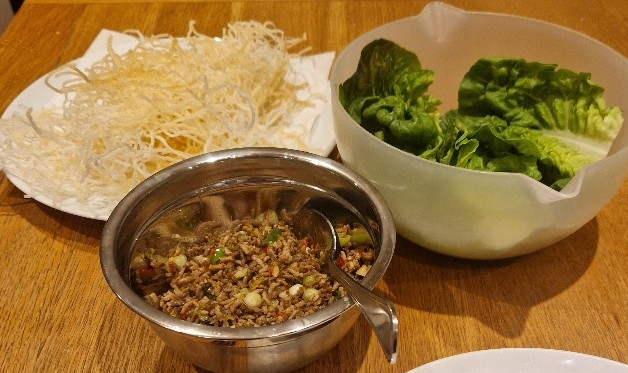
To serve, place the mince into a serving bowl, preferably a warmed one, and place on the table with the bowl of lettuce leaves, the plate of noodles and the dressing for everyone to serve themselves.
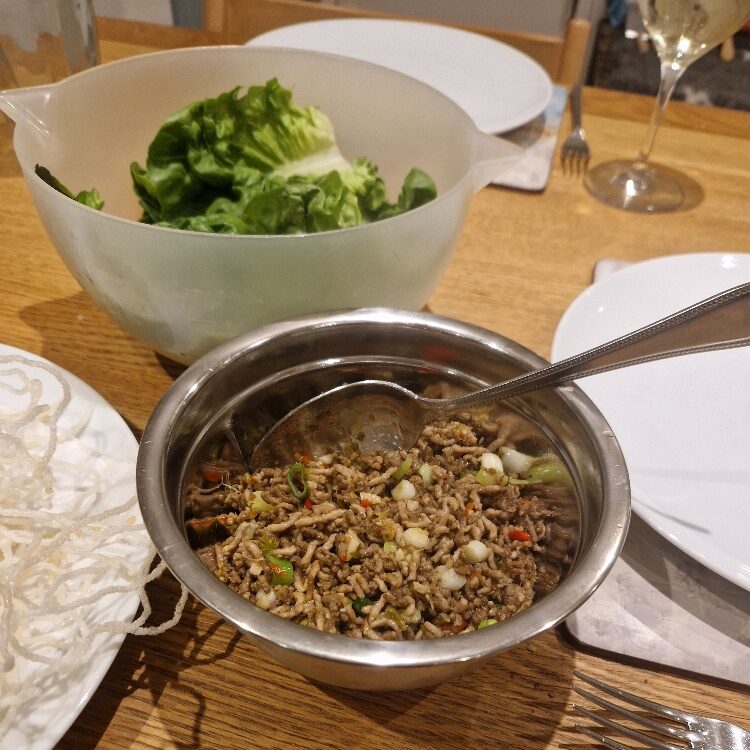
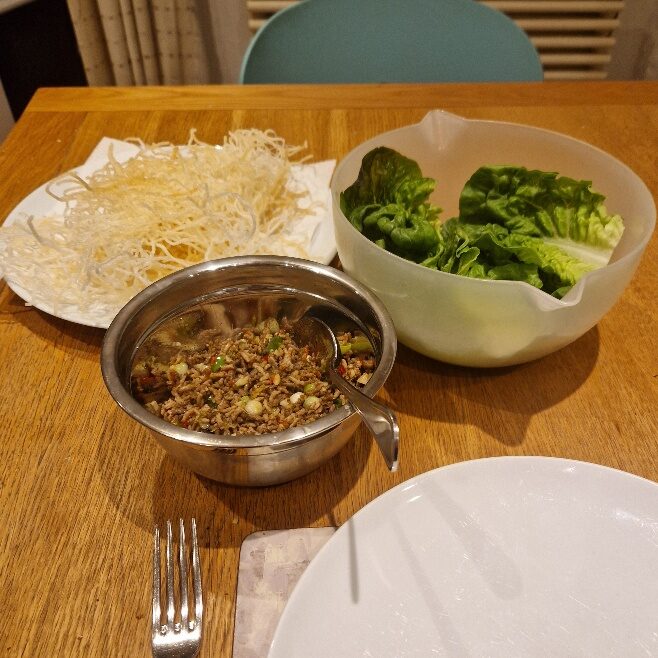
Jake sticks his nose in
You can warm plates and serving bowls in a low oven, but a quick way is to rinse them with very hot or boiling water. Use a tea towel or gloves when moving them if hot.
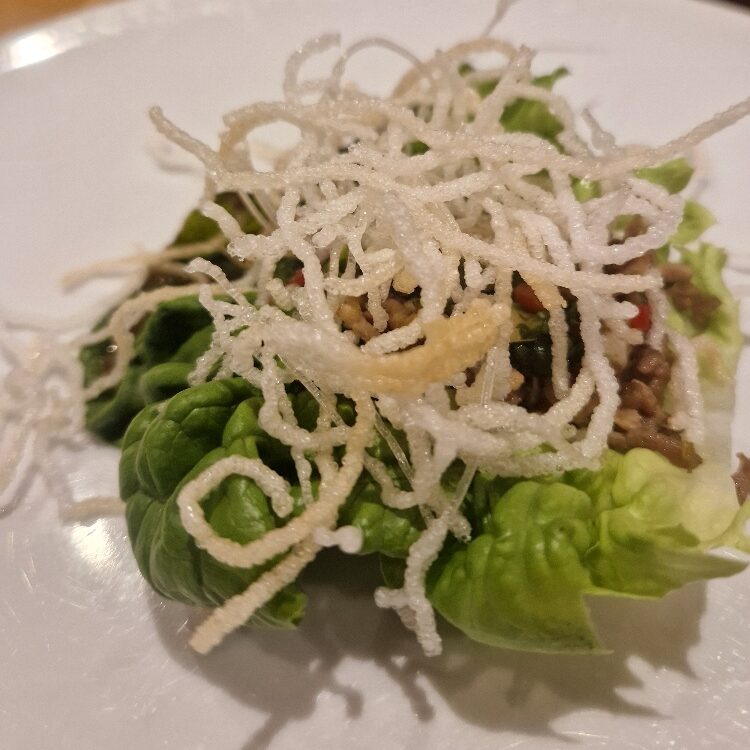
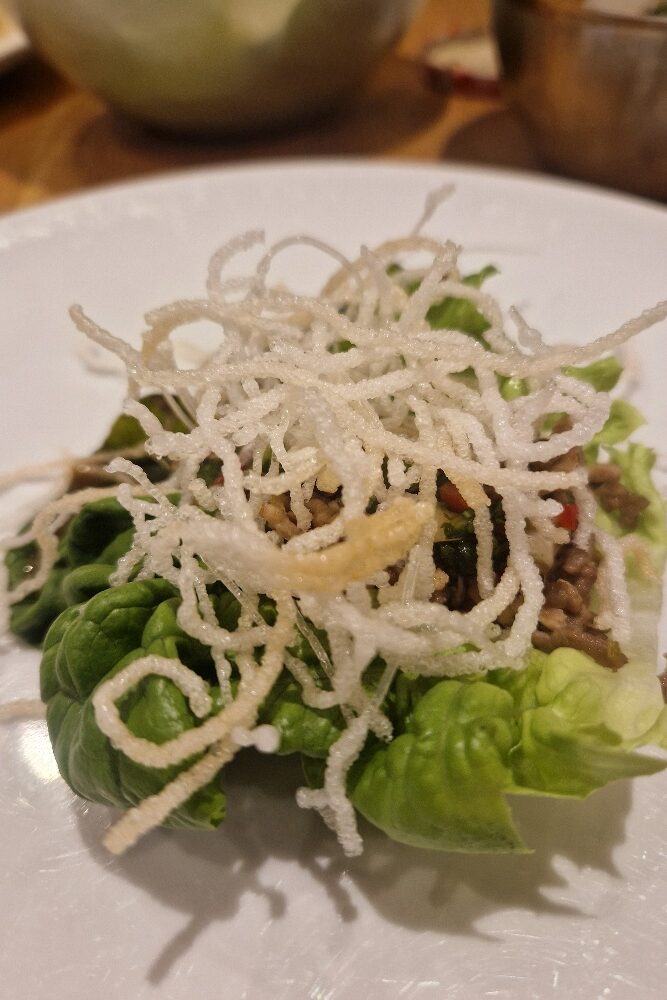
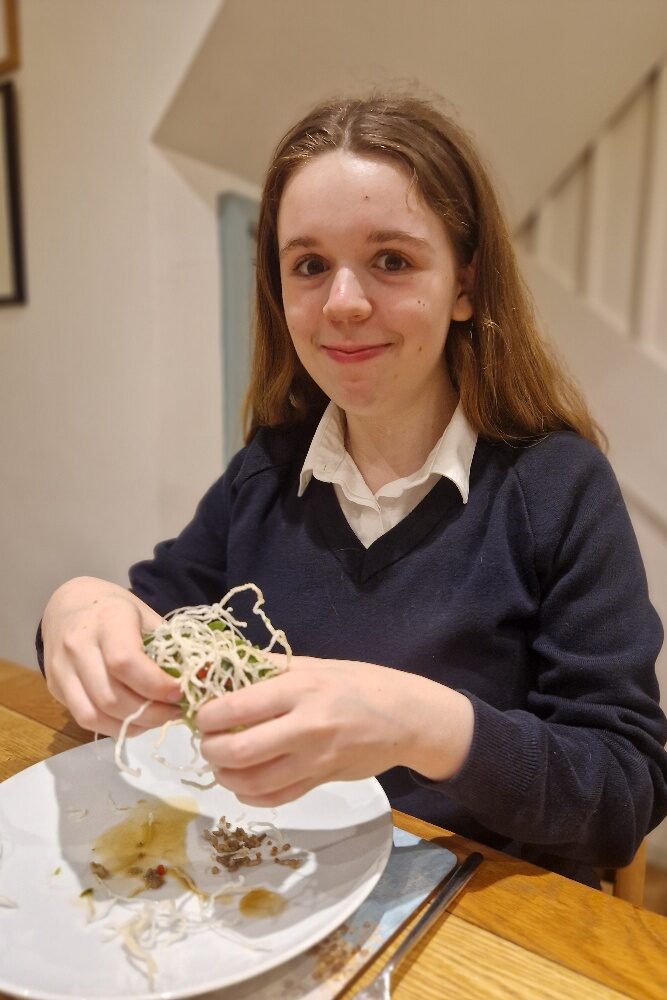
To assemble the wraps, place a lettuce leaf on your plate, and top with some of the mince. Add a little of the dressing, then top with the crispy noodles. Roll up, eat and repeat!
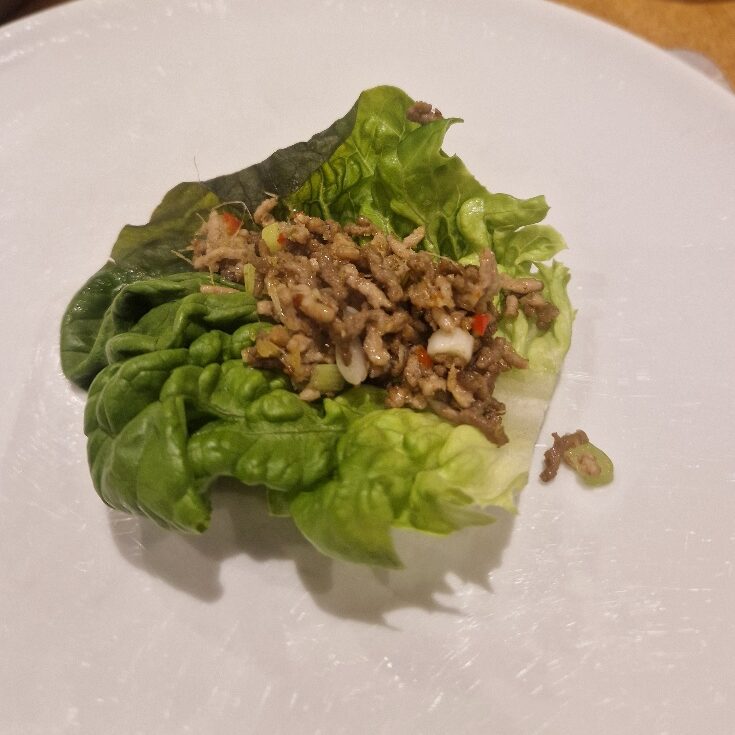
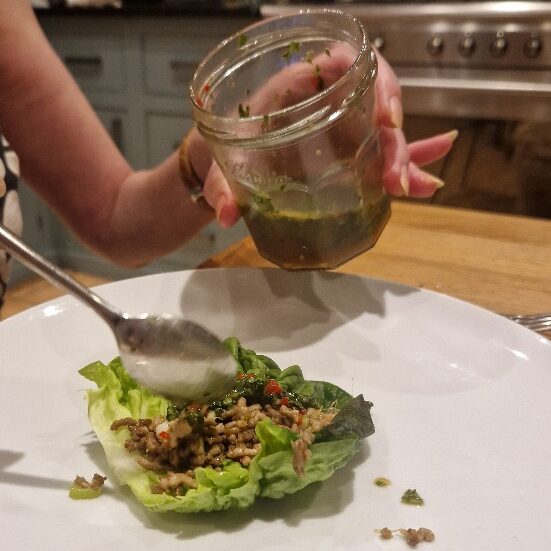
Enjoy!
Chilli Beef, Crispy Noodle & Lettuce Wraps
Ingredients
Equipment
Method
- First prepare your key ingredients. Chop the chillies, including the one for the dressing; also chop the garlic. See our garlic & chilli Tip. Peel and grate the ginger. See our ginger Tip. Zest and juice the lime(s), then cut the zest smaller. See our citrus Tip. Cut the spring onions into small rounds.
- Add a little oil to a frying pan and fry both meats together over a high heat. Keep stirring until the meat is fully brown and looks dry and crumbly, at least 7 to 8 minutes. Drain the mince in a sieve, and set to one side.
- Next prepare the dressing. Chop the coriander. See our herb Tip. Add the brown sugar, soy sauce and one generous tablespoon of the lime juice to a clean jam jar and stir until the sugar dissolves. Set the remaining lime juice aside. Add the sesame oil, fish sauce and one tablespoon of the olive oil to the jar and shake vigorously until emulsified. Add two more good tablespoons of the oil and shake again. See our dressing Tip. Stir in the coriander and about a teaspoon of the chopped chillies, setting the rest aside. Taste and adjust with any of the flavourings until liked.
- Now fry the noodles. Add the groundnut oil to a deep frying pan or wok, and heat to a very high temperature. Test the oil with a piece of noodle – if the oil is hot enough, it will immediately puff up. If it doesn't, remove the test noodle, heat the oil for longer and test again until the test noodle puffs. Fry the noodles in batches, turning with tongs, until crisp and puffed, a few seconds, and remove to a plate covered with kitchen towel once done, Reserve.
- Cut the bottom of the stem from the lettuce, and separate into leaves. Reserve in a serving bowl.
- Place a frying pan over a medium heat and add the chillies, garlic and ginger until slightly softened, about 2 minutes. Add the sugar and a pinch of salt, then raise the heat slightly and add the cooked mince. Stir and heat through, then add the fish sauce, a generous splash of lime juice and the zest, and stir. Taste, and adjust seasonings. Add the spring onions and cook for a minute or so. You are ready to serve.
- To serve, place a lettuce leaf on your plate and top with a little of the mince mixture. Spoon over a little dressing, then top with some crispy noodles. Roll up the lettuce wrap and enjoy!