

A classic white sauce – or béchamel – is a very useful thing. It’s the sauce you use in lasagne, and also the base for cheese sauce, as we use in our Macaroni Cheese, see our recipe here. You can also turn it into parsley sauce or mustard sauce, or make it into a rich cream sauce. Or indeed flavour it up any way you want!
The method below is simple, but requires some patience, diligence and a little technique. It’s also the same method you’d use to make any roux-based sauce, for example a velouté sauce made with stock which we often do with chicken or fish. Or a wine-based sauce. Or indeed a classic gravy!
Starting the white sauce
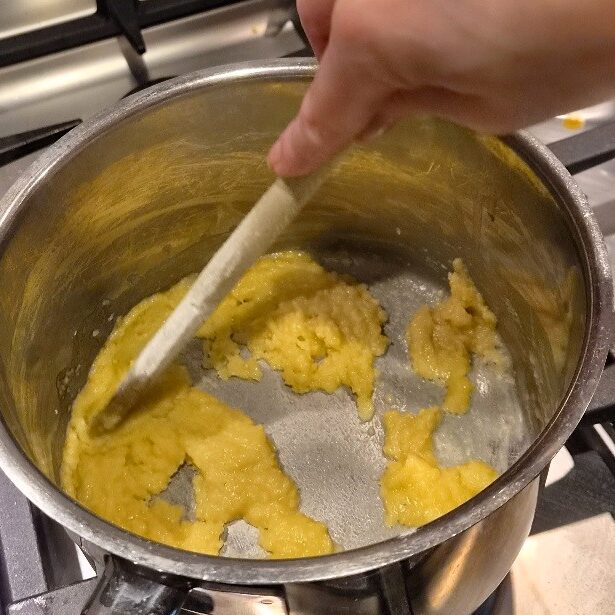
You need to start the white sauce by making a roux. See our Roux Tip for details on how to do this here. For a classic béchamel you ideally want a white roux. For a cheese sauce, you can use either a white or blond roux – find out more on how to make both in our Roux Tip.
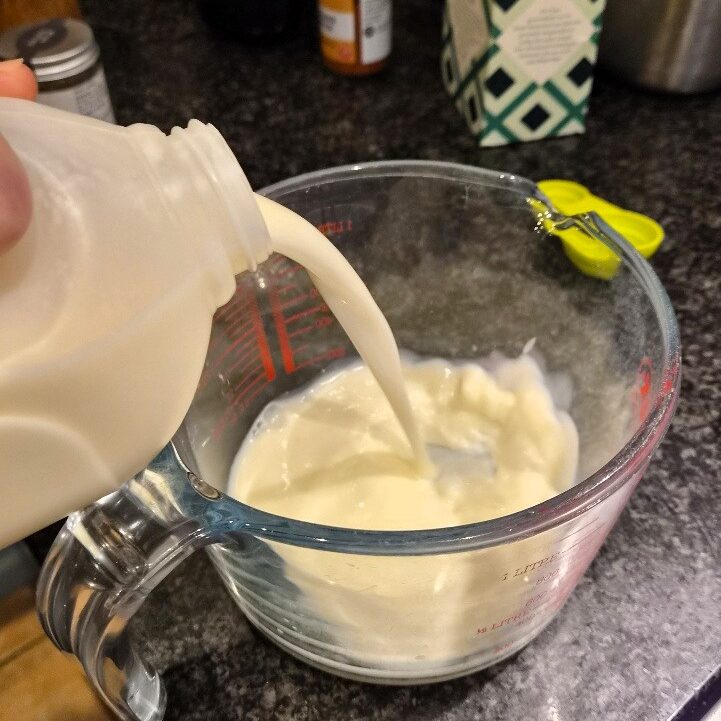
If you have made your roux ahead, you will need to warm it up slightly over a low heat before you start making your sauce. It is also easier to make any roux-based sauce with a liquid that is warm or at room temperature. This helps avoid lumps – the enemy of white sauce! A white sauce is made with milk, so get your milk out of the fridge about half an hour before you are ready to make your sauce. Today we used a slightly blond 50g butter & 50g flour roux, with 850ml (1 1/2 pints) milk.
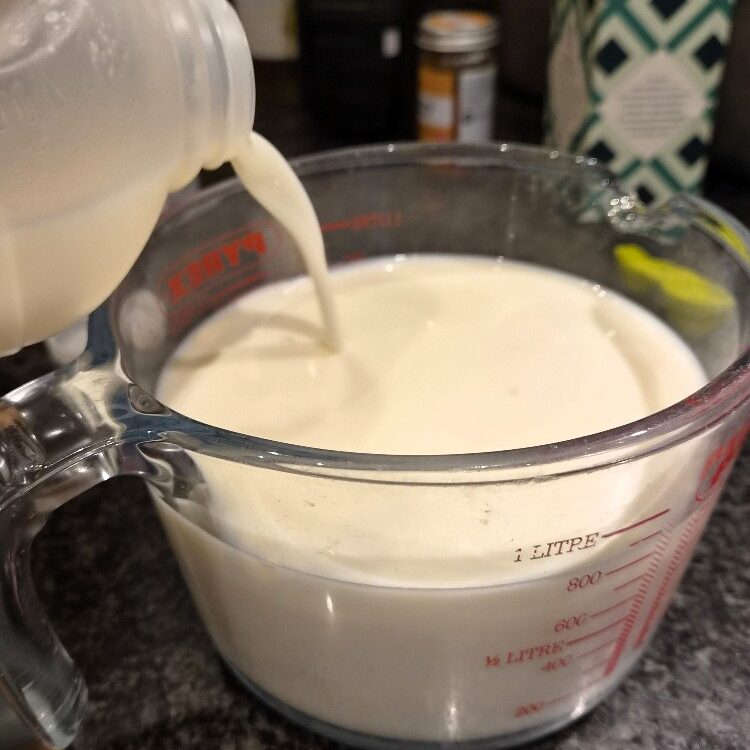
Equipment
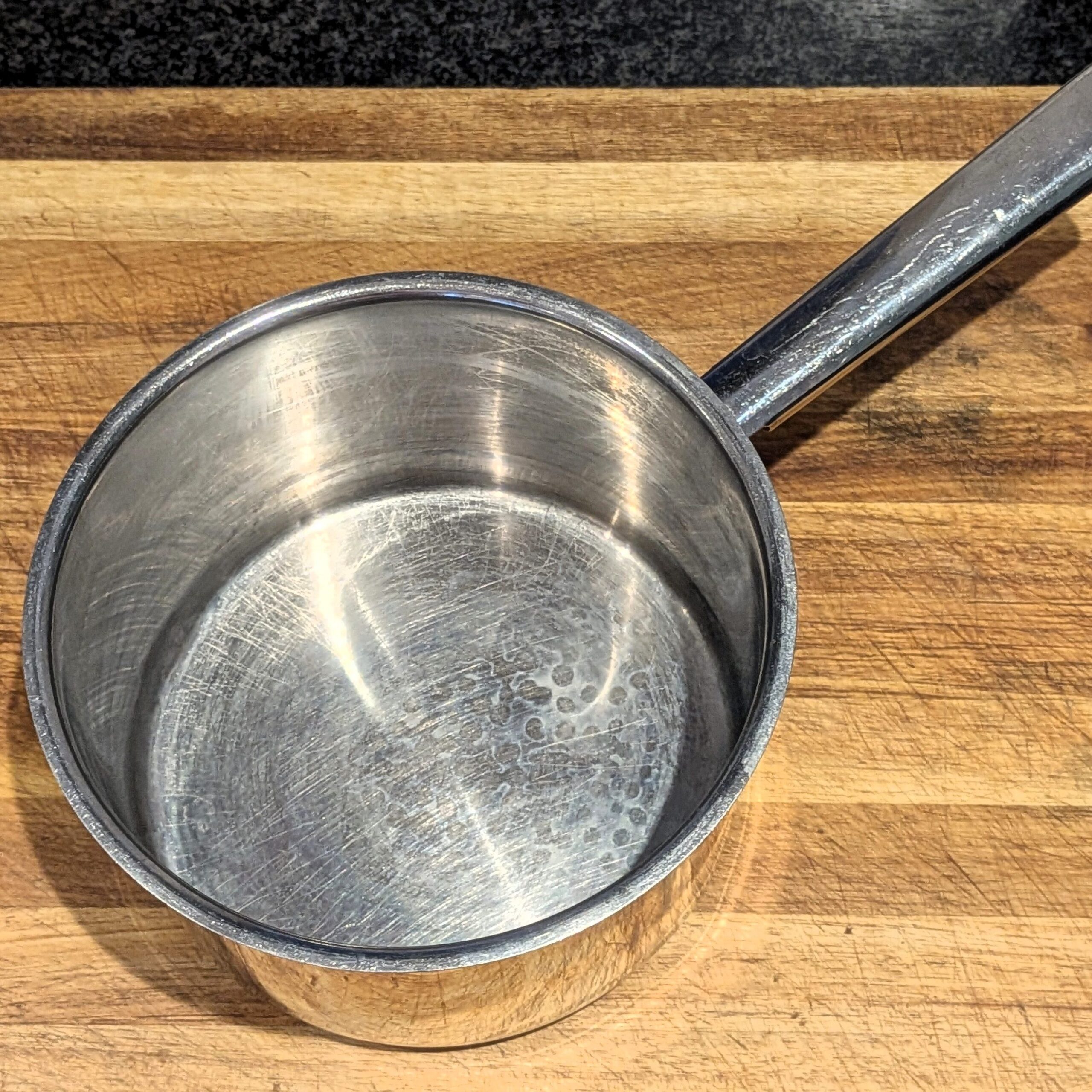
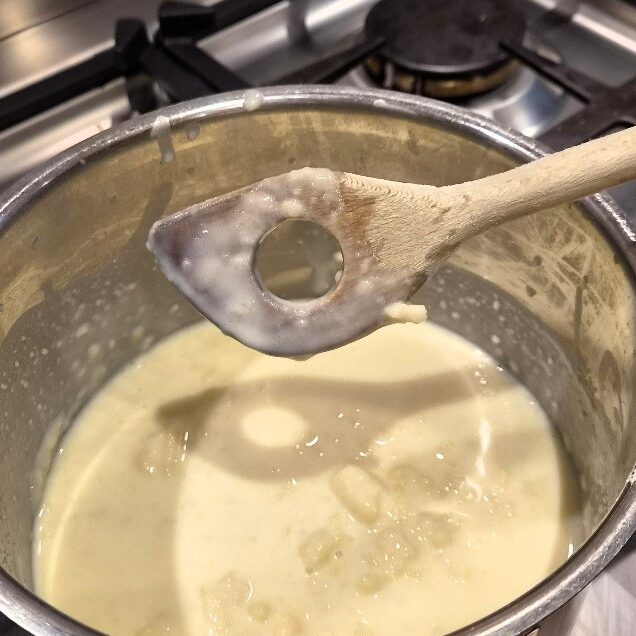
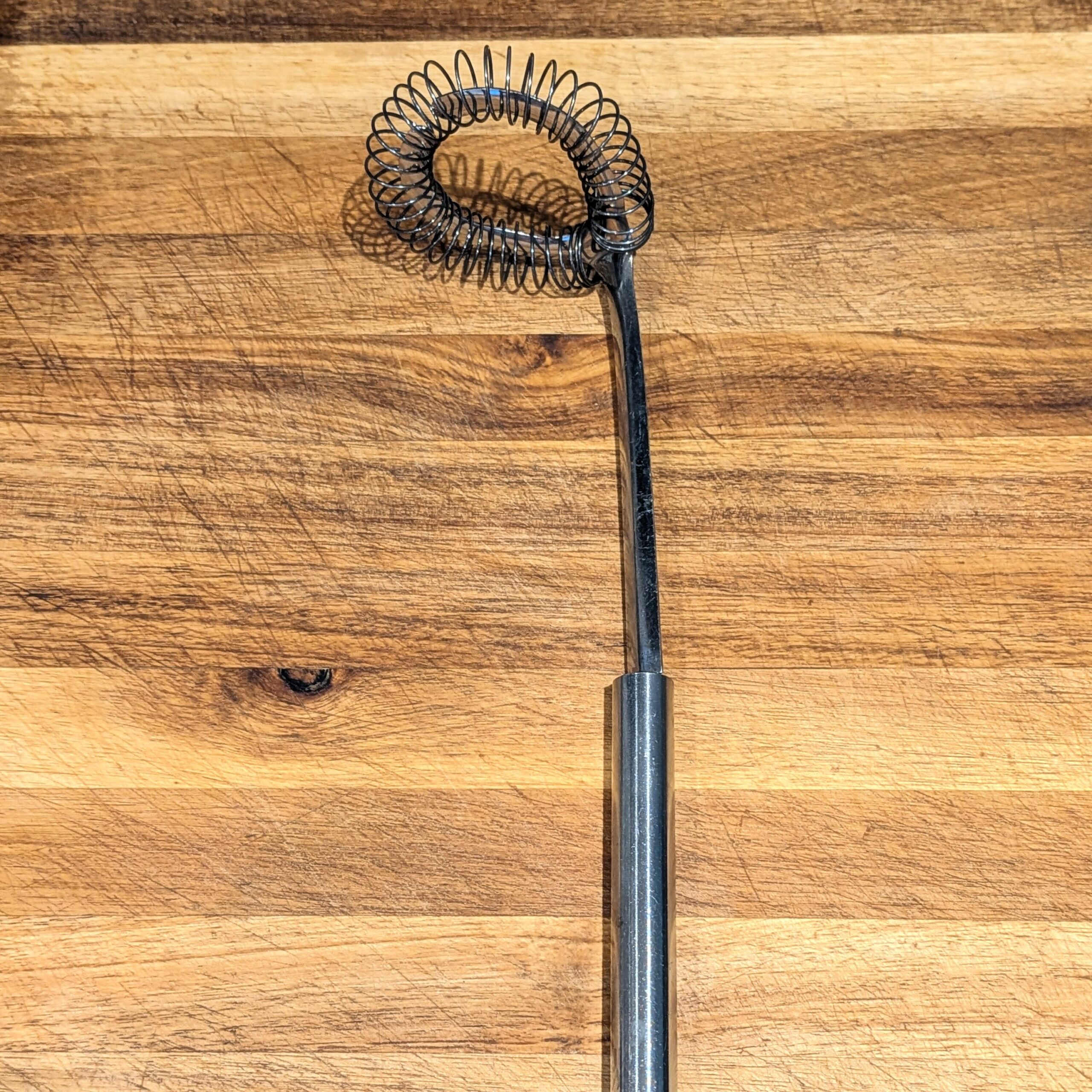
To make a white sauce, you’ll need a saucepan, ideally heavy & non-stick, large enough to hold your finished sauce. You’ll also need a wooden spoon or spatula. The very best sort of wooden spoon is one with a sharp corner and flat end, like the one below. Even better if it has a hole in! This shape of spoon really helps you get into the corners of your pan when you are stirring, and the hole maximises the amount of sauce you can stir. But another handy tool is a sauce whisk, like the one below – really great for getting out lumps. You’ll also need a measuring jug.

Jake sticks his nose in
A sauce whisk is one with a flat bottom, as above. It’s a really great tool for making roux-based sauces & gravies. You can buy one for just a few pounds, or use a small normal whisk if you don’t have one.
Making the white sauce
The key to a successful white sauce is adding the milk very slowly over a low heat, and constantly stirring.
Set the saucepan with the roux in over a low heat. When it is warm, add a very small splash of milk. It is better to add too little than add too much. Stir constantly and briskly with your wooden spoon until the milk is fully incorporated and the roux looks smooth again with few or ideally no lumps. Make sure to get your spoon right into the corners of the pan – any roux not incorporated can burn into the edges of the pan, and give your white sauce an unpleasant scalded taste.
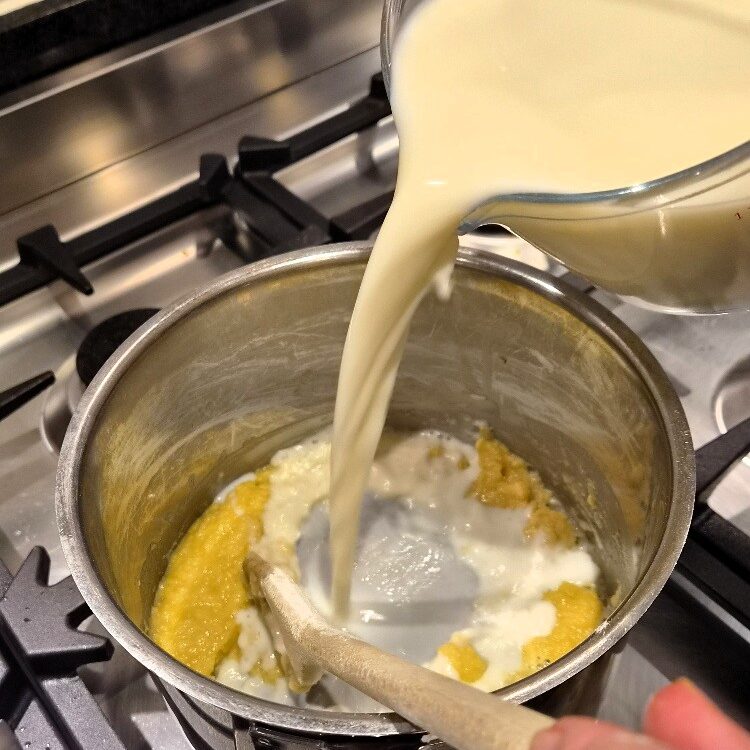
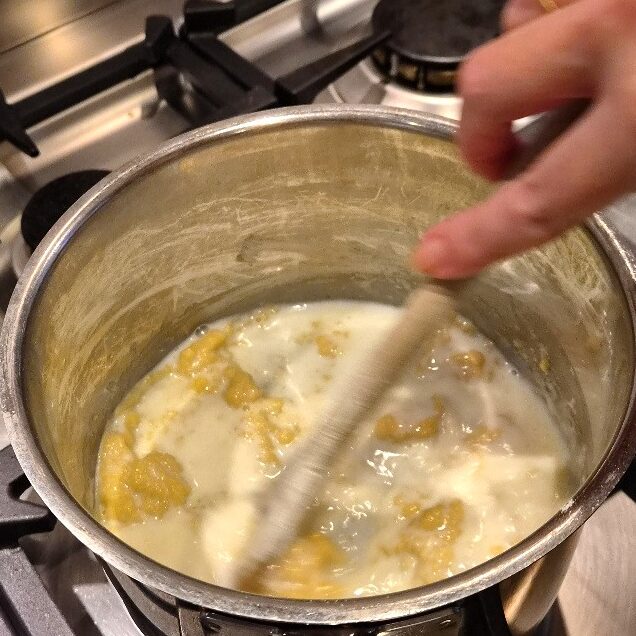
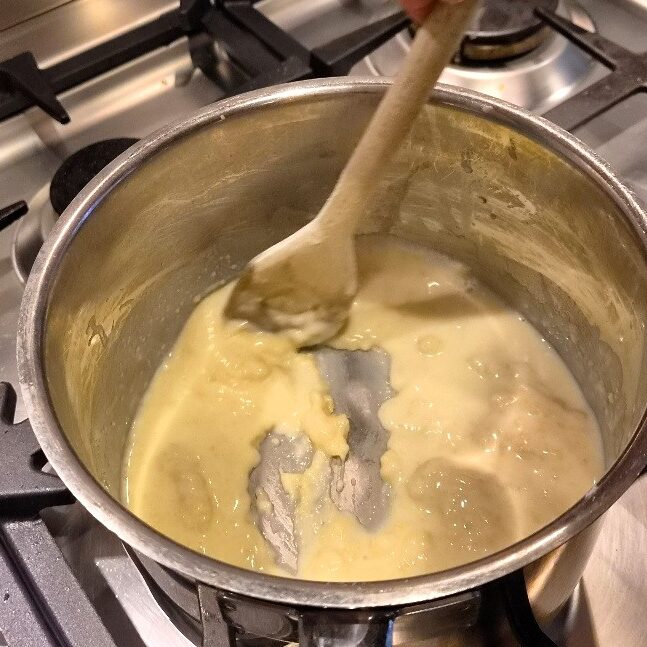
Jake sticks his nose in
It helps if you can work as a pair – one person pouring in the splashes of milk, and the other one constantly stirring. Emily & Estella often make this type of sauce together. Keep stirring, and add the milk one splash at a time!
When the roux looks smooth, add another small splash of milk, and stir well again. Keep the heat low.
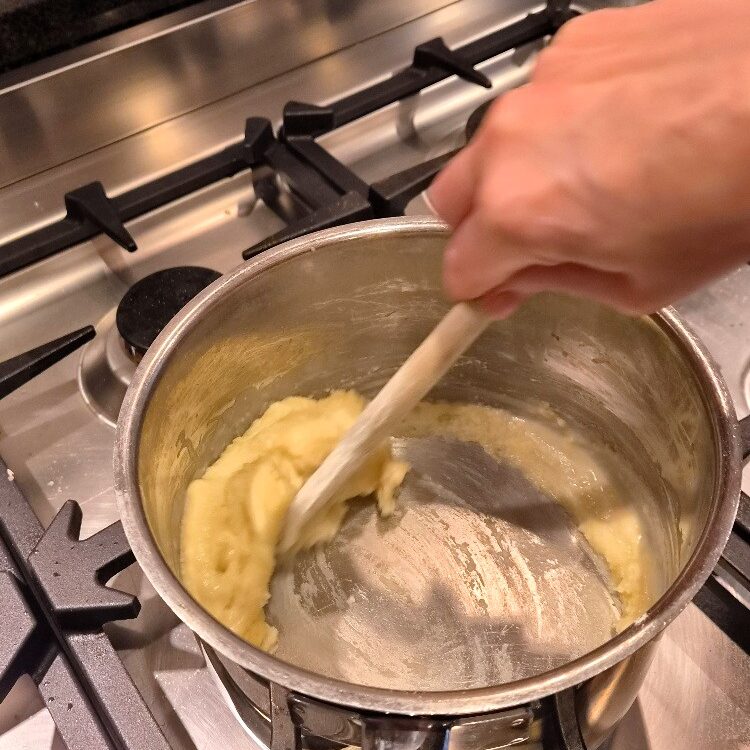
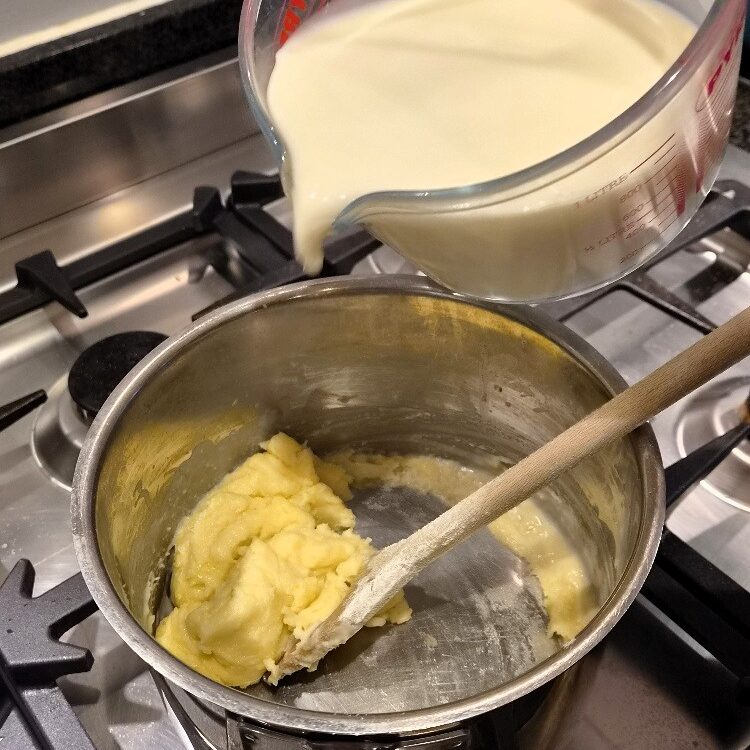
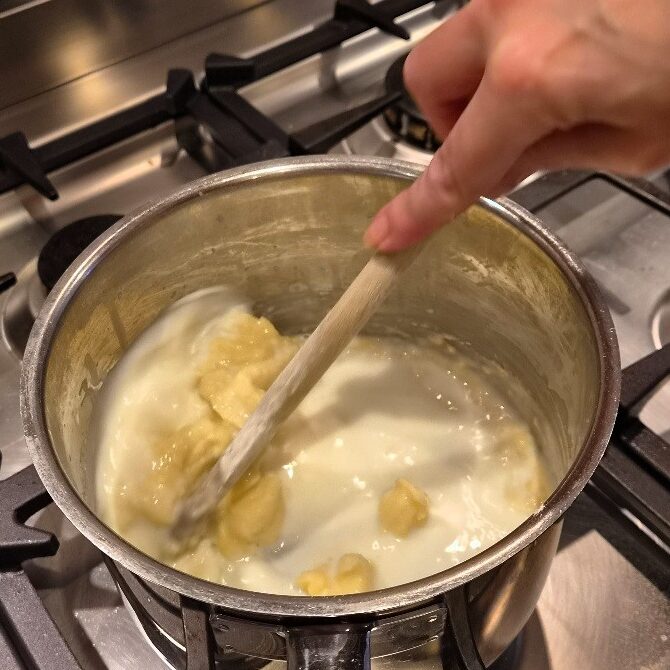
Keep stirring until the milk is fully incorporated, and the mixture looks smooth again. This is a good point to go in with your sauce whisk if you have one. Swirl the whisk about on the bottom of the pan, again making sure to go right to the edge. You’ll be amazed how any lumps just melt away – it is very satisfying!
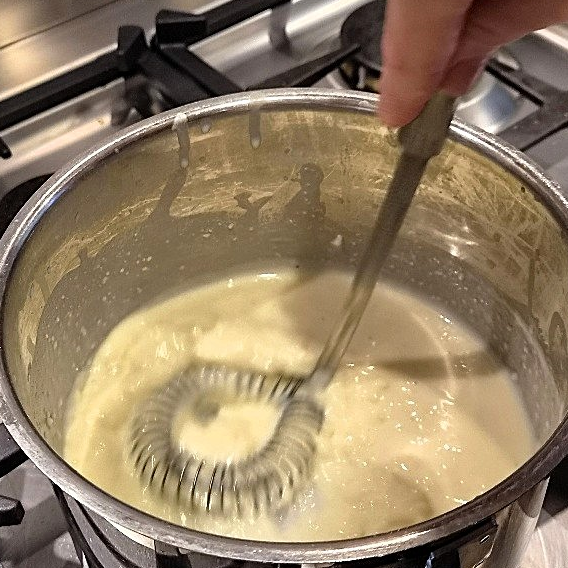
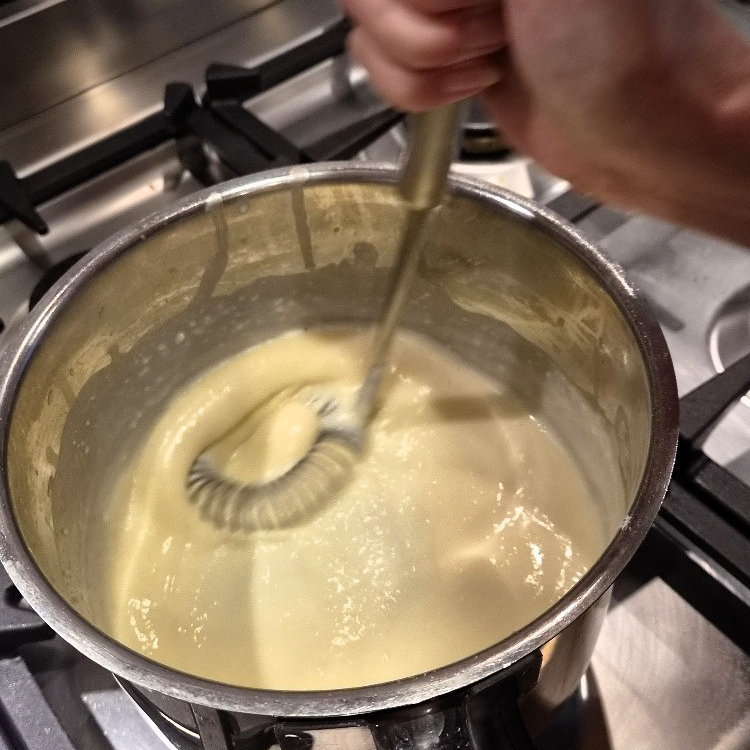
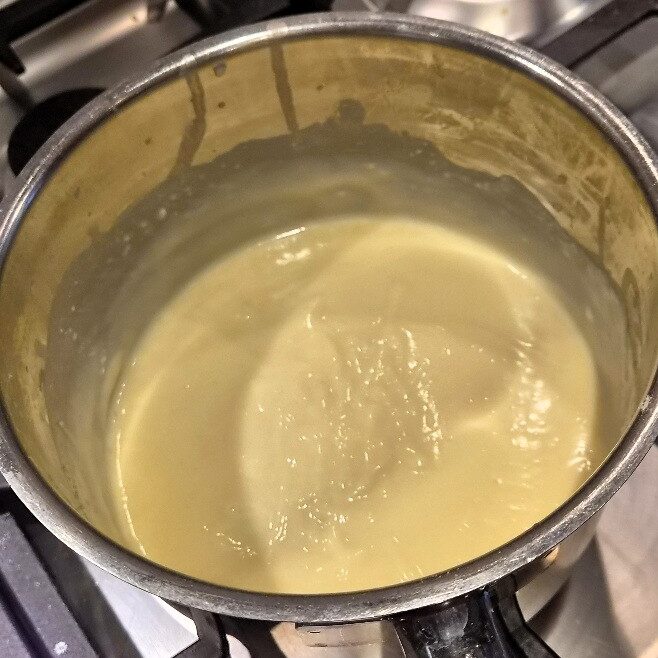
One the sauce starts to become more liquid than solid, you can start to add the milk in slightly larger splashes, again stirring really well with your spoon or sauce whisk between each addition.
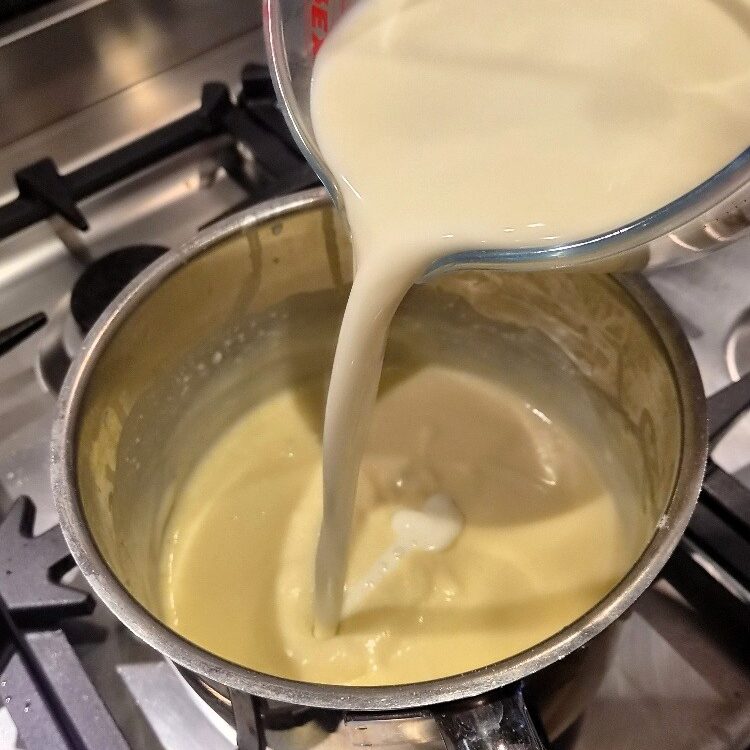
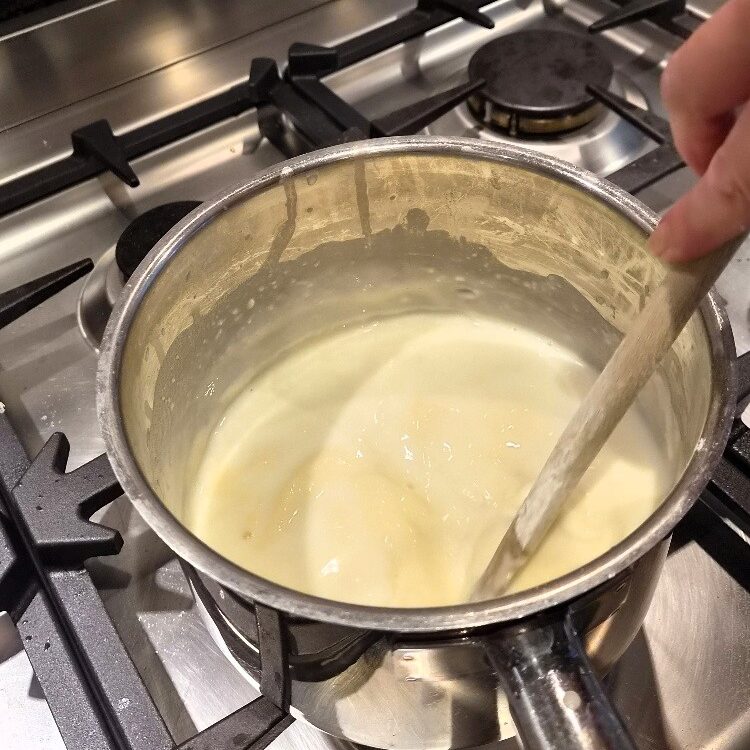
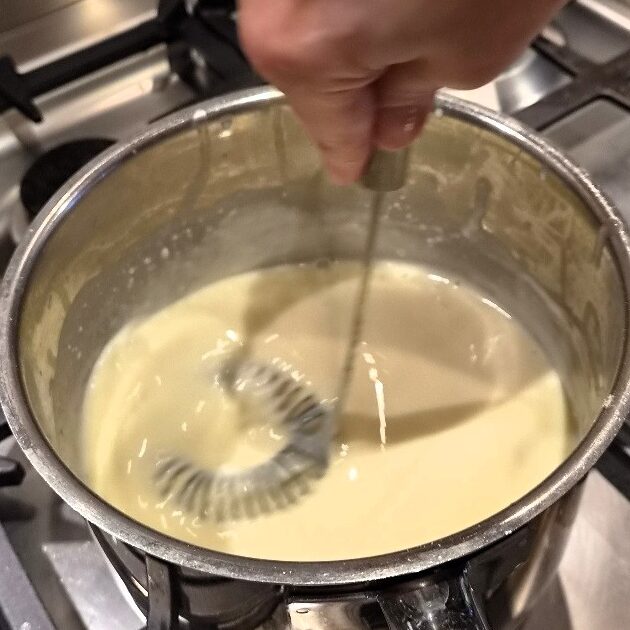
Keep going until the last of the milk is incorporated, splash by splash & stirring all the time. The slower you go, the better the result will be. As you get more experienced, you’ll be able to go a little faster, but at first take it cautiously to avoid lumps. This can take between 5 and 10 minutes from when you first add the milk.
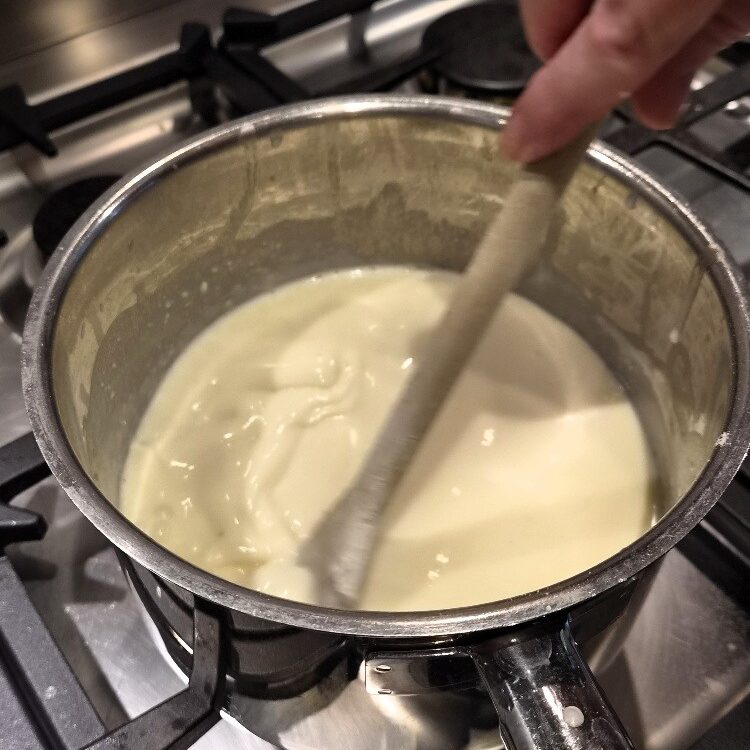
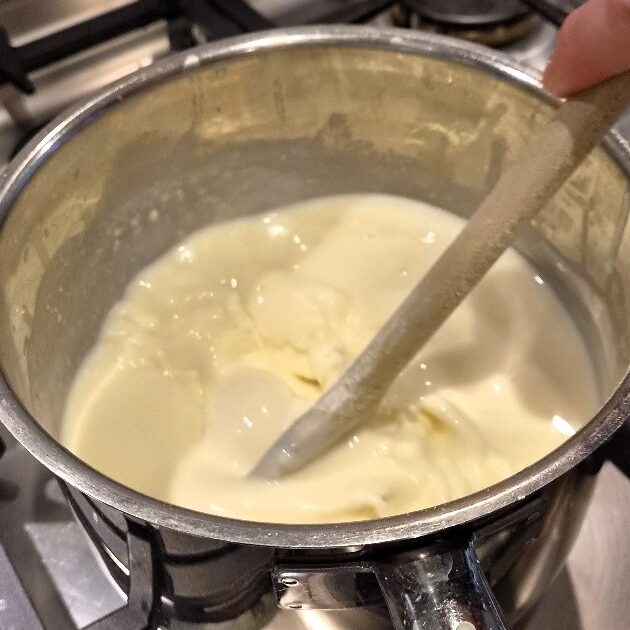
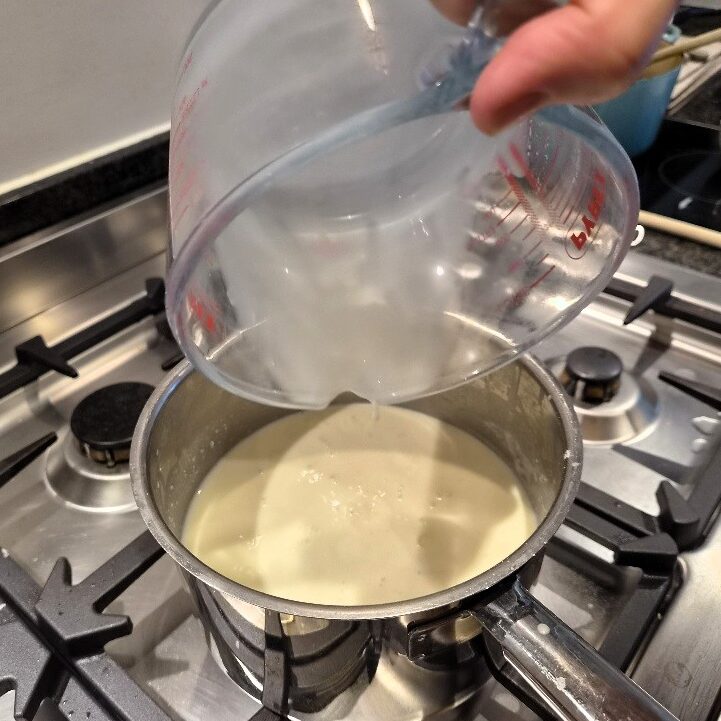
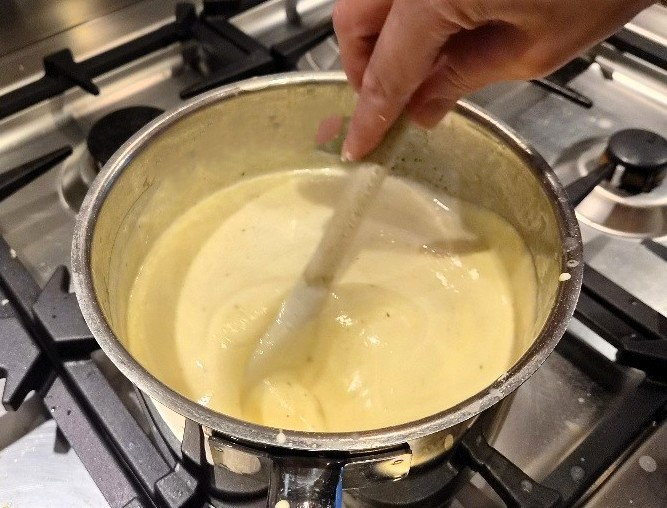
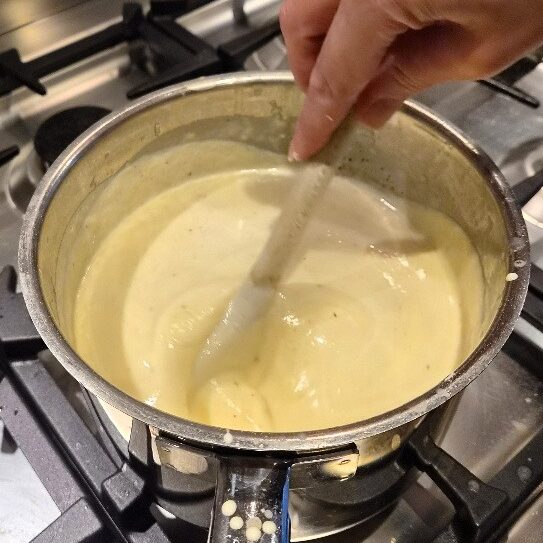
When all the milk is in, your white sauce should be smooth and glossy, but it may look a little thin at this stage. Don’t worry, it will thicken with a little more cooking. Turn the heat up slightly so the sauce just gloops and bubbles very gently. Don’t get the pan too hot or your sauce may scald or catch on the bottom. Keep stirring until the sauce thickens up to about the consistency of double cream, a few minutes.
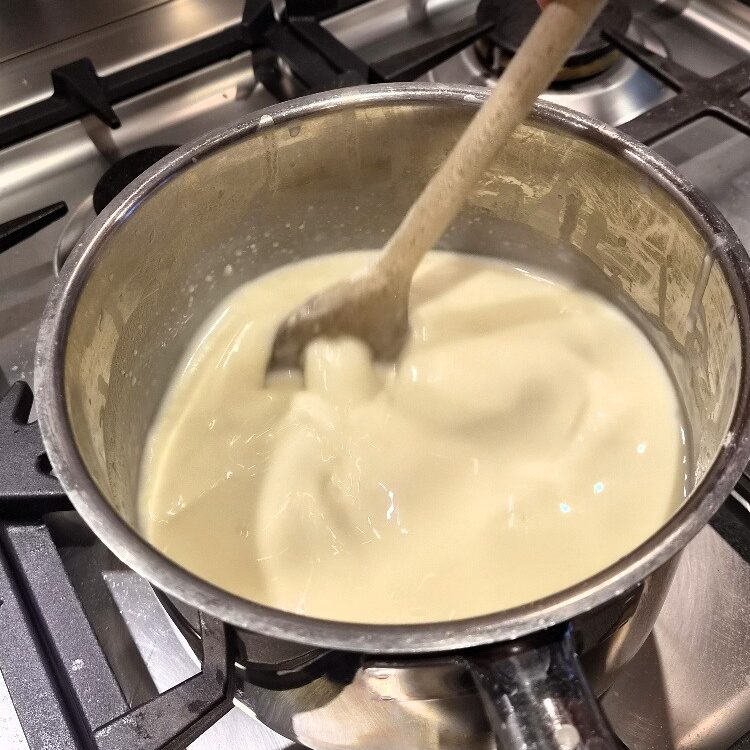
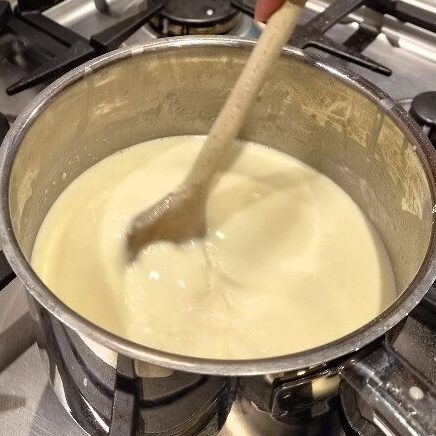
Your basic white sauce is done!
Flavouring the white sauce
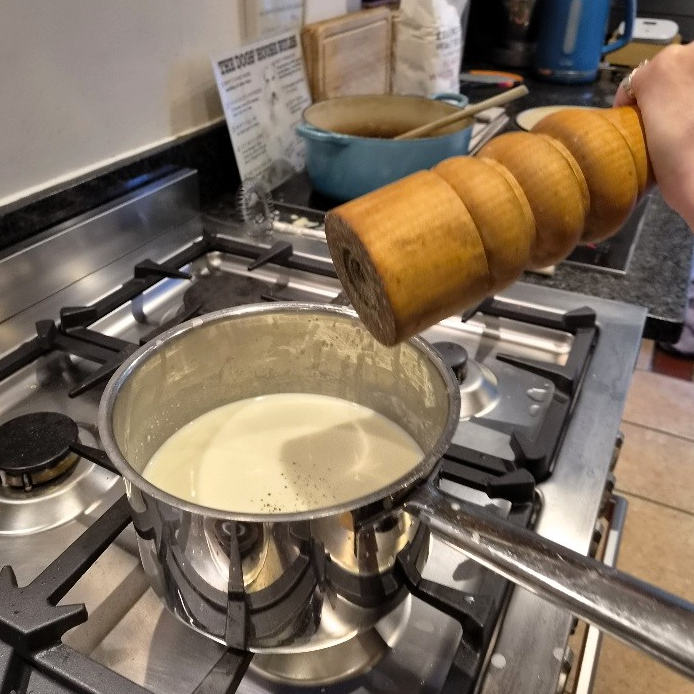
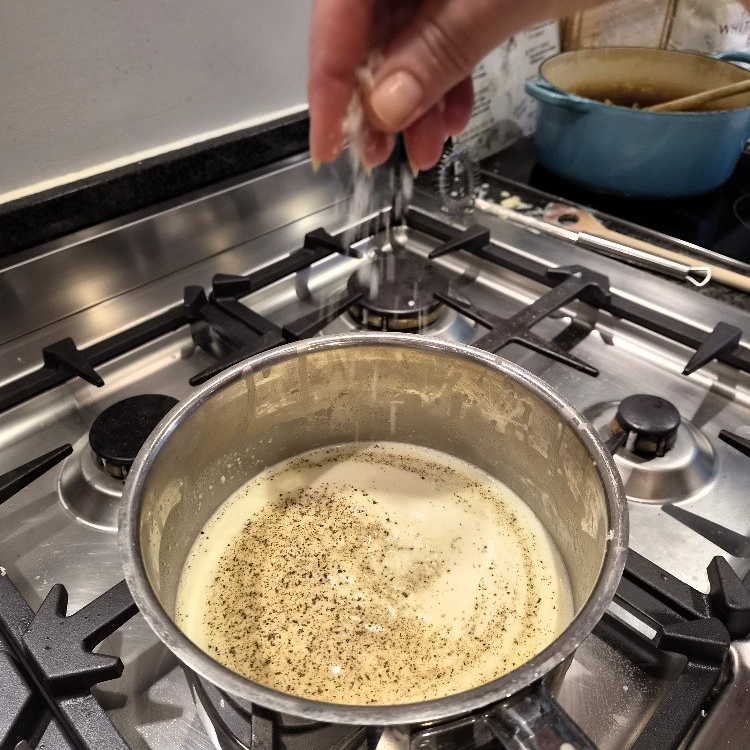
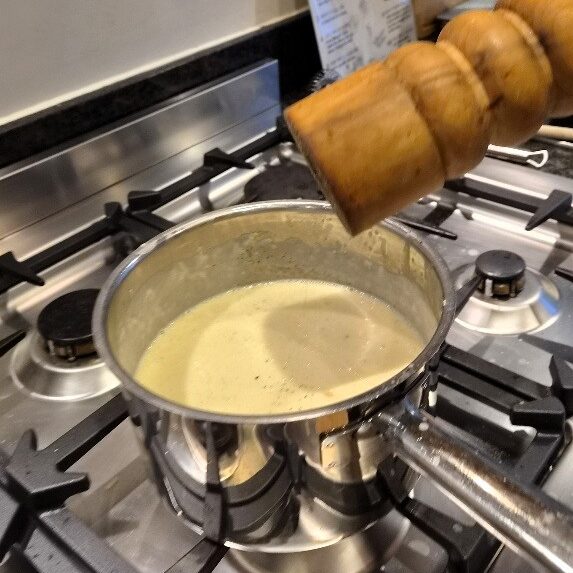
This basic white sauce will be a little bland, so you’ll need to season it with at least a little salt & pepper (use less salt if your butter was salted).
Jake sticks his nose in
Some cooks say you should only use white pepper in a white sauce or béchamel. We think this is mainly for appearance – you sauce won’t be pure white if you use black pepper – albeit white pepper also has an earthier flavour. But we prefer the bold flavour of black pepper, and don’t mind the specks!
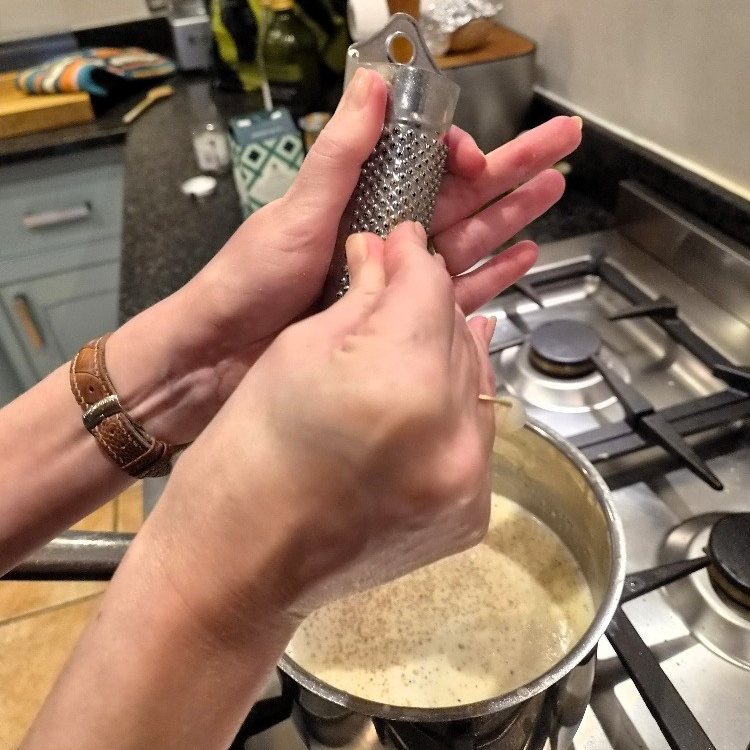
To make your white sauce into a classic béchamel also flavour it with a little grated nutmeg, to taste.
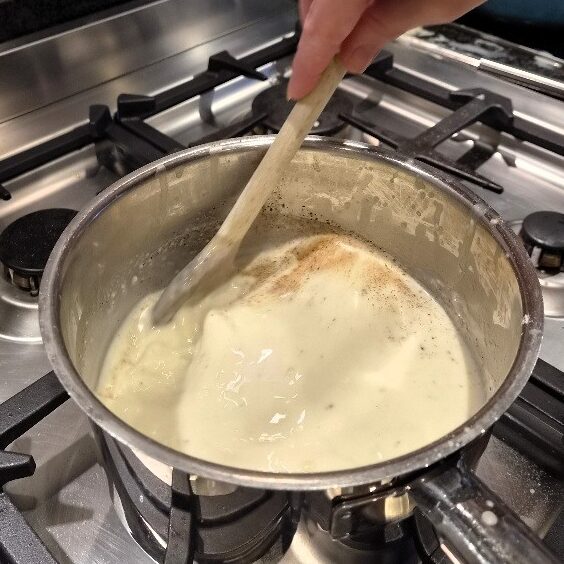
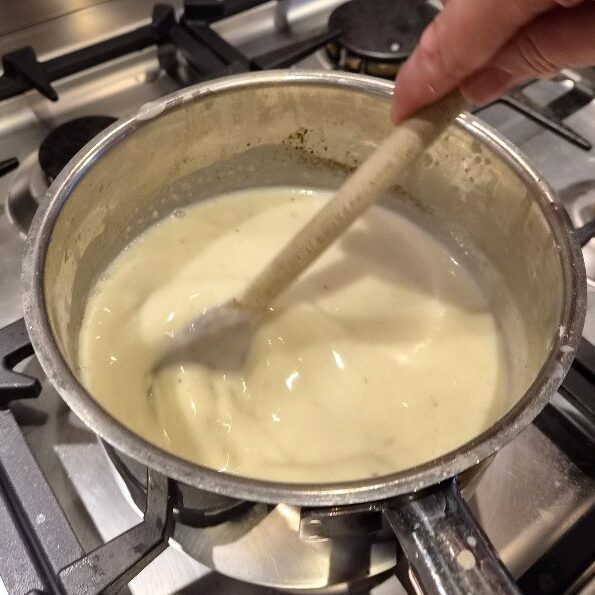
You can also flavour your white sauce with anything you like! It can become a mustard sauce, great with ham, with a dollop of mustard. Or a parsley sauce – great with ham or fish – with some chopped parsley. Or add any herb or spice you prefer. You can also make it into a lemon sauce, or add white wine or cream. Have fun experimenting!
But today we needed a cheese sauce for our Macaroni Cheese.
Making white sauce into cheese sauce.
First grate your cheese of choice – any firm cheese can work. Today we used mature cheddar, but we often use cheddar combined with, for example, red Leicester or Gruyère, both of which melt well. Or you can make a blue cheese sauce. Today we used about 230g of cheddar
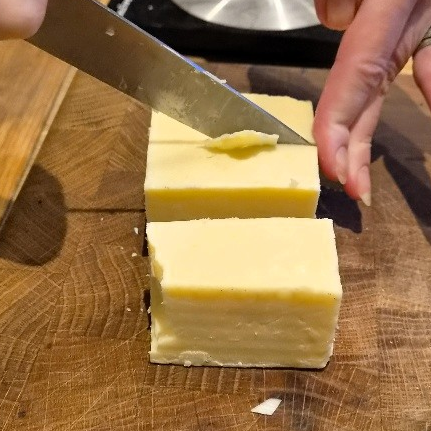
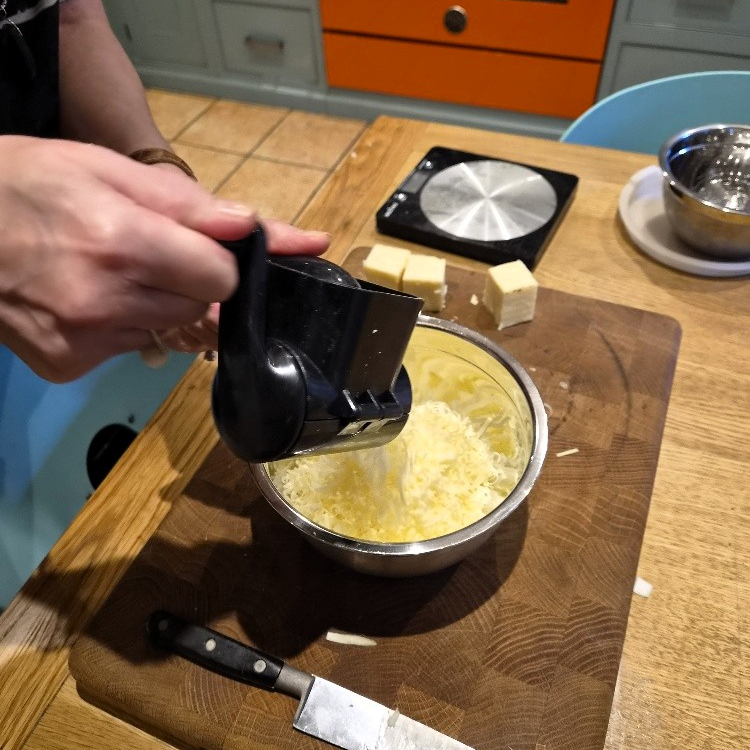
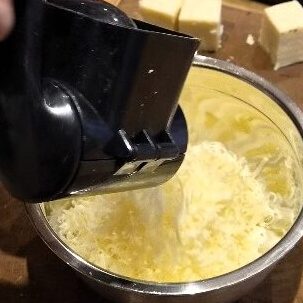
Add the cheddar to the white sauce, and stir over a low to medium heat until the cheese melts, a few minutes.
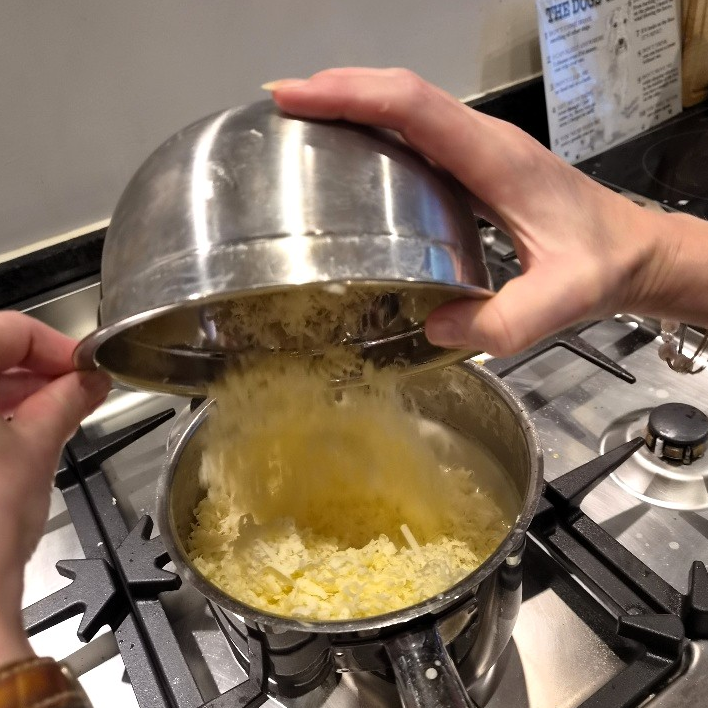
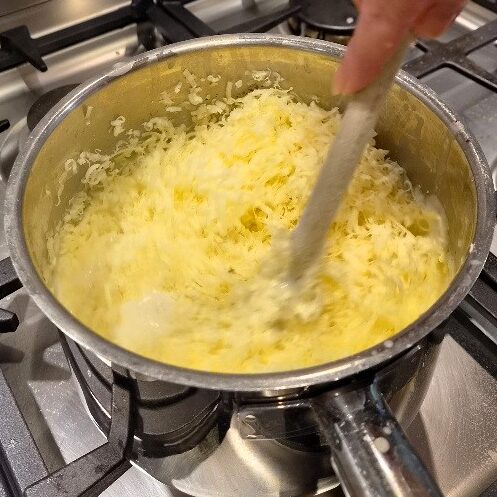
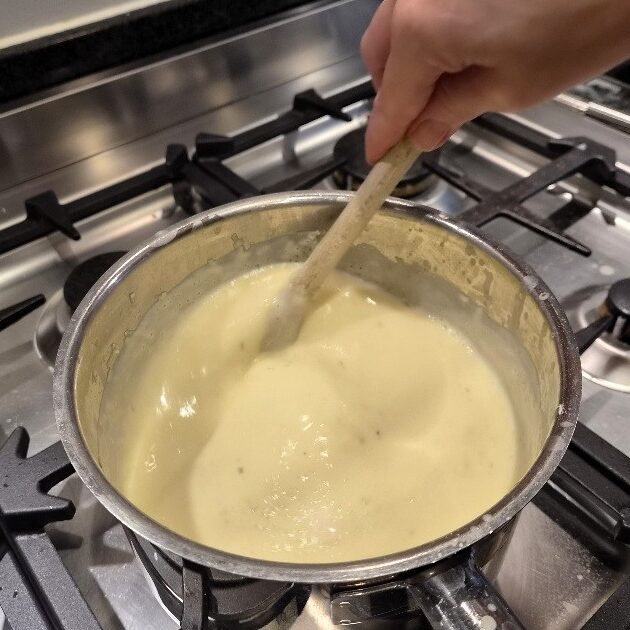
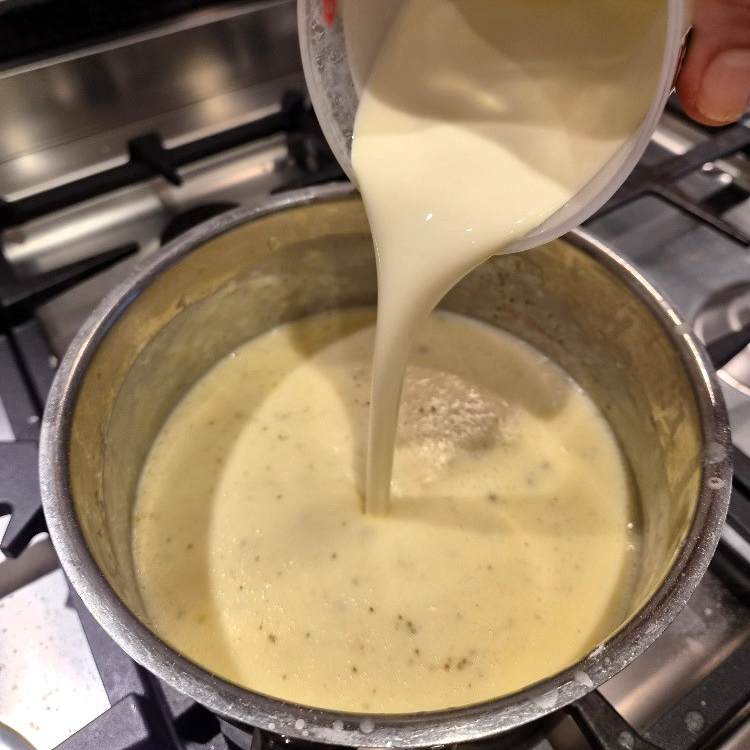
Your basic cheese sauce is done! You may want to add a little more black pepper or a touch of mustard (it shouldn’t need more salt). Today we added a little more pepper. But for our Macaroni Cheese we also like to add a little double cream for extra richness – today we added about 100ml.
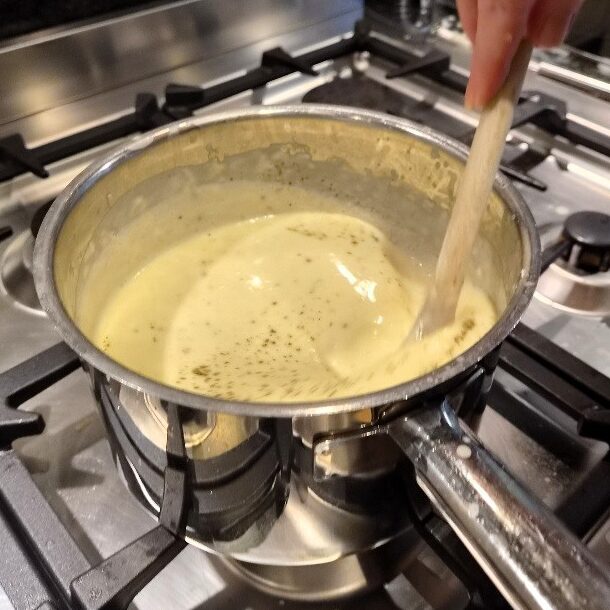
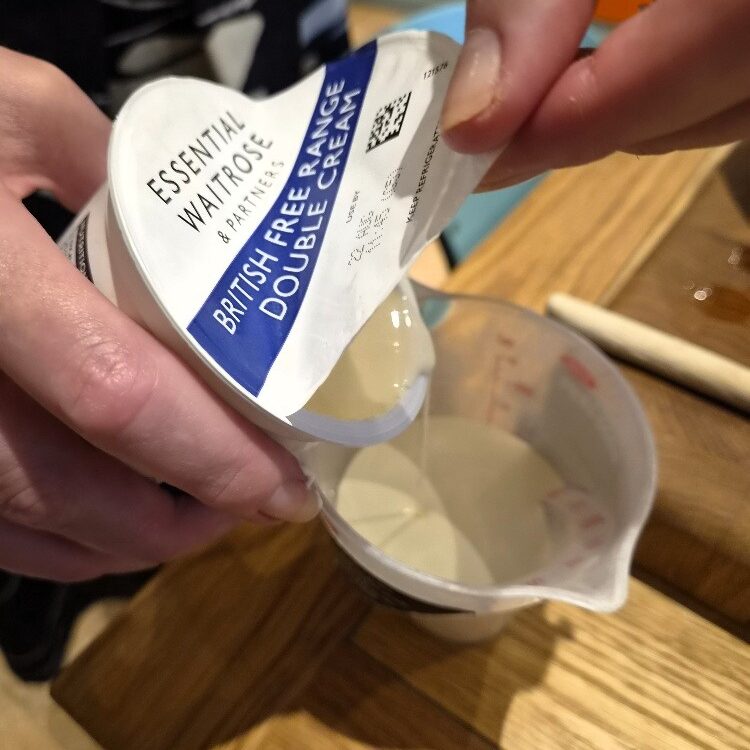
Your rich cheese sauce is done.
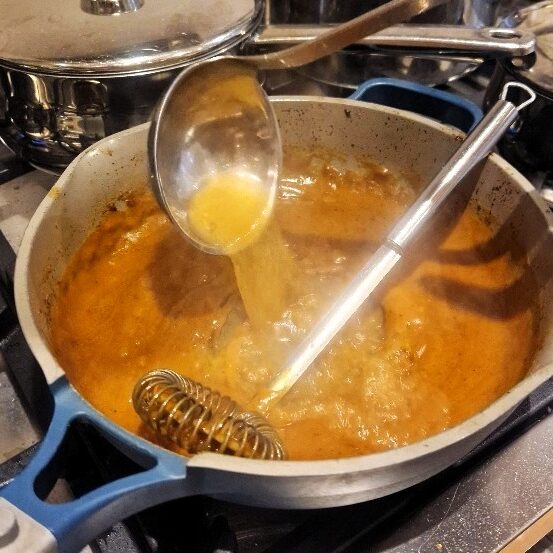
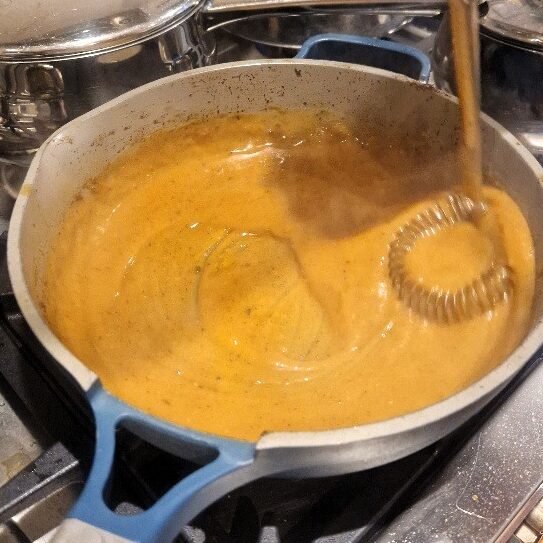
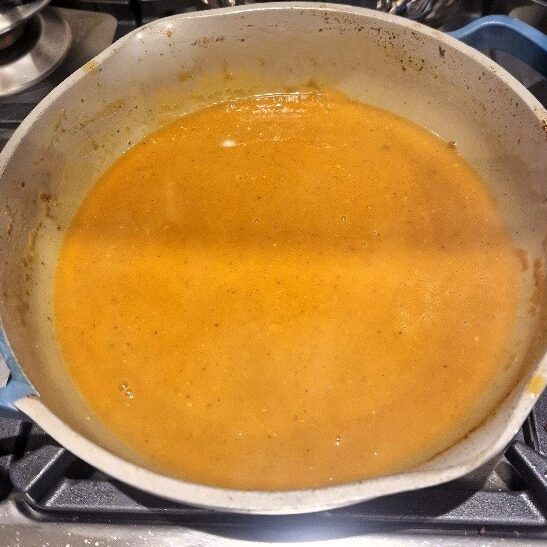
Congratulations! You can now make any roux-based sauce. Just follow the same technique using whatever warm liquid you need. Gravy and veloutés are made with stock, for example. Here’s some gravy we made the other day with lamb stock.
Happy sauce making!