

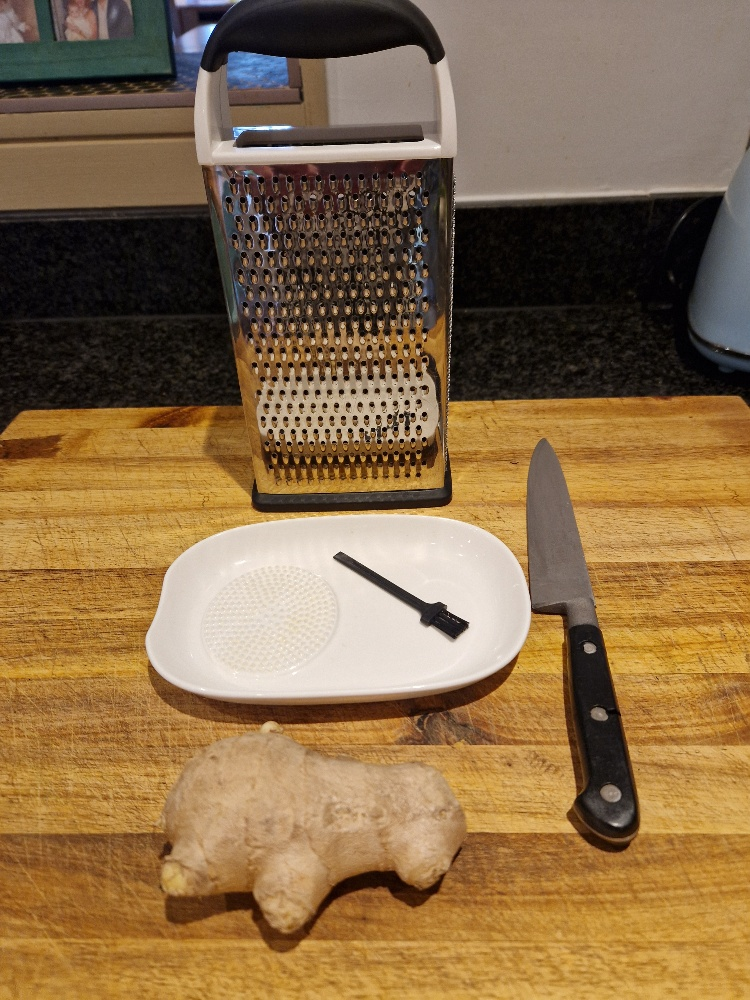
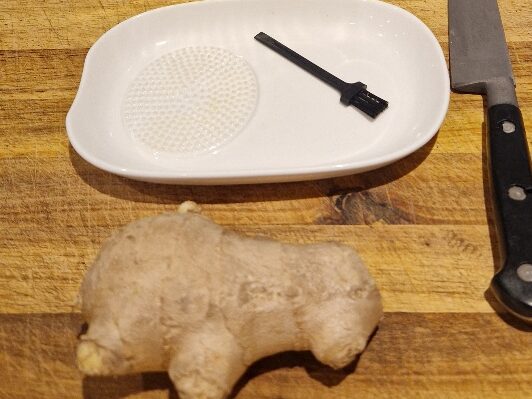
Fresh ginger is a common ingredient, particularly in Asian dishes. It is strong, aromatic and quite hot, so is generally used in savoury dishes. Stem ginger, which you usually buy preserved, is sweet and used in sweet dishes; powdered ground ginger tastes somewhere between the two and can be used in either. This ginger is the woody root, as shown above.
To prepare it you’ll need a sharp knife and either a good, sharp grater with a medium-to-fine setting, or we use a special ginger and garlic grater, which is the white ceramic tray shown above. Both work well, the special tool is just kinder to fingers, and gets the ginger slightly finer, so isn’t at all essential.
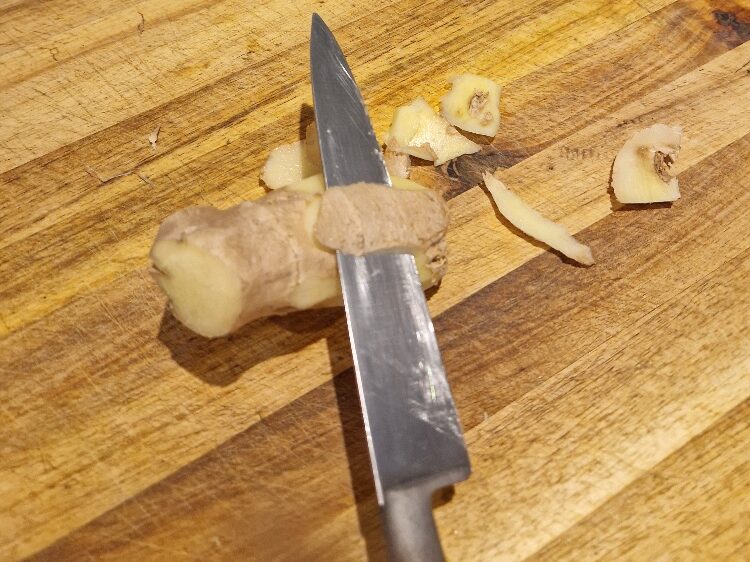
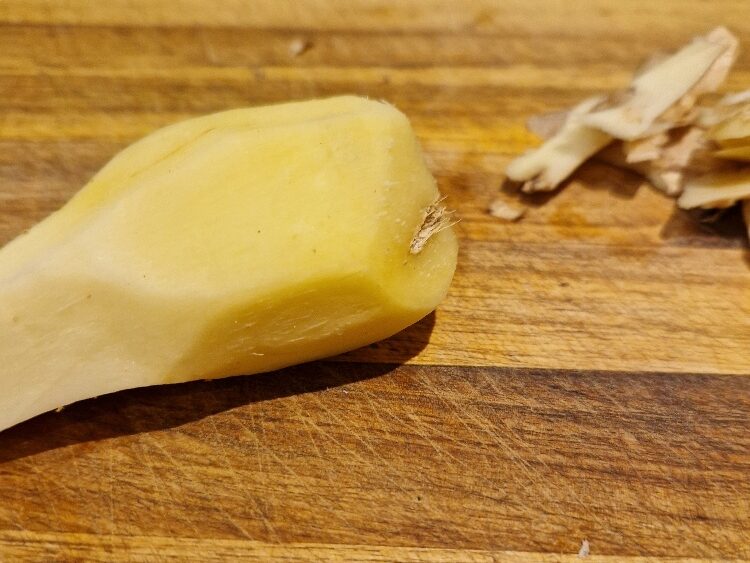
Most fresh ginger that you buy is a knob that has been broken off a larger piece of the root – it is therefore likely to have dry cut ends and perhaps a few straggly buds that would be difficult to peel. Start by cutting these off, as below. Fresh ginger also has a thick, woody skin that you need to completely remove before using. Take this off with your knife, trying to preserve most of the juicy flesh below. As the skin is woody it won’t simply slide or peel off, you have to cut into the skin as shown below, a bit like peeling a potato. You could alternatively use a potato peeler, but we find it harder to get a good clean result when using one with ginger.
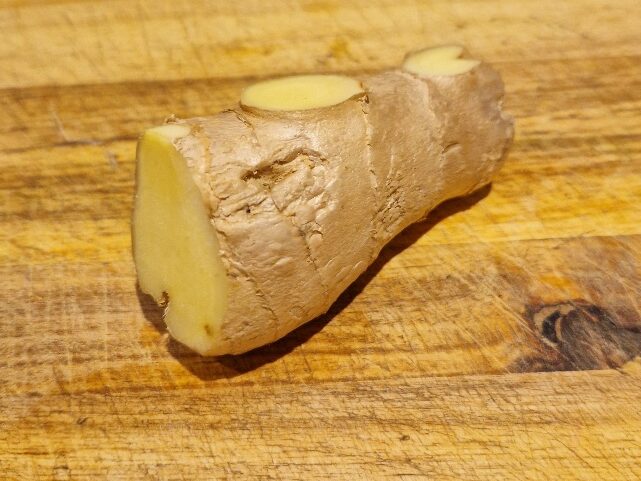
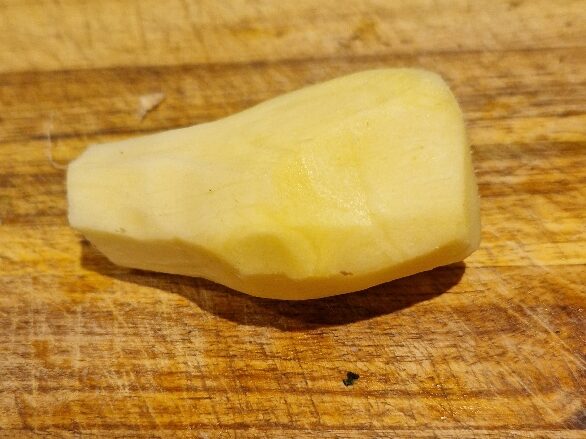
If you see any woody notches or lines in your ginger as you peel, remove these with your knife. You want to end up with a nice, clean, fairly regularly-shaped piece as below:

Jake sticks his nose in
We tend to buy a larger piece of ginger than we need to allow for waste, but also because it makes it easier to prep and peel if you are not worrying about how much you taking off – you can then afford to be a bit crude with what you remove! It is also easier to grate a large piece without grating your hand.
Some recipes call for fresh ginger to be sliced (usually quite finely) or cut in the very small batons, but most require it to be grated or chopped very small. Grating is the easiest way, we find, to prep it and works for most recipes that use ginger.
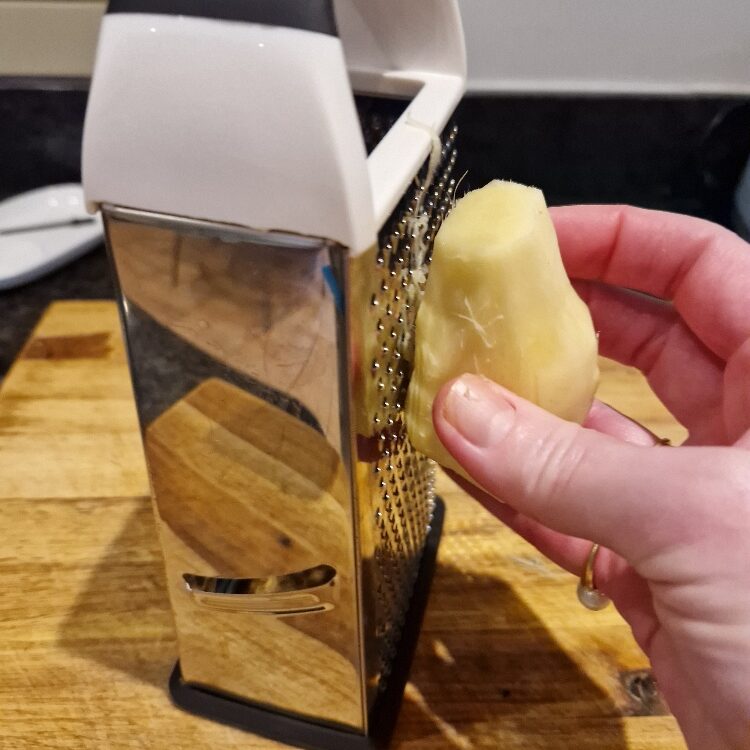
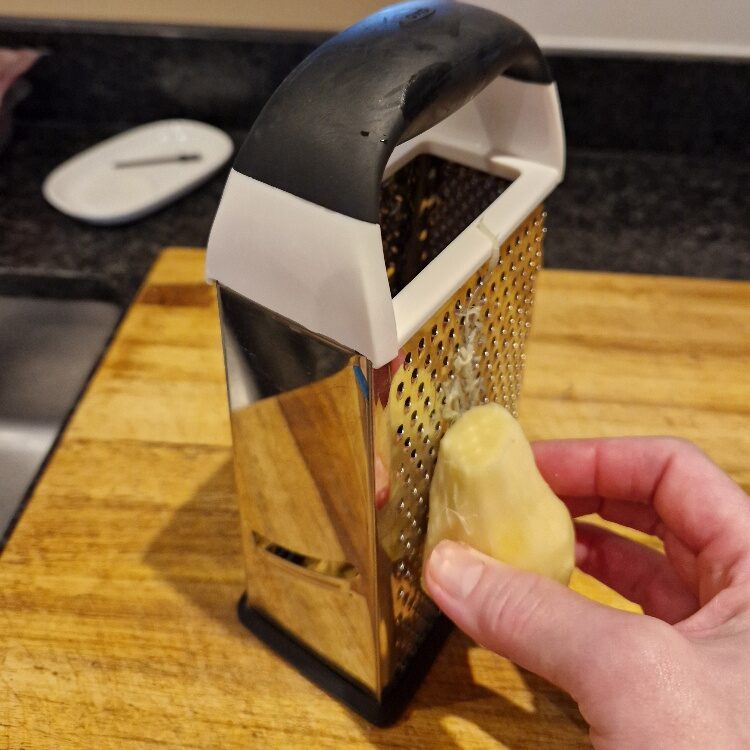
You can do this on a box or other standard grater, and this works well – just make sure you use a medium-grade side of the grater. You need to grate with a firm pressure, and move the sides of the ginger that touch the grater around. This is because ginger has a fibrous core and you will want to discard this, while getting most of the juicy flesh off. Grating naturally does this.
You can also use a special ceramic grater. This gets you a finer result, helps really remove the fibres, and is kinder to your fingers but isn’t at all essential. (The little brush is used to help clean it).
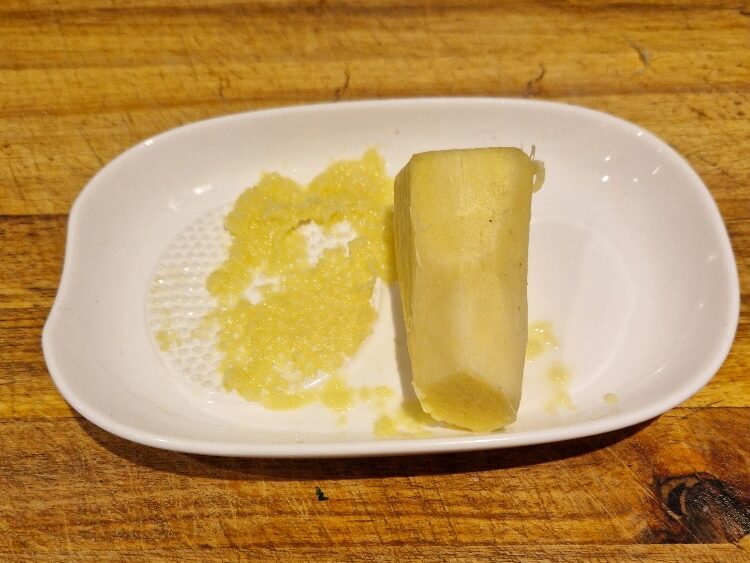
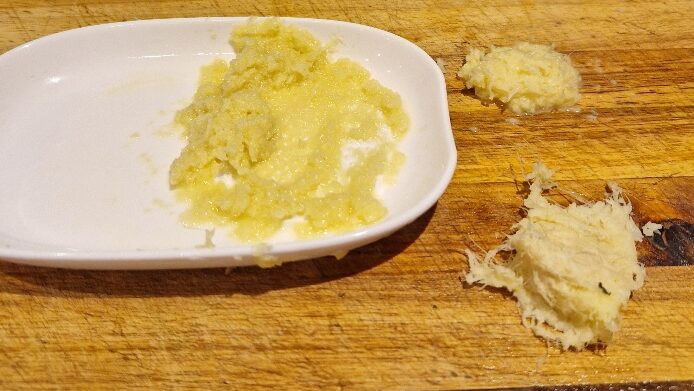
Whichever tool you use, when you think the piece of ginger in your hand is mostly fibre stop grating. Collect the flesh from the back side of the grater (slide your knife down the back to get the bits off that have stuck to it) and discard the fibrous part. The ‘good’ ginger from both methods is shown below on the white tray and back of the board; the fibrous bit to get rid of is at the front.