


Skills you will learn in this recipe
Making a rich tomato-based sauce
Links to the last recipe
Flavouring with anchovies & capers
Pasta puttanesca is one of those recipes that is both ubiquitous and varied at the same time – a legacy of its ‘make with whatever you have to hand’ origin. Every recipe you read will be broadly similar, but no two cooks seem to execute it quite the same. Even we cook two versions – this one, which is simpler and probably closer to its quick, store cupboard roots, and a chunkier version, more like the one Bibi used to make (based on Delia Smith’s Tart’s Spaghetti, a nod to the name’s origin) that features fresh tomatoes and keeps the olives and capers larger, not roughly chopped. But whatever the version, it’s always tasty, gutsy and very satisfying!
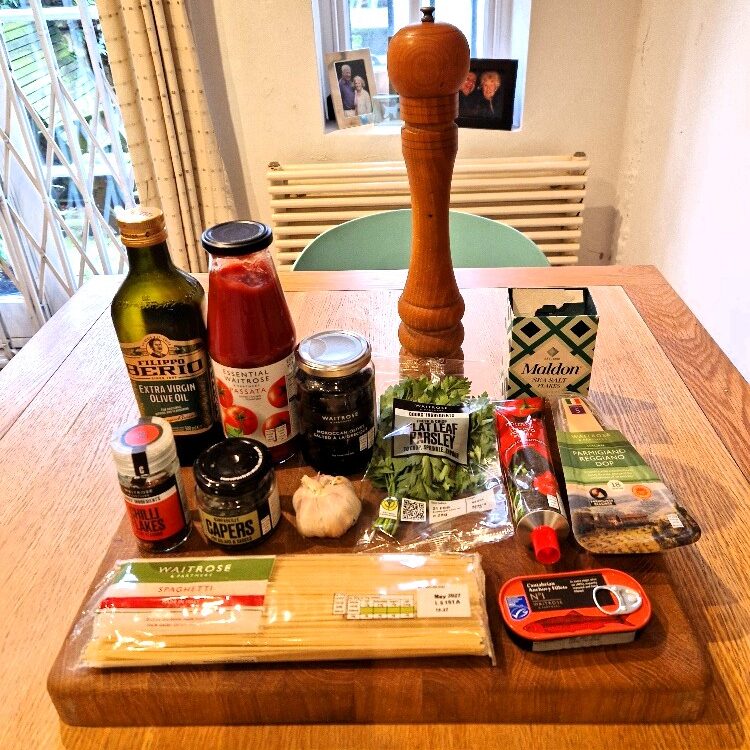
All puttanesca recipes feature tomatoes (in some form), olives, garlic and capers, but there the ‘must haves’ seem to end. Anchovies are optional, and not used in parts of Italy for this dish, but we would hesitate to make a version without them personally. Tomatoes can be canned, fresh or pureed; the herb can be parsley, basil or oregano – or some combination of the three. And the pasta can be any shape you want, though long pastas like spaghetti and linguine seem to be preferred. Today we are using spaghetti as we had lots in our store cupboard, but we also particularly like this dish with bucatini, a thicker long pasta.
Putting cheese on top is controversial too – purists may say you shouldn’t put cheese on a pasta sauce with fish (though we’d argue the anchovies are more of a flavouring here) or that you don’t need it as the sauce is savoury enough. But we like it, and think parmesan adds sweetness to the dish too.
The puttanesca sauce is very quick and easy to make, and if you keep most of these ingredients in your store cupboard you’ll have a tasty meal in minutes without needing to shop. Great if you are coming back late, or want a quick but tasty meal before you head out for the evening.
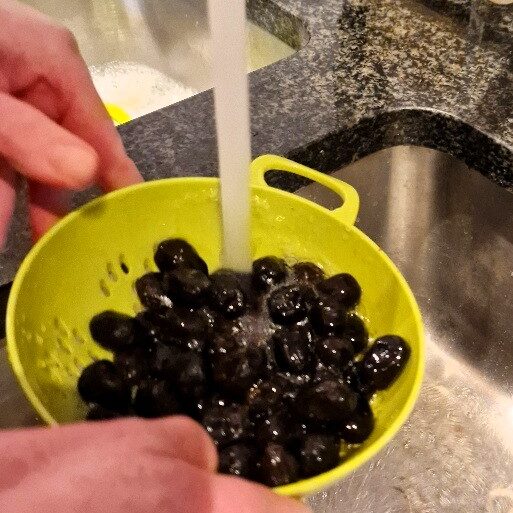
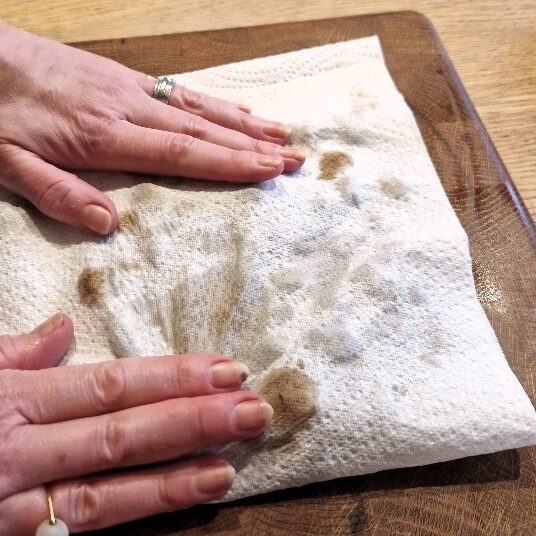
First prepare the olives. It’s essential to use black ones in this dish. We don’t like Kalamata olives here though, as we used in Greek Salad; we find they make the sauce a bit ‘medicinal’ tasting. Our favourites are the dried black olives that you can find in jars and sometimes little flat packs. We couldn’t find quite the ones we like today, but the Moroccan ones we used were very close, just saltier. So we decided to wash them before using. Wash, if needed, under the cold tap then pat dry on kitchen paper. Pit them if they have stones; ours today did, a slightly fiddly job so look for ready pitted ones if you can find them. To pit, cut round the stone with your knife, and then squeeze open the olive to remove the pit.
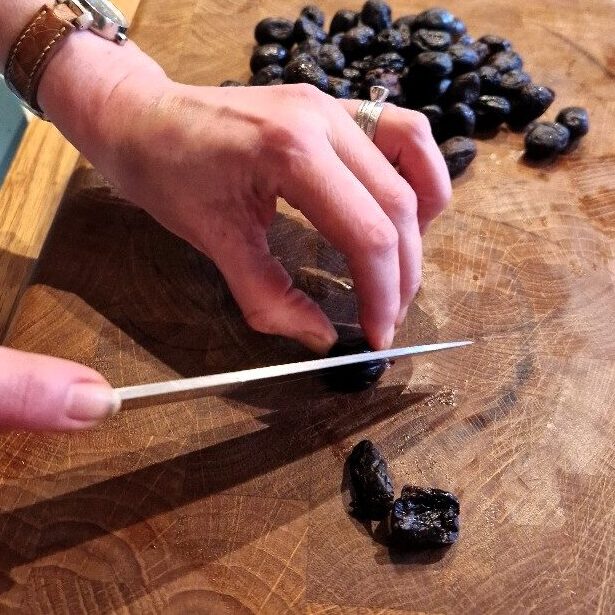
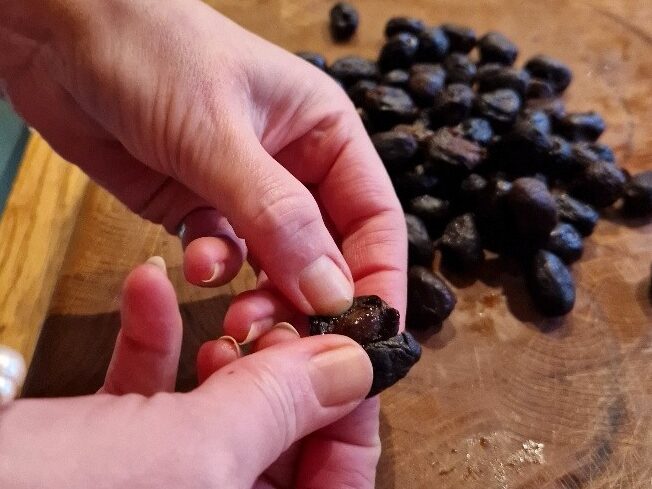
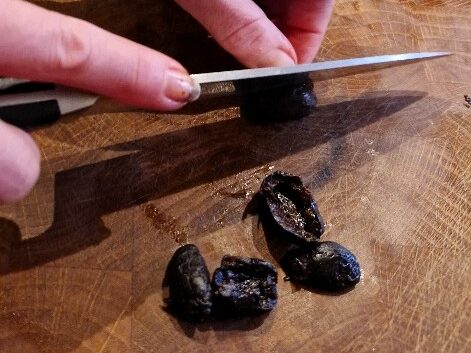
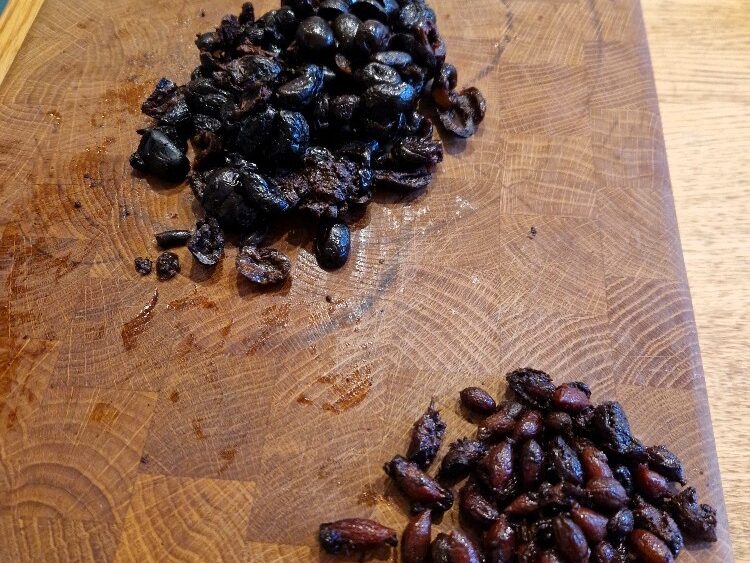
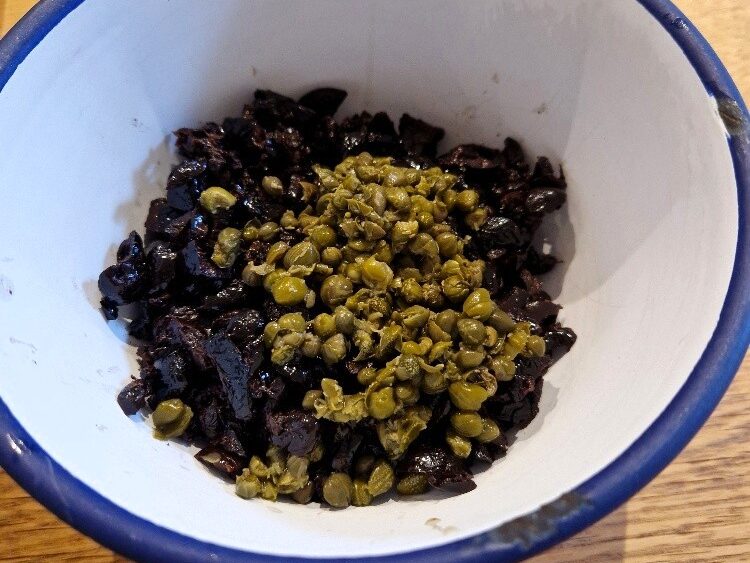
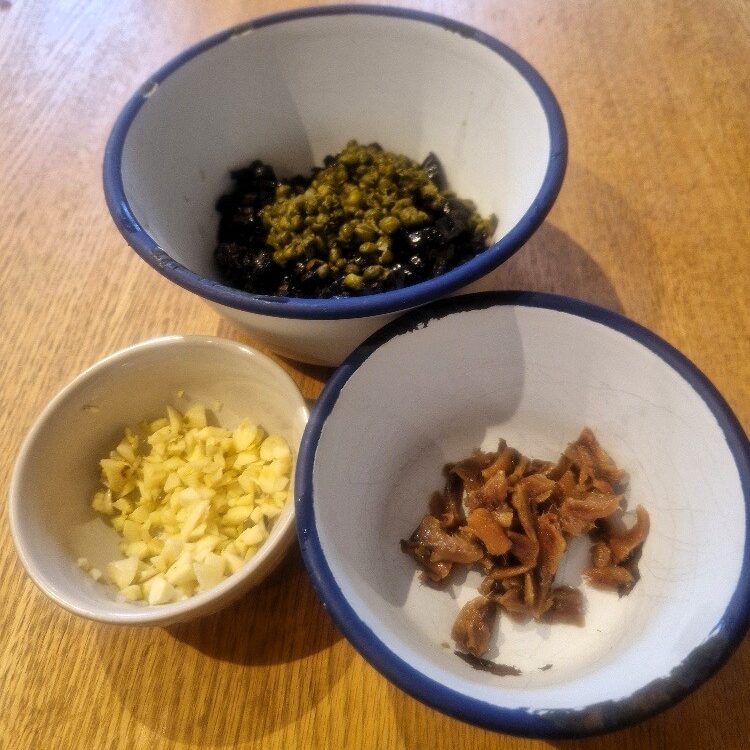
Chop the olives roughly – for this version we do chop them down, though coarsely, as in the pictures below, but in our other version of puttanesca we simply halve them, which blends less well into the sauce, but adds texture.
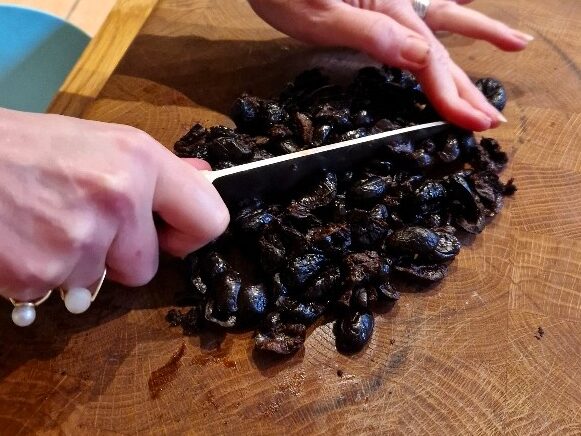
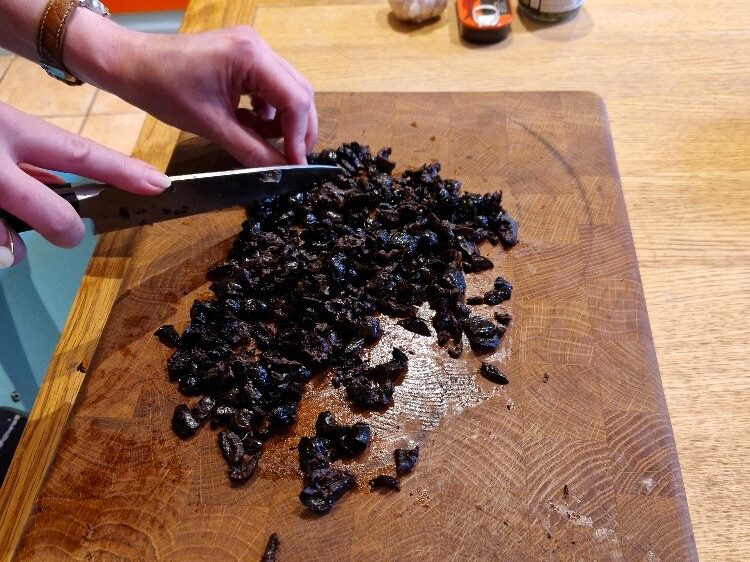
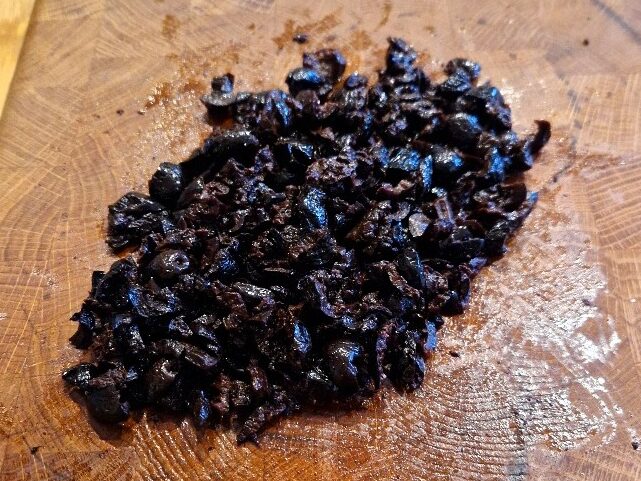
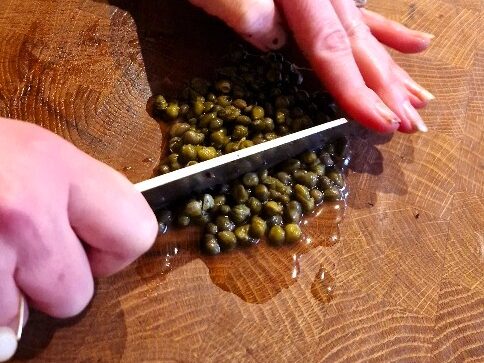
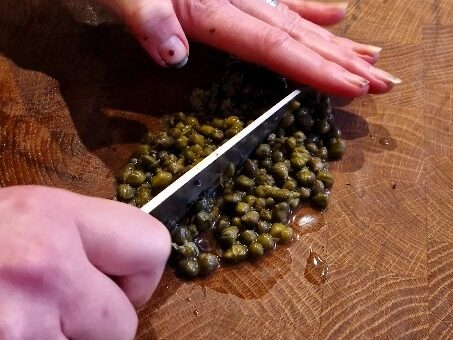
Add to a small bowl and reserve. Now chop the capers. Choose ones in vinegar, not salted, for this dish as the anchovies will already add saltiness – and in our case today, so would the olives. Also chop these roughly, especially if they are larger ones. Ours today were the small nonpareille variety so didn’t need much chopping – we could have left them whole, but if chopped they lend more flavour to the sauce. Add to the olives in the bowl.
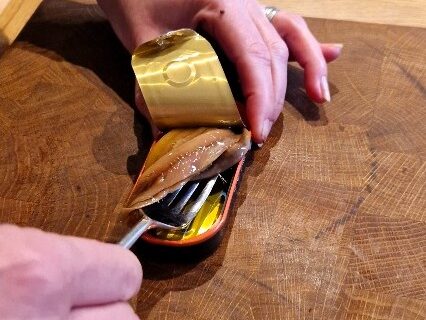
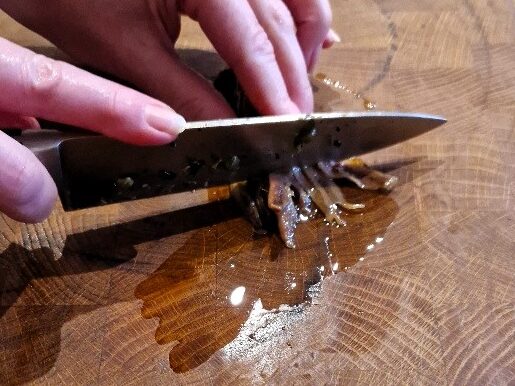
Now drain and roughly chop the anchovies – you just need a few strokes of your knife down the length – and reserve onto a plate or into another small bowl.
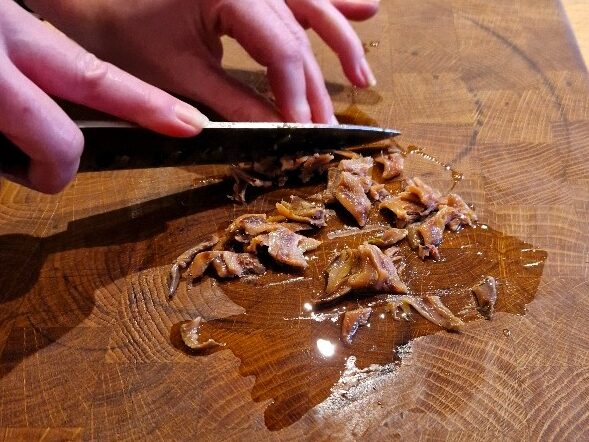
Jake sticks his nose in
Look out for Cantabrian anchovies, they are widely available (often now in many shops the only option) and much the nicest anchovies you can use – and still very inexpensive in most supermarkets. But if you can’t find them, standard anchovies will do, but will likely be saltier, so use fewer.
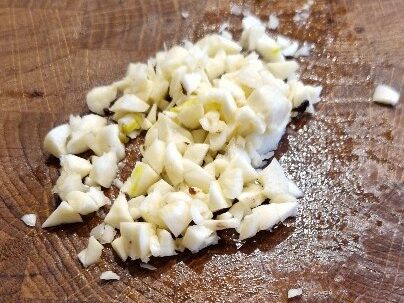
Peel and chop the garlic, we used four cloves today. Find out how in our garlic Tip. A rough chop is best.
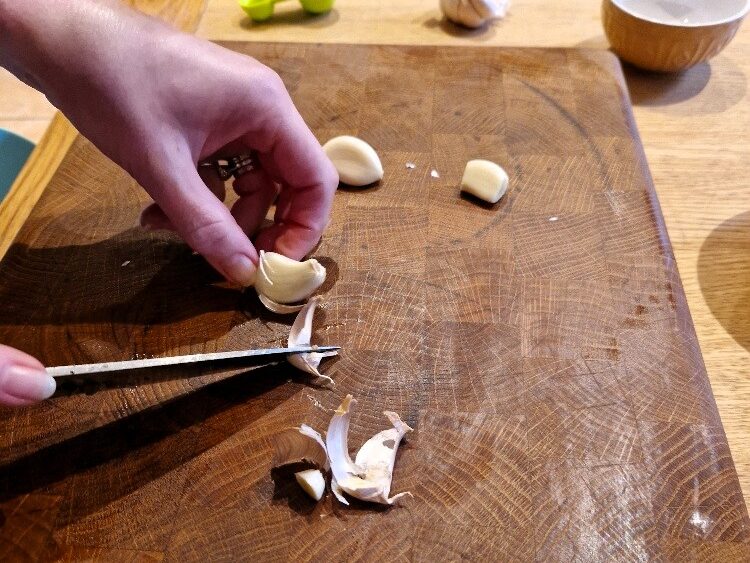
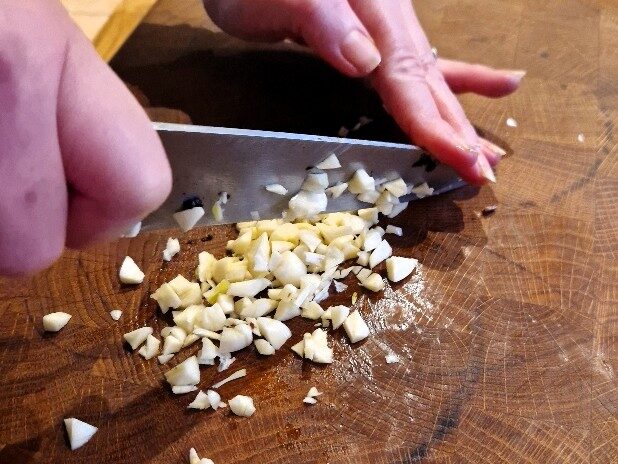
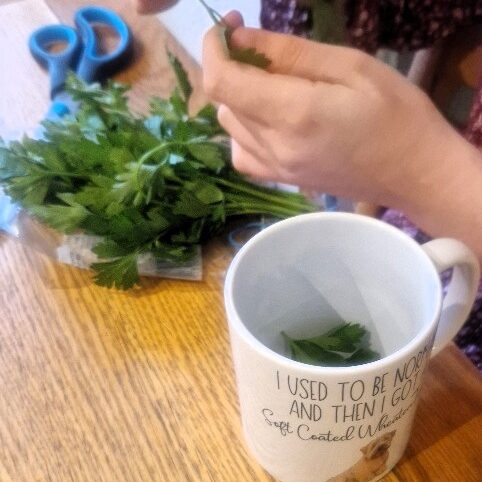
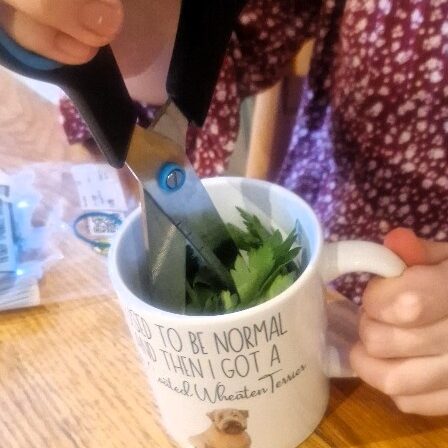
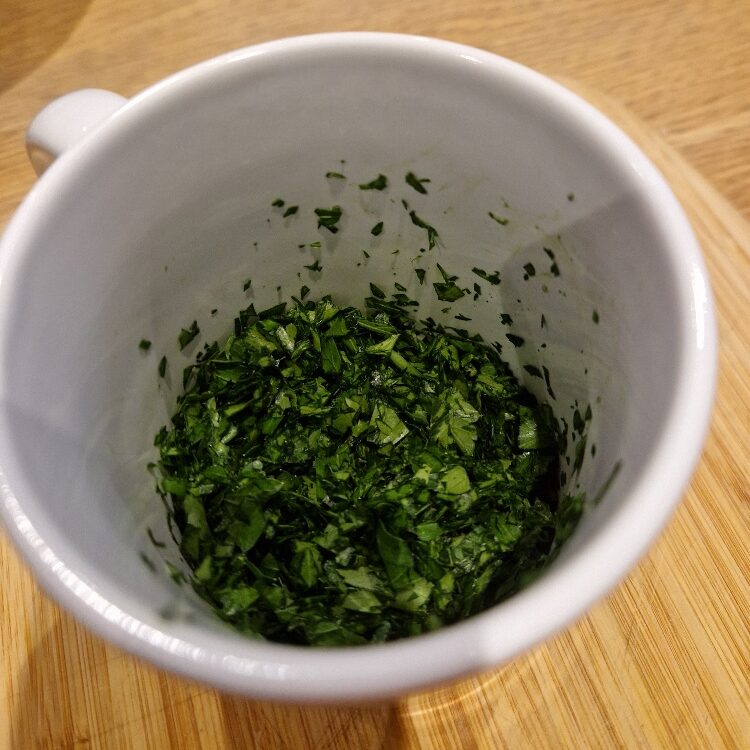
Also chop the parsley, find out how in our herb Tip. Your mise en place is done, and you are ready to cook.
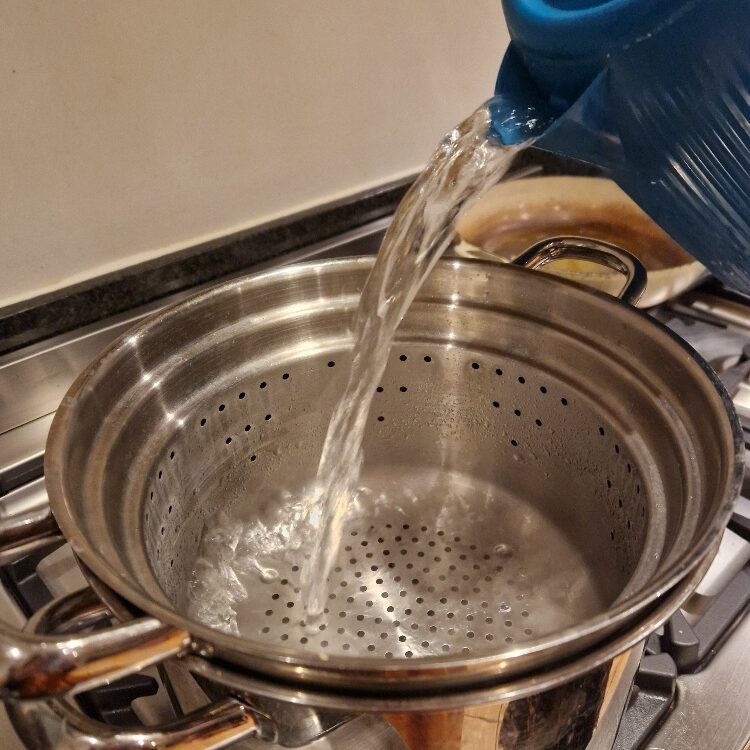
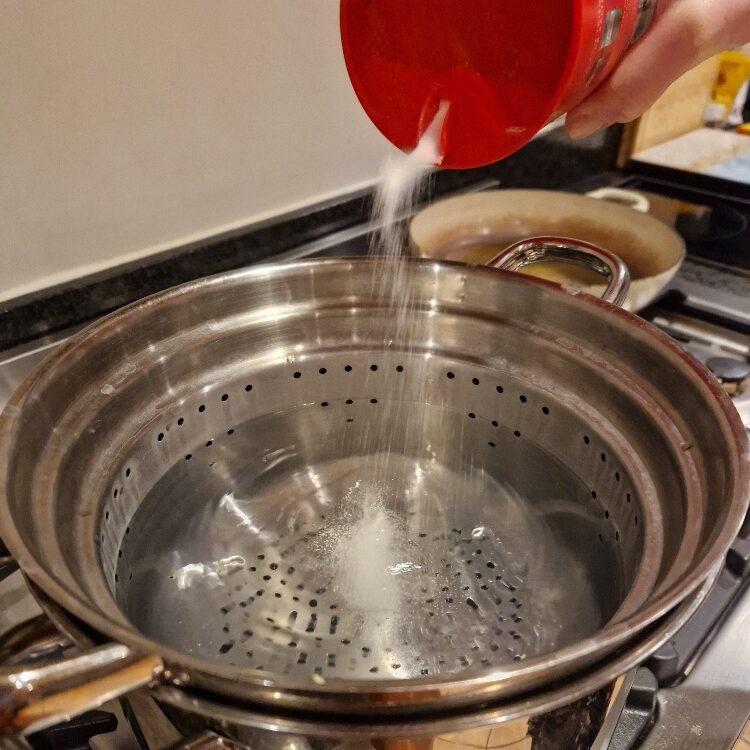
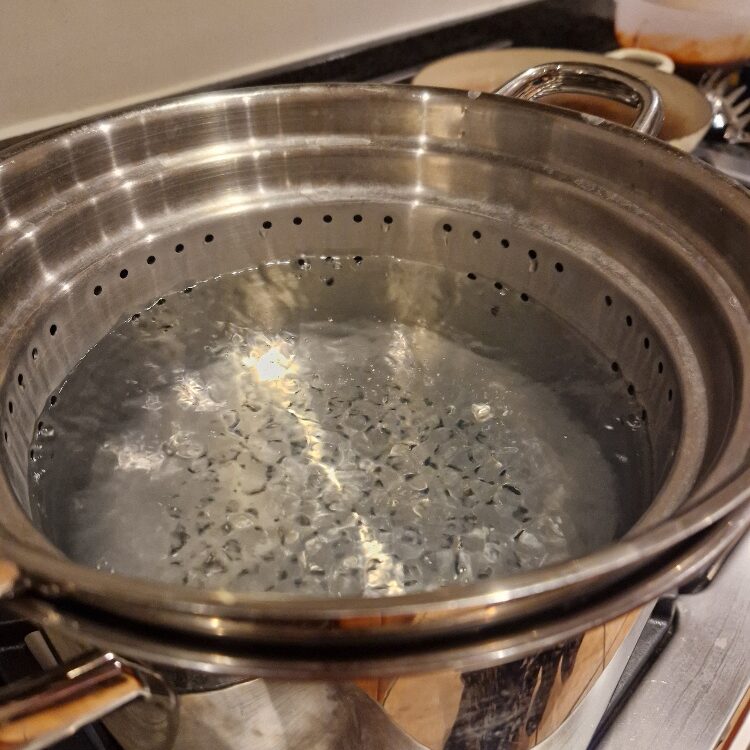
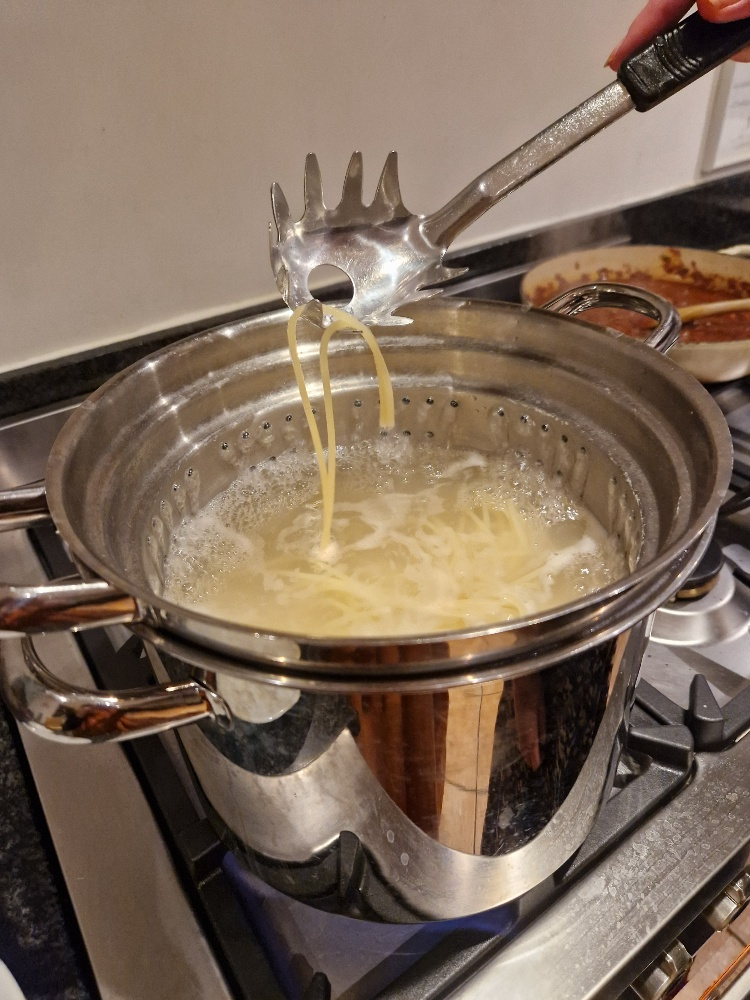
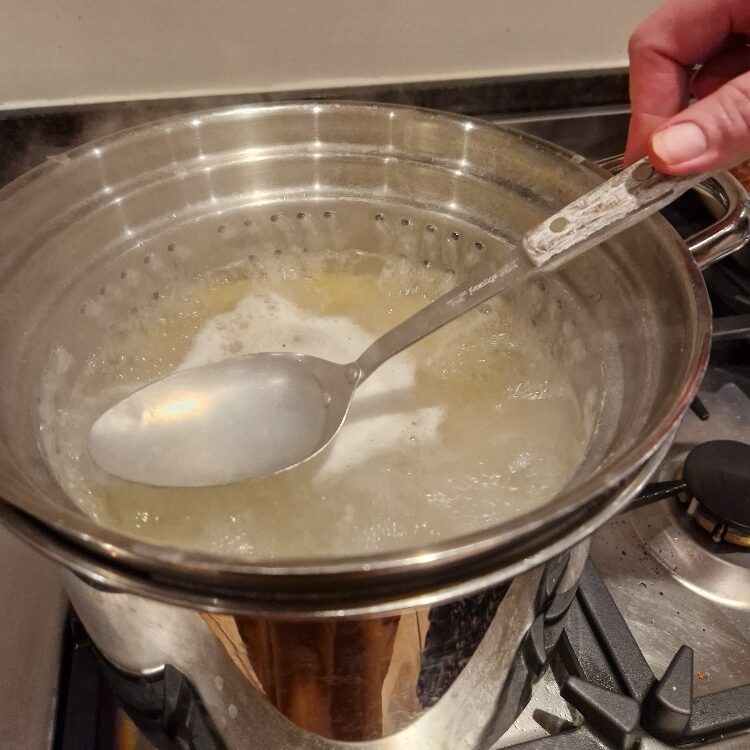
Before you start cooking the sauce, get the spaghetti on to boil – check how long this will take on the packet, usually 10 to 12 minutes, plus allow a few minutes to get the water to a rolling boil. Put a little water in your pasta pan or large saucepan and set it over a high heat; meanwhile fill a kettle and get it on to boil. Add boiling water to the pan – you need enough to fully cover the pasta, while allowing a gap at the top. Add a shake of salt. Allow the water to come up to a rolling boil – it should be bubbling fiercely.
Jake sticks his nose in
Putting salt in pasta water not only seasons the pasta (the salt water is pulled into the pasta as it cooks) but gives it a better texture too.
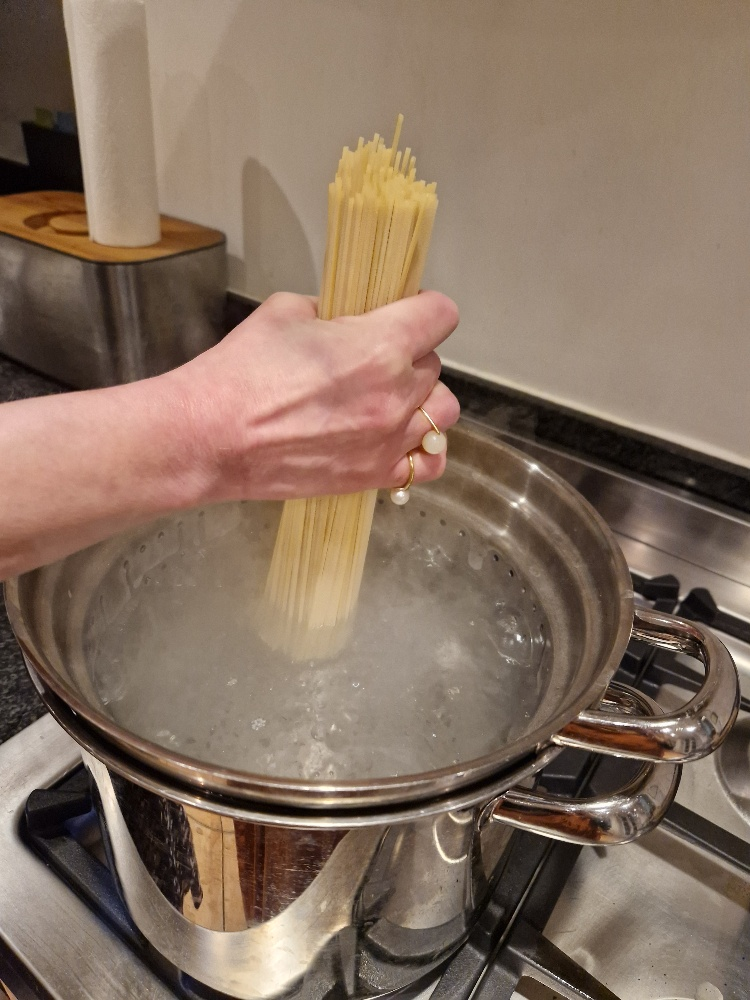
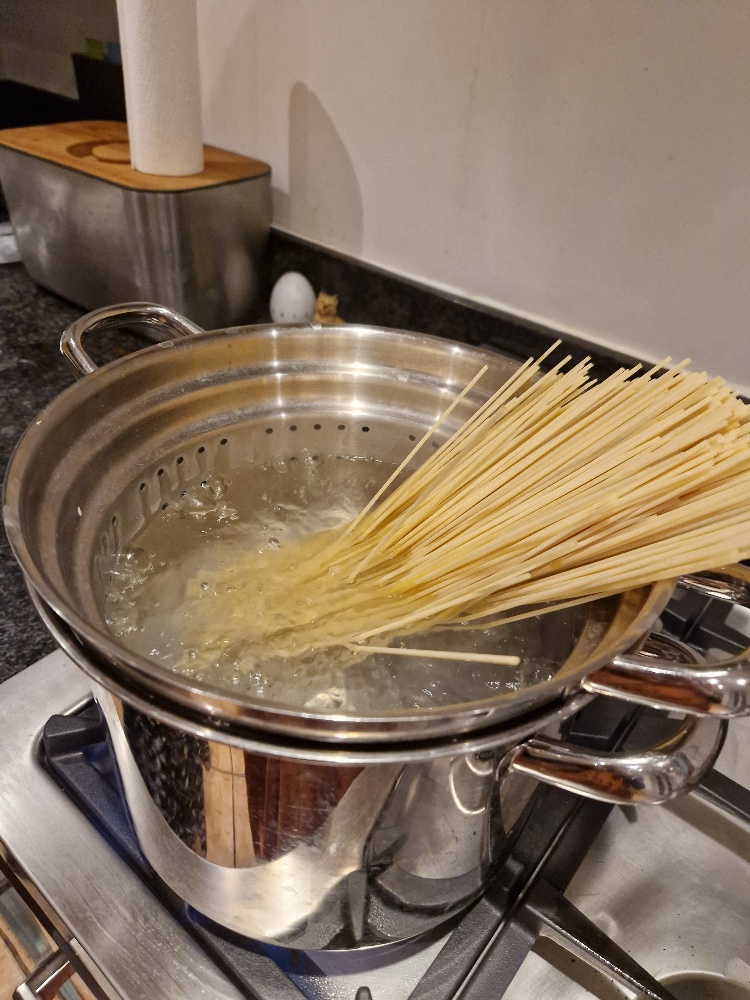
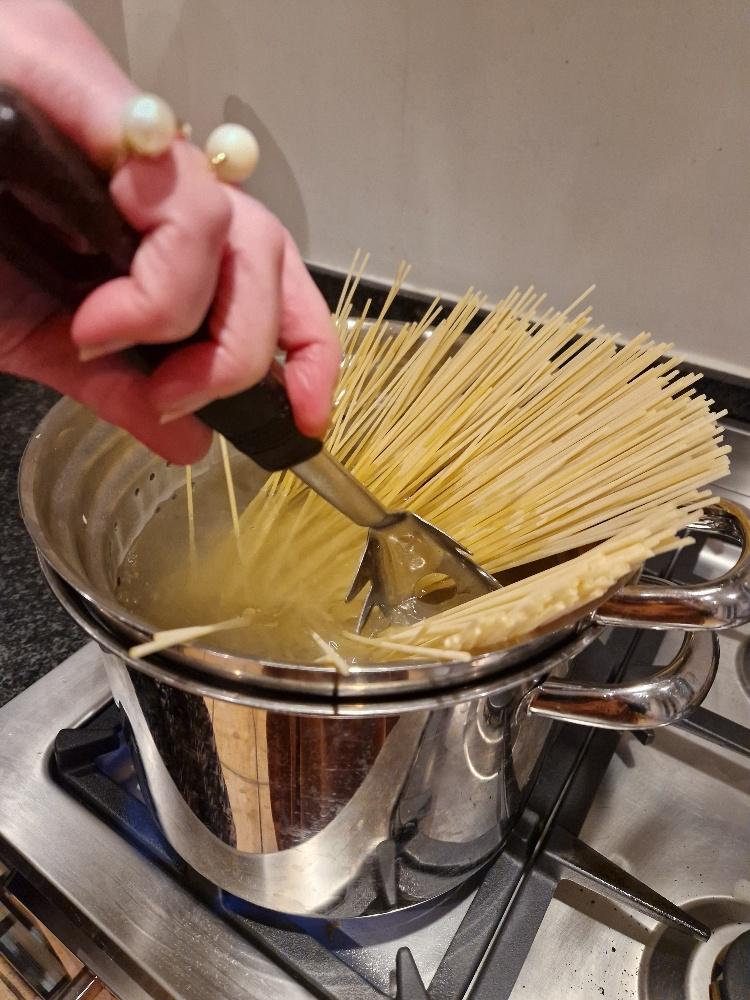
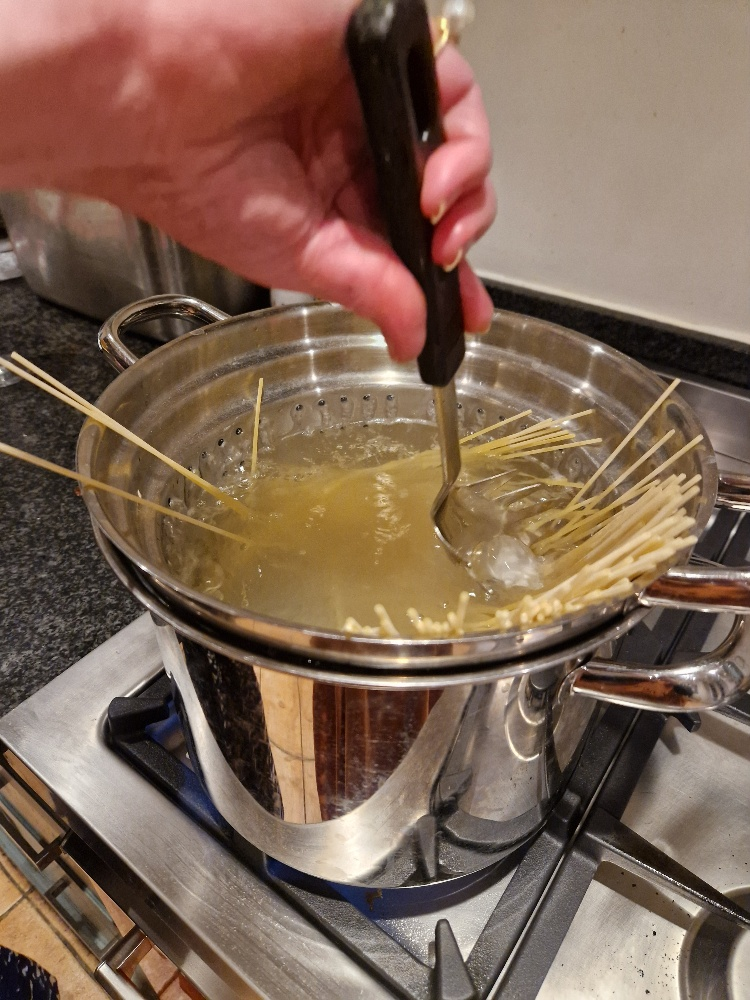
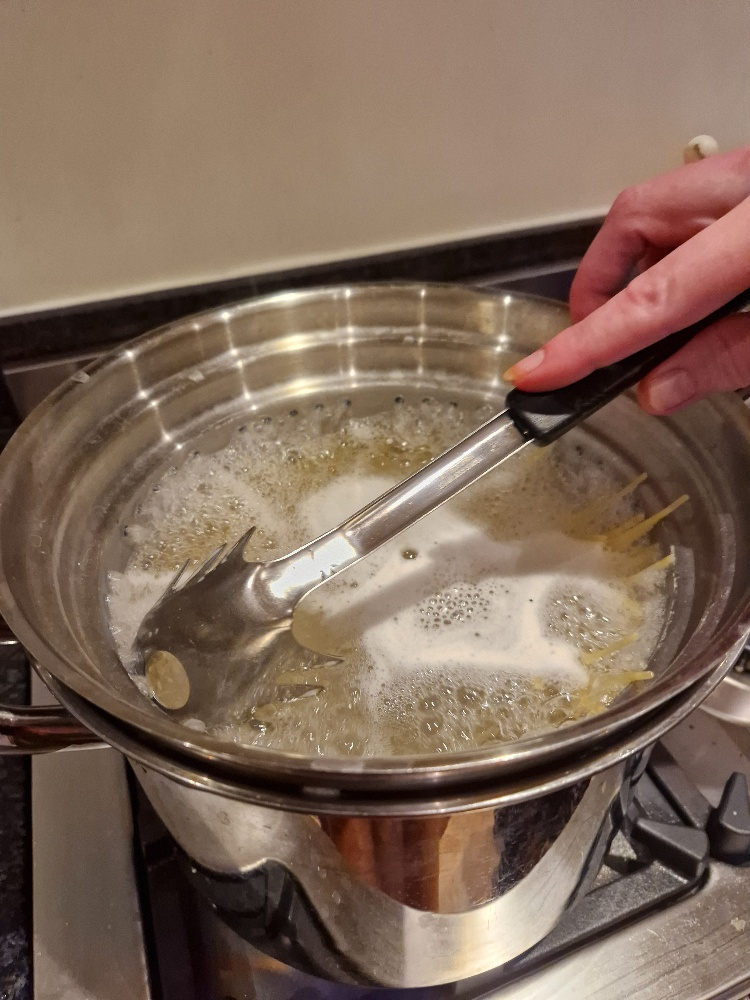
When the water is boiling, add the spaghetti. We measure spaghetti by eye, but about 100g per person is a good portion. Spaghetti is long, so you need to gently push it down into the water as the ends soften and spread it out so that all the strands are fully submerged. Give it a stir to stop the pasta from clumping and boil until done. Pasta generally has a range of cooking times with the lower number for firmer (al dente) pasta and the higher one for softer. Test for done-ness at the lower of the two timings by taking out a strand and biting into it – if it feels hard or chalky, boil for longer.
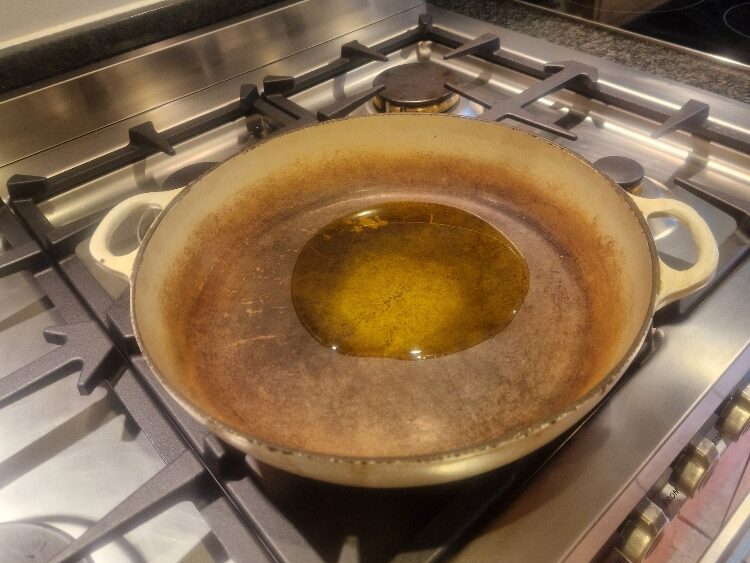
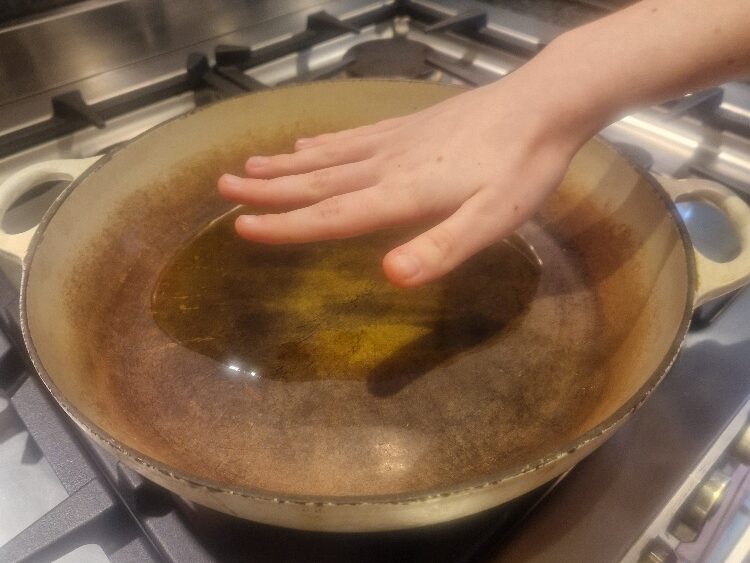
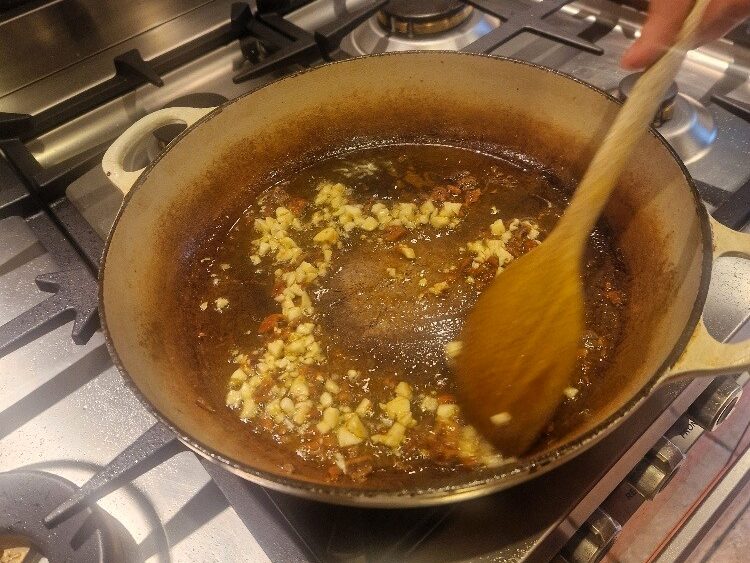
While the pasta is cooking, make the puttanesca sauce. Place a pan over a medium heat and add a glug of olive oil. When the oil is hot and just sizzling – test it with your hand, you should feel the heat – add the anchovies and stir until they dissolve slightly in the hot oil, a few minutes.
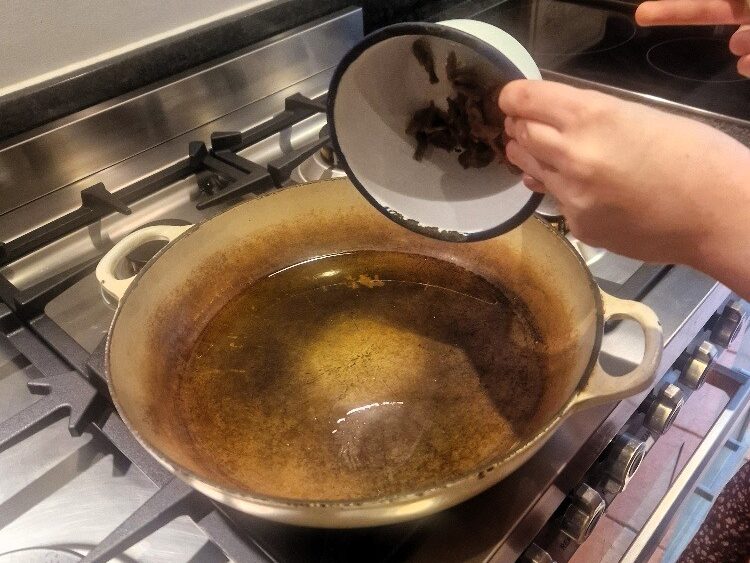
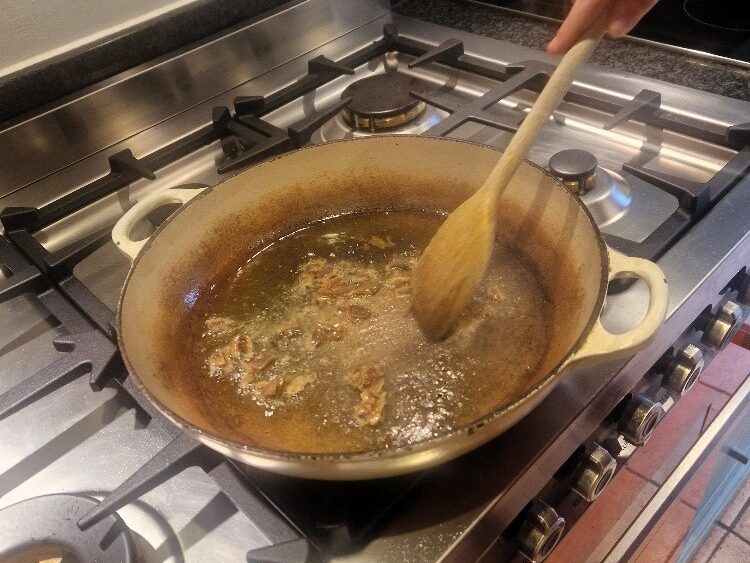
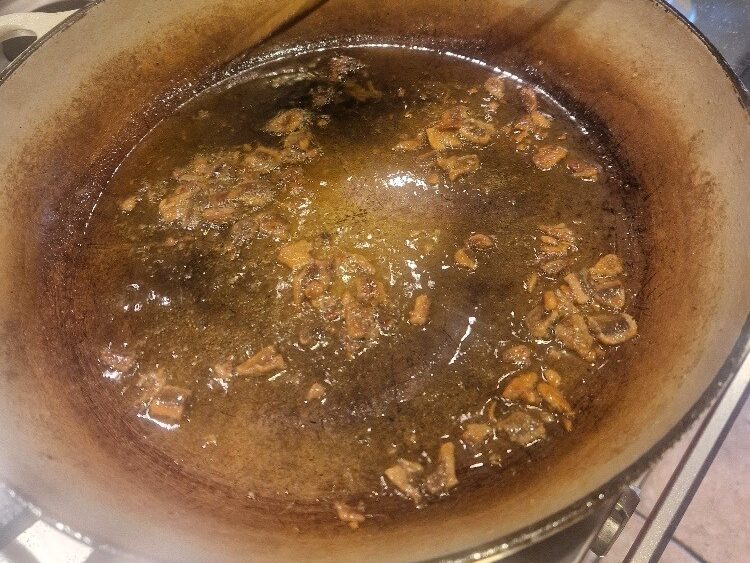
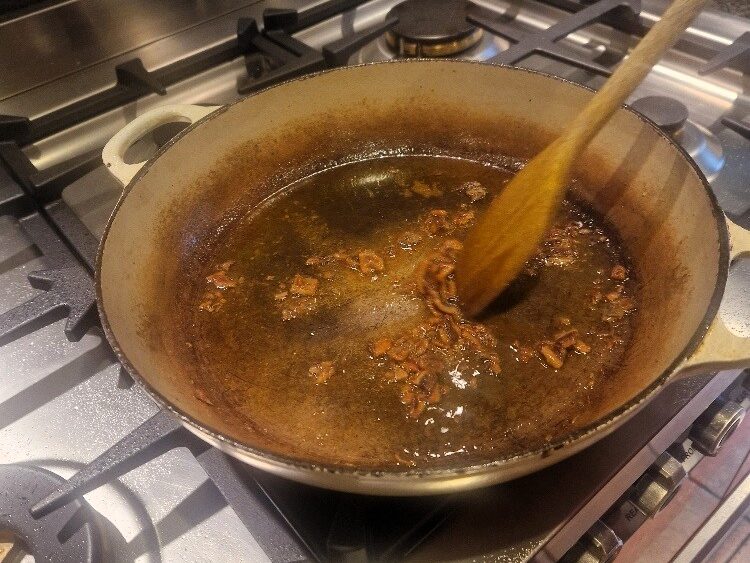
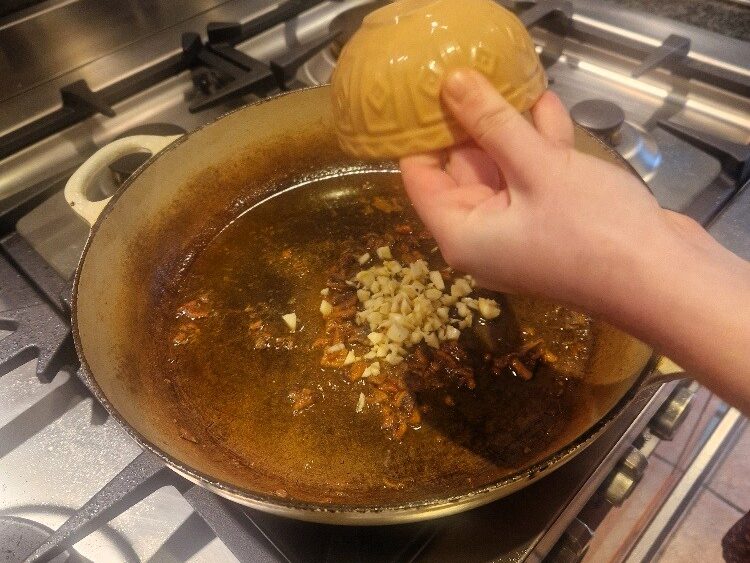
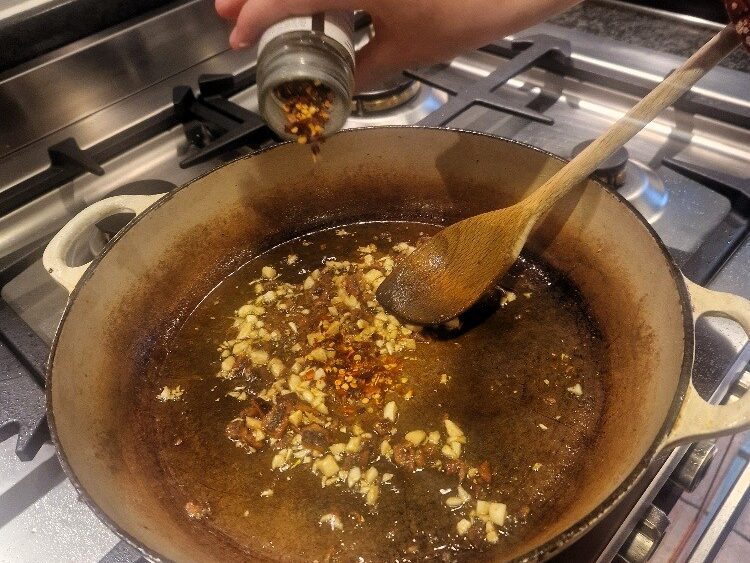
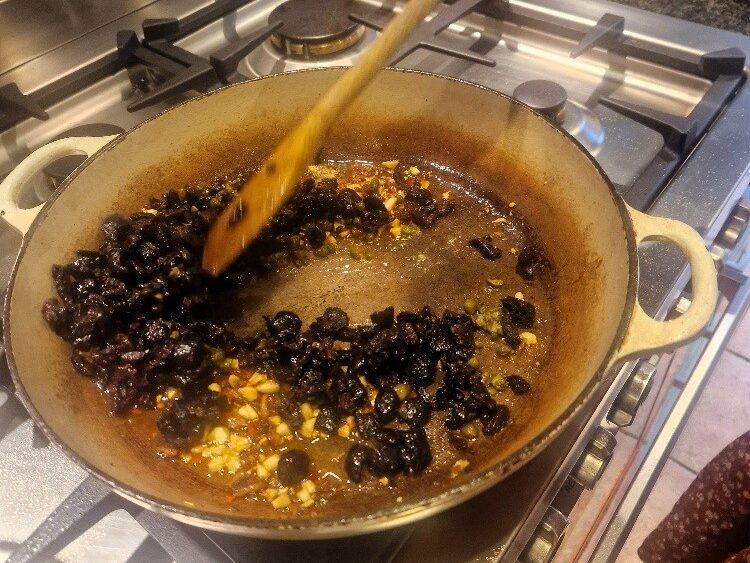
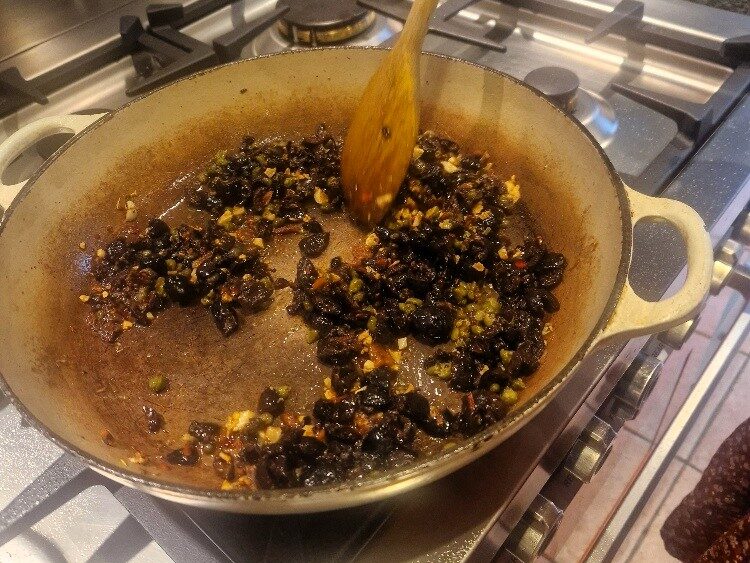
Add the garlic and stir until just softened and the garlicy smell rises. Add a shake of chilli flakes – how much depends on how spicy you like it – and stir to combine. Then add the olives and capers and turn the heat up slightly. Cook until you can hear them sizzling, they will spit and pop when ready.
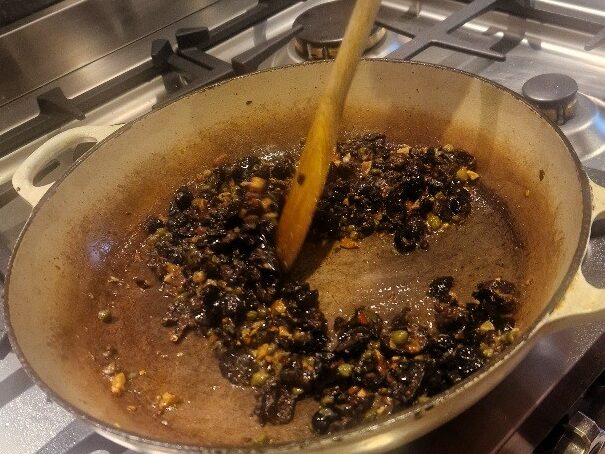
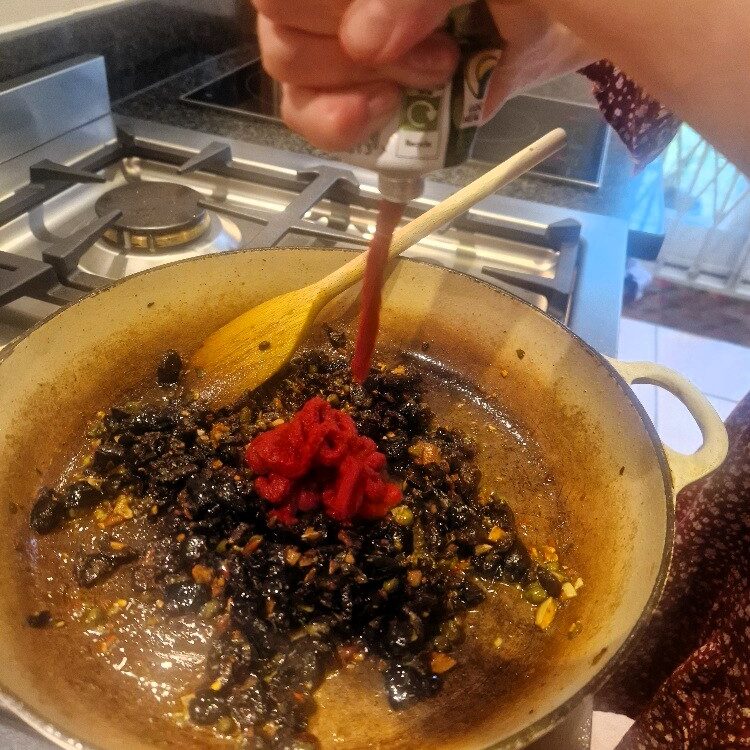
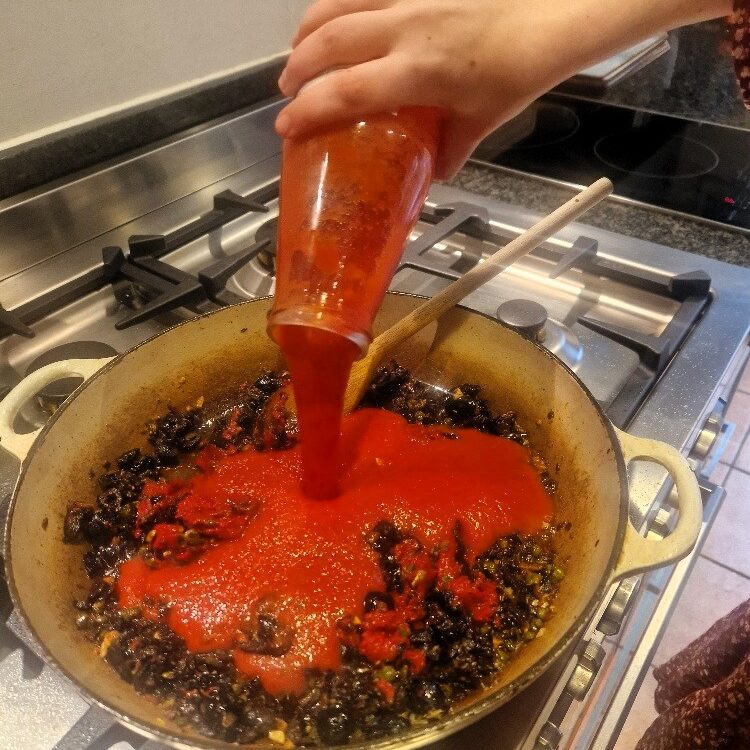
Next add the tomato puree, a large squeeze, and stir briefly to distribute. Then add one jar of passata and stir well.
Jake sticks his nose in
Swirl the bottle with a little boiling water to get all the passata out, and add this to the pan too.
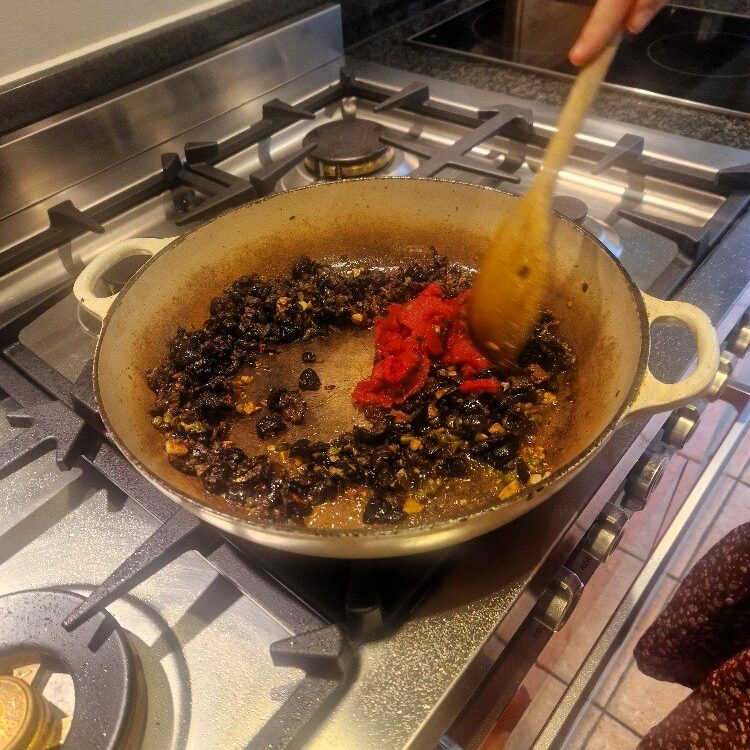
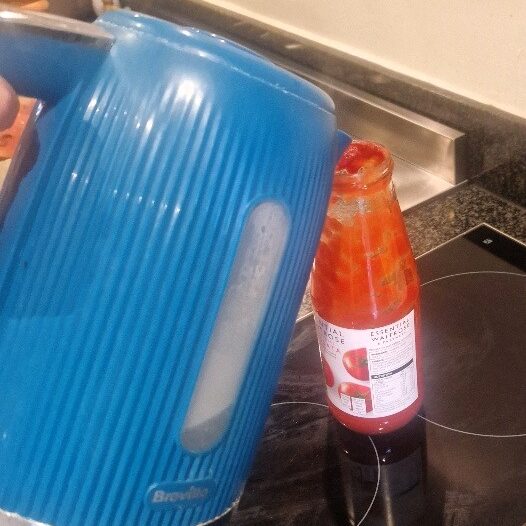
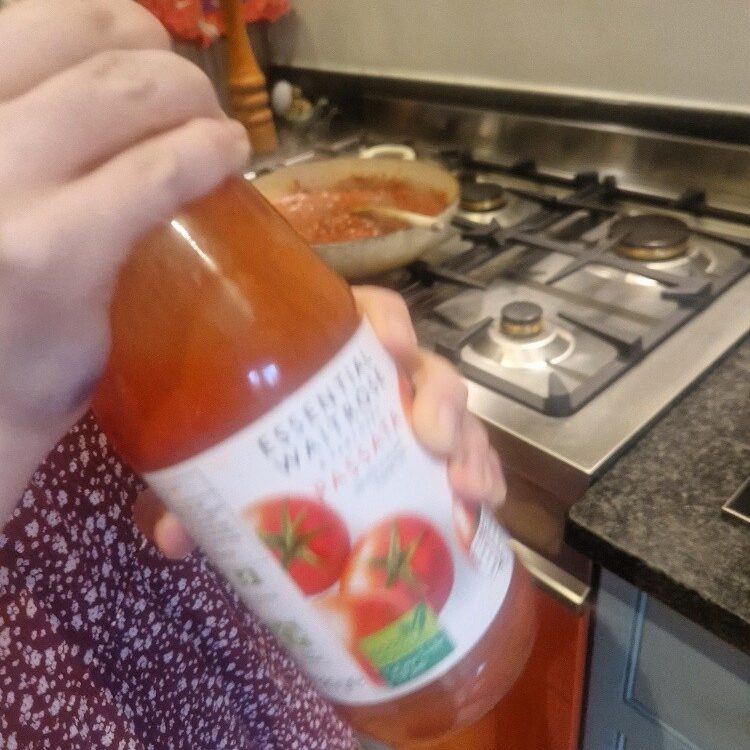
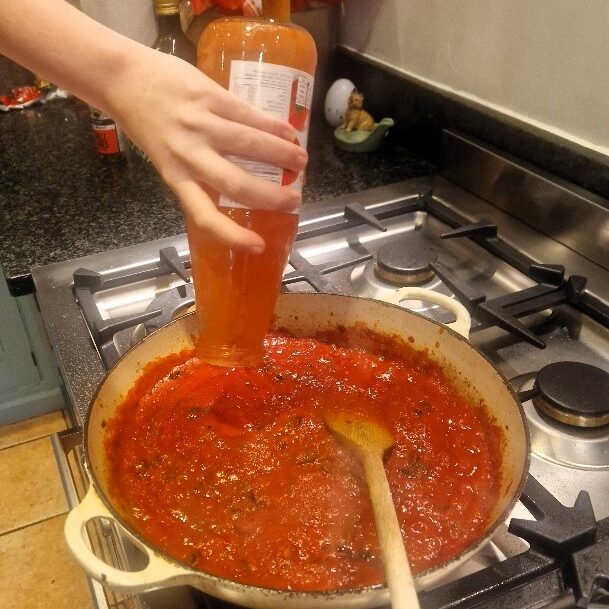
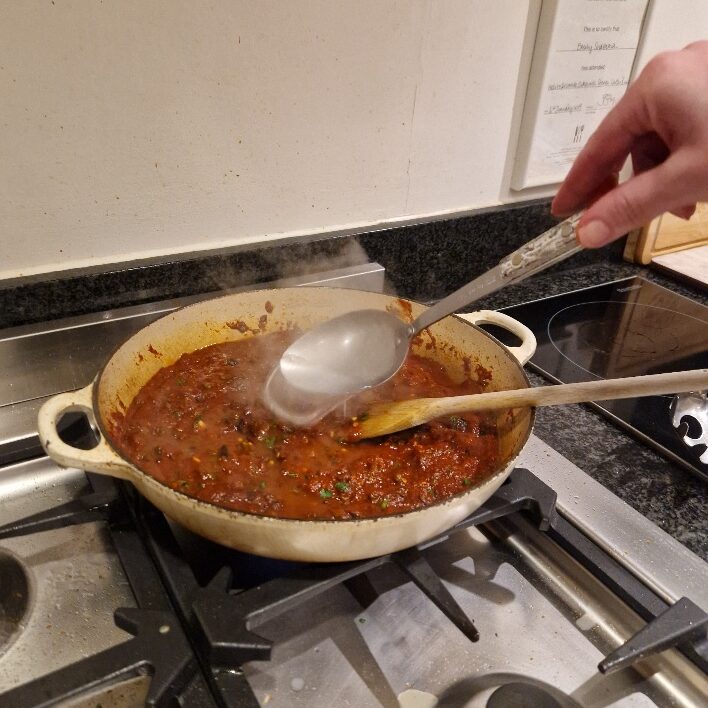
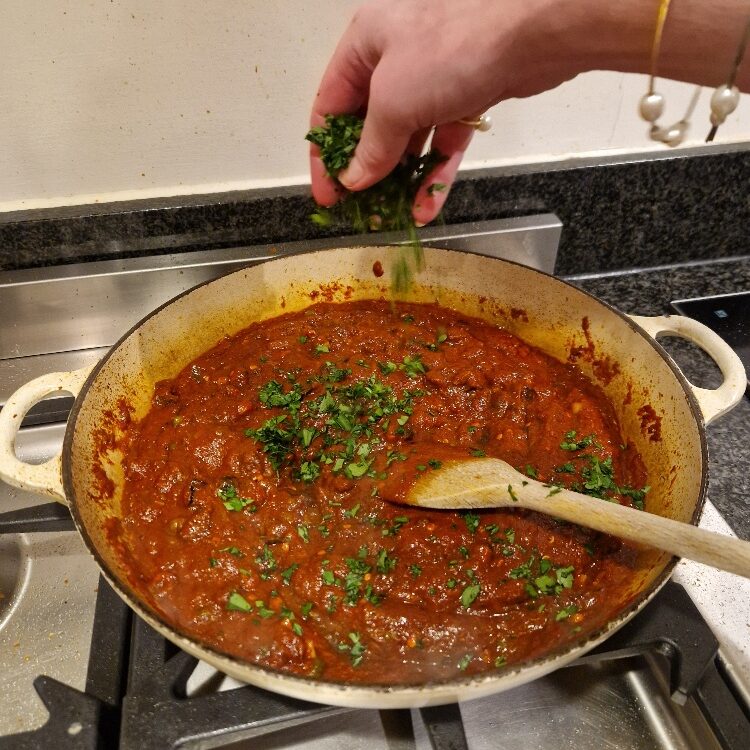
Stir the sauce well, then simmer to reduce slightly. You don’t want the sauce to be too thick as you need it to coat the spaghetti (rather than sit on top of it as you do with Spaghetti Bolognese), but you want to simmer off any wateriness so the sauce is rich and glossy. If the sauce reduces too much, add a spoon or two of the pasta water to it to loosen. Add about half the parsley, keeping the rest to garnish.
Jake sticks his nose in
Adding some pasta water to the sauce is a good idea – not only does it loosen the sauce, it helps it to emulsify, making it smoother and better able to ‘stick’ to the pasta.
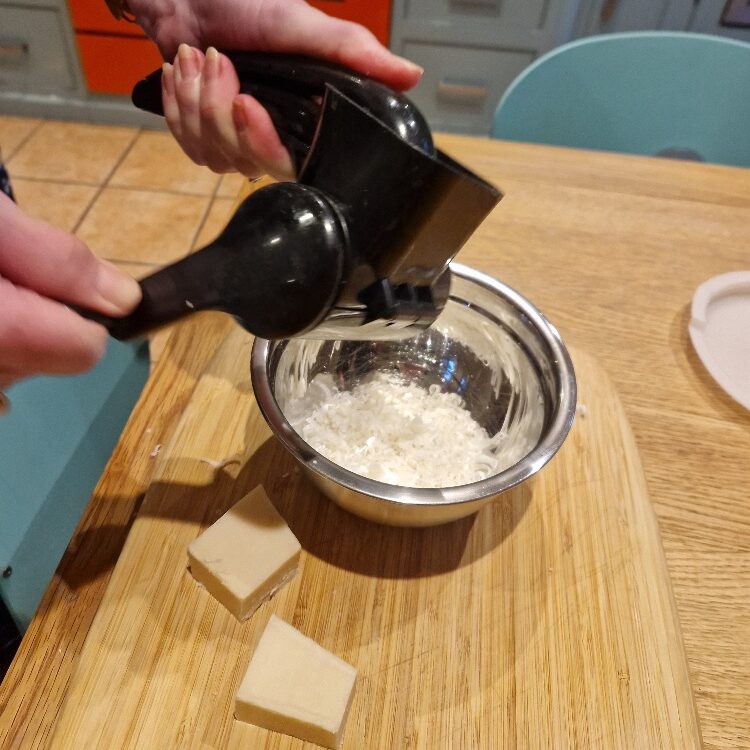
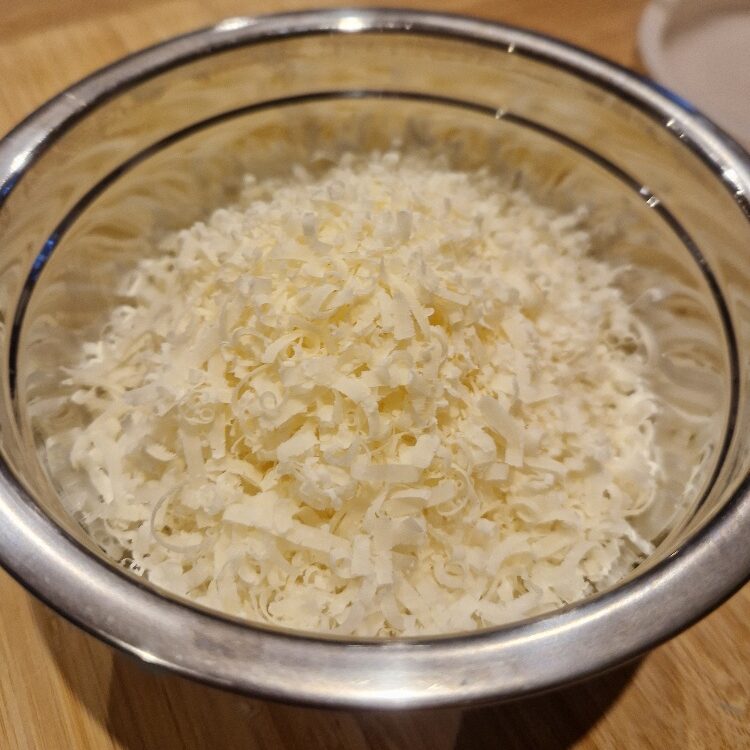
While the pasta and sauce are cooking, grate the cheese. Topping the dish with cheese is optional, but we like it and use parmesan which lends a slight sweetness. Set aside with the other half of the chopped parsley for serving. Taste the sauce and adjust the seasoning if needed – you shouldn’t need salt, and today we didn’t add black pepper either as the chilli was enough.
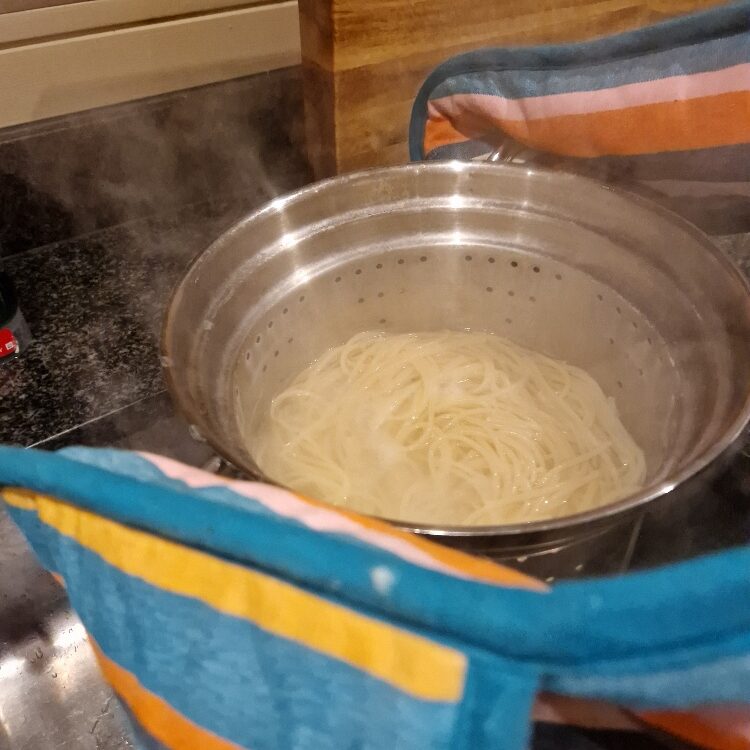
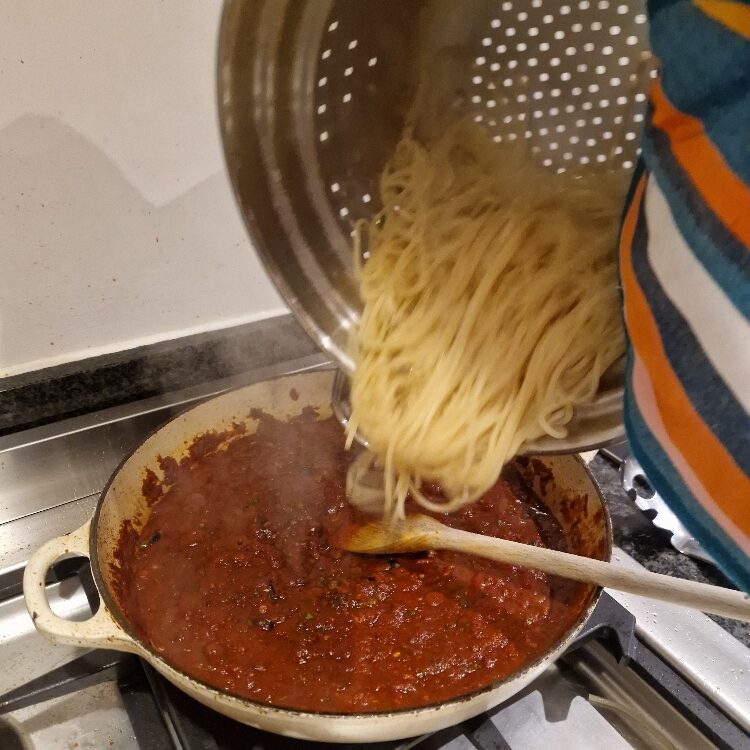
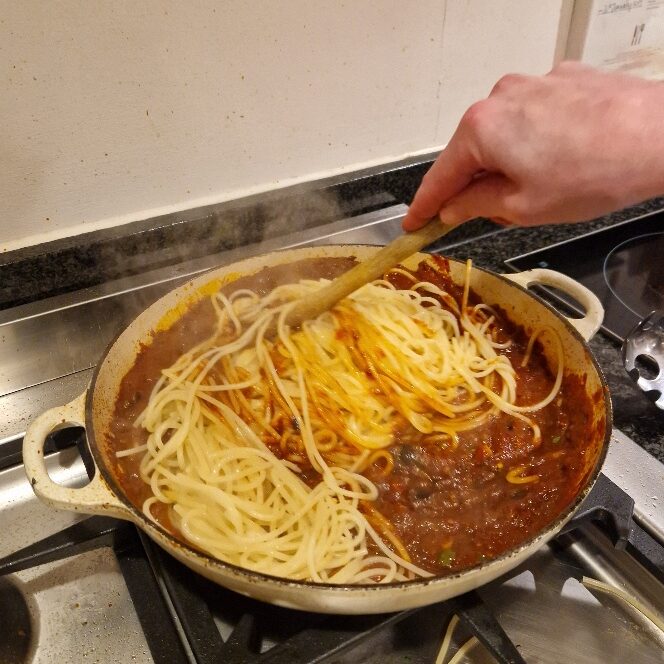
When the pasta is ready, drain and add to the pan with the sauce. Stir well to really coat the pasta in the sauce and to distribute the olives and capers evenly – a pasta server makes this easier.
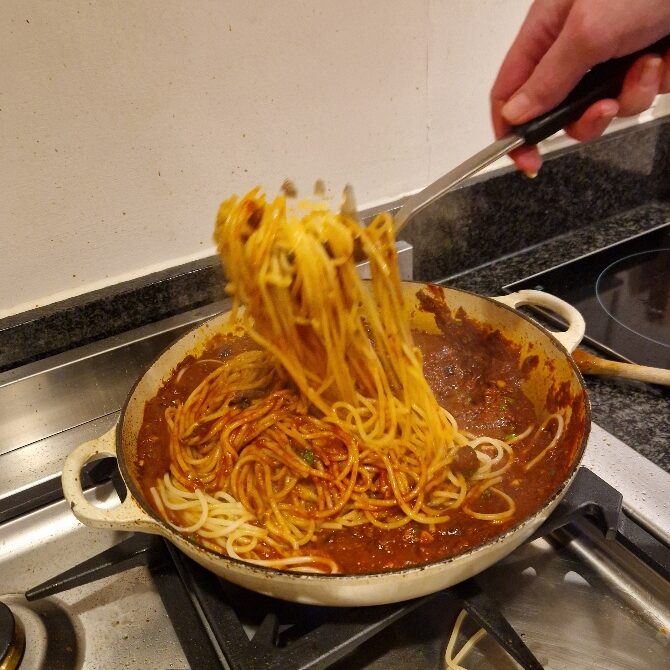
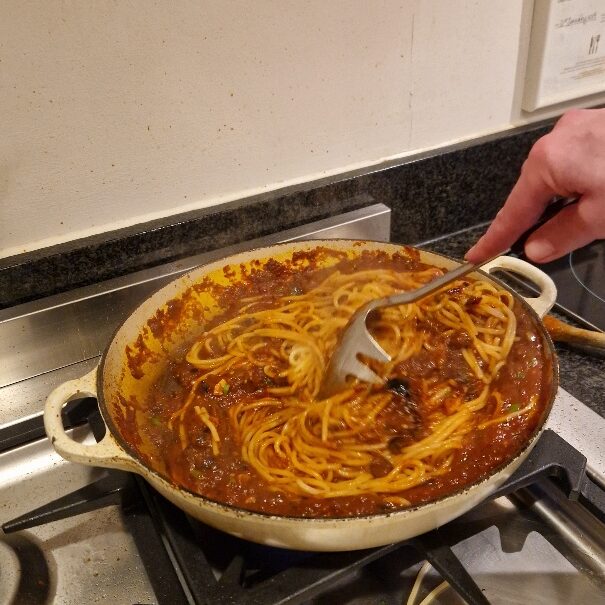
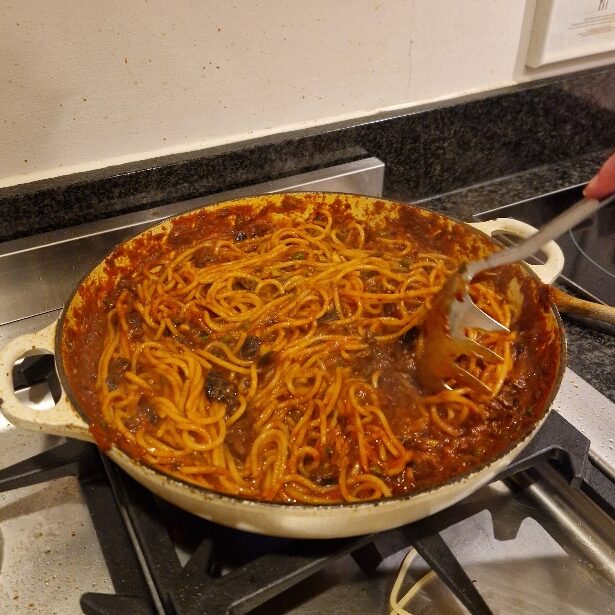
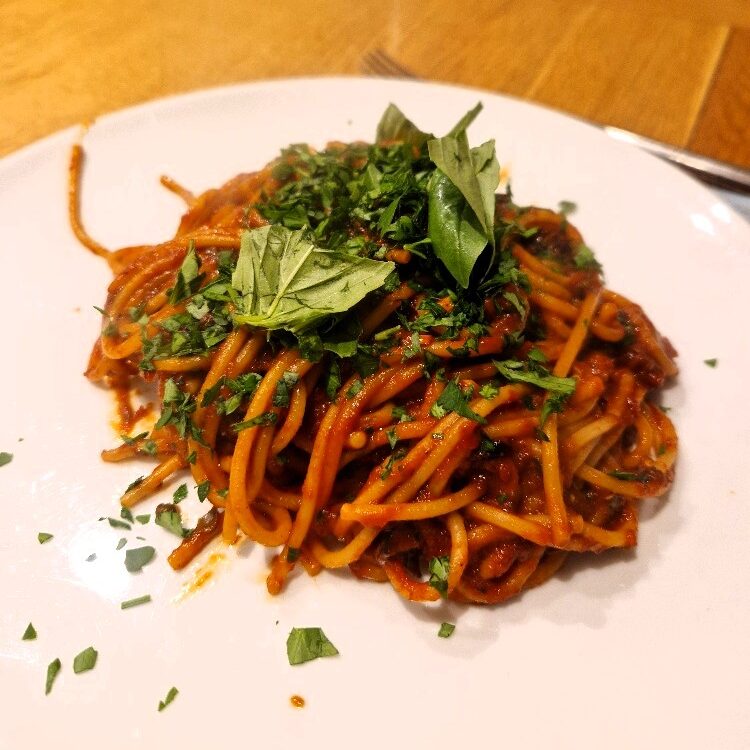
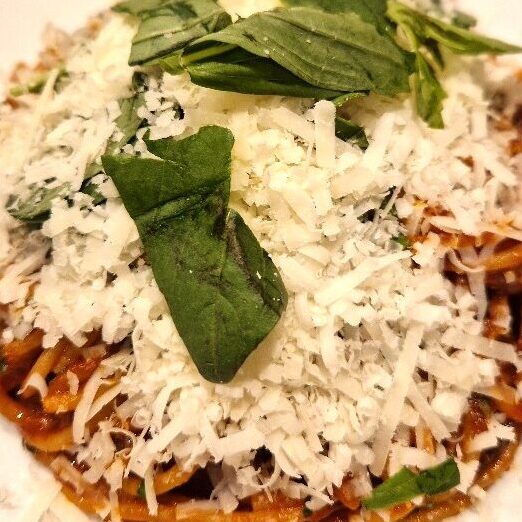
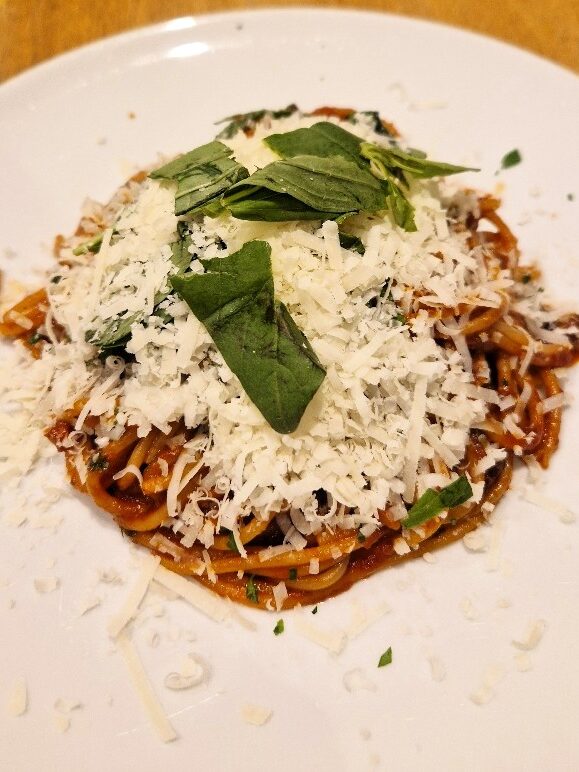
Serve immediately, topping each portion with some of the parsley and ripping over a few leaves of basil. Pass round the cheese for you and your guests to add as much as they wish.
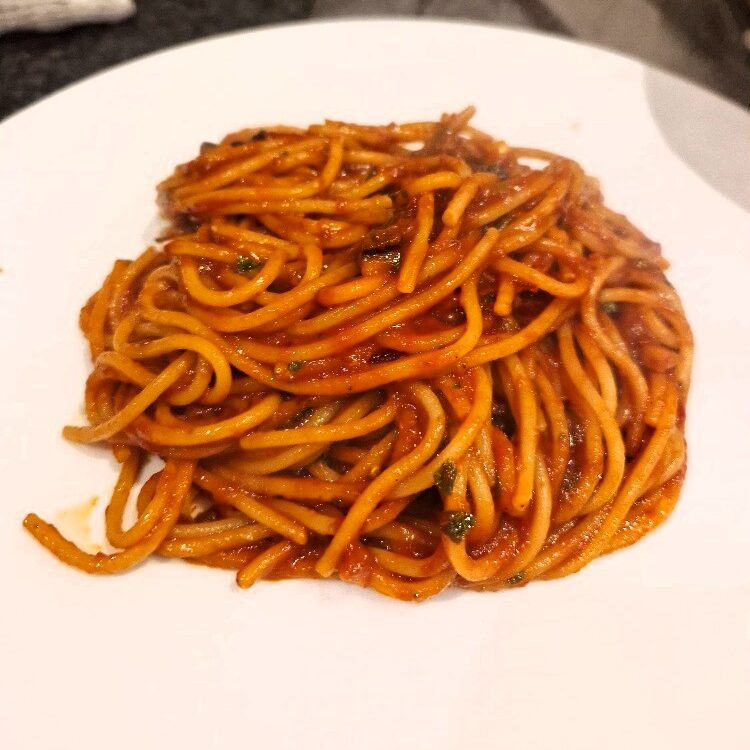
Enjoy!
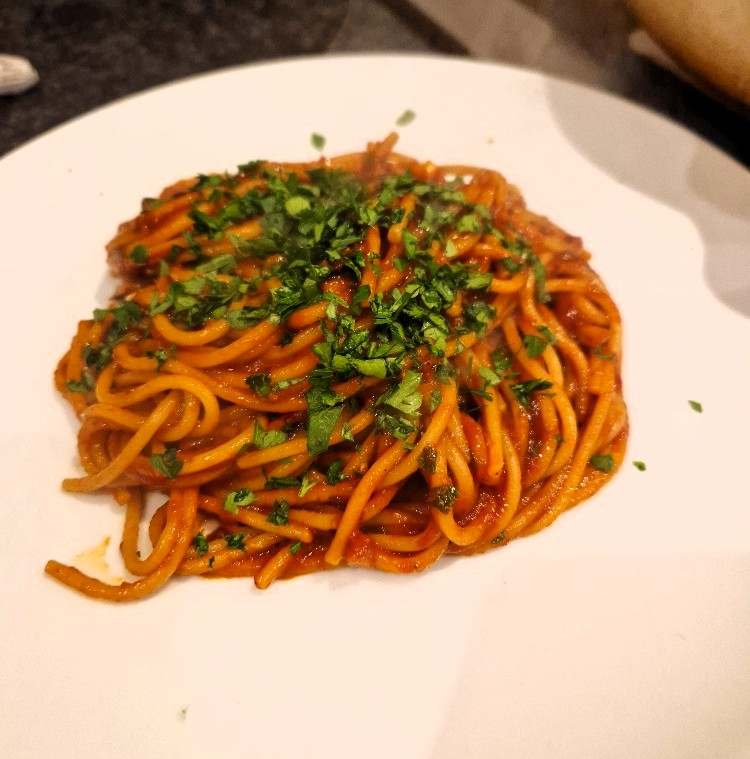
Punchy Pasta Puttanesca
Ingredients
Equipment
Method
- Rinse the olives and pit them if needed. Chop them roughly. Also roughly chop the capers and reserve both together in a small bowl. Roughly chop the anchovies and reserve separately.
- Roughly chop the garlic. See our garlic Tip. Chop the parsley, see our herb Tip.
- Before starting to cook the sauce, get the spaghetti on to boil. Heat the water with a shake of salt until it is at a rolling boil – it should bubble and swirl. Add the spaghetti, gently pressing it down into the water and spreading it out until it is completely submerged. Stir to separate the strands. Cook for the time stated on the packet, usually about 10 to 12 minutes. Test a strand for doneness – if it is chalky or too firm, cook a little longer.
- Add the olive oil to a large frying pan, and set over a medium heat. When the oil is hot, add the anchovies. Stir until they melt slightly into the oil, a few minutes. Add the garlic and stir until it softens slightly and the garlicy smell rises. Add a shake of chilli flakes, if using, to taste. Stir briefly to combine, then add the olives and capers and turn the heat up slightly. Fry until they sizzle and pop, a few minutes.
- Add a generous squeeze of tomato puree to the sauce, stir, and add a jar of passata. Rinse the jar with a little boiling water and add this to the pan. Reduce the heat, and add about half the parsley. Stir, then simmer while the spaghetti is cooking. You want a sauce that is glossy and not watery, but still thin enough to coat the pasta. If the sauce gets too thick, add a few spoons of the hot pasta water.
- Grate the cheese, if using, and set aside. Taste the sauce, and add seasoning if necessary to taste.
- When the spaghetti is cooked, drain and add to the pan with the sauce. Stir well – a pasta server will make this easier – until the pasta is well coated, and the olives and capers well distributed.
- Serve immediately, topping each portion with a little chopped parsley and some torn basil leaves. Top with the cheese, if using.
- Enjoy!