


Skills you will learn in this recipe
Making a pesto; cooking green beans
Links to the last recipe
Cooking pasta; making a classic pasta sauce
When you think of pesto, you’ll probably think first of the classic green Pesto Genovese, rich with pine nuts, cheese and basil – and indeed we’re making a version of that today. But pesto comes in many forms from all over Italy, and indeed southern France where pistou is its cousin, lacking cheese and nuts.
Italian pestos can, amongst other things, include tomatoes; be made with almonds, walnuts or pistachios; feature herbs other than basil; swap hard cheese for ricotta, or not feature it at all. And some are heavy with garlic, and others exclude it completely. In fact ‘pesto’ simply means ‘pounded’ – so any crushed sauce can qualify! Today we’re going classic green pesto, with a little money-saving twist, but we’ll feature another version next in the series.
Homemade pesto is really easy and quick to make, and very forgiving in terms of quantities of ingredients used. We generally make it by eye, tasting as we go, and adding more of the key ingredients until we’re happy. It’s also a far remove form the jarred varieties you’ll find in every supermarket – which are great, inexpensive and convenient, but almost like a different product. Homemade is much more delicate and fragrant, so it really is worth making from scratch.
The only downside to pesto-making is that pine nuts are very expensive – as indeed are most nuts, but pine nuts particularly so. You can swap them for less expensive walnuts or cashews – both lovely though this does change the flavour profile. But we like the creamy, sweet-but-bitter notes that pine nuts bring, so a great tip to reduce cost is to replace some of them with sunflower seeds. These seeds give a similar taste and texture to pine nuts and are very healthy and good value – you could in fact make an excellent pesto with sunflower seeds alone, which would also make it nut free.
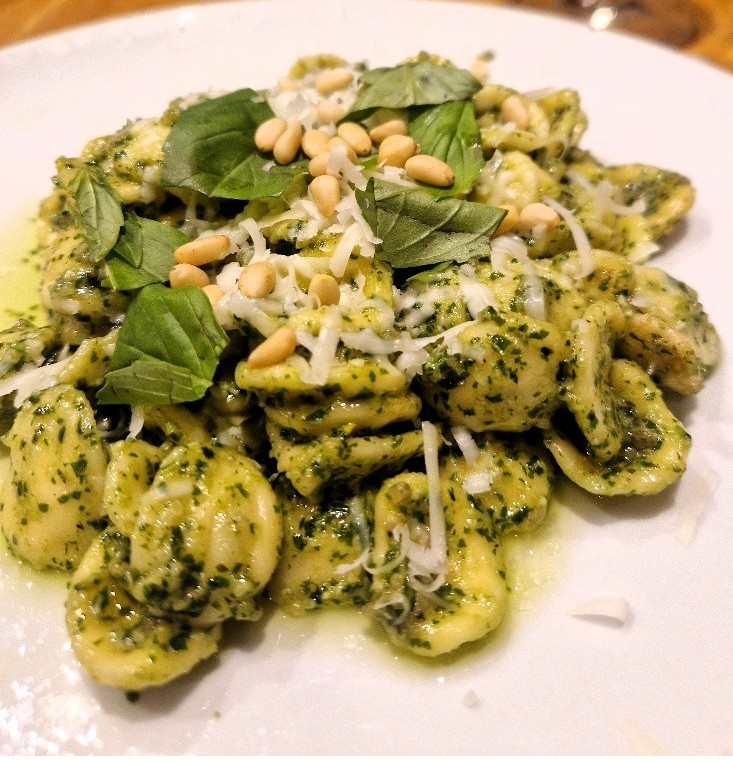
Today we are combining pine nuts with sunflower seeds and pecorino cheese, and most importantly lots of fresh basil, to make a fantastic green pesto sauce for pasta. And to serve on the side to add freshness, we’re making a crunchy, sweet bean & beetroot salad, with a tangy shallot vinaigrette.
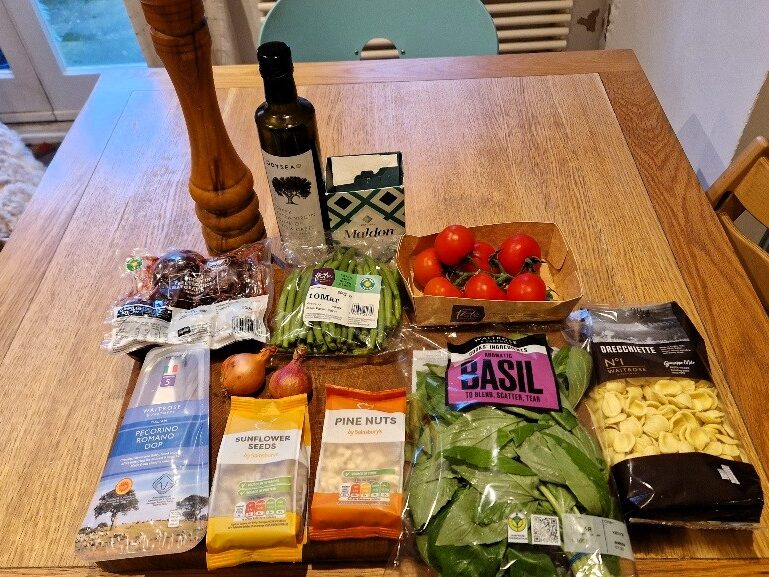
Our green pesto version does not use garlic. We always used to add a couple of cloves to our pesto, but having tried it without we much prefer it. Raw garlic can be a bit of a bully – we find it knocks out the fragrance of the basil and the sweetness of the nuts. But if you like your pesto garlicy, by all means add a clove or two – just don’t be heavy handed or you’ll simply be making a more expensive form of garlic sauce!
We use pecorino, but you could use parmesan, or a combination of the two. The latter is particularly nice, and slightly more savoury-sweet than with pecorino alone. But again we find pecorino more delicate and less prone to dominate. It tends to be a bit cheaper than parmesan, too.
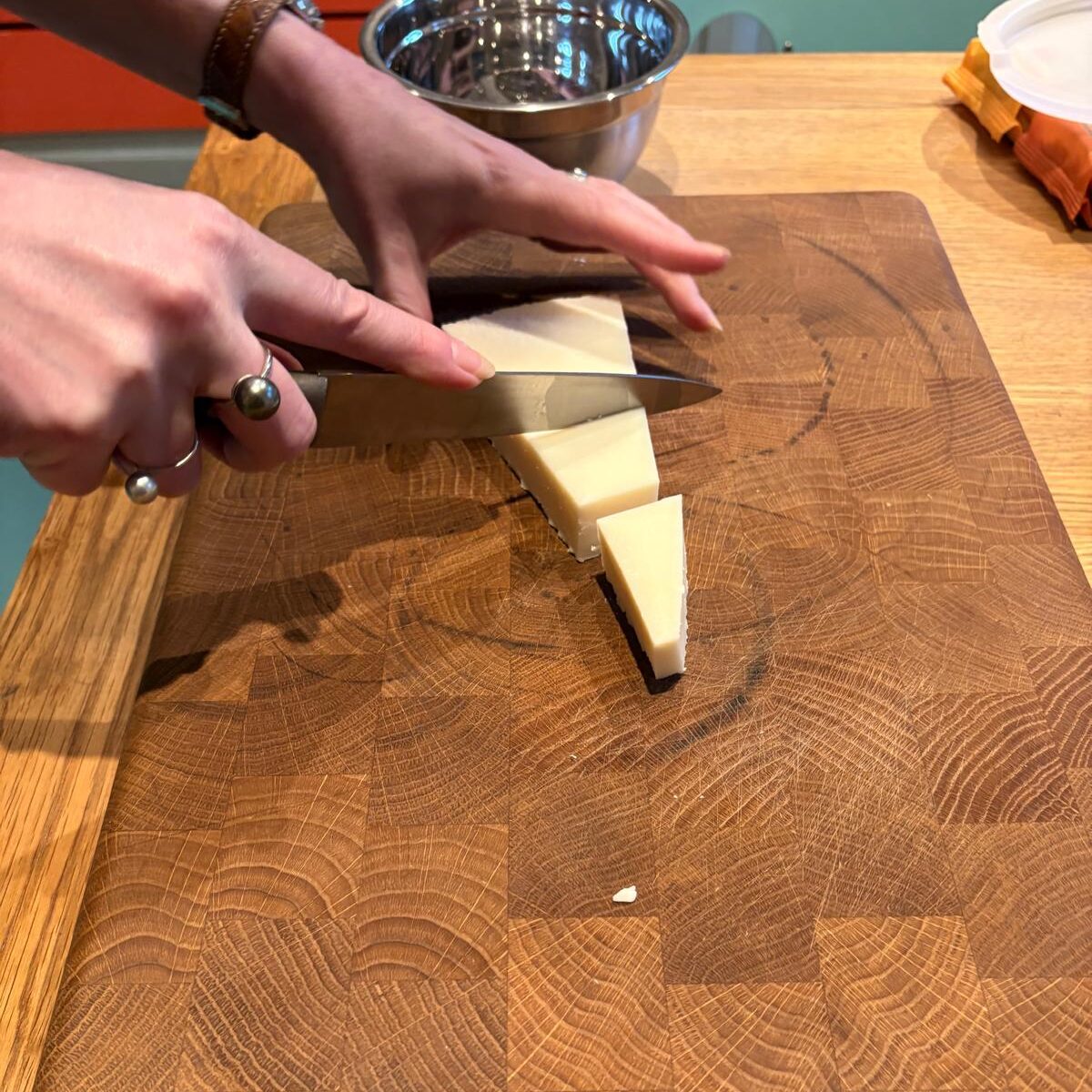
First grate the cheese, be generous as you’ll want to reserve some for serving as well as having about 100g for the sauce. So today, to serve three, we used the whole block.
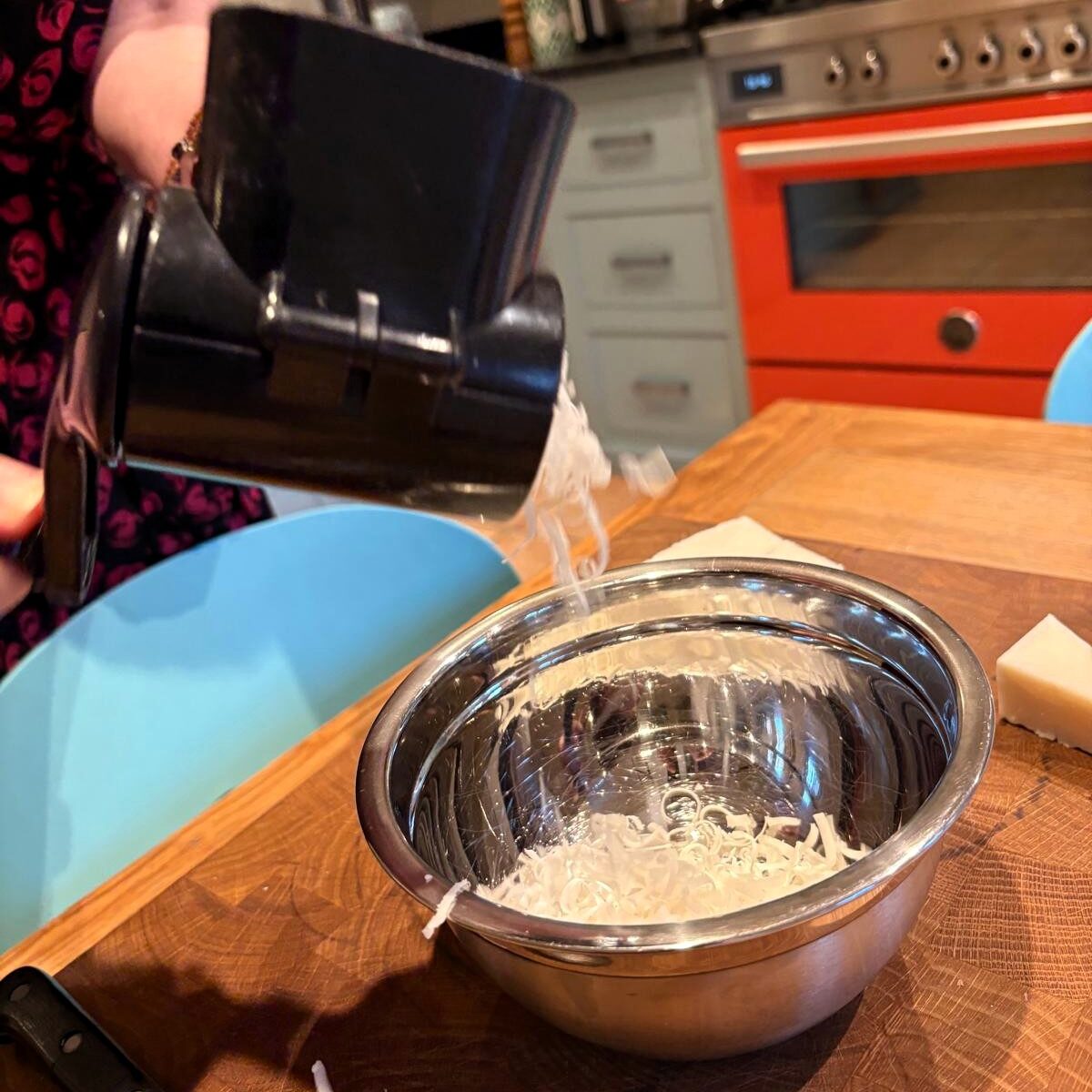
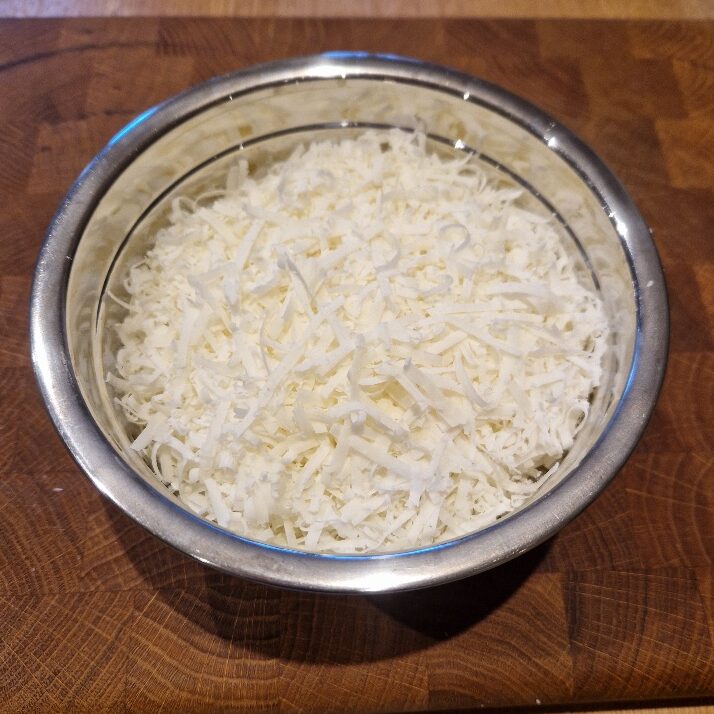
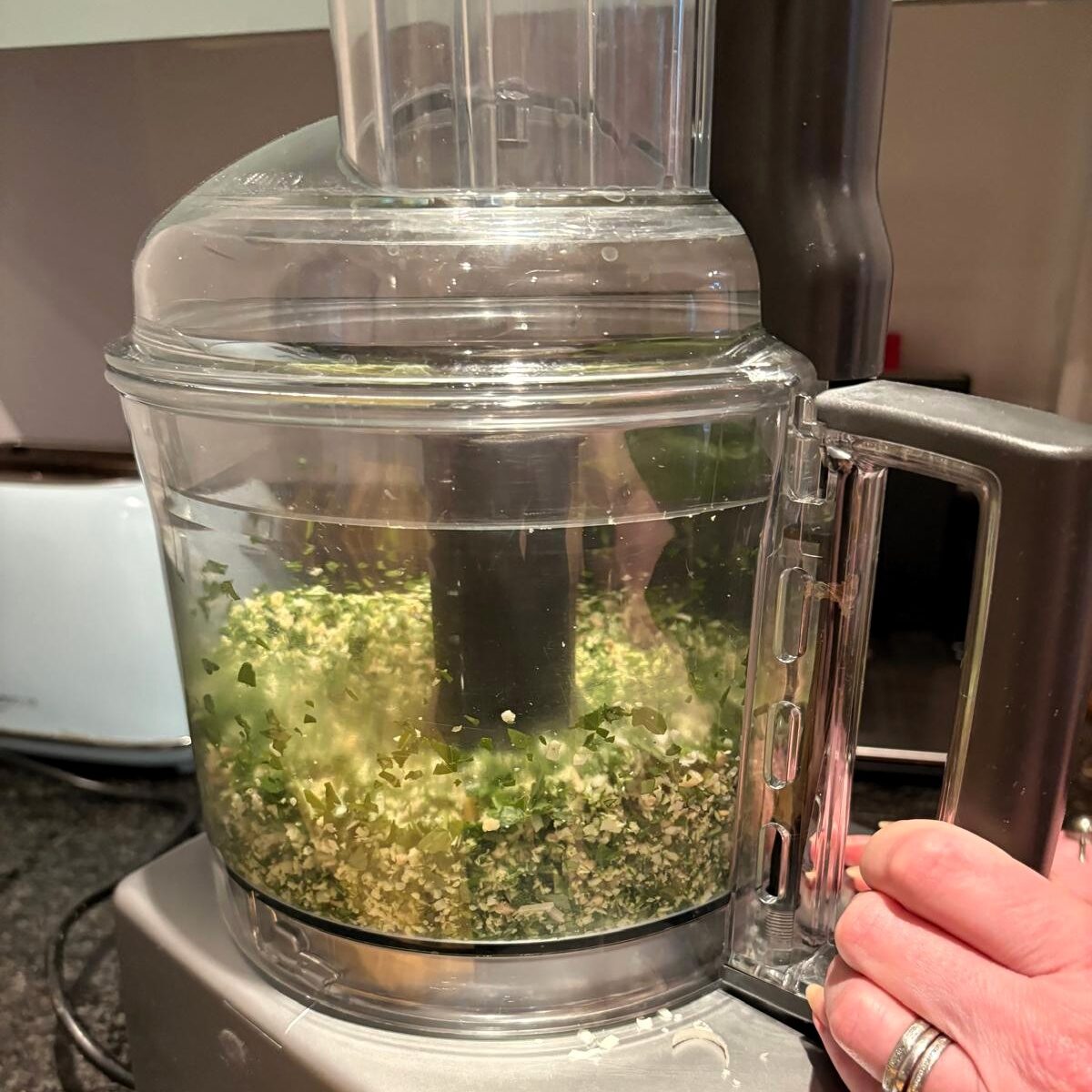
Now make the pesto. Add the pine nuts and sunflower seeds to the bowl of a food processor or liquidiser, and add a generous amount of cheese, keeping enough back to serve. Opinions vary about how much nut a green pesto should have – some have only a very small amount, which is probably more traditional. But we like our pesto with quite a lot of texture and were serving three greedy people, so we added about 4 tablespoons of pine nuts and 3 tablespoons of seeds. Reserve some pine nuts to garnish. Blitz briefly on the pulse setting, just to combine. Don’t chop too small as you’ll also be blending later.
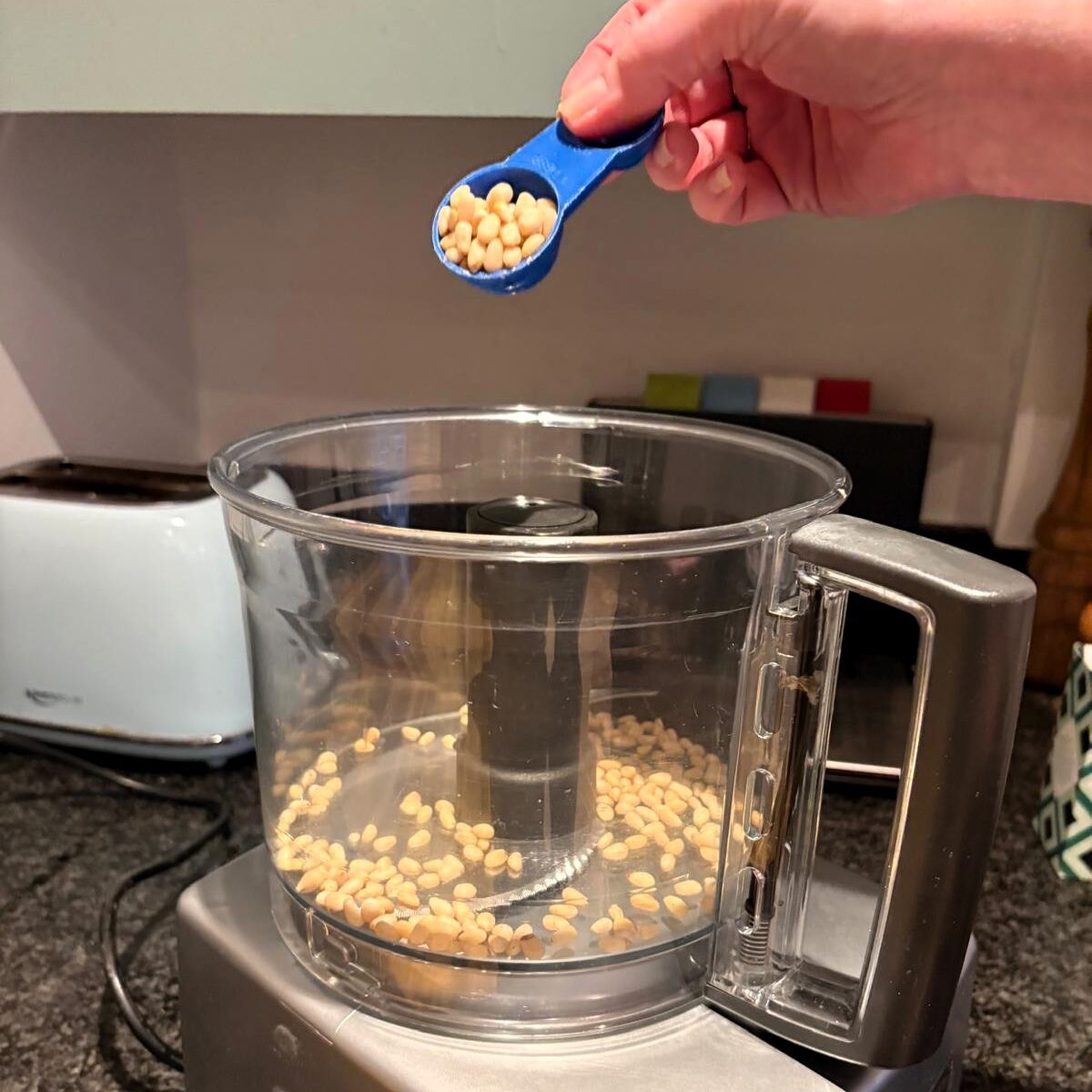
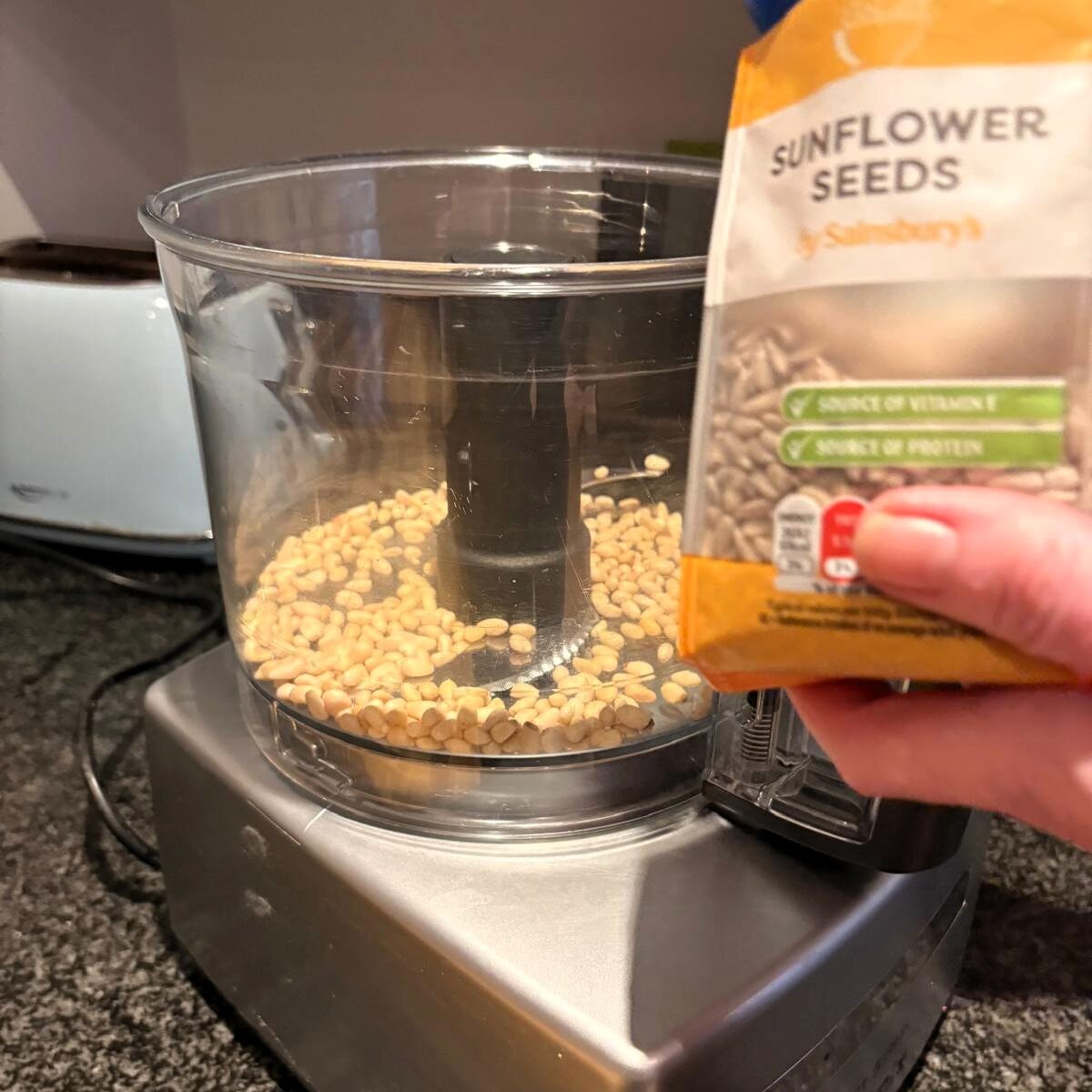
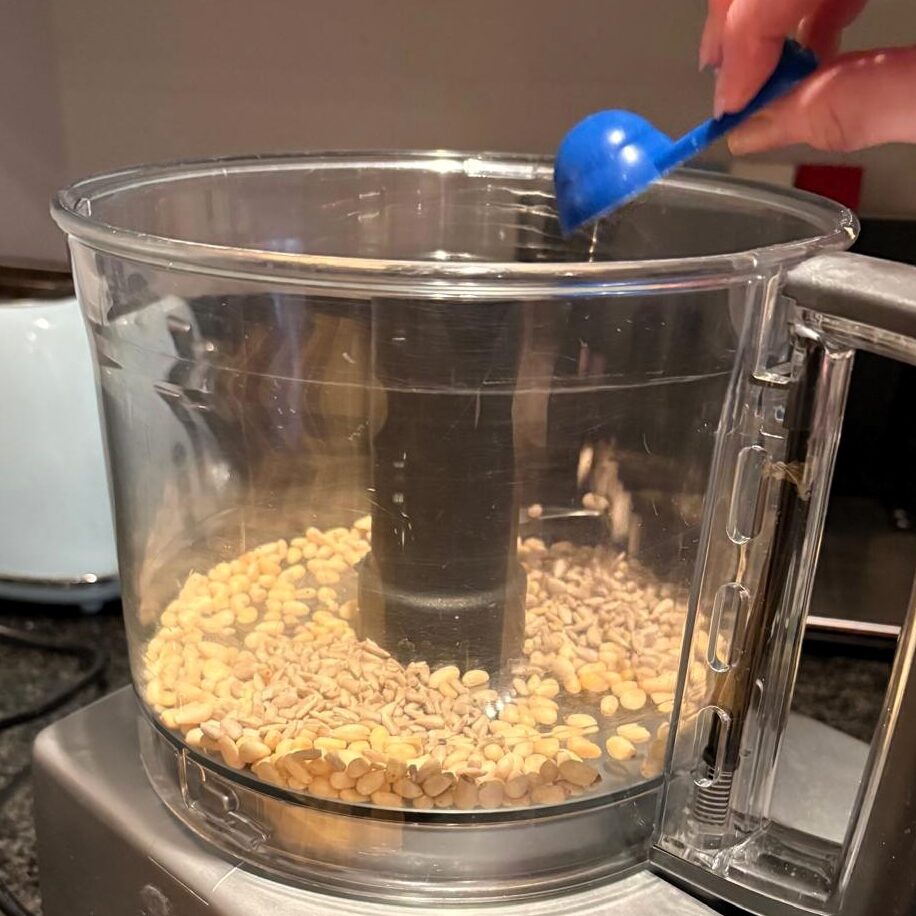
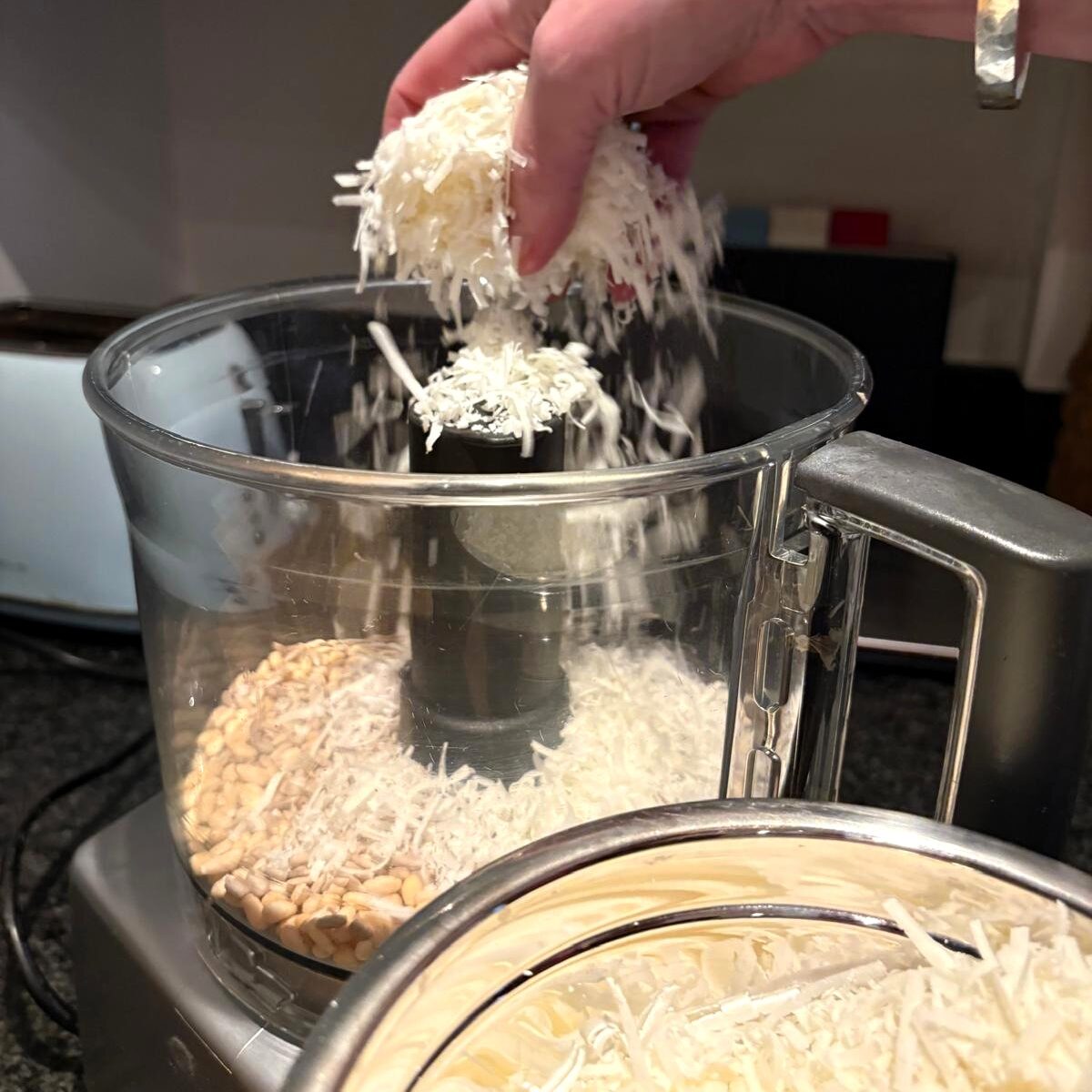
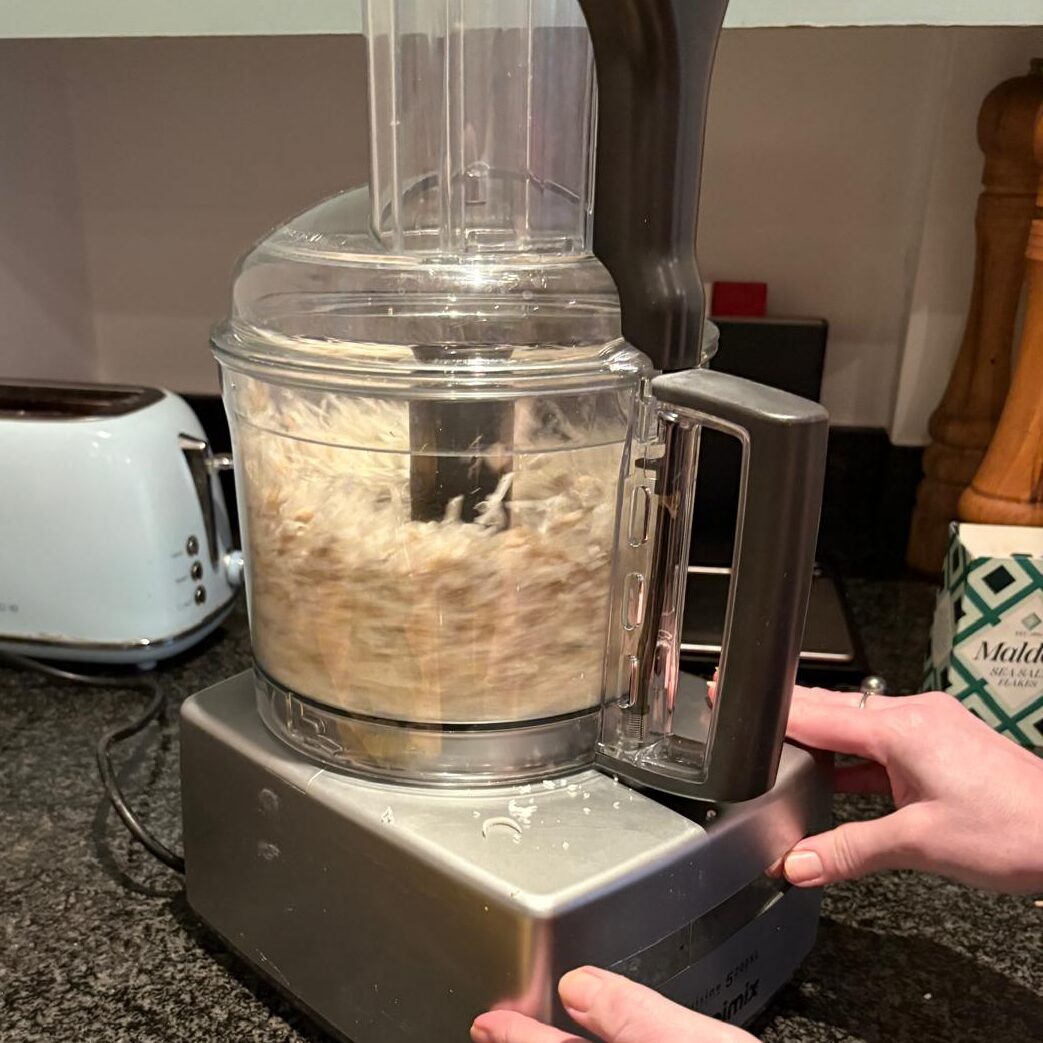
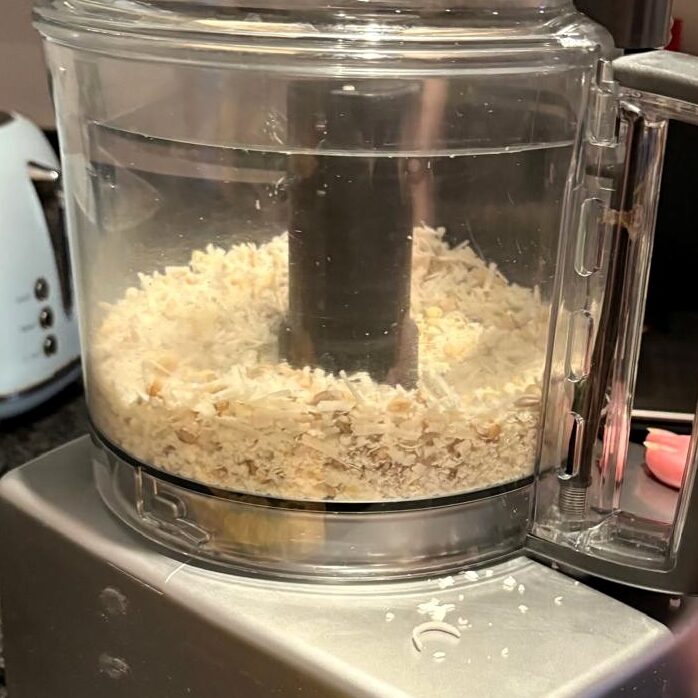
Now add the basil. It’s hard to add too much! We used one large pack, but we could have added more. Reserve a few leaves to garnish. Remove the leaves from the stems as much as possible – the stems can cause the pesto to discolour. Season with a little salt – you won’t need much as the pecorino is salty – and add a generous few grinds of black pepper to taste. Blitz again briefly on the pulse setting to combine, then check the basil is well incorporated.
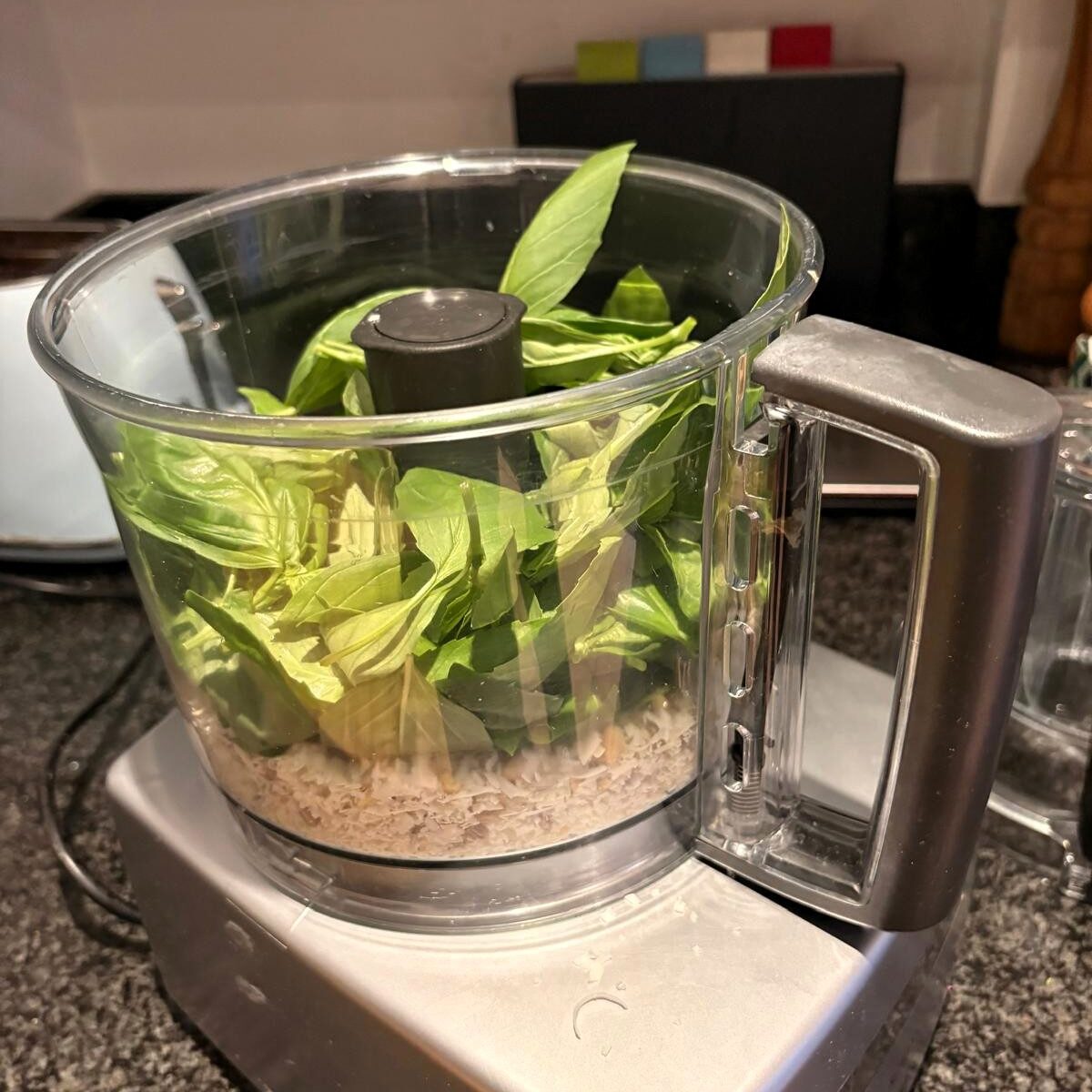
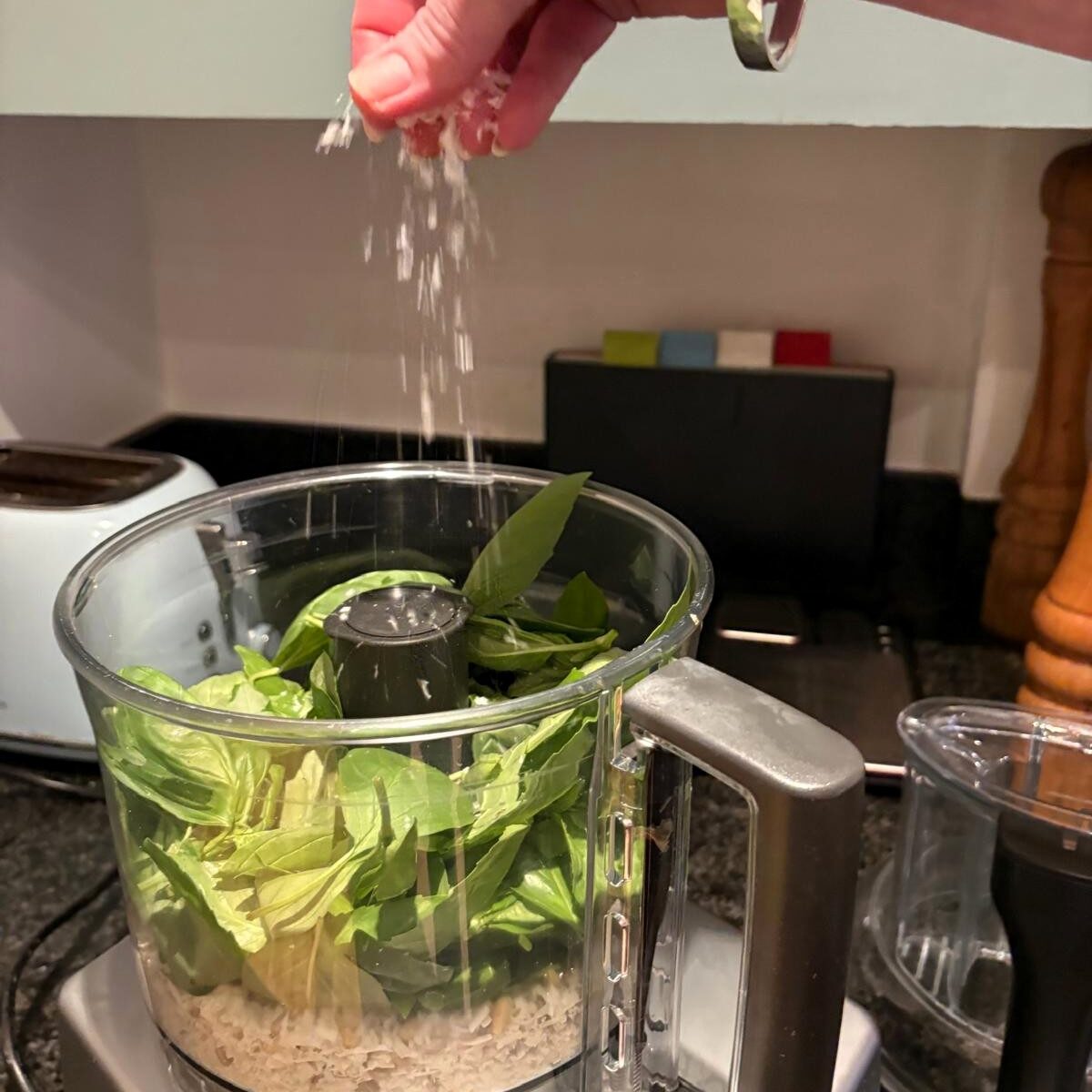
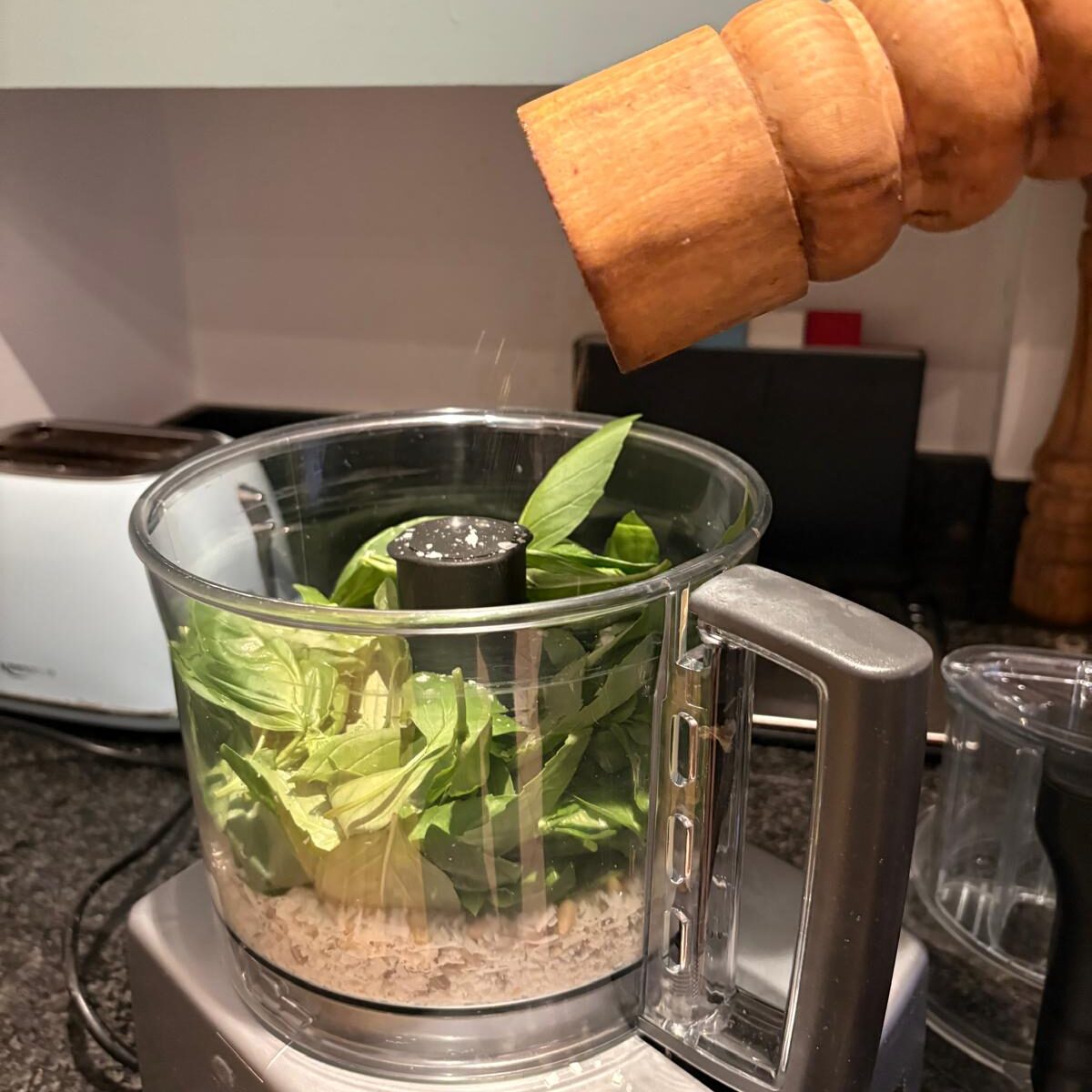
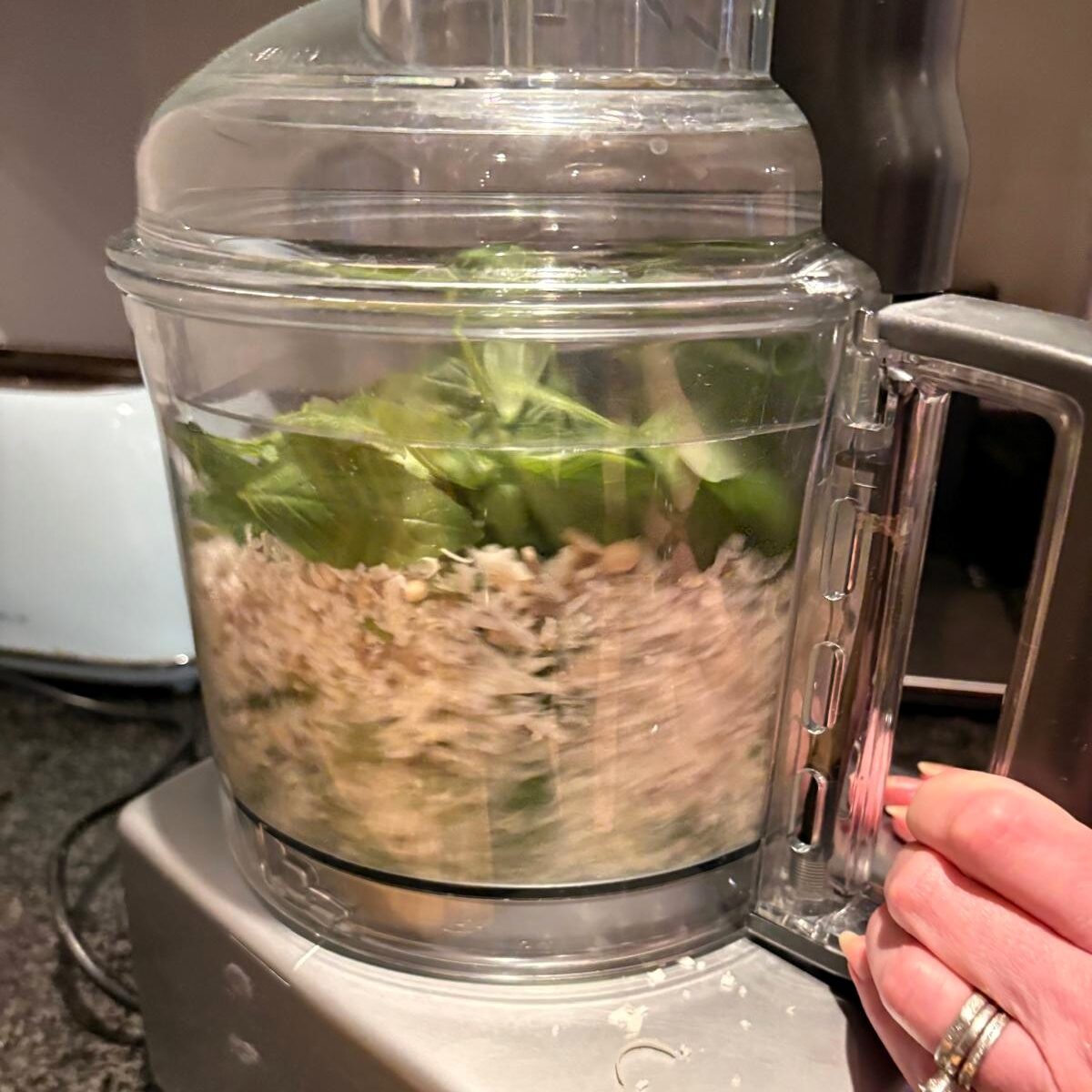
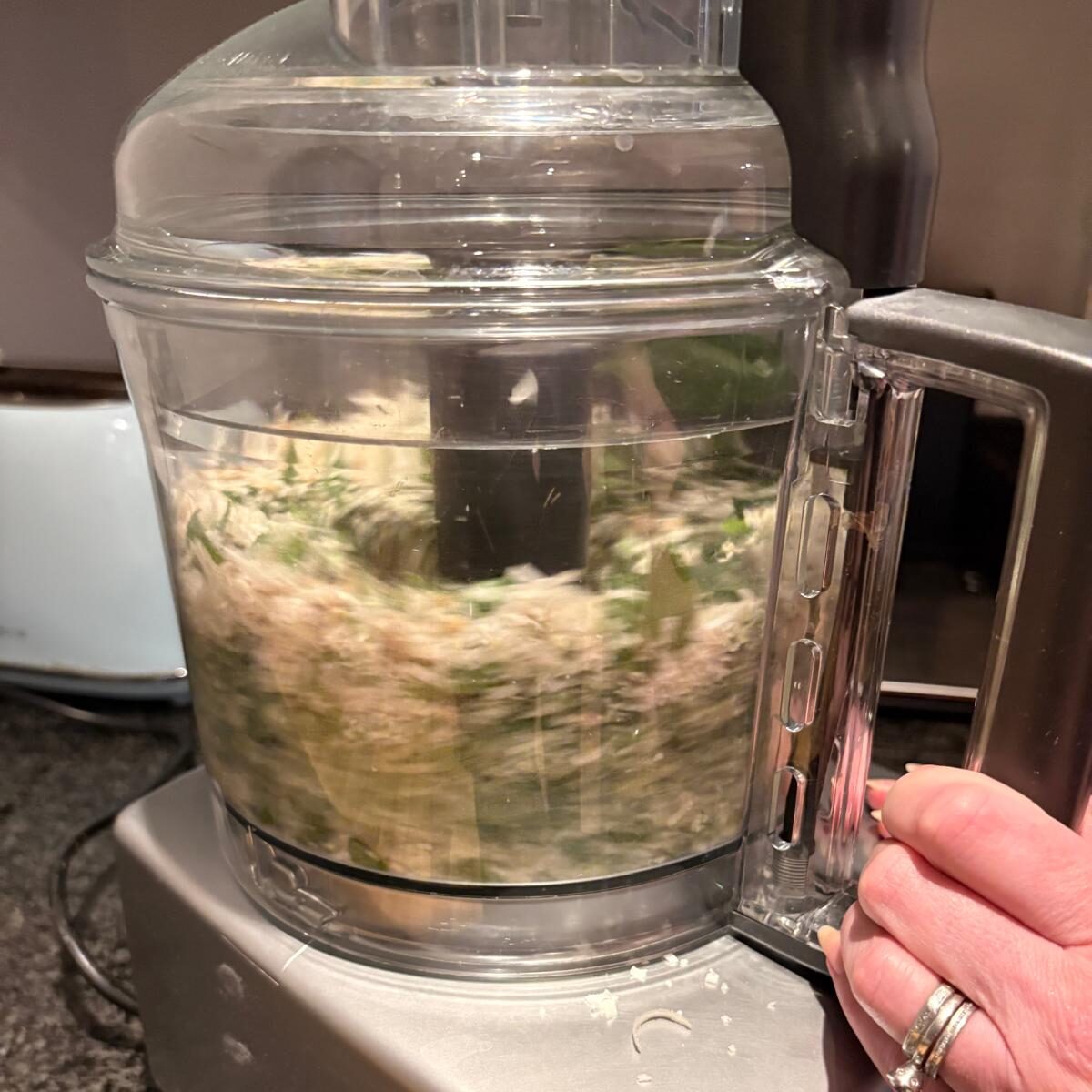
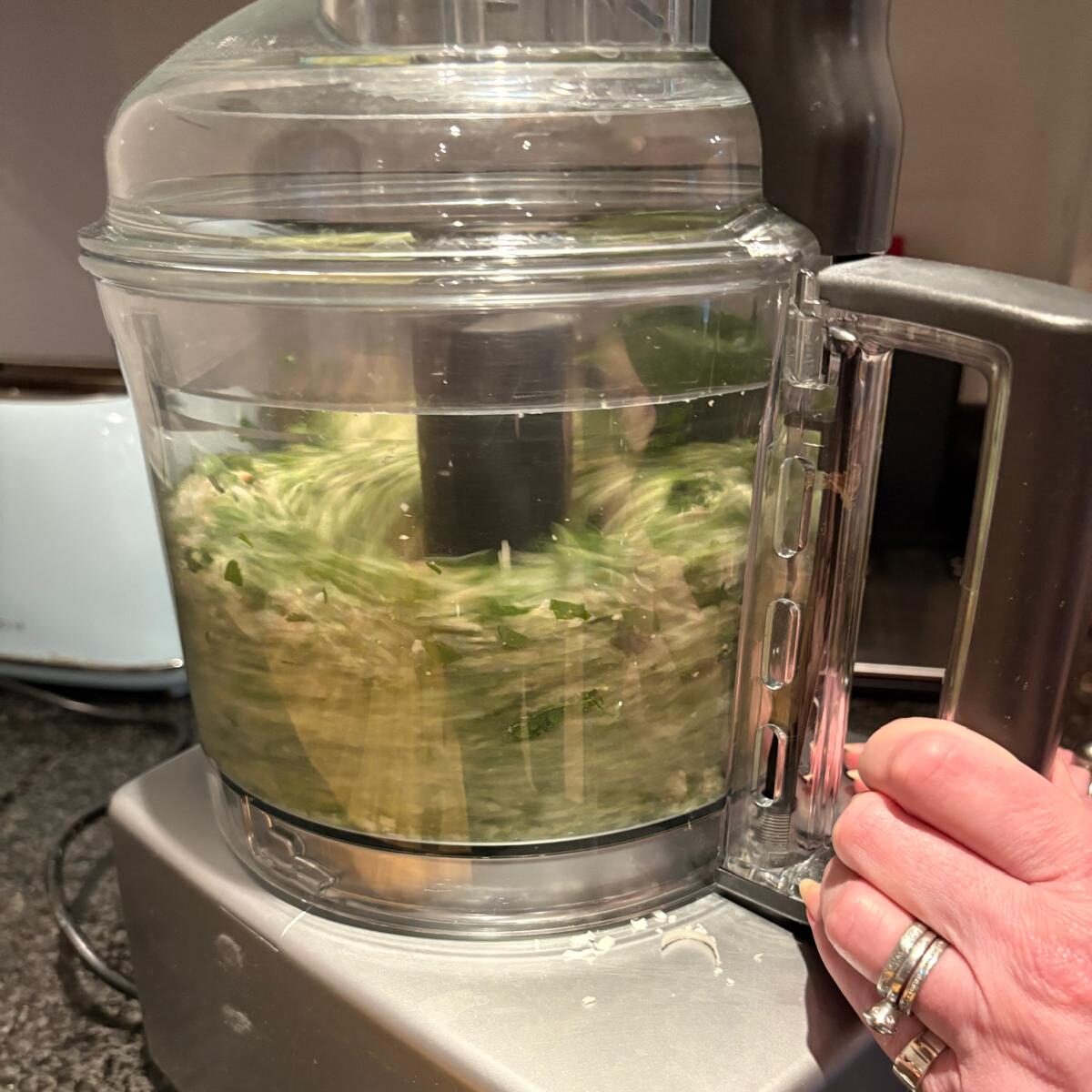
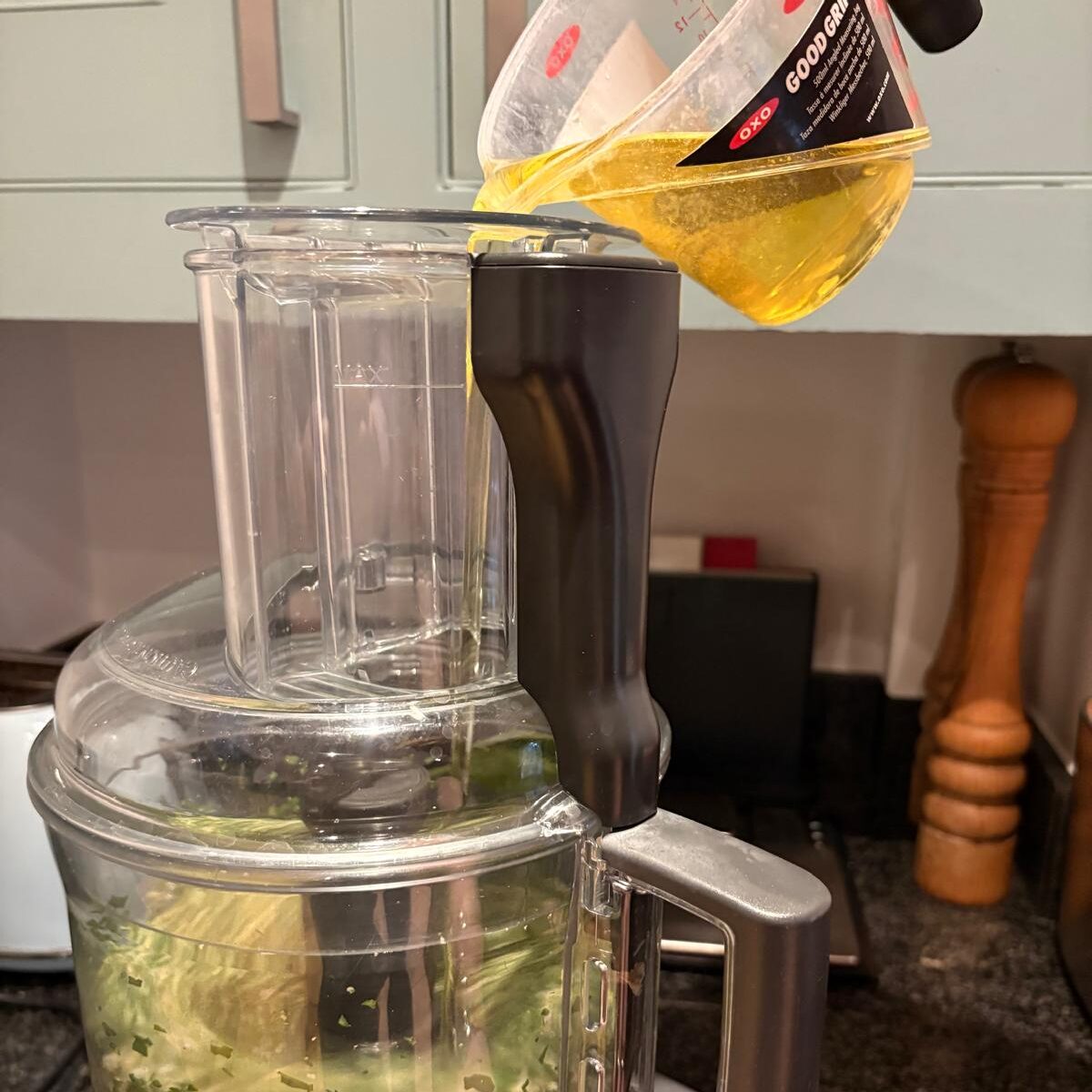
Now add the olive oil – we tend to add by eye until we get the texture we like – and blend well until you get a pourable sauce with an even, pretty green colour, but which still has some texture. A high quality extra virgin olive oil will make a difference to the finished taste here, but you can make with any good quality olive oil. Taste and add more of any of the key ingredients or seasonings until you like it. Your pesto is ready!
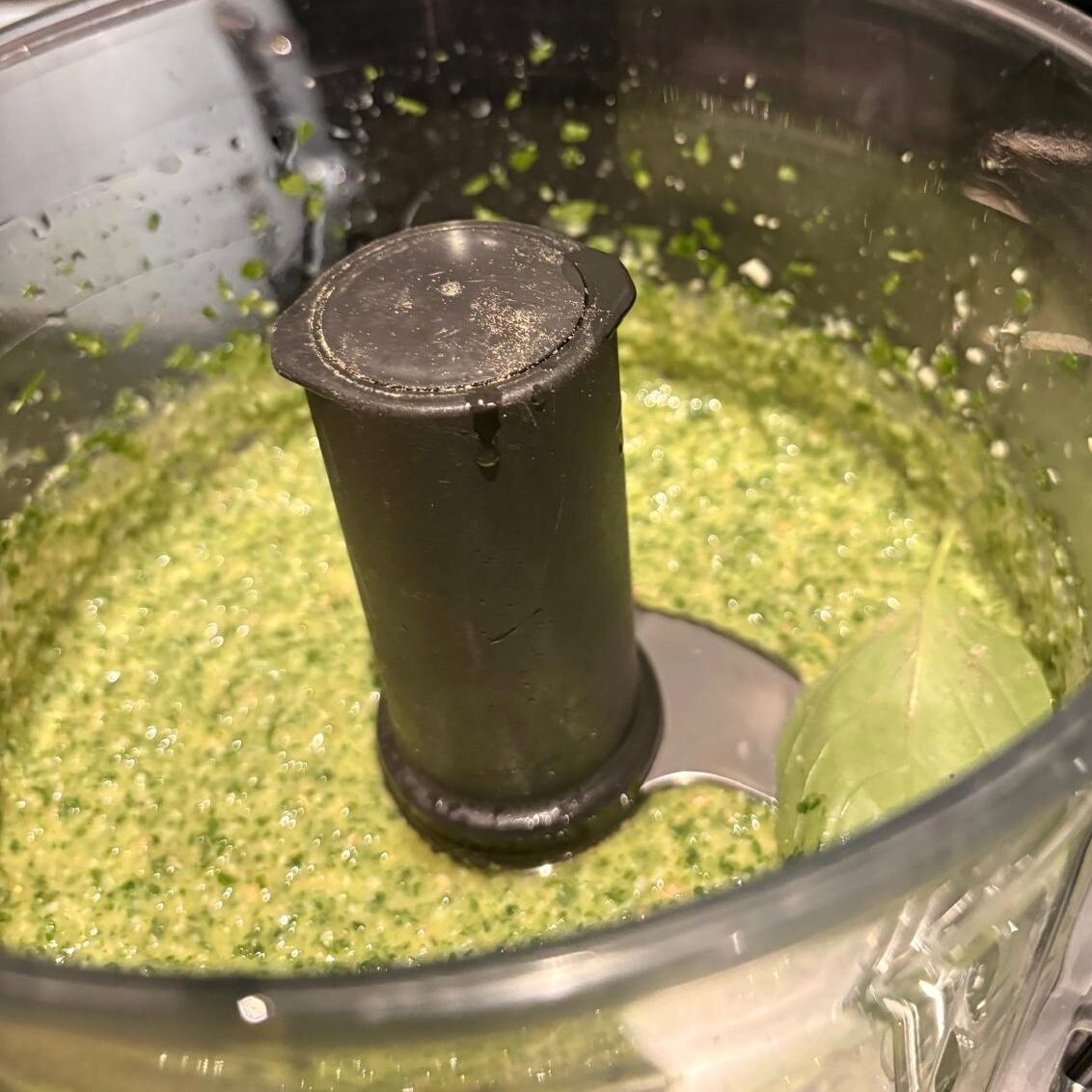

Jake sticks his nose in
If you don’t have a food processor you can make the pesto with a pestle & mortar. This is traditional and some cooks prefer it – you get a more rustic finish, which is charming. You need quite a large pestle though to make enough pasta sauce for more than one person, and even though we have one, it isn’t quite large enough, so we blend instead. If we were making a smaller quantify of pesto, we’d do by hand.
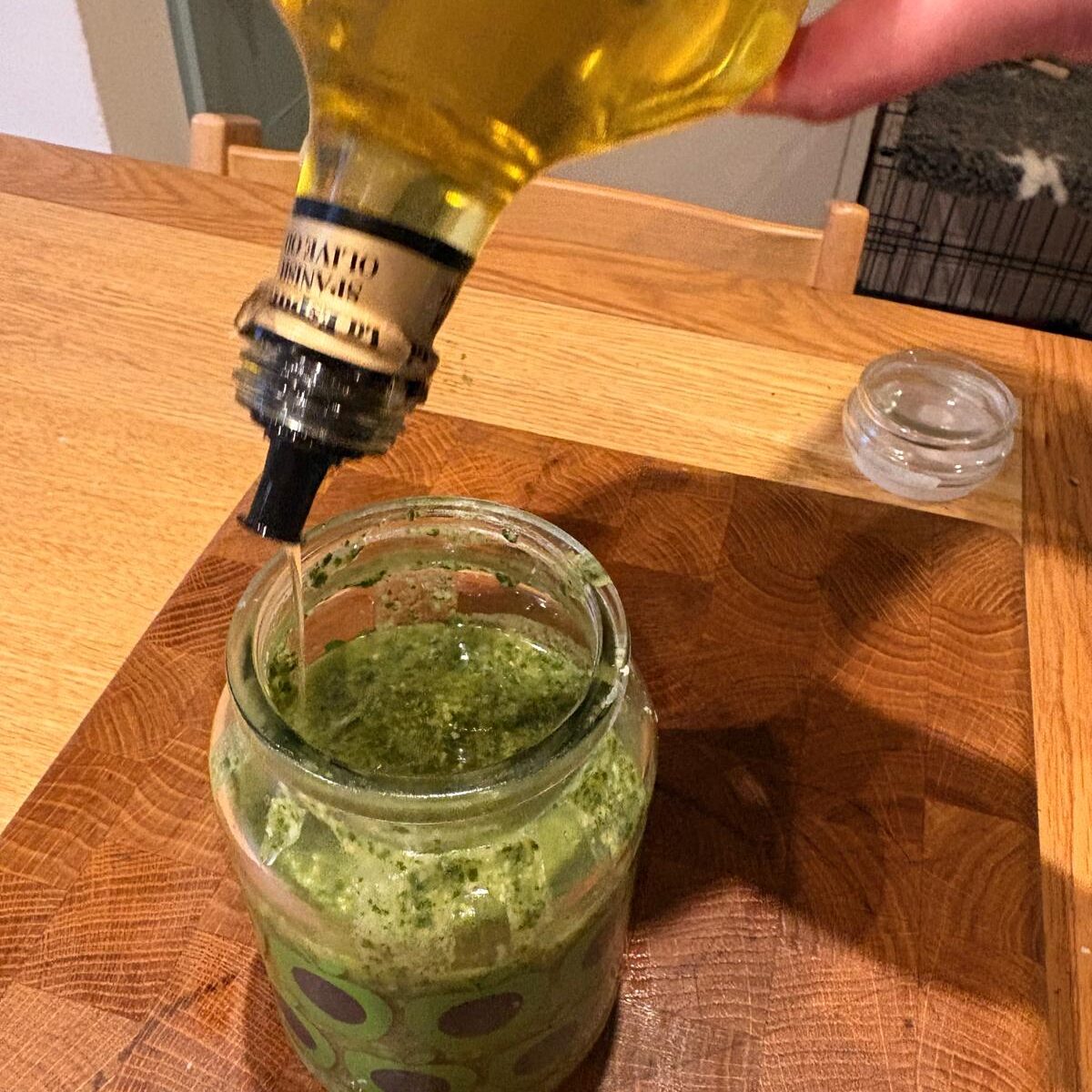
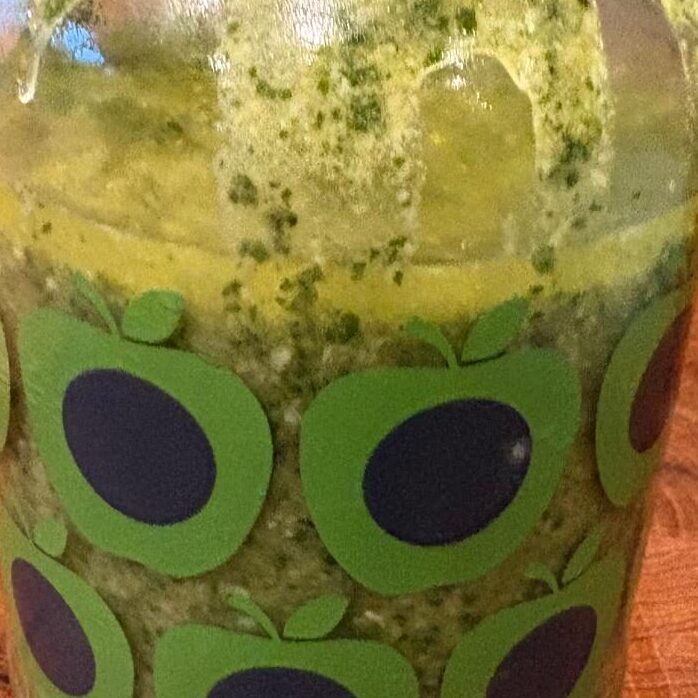
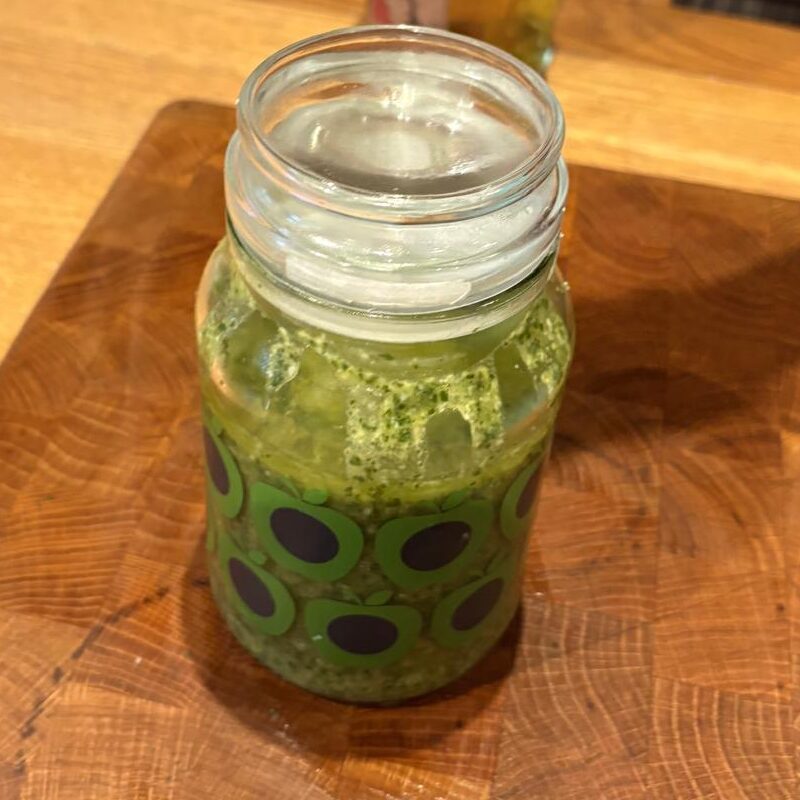
Green pesto discolours quickly if left out in the air. If your pasta is cooked and you are using immediately – it is very easy to make pesto in the time it takes for most pastas to cook – it will be fine. But if you are making it even just a short time ahead, you need to seal it into a bowl or jar. Spoon the pasta in to an airtight jar, then cover with a generous layer of oil. Seal the jar, and keep in the fridge until needed.
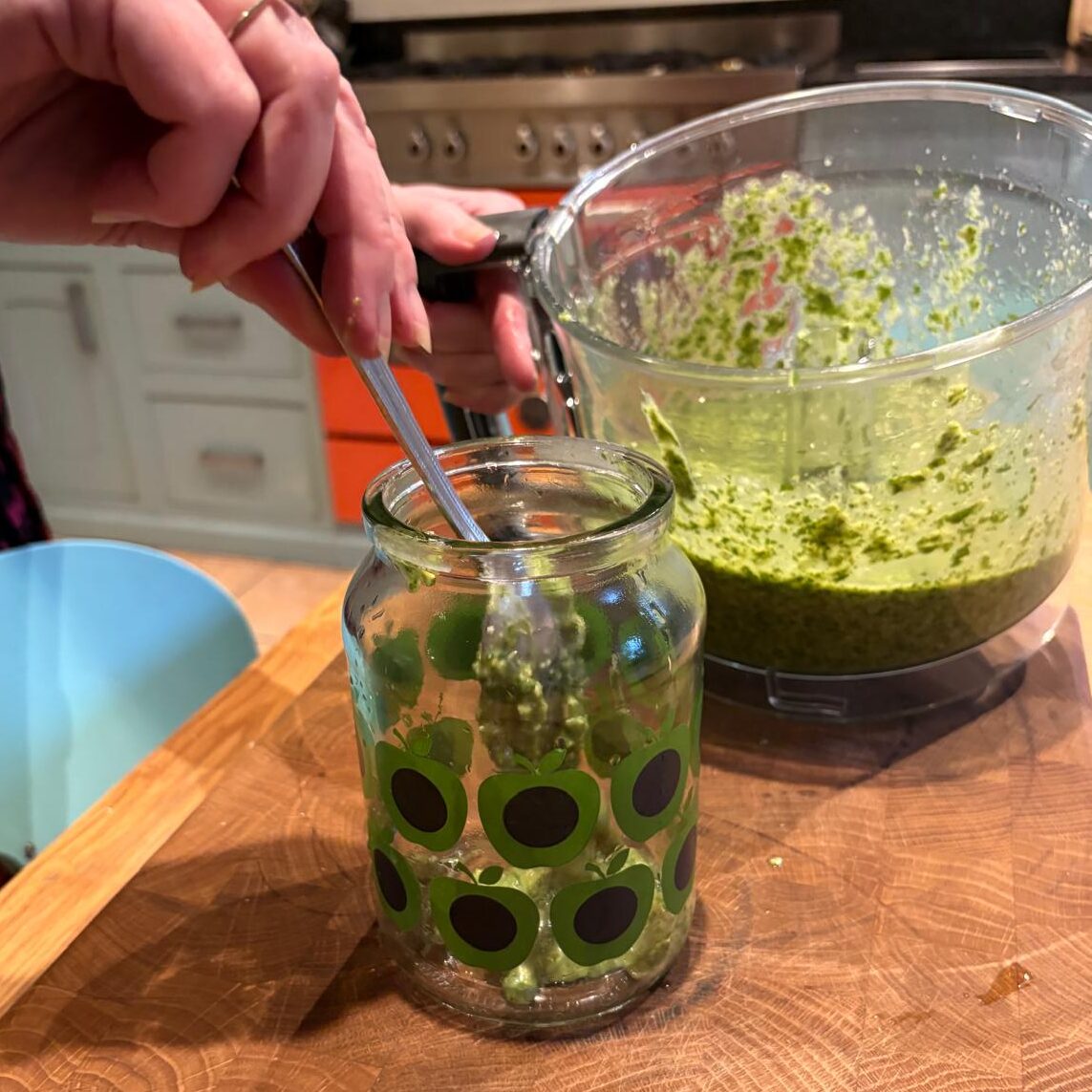
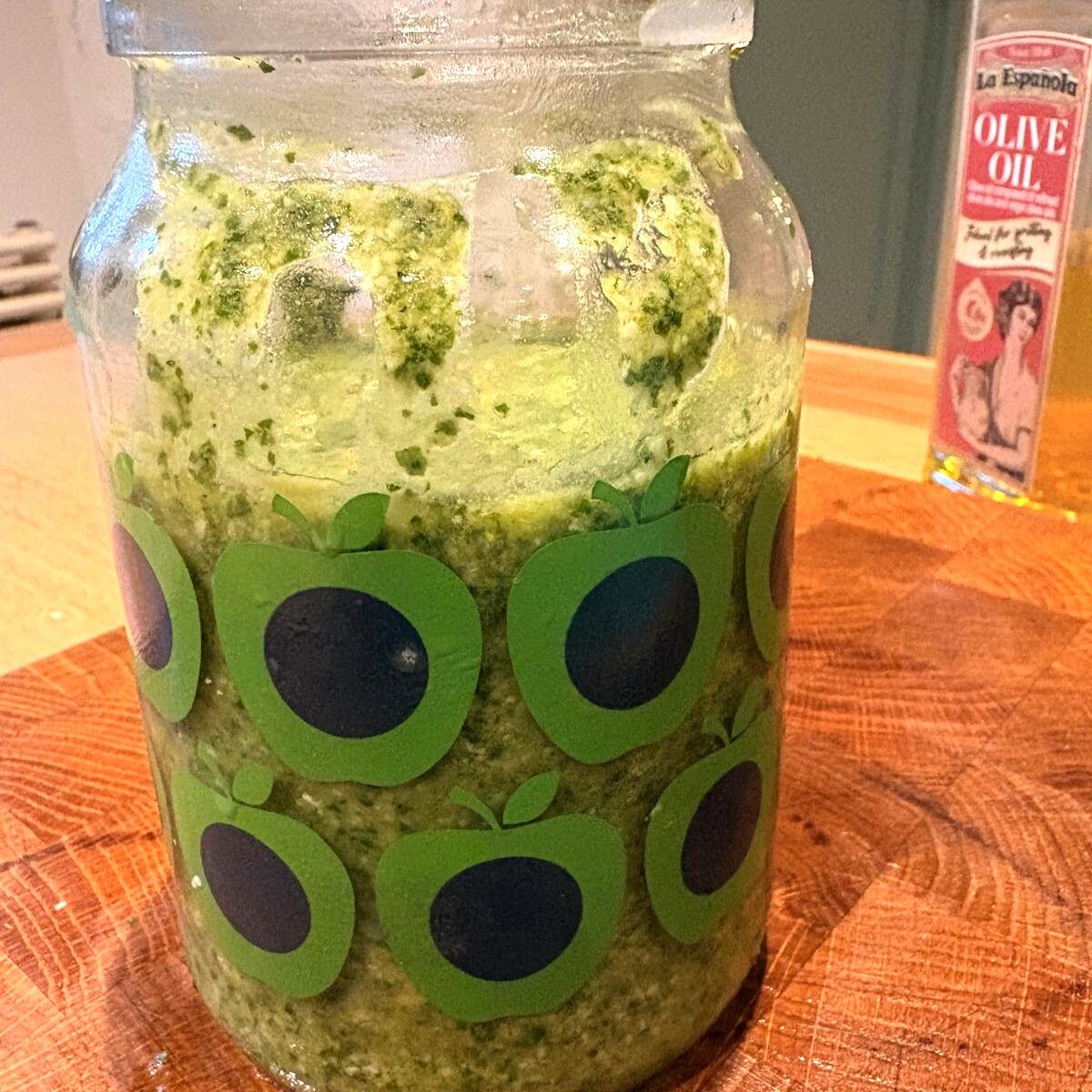
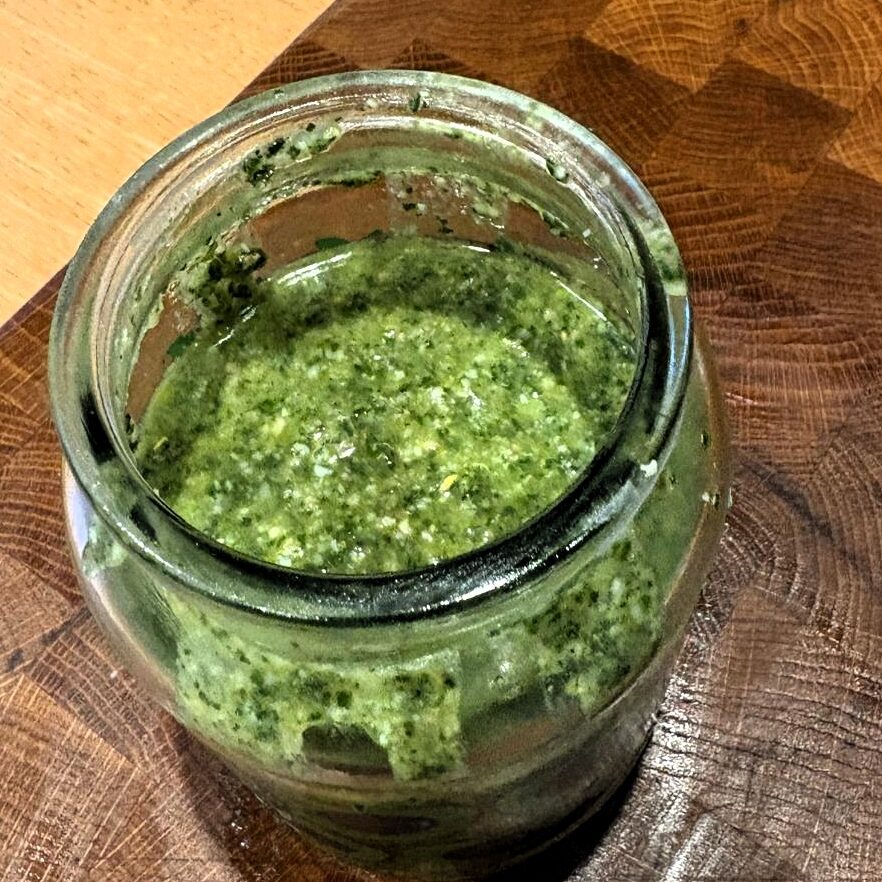
Jake sticks his nose in
If you don’t have a jar with an air-tight seal, a clean jam jar will do, especially if you are not keeping the pesto for long. Or you can place the pesto in a bowl and cover with cling film – two layers, one of which should touch the top of the pesto, and another pulled tight to seal the bowl.
Pesto stored this way will keep for a few days, up to a week. But if you want to keep some extra for another dish, or just otherwise leave it that long, please check it – if it has gone dark, or smells sour or otherwise off, do not use.
You can now prepare your salad. You can make a simple crunchy salad like we served with the pasta carbonara – find the recipe here. But pasta served with green pesto in Italy often comes with cooked green beans and boiled potatoes. We sometimes serve it that way too, and it’s lovely, though it makes for a quite a carbohydrate-rich dish! However, the green beans gave us an idea for another crunchy-but-sweet salad – bean salad with beetroot, tomatoes and a shallot vinaigrette.
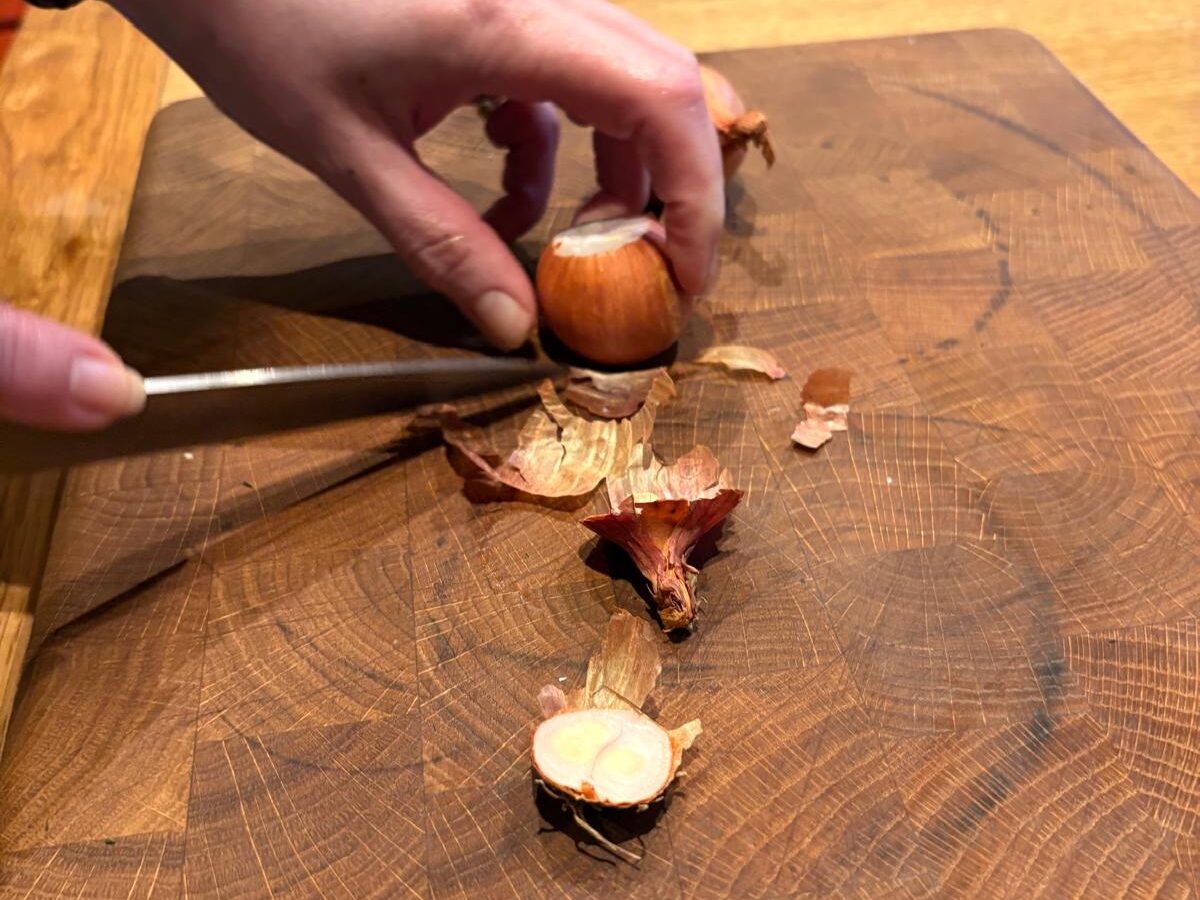
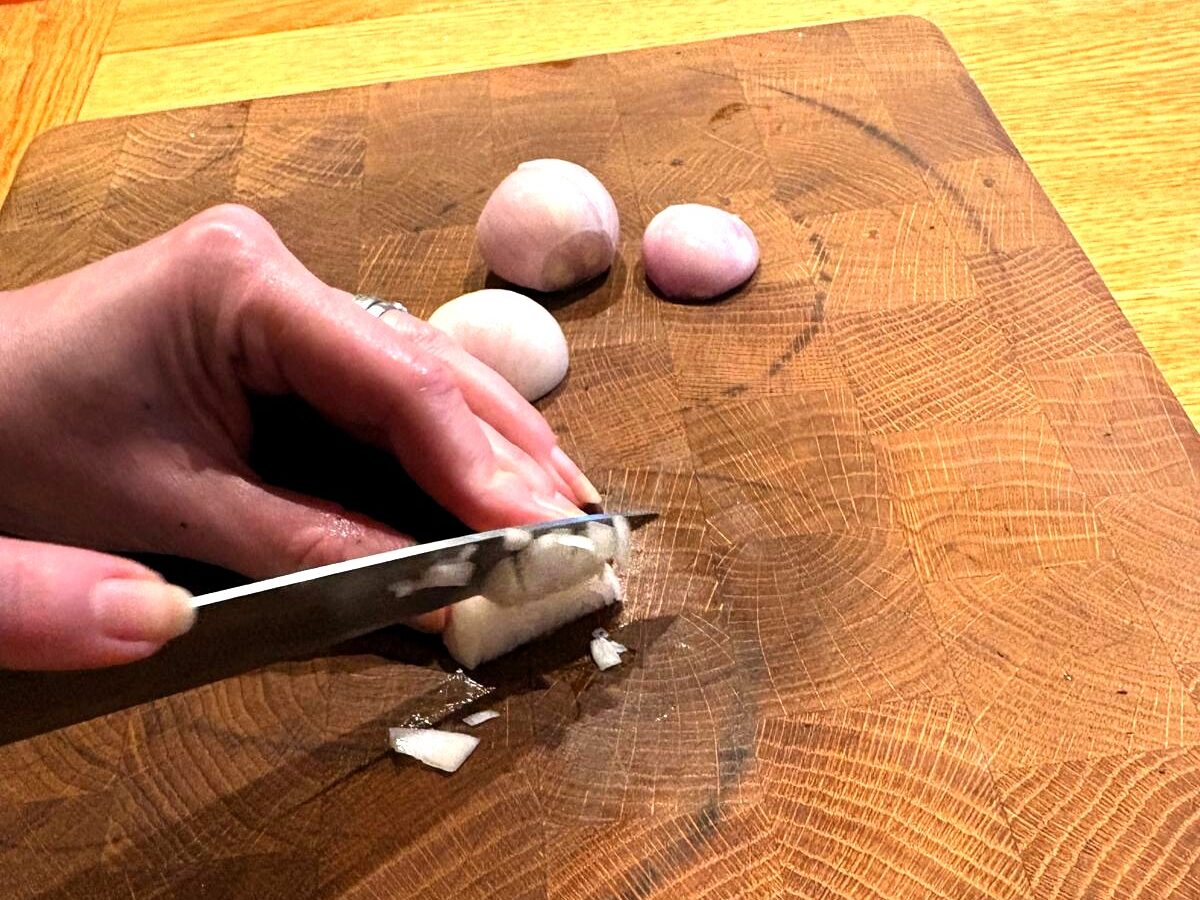
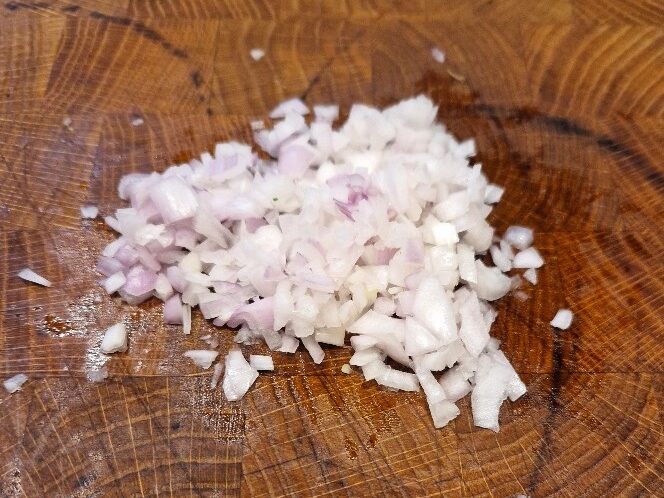
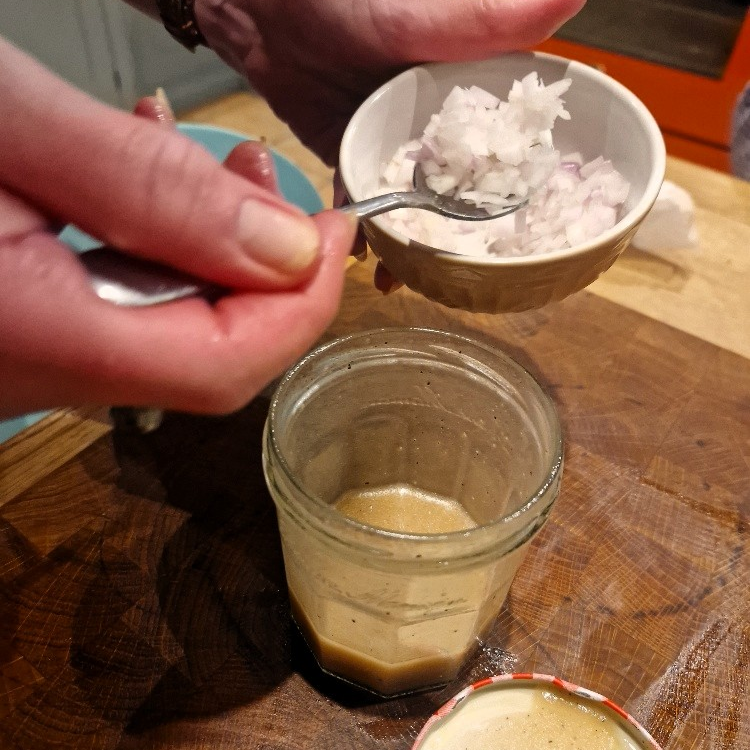
Chop the shallots as finely as you can – you’ll only need one or two, depending on size. Treat them as you would an onion, find out how in our onion Tip. Shallots are both more tightly folded and more delicate in flavour than onions, so better for using raw. They can be a little fiddly to chop, so if you can’t get them fine enough first time, go over them with your chef’s knife using the ‘rocking knife’ technique as you would for garlic – find out how in our garlic Tip.
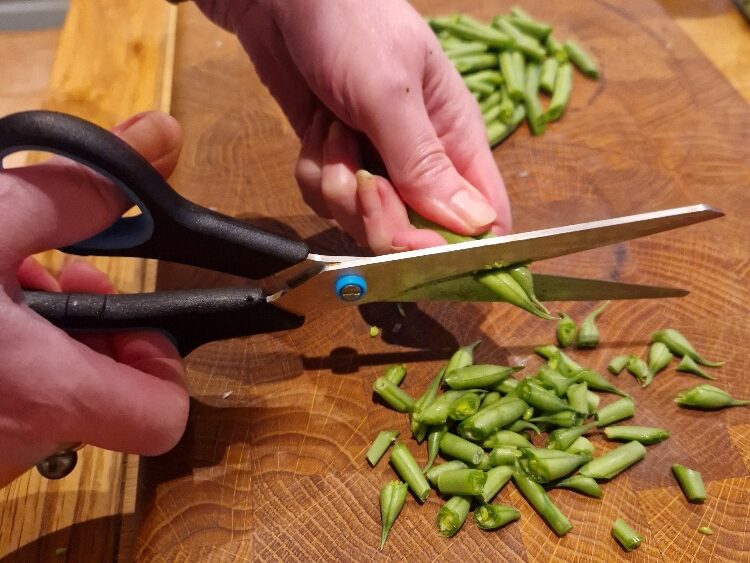
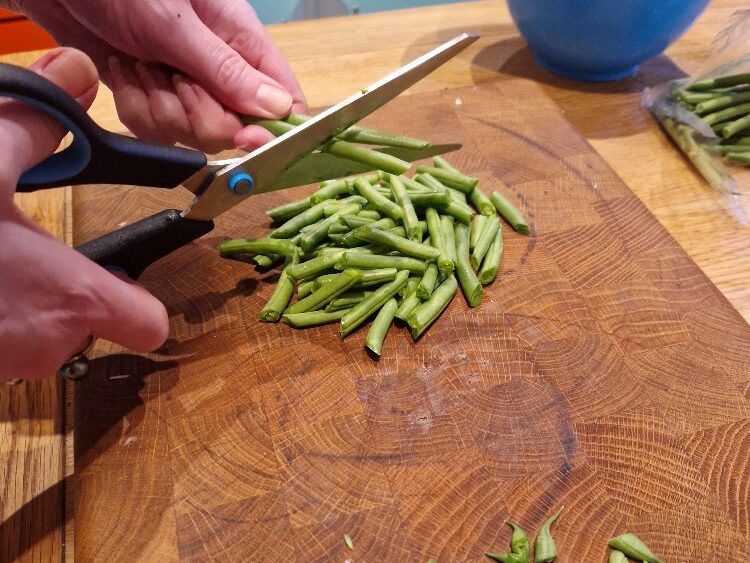
Now prepare the beans. You want long, round green beans here – often called French beans, fine beans or string beans in the UK. Top and tail both ends with scissors, then cut the beans in half.
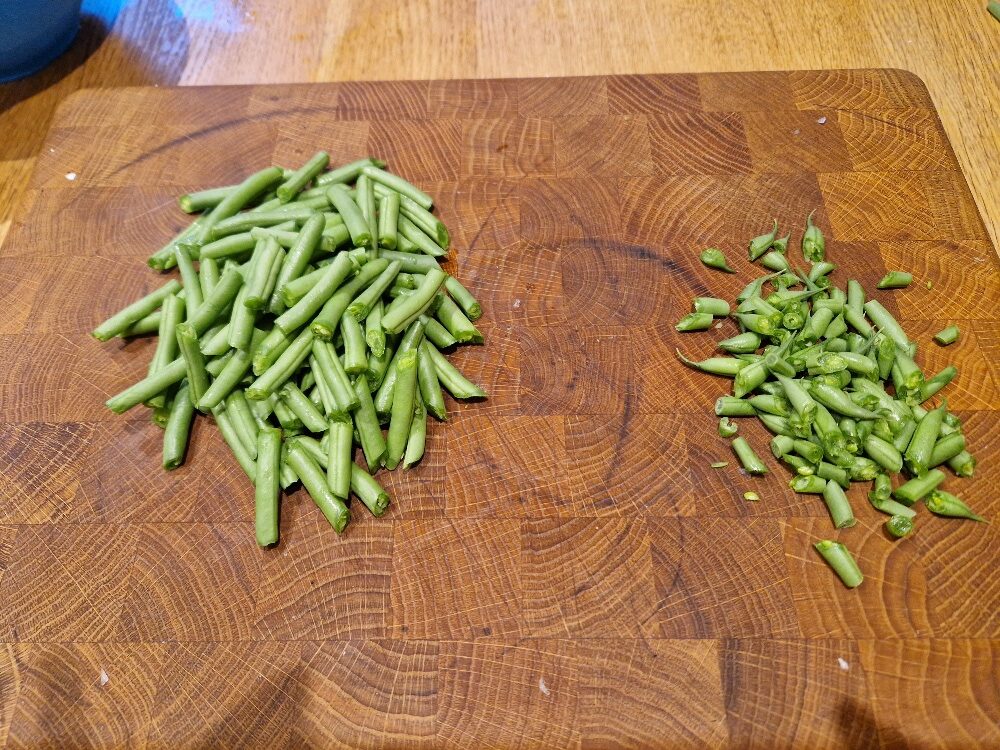
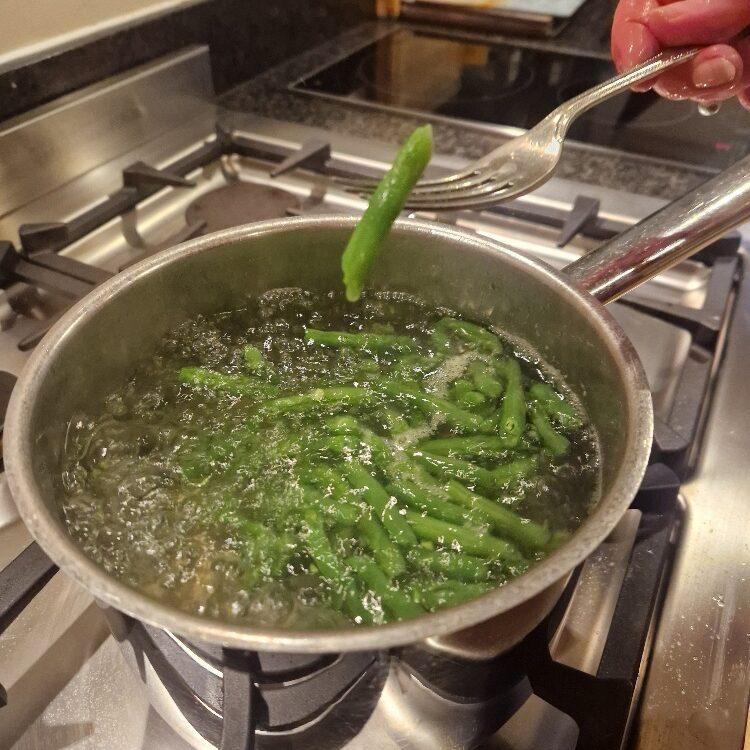
To cook the beans (you shouldn’t eat them raw), you can either steam or boil them for a few minutes, about 3 to 5 minutes depending on how fine they are. Today we boiled them. Get some water to a rolling boil, then add the beans. Cook until tender, but still retaining a little snap. Test one by biting into it to check. Fill a bowl with really cold water and have to hand. When done, drain the beans.
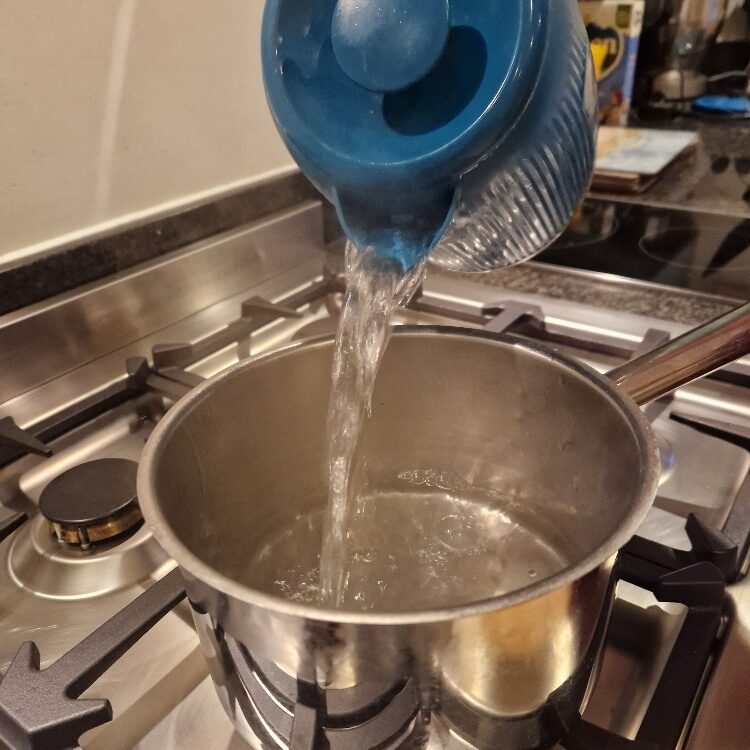
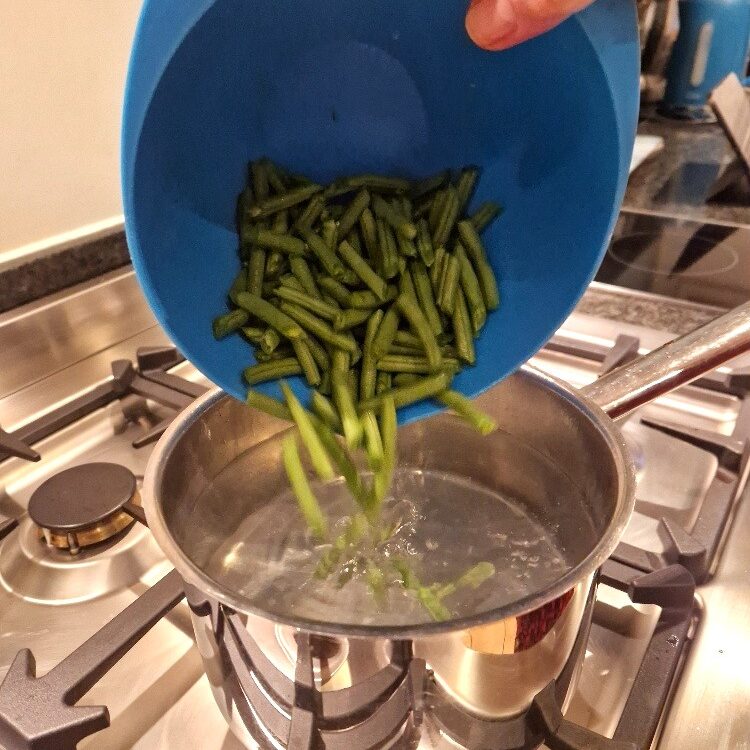
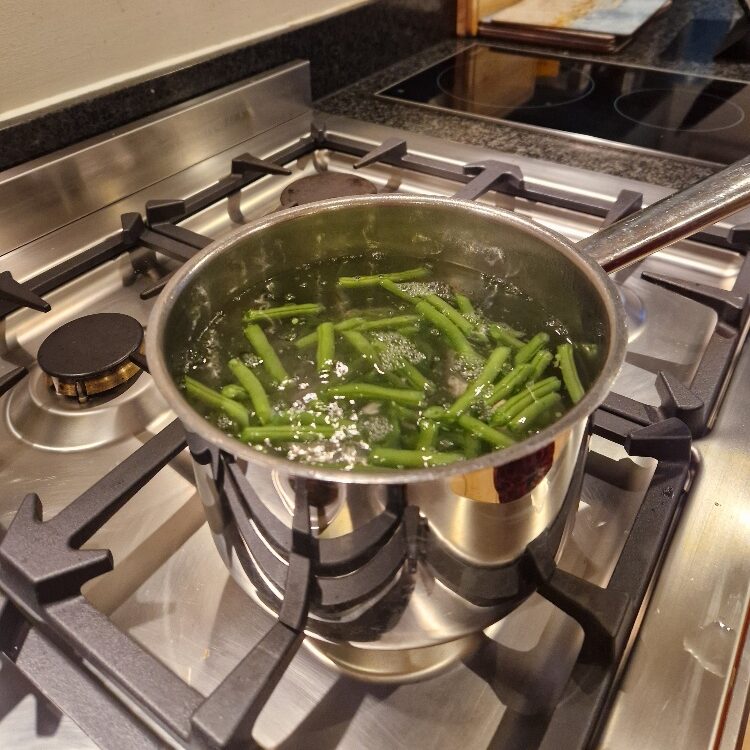
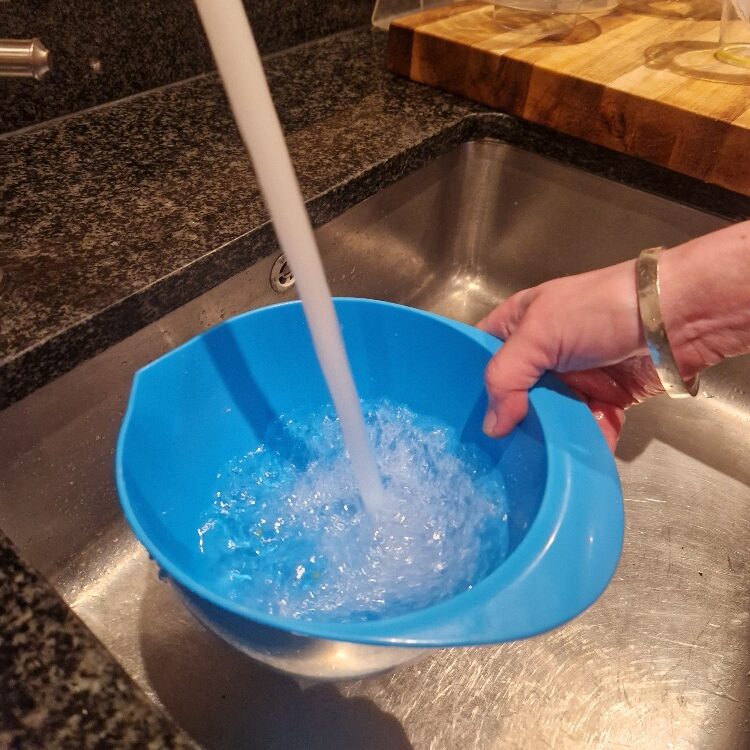
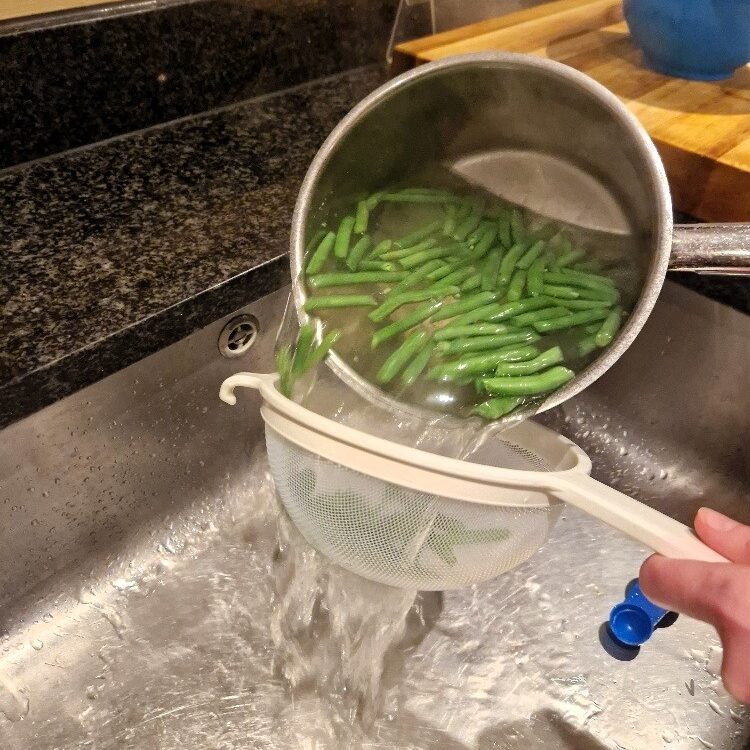
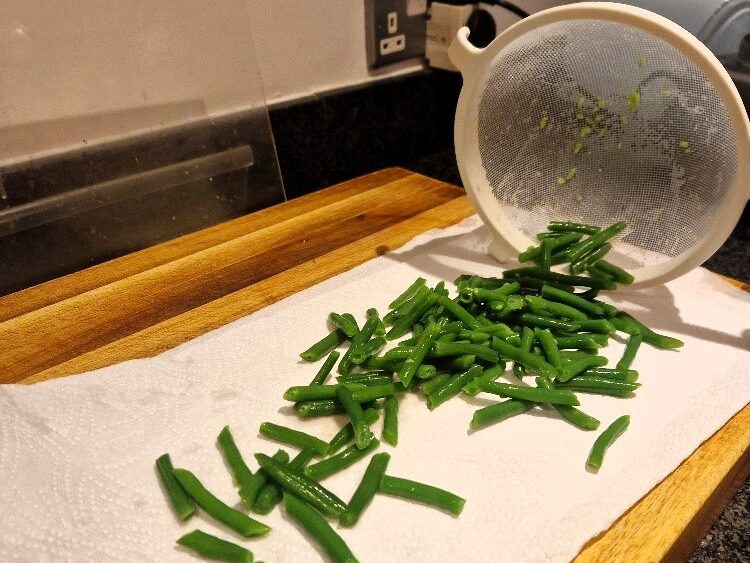
Immediately plunge the beans into the cold water to arrest the cooking and crisp them up. Once cooled, drain again and dry on kitchen paper.
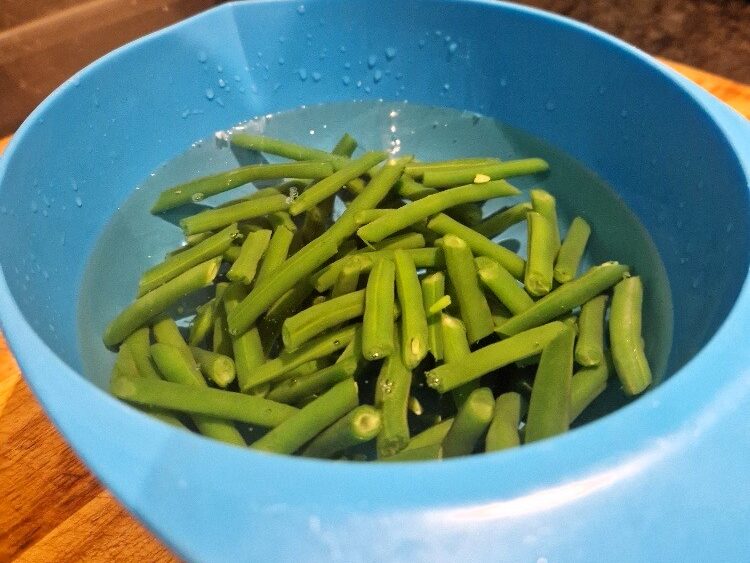
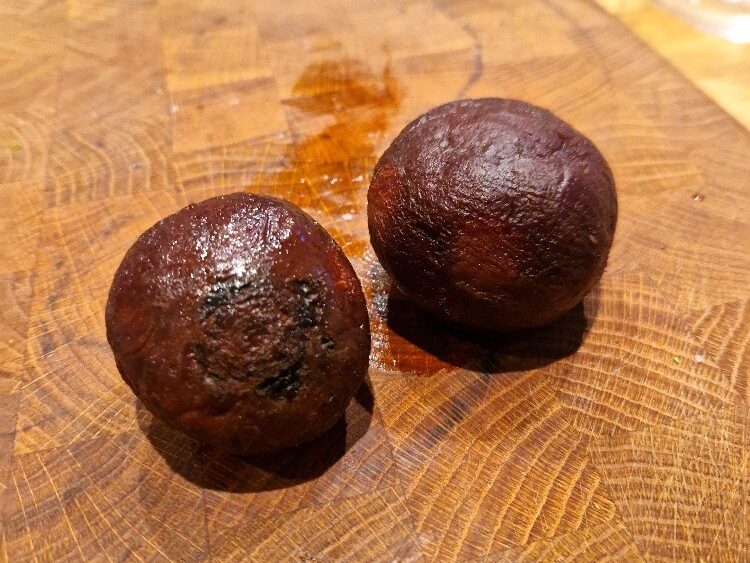
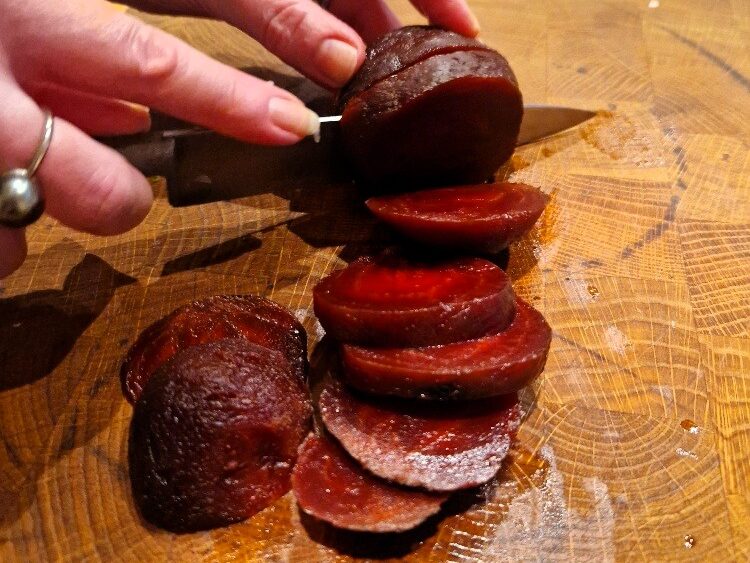
Next prepare the beetroot. Today we used the plain cooked beetroot you will find in the fresh section of a supermarket, rather than the pickled kind in jars. These are slightly better in this salad as you’ll be dressing with vinaigrette, so don’t really want the extra vinegar flavour of the pickled beets. But it’s marginal – jarred beetroot will work fine. Chop into small dice.
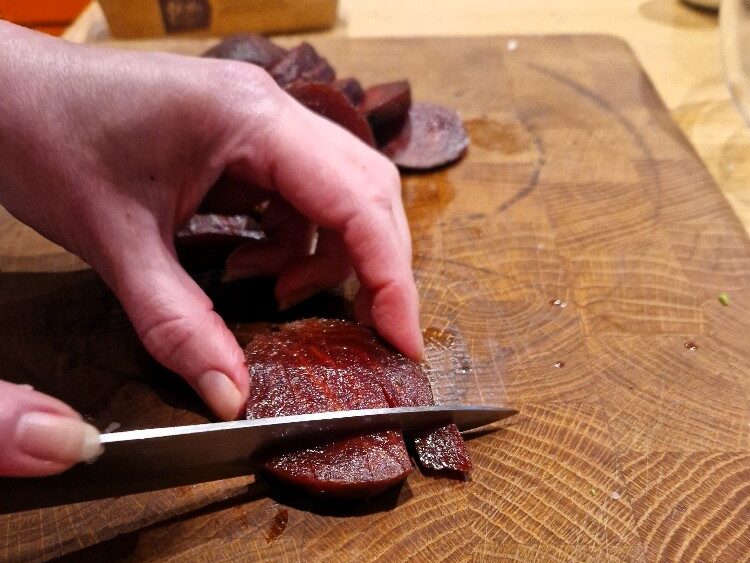
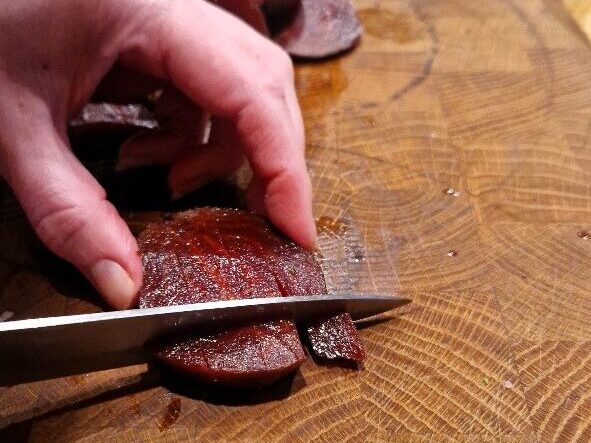
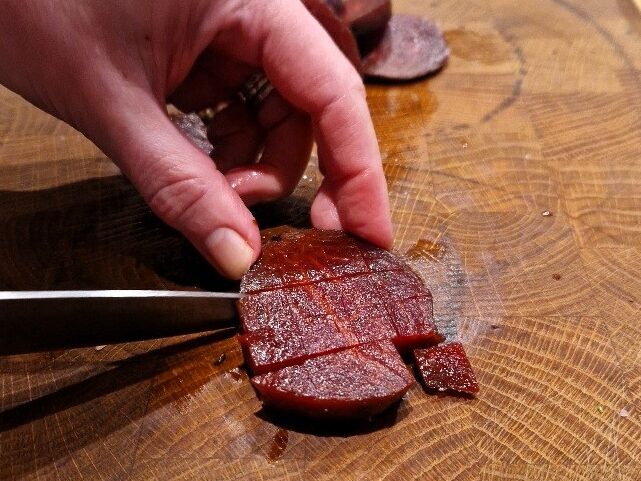
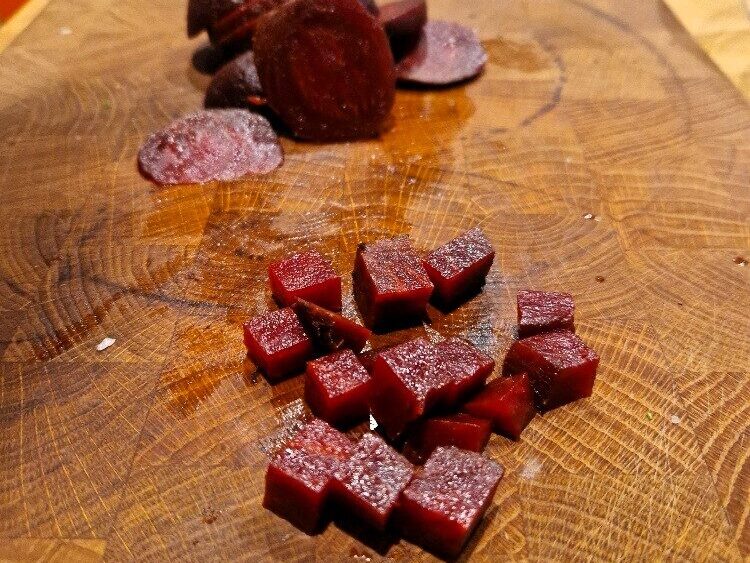
Also chop a few small, firm tomatoes, again into small dice. Remove the white core. You can also fully remove the seeds for a better finish to the salad, but it isn’t essential here. We just moved some of the seeds to one side while chopping, and tried not the pick too many up when adding to the salad.
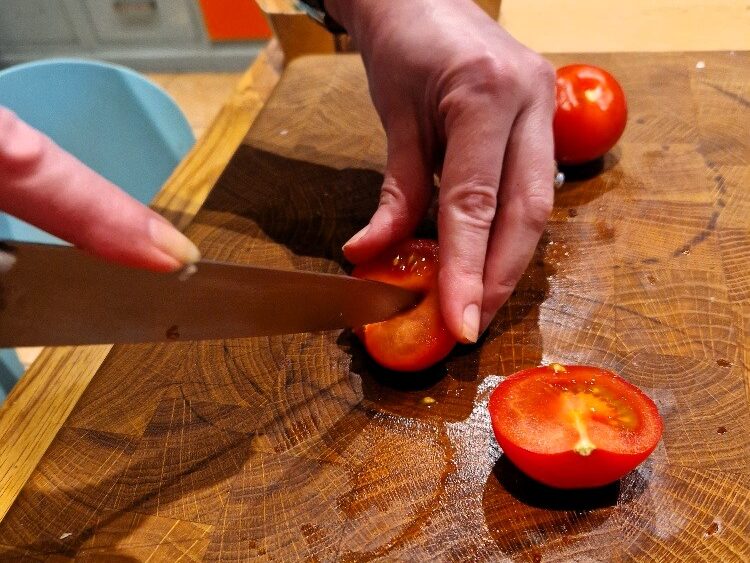
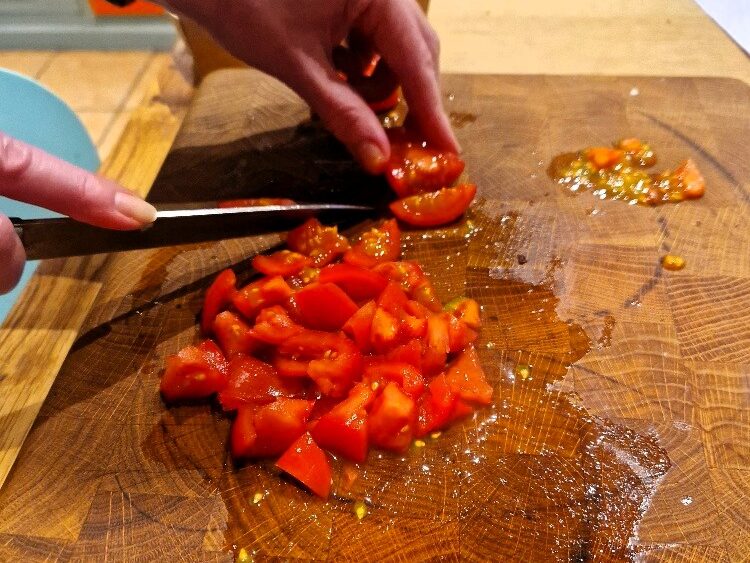
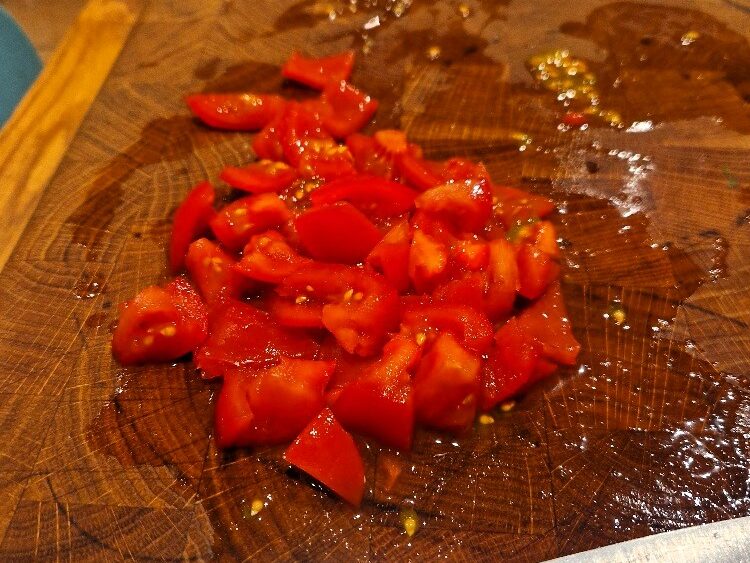
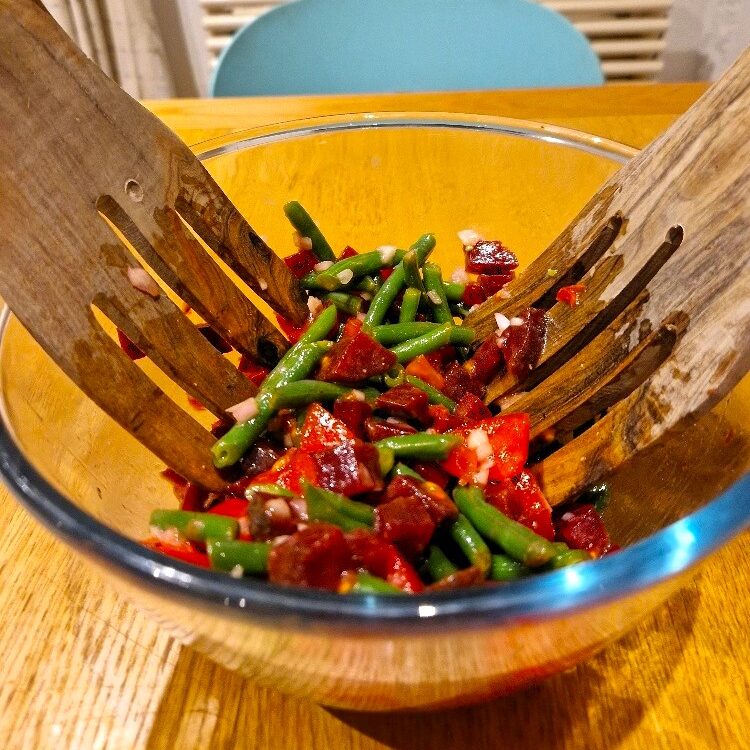
Add the beans, beetroot and tomatoes to a serving bowl, and mix well.
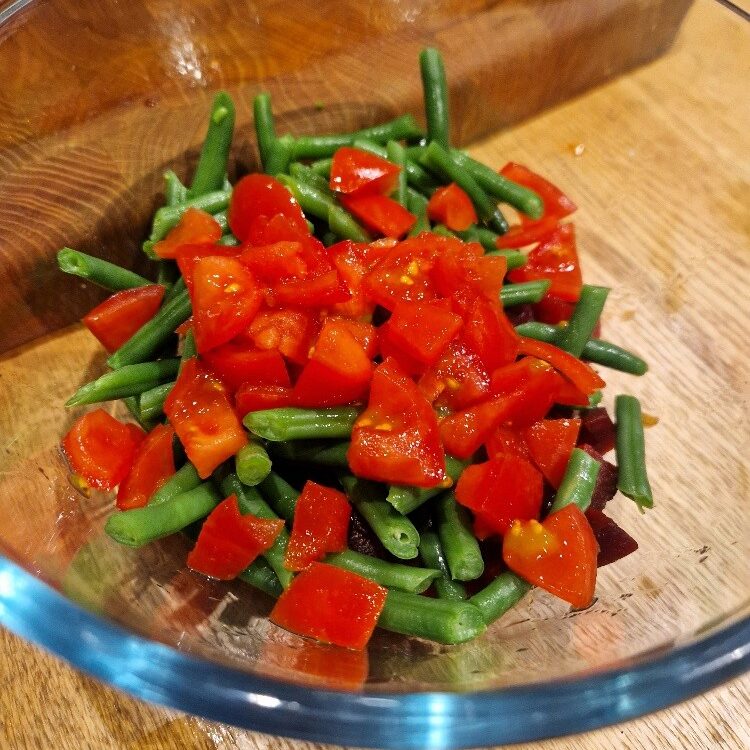
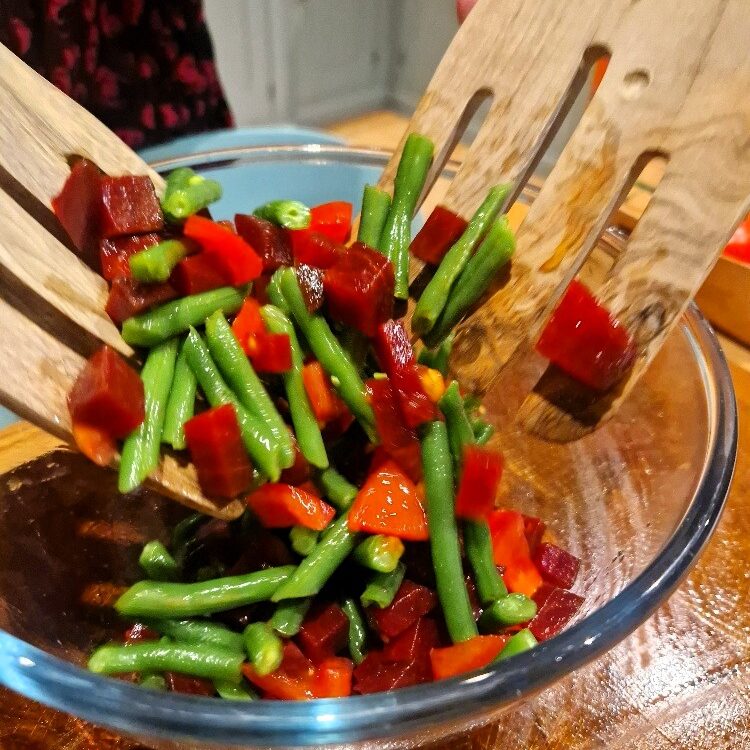
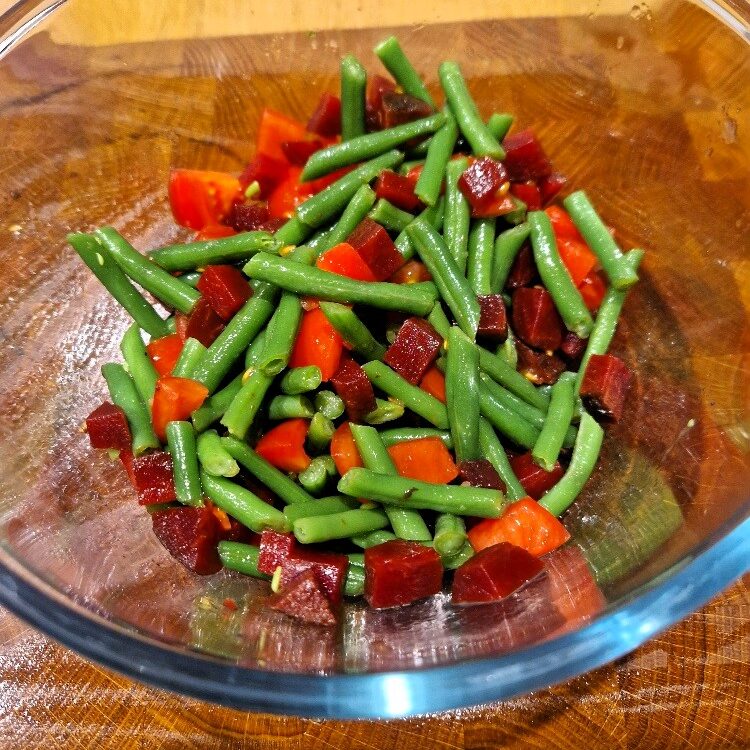
A little beetroot goes a long way in this salad, and with hindsight we perhaps added a bit too much – you want the beans to dominate. We fell into the classic thrifty cook’s trap – having chopped two beetroots, we used it all to avoid waste. One or one-and-a-half beets would have worked better – don’t do as we did, do as we say! But the salad was still delicious. Cover the salad with kitchen paper to soak up any excess moisture, and keep in the fridge until just before needed.
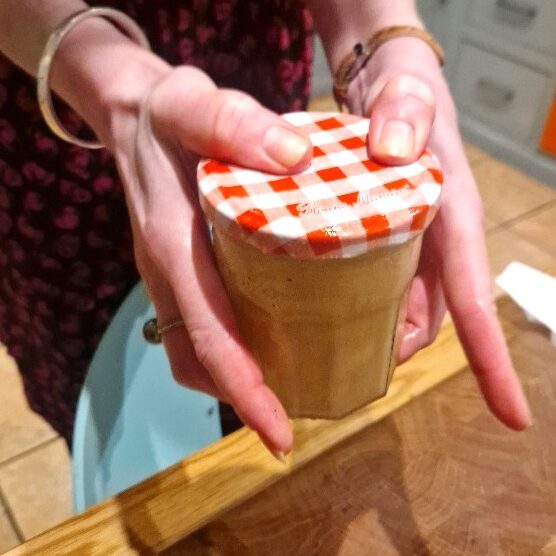
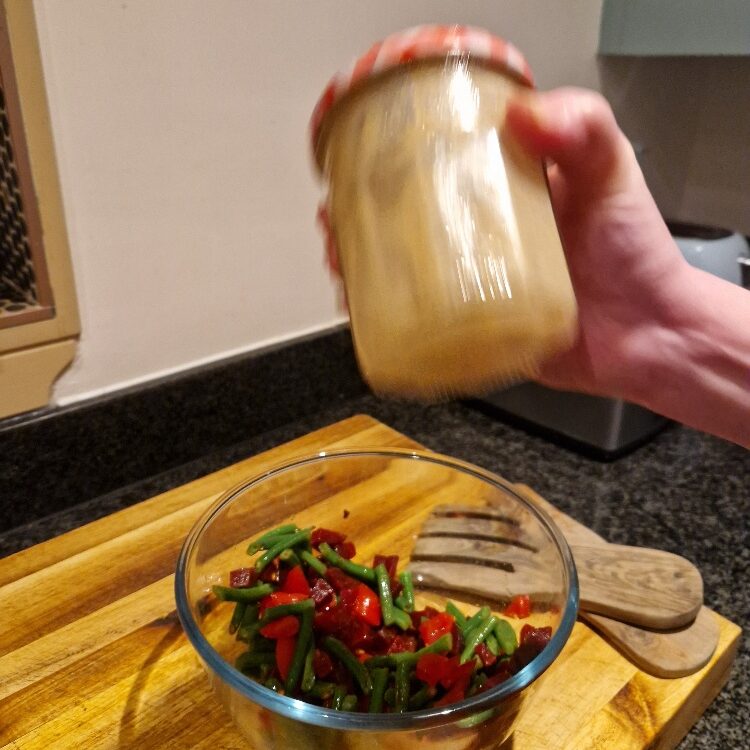
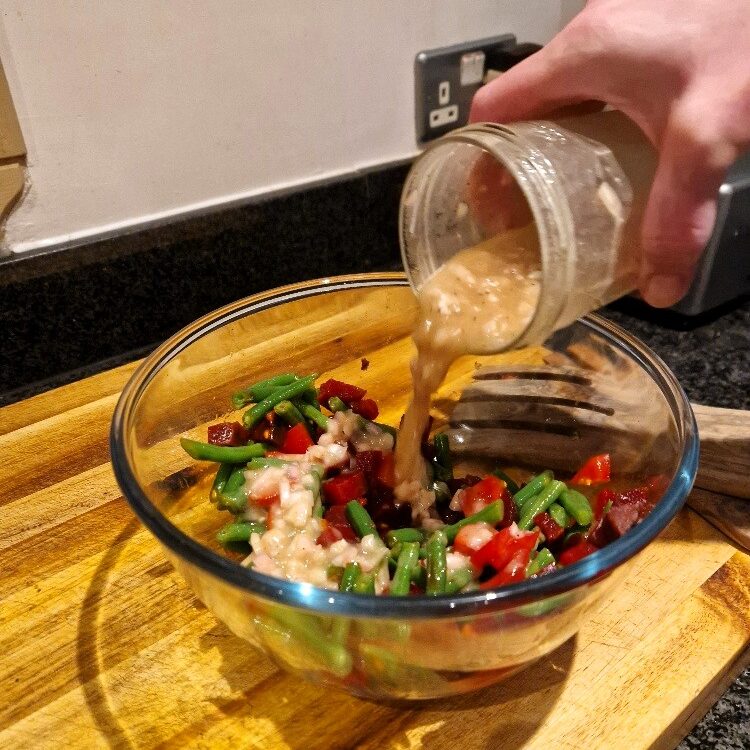
Next make a vinaigrette, you can find out how in our Tip. The easiest way is to shake the oil, vinegar and flavourings in a jam jar to emulsify. Add the chopped shallots and stir, then shake again well to combine. This can also be kept in the fridge until needed.
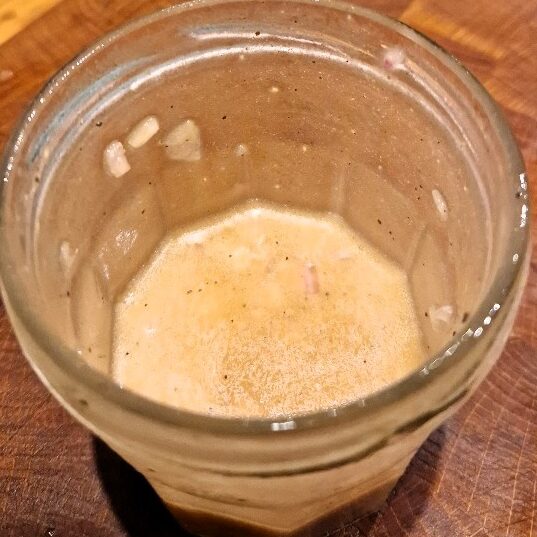
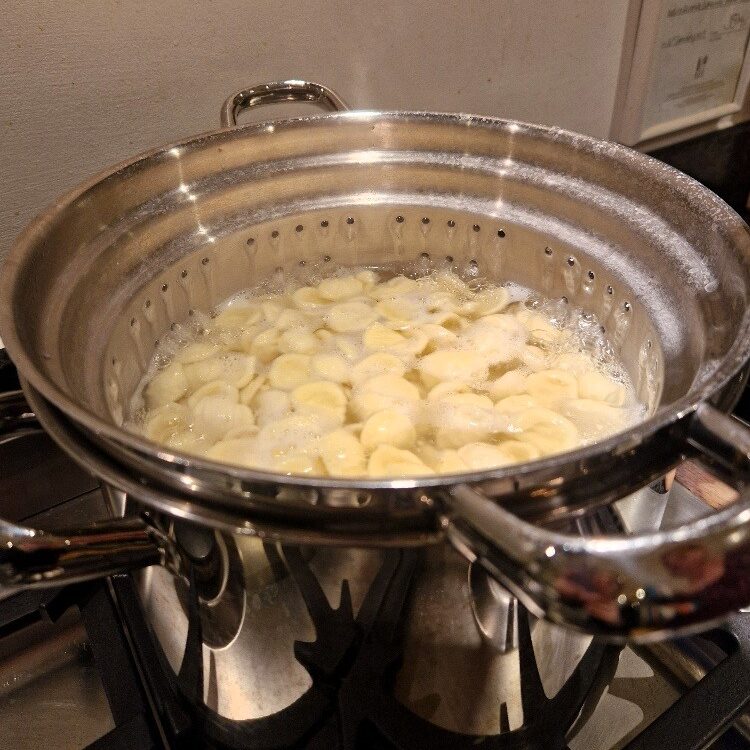
About 20 minutes before you are ready to serve, take the pesto, salad and dressing out of the fridge to warm up slightly, and get a pasta pan or large saucepan of water on to boil. Put a little water in the pan, and set over a high heat, filling the pan up with boiling water from the kettle. Season well with salt. When the water is at a rolling boil, it should bubble and swirl, add your pasta and cook for the time shown on the packet.
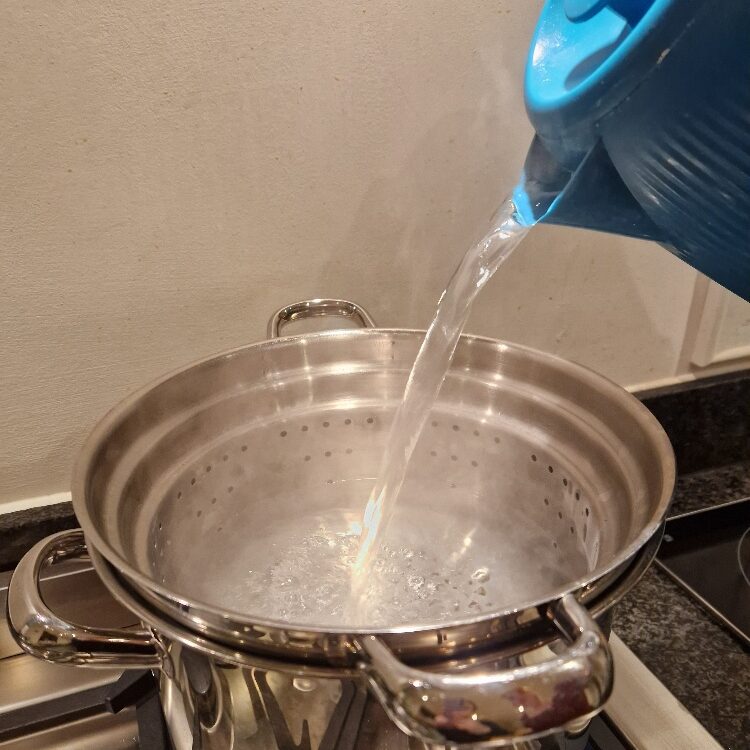
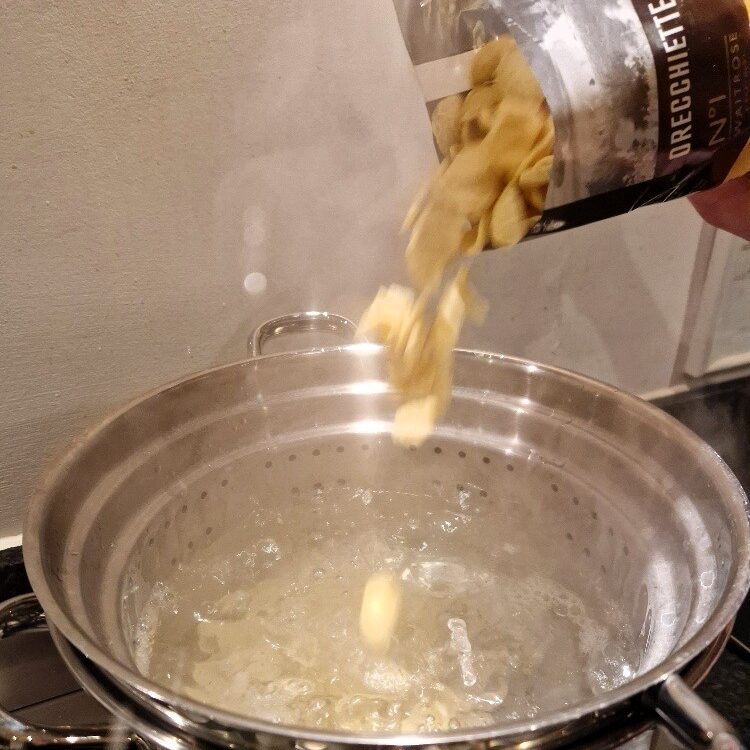
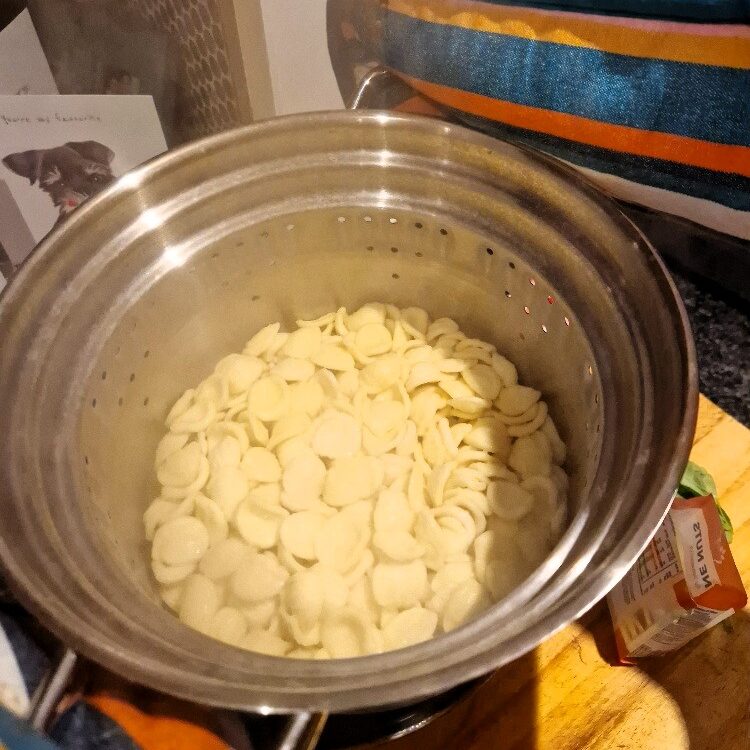
Green pesto goes well with almost any pasta shape (unlike some pasta sauces which are better on a specific type of shape). It works with long pasta, particularly flatter shapes like linguine, but we like to use a short pasta with a shape that will trap some of the sauce. The commonly found penne (small tubes), conchiglie (small shells) and fusilli (spirals) all do this well, as does farfalle (bows), which looks particularly pretty on the plate. Trofie (twists), if you can find it, is also a traditional choice. Today we used orecchiette (little ears) as it gives a nice, slightly chewy, finish that goes well with the simple pesto, and has a curved shape that traps the sauce nicely.
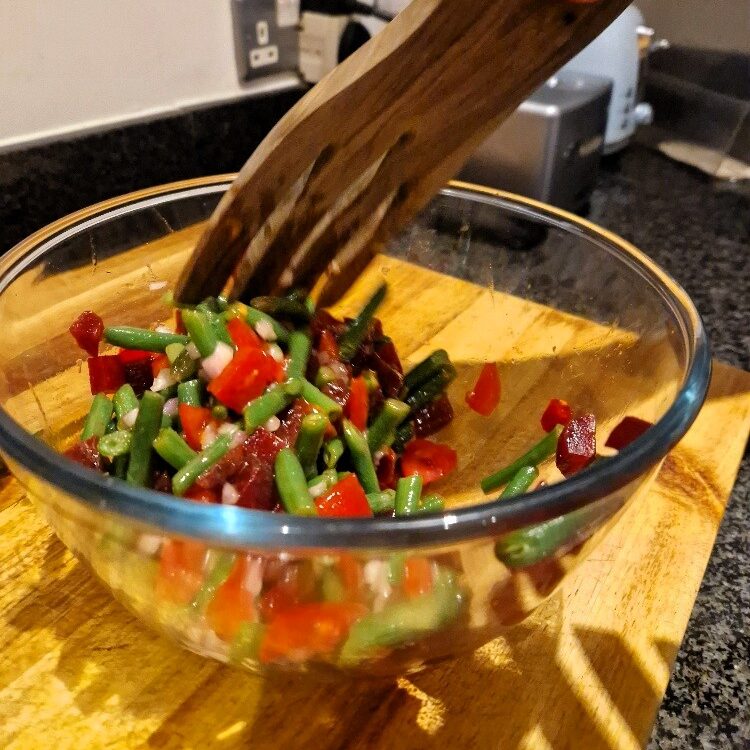
While the pasta is cooking, dress the salad, shaking the dressing well before you add. Toss well to combine.
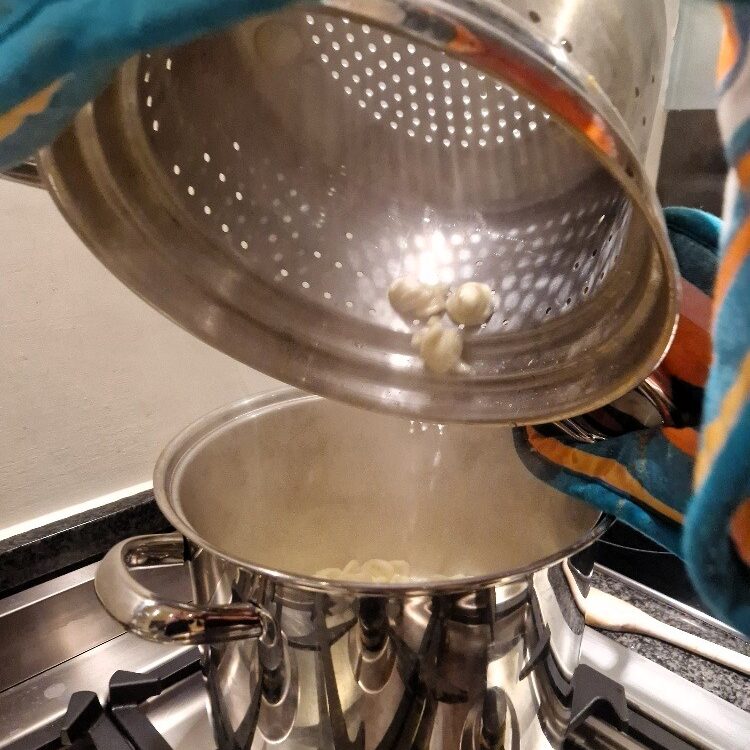
At the lower of the two cooking times on the pasta pack (ours today was 11 to 13 minutes), test a piece by biting into it. If it is hard or chalky, cook longer. Have your pesto sauce to hand. Drain the pasta when done, then return to the pan over a low heat.
Immediately add the pesto to the pan, and stir well to combine. Allow to heat through, a few minutes, but don’t boil (or the sauce may split or become oily).
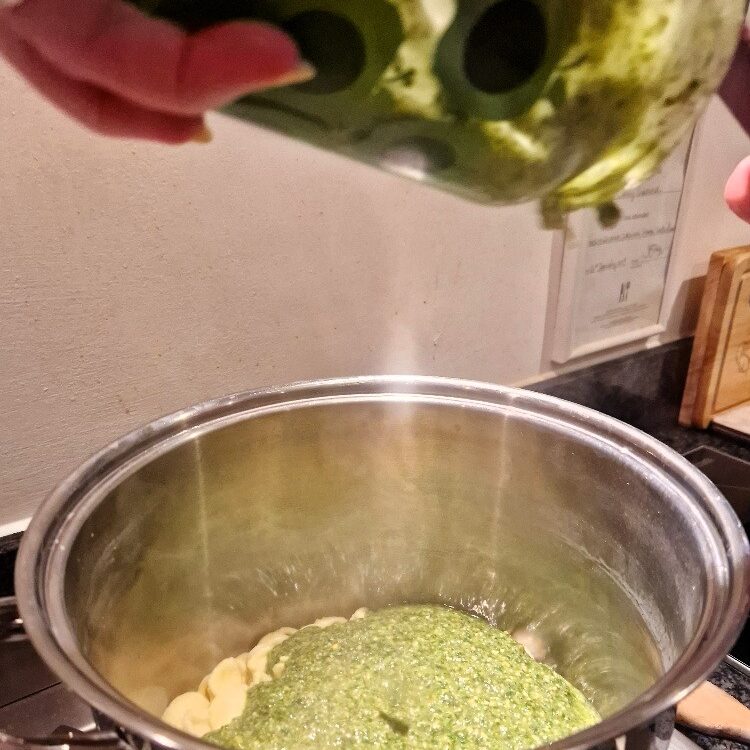
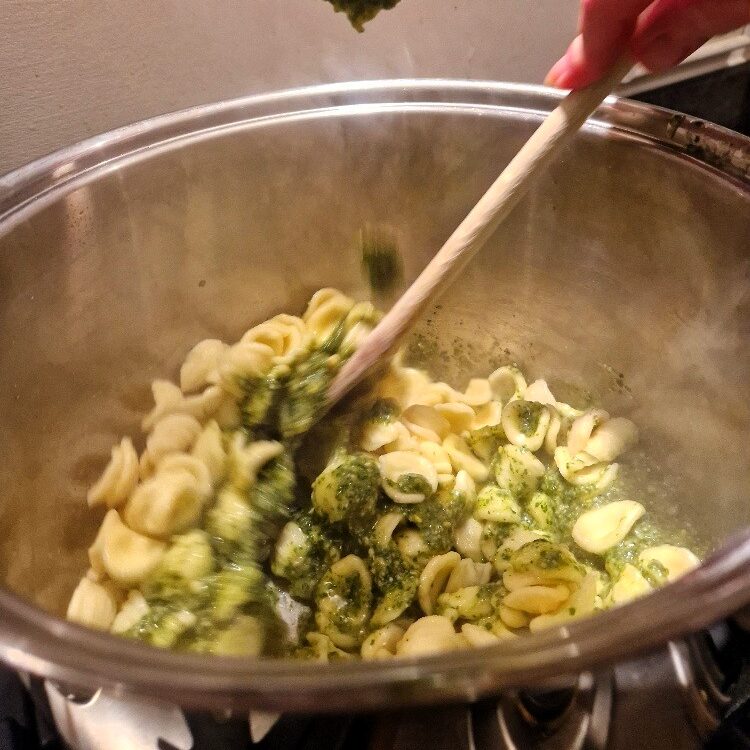
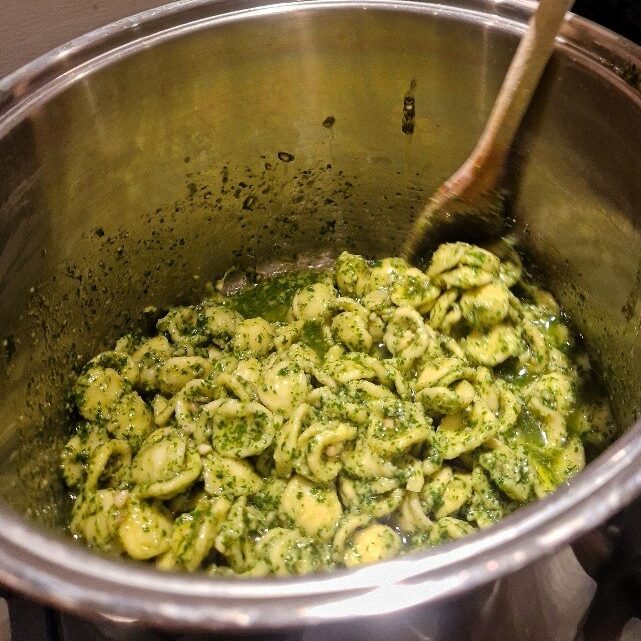
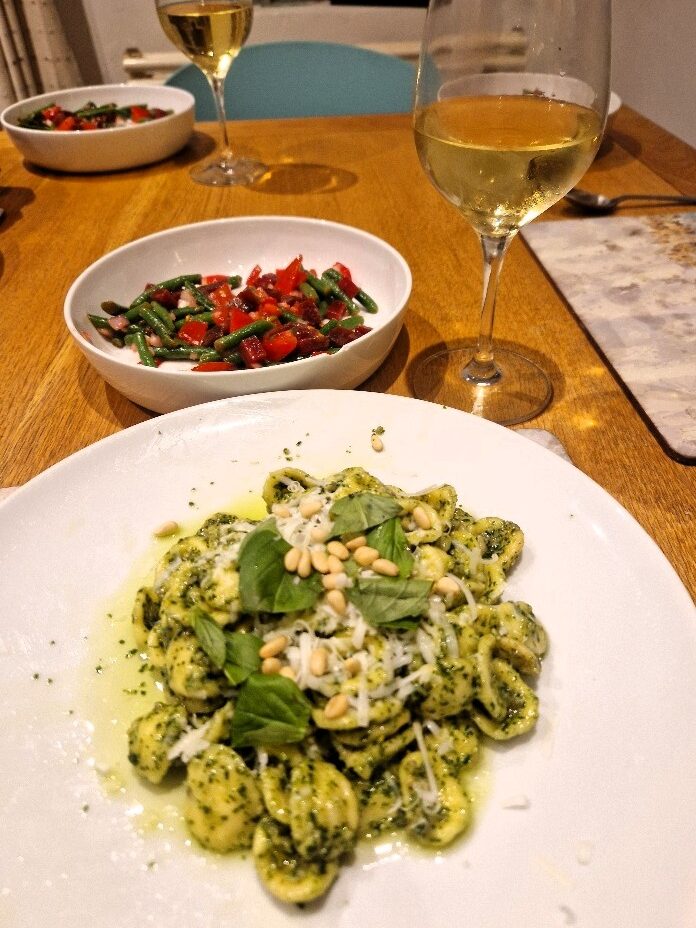
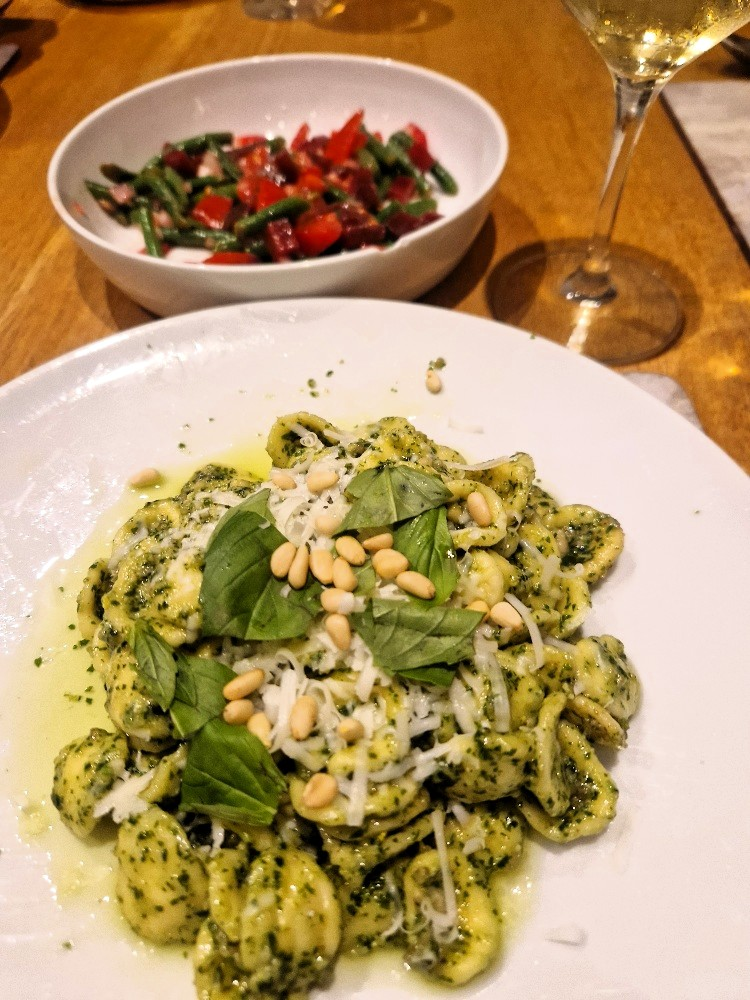
Plate the pesto pasta, then top with a little more grated pecorino. Rip over some basil, and garnish with a few pine nuts.
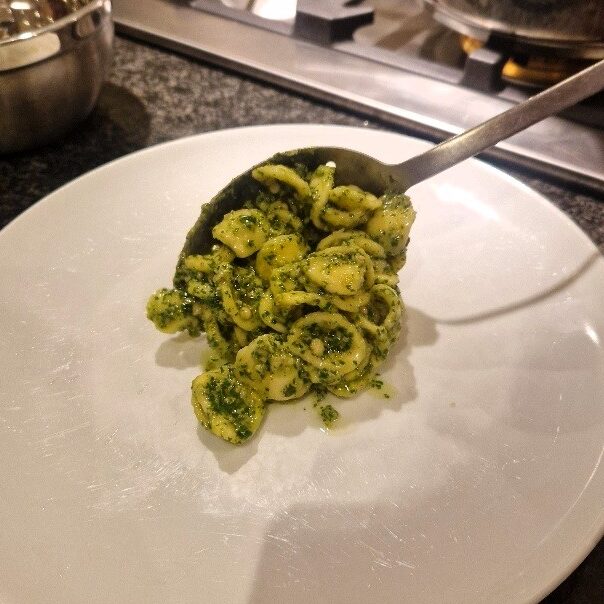
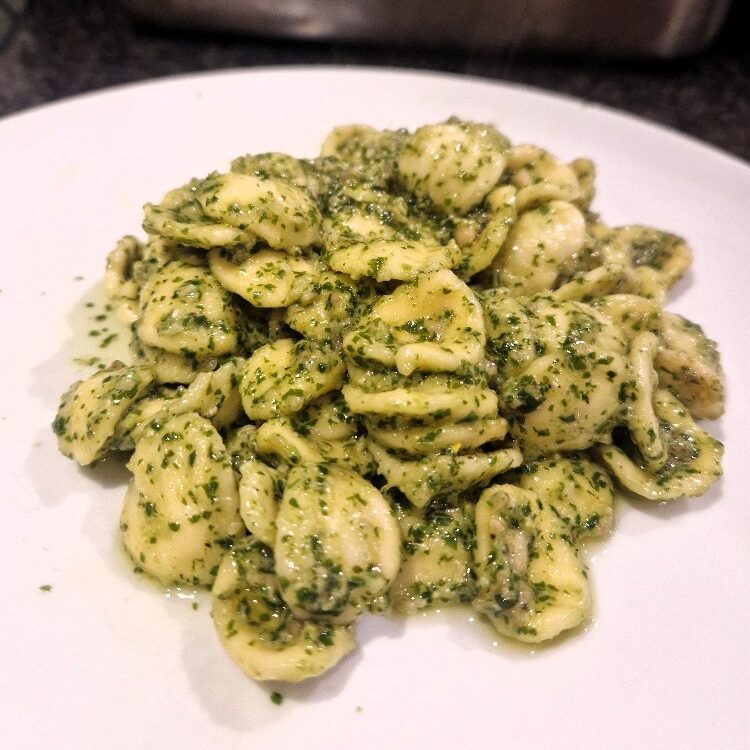
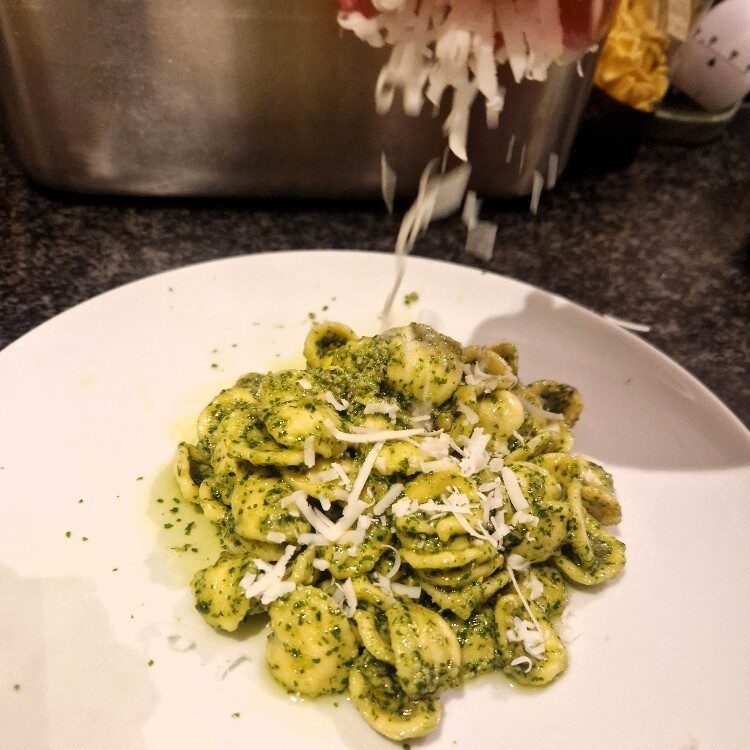
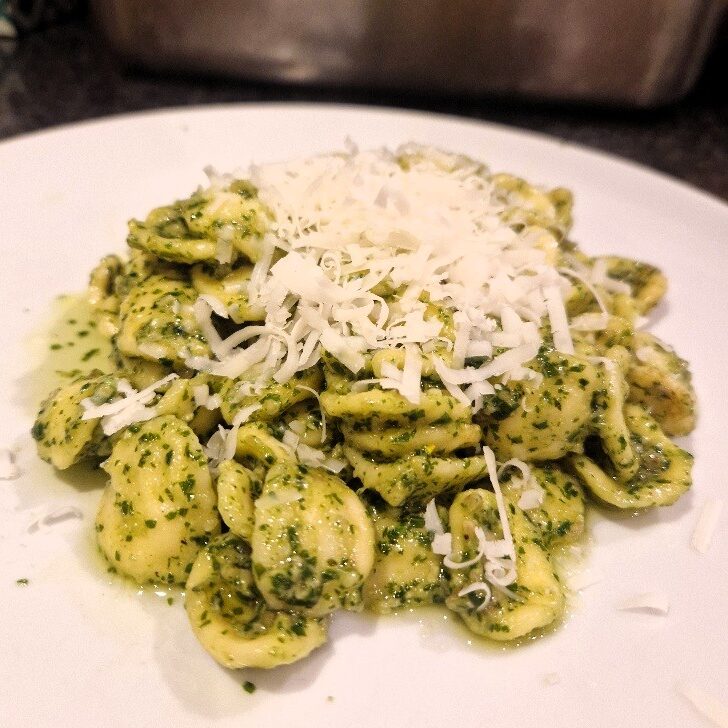
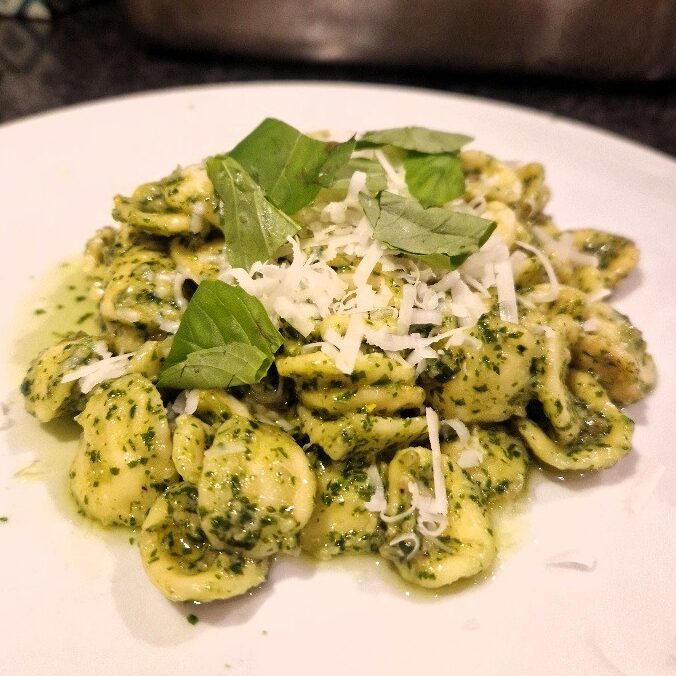
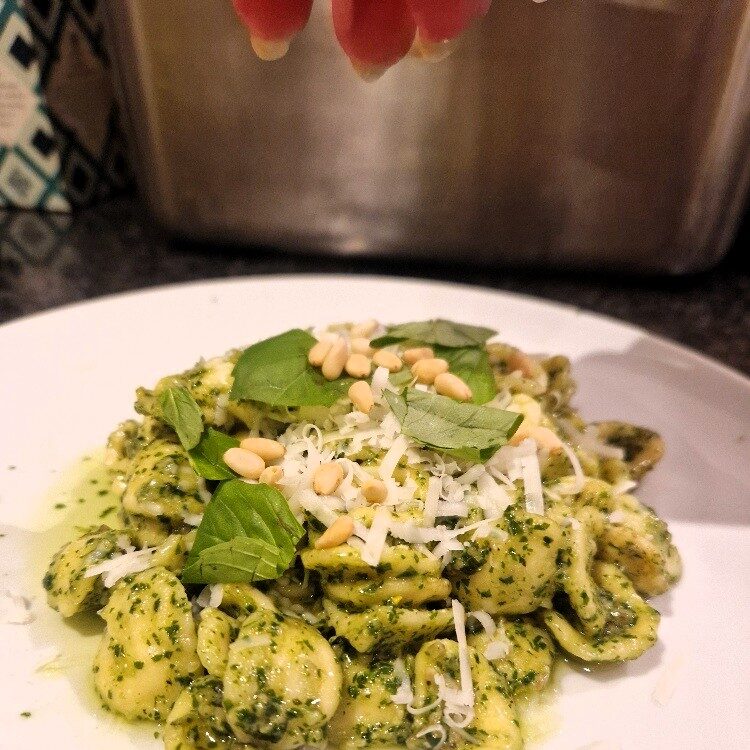
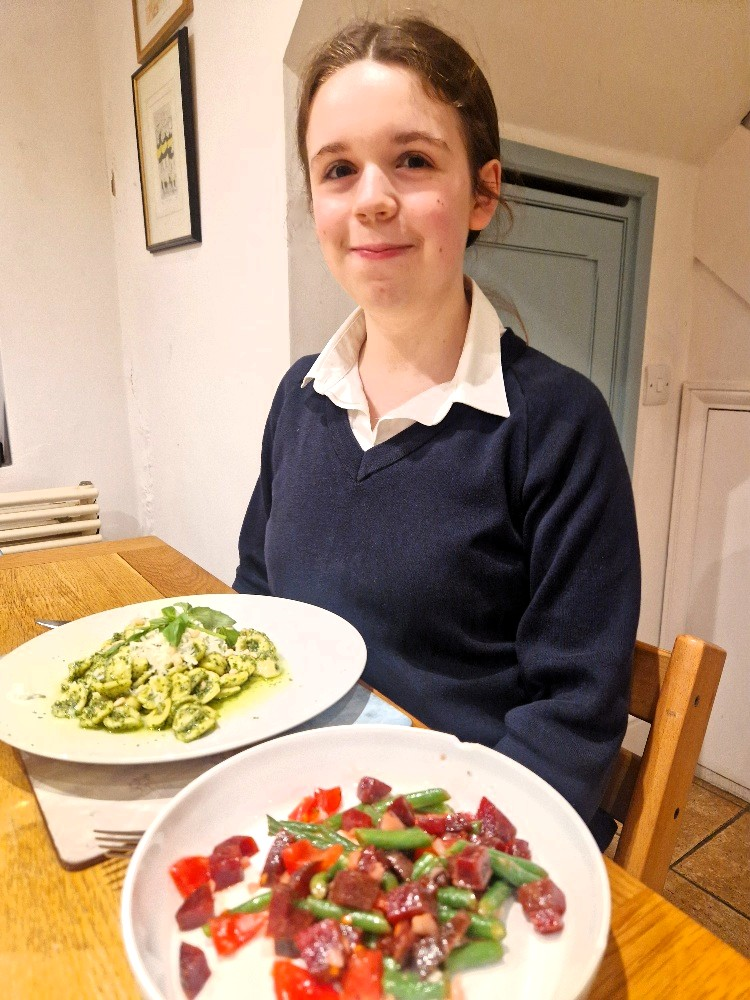
Serve with the salad on the side. How pretty is that!
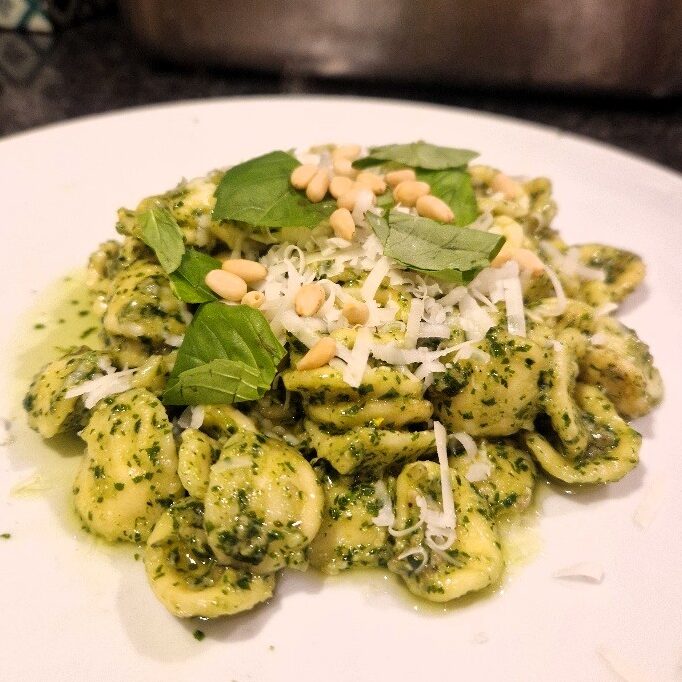
Enjoy!
Fragrant Pesto Pasta & Green Bean Beetroot Salad
Ingredients
Equipment
Method
- Grate the pecorino and set aside.
- Add the pine nuts and sunflower seeds to the bowl or a food processor or blender. Sunflower seeds help reduce cost. You could make with just pine nuts (more expensive) or just sunflower seeds (cheaper), or use walnuts or cashews instead. Keep a few pine nuts back to garnish. Add the pecorino, reserving some to serve later, and pulse a few times to combine.
- Add the basil, stalks removed, to the processor, reserving a few leaves to garnish. Season with salt & black pepper to taste. Pulse to combine well. Add oil and pulse several times, adding enough oil and blending until the sauce is slack enough to pour, but still retains some texture, and is an attractive, even green colour. You can also make pesto in a pestle and mortar if you don't have a food processor.
- Unless using immediately, spoon the pesto into an airtight jar or bowl, and cover with a layer of oil. Seal the jar, and keep the pesto in the fridge until needed. This stops the pesto from blackening and degrading – it will keep in the fridge for a few days if stored this way.
- Chop the shallots very finely. Find out how in our onion Tip.
- Top & tail the green beans, then cut in half. Cook in boiling water for about 3 to 5 minutes, depending on thickness, until tender but still with some crunch – test one by biting into. When done, drain and plunge into cold water to stop the cooking and crisp the beans. Drain and dry on kitchen paper.
- Chop the beetroot into small dice. Chop the tomatoes small, removing the white core and some of the seeds.
- Add the beans, beetroot and tomatoes to a serving bowl, and mix to combine. Cover with kitchen paper and keep in the fridge until just before serving.
- Now make one quantity of classic vinaigrette, following the recipe and method in our Tip. Add the shallots and stir, then shake well to combine. Keep in the fridge until needed.
- About 20 minutes before you are ready to serve, get out the pesto, salad and dressing, and put a large pan of water on to boil. When it is at a rolling boil, add the pasta.
- While the pasta is cooking, dress the salad with the shallot vinaigrette and toss well to coat.
- Cook the pasta for the time shown on the packet – test it for done-ness by biting into a piece at the lower of the two times shown, and cook longer if it is hard or chalky. When done, drain and return to the pasta pan, setting it over a low heat.
- Immediately add the pesto, and stir well to combine and heat through – a few minutes. Keep the heat low, and do not boil.
- Serve topped with a little of the reserved pecorino and rip over some basil. Garnish with a few pine nuts.
- Serve with the salad on the side.
- Enjoy!