


Skills you will learn in this recipe
Baking potatoes; skinning tomatoes; prepping tinned salmon
Links to the last recipe
Making a pesto sauce
In our last post we featured the most commonly found pesto – pesto alla Genovese, a classic green pesto made with basil and pine nuts. But this more unusual pesto is equally traditional, and comes from much further south in Italy – the island of Sicily. It uses almonds, not pine nuts, and features tomatoes – making it more savoury and richer than green pesto. Today we’re elevating the humble baked potato with it for an elegant take on a classic supper. But this pesto is of course great with pasta too. Traditionally it is used on spiral pastas – busiate, if you can find it, or the more commonly found fusilli if not, or it’s good with linguine too.
Today we’re adding red salmon too, cut with sour cream for an extra luxurious feel. Canned red salmon is one of our favourite tinned fish, but you could replace it with good old tuna mayo, as in our Simple Supper potato version for a cheaper alternative – see the recipe here. And today we tried an even cheaper alternative too – canned sardines. Tasted side-by-side we were divided – Emily preferred the more delicate salmon, but Estella preferred the more robust sardine version. You decide!
This dish is simple, but you do need to plan ahead – baked potatoes take between 1 hour to 1h 30 minutes, depending on size. So you’ll need to get your oven heating to 200C (180C fan) about 1 h 40 minutes before you want to eat. The pesto can also be made ahead, but you’ll need to store it under oil in an airtight jar (as we did with the green pesto) if you are making it more than about 10/15 mins before you serve – it will discolour if left out in the air.
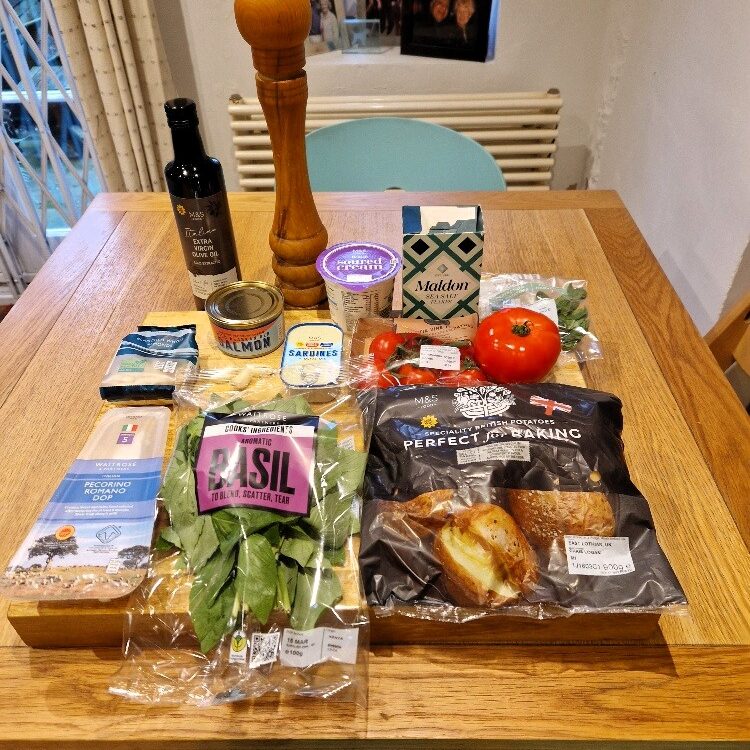
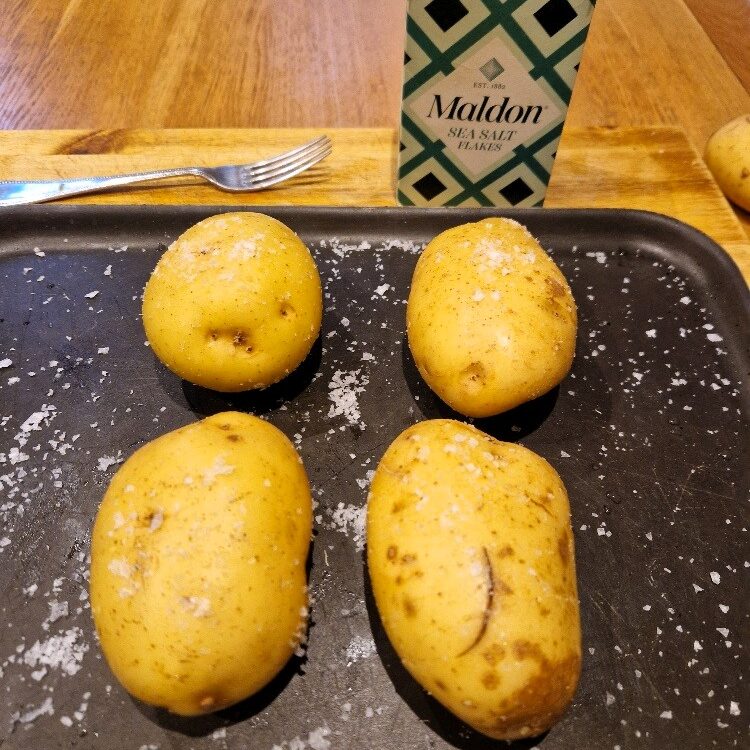
First, get the oven on and prep the potatoes. You can find detailed instructions on baking potatoes for a crisp or soft finish here in our Tip. Today we wanted crisp potatoes. Stab the potatoes all over with a fork, then dampen slightly and roll in salt. Bake in a hot oven until done – 1 hour to 1 hour 30 minutes at 200C (180C fan). Always allow more rather than less time – baked potatoes are very forgiving. If you think they are done sooner, they will keep in a warm oven, 60C to 80C, until you are ready to serve.

Trapanese pesto
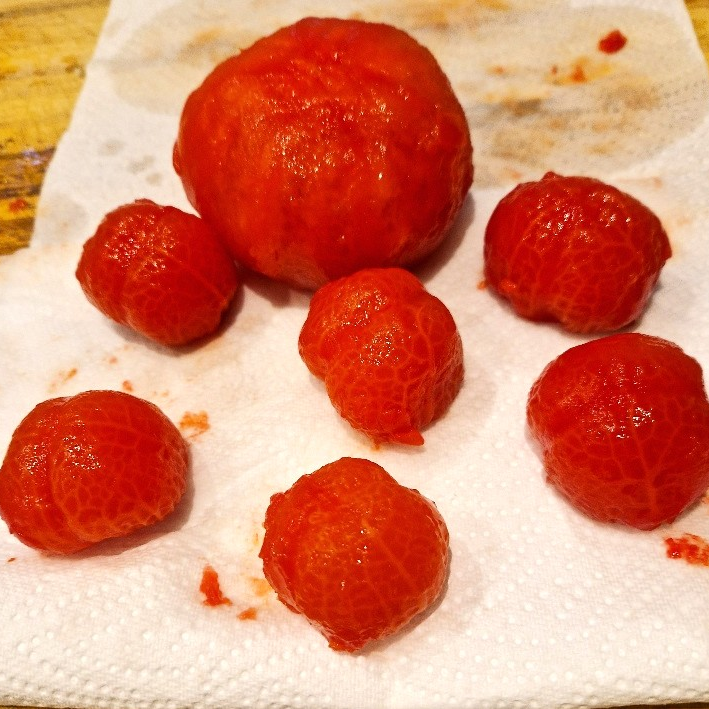
Next, prepare the tomatoes for the Trapanese pesto. Ideally, for the best flavour and texture you want to peel and deseed fresh tomatoes for this pesto – find out how to easily peel them in our Tip. But if you’re in a rush (or can’t be bothered – peeling tomatoes is a slightly fiddly job!) you could use chopped unpeeled fresh tomatoes, the result will be a slightly coarser pesto with a sharper taste. And, though we haven’t tried it, we’re sure drained chopped canned tomatoes would work well too, as an even faster and cheaper option.
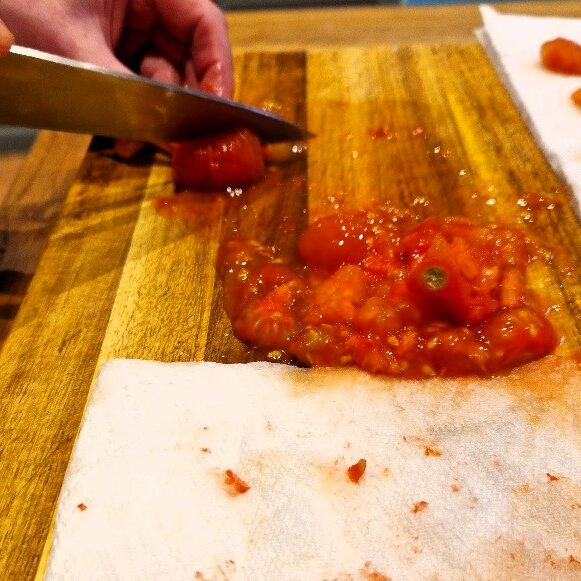
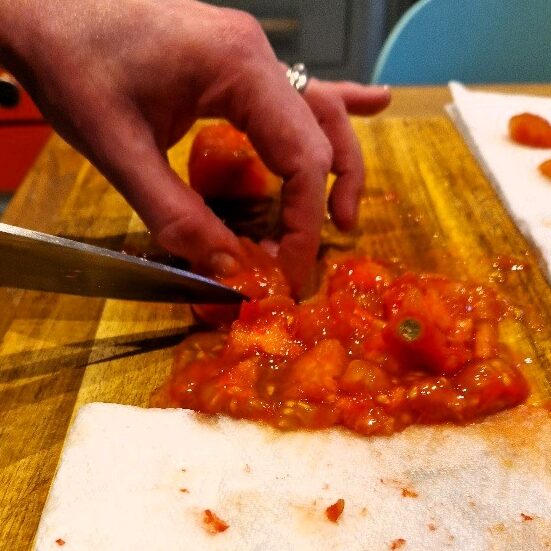
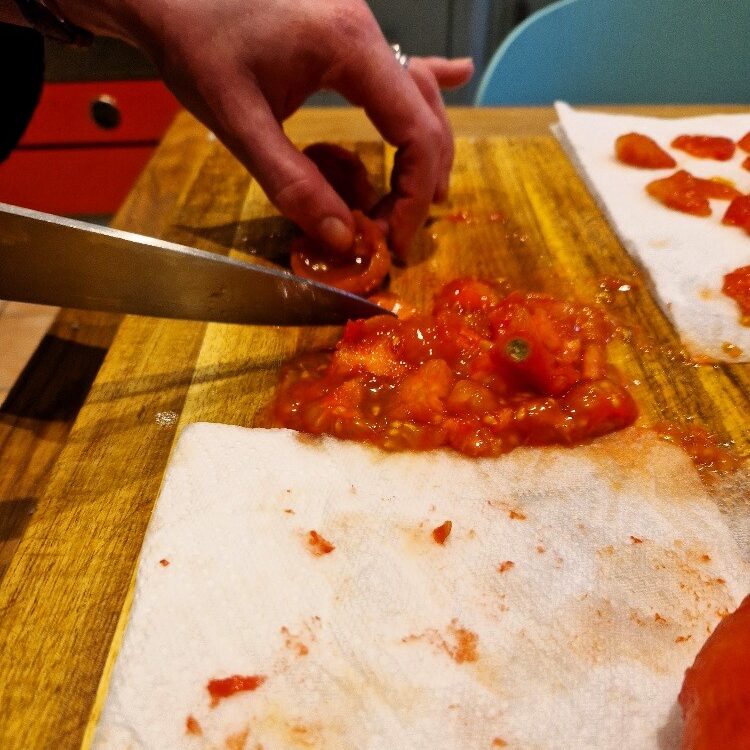
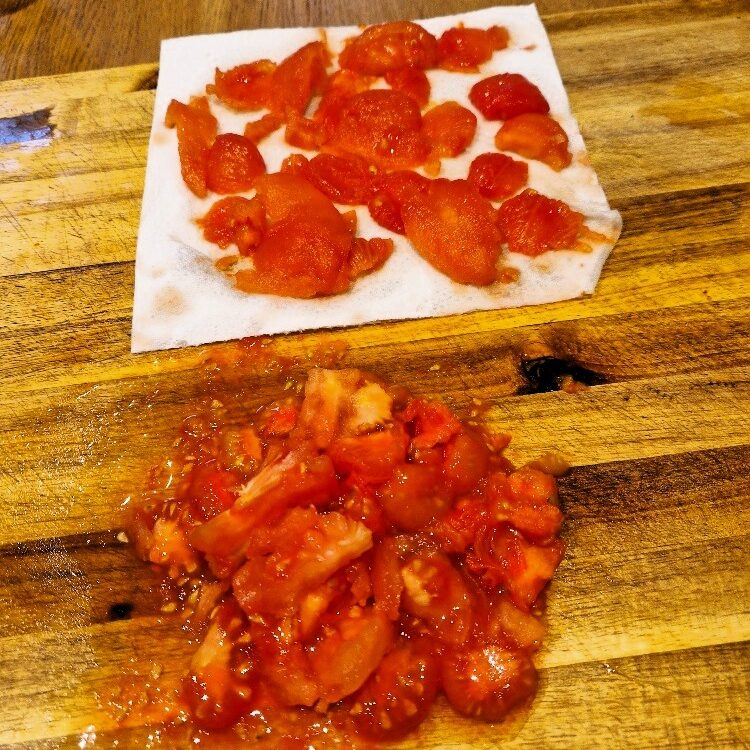
But to do it the ‘optimal’ way, score and blanche the tomatoes as in our Tip, then drain and peel them. Remove the white core with a knife, then tease out the seeds with either a teaspoon or the tip of your chef’s knife. Discard the skins and seeds. Roughly chop the tomatoes, then set them aside on some kitchen paper until needed.
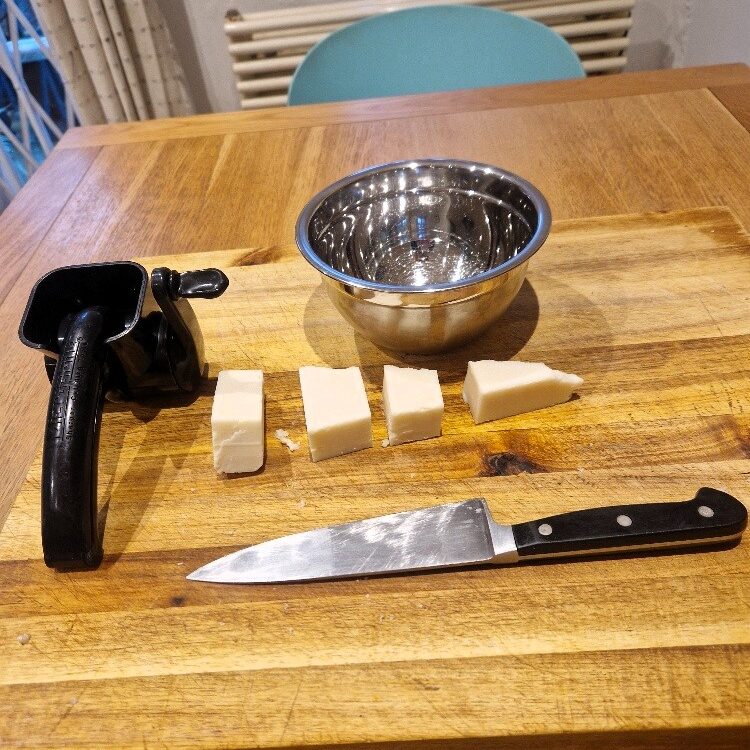
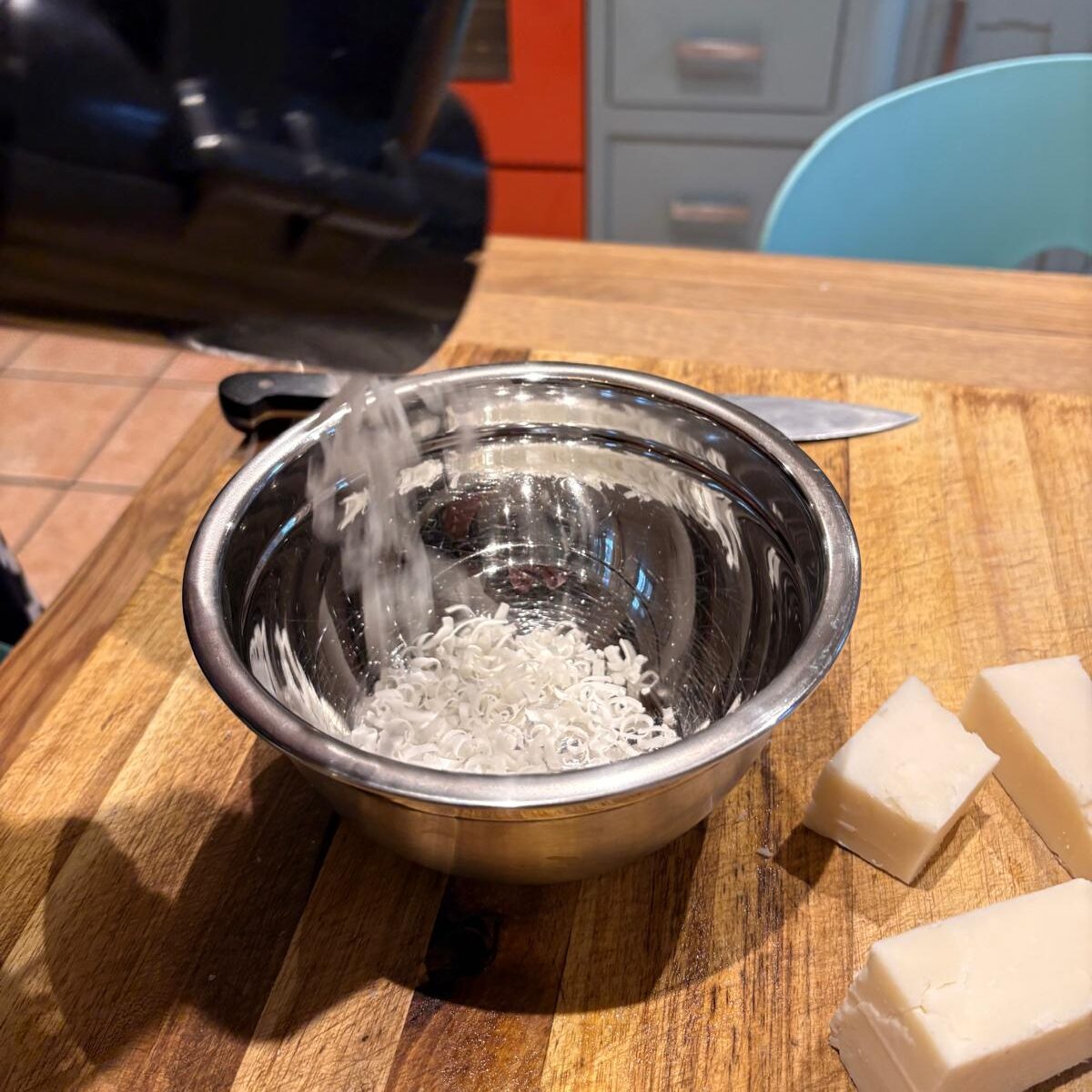
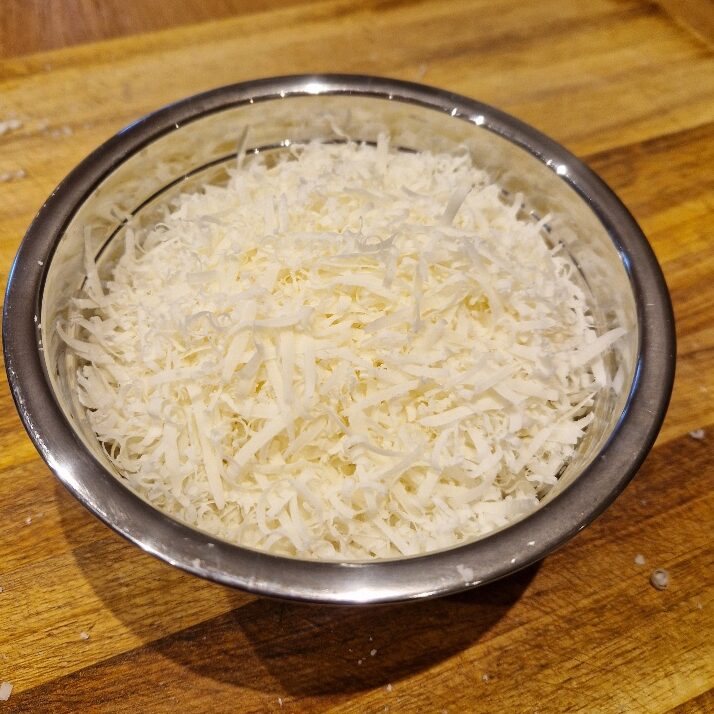
Now grate the cheese. Pecorino is traditional in this pesto, but you could use parmesan instead. Pecorino is slightly lighter flavoured and more salty, and, if you can find it, usually a little less expensive than Parmesan too.
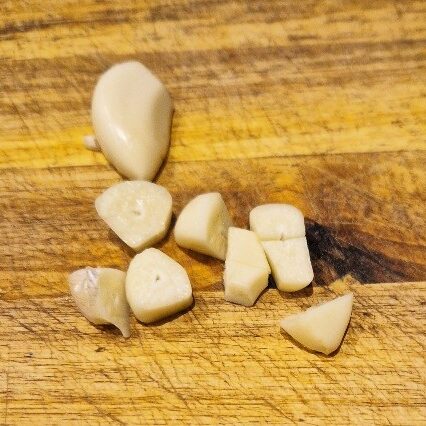
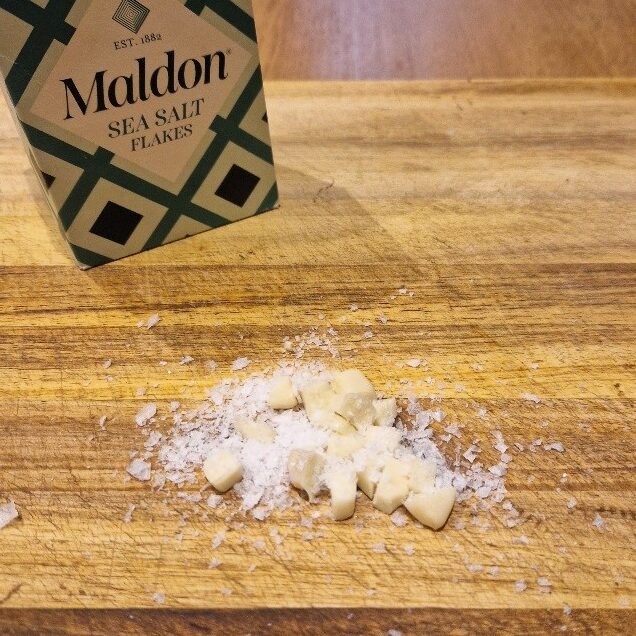
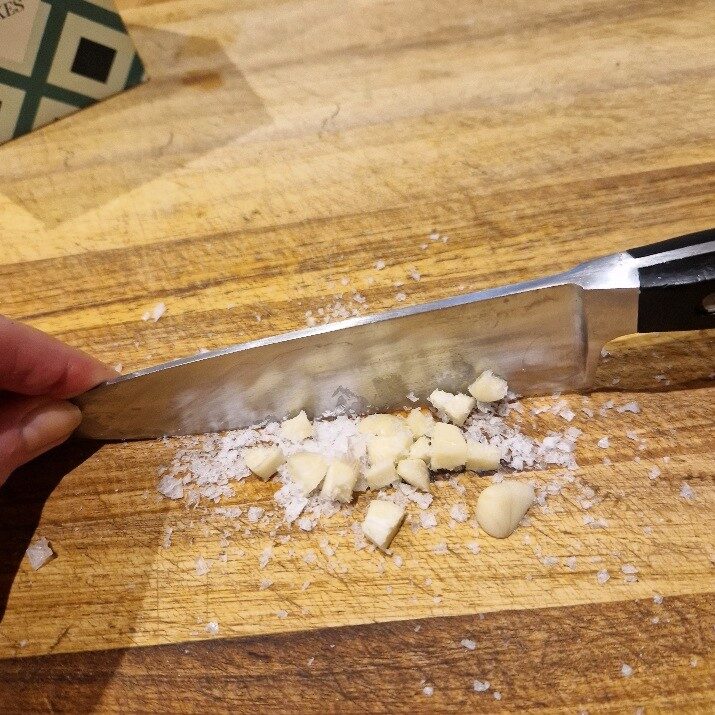
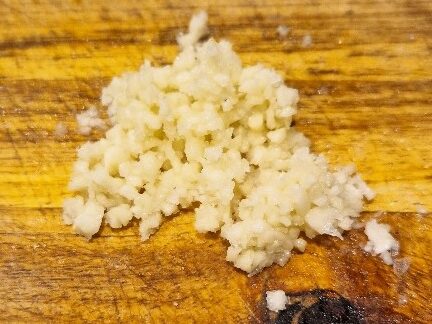
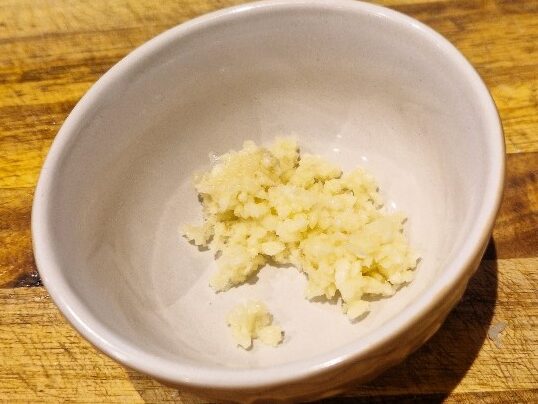
Peel and roughly chop the garlic, then crush it to a paste with salt using the rocking knife technique – see our garlic Tip for details. To get to the paste stage, keep chopping and re-chopping the garlic over and over in the salt until you get a fine, wet texture as below.

Jake sticks his nose in
You could just add the roughly chopped garlic to the bowl of your food processor or liquidiser in the next stage with the nuts and cheese. But the benefit of making a paste first is that you won’t risk getting lumps of raw garlic in your pesto. Most food processors have quite a large main blade, so it is easy for bits of garlic to get missed by them.
You are now ready to make the pesto. As with the green pesto, it is best to do this by eye and by taste – the proportions are rough and it’s really what you personally like that matters. We find it slightly easier to measure in cups for this pesto, but we do give grams in the recipe below too, though do regard this as a guide. Some Trapanese pesto recipes don’t feature cheese at all, or have less of it. But most do, and we like it, so we add about an equal quantity to the nuts. Keep a little of the pecorino to one side to serve.
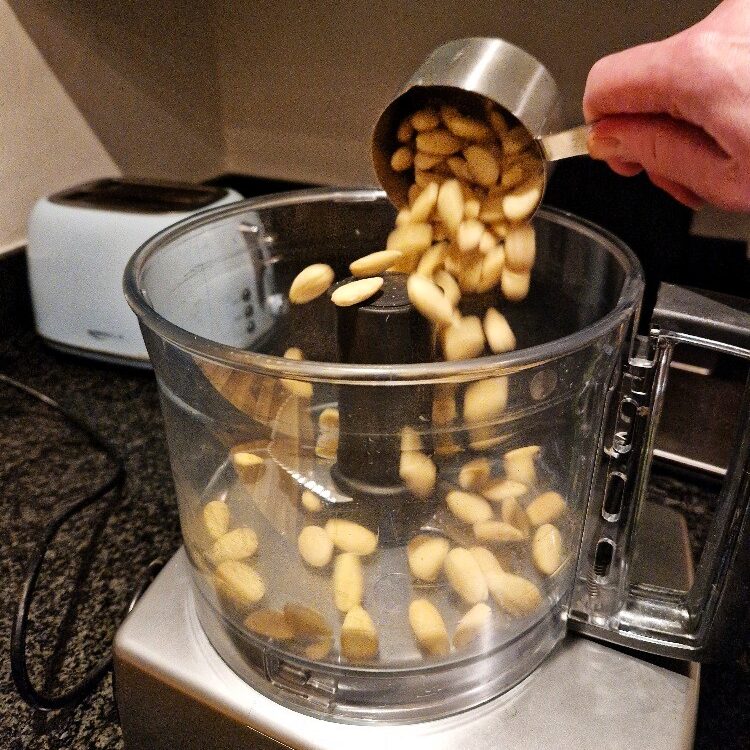
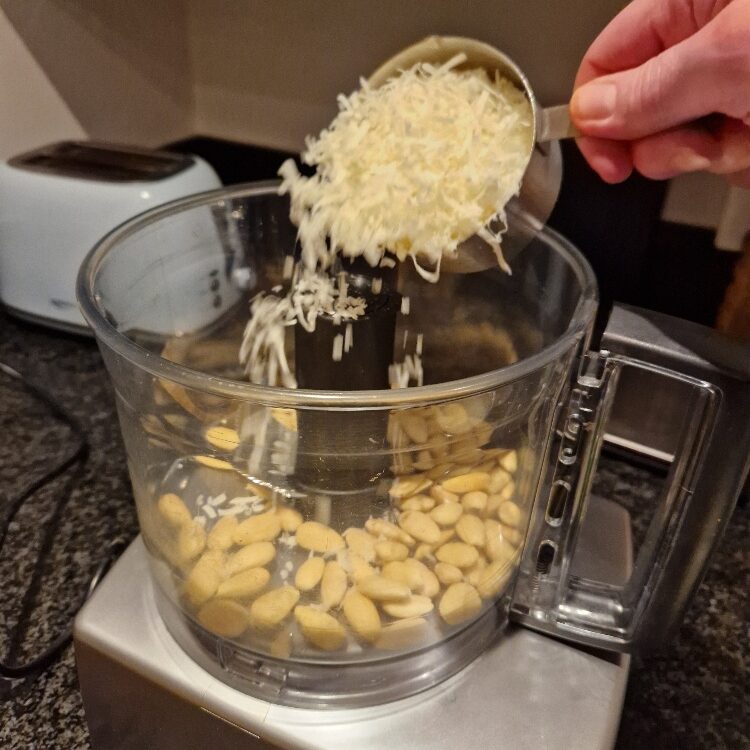
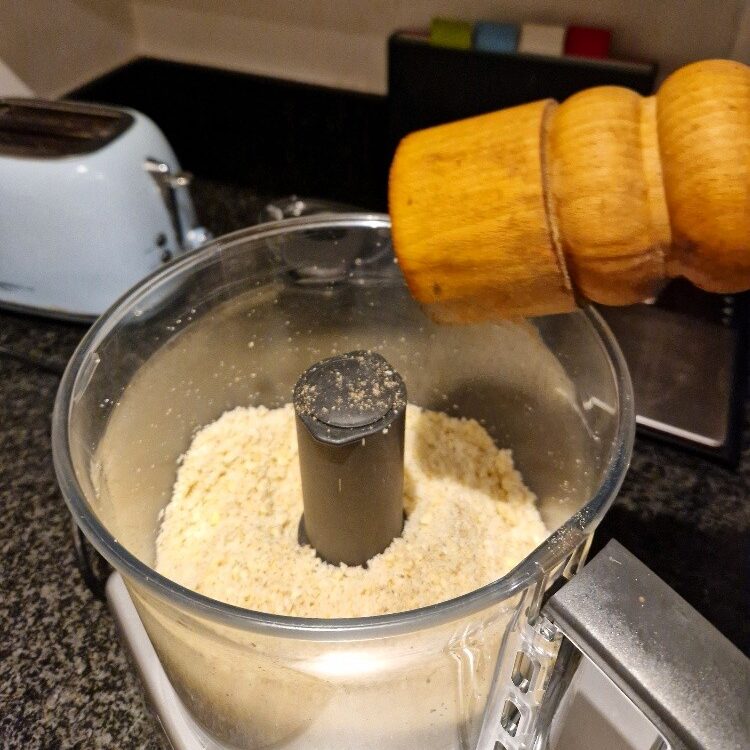
Add one cup of almonds, one cup of grated pecorino and the garlic paste to the bowl of your food processor or blender, and pulse a few times to chop the almonds and combine. Do not blend too much as you’ll be blending again later with the basil and tomatoes.
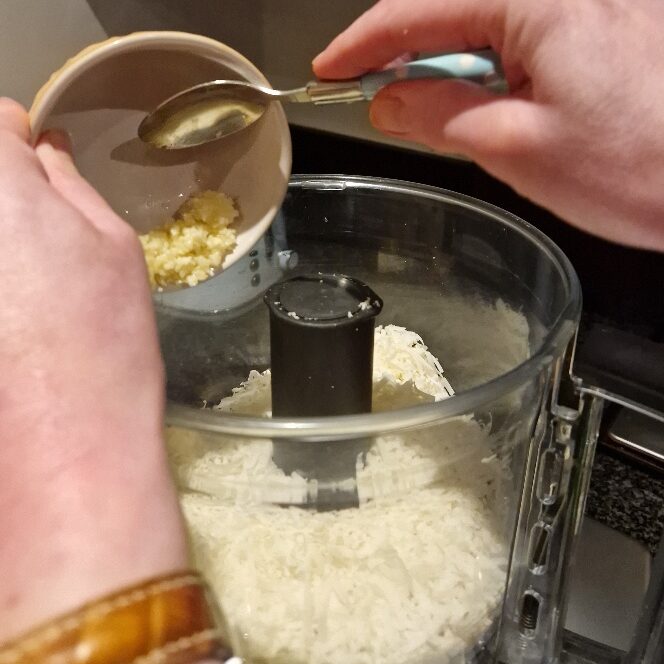
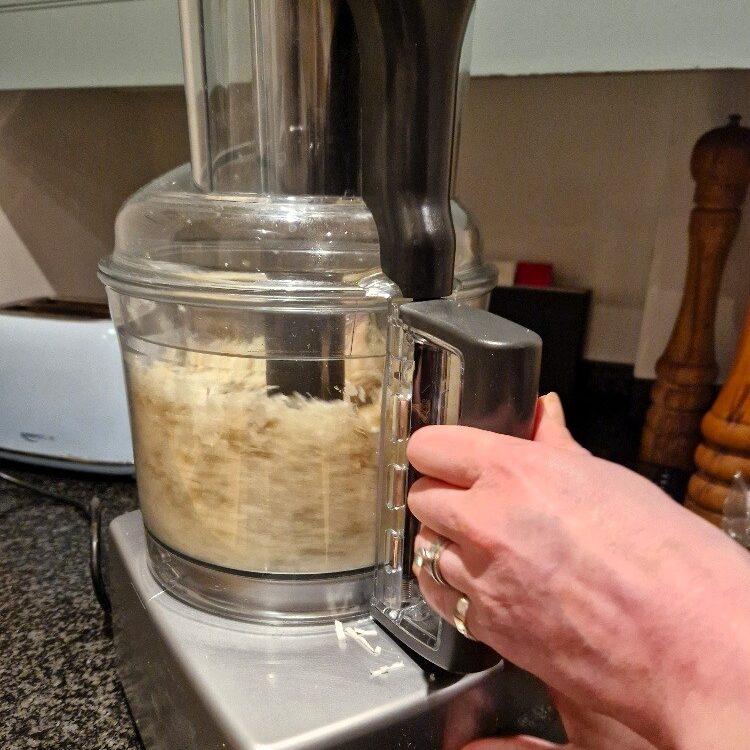
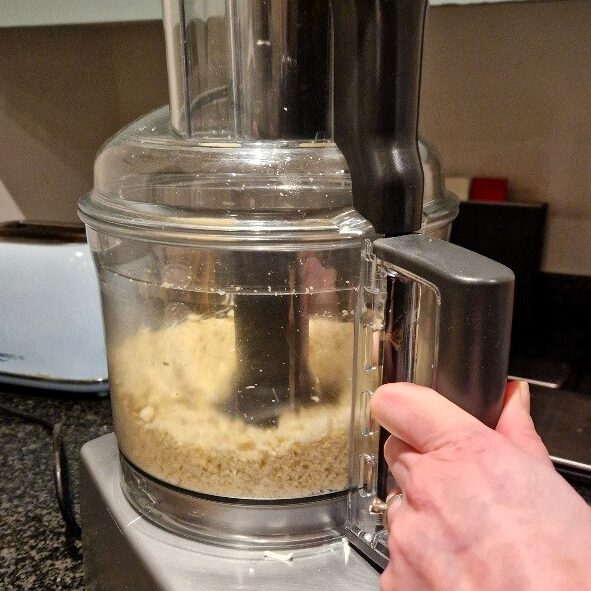
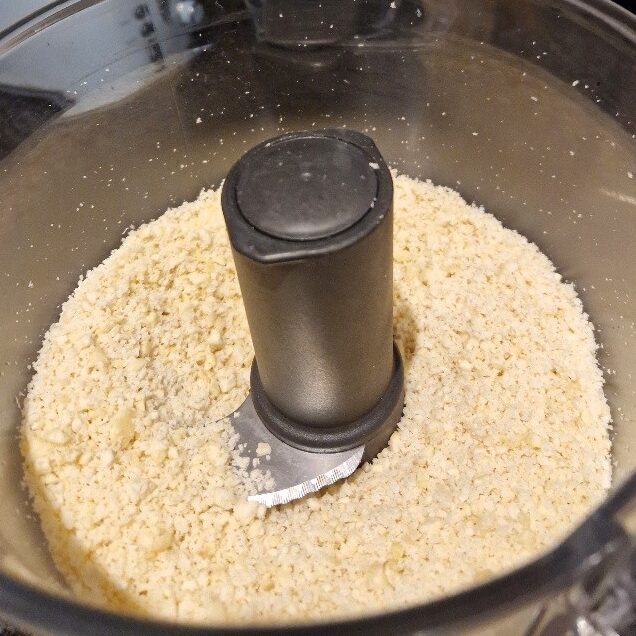
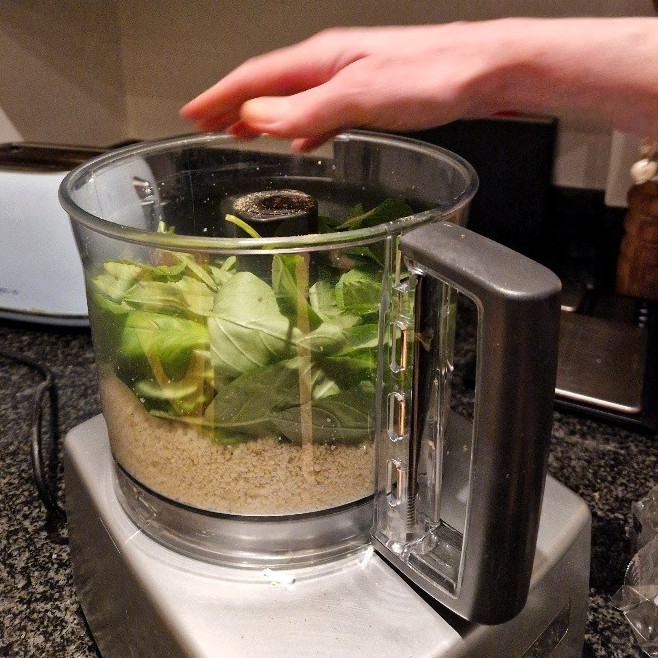
Season with black pepper – you shouldn’t need salt as the pecorino is salty, and there is also salt in the garlic paste – and add the basil to the bowl of the processor. Even though this is a ‘red’ not ‘green’ pesto, basil is still a key ingredient. We used one large bag, keeping aside a few leaves to garnish.
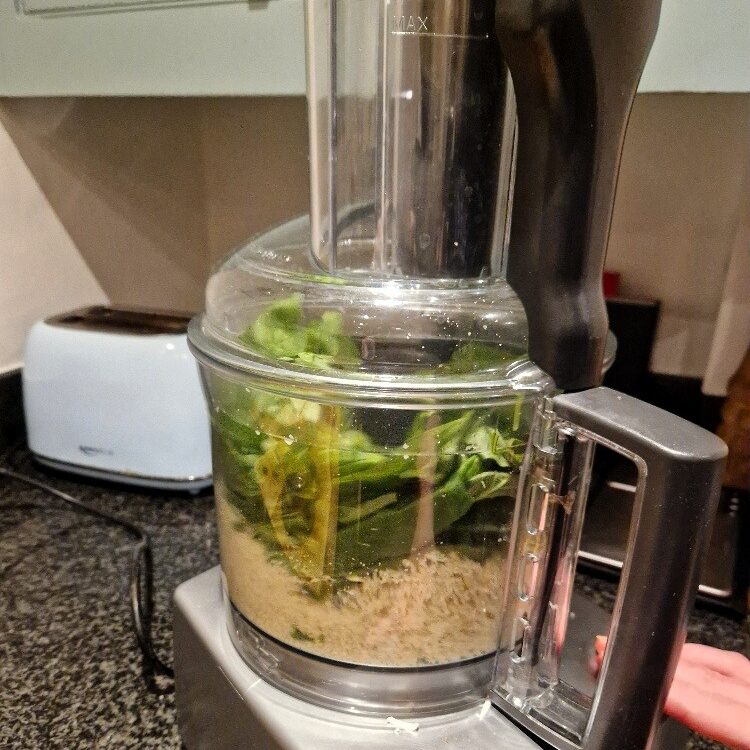
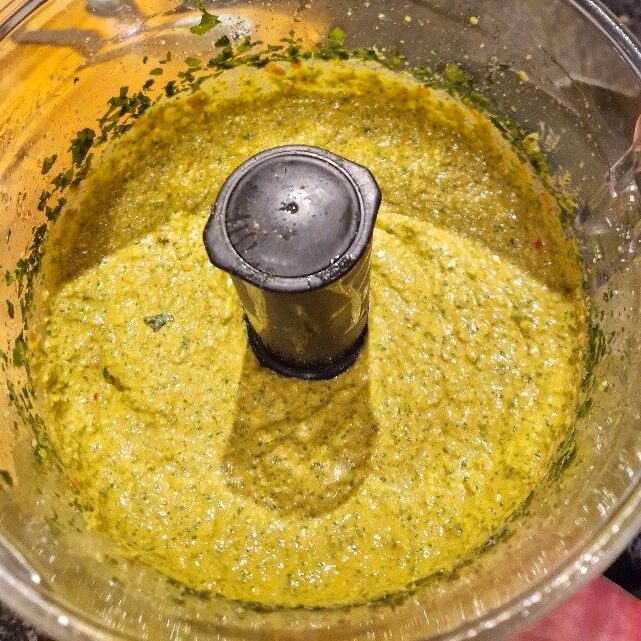
Remove as much stem from the basil as possible – the stems can make the pesto more prone to discolouring. Add a little olive oil – extra virgin will give the best taste, but any good quality olive oil will do – and blend well until you have a smooth paste with an even green colour. You may need to add more oil to get a more pourable consistency. This is not a precise science, as it depends on the liquid levels in your cheese and basil, and later in your tomatoes. But as a guide, today we used about 170ml.
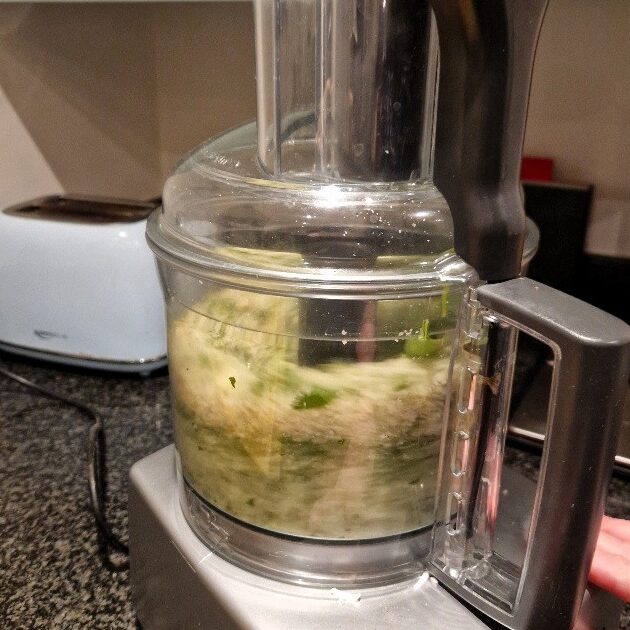
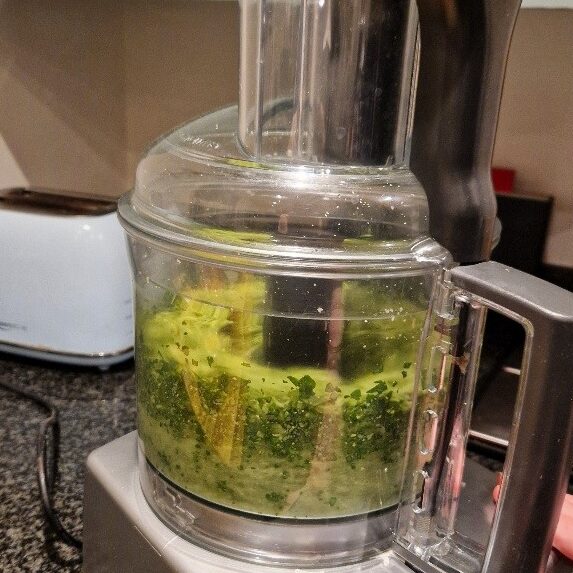
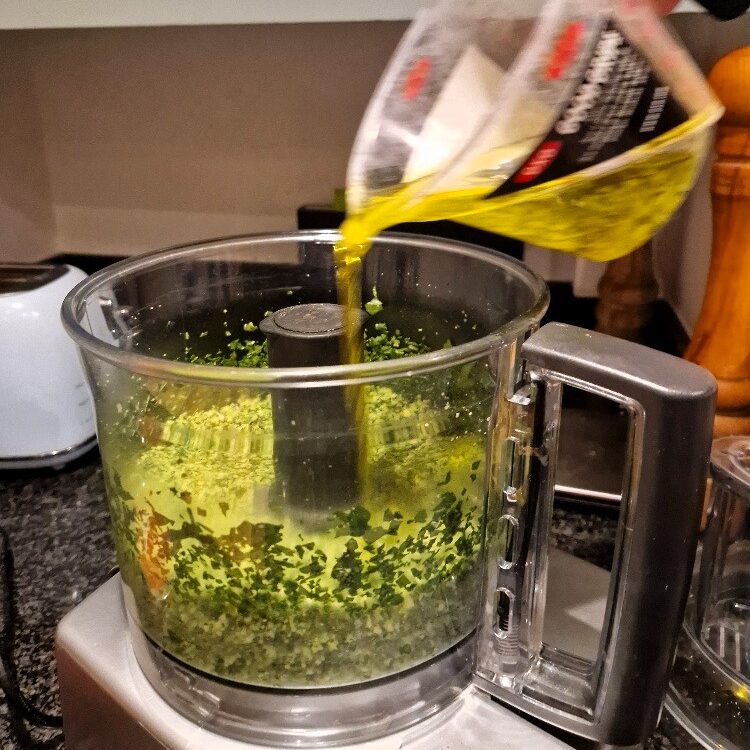
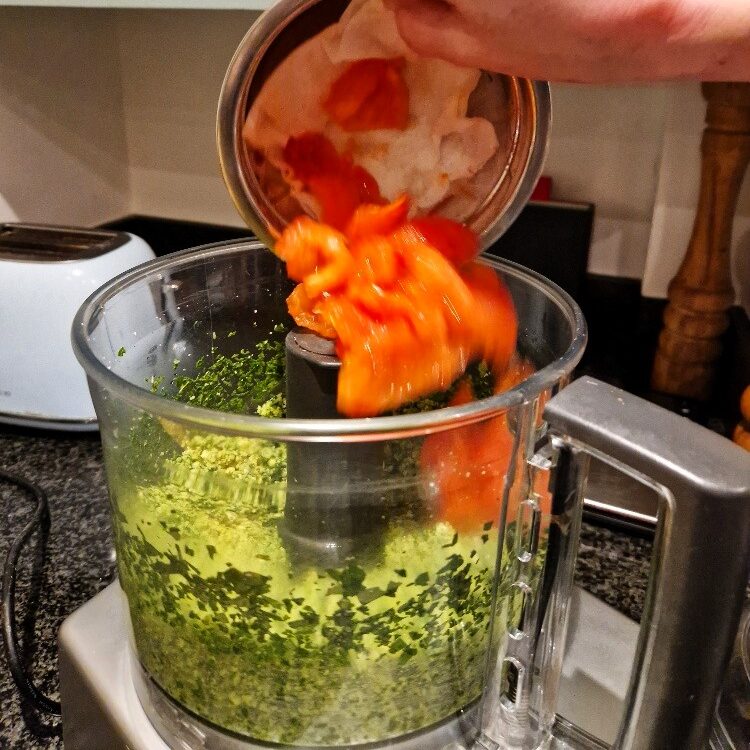
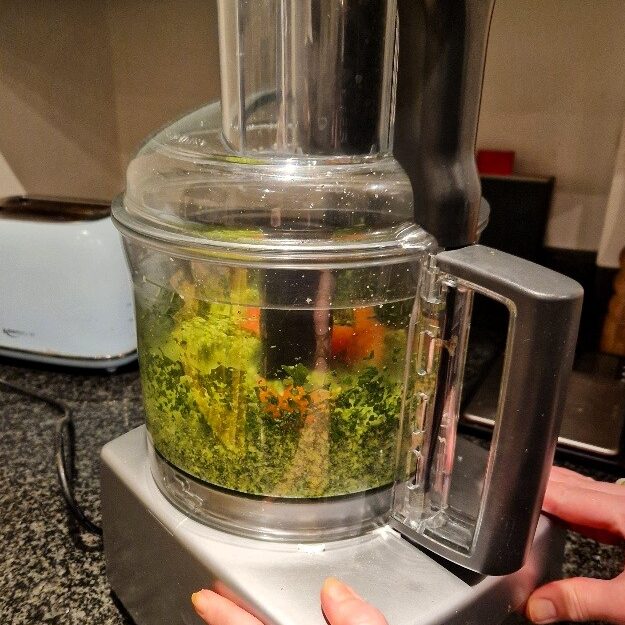
Now add the tomatoes and blend again, adding more oil if needed, until you have a pourable consistency that still has some body, and a pretty greenish-orange colour. You need quite a lot of tomatoes to achieve this (especially if you are peeling and deseeding them, where you discard quite a lot). Today we used about 800g and indeed added a few more tomatoes than we had originally prepared.
Jake sticks his nose in
You can use a hand blender and a bowl to make your pesto if you don’t have a food processor. Or you can make it in a pestle and mortar, but unless this is very large you may need to make it in batches to get enough.
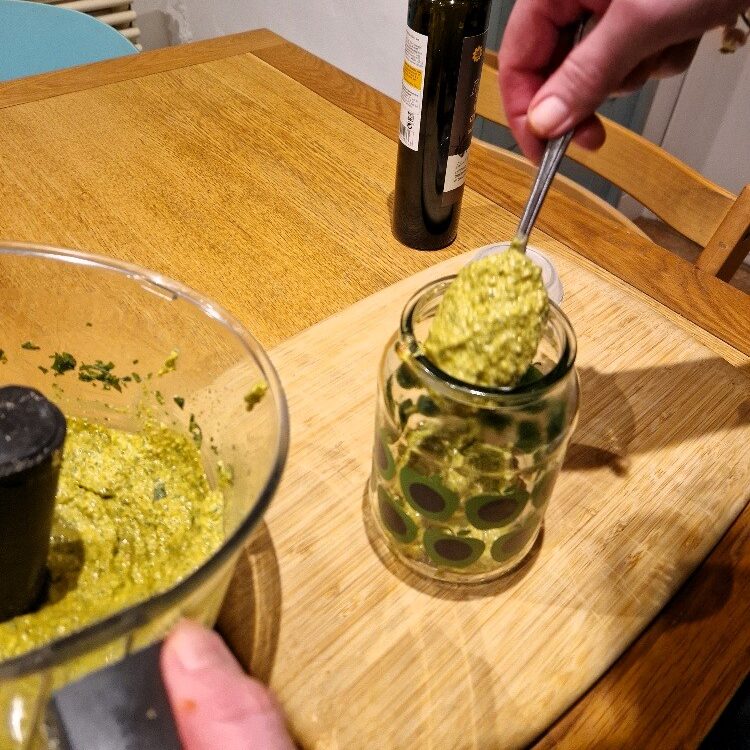
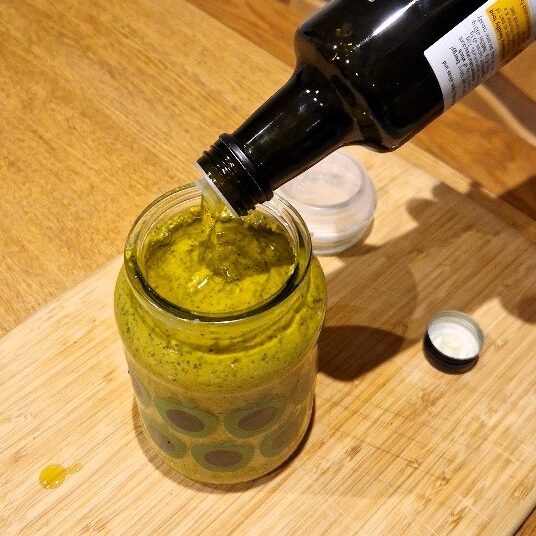
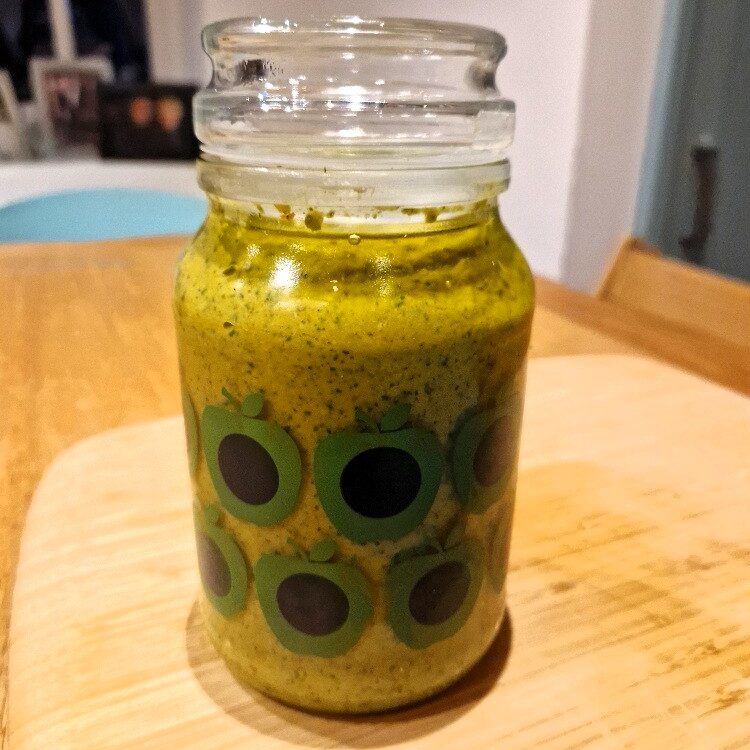
If you are using the pesto immediately it will be fine. However, if you are keeping it for more than about 10/15 minutes you will need to store it under oil to prevent it discolouring. As we did with the green pesto, spoon it into an clean airtight jar, cover with a good layer of oil and seal it. Keep in the fridge – it will in fact keep in the fridge for a few days if stored this way.
If you don’t have an airtight jar, any clean jam jar will do. Or store the pesto in a bowl under oil, and cover with cling film.
Salmon or sardine filling
Now prepare the fish filling. You can leave this out, especially if you want the potato to be vegetarian – they are good with just the pesto and sour cream! But we like the tanginess and contrast of the fish, whether you use salmon, tuna or sardines.
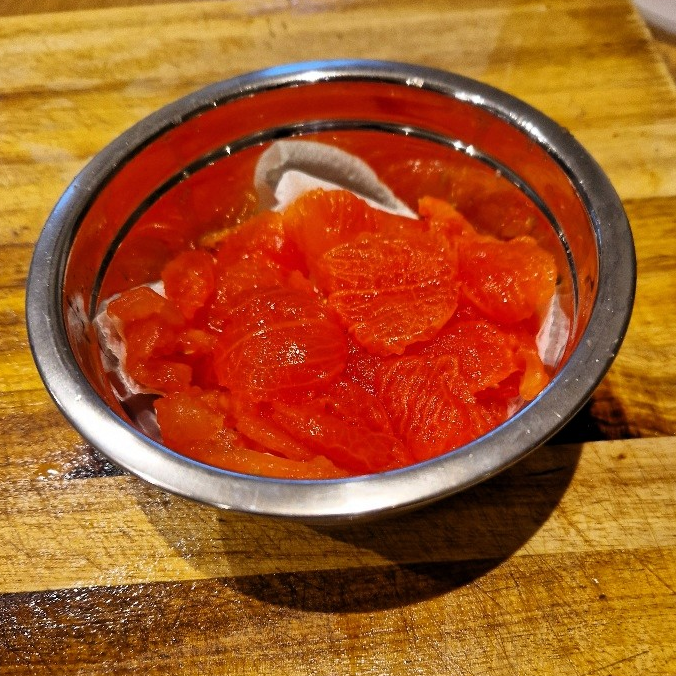
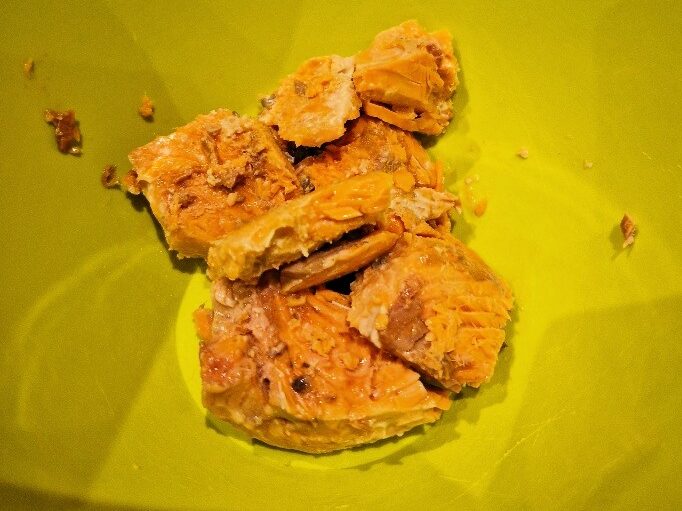
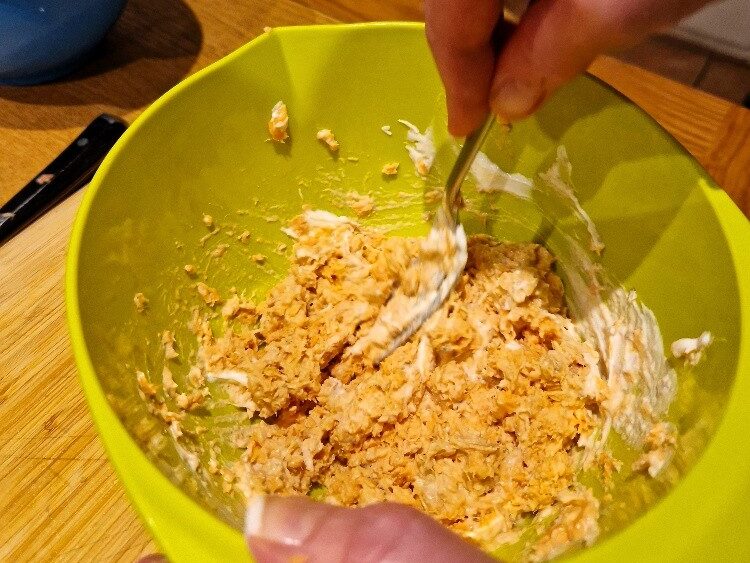
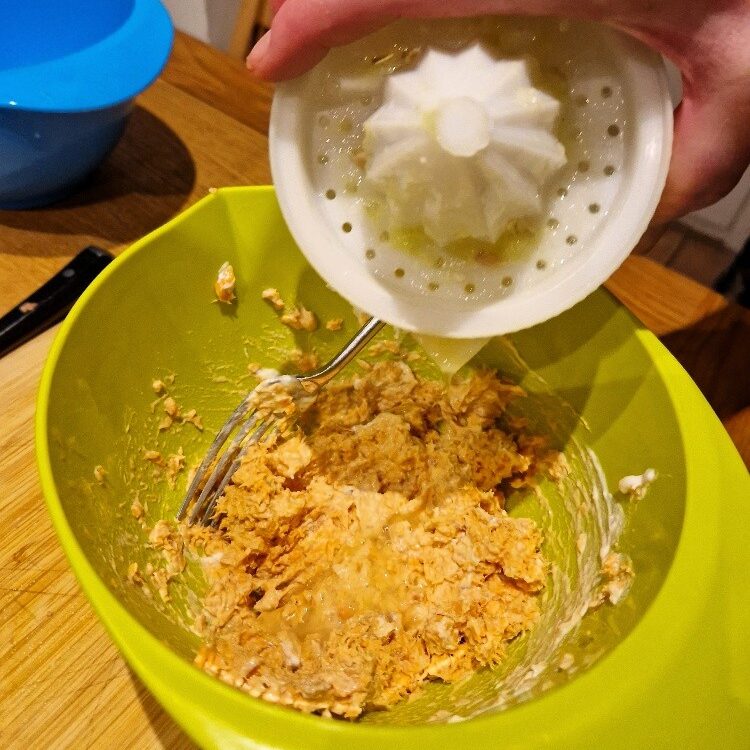
For the salmon filling you need to first clean the fish. Canned salmon most frequently comes packed with skin and some small bones. These are fully edible BUT we much prefer the look and taste without them in. To remove them, drain the salmon and tease it apart along the lines of the skin – removing this, any small white bones and any flesh that looks very dark. Add the clean flesh to a bowl, and squeeze a lemon.
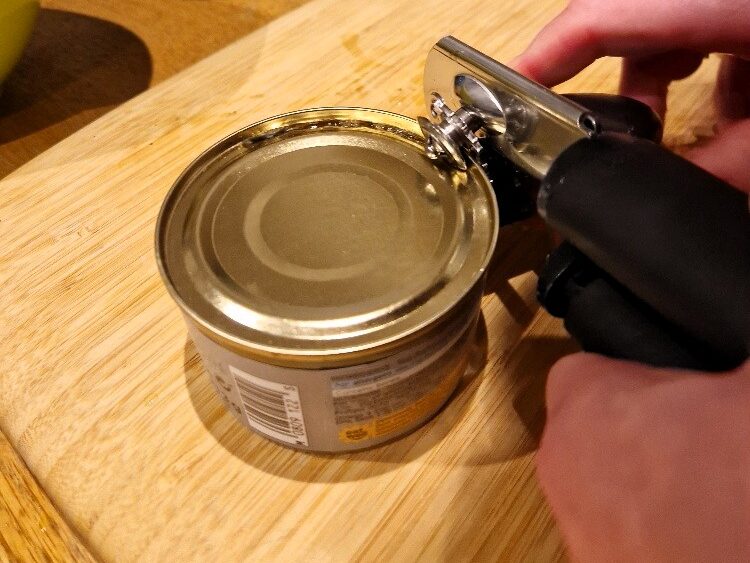
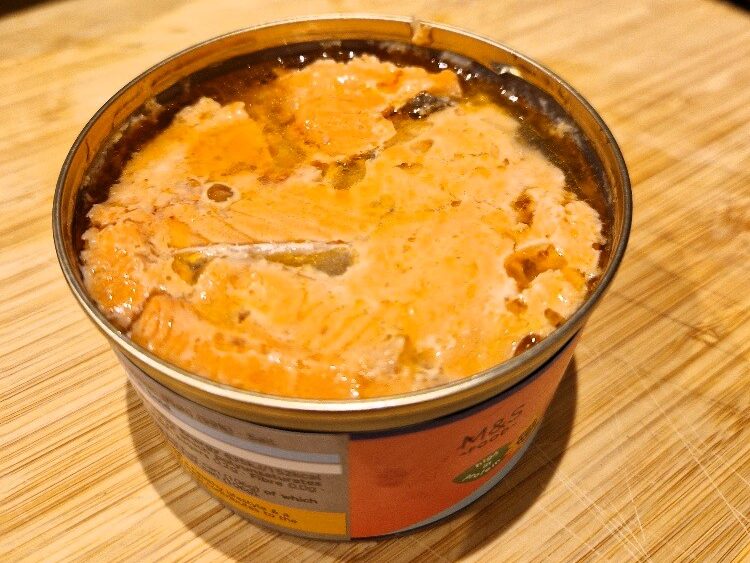
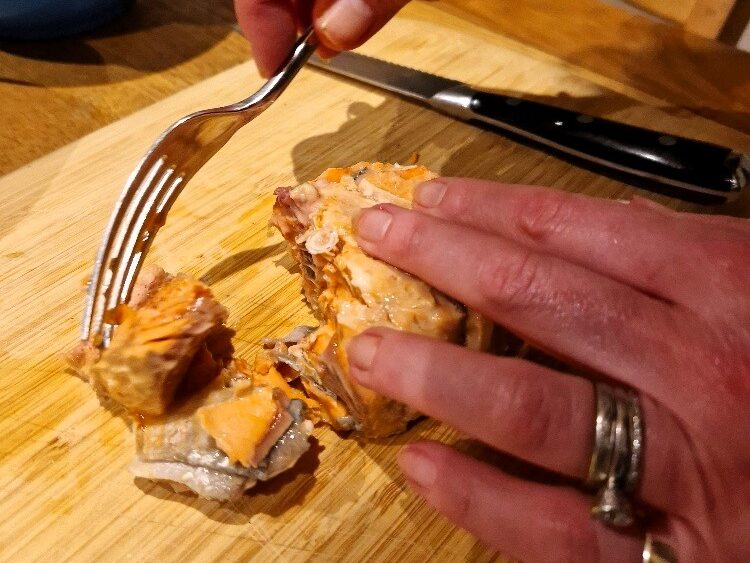
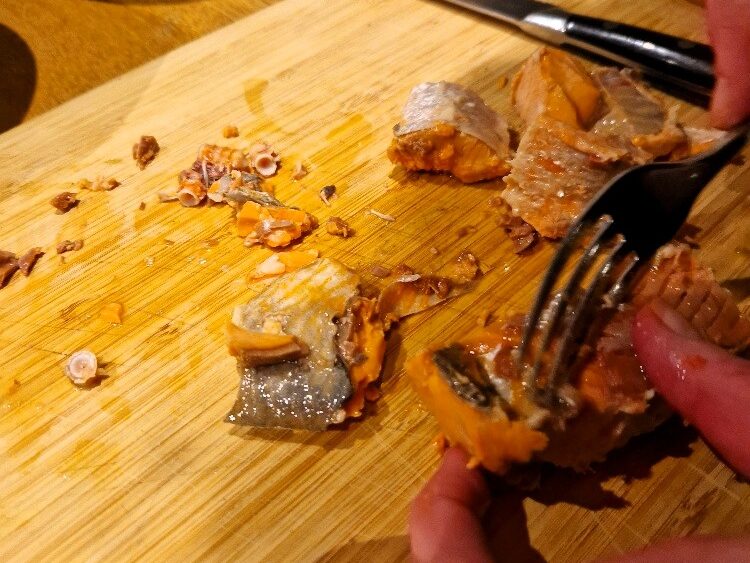
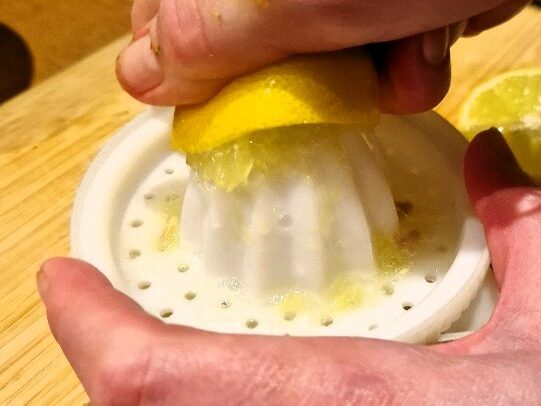
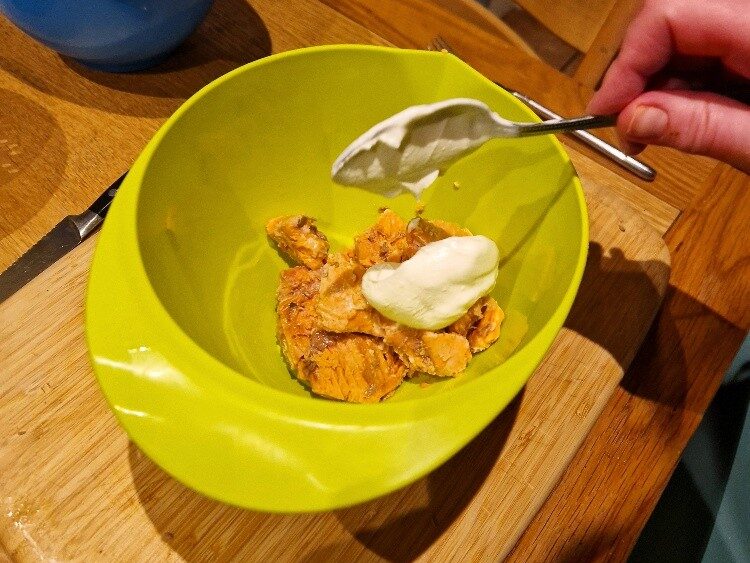
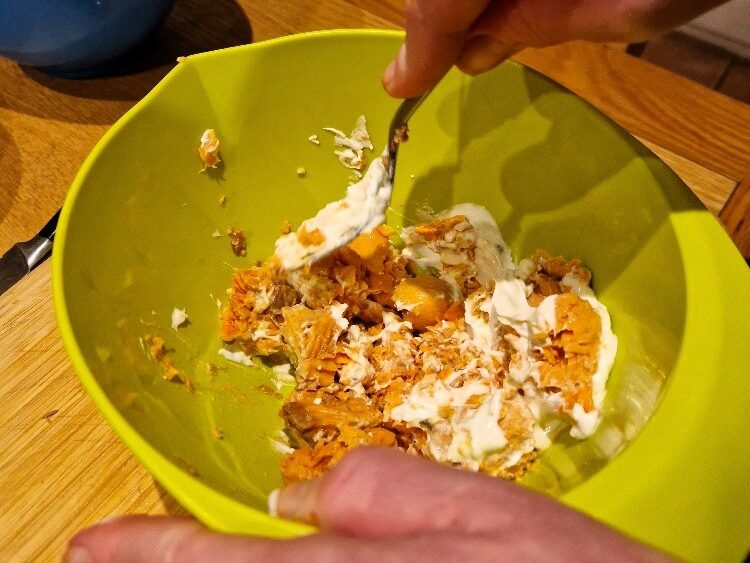
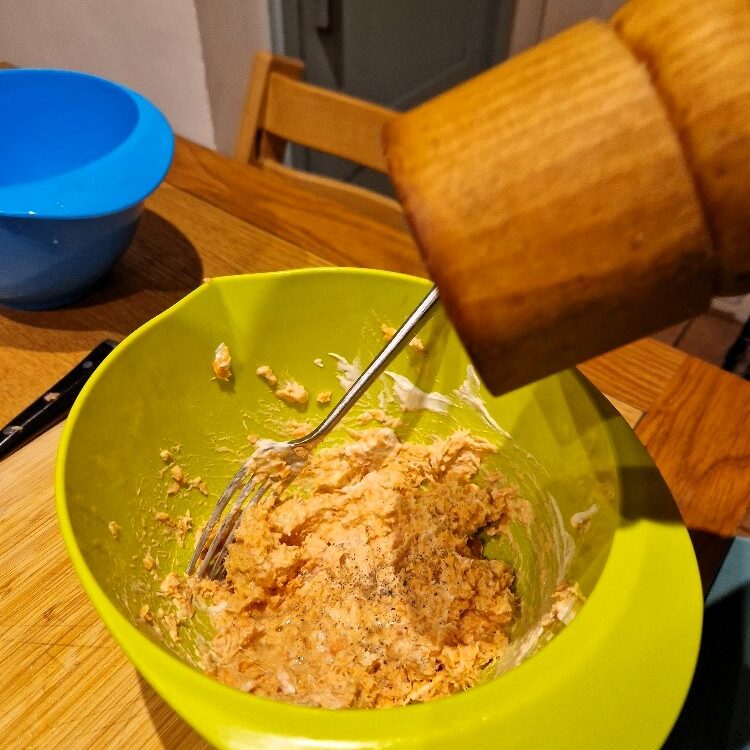
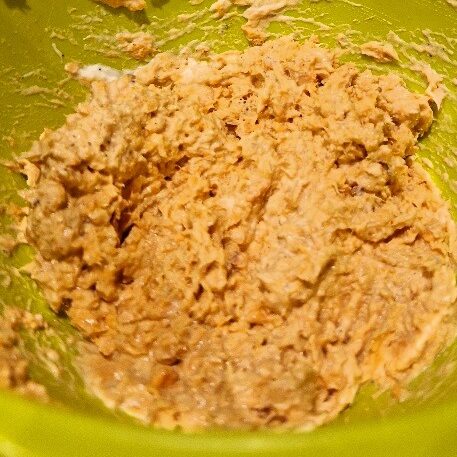
Mash the salmon with some sour cream – we used one very generous tablespoon to one large can of salmon. Taste, and add a little lemon juice and black pepper until you like the flavour. This also makes a good sandwich filling, especially with some cucumber.
Jake sticks his nose in
You can get various types of tinned salmon. Wild red salmon is the best. Pink salmon is cheaper and also very good, but has less firm flesh, and is less delicate in flavour. You can buy salmon without skin & bones too, but it will be more expensive. Today we used red salmon, but pink would also work well in this dish.
For the sardine filling, mash the sardines but do NOT add cream. Instead, season generously with black pepper and add a little lemon juice and/or red wine vinegar – today we added both. Sardines are stronger, richer and oilier than salmon so you don’t need the cream, and they work well with a robust dose of acid. This mix is also nice on toast! Your fillings are done.
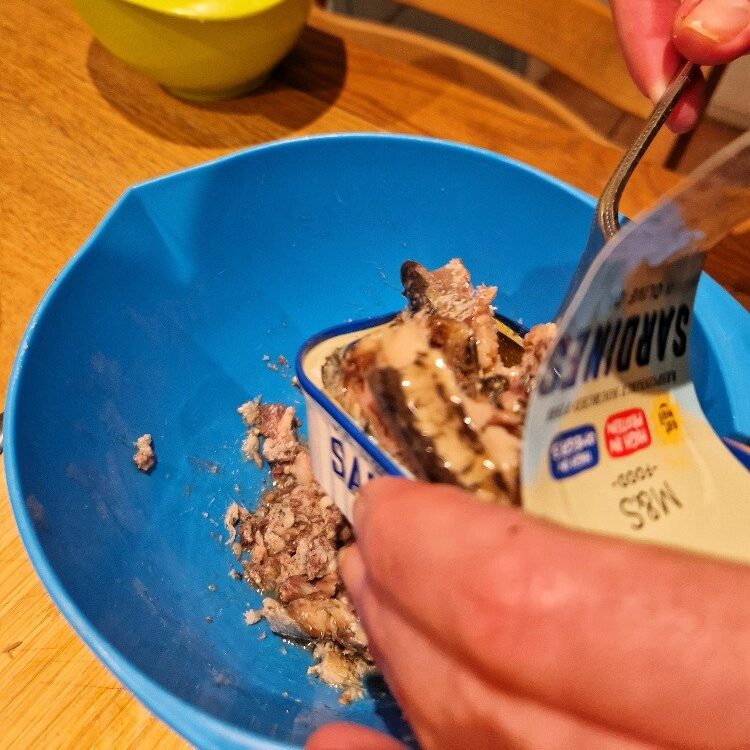
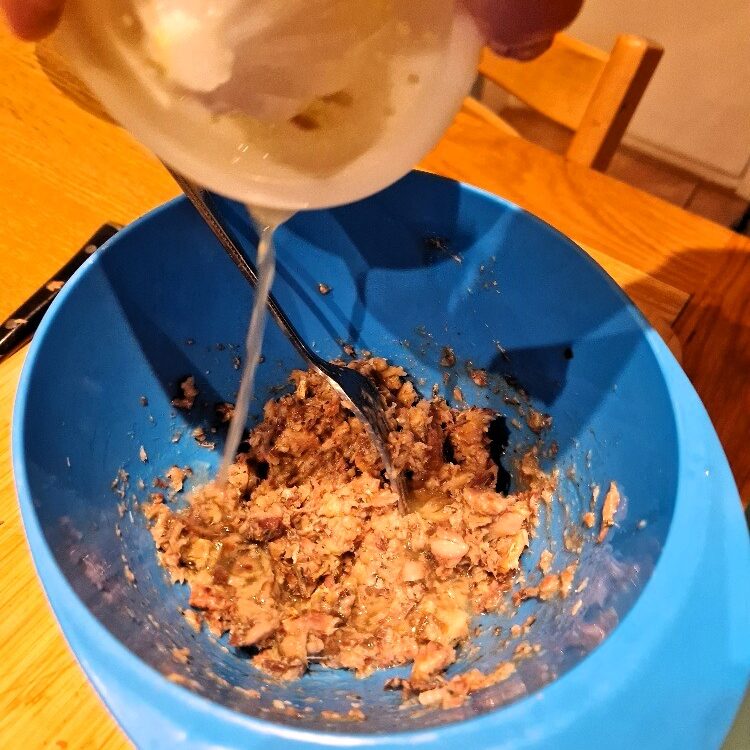
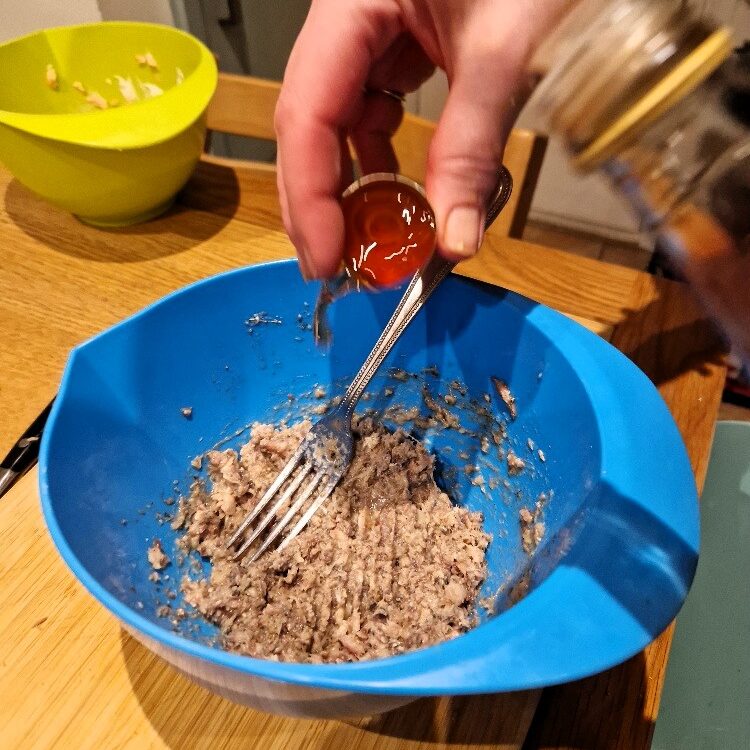
Jake sticks his nose in
Not everybody likes sardines, but they are tasty, very inexpensive and good for you, being rich in fish oil. Choose ones in oil for the nicest texture, and use vinegar or lemon to cut through the oiliness. We like them on toast with tomato!
Filling & serving the potatoes
You are now ready to fill your potatoes! Remember to get the pesto and fish filling out of the fridge about 20 minutes before the potatoes are done. When ready, remove the potatoes from the oven – crispy potatoes will feel dry and sound hollow when tapped with a fingernail, or test with a sharp knife. See more about baking potatoes in our Tip.

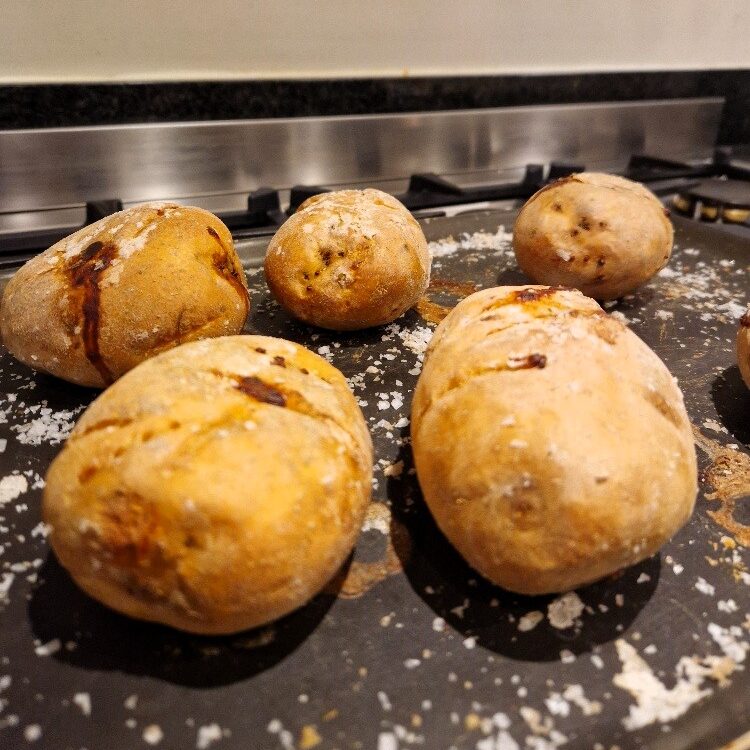
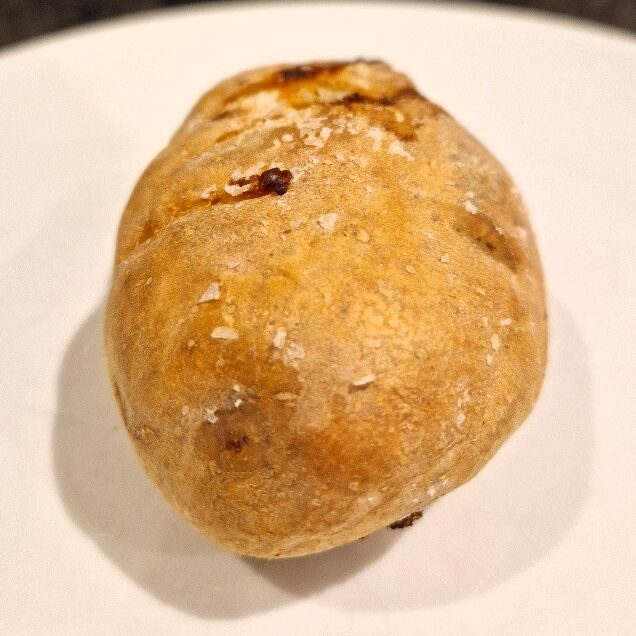
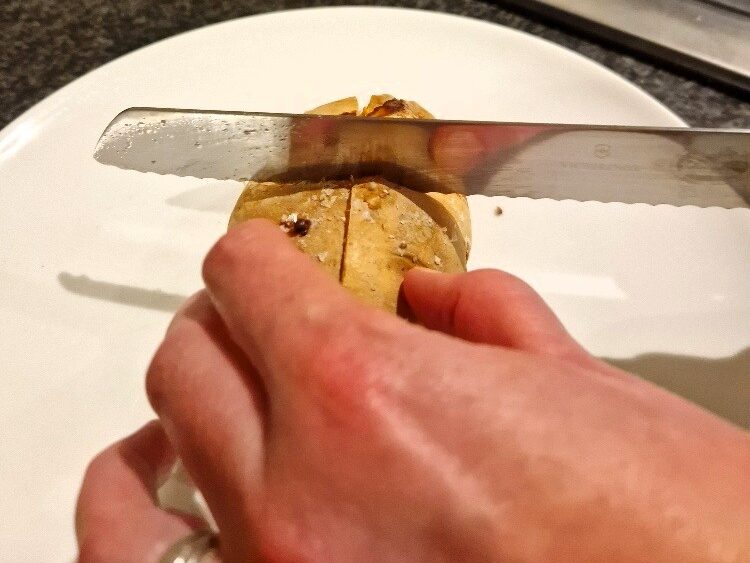
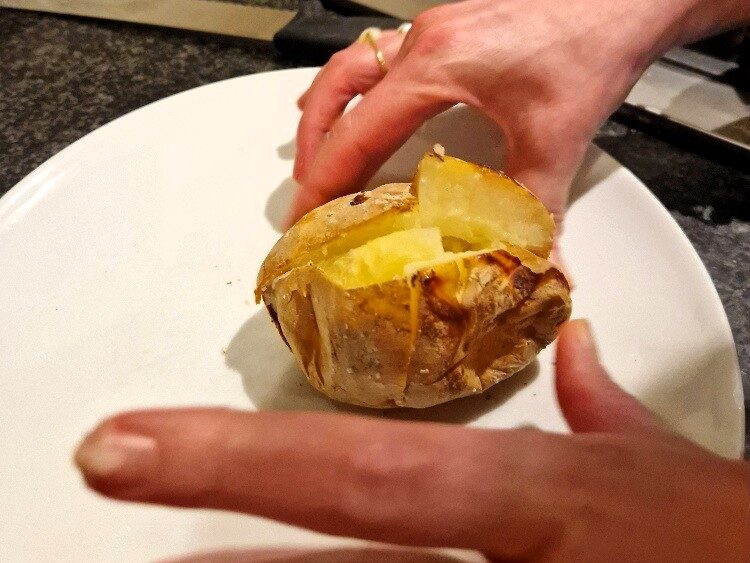
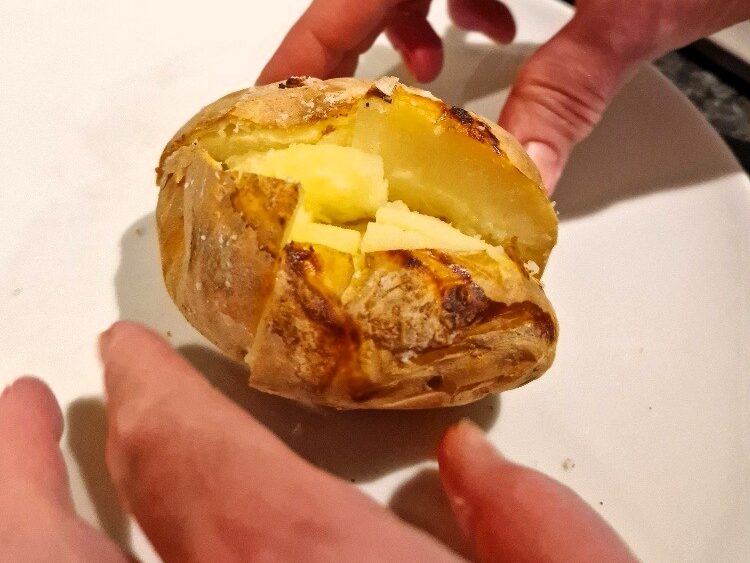
To serve, cut a cross in the top of the potato, and press together to fluff up the flesh and create a pocket for filling – see more in our baked potato Tip.
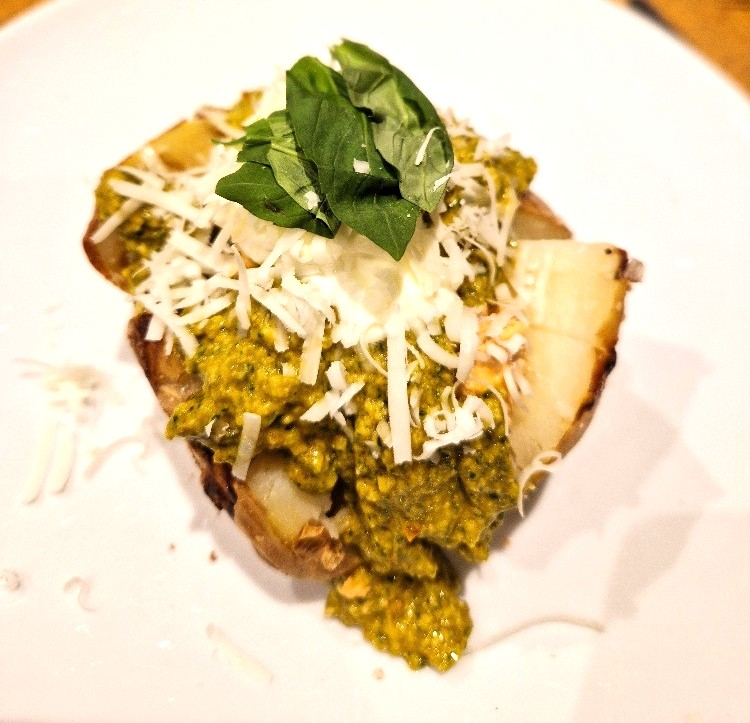
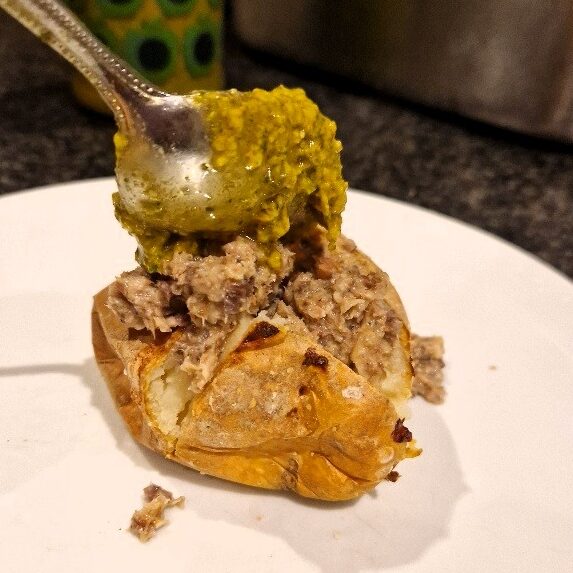
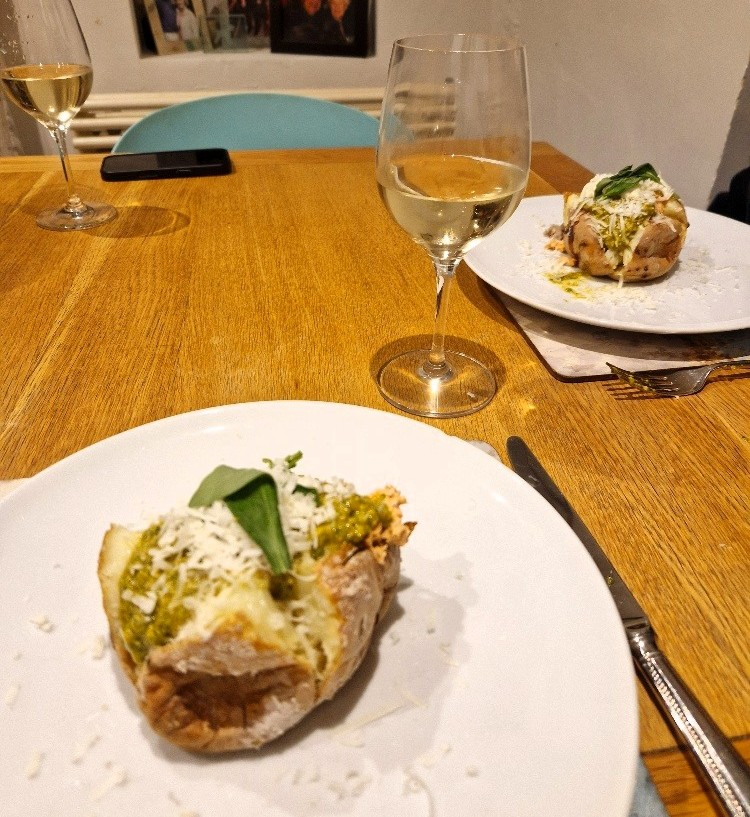
Top with the fish filling, and generously pour over the pesto.
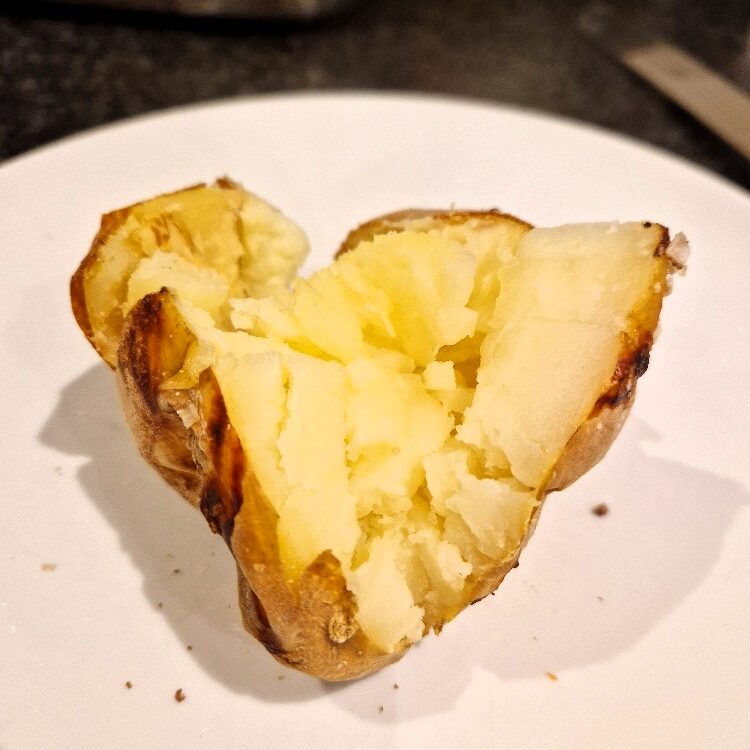

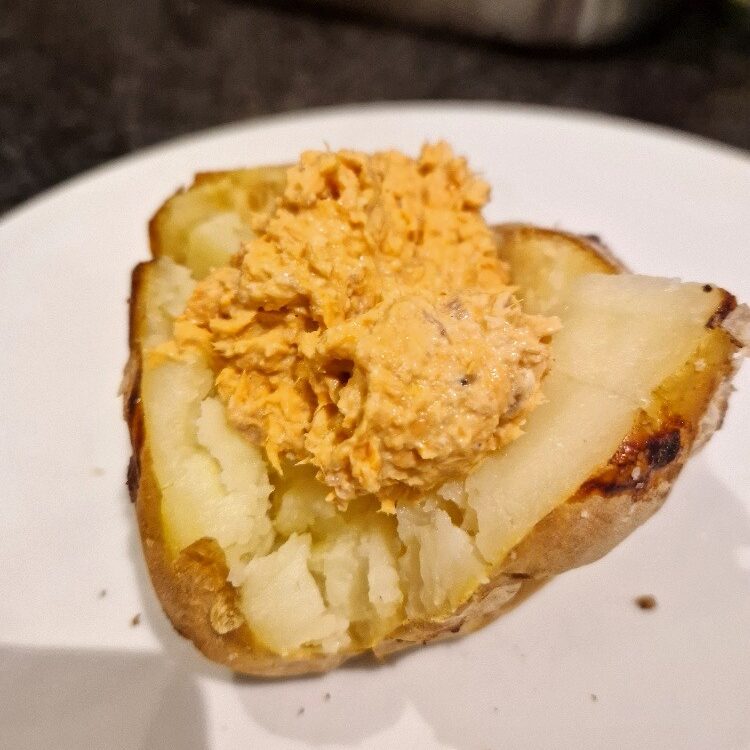
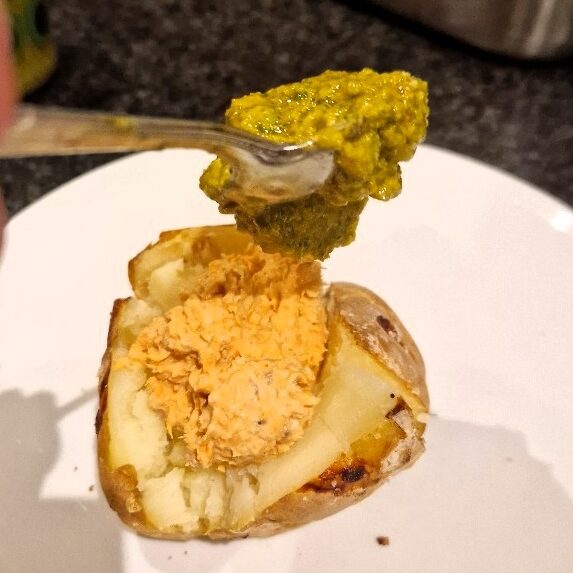
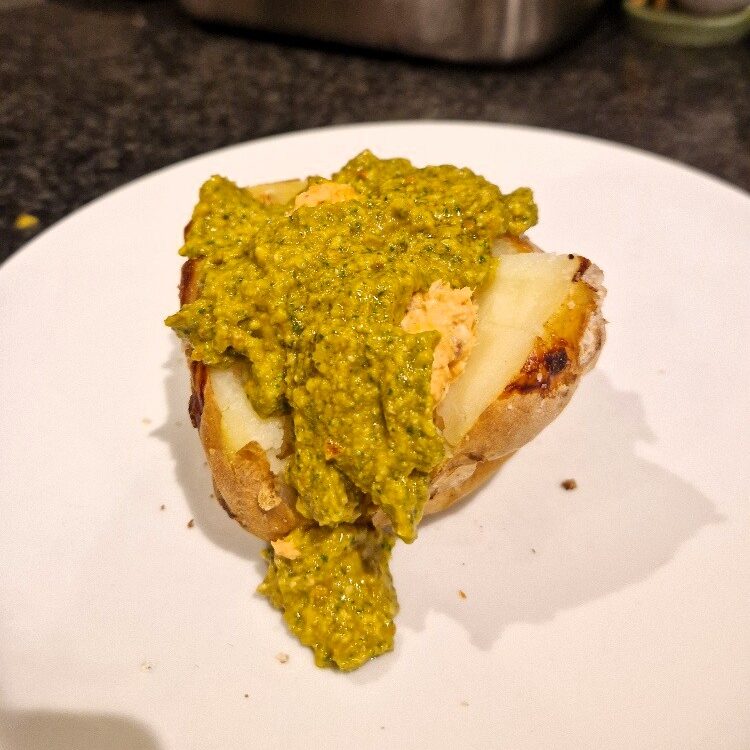
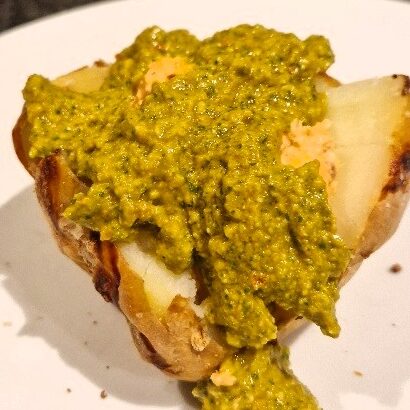
Jake sticks his nose in
We use the pesto at room temperature. But if you don’t want to cool the potato down too much, you can warm it slightly. Do this in in saucepan over a low heat – you want the pesto to just warm through, not cook, and definitely not boil, or it will split.
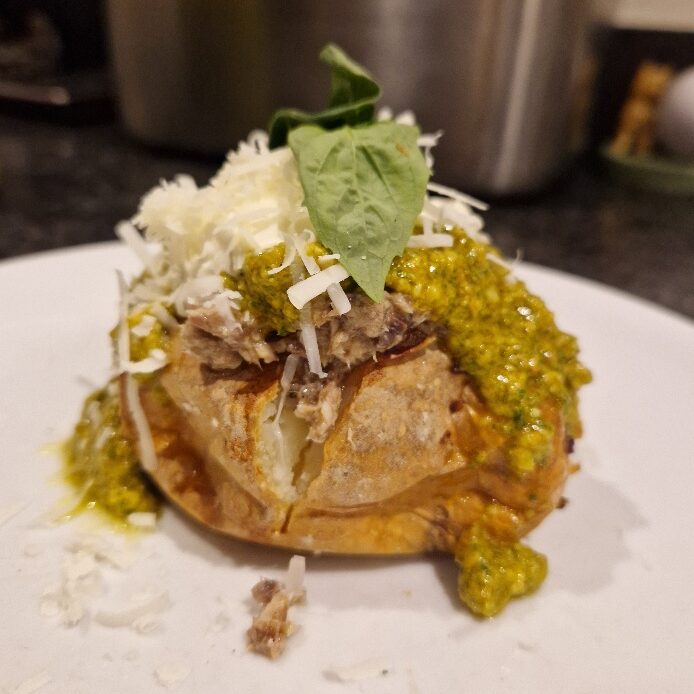
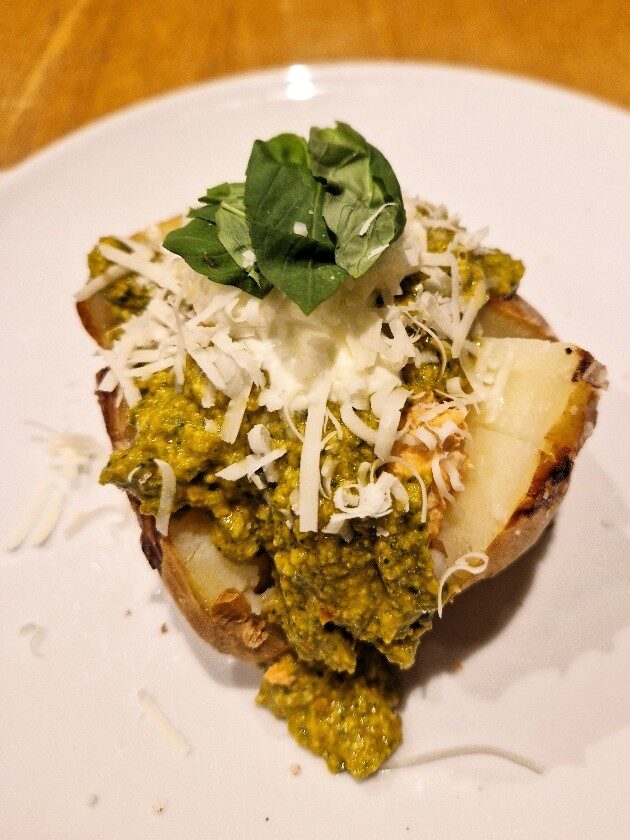
Top with a generous dollop or sour cream, a sprinkle of pecorino and some basil leaves.
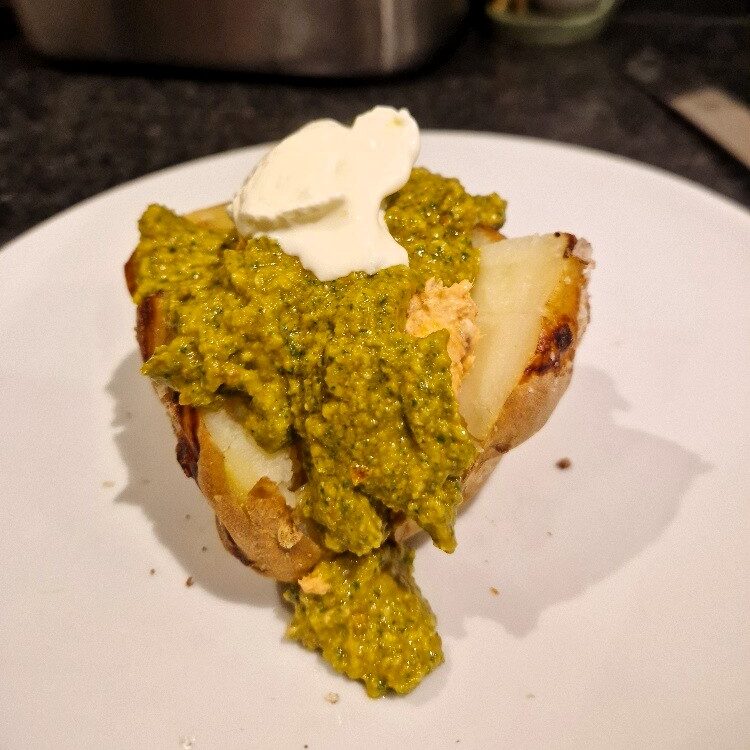
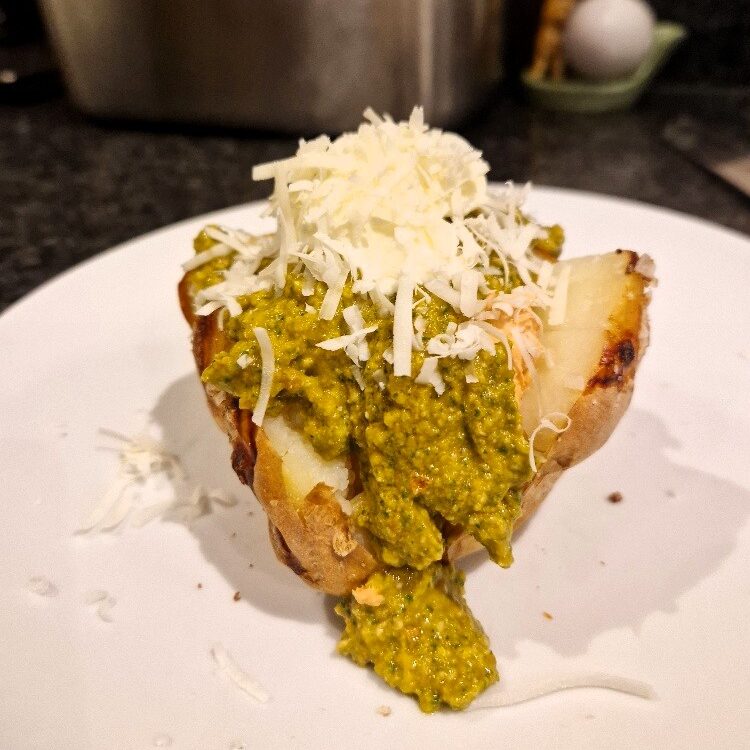
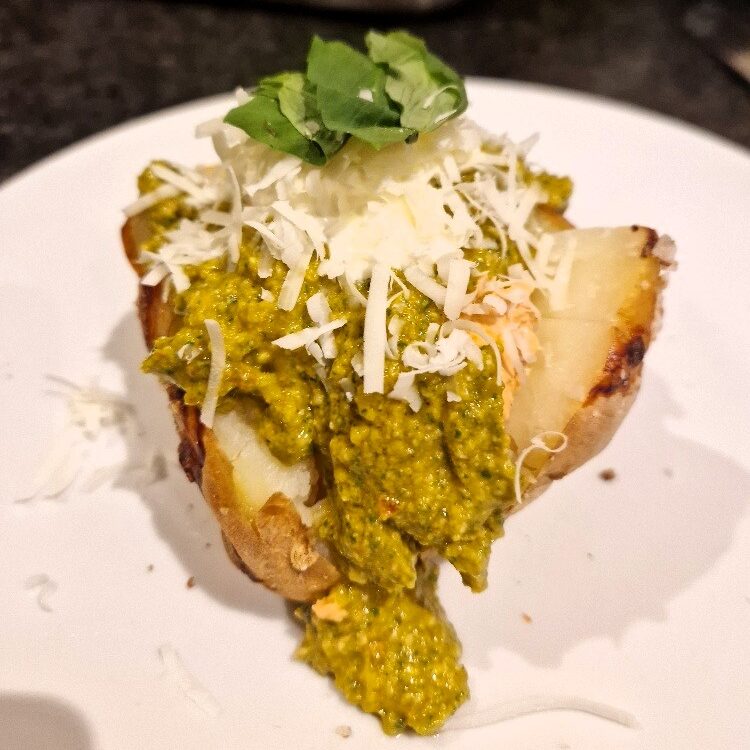
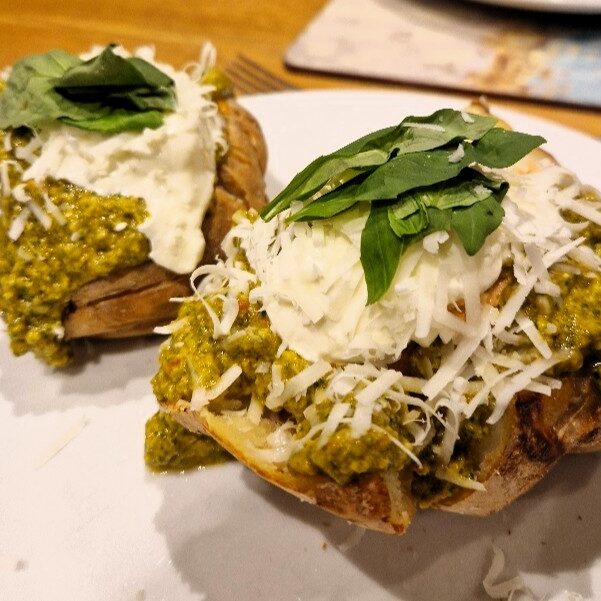
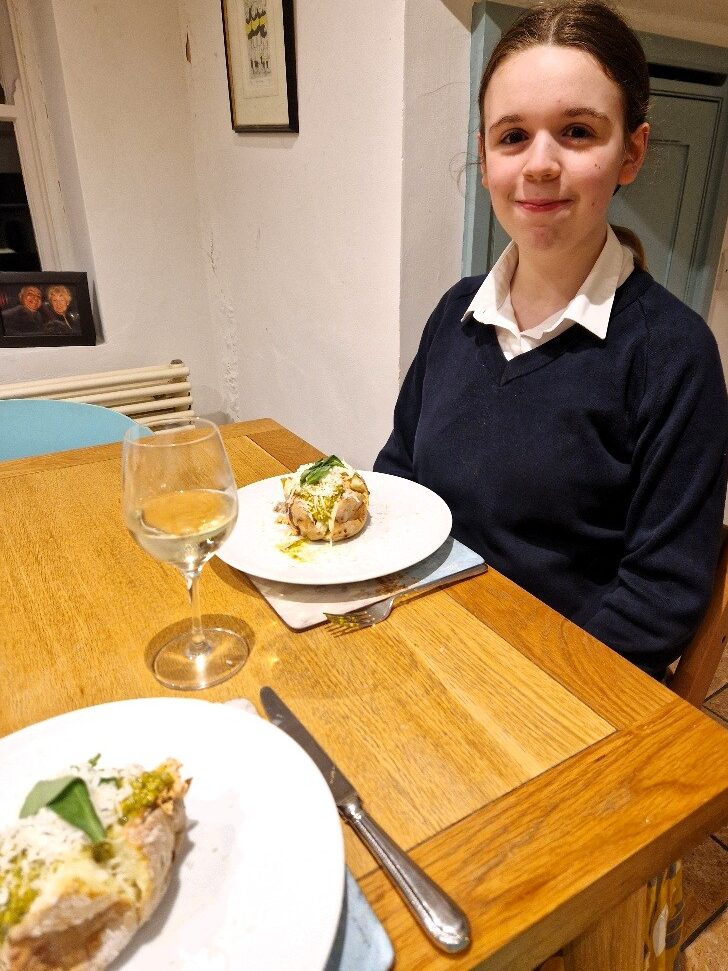
The pictures above are with the salmon filling, here’s the potato with the sardine one, and one of the two different types together. Which do you prefer?
Enjoy!
Tasty Trapanese Pesto Potatoes
Ingredients
Equipment
Method
- About 1h 40 minutes before you are ready to serve, heat the oven to 200C (180 fan). Stab the potatoes with a fork, then roll in salt for a crisp finish. Put into the hot oven and bake until done, about 1 hour to 1 hour 30 minutes, depending on size. See our baked potato Tip.
- Next, skin the tomatoes – find out how in our tomato Tip. Deseed them, then chop them roughly. Set aside on some kitchen paper.
- Chop the garlic, see our garlic Tip, then crush to a paste with salt, using the rocking knife technique, also in our Tip.
- Grate the pecorino – we use a whole block, using about one cup in the pesto and keeping the rest to serve.
- To make the pesto, add the almonds, one cup of pecorino and the garlic paste to the bowl of a food processor or blender, and pulse to chop the nuts and combine. Do not over-blend at this stage.
- Season with black pepper – you shouldn't need salt- then add the basil, stalks removed, to the bowl of the processor. Blend, with a little of the olive oil, until well combined and an even green colour . Add more oil as needed.
- Add the chopped tomatoes and blend until well combined and you have a pourable consistency, but which still retains some texture. It should be a pretty greenish orange colour. Taste and add any more of the key ingredients as needed.
- Unless using immediately, store the pesto under a layer of oil in a bowl or ideally an airtight jar with the lid on. Keep in the fridge until needed – stored this way it will keep for a few days. Remove from the fridge about 20 minutes before serving.
- To make a salmon filling, clean the tinned salmon of any skin or small bones, and add the clean flesh to a bowl. Mash with a generous tablespoon of sour cream and a little lemon juice – season with black pepper, taste, and add more lemon or seasoning if needed.
- To make a sardine filling, mash the sardines with a little lemon juice and/or vinegar (we use both), and season generously with pepper.
- When the potatoes are ready, cut a cross in the top and press to fluff up the flesh and create a bed for the filling. Stuff with the fish filling, then top generously with the pesto. The pesto can be used at room temperature, or warmed through very gently if you don't want it to cool the potato too much.
- Top with a dollop of sour cream, a sprinkling of grated pecorino and garnish with a few basil leaves.
- Enjoy"