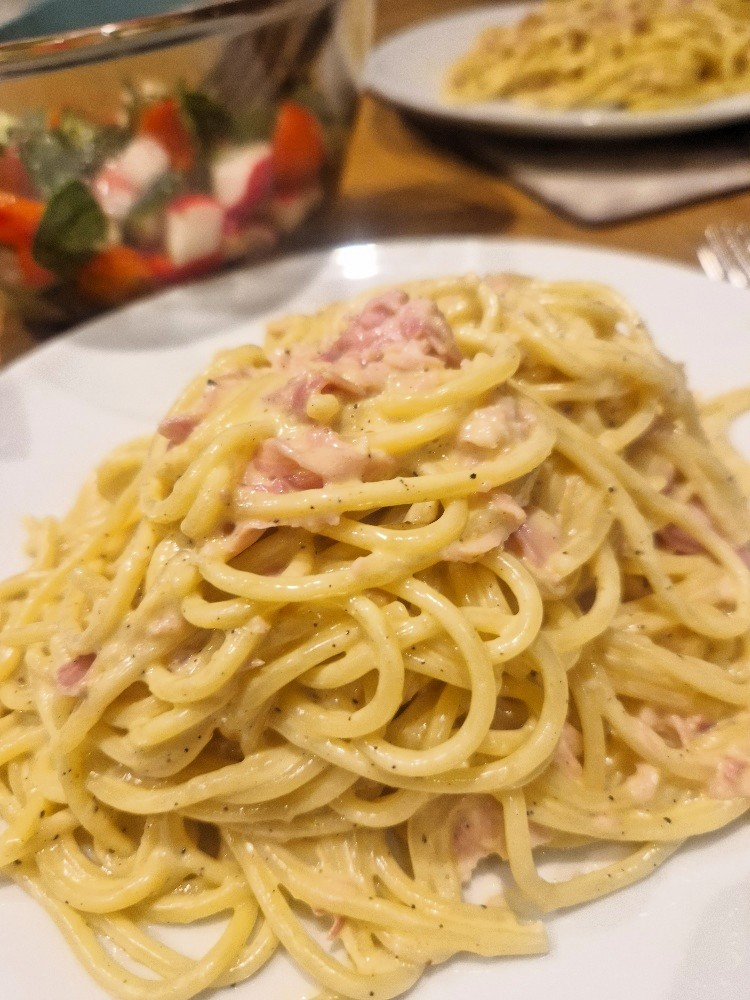


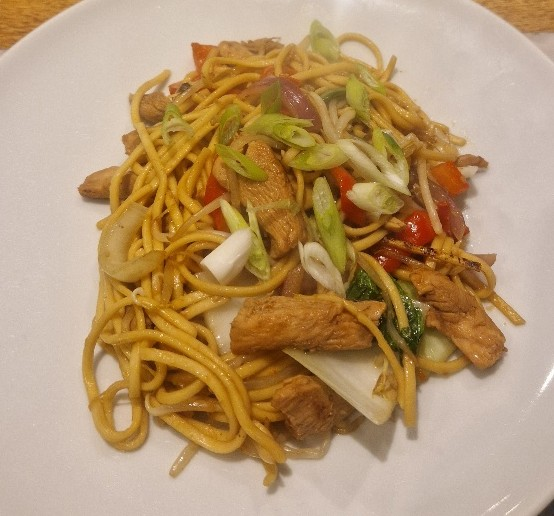

Skills you will learn in this recipe
Marinating meat; cooking with chicken; stir frying; making a garlic paste; slicing peppers; order of frying
Links to the last recipe
Chopping chillies & garlic; cooking with noodles
We often make stir fries at home, and they have been a favourite supper of Estella’s since she was little. They are easy, fast and healthy, and can be endlessly varied and adapted. We are sometimes lazy and use packet stir fry mixes from the supermarket, which can be very good and reduce waste of the many ingredients you’d need otherwise. But if you keep them simple, stir fries cooked from scratch are cheaper and still very easy, with the benefit that you can adapt the mix to your taste. This version, with its delicious teriyaki-marinated chicken, crunchy bean sprouts and pak choi, and soft noodles is a real favourite and bound to become a go-to for your friends and family too.
You can vary the vegetables to whatever mix you like – mange tout, sugar snaps, broccoli, cabbage and baby corn are all other favourites of ours – but this combination of beansprouts, pak choi, peppers and onions is a winner. You can also change the meat – we often use beef instead – or make it vegetarian with marinated tofu. Or change the marinade, or indeed use plain meat instead of marinated (it will still be good, just different). But the teriyaki flavours work so well in this dish, and marinating also softens the meat, making it easier and quicker to cook, and with a juicer, less ‘tight’ texture than flash-fired plain chicken.
You’ll need to plan in advance as the chicken is best with 2 to 3 hours of marinating, though if you are short on time (or forget) half an hour will do. But after that it is super fast to make.
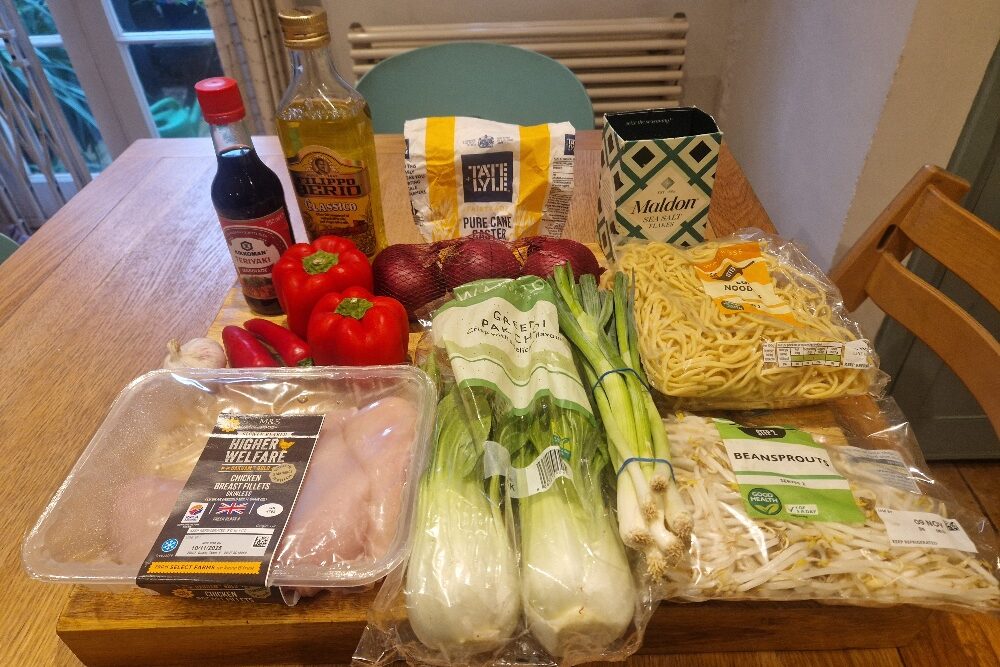
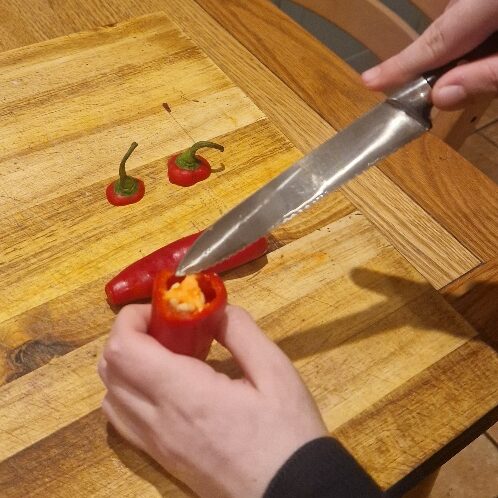
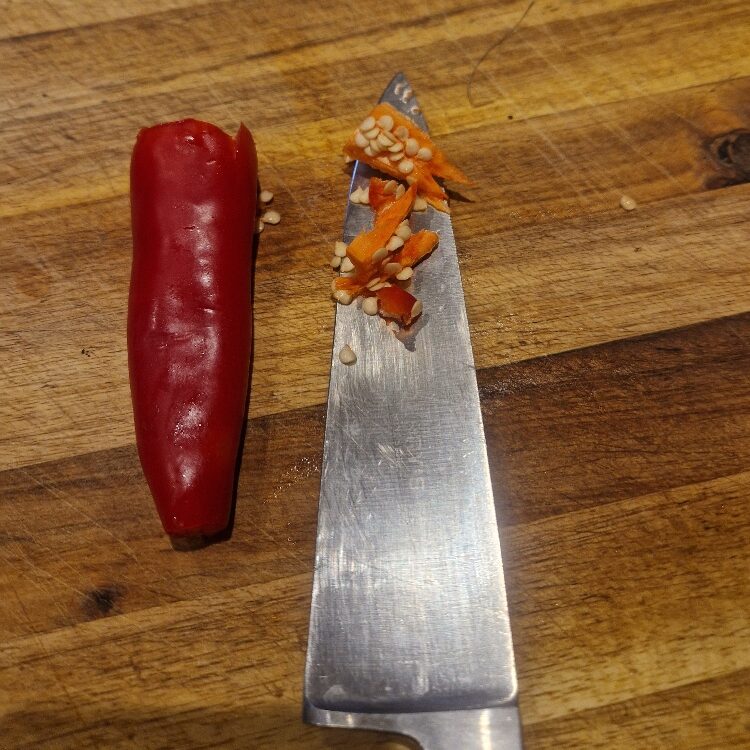
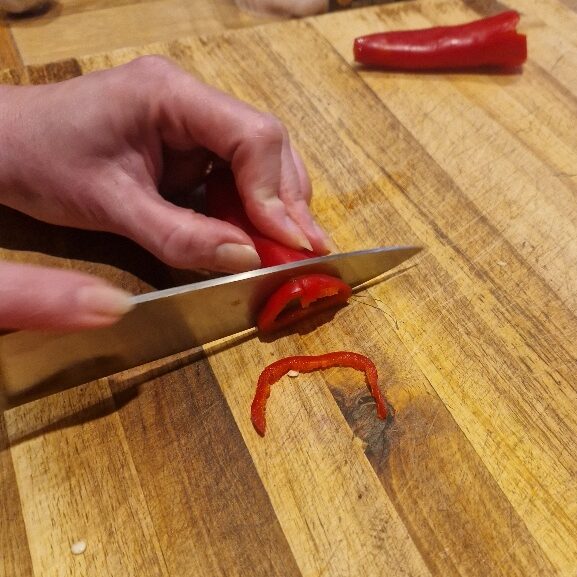
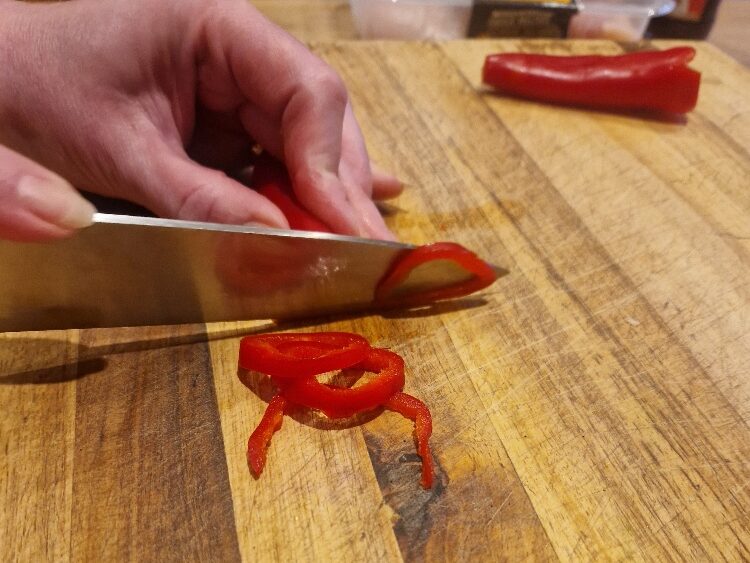
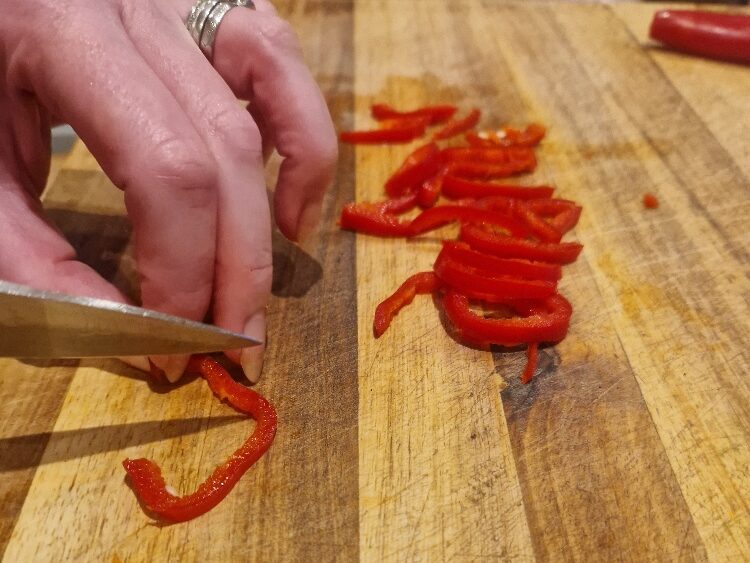
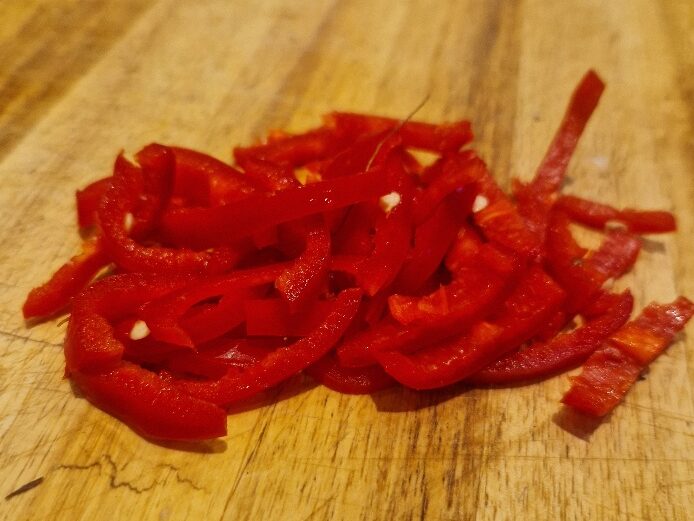
Start by making your marinade. Prepare your chillies by removing the end, pith and seeds as you do for chopping and in our chilli Tip. You can chop them for this recipe, as per the Tip, but today we are going to slice them, which looks nicer in the finished dish. To do this, cut the chilli into thin rounds, then cut into small batons, as below.
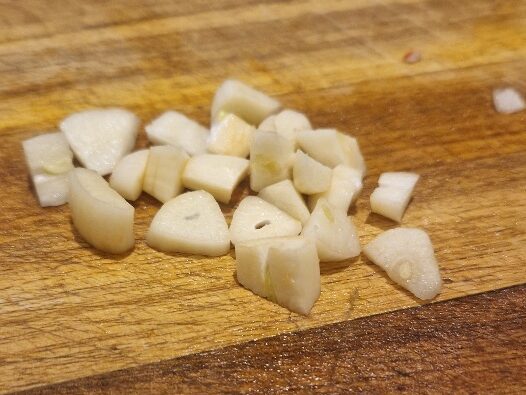
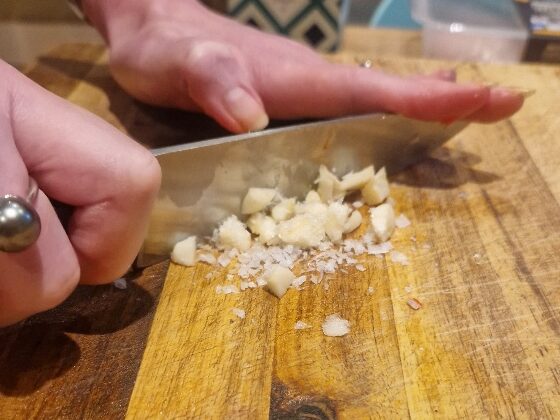
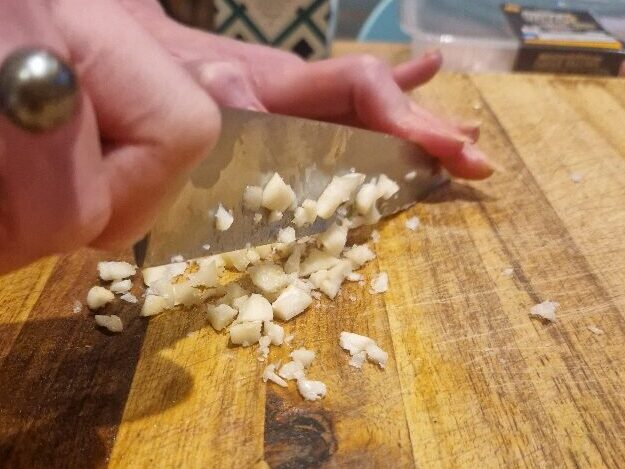
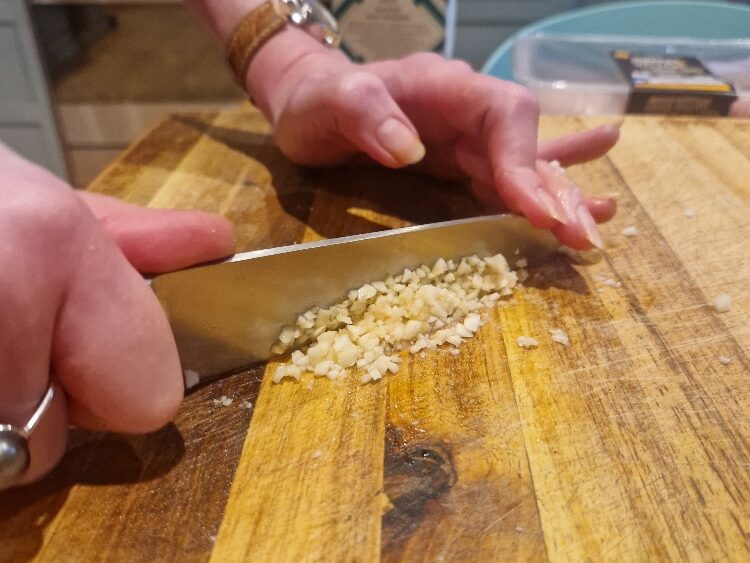
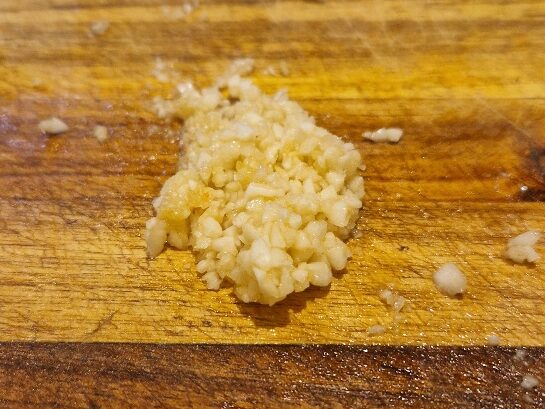
Next prepare the garlic paste. You can use a shop bought paste, but making it yourself is very easy and much cheaper. The technique you use is essentially the same as for chopping garlic, as in our Tip, the only differences being that we add salt, and keep on chopping until the paste forms.
Roughly chop the garlic cloves first, then add a large pinch or two of salt. Any salt will do, but we prefer to use a good crystalline salt. Use the rocking method as in our Tip to chop and keep re-chopping the garlic – keep going until the mixture looks wet and a paste forms. It’s ok if it is only a rough paste for this dish; if you wanted you smoother puree you’d just keep going. Add to a large bowl, along with the chillies.
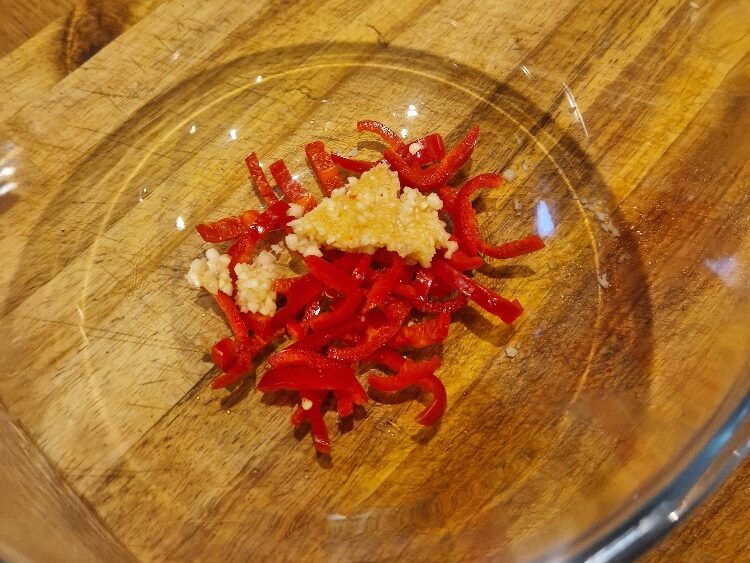
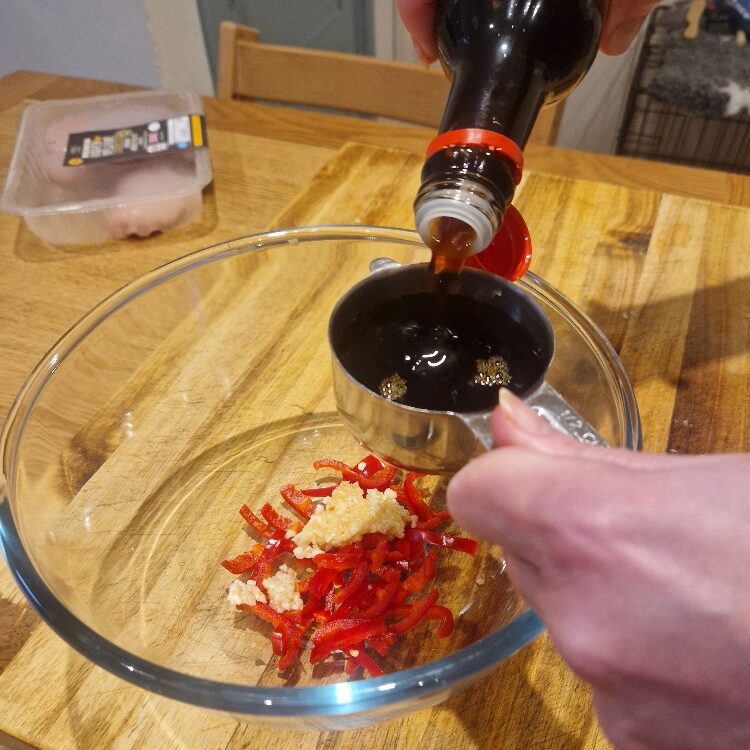
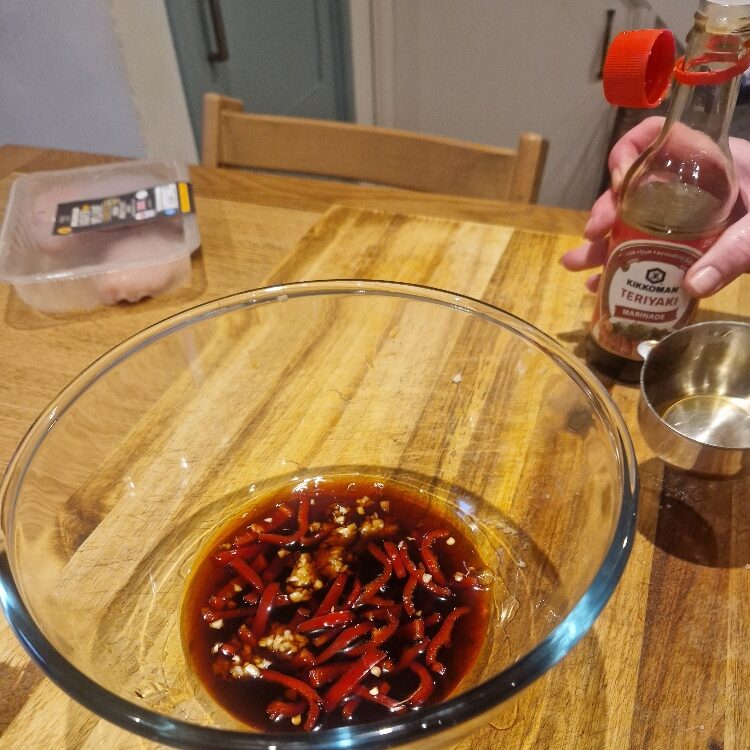
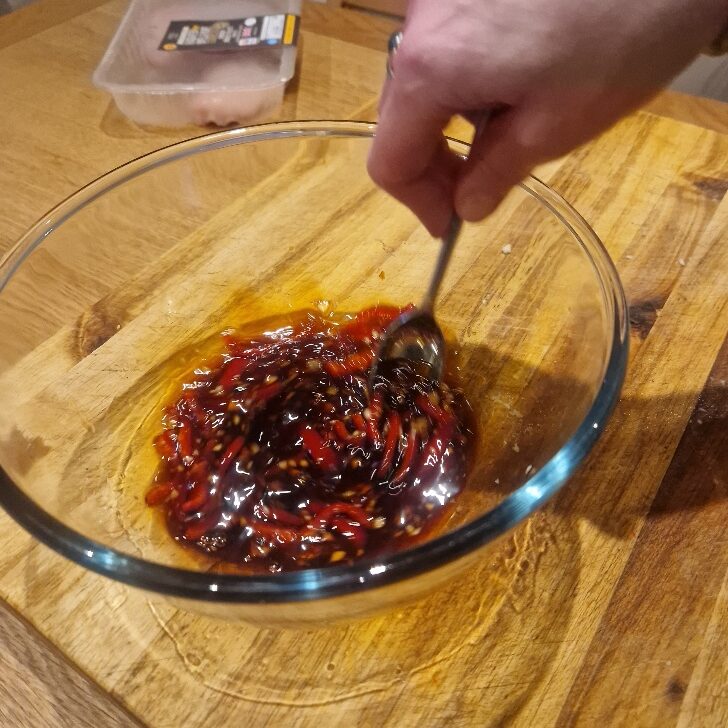
Now add your marinade. Today we used a good quality shop bought teriyaki that is specifically a marinade, but teriyaki sauce would work too (though if it is thick, add a little water and stir to loosen it). Add a slug of teriyaki to the bowl – how much depends on how much chicken you have, today we used about half a cup, you need enough to cover the chicken. Mix to combine.
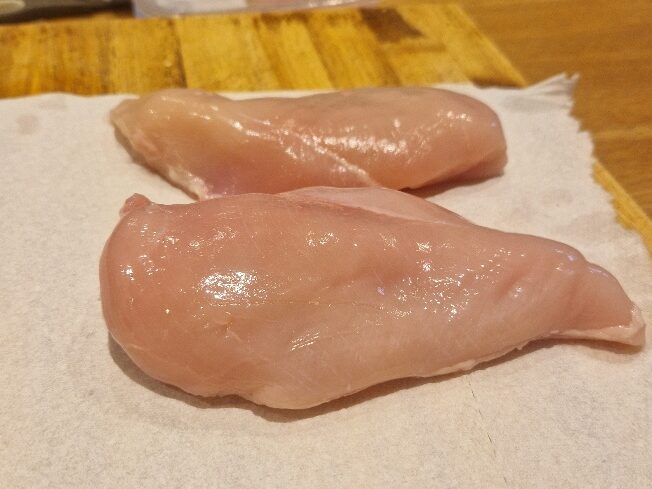
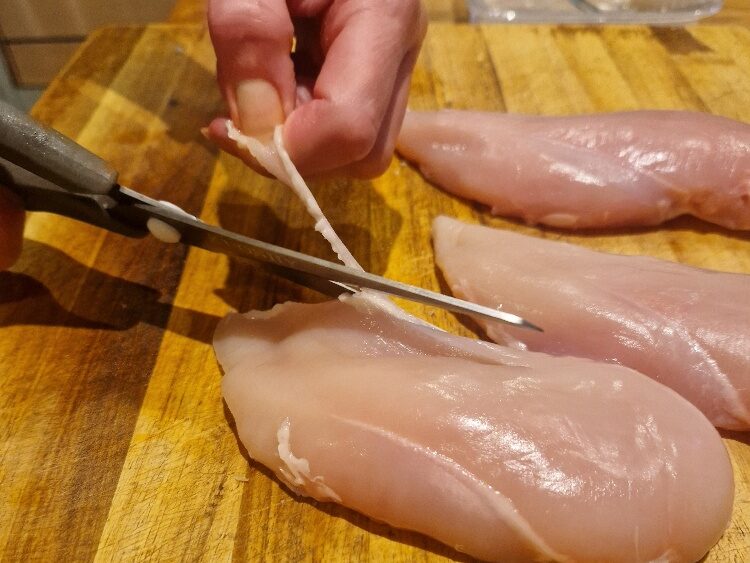
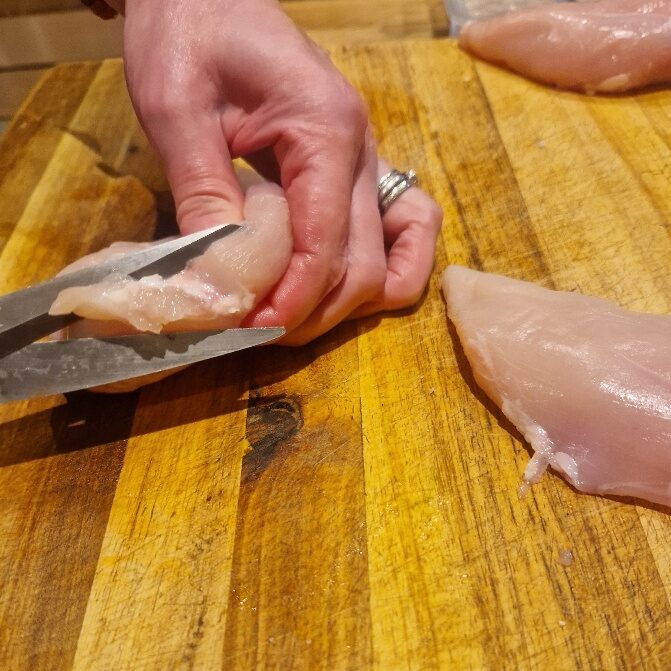
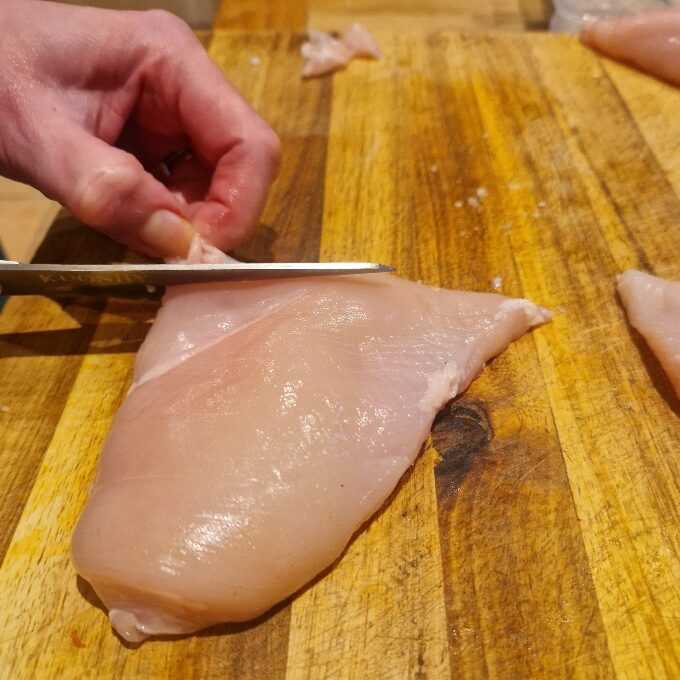
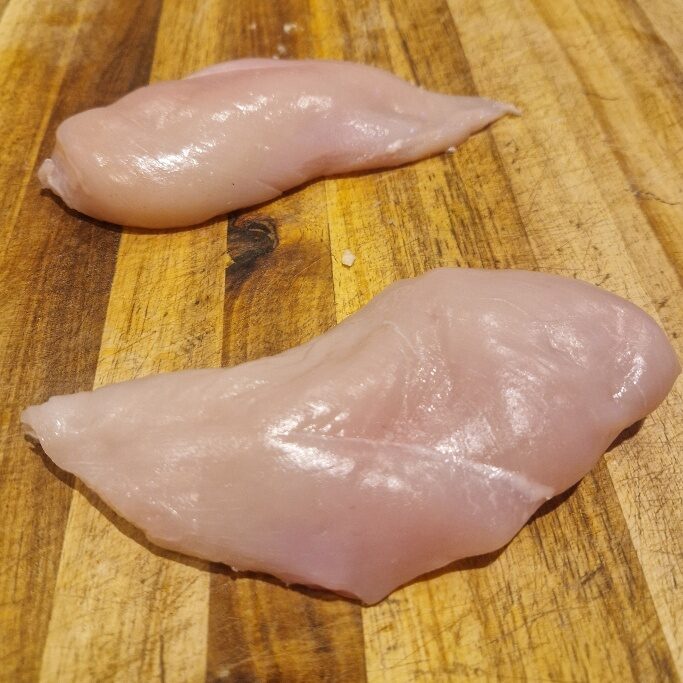
Now prepare your chicken. Today we used skinless, boneless breast pieces so they didn’t need much prepping, but often even on this type of cut you’ll find some residue of skin, fat or sinew, especially on the underside – it’s best to remove these. First pat your chicken dry with kitchen towel, then cut off anything that looks white or red in colour. This is easiest done with sharp scissors. You want to end up with nice clean breast pieces that are fully pink, as below.
Jake sticks his nose in
NEVER wash chicken. Raw chicken can contain harmful bacteria, and washing will just spread this further. Always just pat or clean with kitchen towel, and immediately throw that towel away.
It is very important when working with raw chicken that you wash your hands frequently, especially after handling, ideally with antibacterial soap. Also wash down any surfaces or equipment the chicken has touched before using again. Don’t, for example, use the same knife or scissors to cut other items without washing them first.
Next cut your chicken into pieces. Thin slices are best for this dish, and they will cook more quickly too if you keep the pieces fairly small
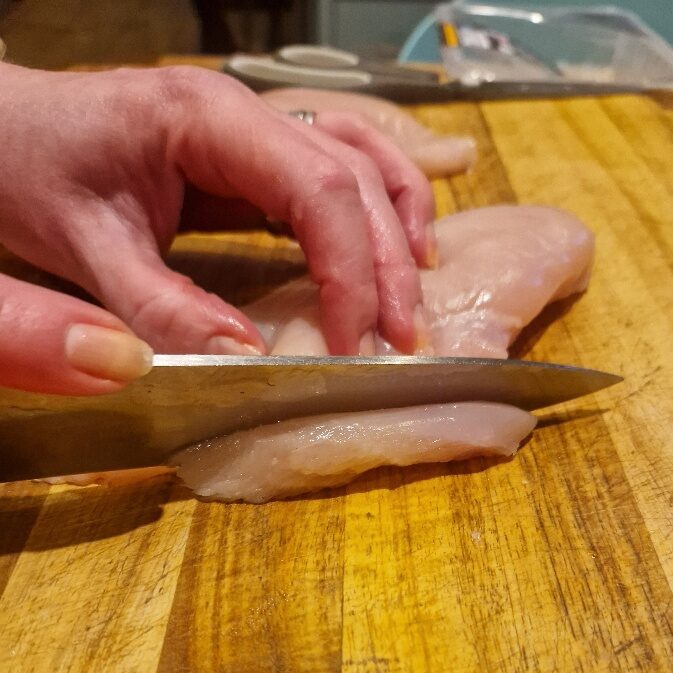
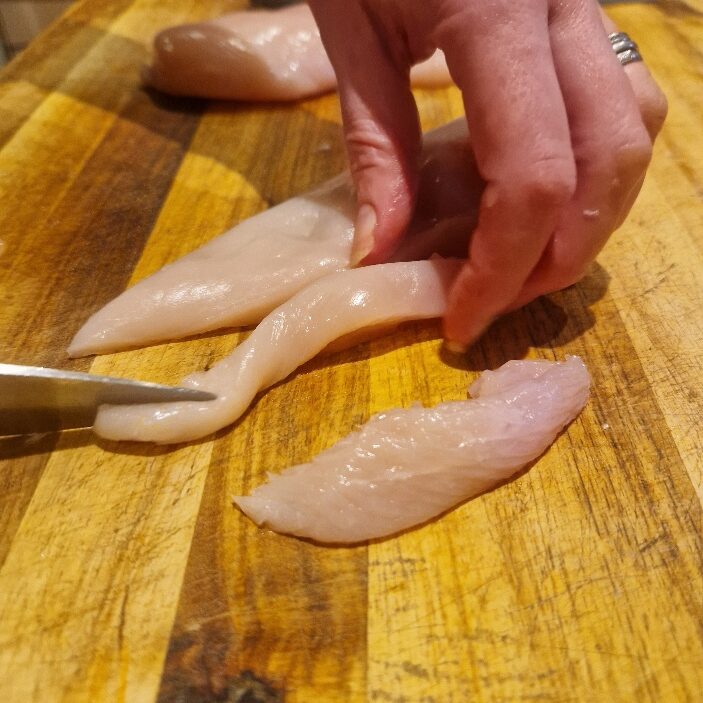
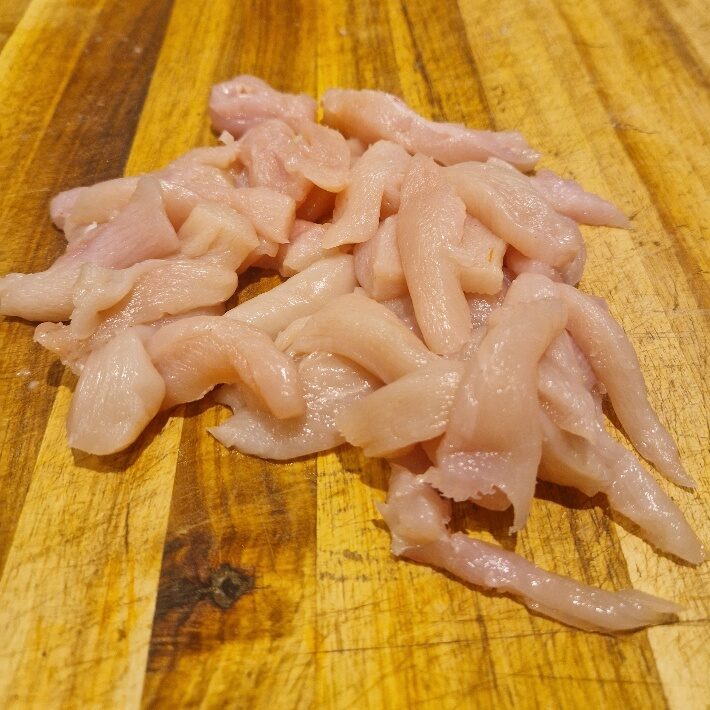
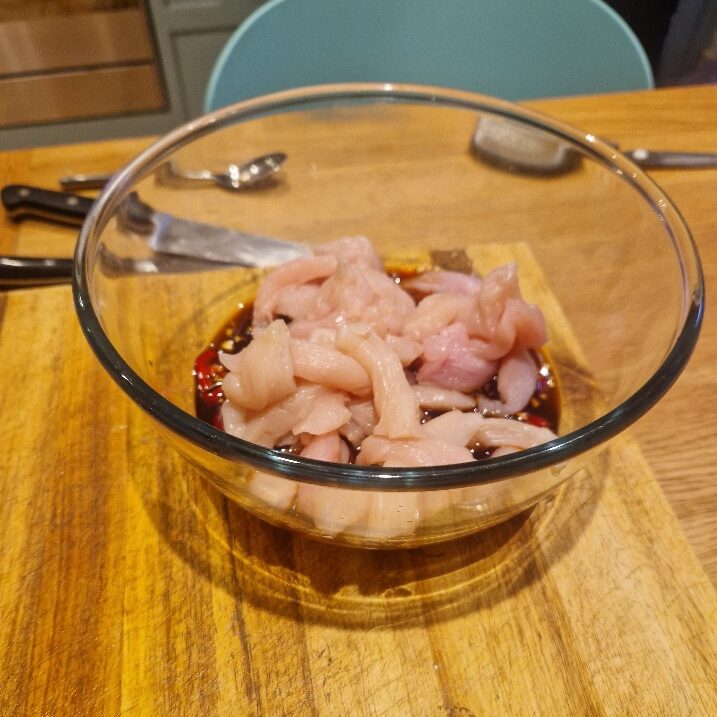
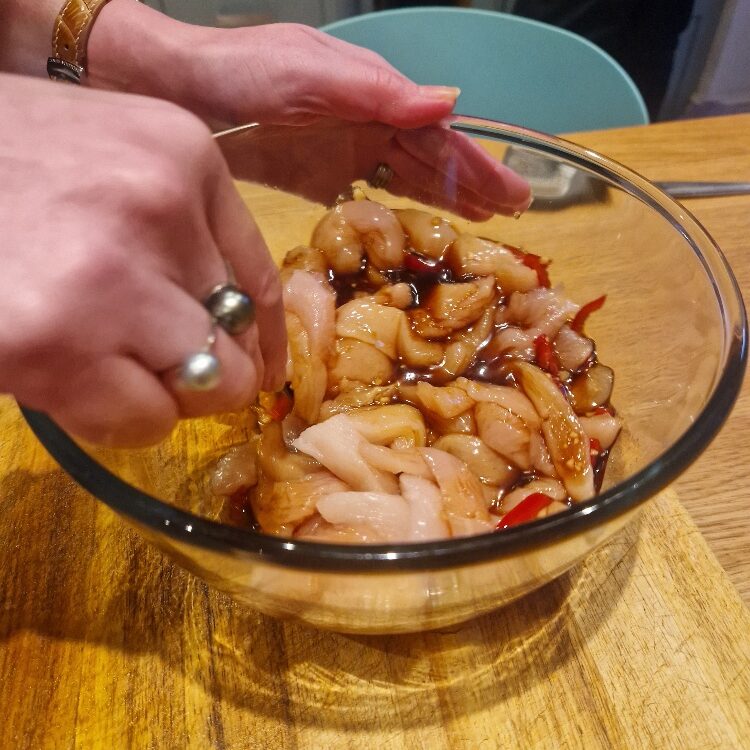
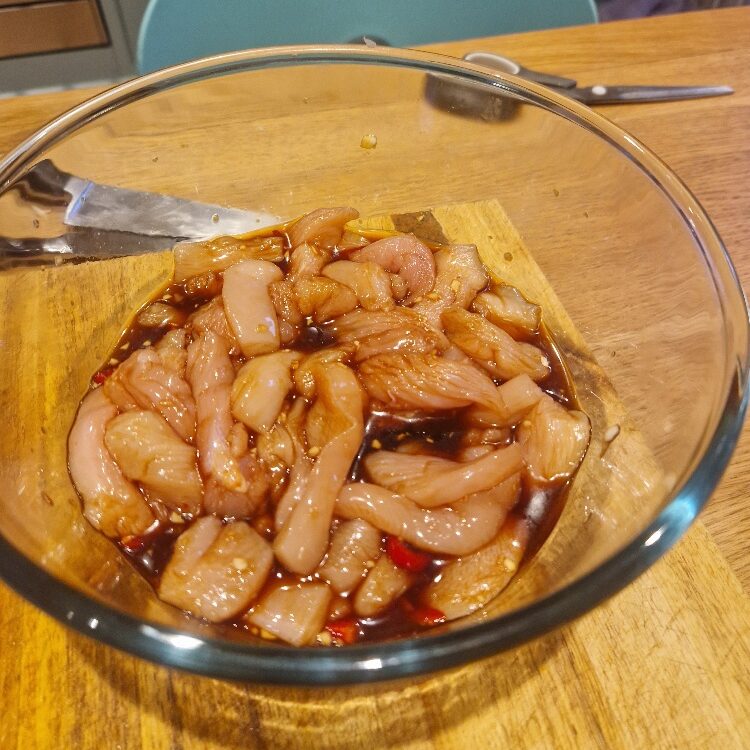
Now add your chicken to the marinade and stir well, making sure to coat all the pieces in the liquid. Cover with cling film and set aside in the fridge, ideally for about 2 to 3 hours. Stir once during this time so the chicken marinates evenly, and remove from the fridge about 20 minutes before you are ready to cook.
You can now prepare your vegetables. For stir frying, it is best to cut all the vegetables into pieces that are quite small and thin so that everything cooks quickly.
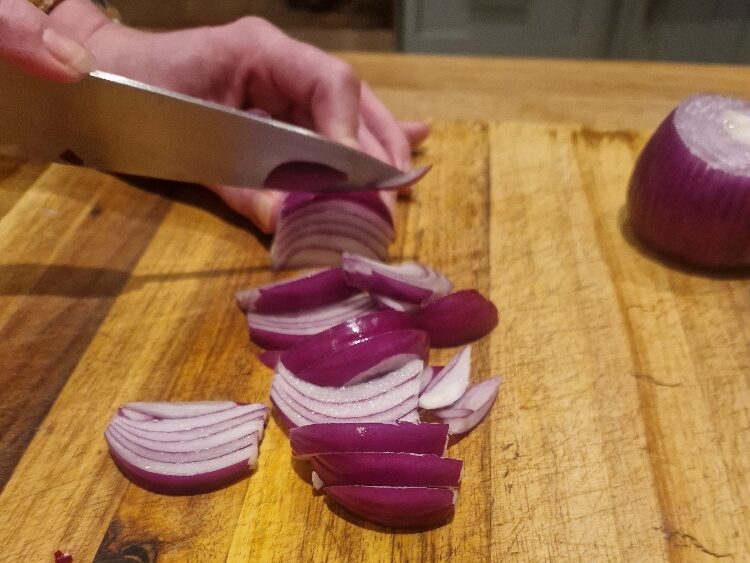
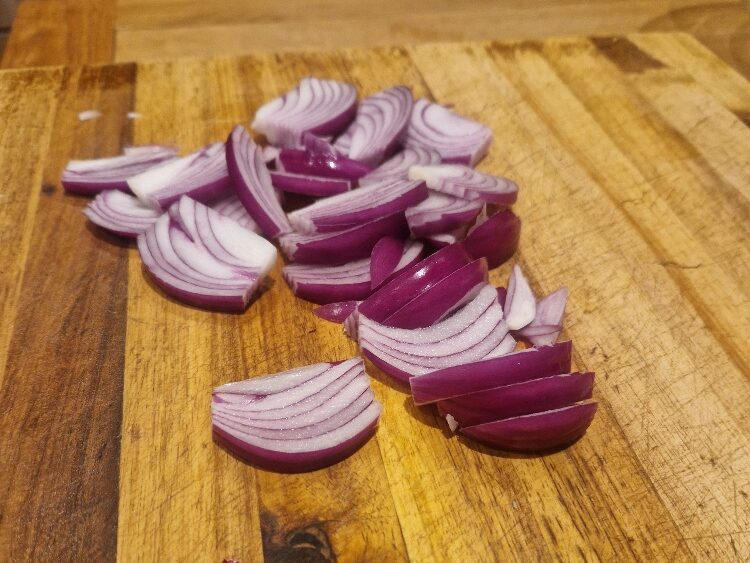
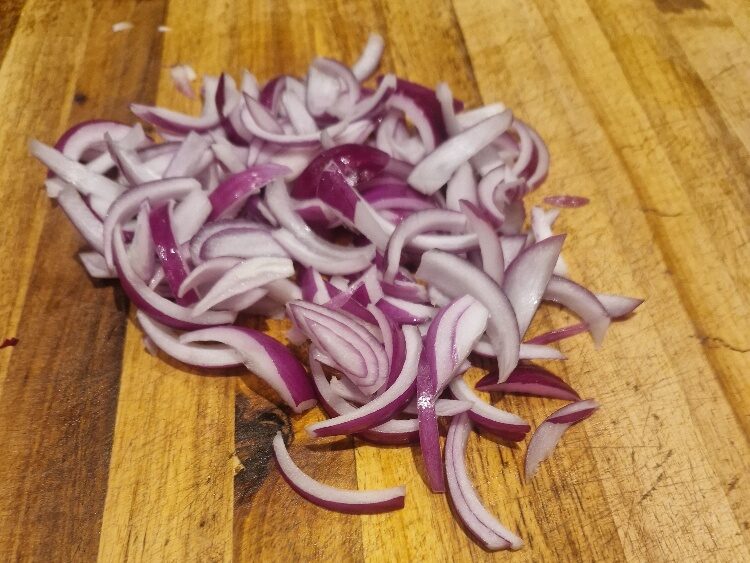
Peel and slice the onions, quite thinly. See how in detail in our onion Tip. Separate all the pieces out, so you have nice slim slices, as below.
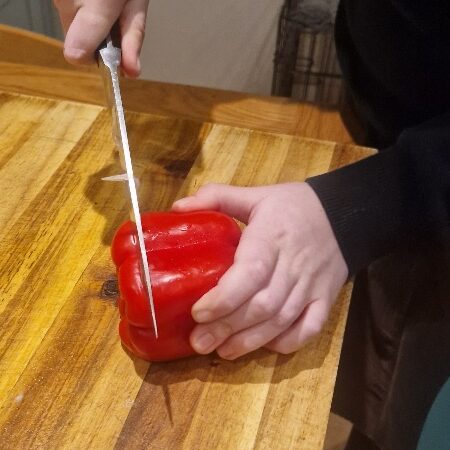
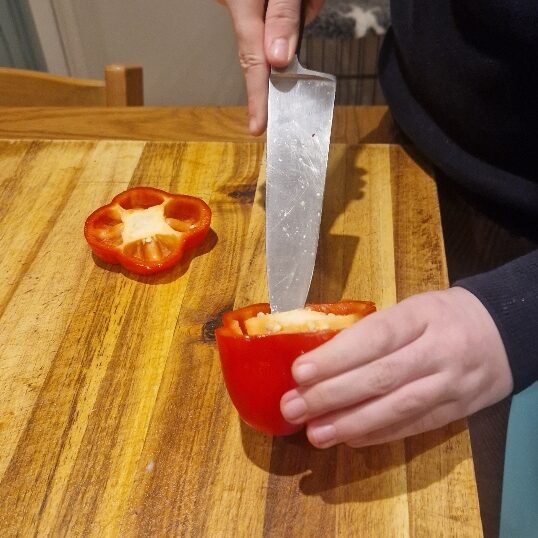
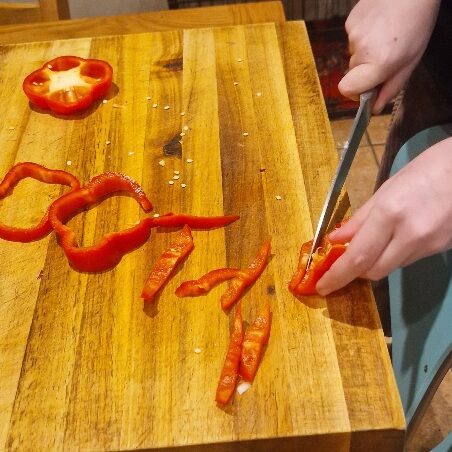
Now prepare your peppers. Any colour pepper will do, but the sweeter red, yellow or oranges ones are probably nicest in this dish, or you can use a mixture. Start by slicing off the top, then pull or cut out all of the white membrane. You want a fairly clean pepper, as below, but don’t worry if there is still a little white – you can cut this off when you slice.
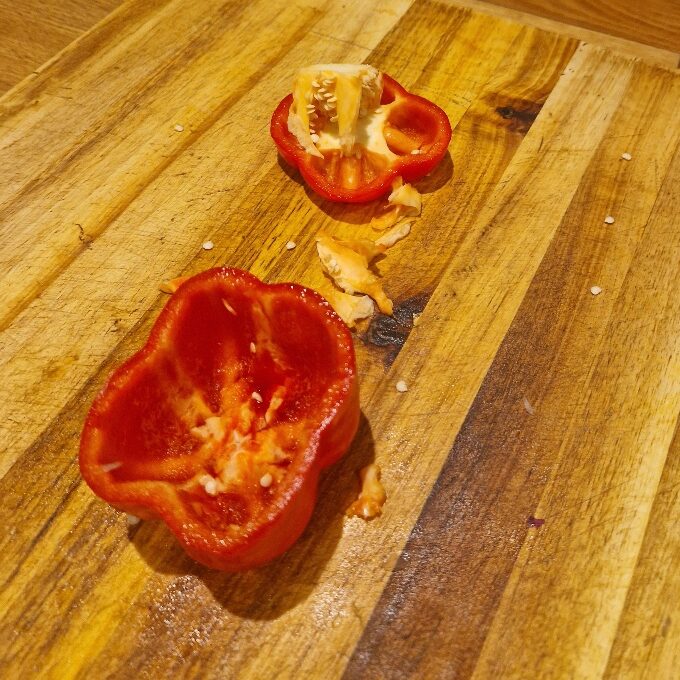
Jake sticks his nose in
The seeds and white part in a pepper aren’t hot, as they are in a chilli, but they impair the texture and can be bitter. Your peppers will look better without them too.
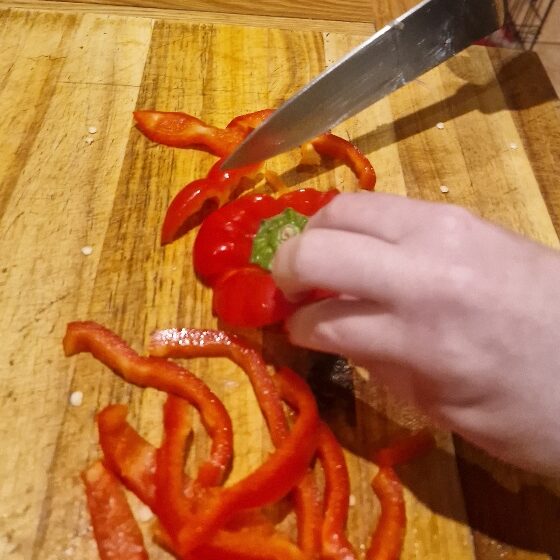
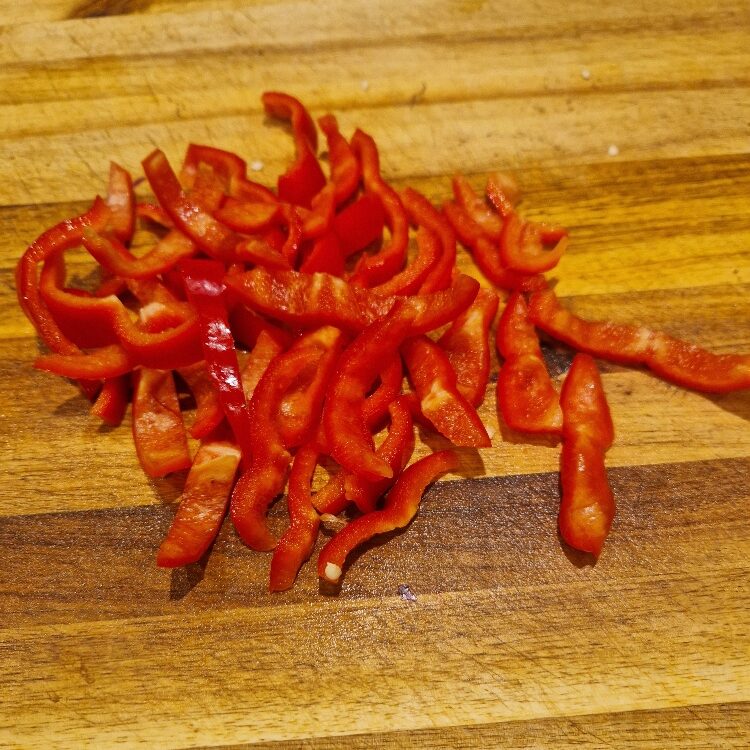
Now cut the pepper into thin rounds. This can be a bit tricky, but don’t worry if your rounds are uneven or some are a bit thick, you can cut them smaller later. Then cut the rounds into evenly sized batons, cutting any that are too thick into thinner slices. Don’t waste the top of the pepper – you can also slice the edges of this off, but avoid the stem area and white middle.
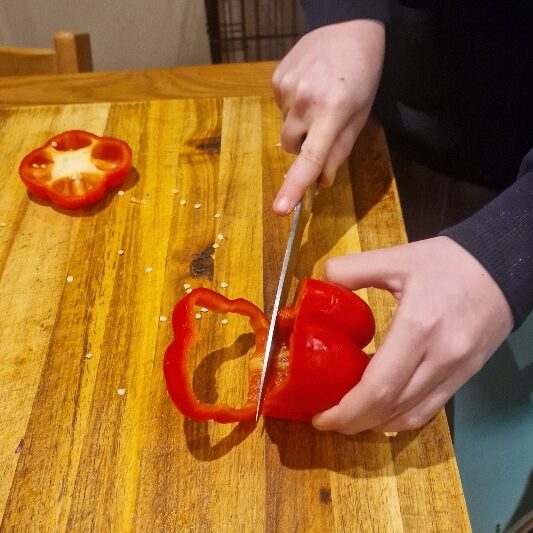
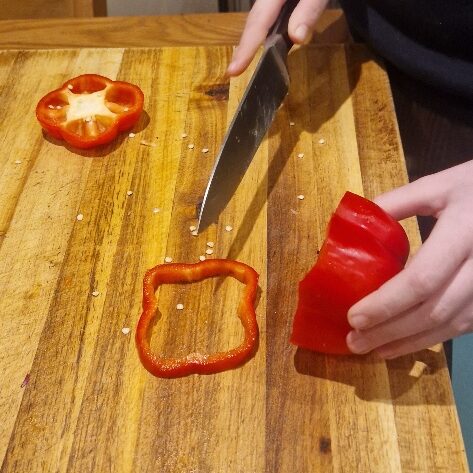
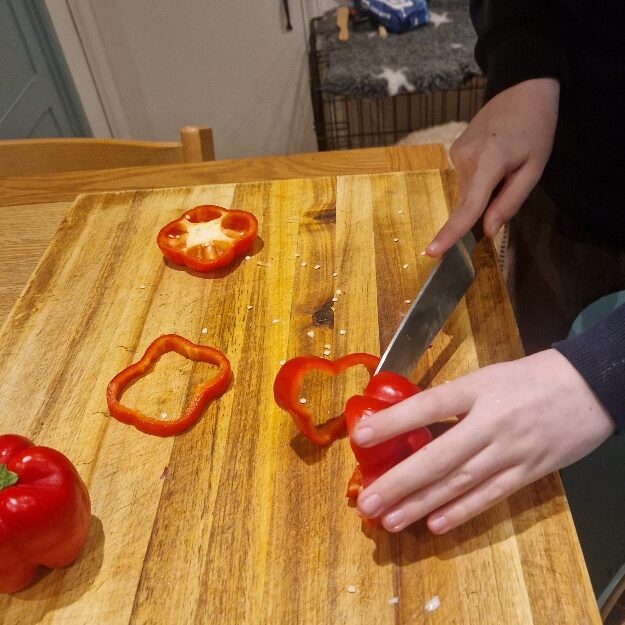
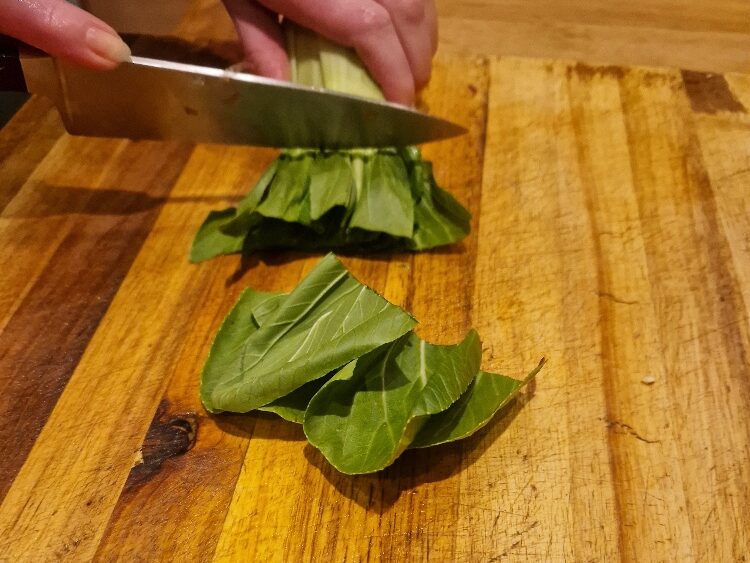
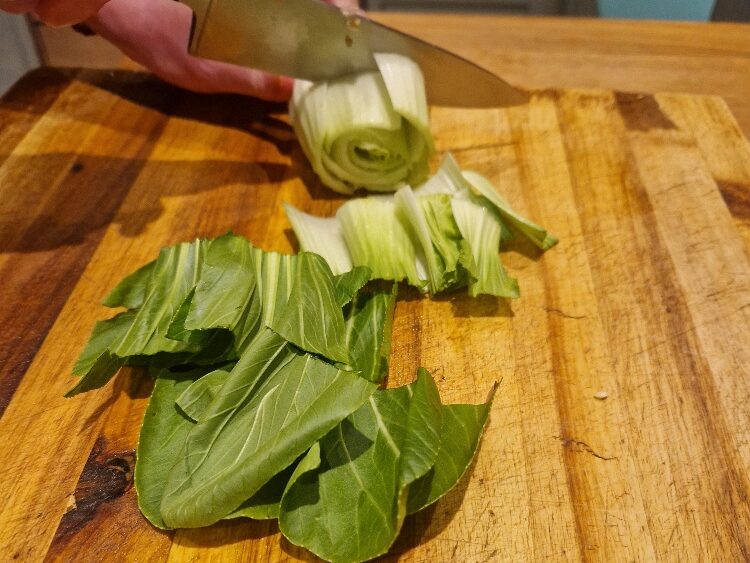
Next slice your pak choi. Slice across the green leaves, then down into the white stem and discard the bottom rooty piece. The green leaves will wilt and cook faster than the white part, so make the green pieces slightly larger and the white slightly smaller – cut any white pieces that look too big down further. Place the onion together with the peppers, but keep the pak choi separate.

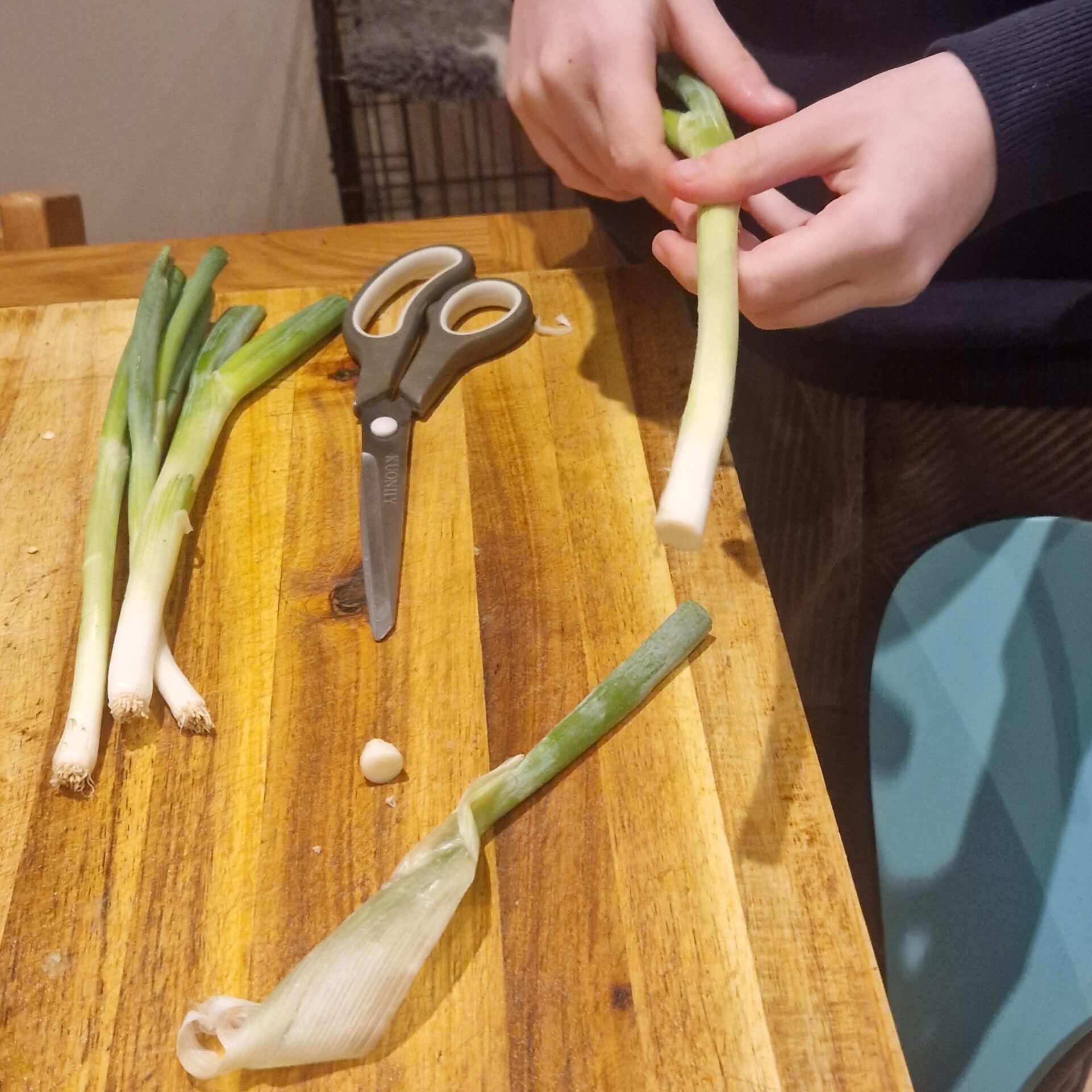
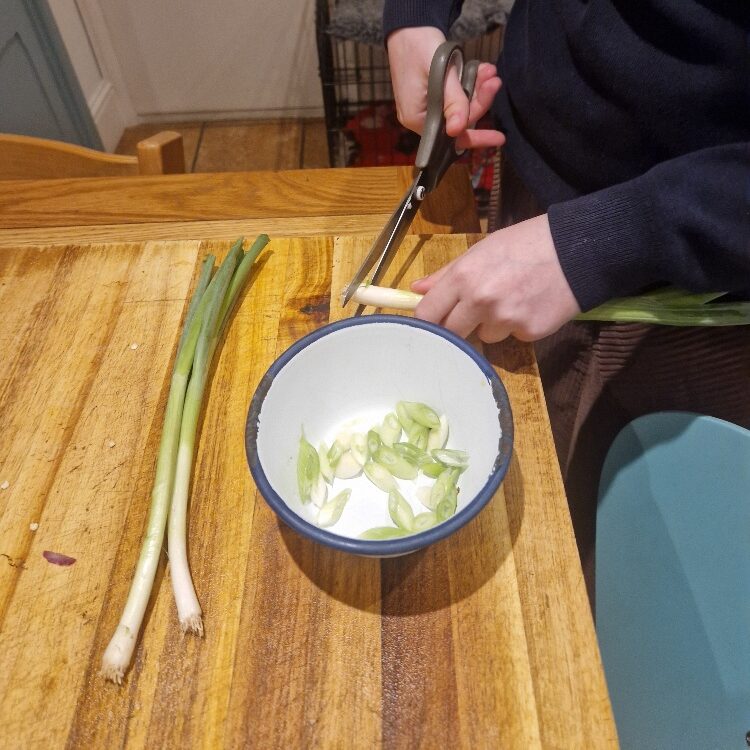
The spring onions won’t be stir fried, but used as a garnish at the end. Cut off the root and peel off the outer layer. Slice into fine diagonal slices, this is easiest using scissors. As these onions will be raw in the finished dish, don’t make the pieces too large. Set aside for when you are ready to serve.
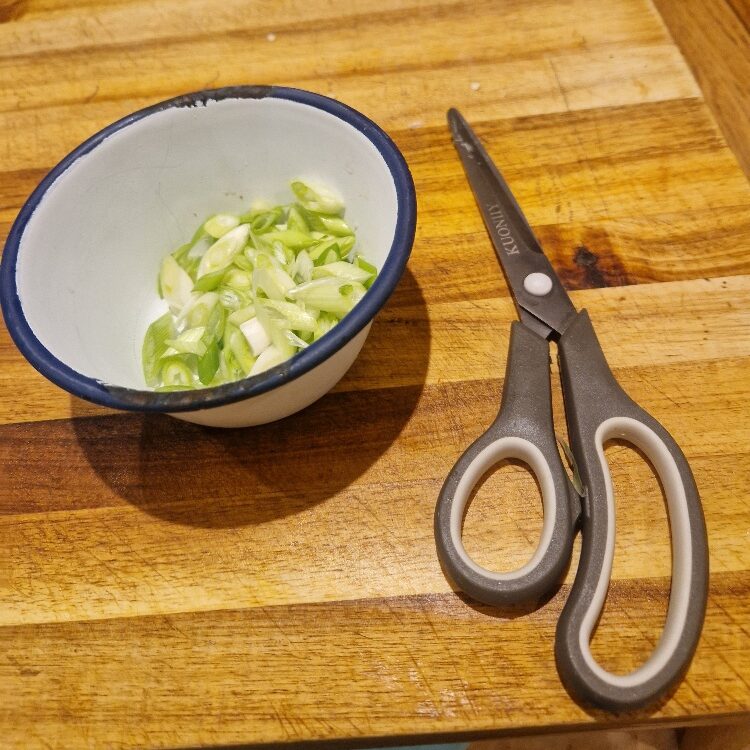
You now have all your ingredients ready to fry!
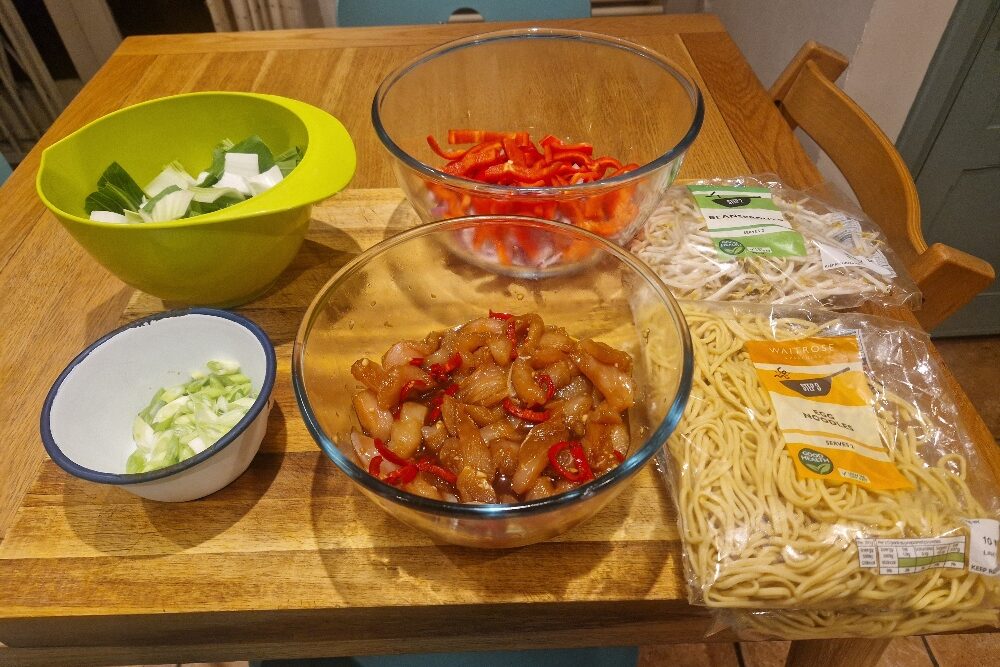
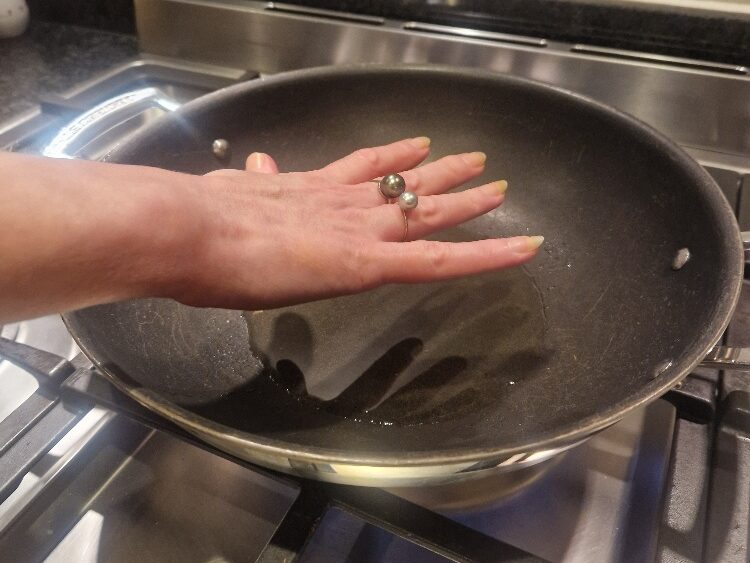
To stir fry you want a really large pan, and to get it very hot. A wok is best, but a large frying pan will do. Add a little oil to the pan, and set over a high heat. Remember to do the ‘hand test’ to tell when the pan is ready – for this the heat should be high enough for you to want to remove your hand, and the oil should be smoking slightly.
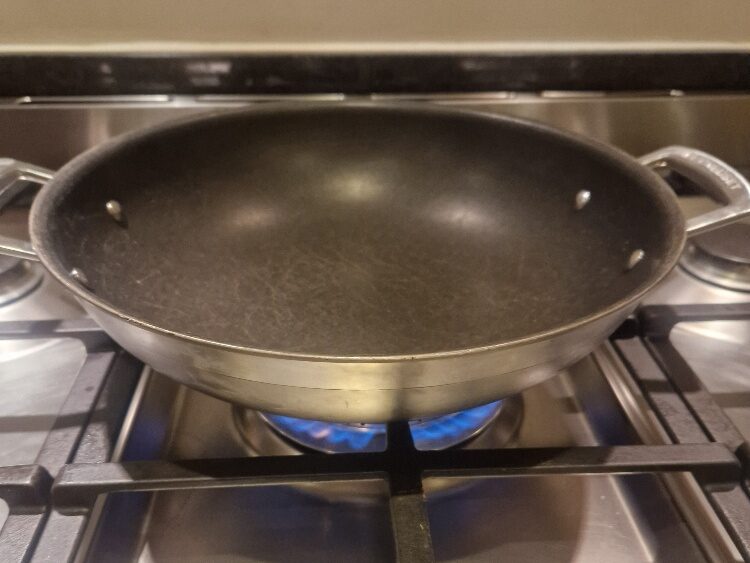
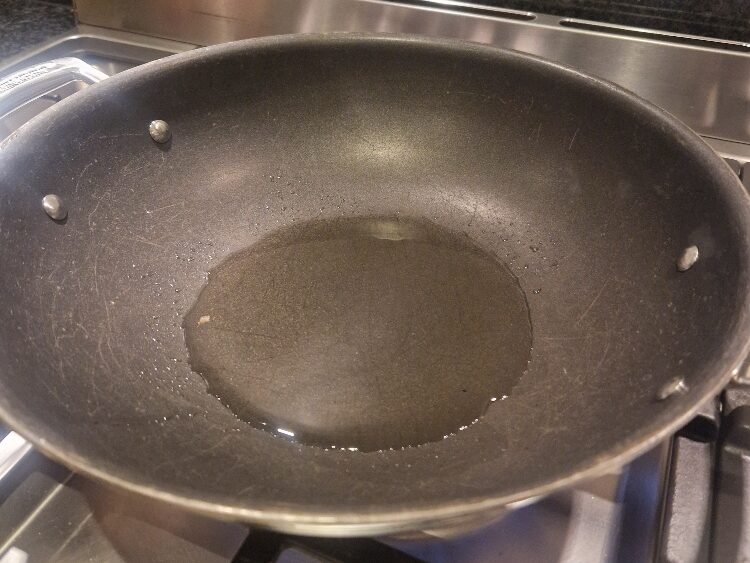
The order of frying is important. Meat will normally need the longest cooking time, so should go in first, but the order of adding the vegetables matters too. Think about their texture if you are trying to figure this out – harder vegetables like onions need longer, and thin leafy ones need much less, with juicy items somewhere in between. Also, in a stir fry you want a slightly crunchy fresh texture to remain, so you will be cooking less than in other dishes. Today our order will be chicken, then onion and peppers together (firmer texture), then beansprouts (juicy texture), then pak choi (thinnest texture), ending with fresh noodles, which only need to be heated through.
Jake sticks his nose in
Remember to get your chicken out of the fridge about 20 minutes before you are ready to cook. You don’t want the chicken to be fridge cold or it will cool the pan down when frying, and you need the pan really hot for best results.
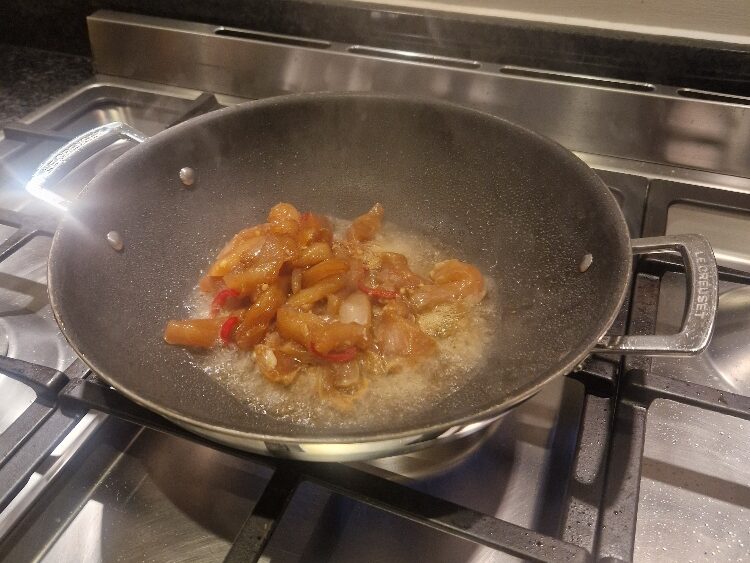
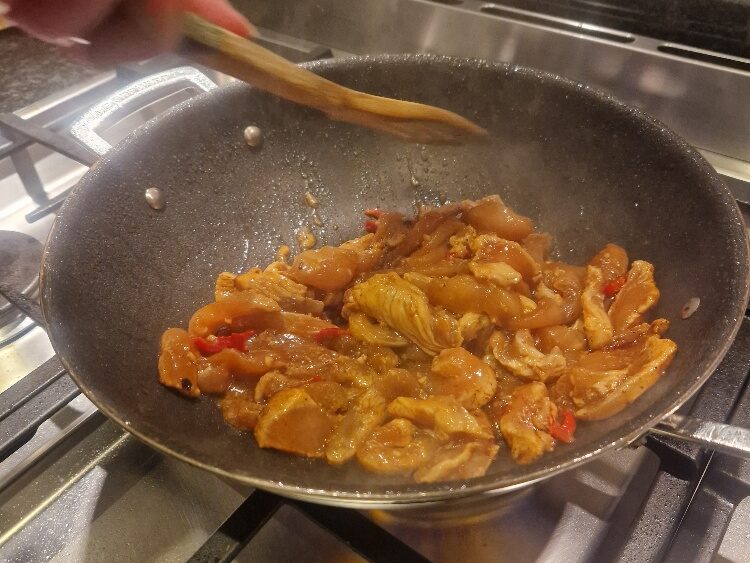
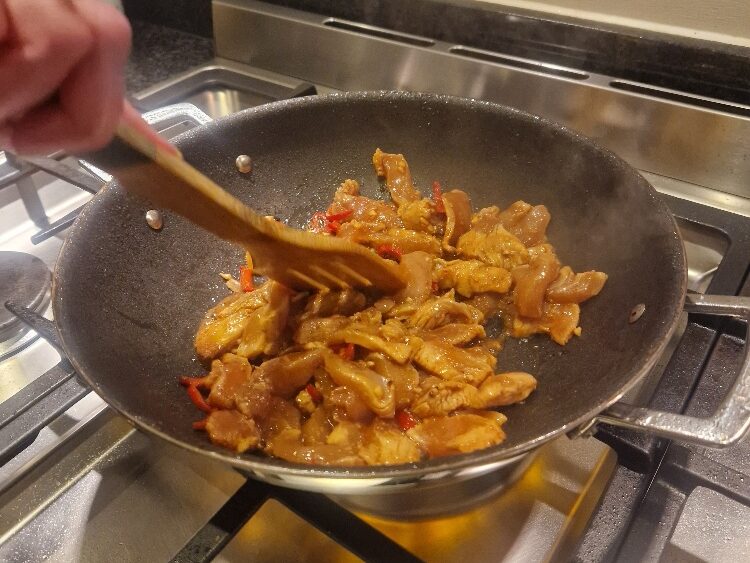
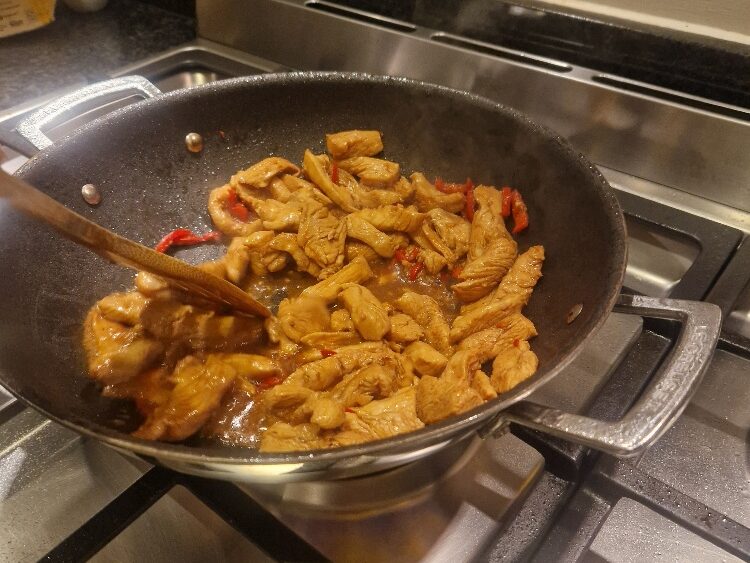
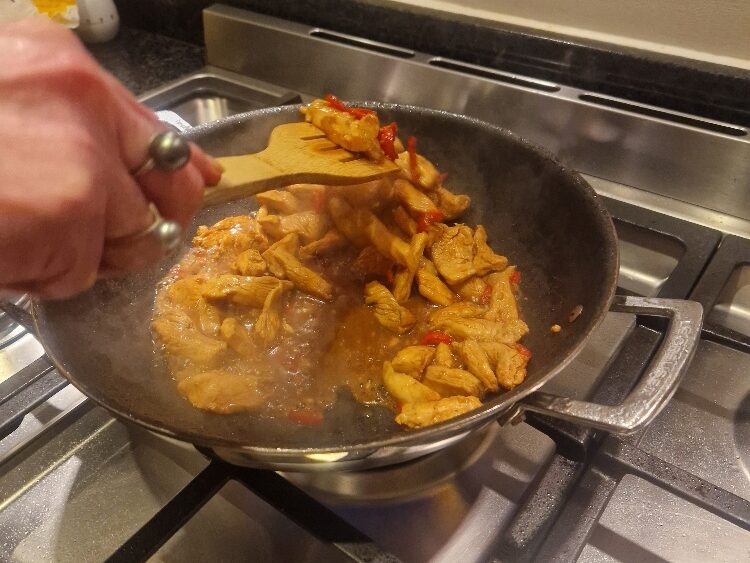
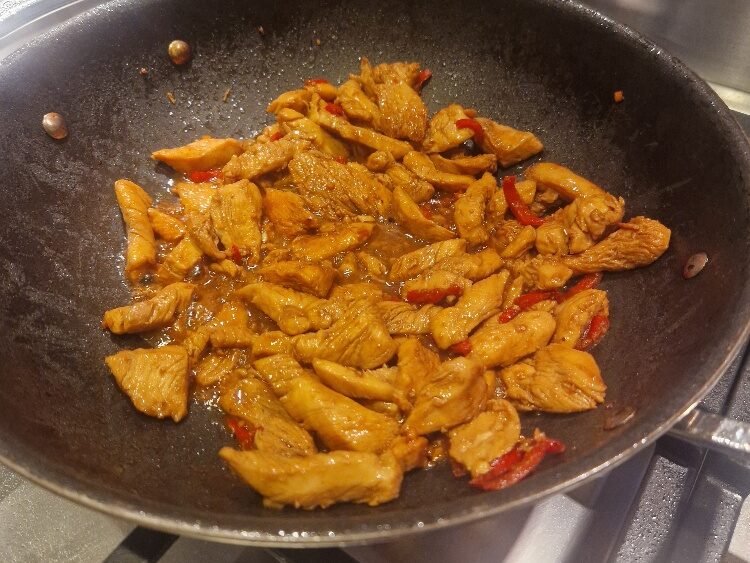
Frist cook your chicken. Add it to the pan with a little of the marinade and as many chillis as you can. Don’t add too much liquid however as your chicken will boil rather than fry. Keep stirring until the chicken is golden all over and feels firm, at least 5 or 6 minutes, possibly a little more.
Jake sticks his nose in
It is really important that chicken is properly cooked through to prevent stomach upsets from the bacteria in some raw chicken. If in doubt, cook for longer. As you are learning, you may want to test a piece to check if it is done – take one out and cut it in half. It should be white right to the centre with no pink or red. If it isn’t, cook longer.
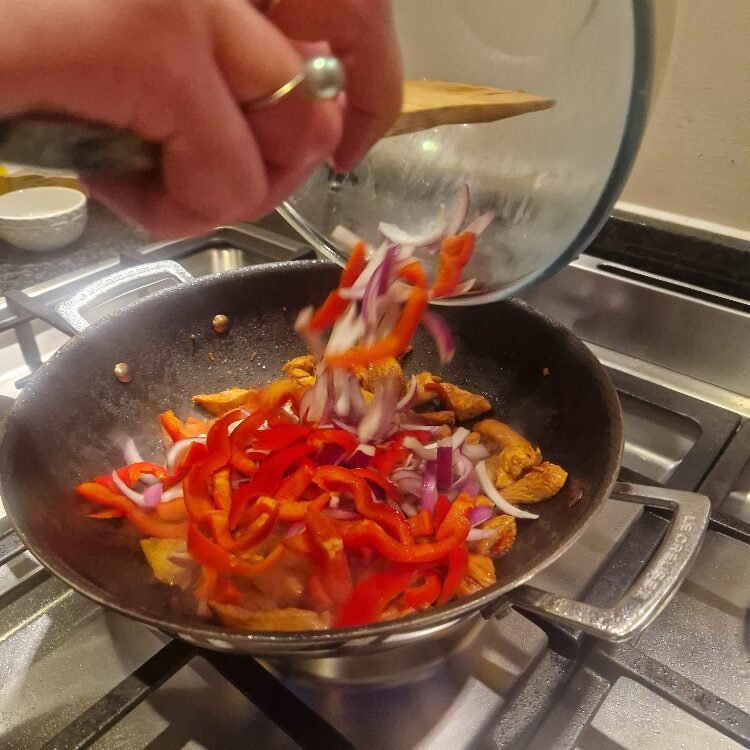
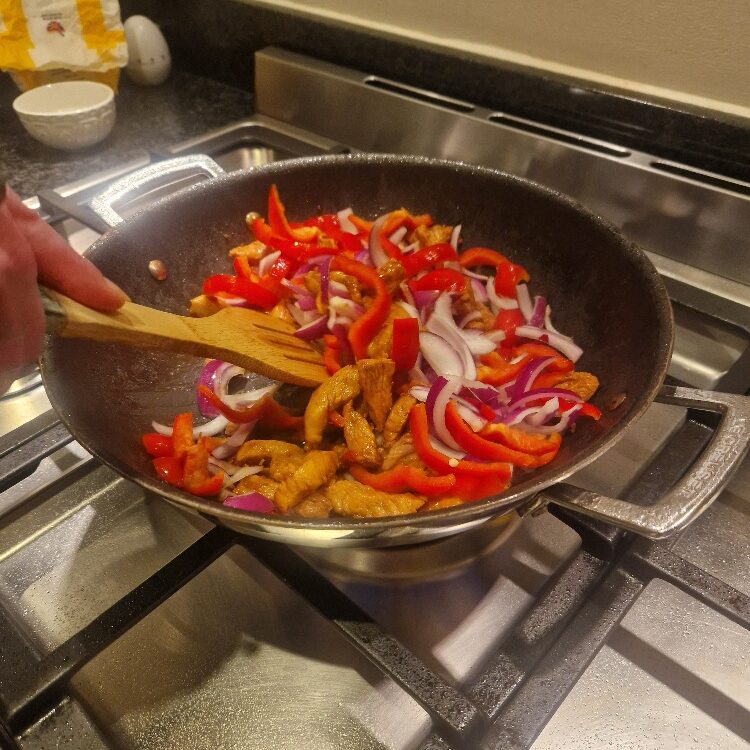
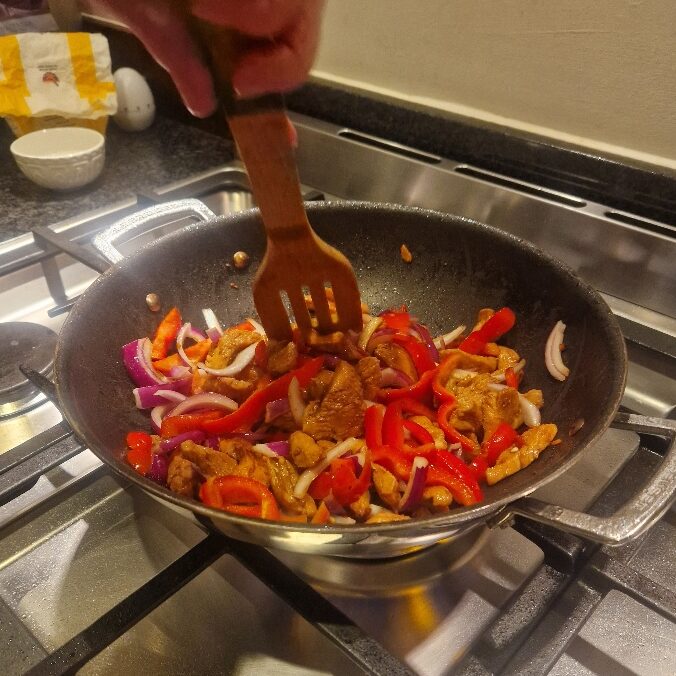
Next add the onions and peppers, and cook, stirring, until they have softened slightly but still retain some crunch, 1 to 2 minutes.
Jake sticks his nose in
The key in stir frying is to keep everything moving so all the pieces get to touch the hot metal of the pan. Use a spatula or tongs to turn the stir fry over in the pan, and stir constantly throughout the cooking time.
Next add the beansprouts – these will cook very quickly and really only need to be warmed up, so give them a quick toss in the pan before adding the pak choi. Keep stirring until the green of the pak choi has wilted very slightly, but the white still looks juicy, about another minute or so. If in doubt that everything is cooked, quickly test a piece of pak choi or pepper from the top of the pan by biting into it – it should be hot. If not turn the vegetables over in the pan again and cook a little longer. Season with a small pinch of salt and sugar to taste. You won’t need much salt because of the marinade.
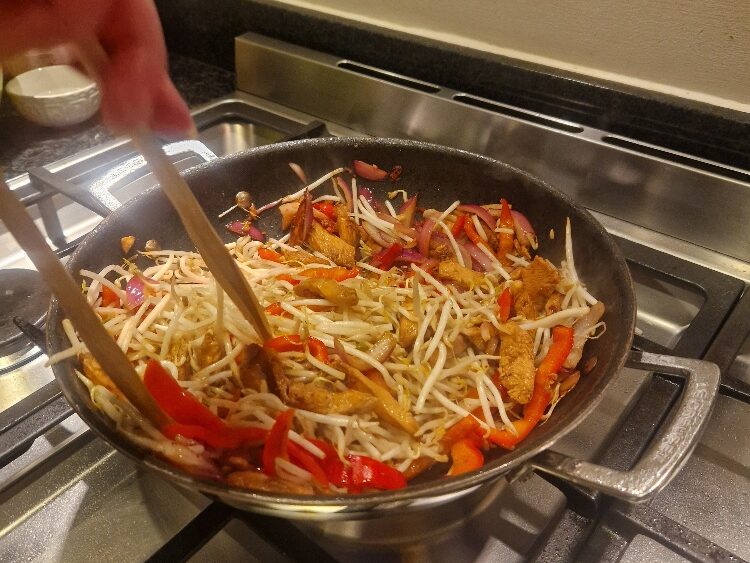
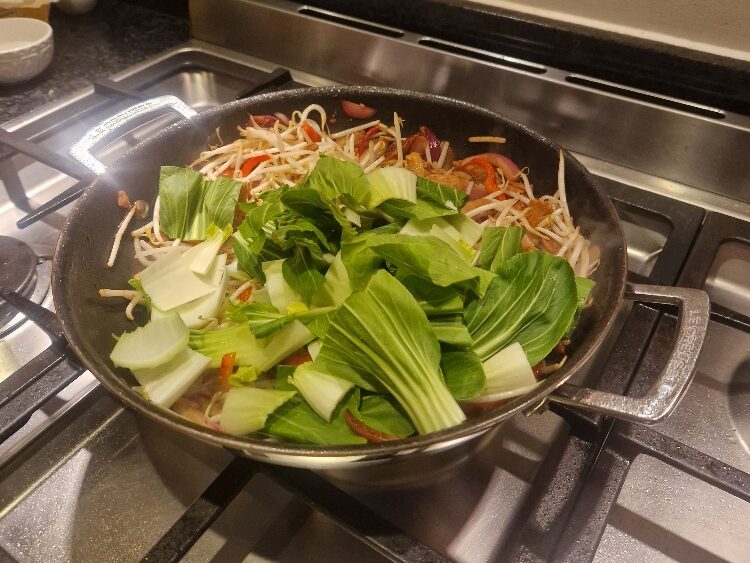
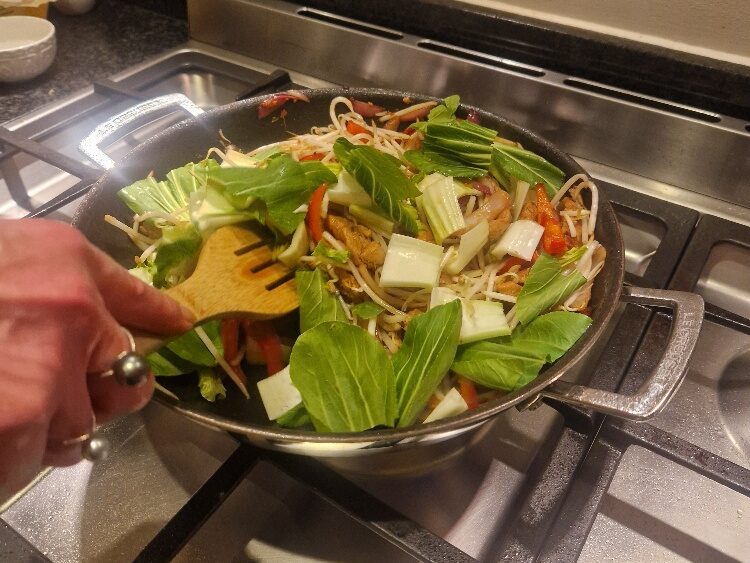
Finally add the noodles. Today we used fresh egg noodles, but you can also use dried. These normally come in nests – cook them first according the the instructions on the packet, the medium width ones are probably best for stir fries. Add the soft noodles to the pan, and keep stirring until they are thoroughly heated through and well combined with the rest of the stir fry. This can be tricky, especially if your pan is quite full like ours was today. A pasta server or tongs can help mix everything together.
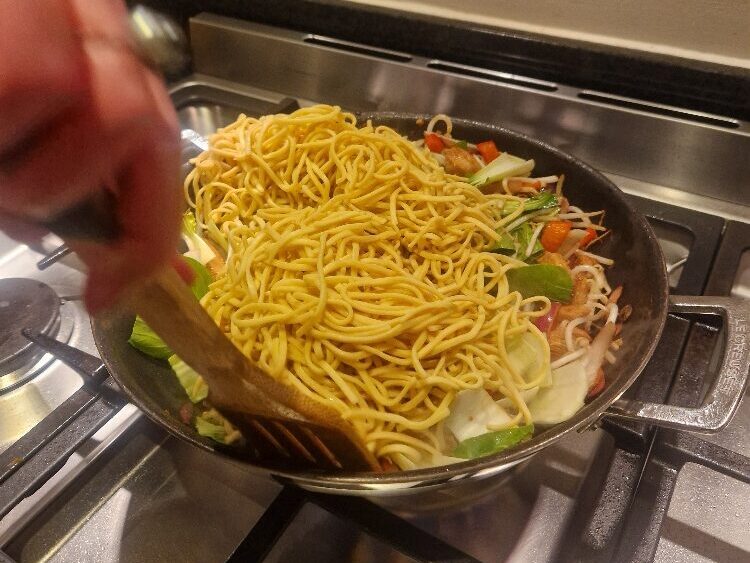
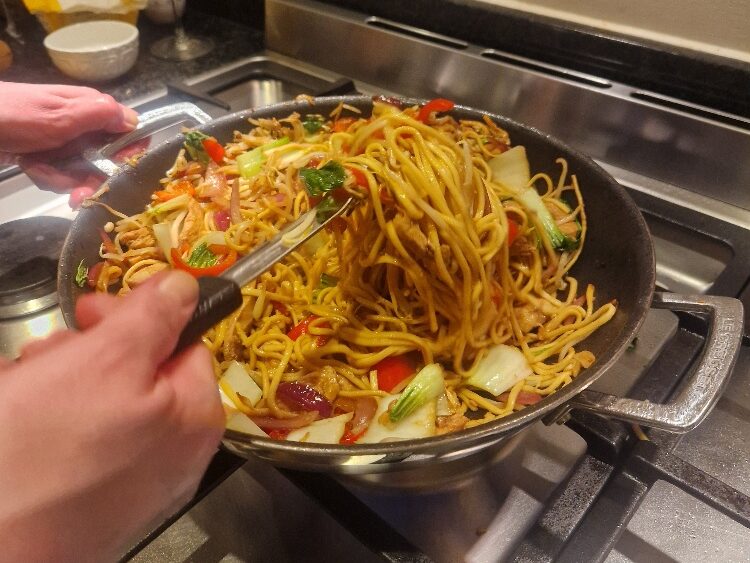
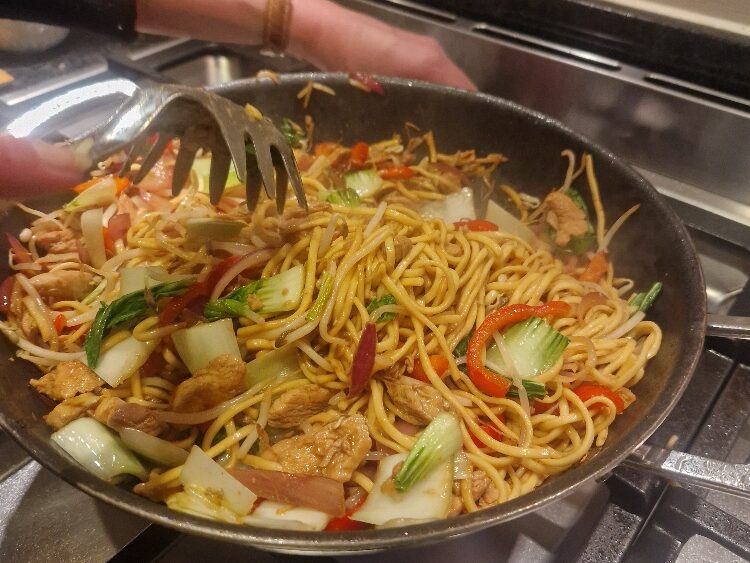
When the noodles are hot, a couple of minutes, serve the stir fry immediately, ideally onto warmed plates, topped with the spring onion. Alternatively, and if your pan is a bit small, you can cook the noodles in a separate frying pan, and serve these first, putting the rest of the stir fry on top for people to mix in themselves.
This dish is so tasty it won’t last long. Ours today disappeared pretty rapidly!
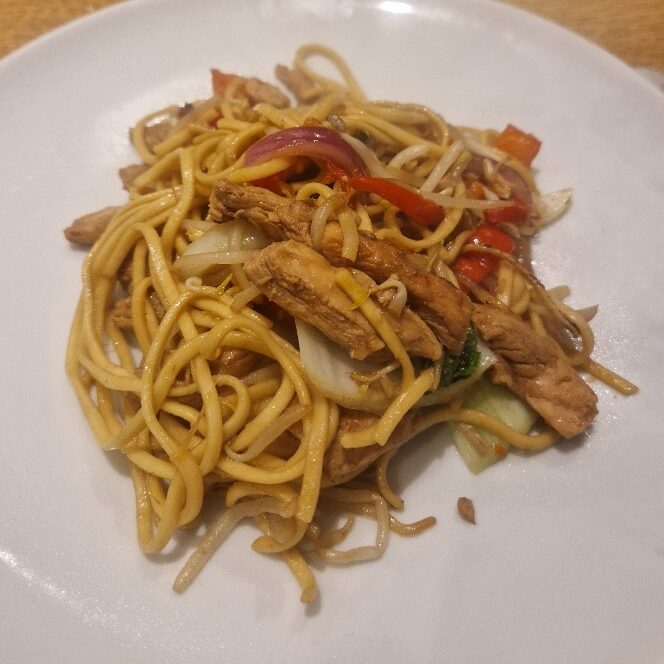
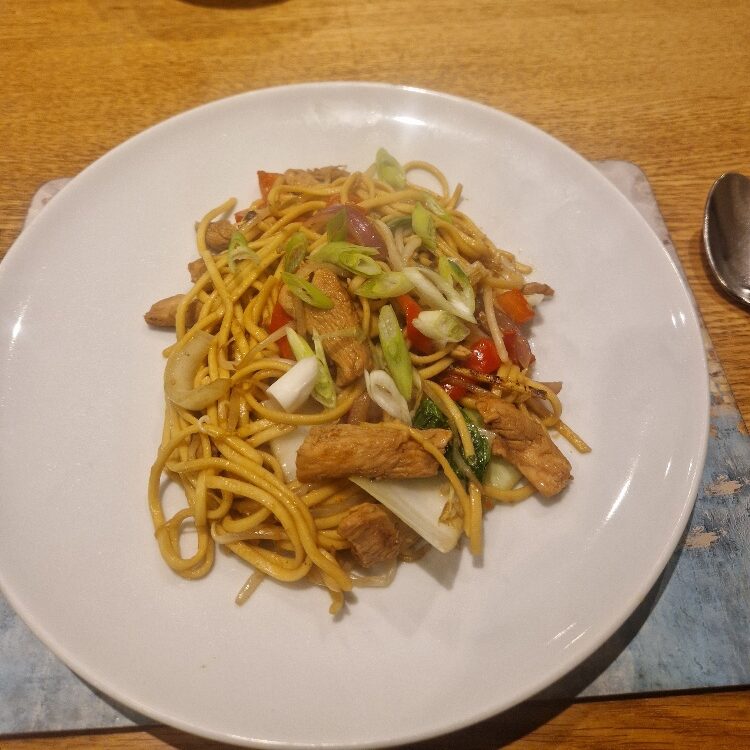
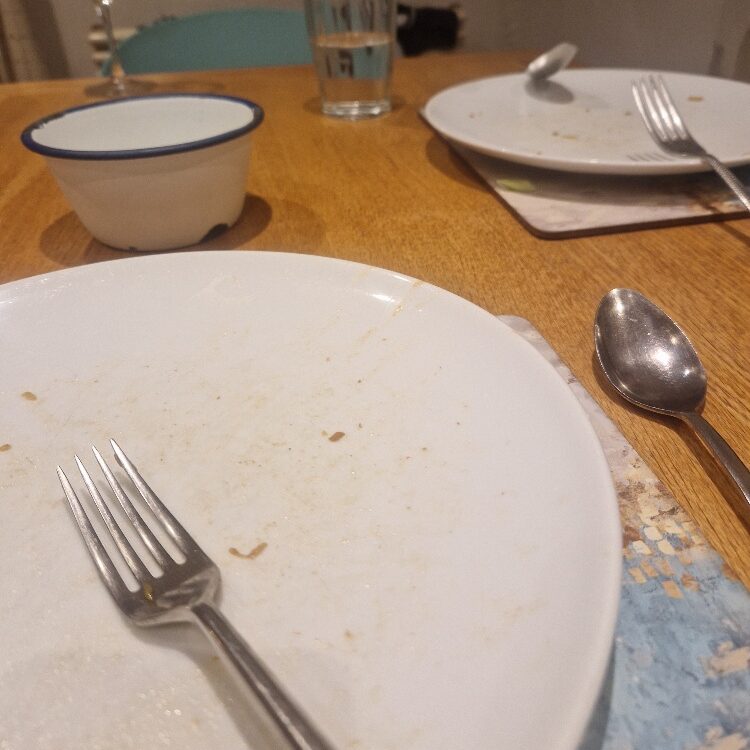
Enjoy!
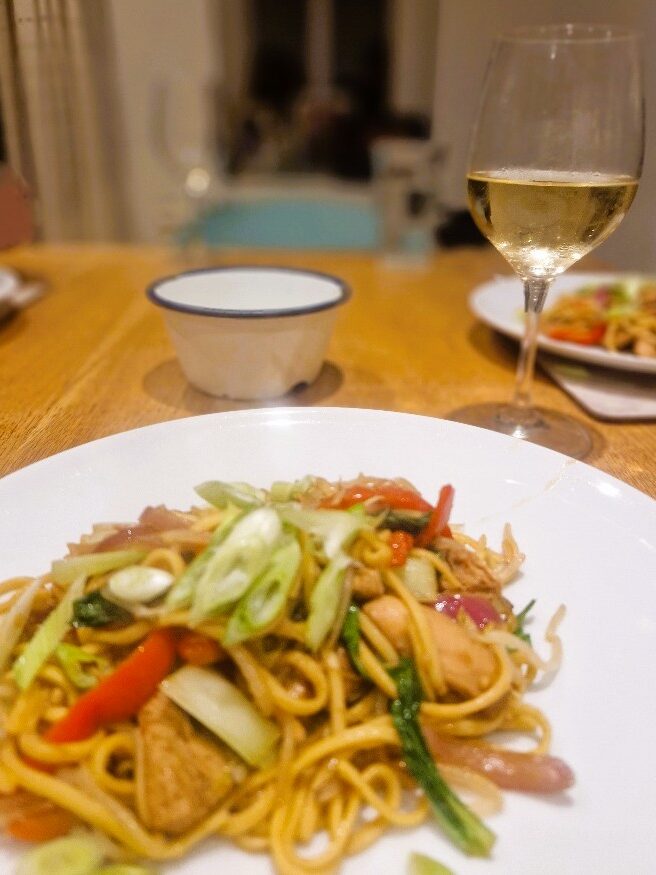

Easy Chicken Teriyaki Noodle Stir Fry
Ingredients
Equipment
Method
- Finely slice the chillies. Chop the garlic, then add a generous pinch of salt and keep on chopping until a rough paste forms. See our garlic & chilli Tip. Add both to a large bowl, along with the the teriyaki marinade and stir.
- Remove the skin from the chicken breasts if needed, and then pat them dry and clean up with scissors. Cut into thinnish strips, about 1.5 cm. Add to the marinade and stir well to coat. Cover and allow to marinate in the fridge for at least 2 hours, stirring once during this time. Remove from the fridge about 20 minutes before you are ready to cook.
- Now prepare your stir fry vegetables. Clean and cut the peppers into thin strips. Roughly chop the pak choi. Snip the spring onions into fine diagonal slices, and set these aside to garnish.
- Add a little oil to the wok or pan and set over a high heat. The wok will be ready to fry when it is really hot and the oil is smoking very slightly. Add the chicken to the wok with a little of the marinade and most of the chillies. Do not add more than about 1tbsp of the marinade in total or your chicken will boil, not fry. Fry, stirring, until fully cooked and golden, about 5 to 6 mins. Test a piece by cutting into if unsure – it should be cooked to the centre with no pink.
- Next add the onions and peppers together and cook, stirring, until they have softened slightly but still retain some crunch, 1 to 2 minutes. Now add the beansprouts and toss in the hot pan, then add the pak choi and cook until the green part slightly wilts, stirring, about another minute. Season with a pinch of salt and a pinch of sugar to taste. Make sure all the vegetables are hot before continuing.
- Now add the noodles and stir well until they are fully heated through and the stir fry is well combined – tongs or a pasta server will help with this. Serve immediately, ideally on to warmed plates, and garnish with the spring onions. Alternatively, if your pan is too full, cook the noodles separately and serve with the stir fry on top for people to mix in themselves.
- Bon appeit!