


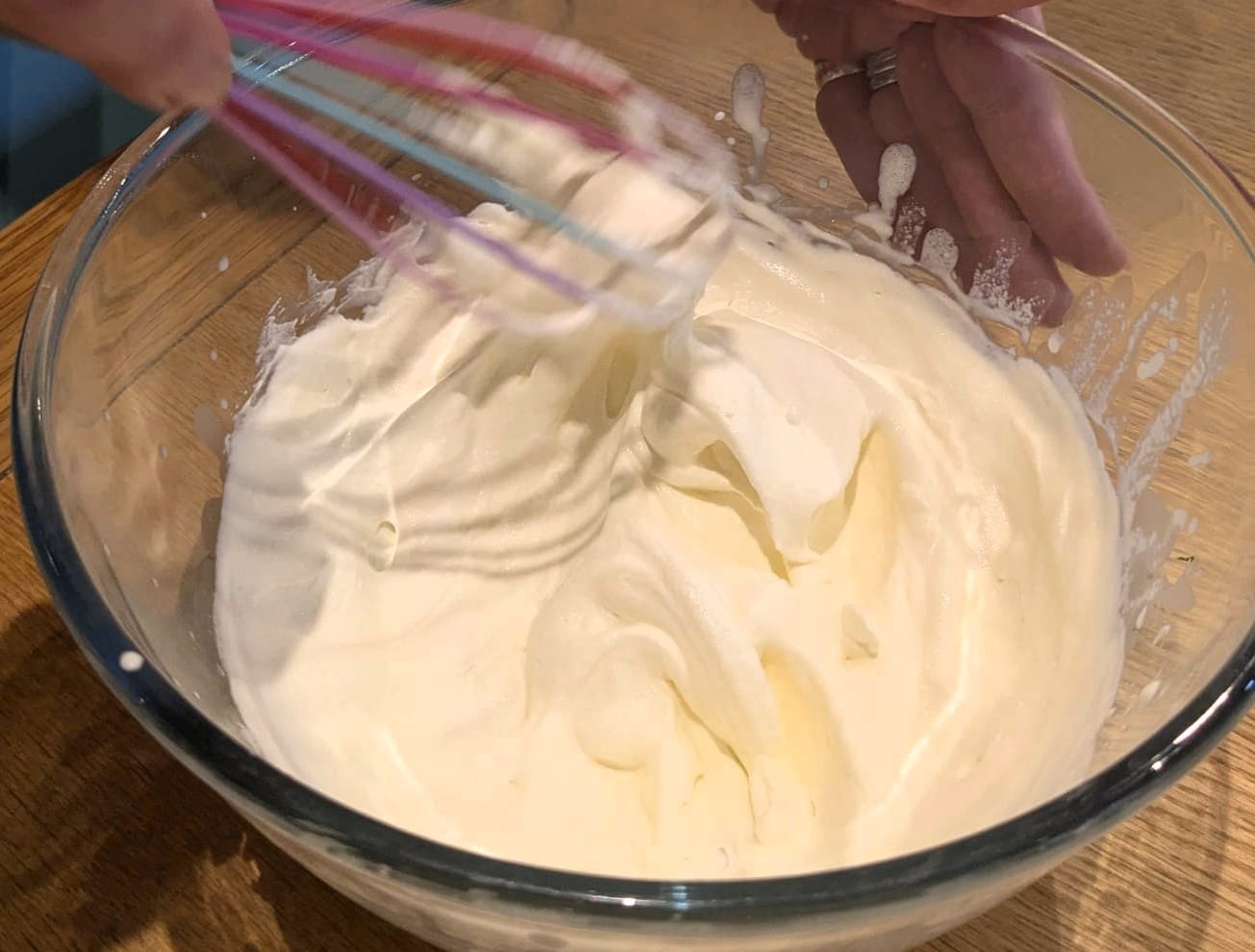
You can whip cream in a stand mixer, with an electric hand whisk or manually with a balloon whisk. Using a balloon whisk is harder work, but we prefer it as you get better control over the key stages. We only use an electric mixer if we are whipping a lot of cream.
Here we show the balloon whisk method to whip cream, which is also accessible to more people as you don’t need any pricey or specialist kit. You can pick up a decent balloon whisk for a few pounds, though a bigger whisk makes whipping easier.
Whipping is also easier if the cream is fridge-cold, and your bowl and whisk are cold too. A glass, ceramic or metal bowl stays colder than plastic, but any bowl will do. You can chill them under a cold tap, then dry.
Pour the cream into a bowl. Today we used whipping cream, but many creams (apart from single and clotted cream) can be whipped. Higher fat cream whips better. Double cream works best and can be whipped to a very stiff shape, though it is rich and easy to over-whip. Whipping cream has slightly less fat and is the easiest to whip. It gives a lighter, softer result, but will not hold its shape as well. Single cream cannot be whipped as it has too little fat, and clotted cream has too much.
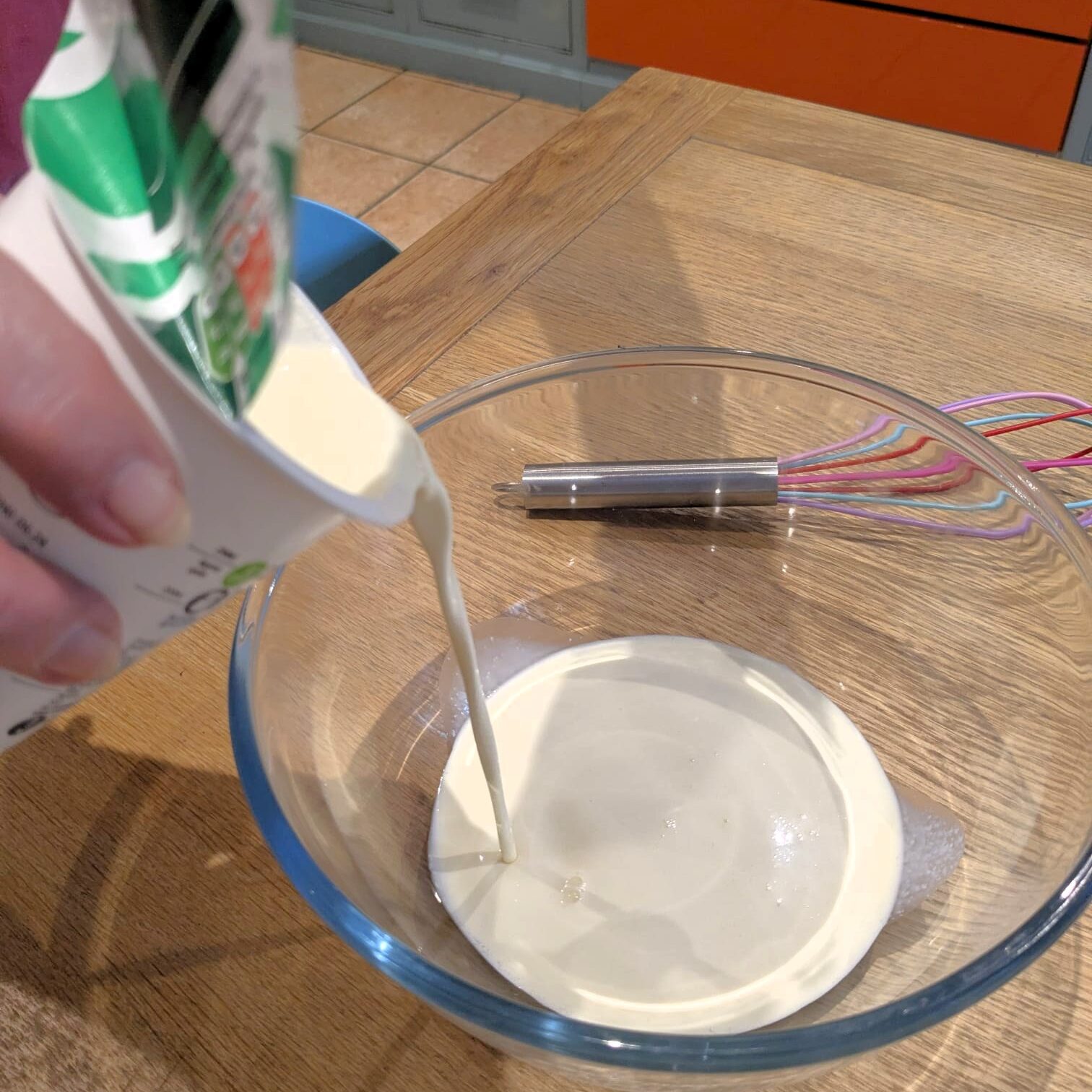
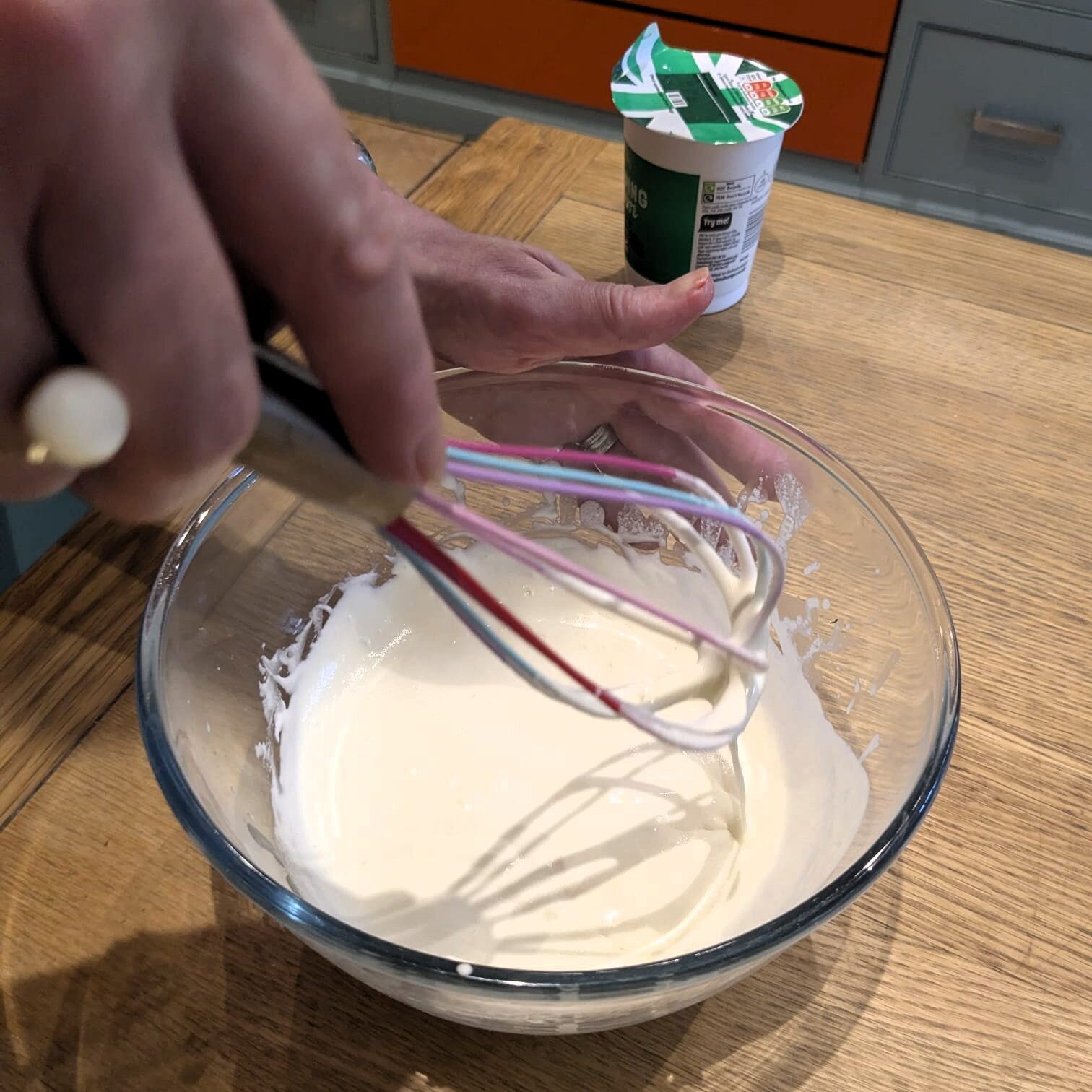
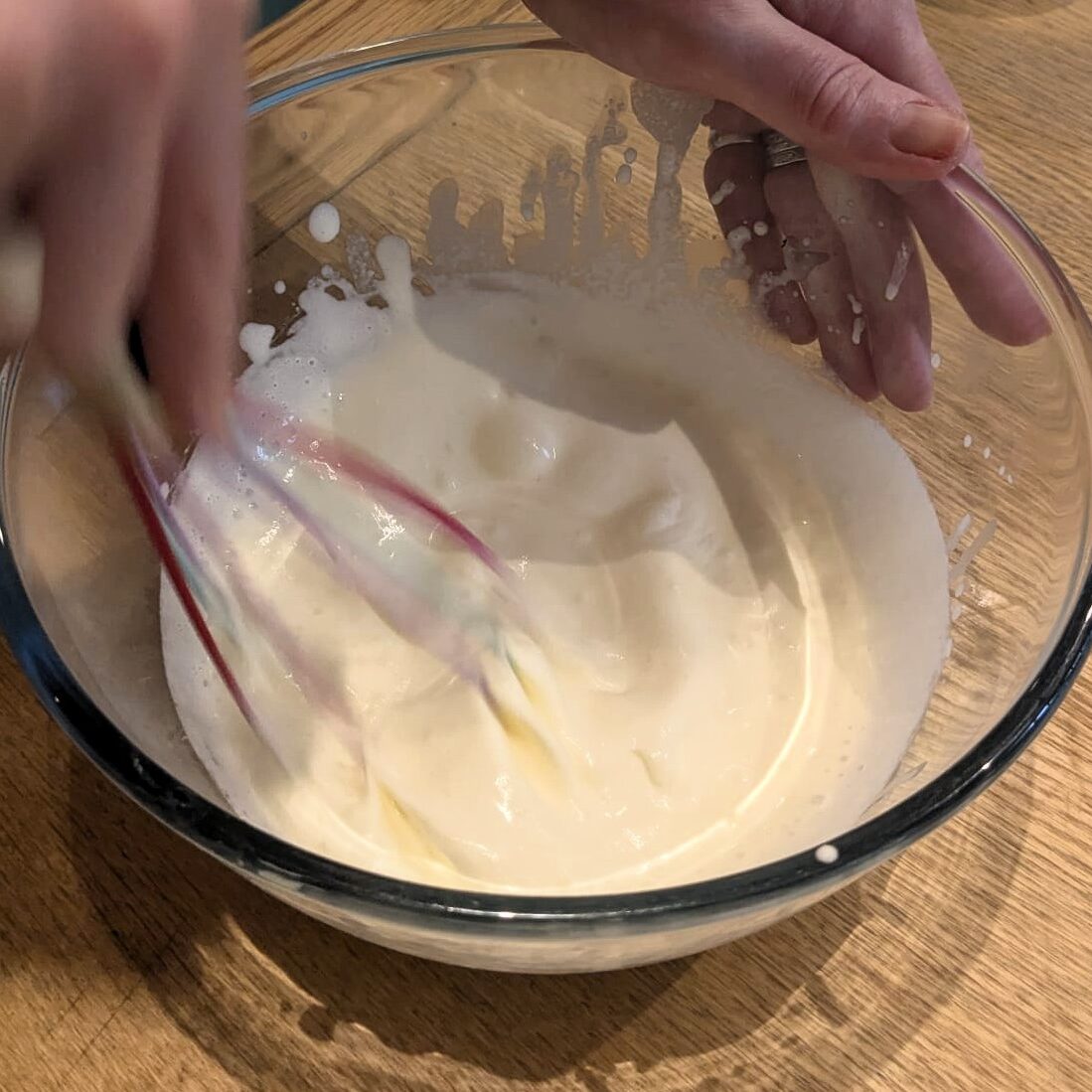
Whip the cream really rapidly with the whisk. The harder you whip, the faster it will start to thicken. You can whip in a circular motion or side to side – we do a bit of both, as it’s easier on the hands!
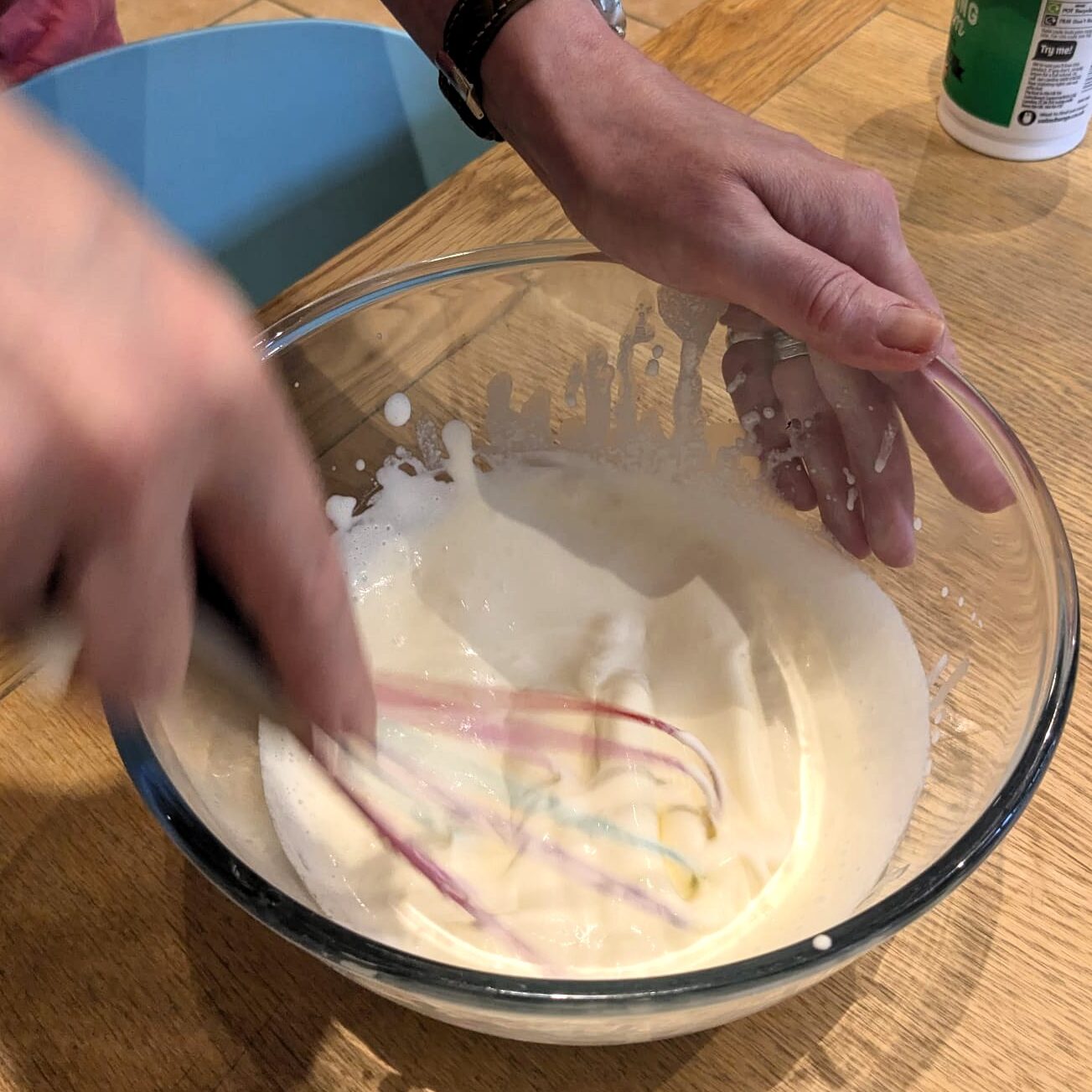
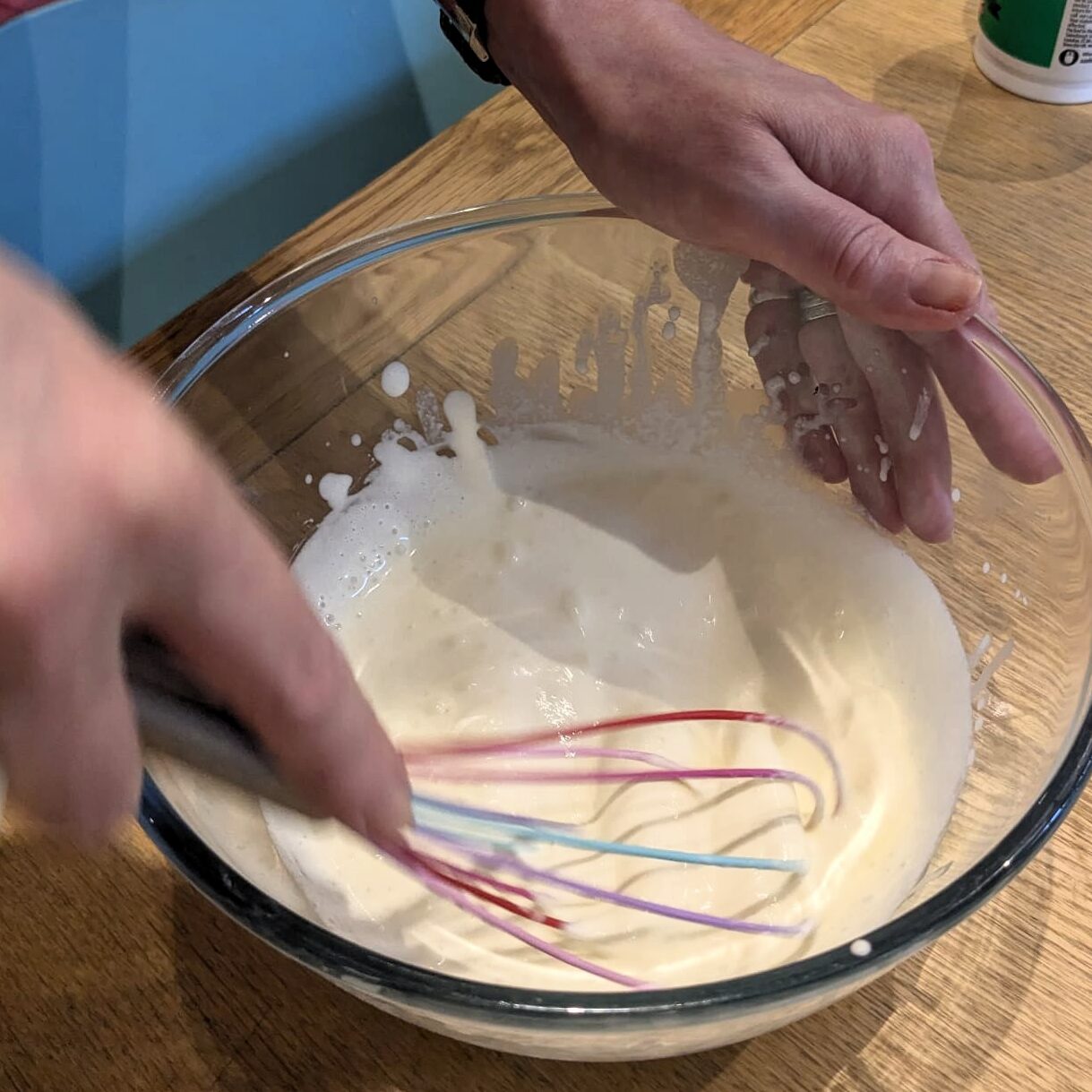
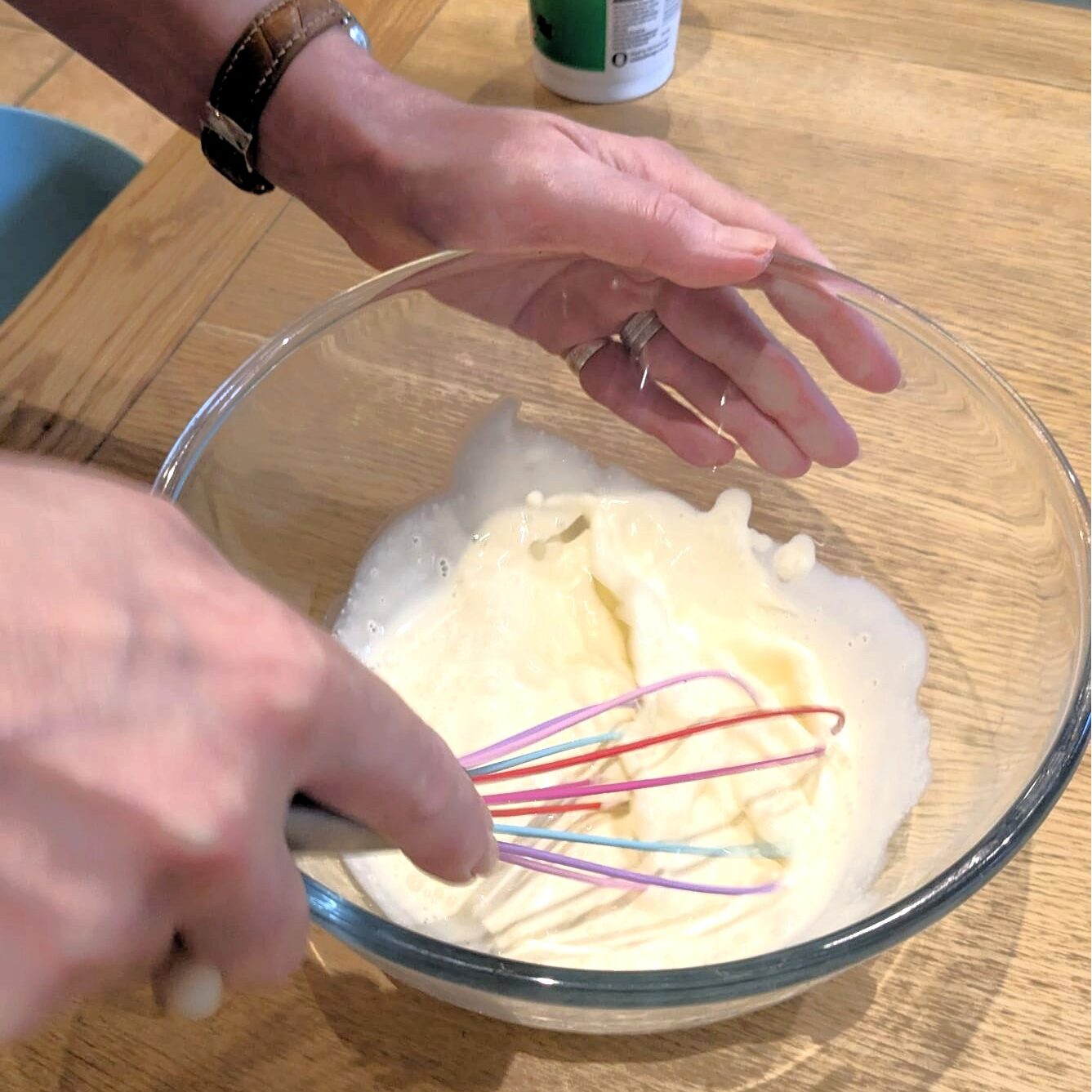
Whipped cream goes through four distinct stages. First is thickening. Next, soft peaks. Then it’s on to stiff peaks. Your recipe might call for any of these three. The fourth stage is split, which is not what you want! The cream has been over-whipped, meaning the fat has split out and the cream has gone grainy. You can usually recover it, but it is best to avoid getting there if possible.
We cover all four stages below. Once the cream starts to thicken, which it will do after about a minute of whipping, the stages will transition very fast – in seconds. So take your whipping carefully, and if in doubt, stop, check, then continue if needed. Whipping cream fully takes about 2 to 3 minutes.
Thickening
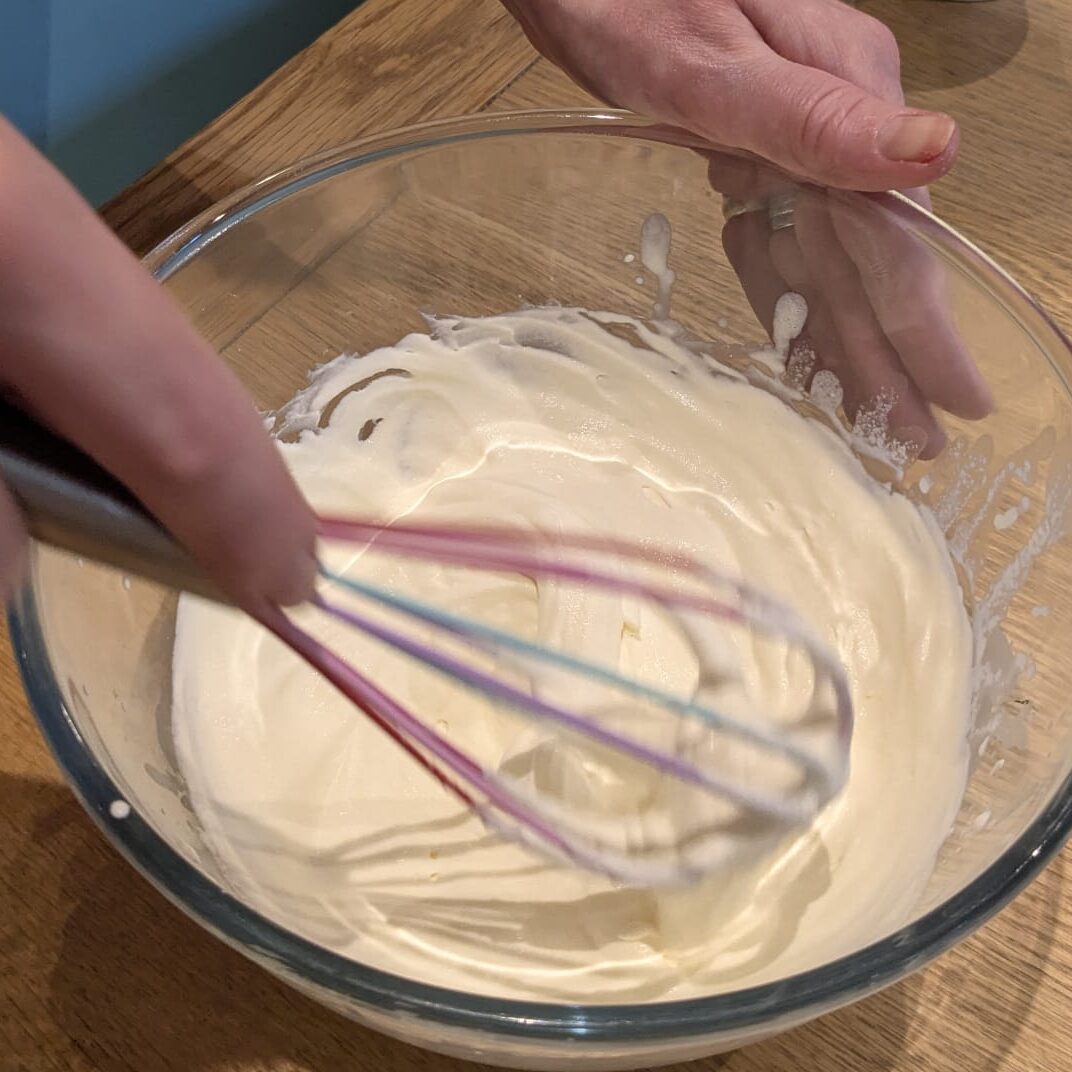
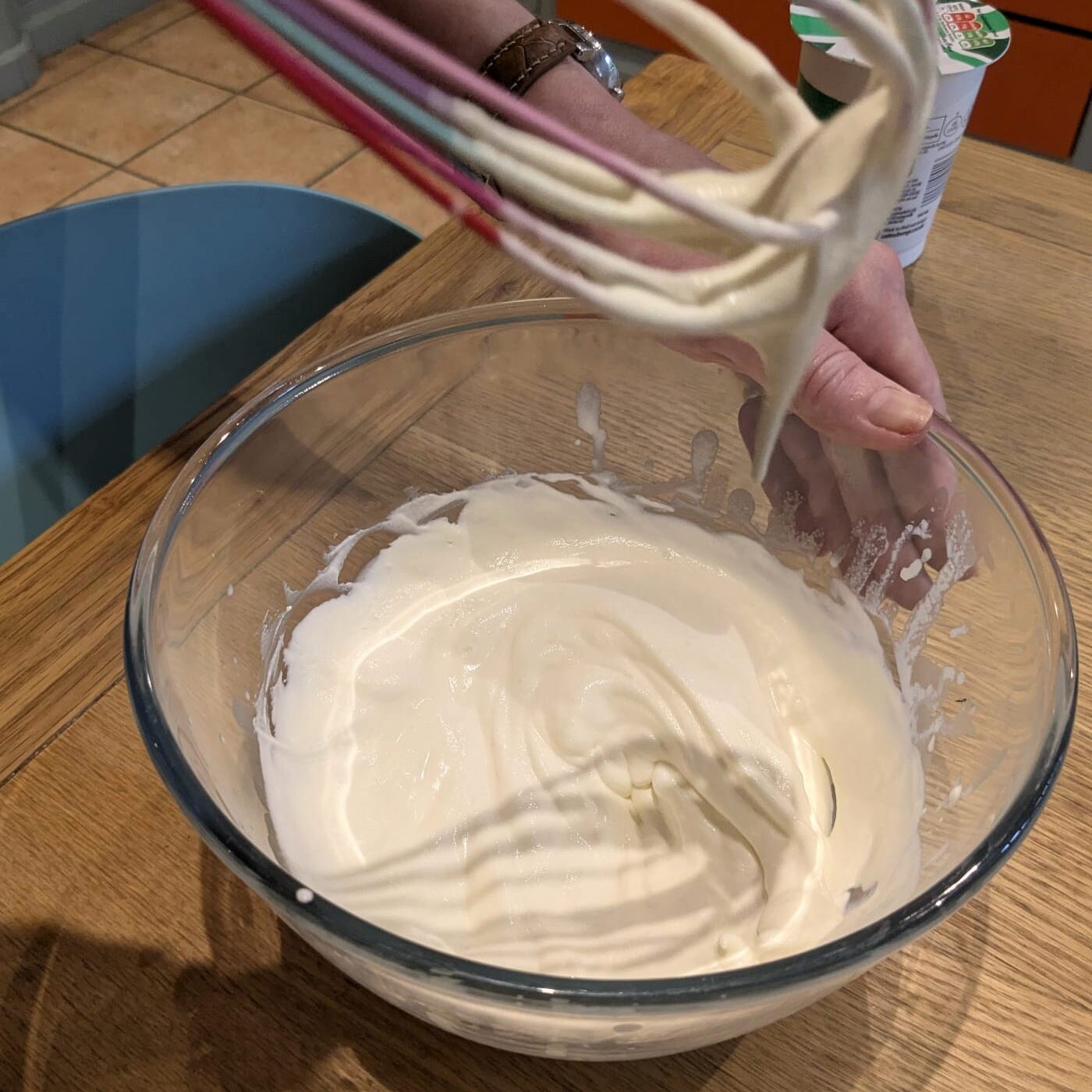
Here you can see the whipped cream starting to thicken. It leaves trails on the surface as you drag the whisk through, but it won’t go to a peak if you lift it with the whisk. This happens after about a minute or two, depending on your type of cream, quantity and temperature.
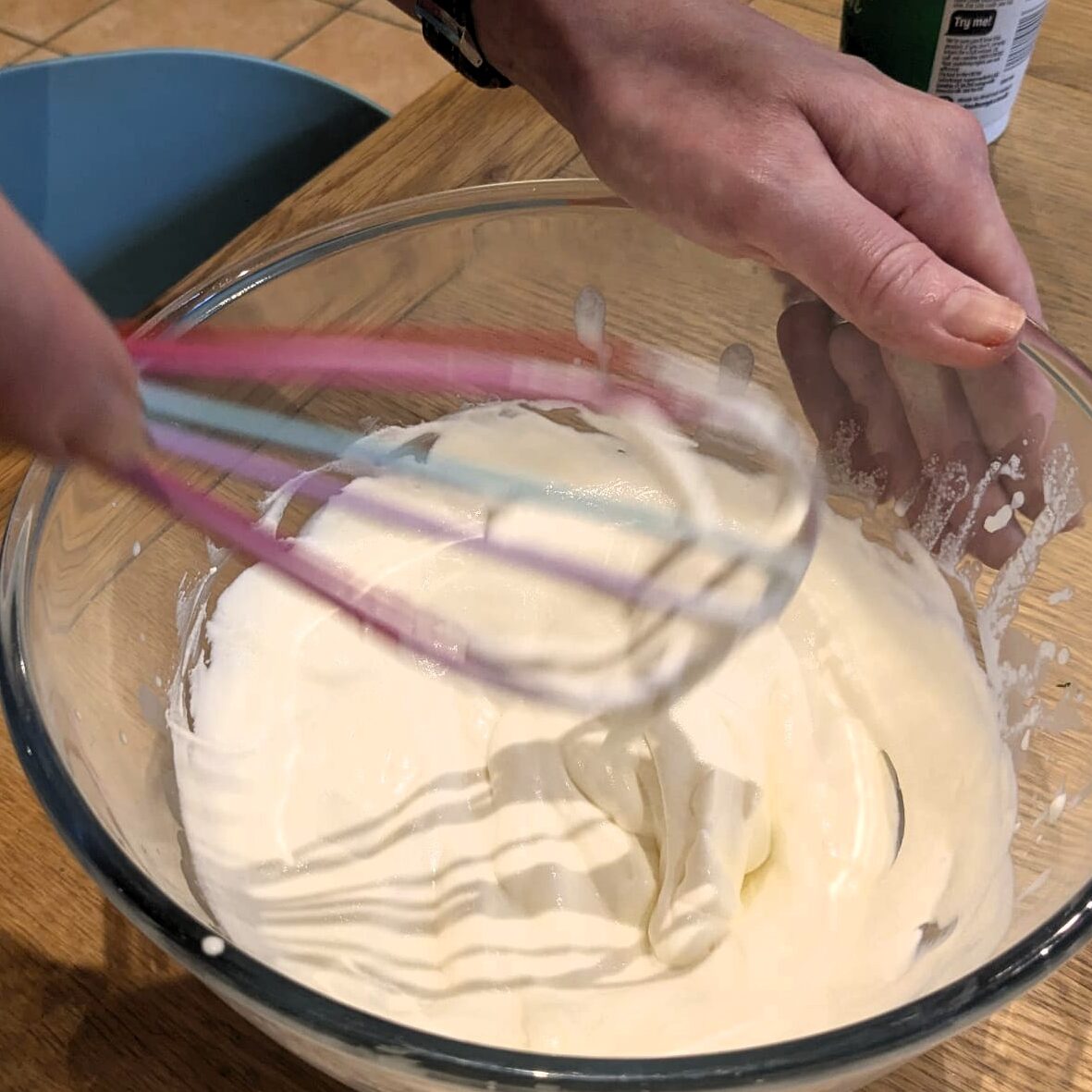
Soft peaks
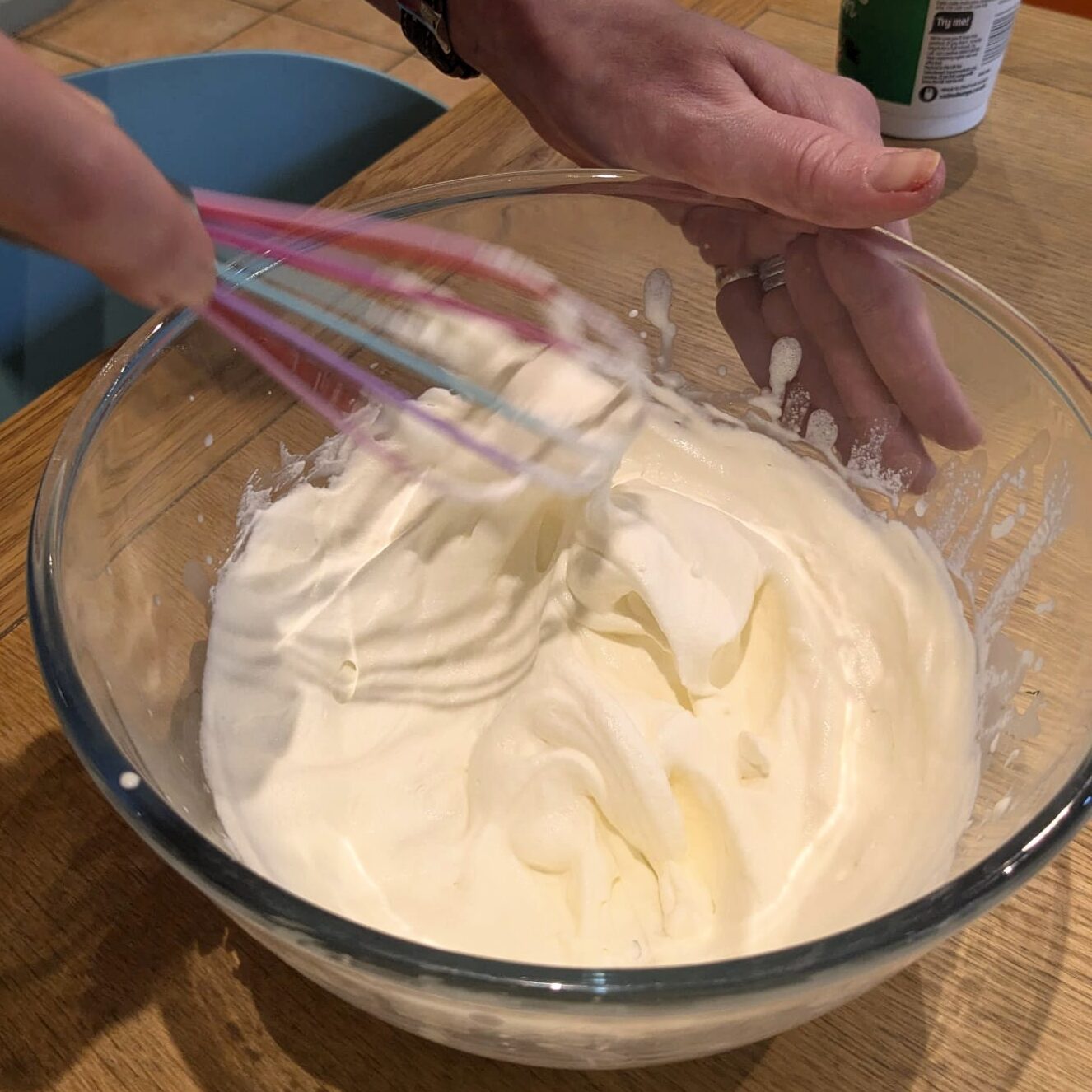
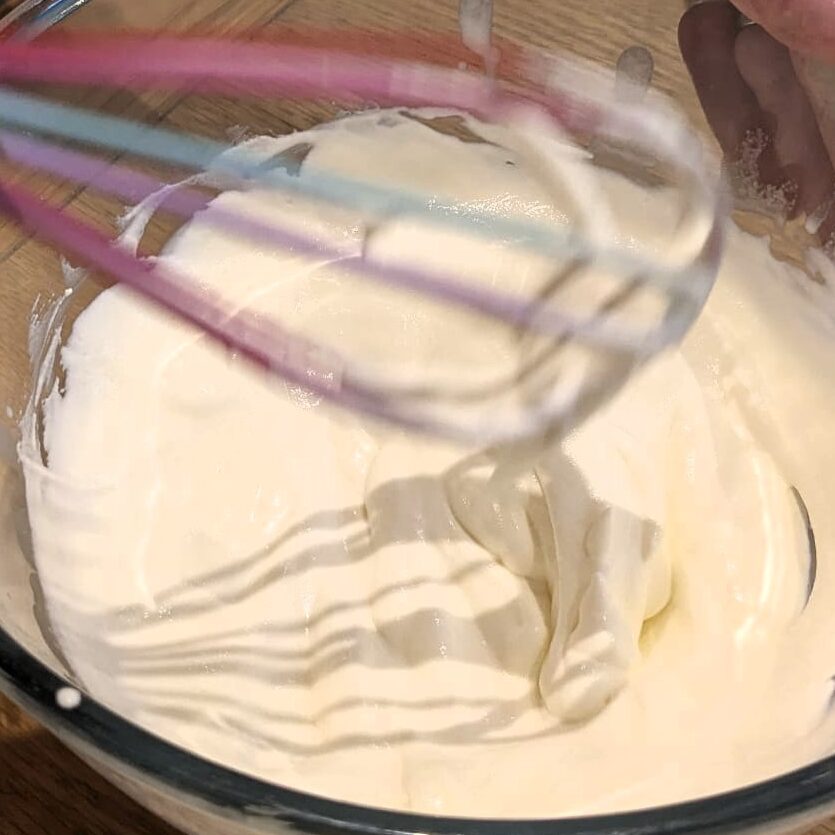
Soft peaks start to form very soon after the cream thickens. It’s a common stage to need to get whipped cream to for puddings. The cream will form peaks, but they will droop over and look a little floppy, as in the pictures below.
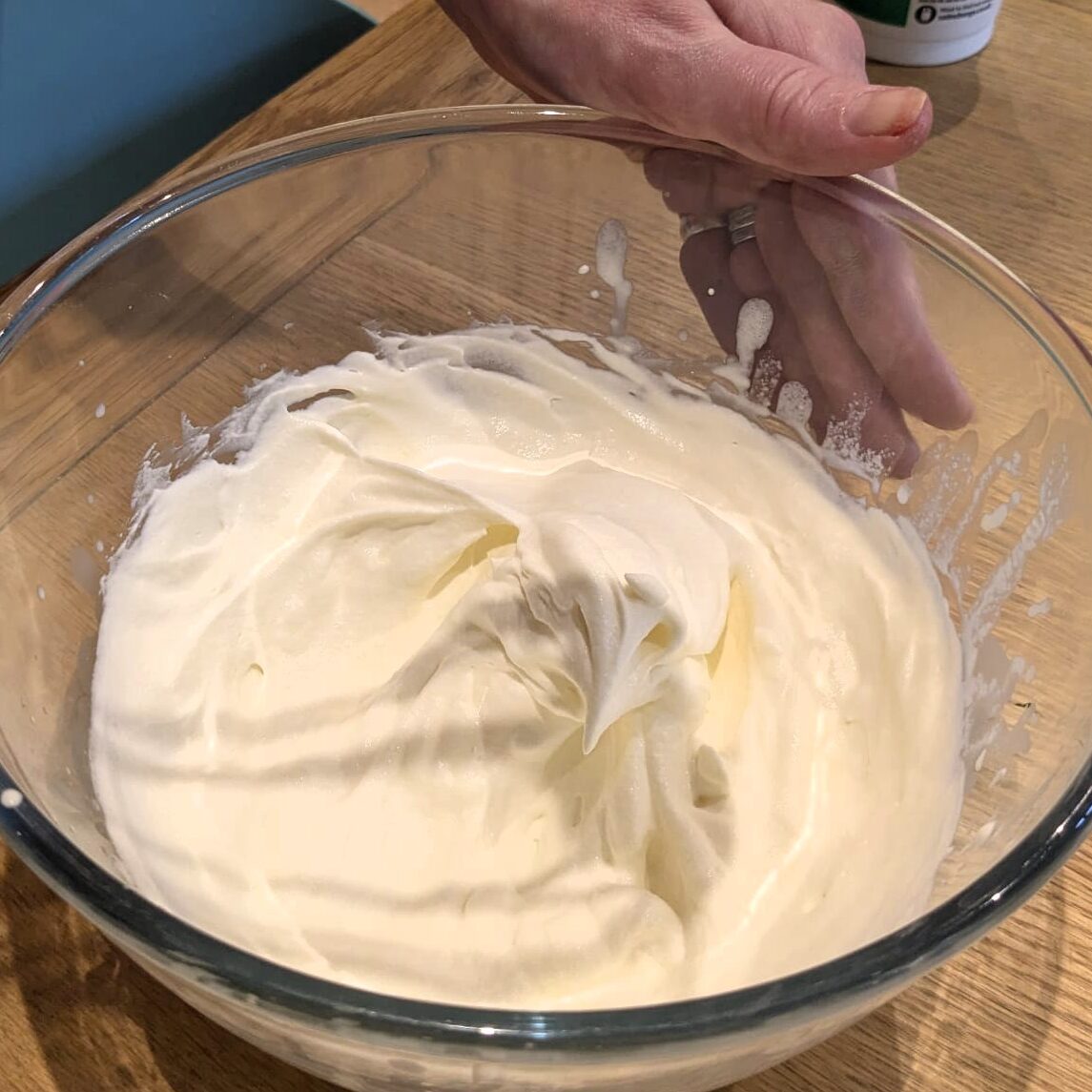
Stiff peaks
Stiff peaks is also common in recipes. They form almost immediately after soft peaks, and can very quickly turn to split, so take care. Your initial whipping may take a minute or two, but once you reach soft peaks, the transitions go very quickly, literally seconds, so be cautious. Stiff peaks will hold their shape, and the cream will look very thick and fluffy.
Split
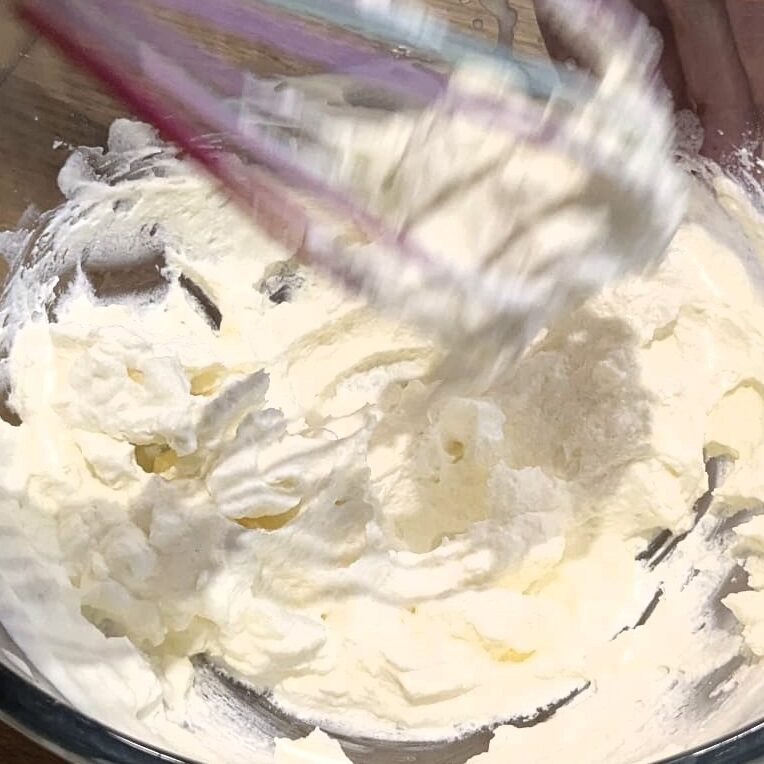
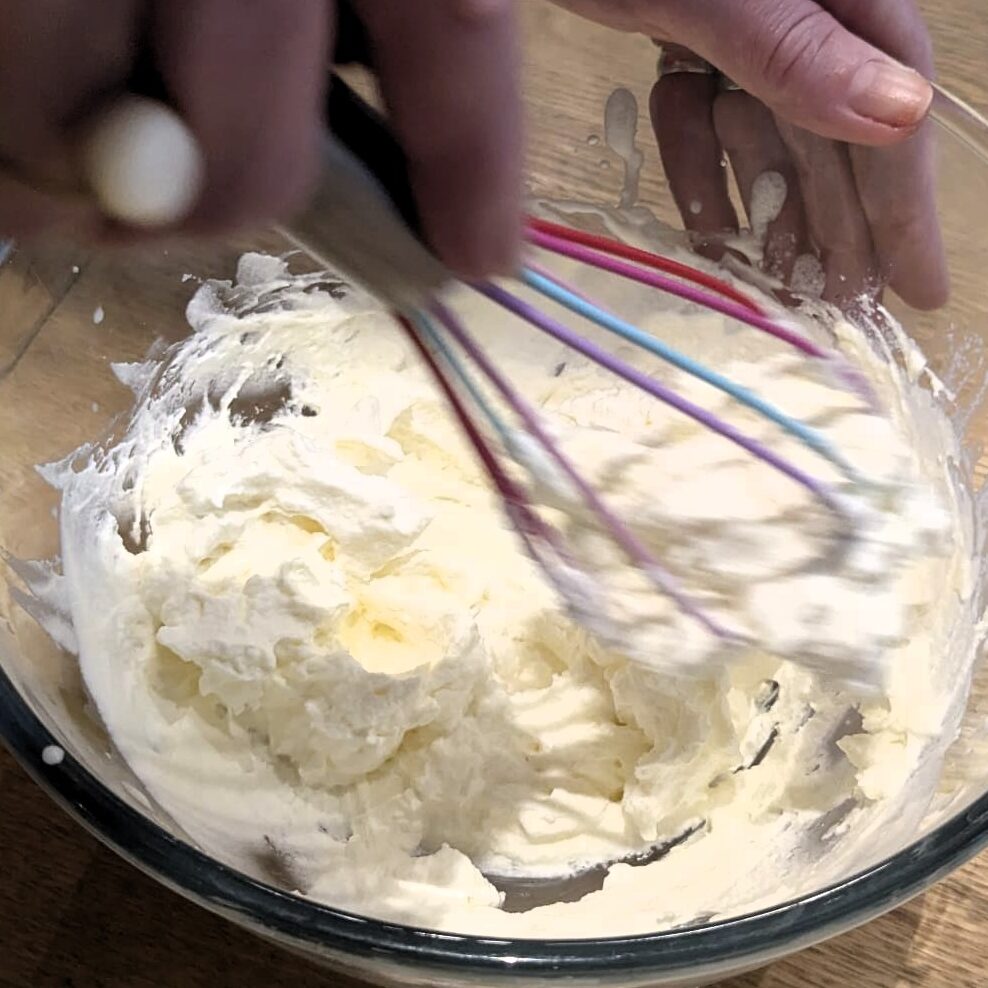
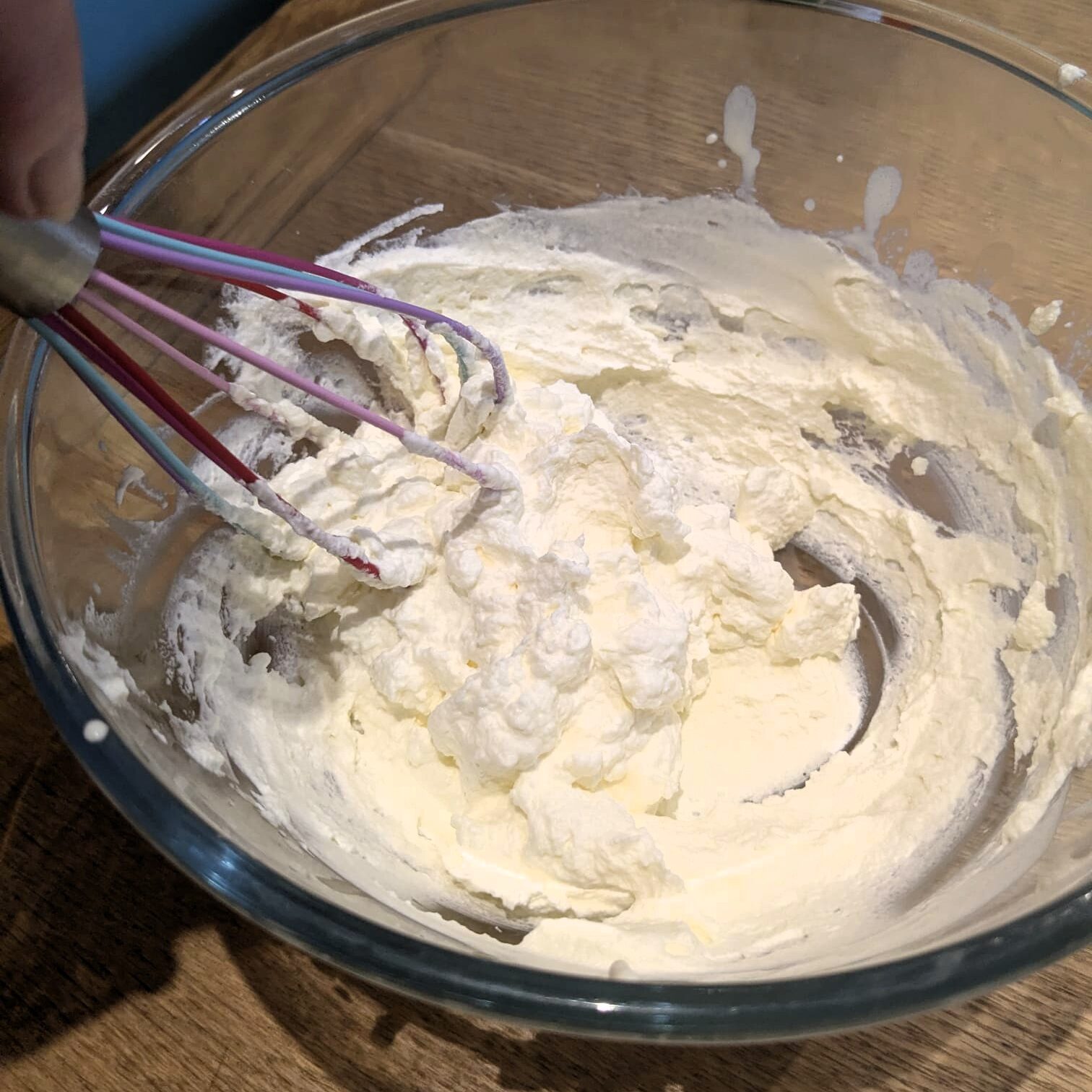
Your whipped cream can split very easily after stiff peaks, so do not over-beat. And if in doubt, stop. The cream is split when it looks broken and grainy, and sometimes slightly yellow. You can also feels grains of fat in it if you taste it. It is just starting to split in the first two photos below, though the line between stiff peaks and split is blurry, and fully split in the last one.
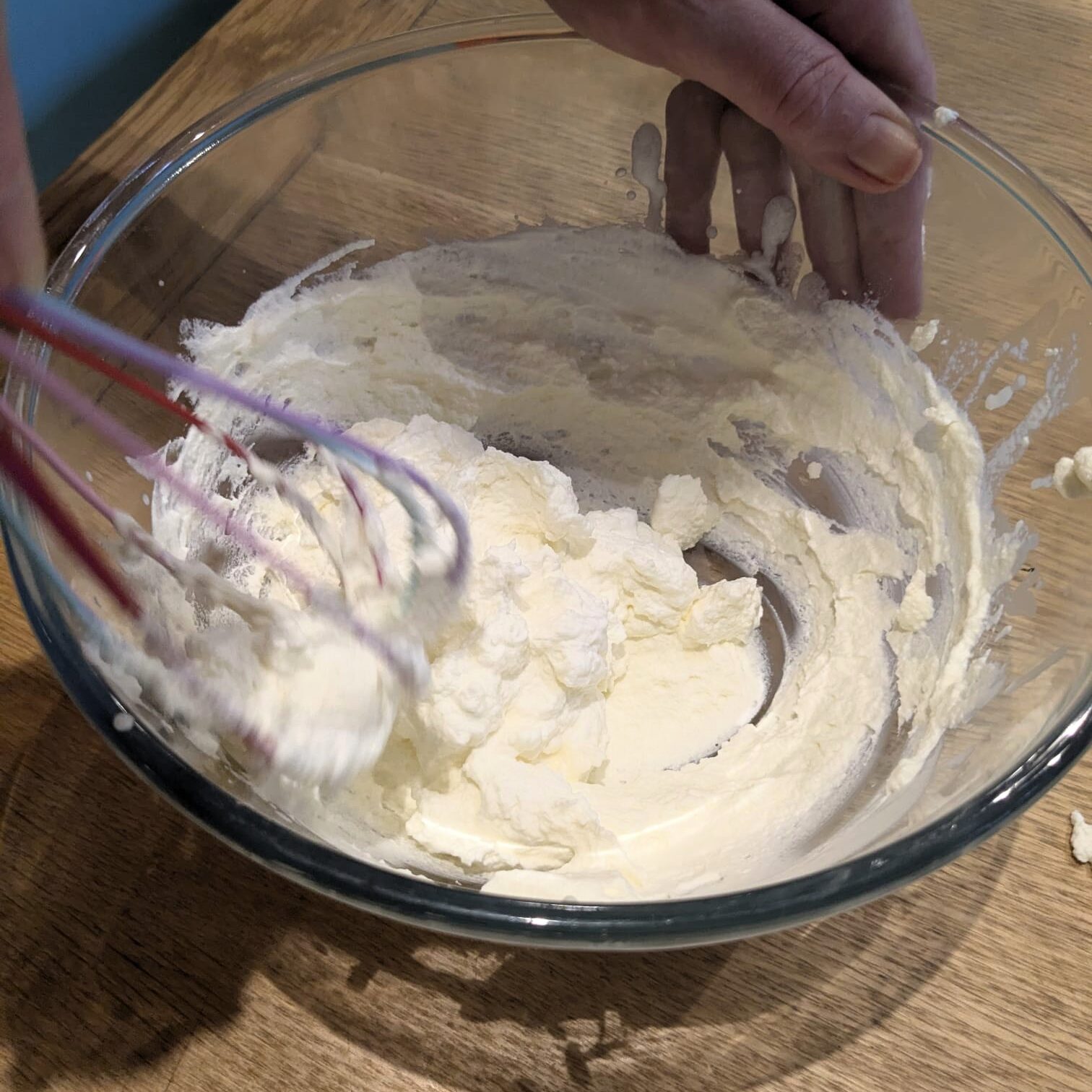
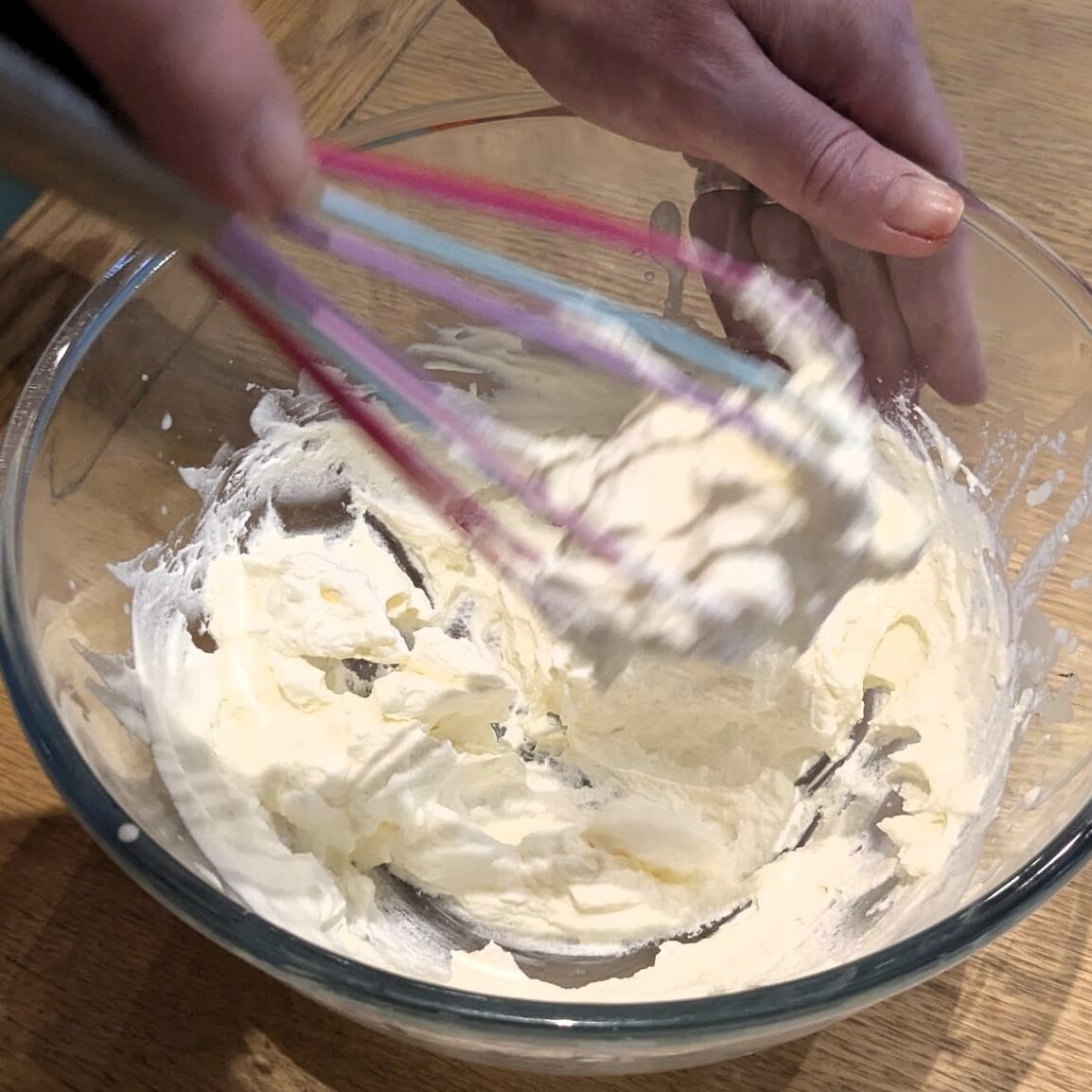
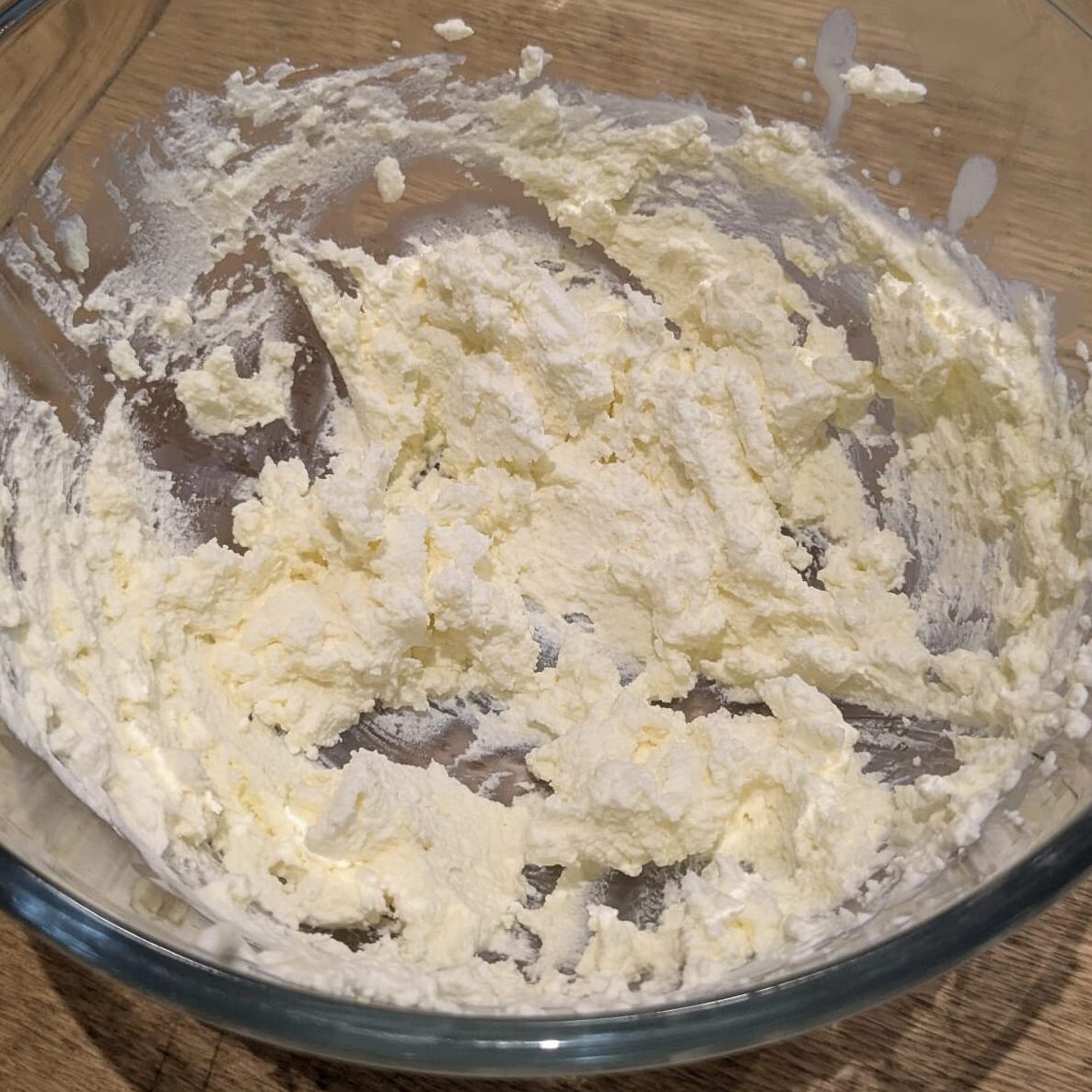
Split cream can normally be recovered by adding a few tablespoons of cold liquid cream, and folding this in gently but well with your whisk or a spatula. Start with a tablespoon or so, then fold in and add more if needed, until your cream returns to a nice fluffy texture.
You can now whip cream like a pro!