


Skills you will learn in this recipe
Marinating meat; roasting & grinding spices; finishing a sauce with butter
Links to the last recipe
Using Indian flavours; making an Indian classic dish
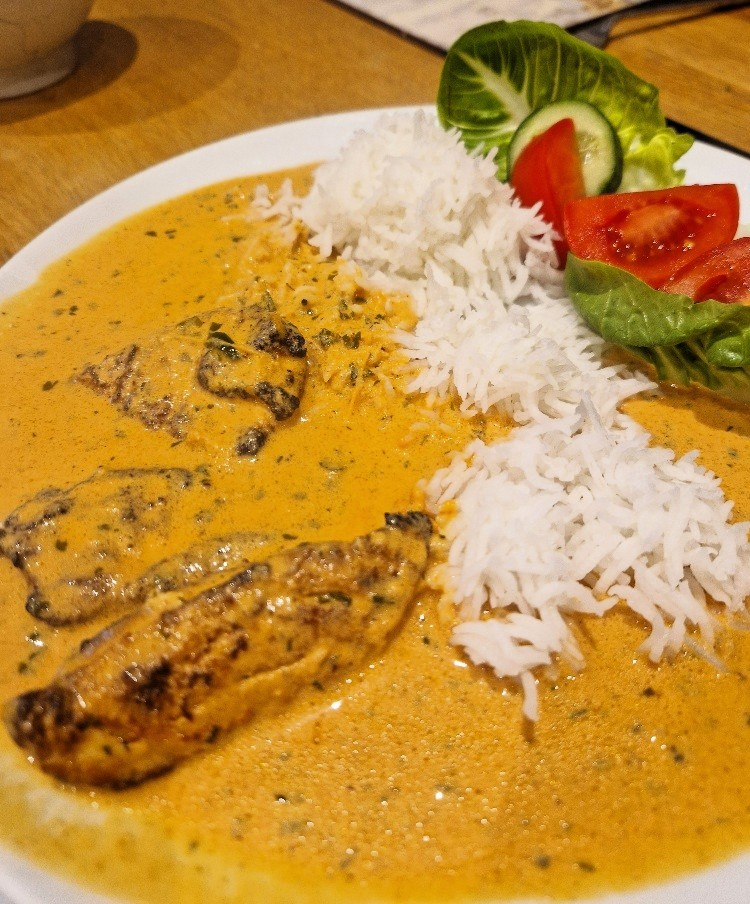
We call this ‘chicken tikka masala’ at home as shorthand, but it’s actually better than that – chicken tikka makhani, or butter chicken. Though, unlike tikka masala, it is an authentically Indian dish, both are relatively new inventions – tikka makhani originating in Delhi in the 1950s, and tikka masala in Glasgow in the 1970s.
The latter is now ubiquitous in the UK, and consistently one the nation’s favourite foods – a top seller in both restaurants and supermarkets. And it’s a nice dish. But butter chicken is its more sophisticated, richer, older cousin. The silky sauce is decadent, creamy and mildly spiced, finished with a generous amount of butter, from which the dish gets its name.
Both dishes are made with chicken tikka – or tandoori chicken – marinated and cooked very hot, traditionally in a tandoor (clay oven). Without one of these, it’s hard to replicate the smokiness of the tikka – but this recipe comes very close! It requires planning ahead (the secret to a good tikka is a long marinade) and a bit of preparation, but after that it’s very easy to make. And once you’ve tried this homemade butter chicken, it will be very hard to go back to a ready-meal chicken masala!
The main difference between the two dishes is that tikka masala is spicier, with more tomato and some onion, and a tomato-yoghurt base. Butter chicken has less tomato and spice, and is finished with both cream and butter. We prefer butter chicken – but why not give both a go, and make up your own mind? To make this recipe into masala, use the same chicken tikka, but make a tomato-based sauce with more chilli, some onions, and omit the cream and butter, finishing with yoghurt instead.
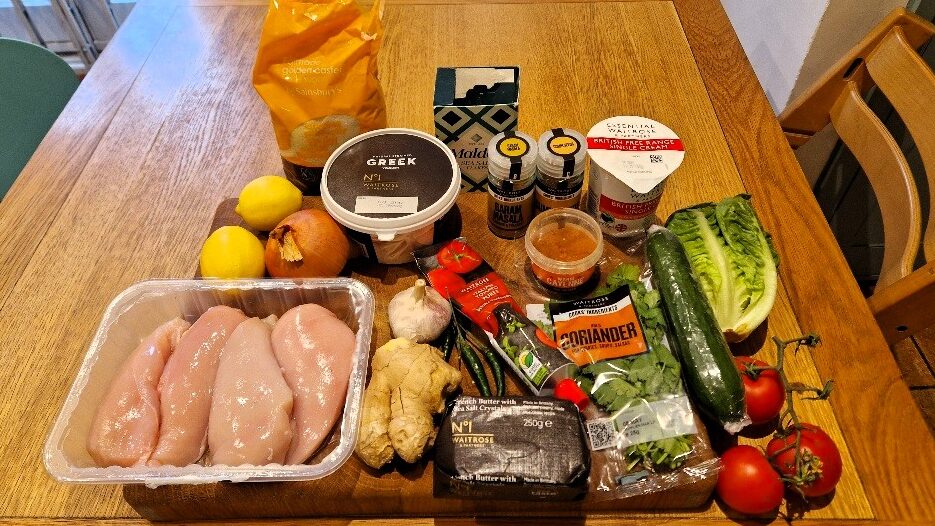
When making chicken tikka, plan ahead. The chicken needs to marinate for as long as possible – ideally 24 hours, but at least 6 hours. But the good news is – once the marinating time is up, finishing the butter chicken is very quick. This makes it a good dish to cook when having friends over. Not only will it be a real crowd pleaser (and earn you lots of praise) but you can prep both the chicken and sauce ahead, leaving you more time to have fun with your guests.
This recipe may look long, but it is in fact very simple to make – it is mainly chopping, blending and stirring. It does require a little time, but it is very well worth it! And the result is so delicious, you’ll be surprised how little skill it actually takes to make. It will look like you did a lot more expert chef work than you did… and we like that!
Chicken tikka marinade
First prepare the chicken. We use skinless breasts, but any cut will do, though it needs to be marinated without the skin. Or you can do a combination, of, say, legs and breasts, so you have something to suit all tastes.
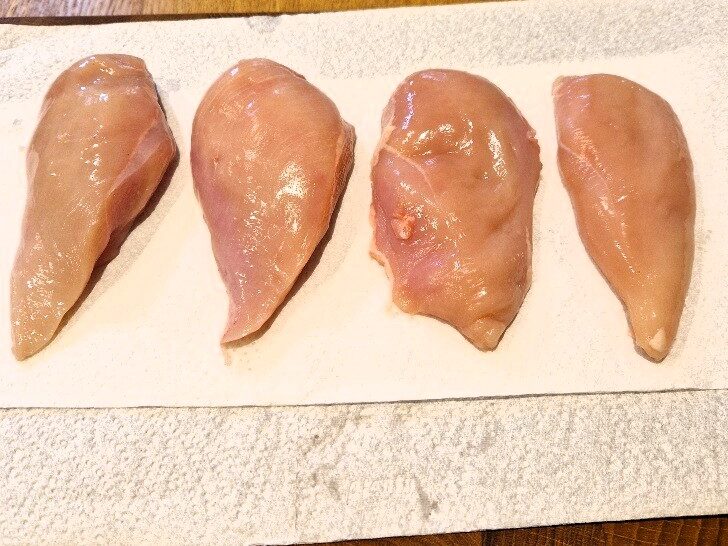
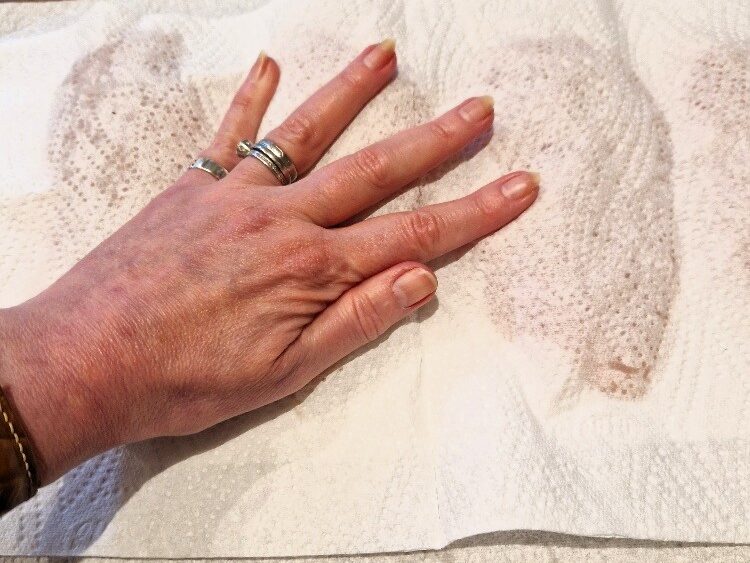
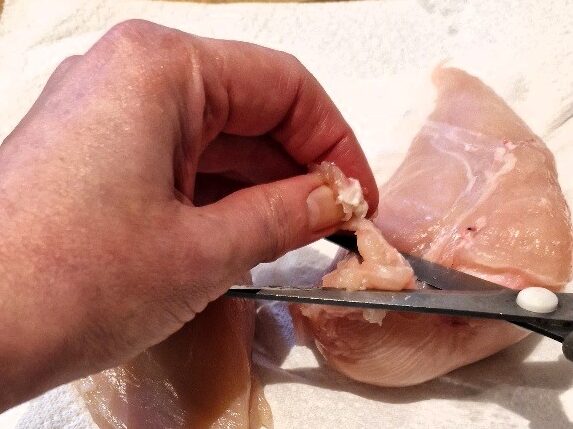
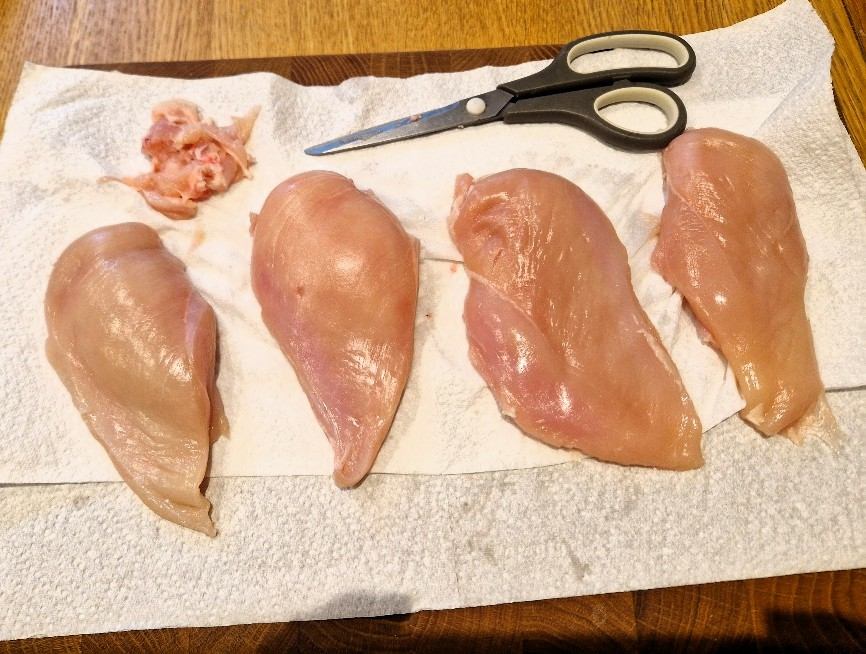
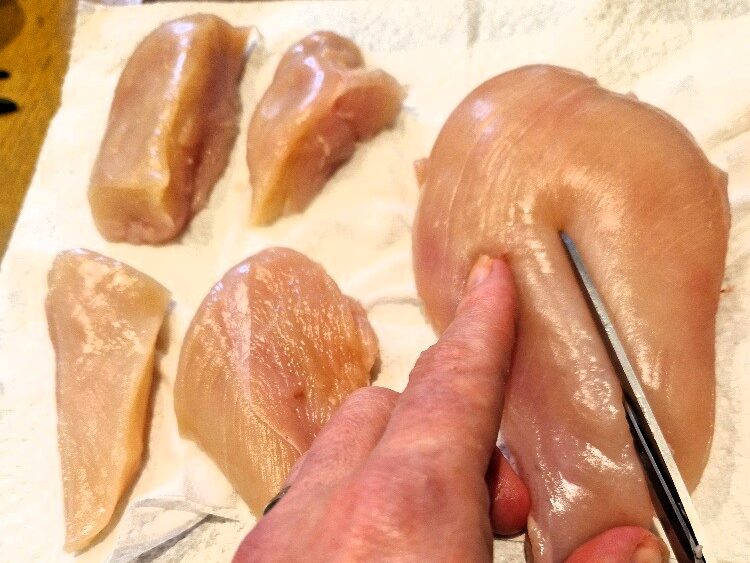
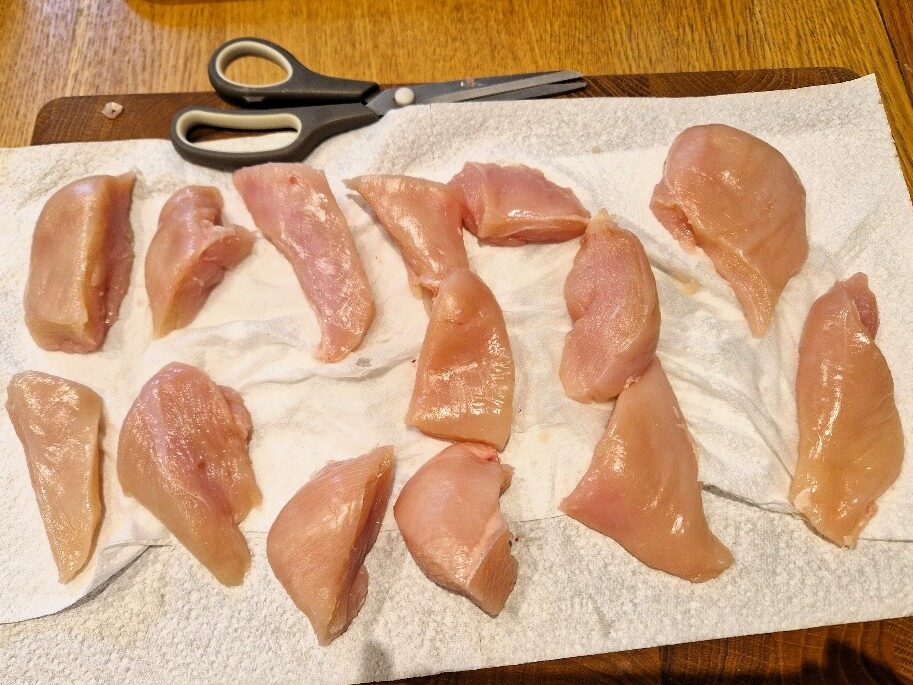
First dry the chicken on some kitchen towel. NEVER wash chicken – it is both unnecessary and liable to spread harmful bacteria. Trim down the chicken pieces (and remove any skin if needed), removing any sinew or traces of skin. Cut into large pieces – today we cut our breasts into three or four pieces each, depending on size. This is easiest with scissors.

Jake sticks his nose in
Hygiene is very important when handling raw chicken. Thoroughly clean every item that has come into contact with it (do not reuse your knife or board without washing them). Also wash your hands frequently, ideally with antibacterial soap.
Next squeeze a lemon. See our lemon Tip.
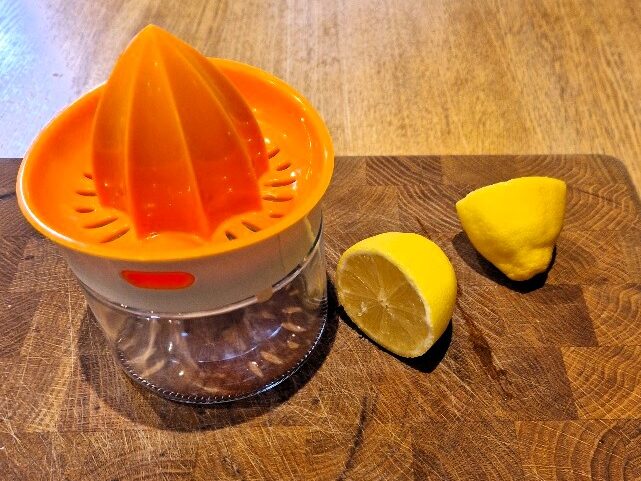
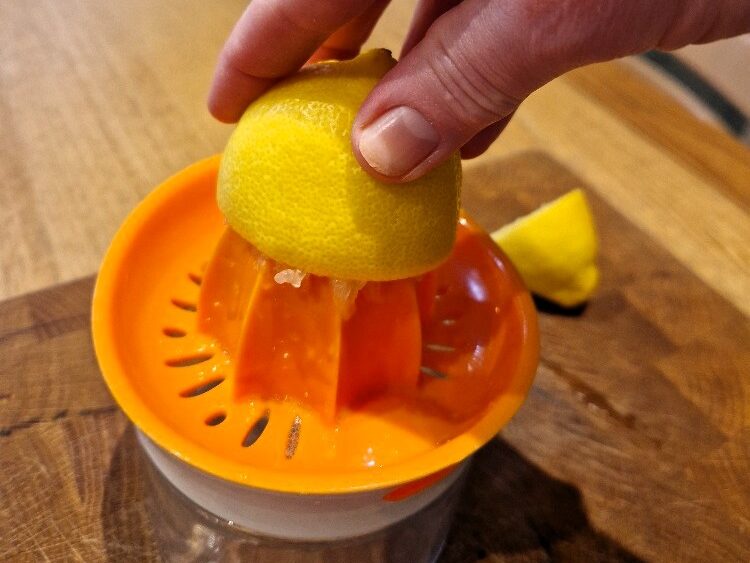
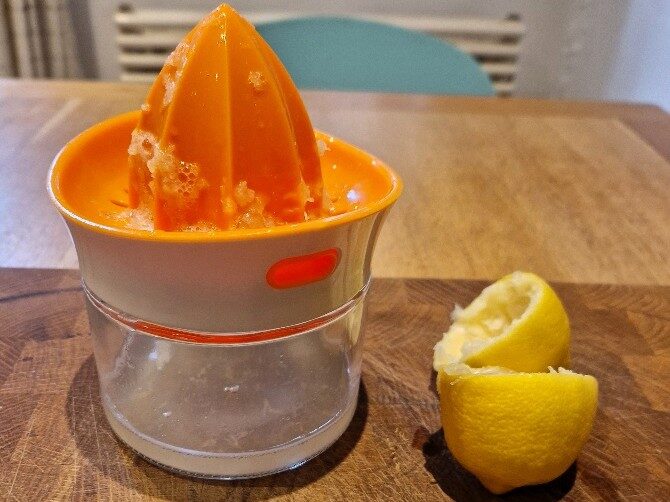
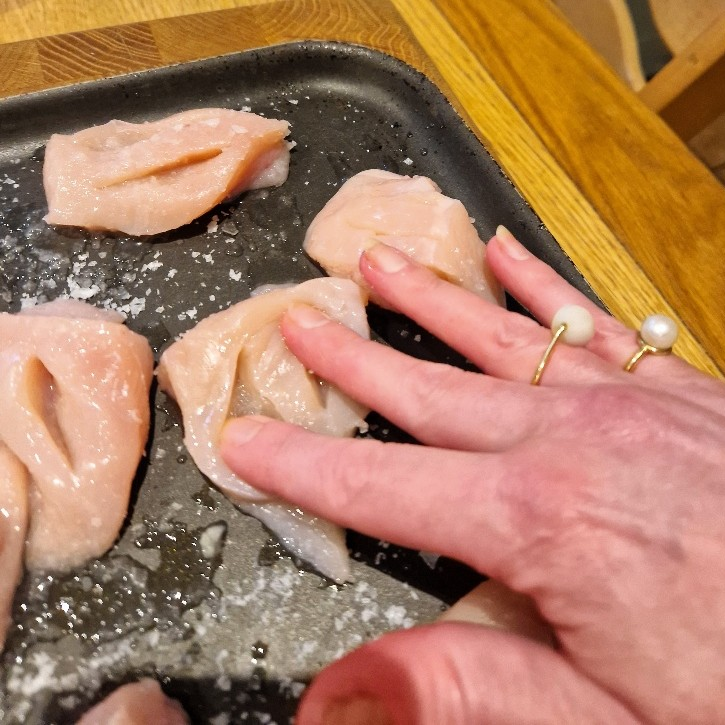
Place the chicken pieces onto a baking try or large plate. Cut two long slots into each piece. The slots should cut through only part way, not to the other side, and should only cover the centre, not run to the edge – see the pictures below. Sprinkle liberally with salt.
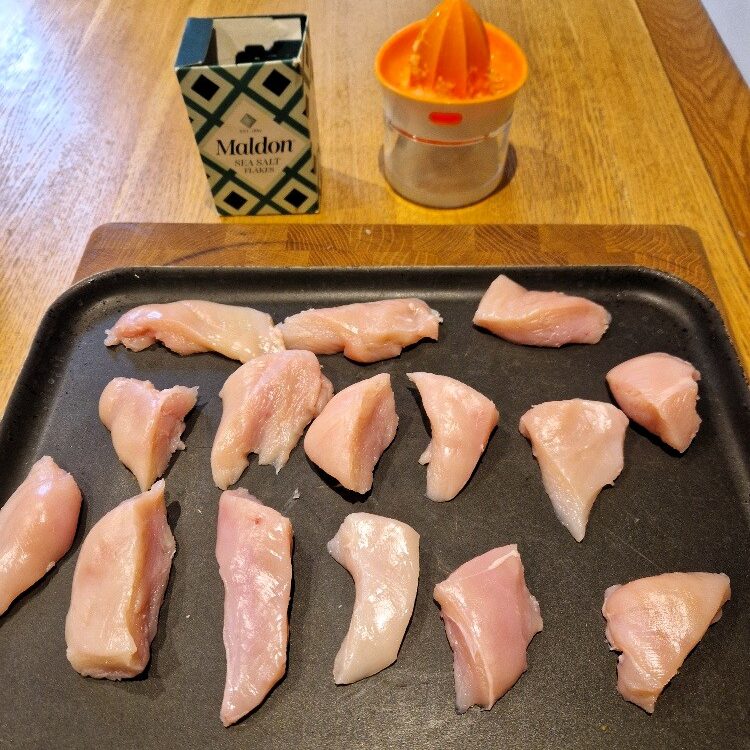
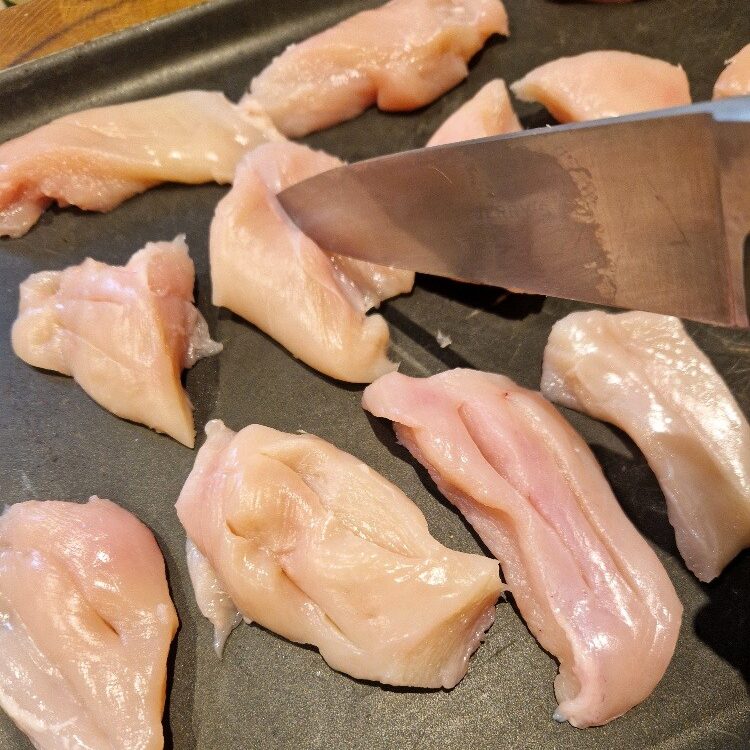
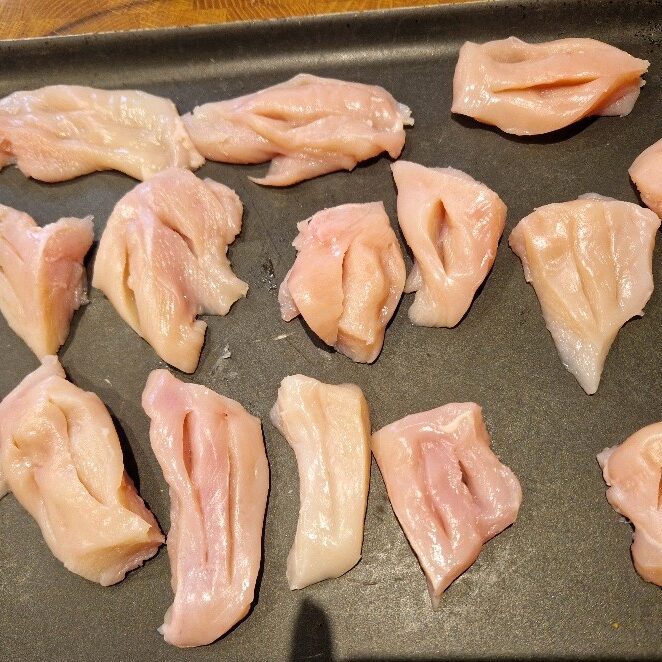
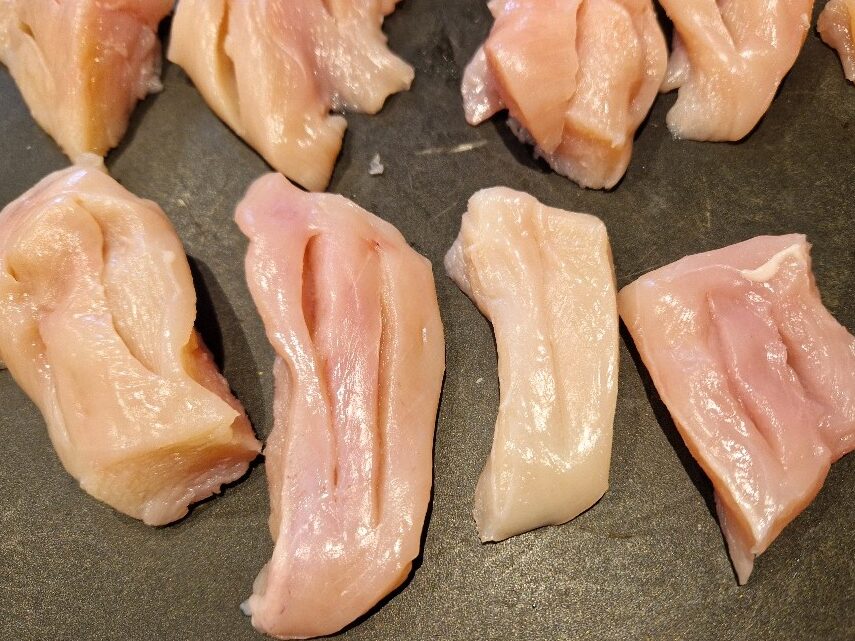
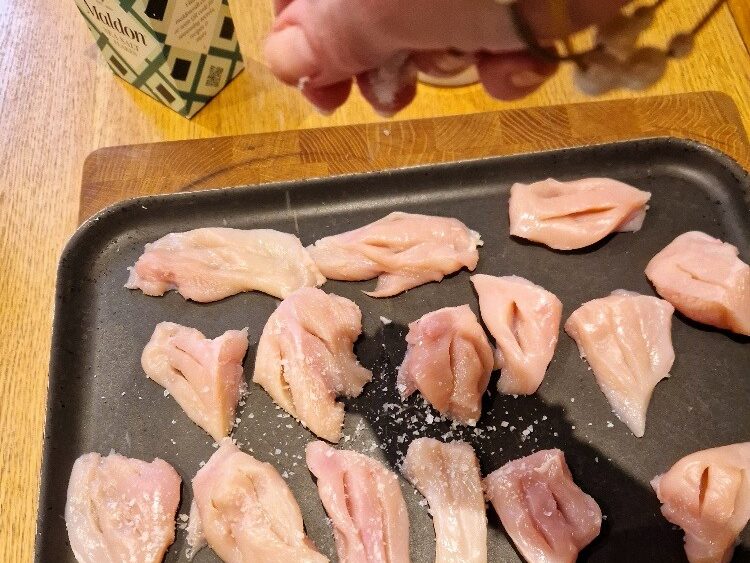
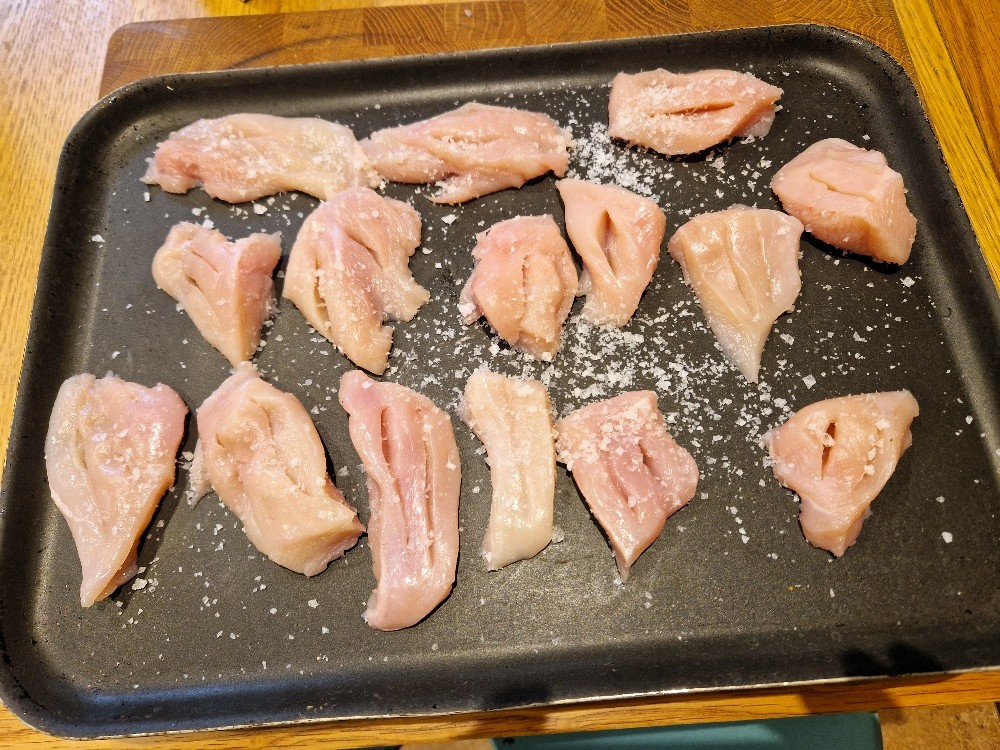
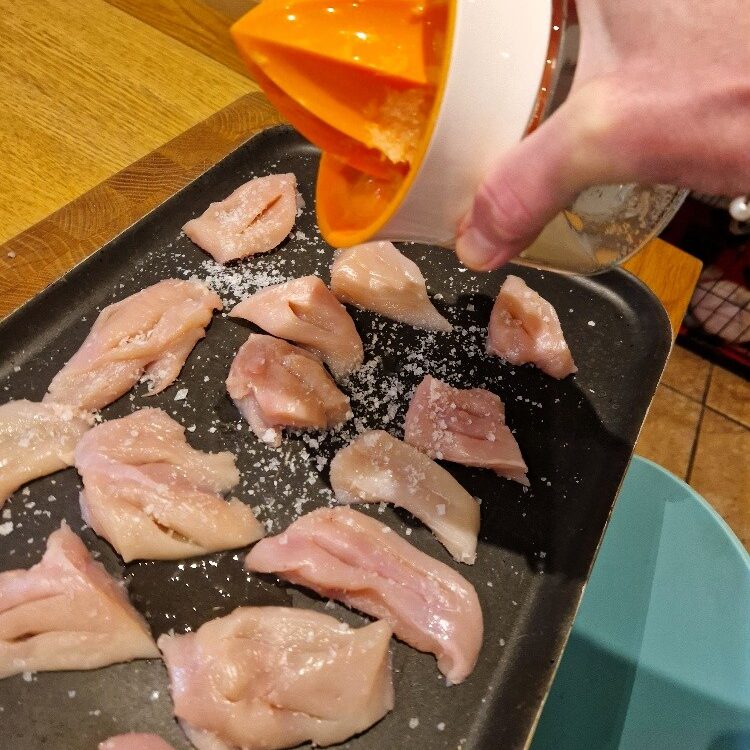
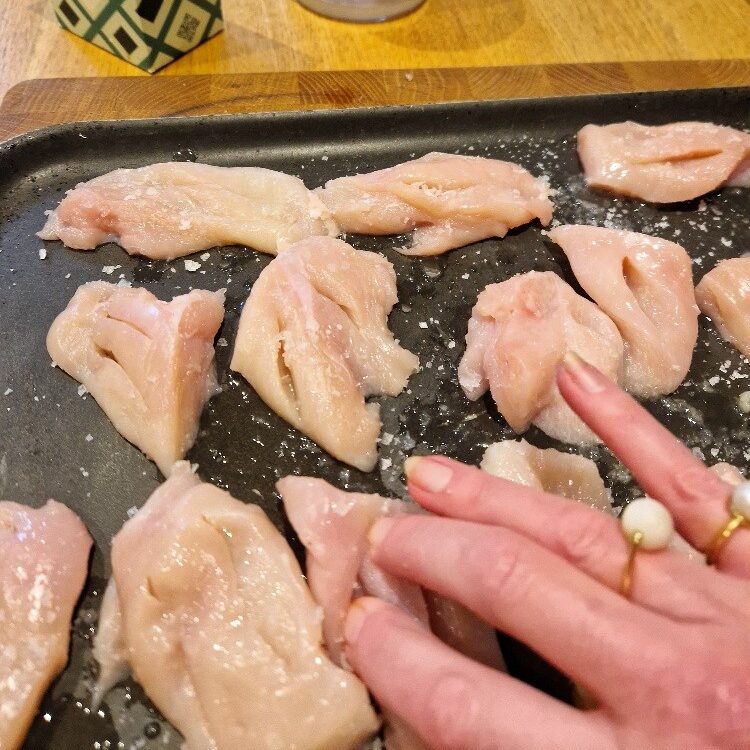
Sprinkle the lemon juice over the chicken. You now need to rub the lemon & salt into the chicken, making sure as much as possible goes into the slots. Set aside while you prepare the marinade, for about 15 to 20 minutes.
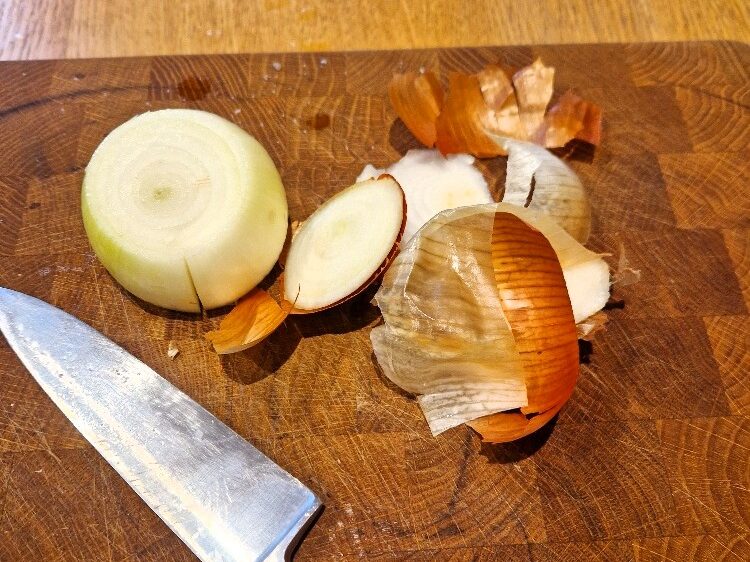
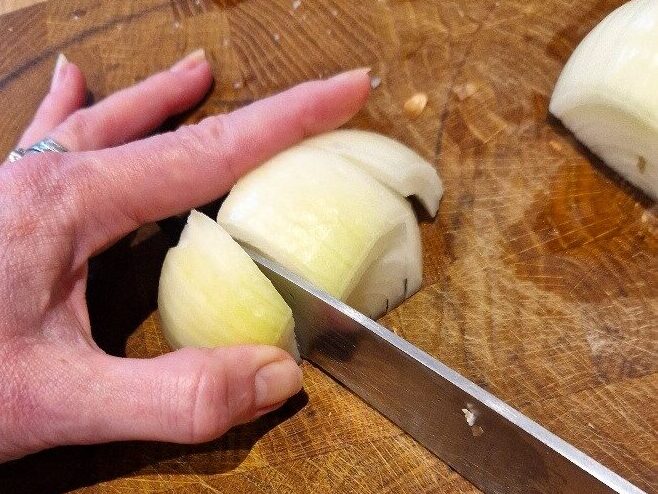
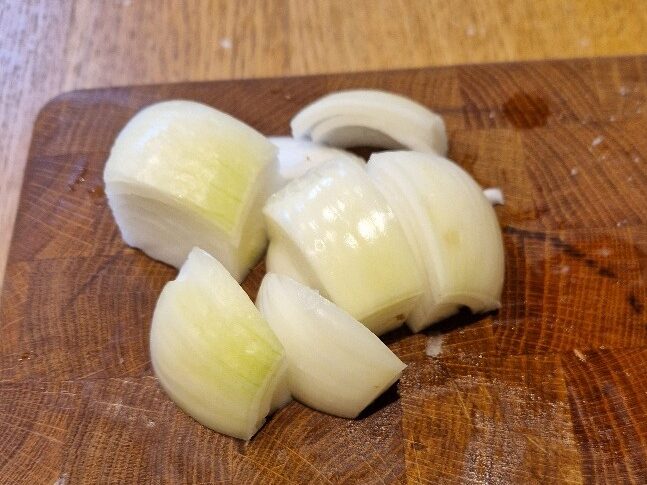
For the marinade, top and tail then peel and halve an onion. See our onion Tip. Chop each half into rough pieces.
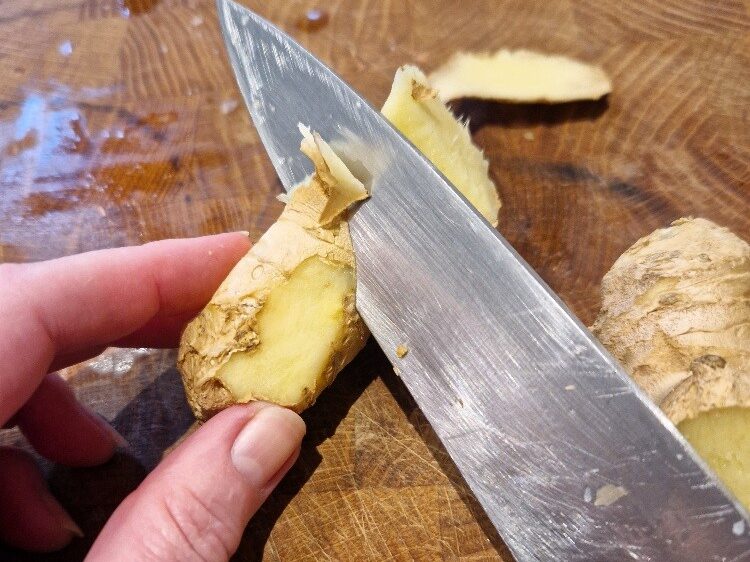
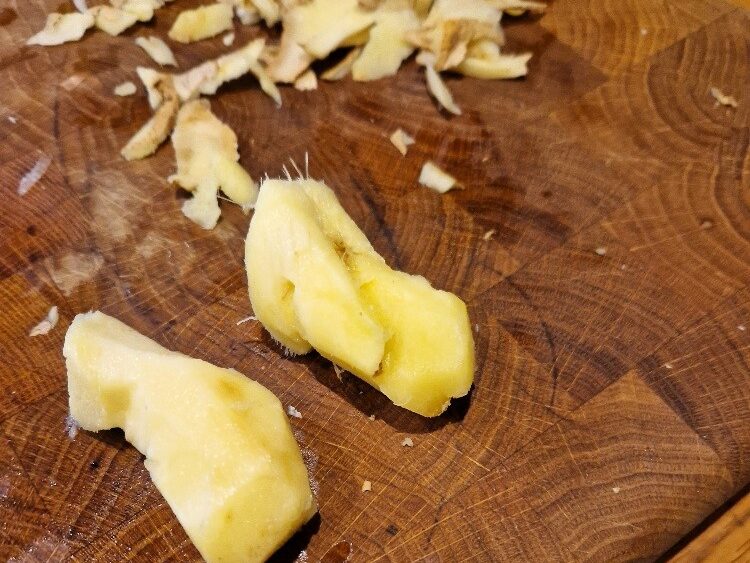
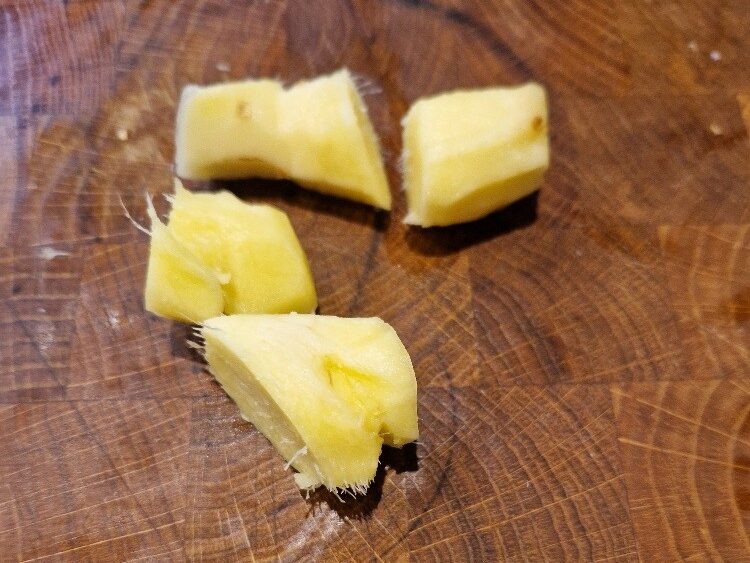
Peel the ginger – see our Tip. Chop into rough pieces.
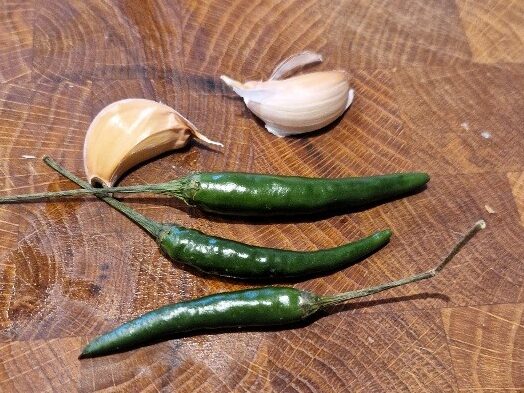
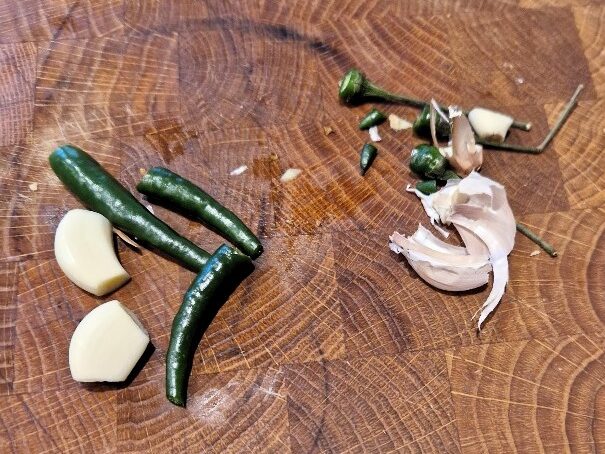
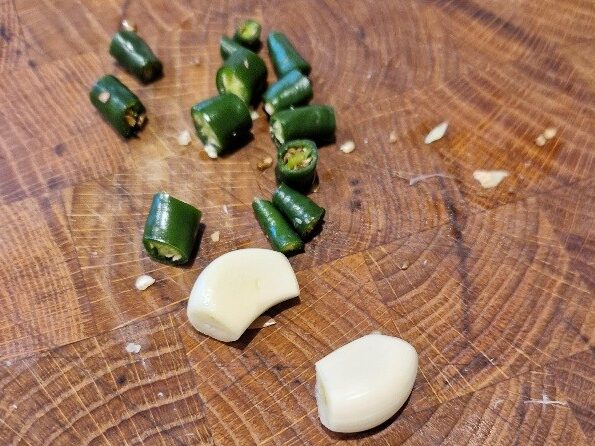
Now peel the garlic, and top and tail the chillies. How much of each you use depends on how strongly you want your chicken to be flavoured. We like a little heat, but don’t want the garlic or chilli to take over, so for four chicken breasts we use 2 cloves of garlic and 3 small hot green chillies. Chop the chillies into rough pieces.
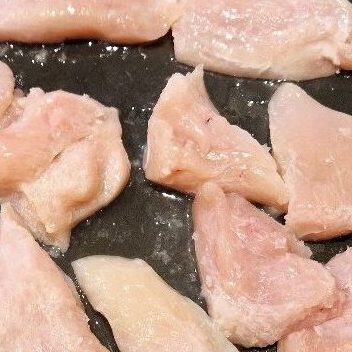
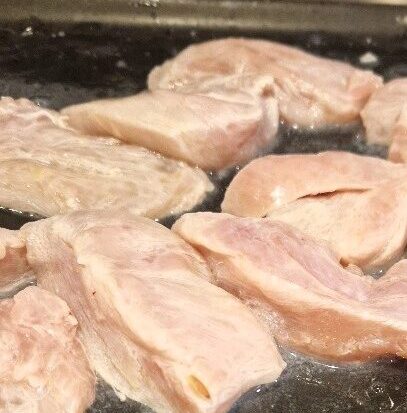
You are now ready to make the marinade. Notice how the chicken has changed while sitting in the lemon and salt – it has cured it slightly, making it lovely and tender, ready to receive the marinade. The raw chicken is on the left, the cured on the right.
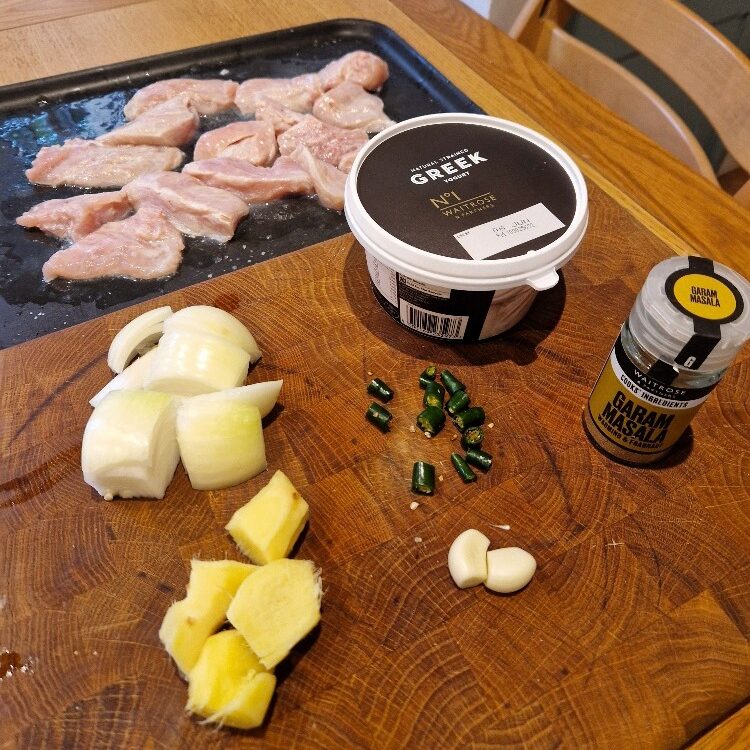
The marinade is easiest made in a blender or food processor. You could use a hand blender in a large bowl, but you’d need to chop everything much finer before blending.
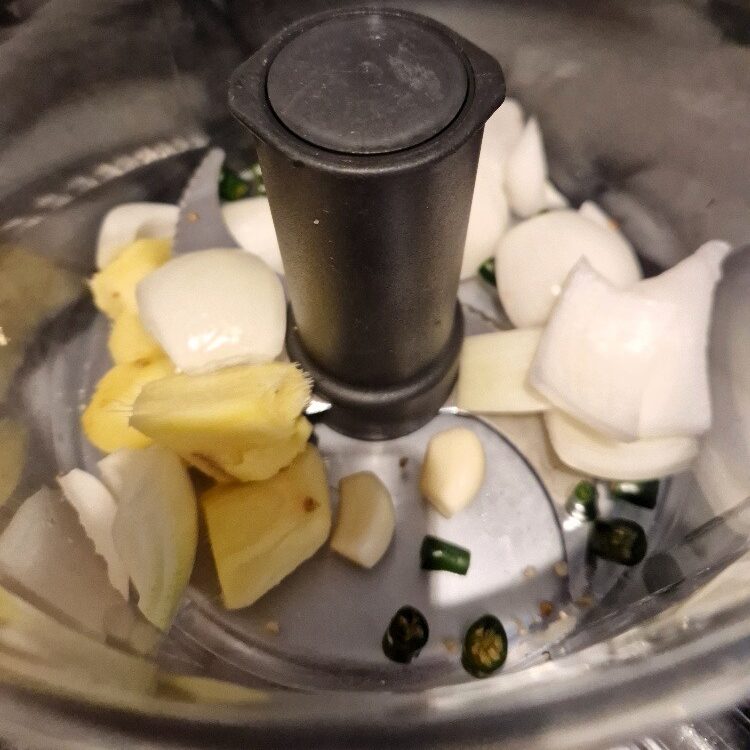
Place the onion, garlic, ginger and chillies into the bowl of the food processor, and pulse a few times to chop them a little.
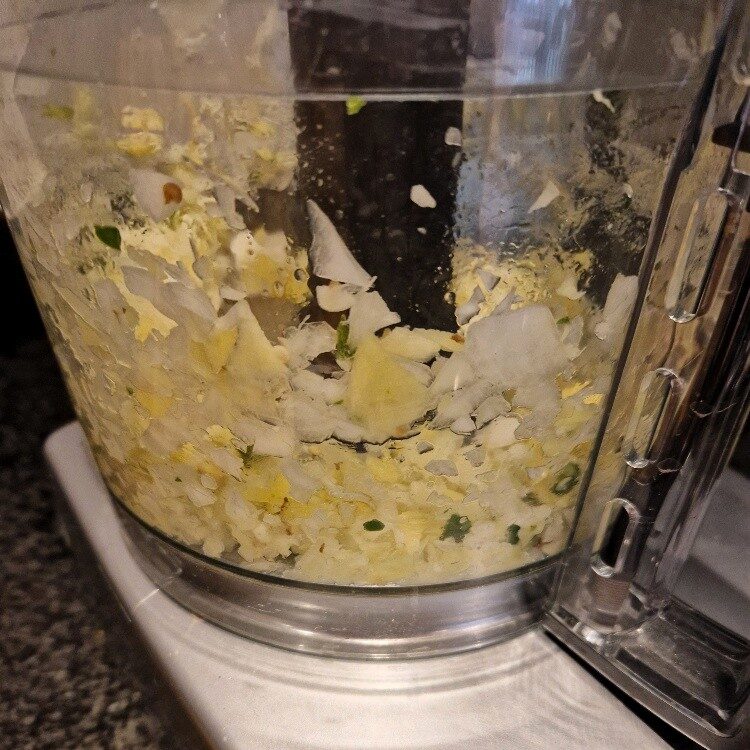
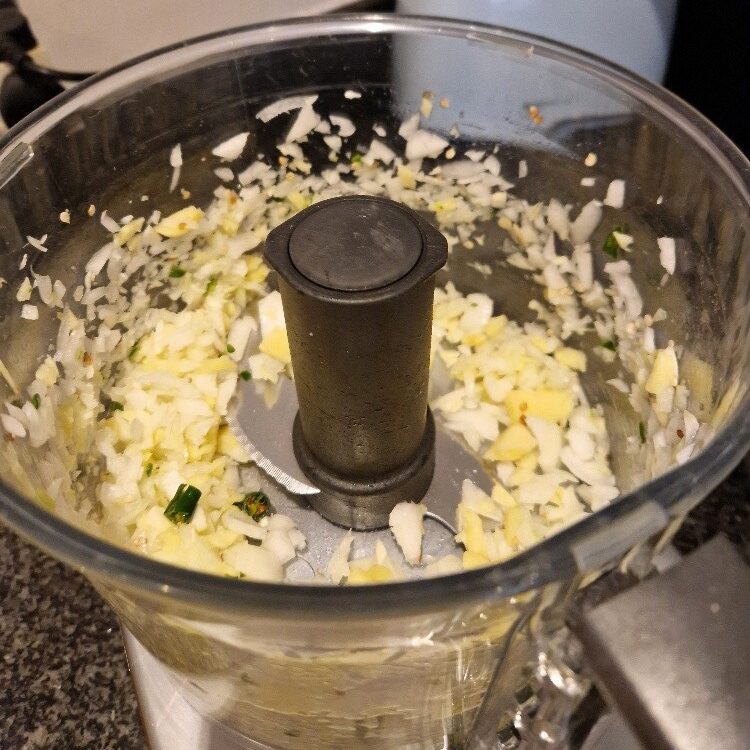
Add a teaspoon or two of garam masala and a large (450g) pot of natural yoghurt – we use Greek yoghurt. Blend well until you have a really smooth paste.
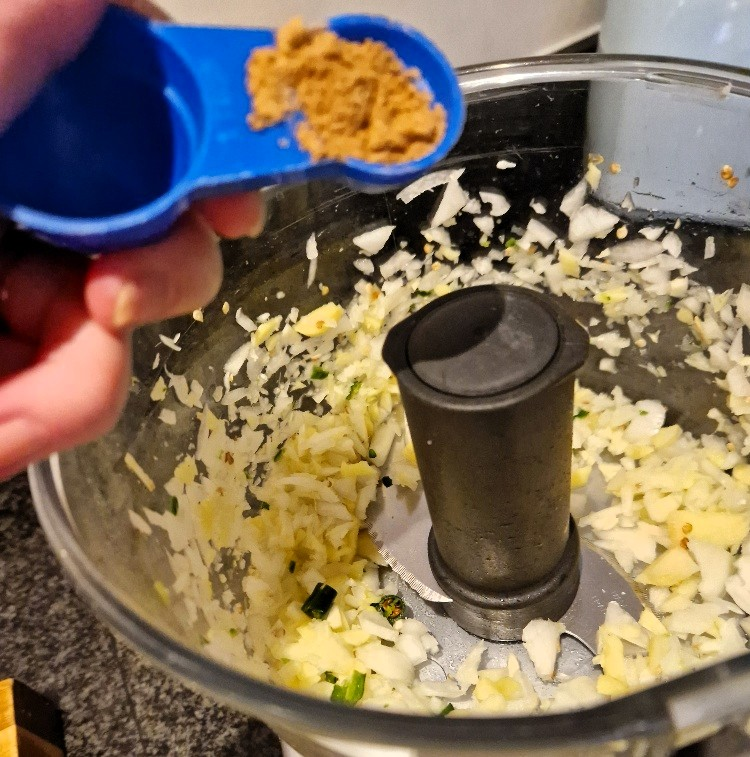
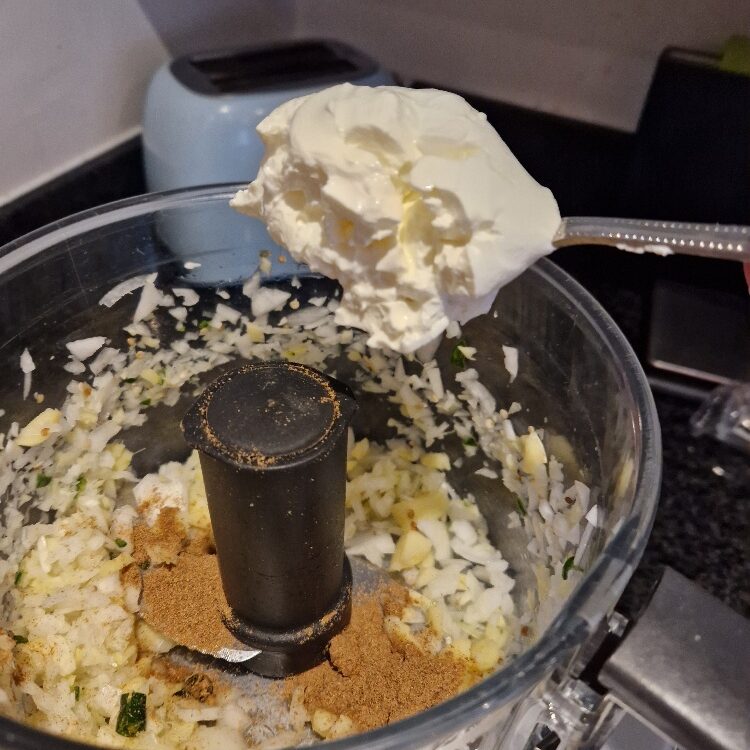
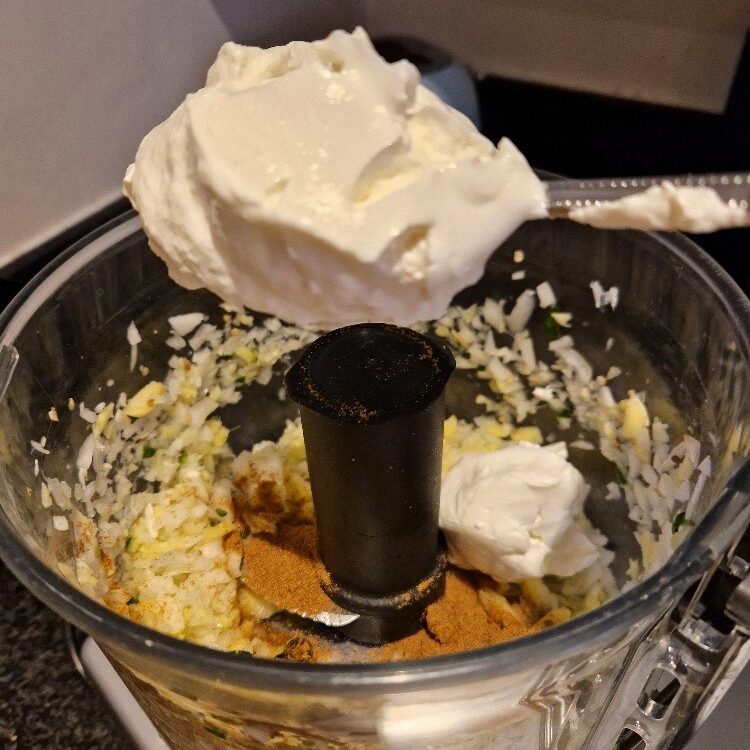
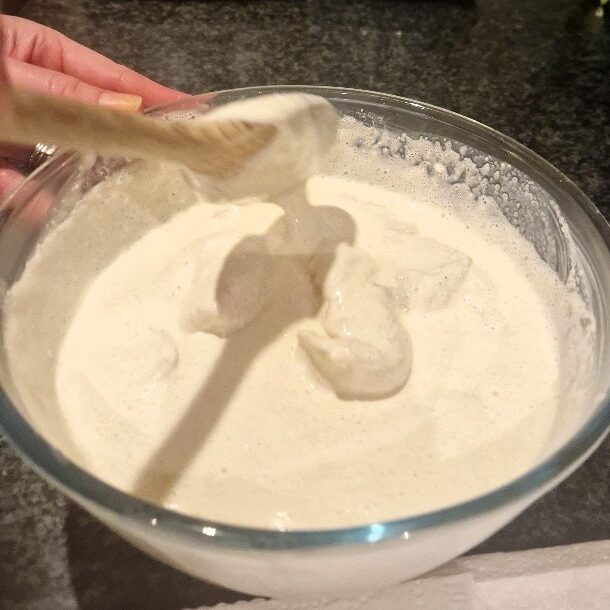
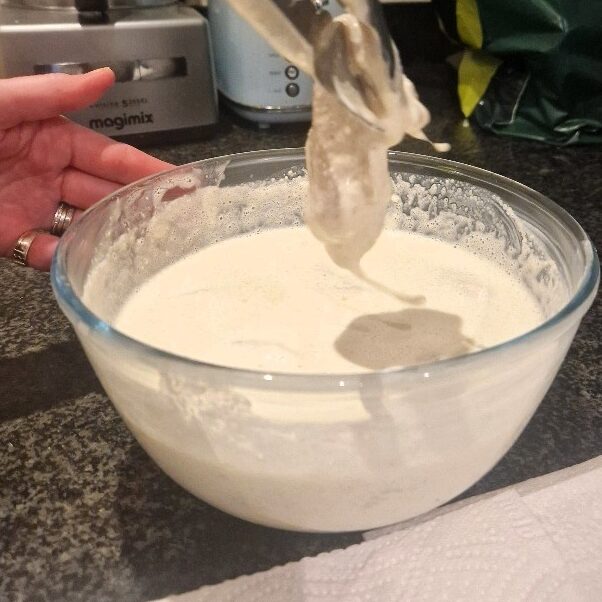
You now need to pass the marinade through a sieve. This removes the fibrous bits, and means the marinade will coat the chicken better and be less likely to burn when cooked. Tip the marinade into a sieve over a large bowl and push it through with a wooden spoon. It may seem like it doesn’t want to go through at first, but keep stirring it firmly and eventually it will strain into the bowl, this takes a few minutes.
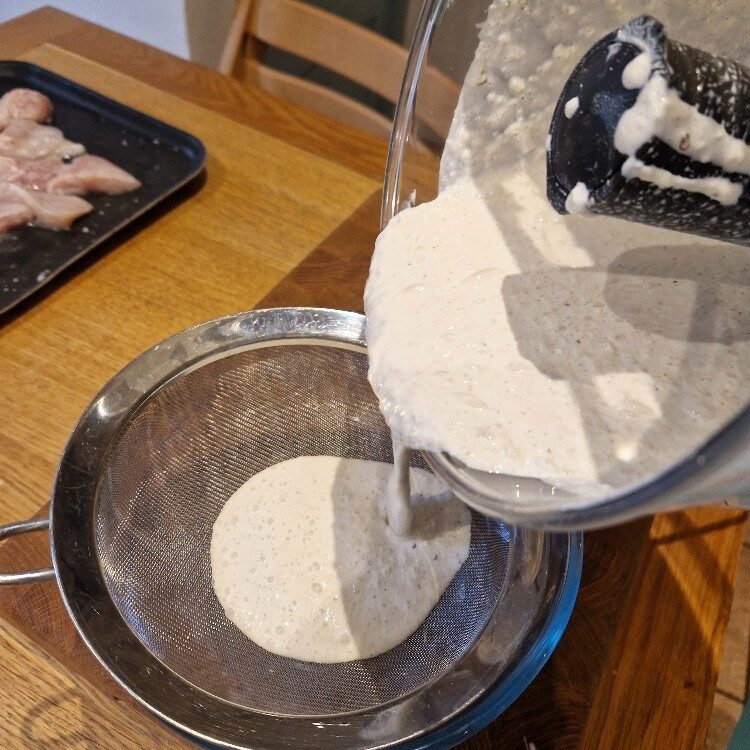
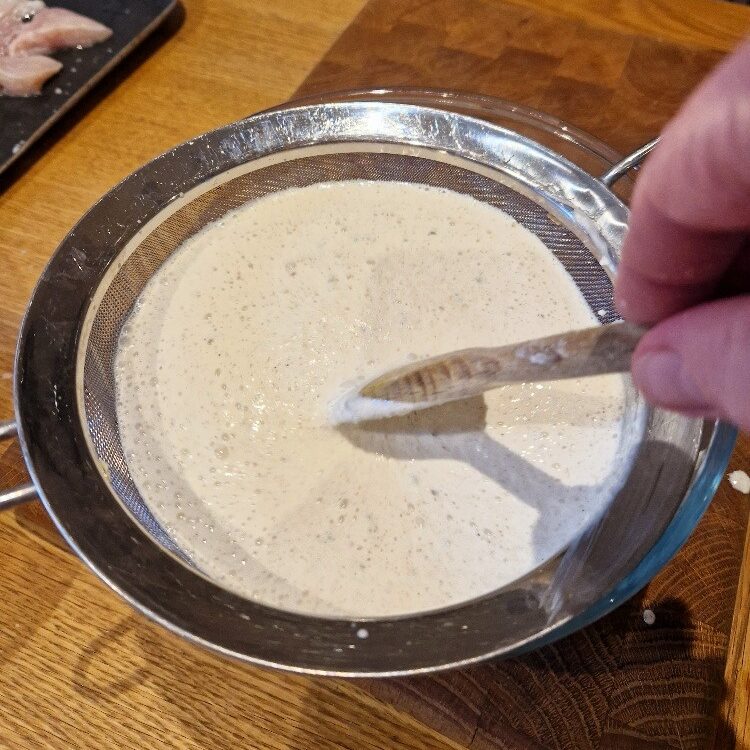
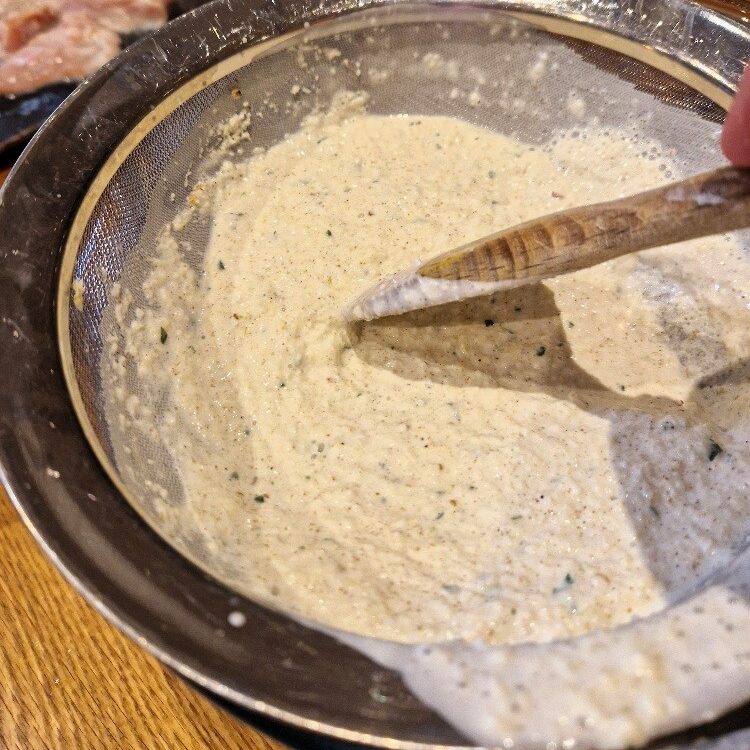
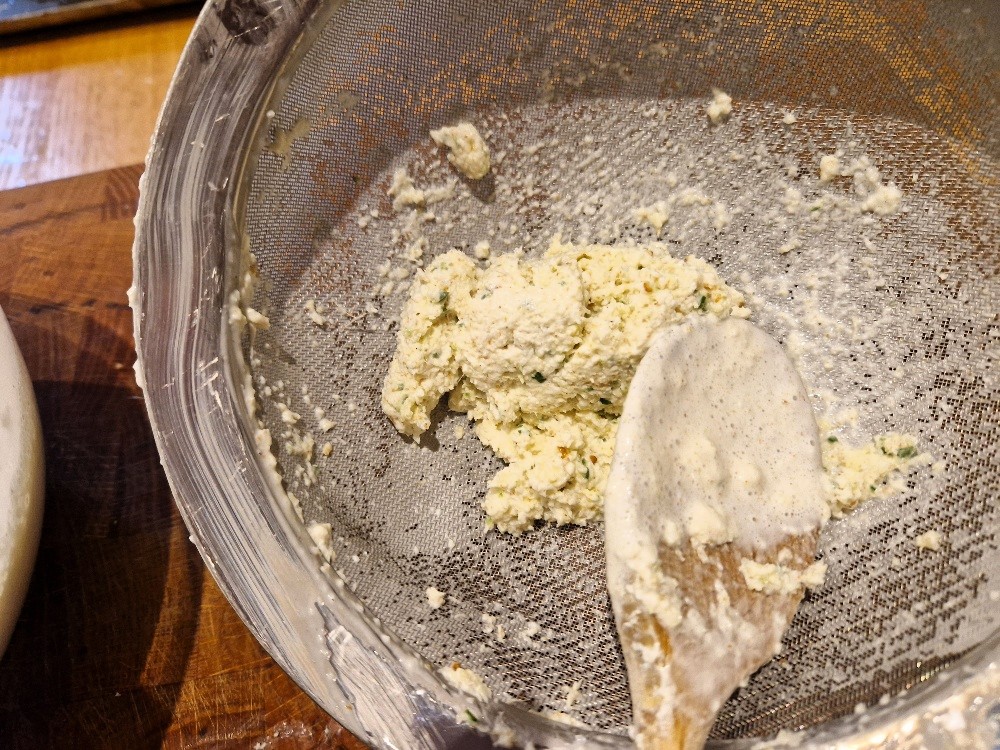
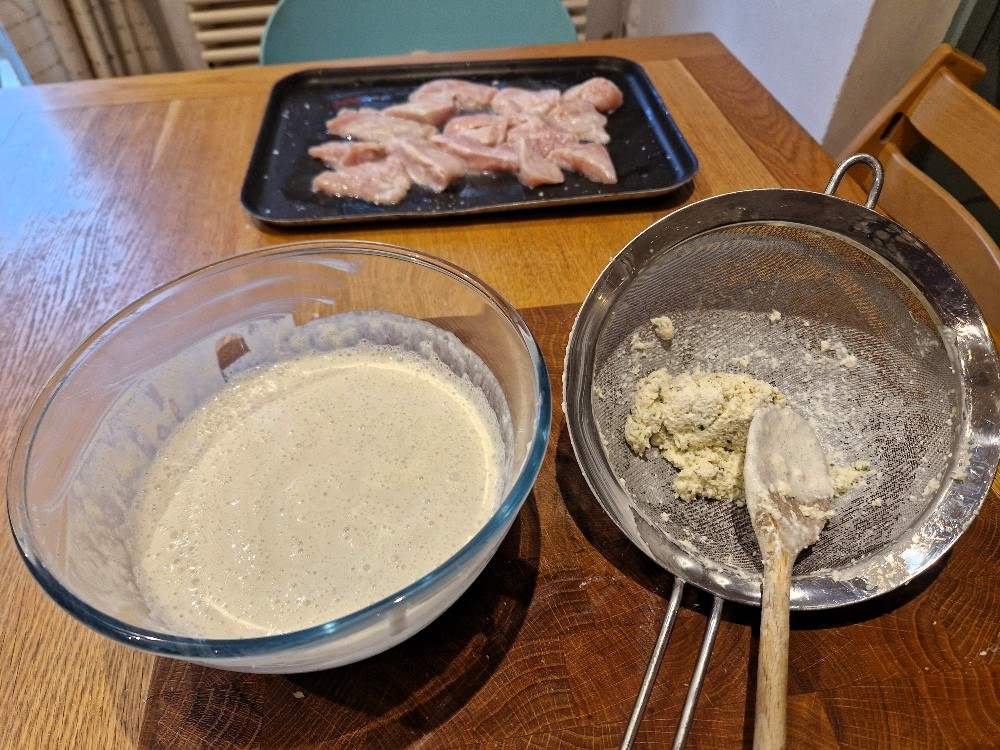
Keep going until you are left with quite a dry, fibrous sludge in the sieve. Occasionally scrape down the bottom of the sieve to release more of the liquid marinade.
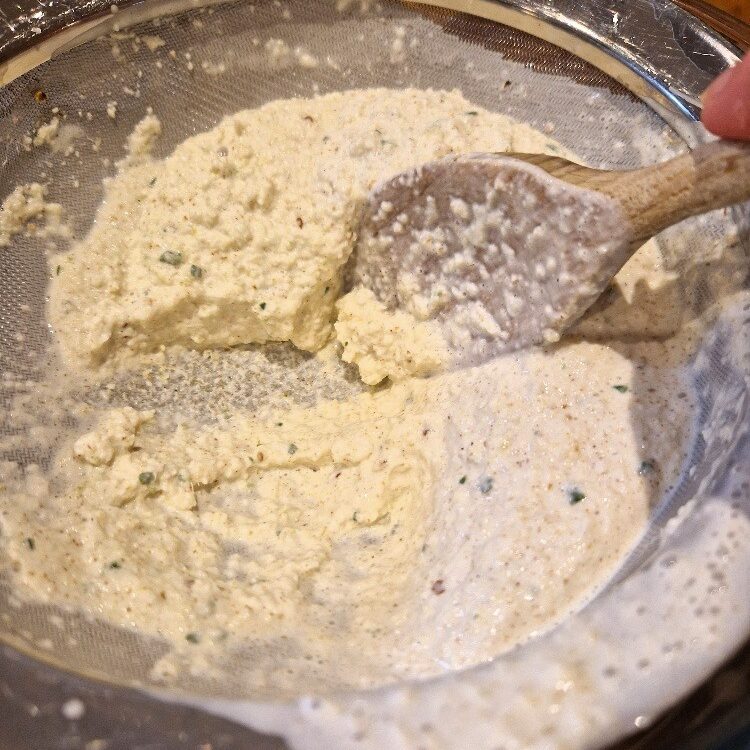
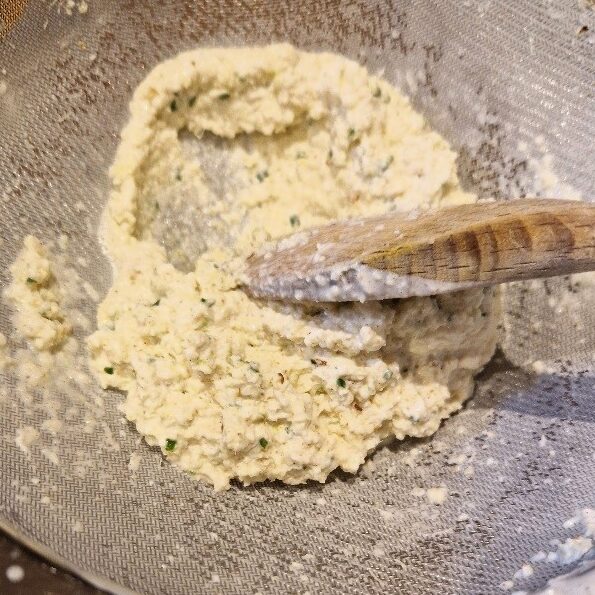
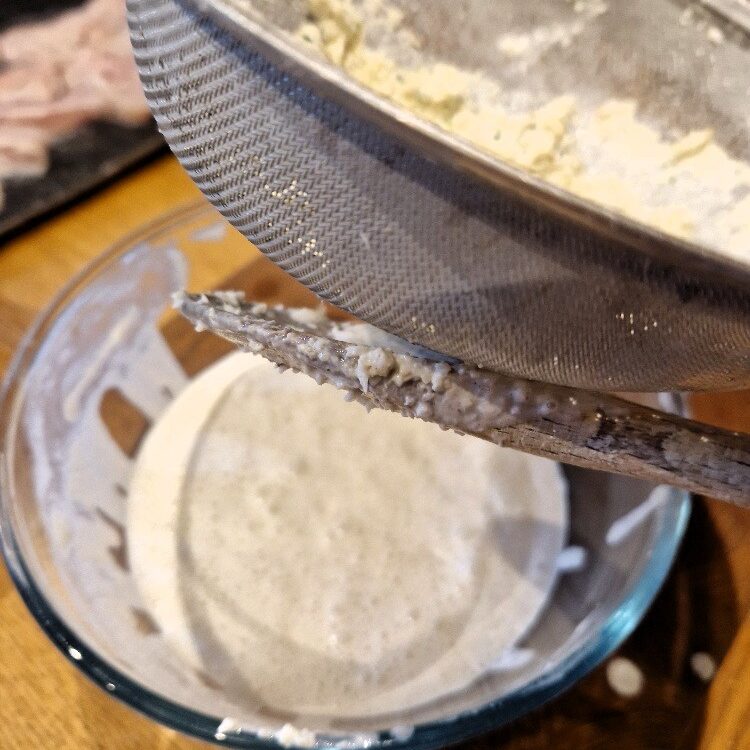
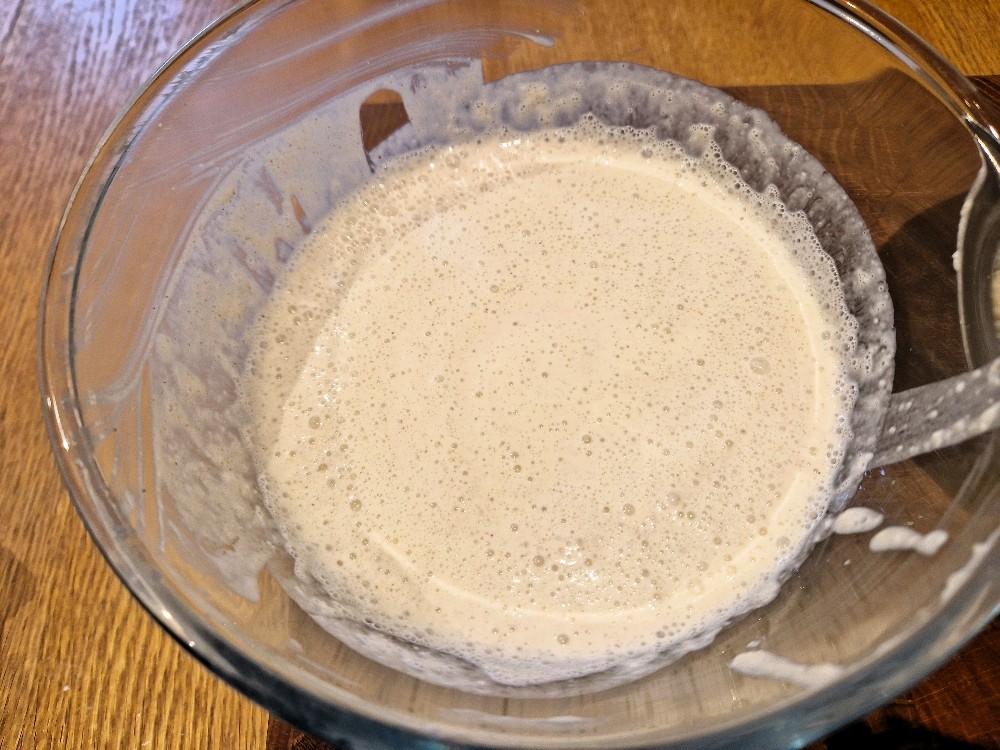
Discard the sludge. You will be left with a lovely, smooth, fragrant marinade.
Jake sticks his nose in
You don’t absolutely need to strain the marinade, it will still flavour and tenderise the meat with the fibres in. But you will need to be extra careful when removing the marinade before cooking – the fibrous bits will burn! So straining now will give you a better finish, and save more work later.
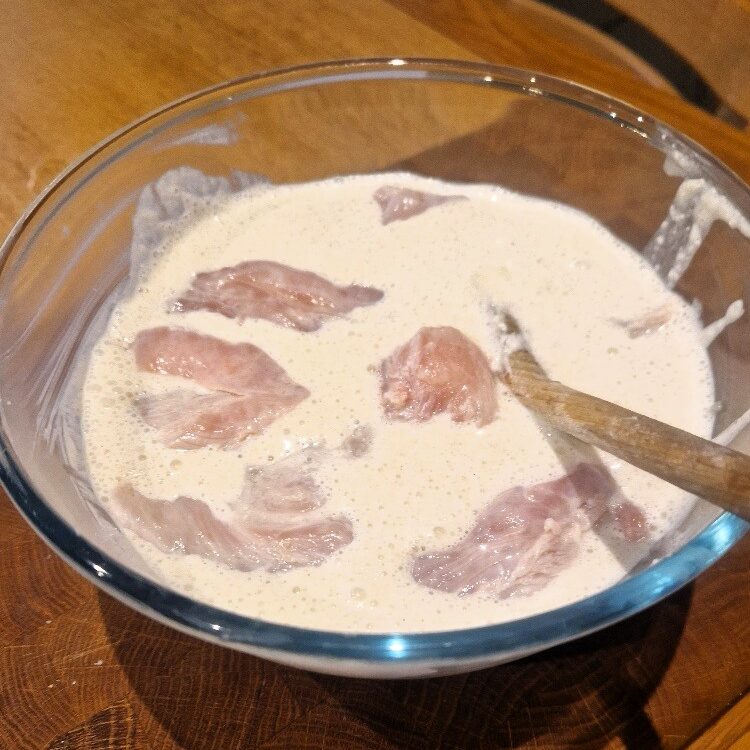
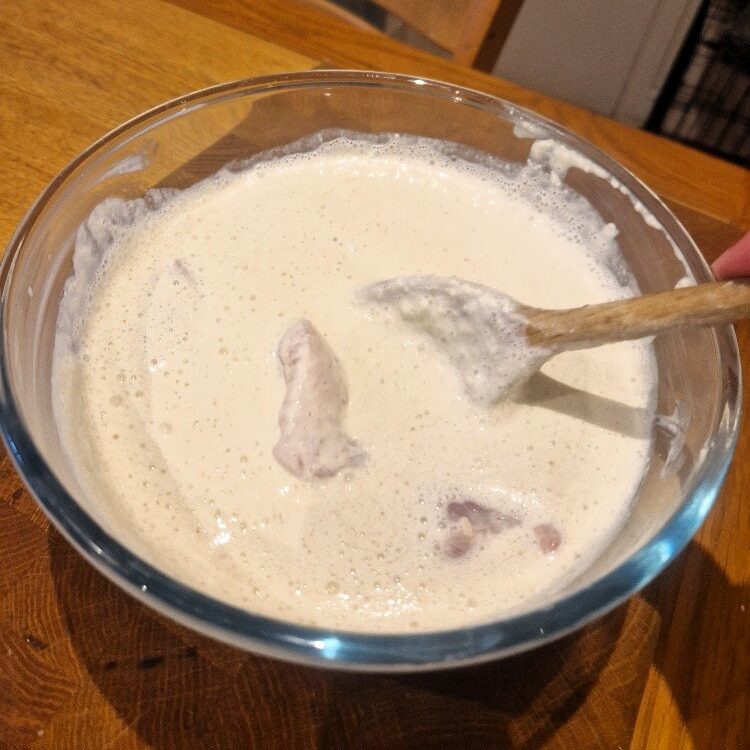
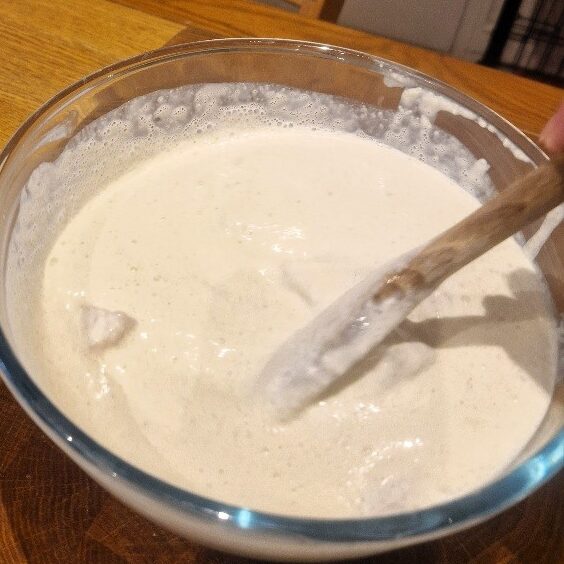
Place the chicken pieces into the marinade, along with any juices.
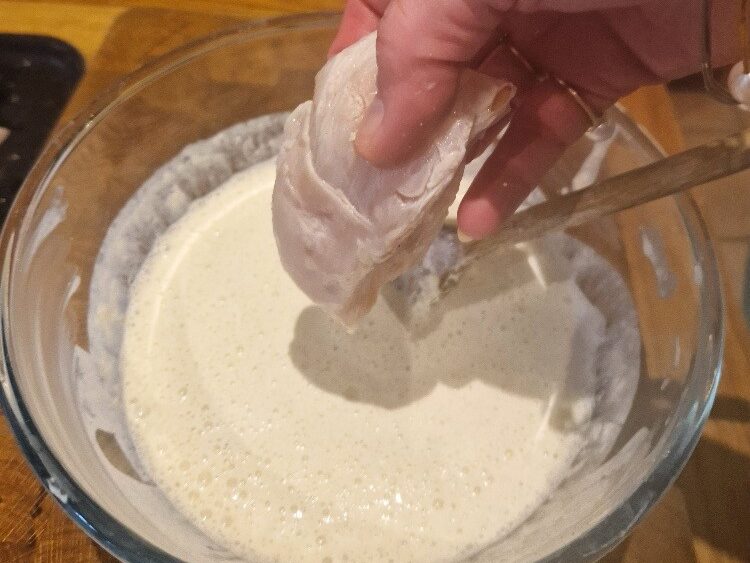
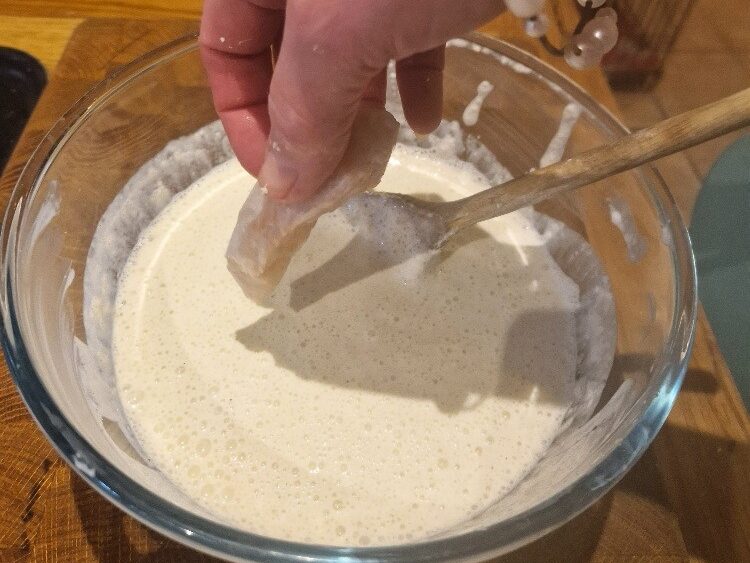
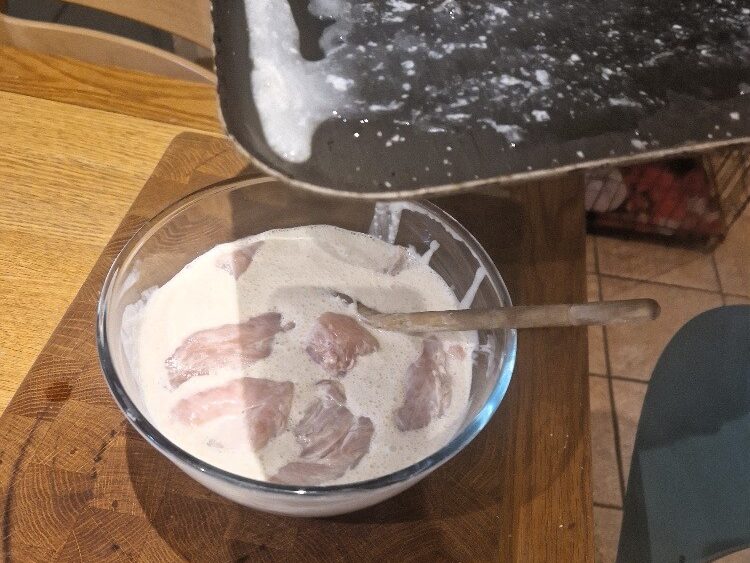
Stir well – you want the marinade to fully cover the chicken and to soak into the slots. Cover and place in the fridge for at least 6 hours and ideally 24 hours – the longer you marinade, the more flavourful and tender the chicken will be. Remove from the fridge about 30 minutes before you are ready to cook.
Makhani butter sauce preparation
The sauce for the butter chicken is very simple, and can be made ahead of time – it will keep in the fridge for a few hours.
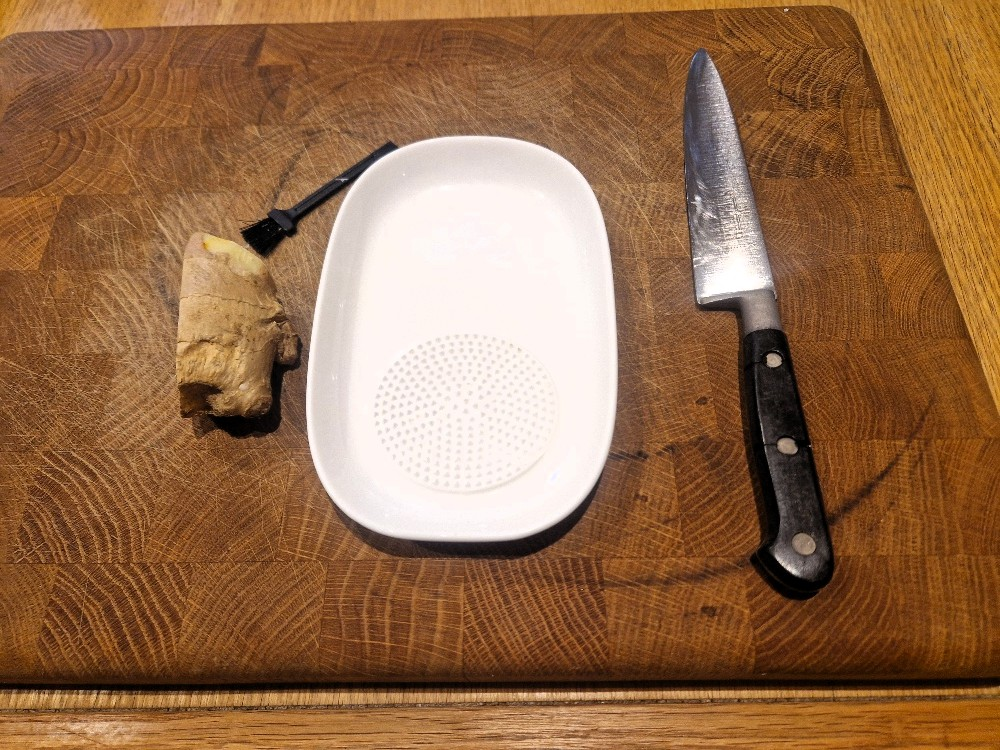
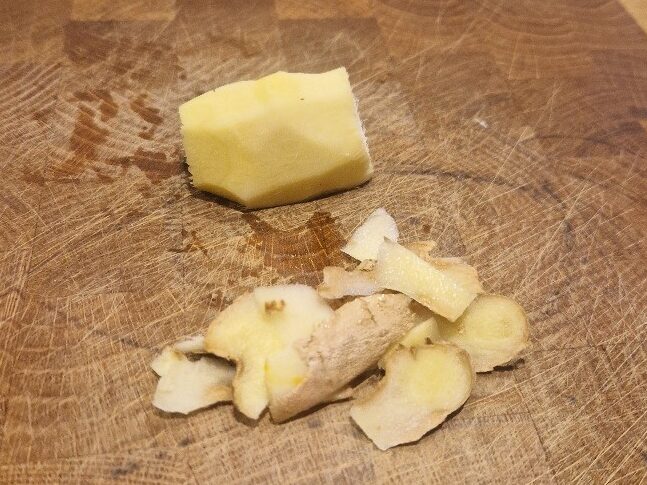
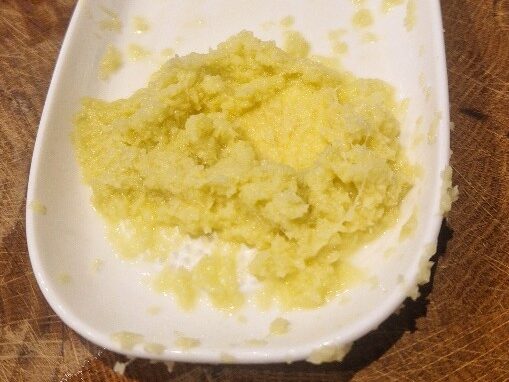
Peel and grate a large piece of fresh ginger. See our ginger Tip.
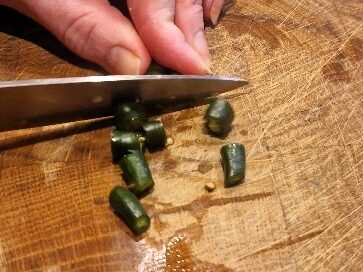
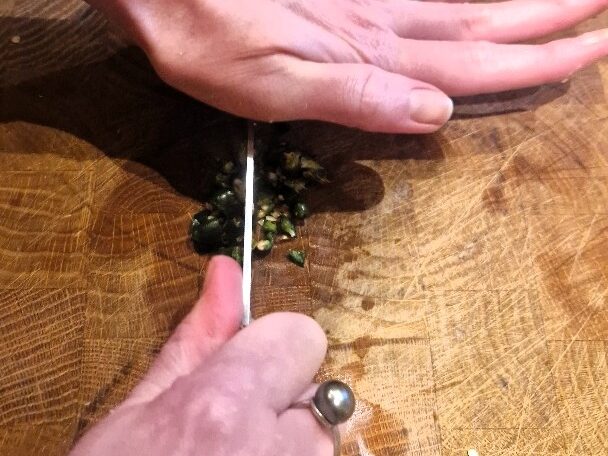
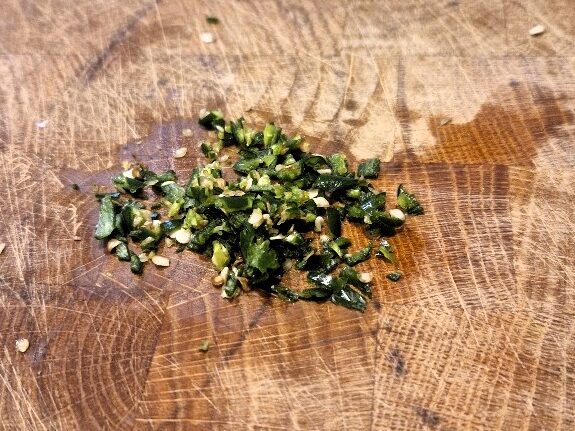
Finely chop some chillies. See our chilli Tip for the ‘rocking knife’ method. Makhani sauce is meant to be mild; we use two small green chillies, but one would be fine if you like it even milder.
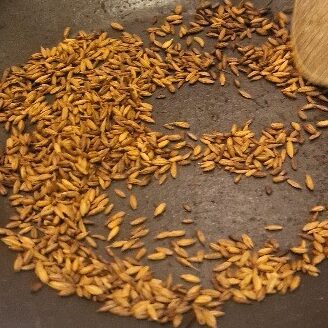
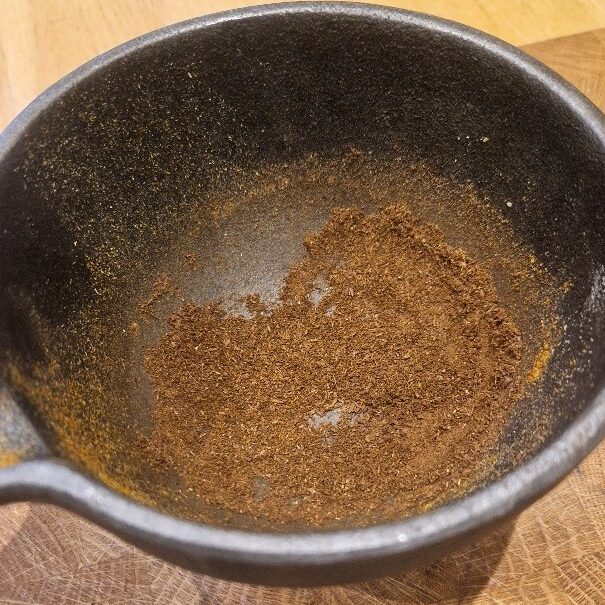
Now roast some cumin seeds. To do this, heat a small frying pan over a high heat. When it is smoking hot – test it by holding your hand above it – add a few teaspoons of cumin seeds and stir continuously. They will roast very fast and can burn, so keep stirring – they are ready when the cumin smell rises and the seeds are just starting to brown. You do want them browned for this sauce (see the bottom middle picture below) – it gives it a slightly smoky flavour which is lovely. Tip the seeds into a mortar or bowl.
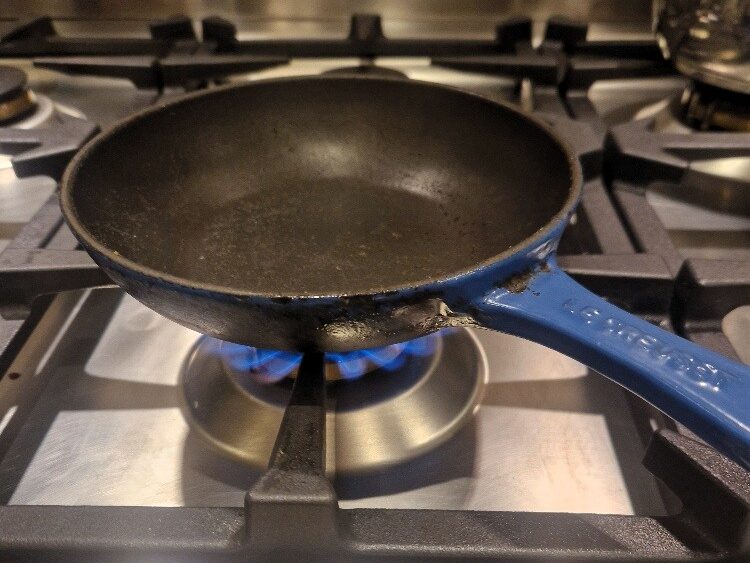
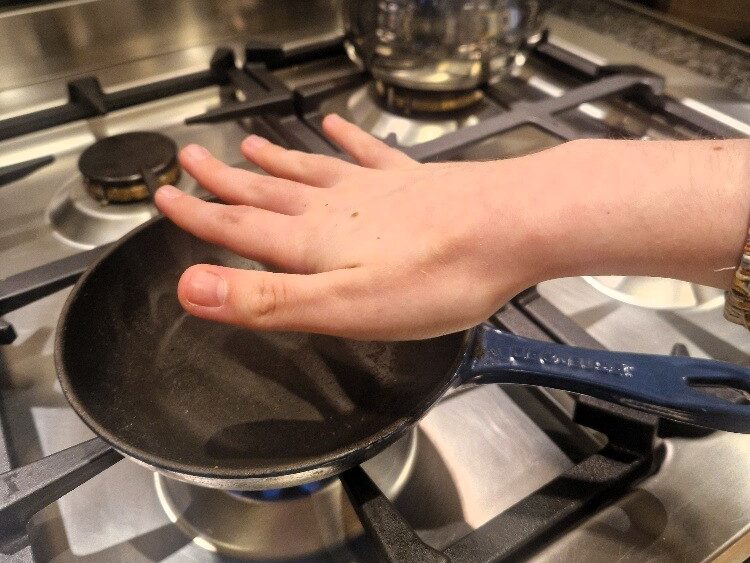
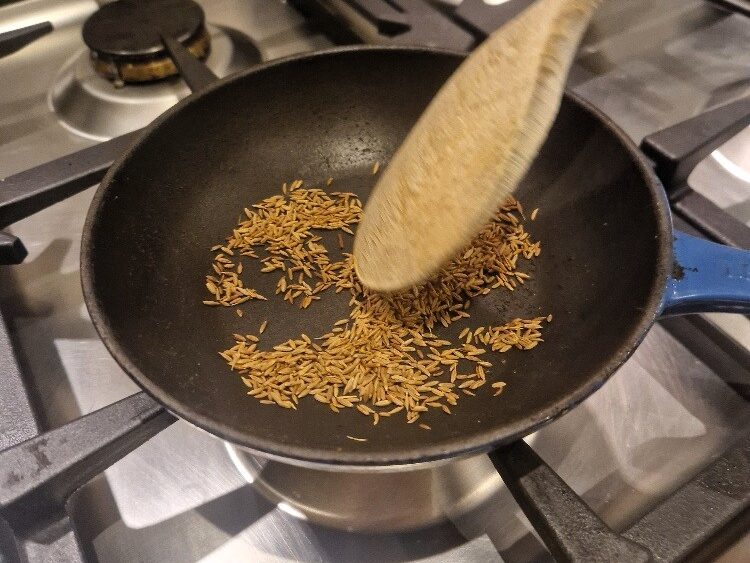
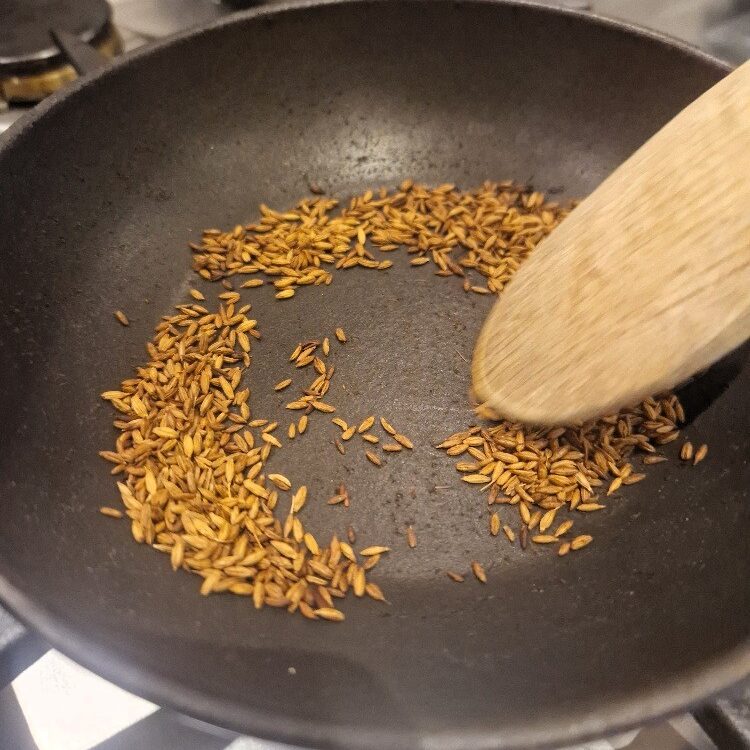
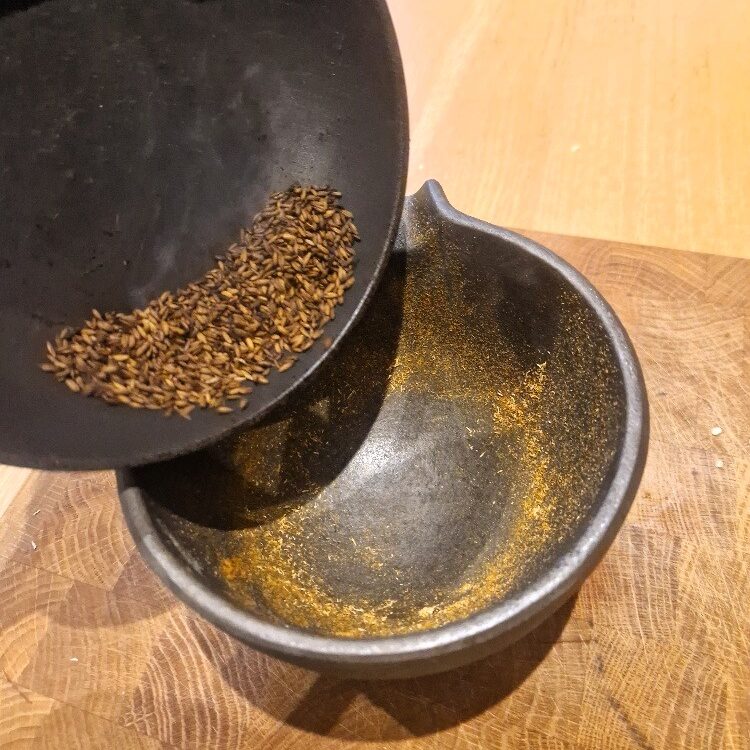
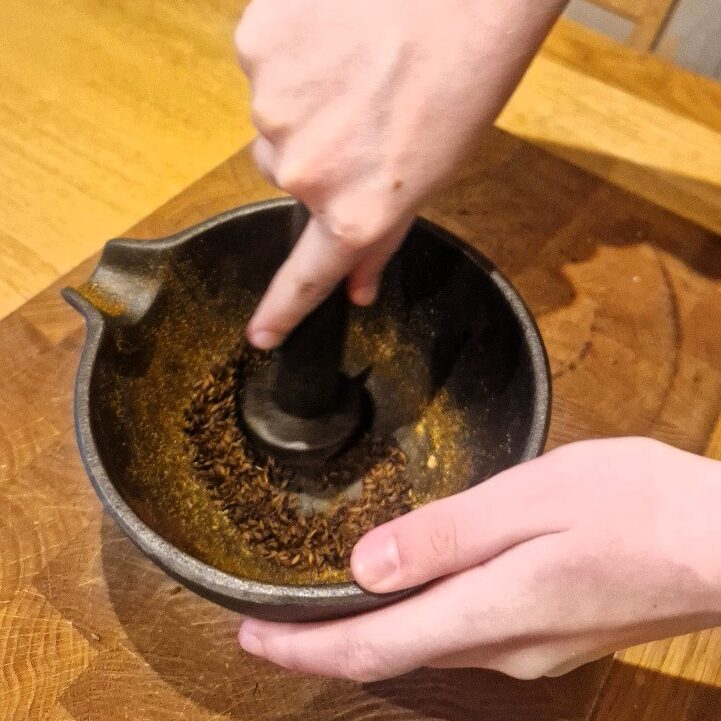
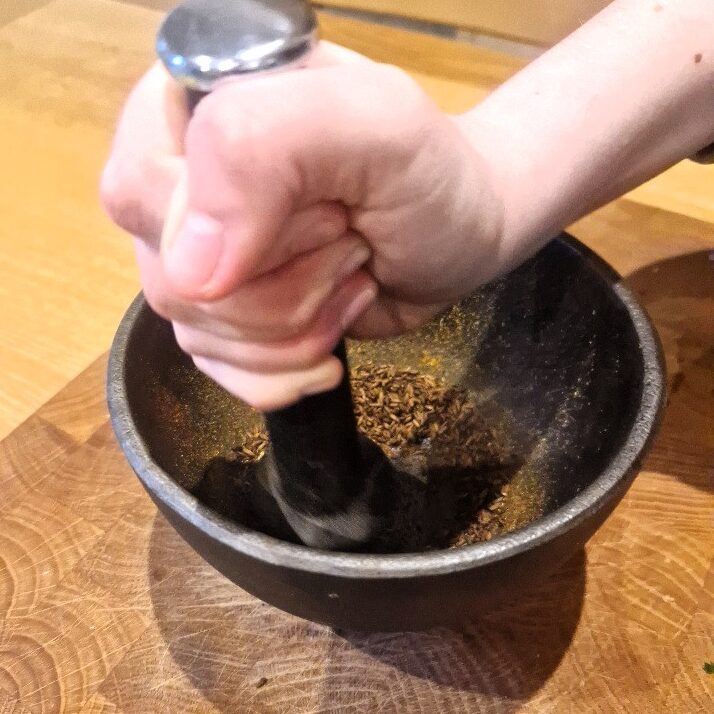
Pound the seeds into a fine powder with a pestle. If you don’t have a pestle & mortar, a rolling pin and a bowl will work just as well.
Jake sticks his nose in
You could alternatively use ground cumin. The flavour will still be good – just not as smoky and pronounced as toasting and grinding cumin seeds yourself.
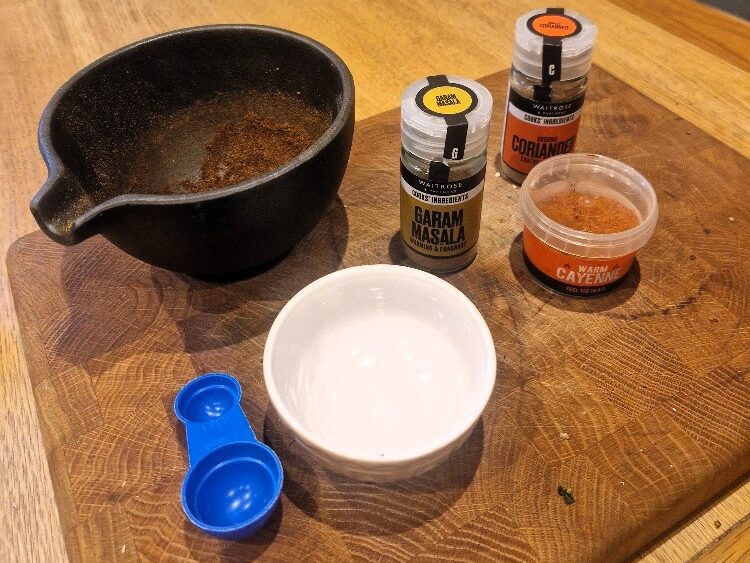
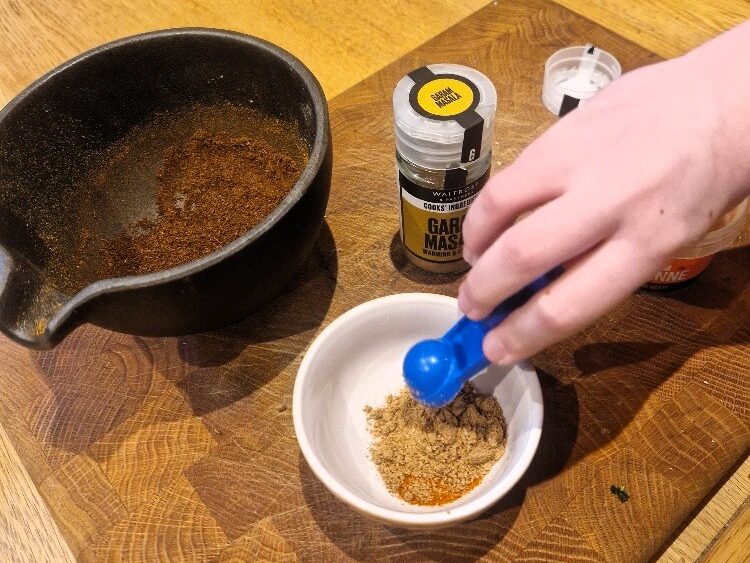
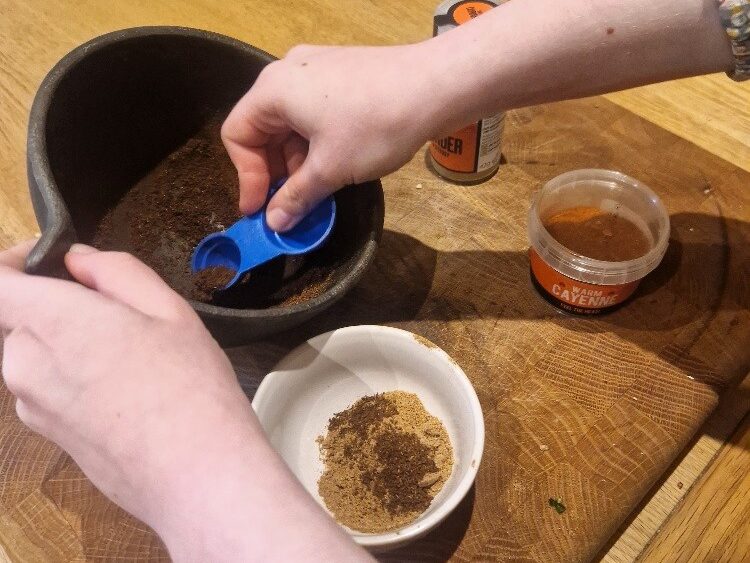
Next measure out your spice mix. To some extent you can use whichever Indian spices you like (look at five different butter chicken recipes and you will find five different spice blends!), but we think cumin and garam masala are essential. We also add our personal favourite, ground coriander, plus a little cayenne for an extra kick. Today we used 2 teaspoons each of cumin, coriander and garam masala and 1 teaspoon of cayenne.
Now squeeze a lemon – see our lemon Tip.
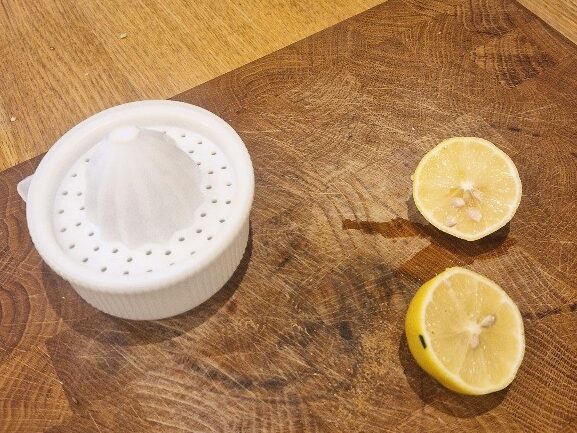
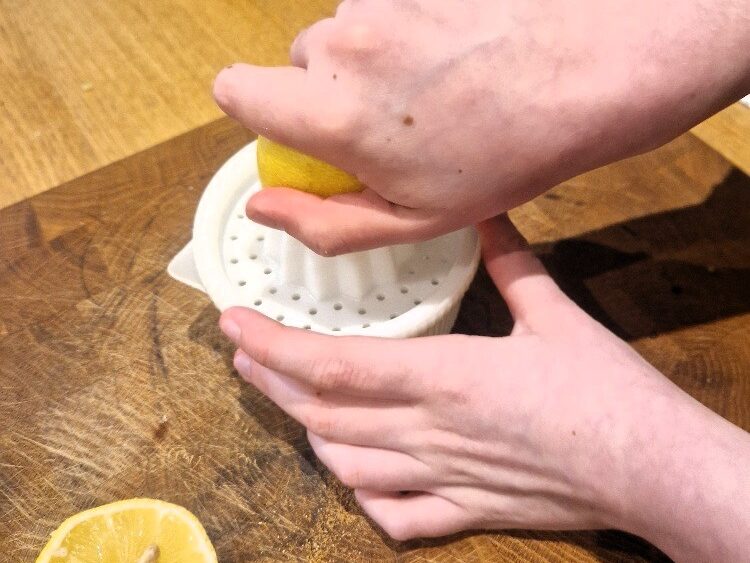
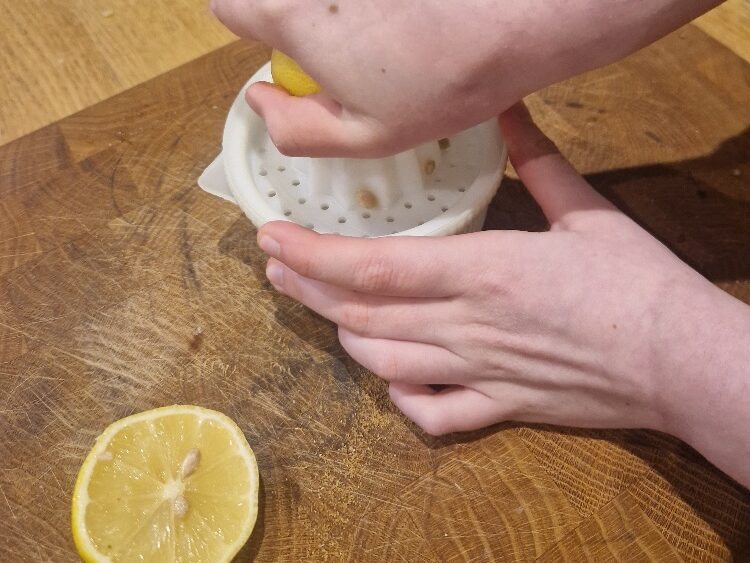
Chop the fresh coriander, you want it chopped really fine for this sauce. See our herb Tip.
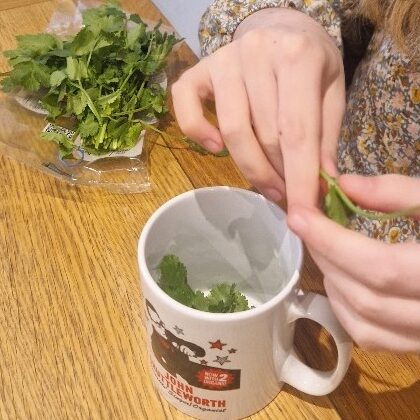
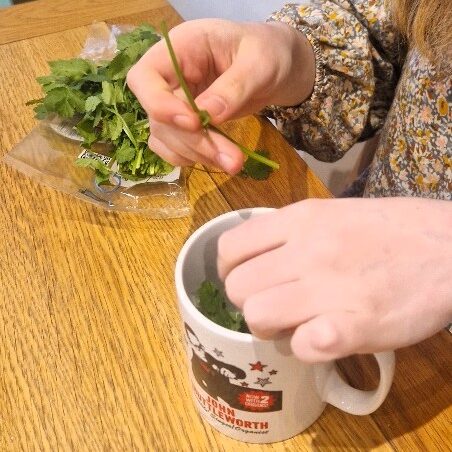
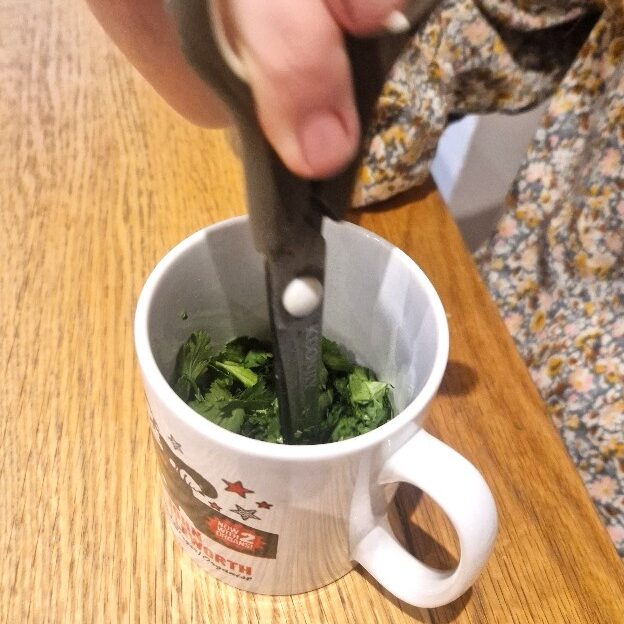
Jake sticks his nose in
We love fresh coriander in this sauce, it gives it fragrance and a slight sweetness. But if you don’t like it (some people can taste a ‘soapy’ chemical in that others can’t), use flat leaf parsley instead.
Finally, spoon some tomato puree into a measuring jug. How much depends on how much sauce you want – use 2 tablespoons per 125ml of water. Today we used 8 tablespoons and 500ml water but this made a lot of sauce! 6 tablespoons and 375ml water would have been fine.
The mise en place for your sauce is ready!
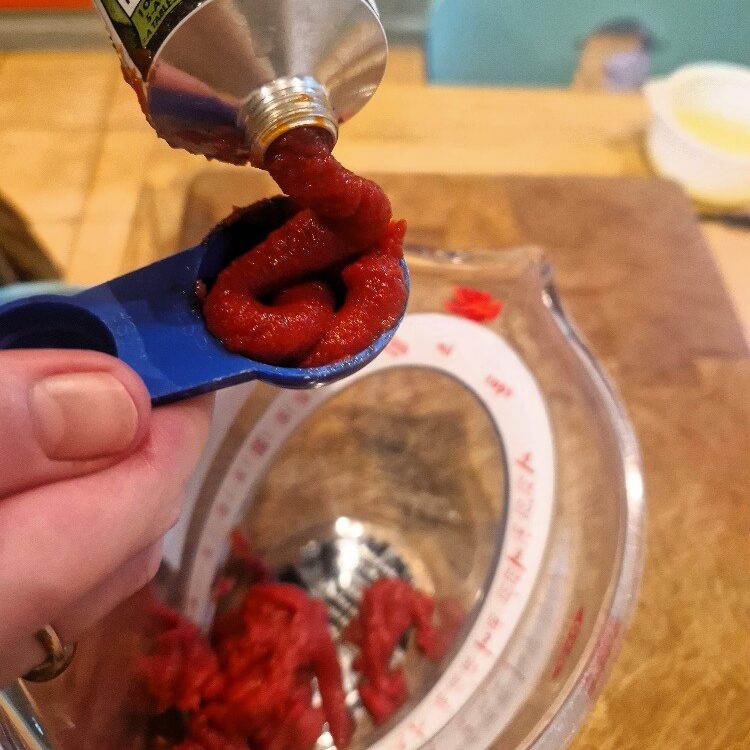
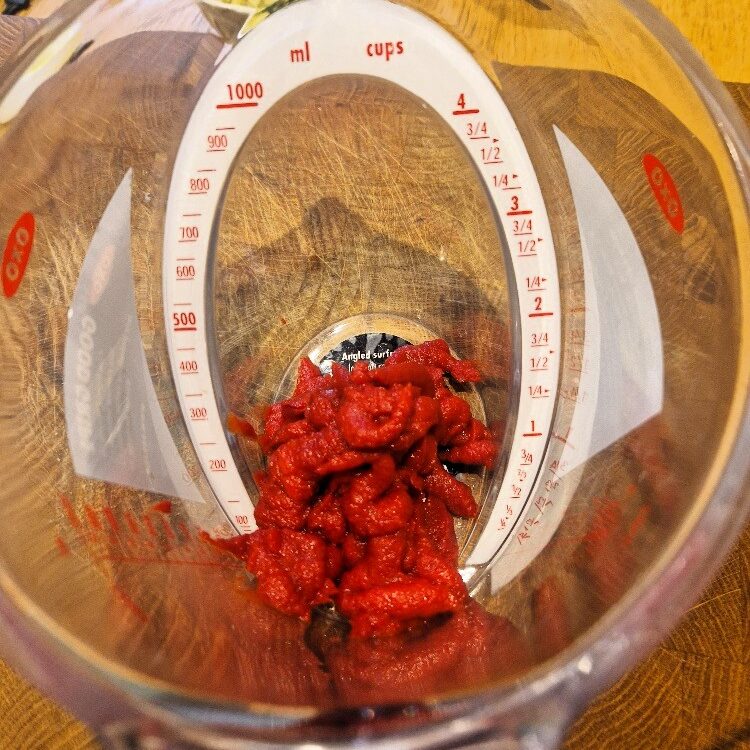
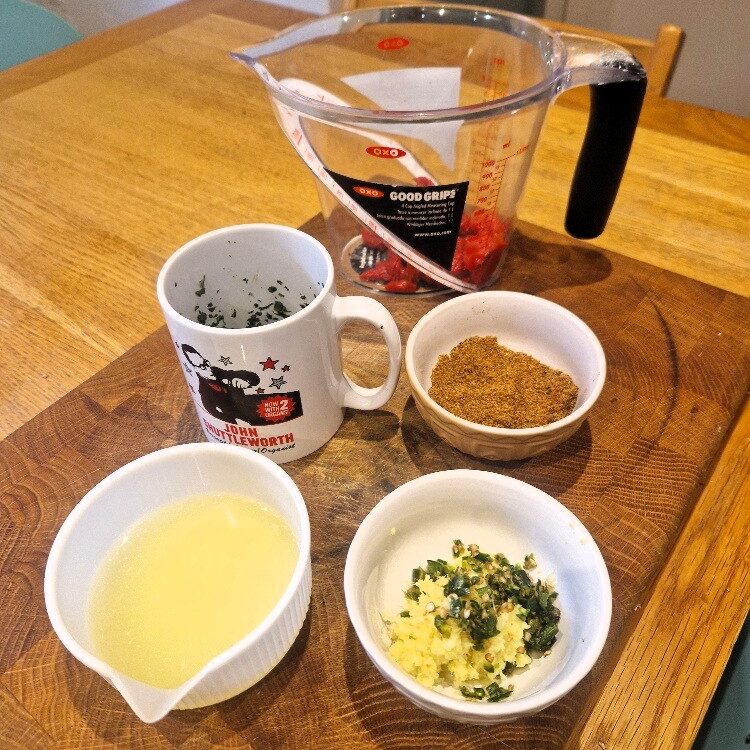
Today, we prepared to this stage ahead, finishing the sauce just before serving. Or you could make the sauce up in a jug (see later below), and keep in the fridge – it will keep for a few hours – adding to the butter just before serving. But we prefer to pause here, and make the sauce up while the chicken is cooking. It only takes a few minutes to do.
Side salad & rice
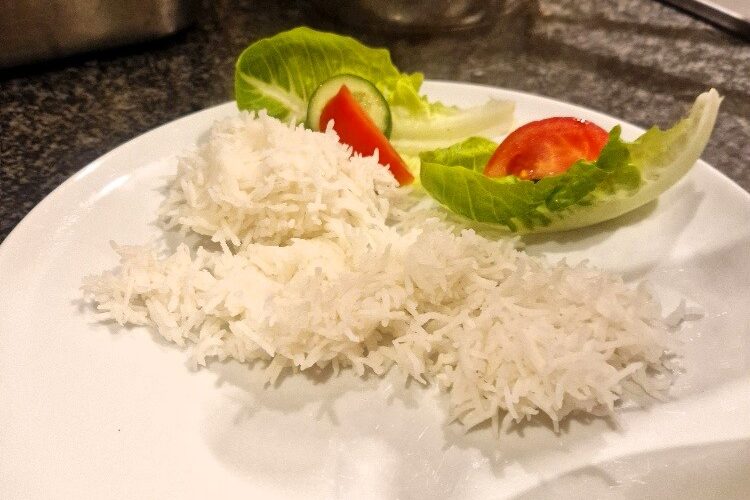
We like to serve our butter chicken with a very simple side salad. It’s a rich dish and we think needs the freshness this provides. It also looks pretty on the plate. You could alternatively make an Indian vegetable side dish, like the cabbage from Bibi’s Dal recipe. But we prefer the simplicity of the salad, which also allows the butter chicken to shine.
Butter chicken is also best served on rice – it soaks up the lovely creamy sauce. We almost prefer the saucy rice to the chicken, and could eat a bowlful! But you could serve with roti or naan bread if you prefer. We use basmati rice. See our rice Tip for how to cook it.
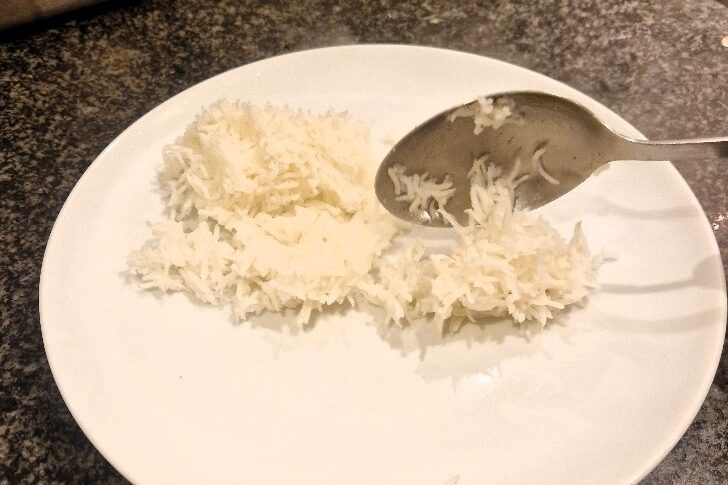
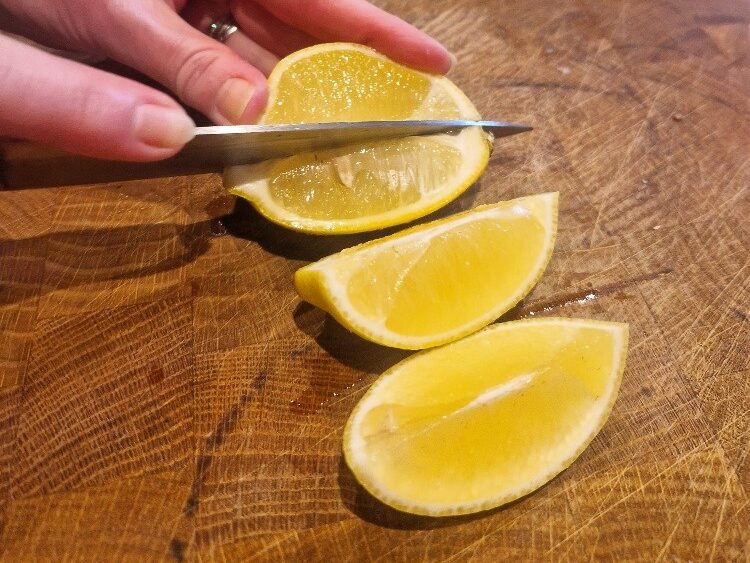
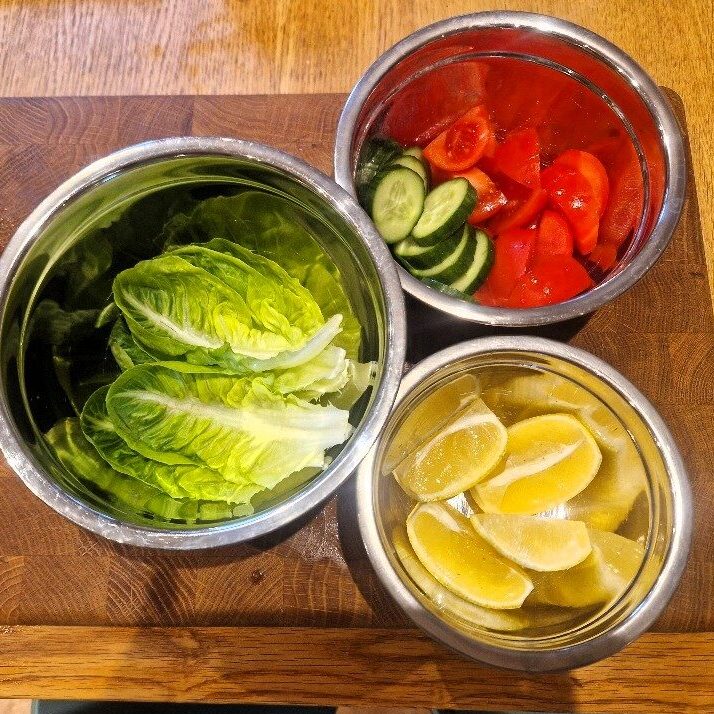
The salad requires very little work. First slice a lemon into quarters lengthwise – you want one quarter per person. Trim off any stem or pith from the ends, and remove any obvious pips.
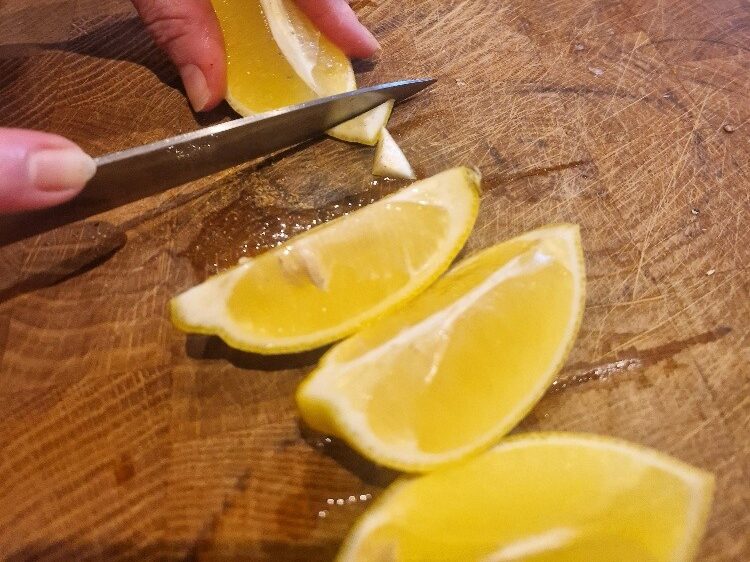
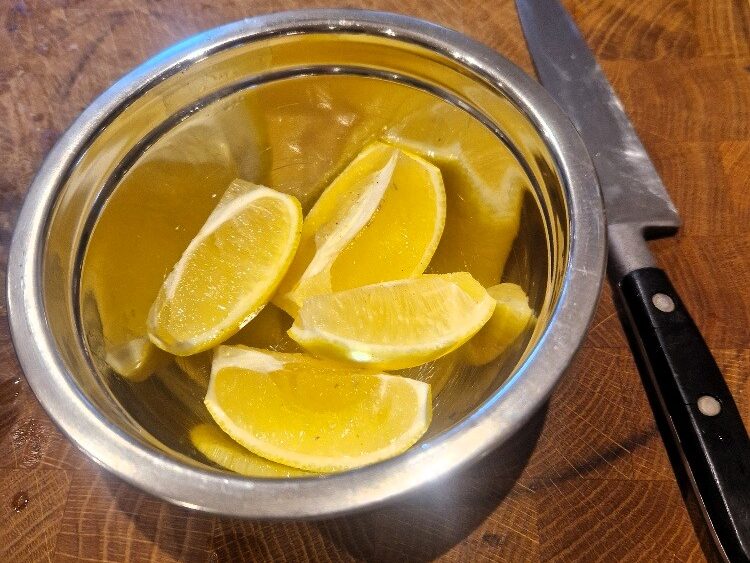
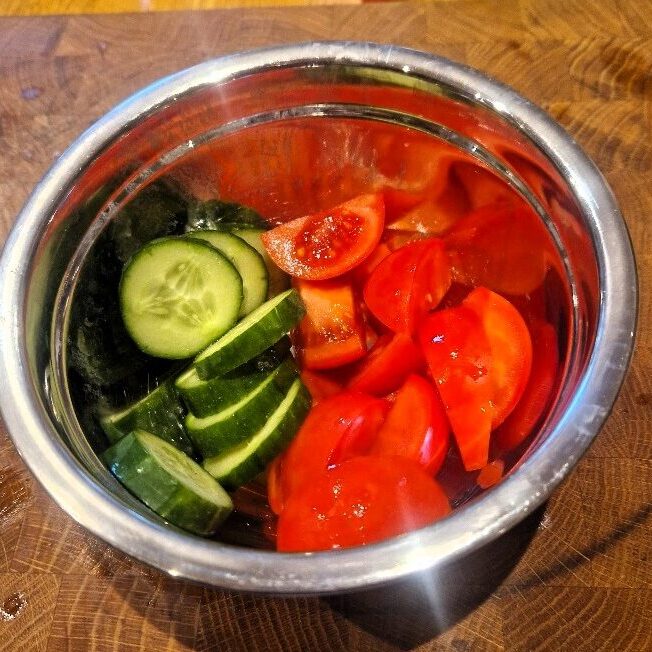
Now slice some cucumber and chop some tomatoes. Today out tomatoes were medium sized so we cut into 4 or 6; smaller tomatoes could be halved. We like the cucumber slices medium thick.
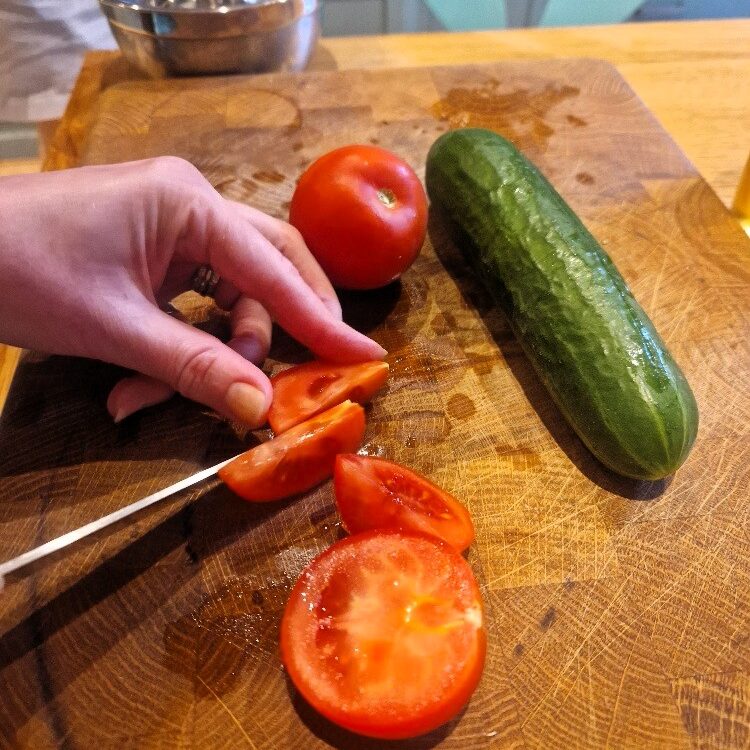
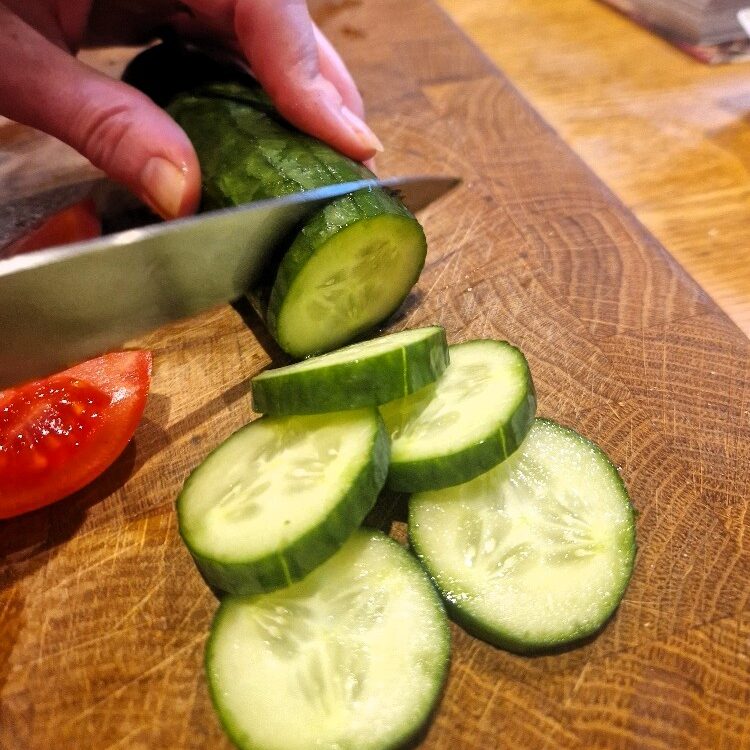
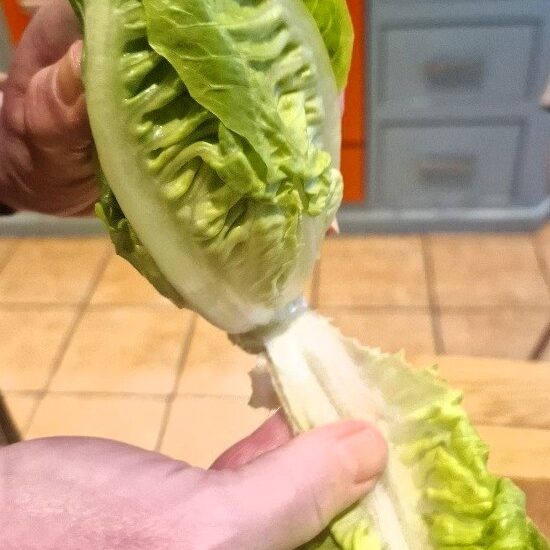
Now separate some lettuce leaves. We used Little Gem as the leaves are a nice small size, but any lettuce you like is fine. Your salad is prepped!
Cooking the chicken tikka
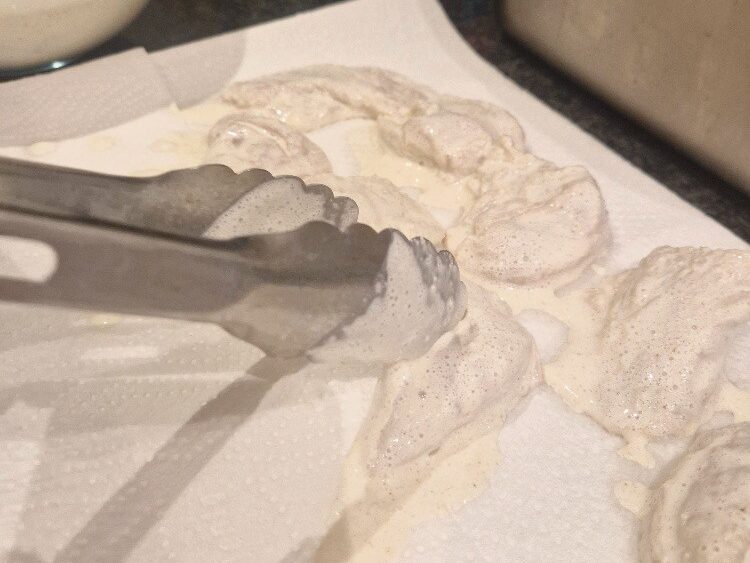
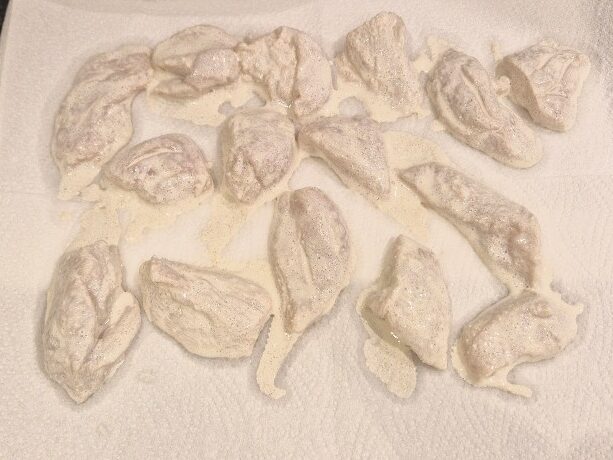
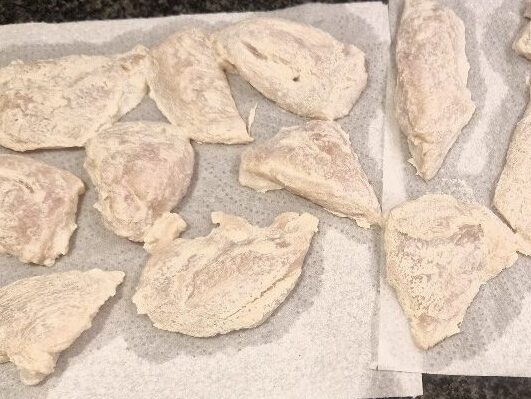
Before cooking, the chicken tikka must be removed from the marinade and allowed to dry off. We’ve learnt from cooking this dish that if you do not dry the chicken thoroughly enough, the marinade will burn before the chicken is cooked. So we now dry the chicken on kitchen paper.
You need to drain the chicken about an hour or so before you plan to eat. The chicken will take up to 40 minutes to cook in a hot oven, depending on the size of your pieces (though it might only take 25 minutes if the pieces are small or thin), plus you need time for the chicken to dry. Pre-heat your oven to its maximum temperature – this is usually about 250C to 270C.
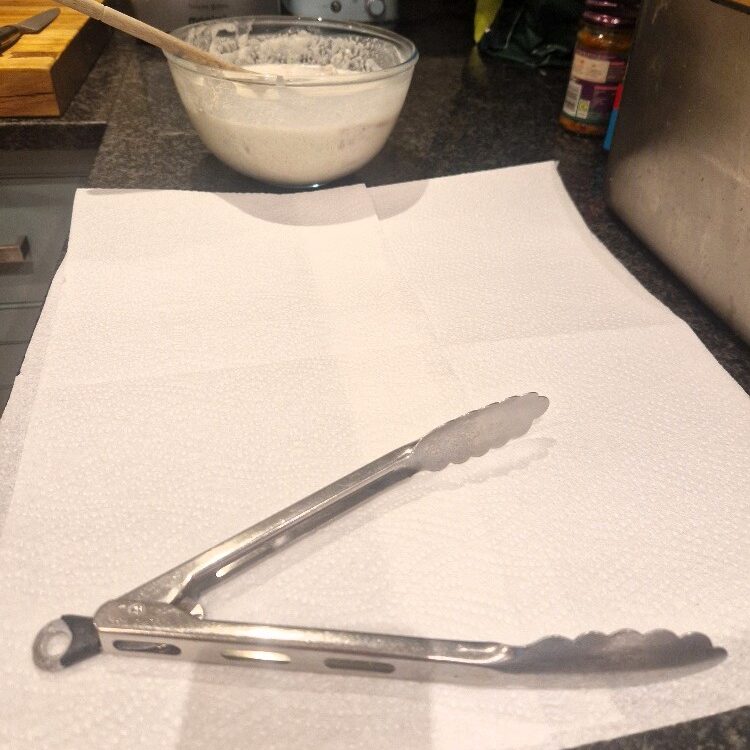
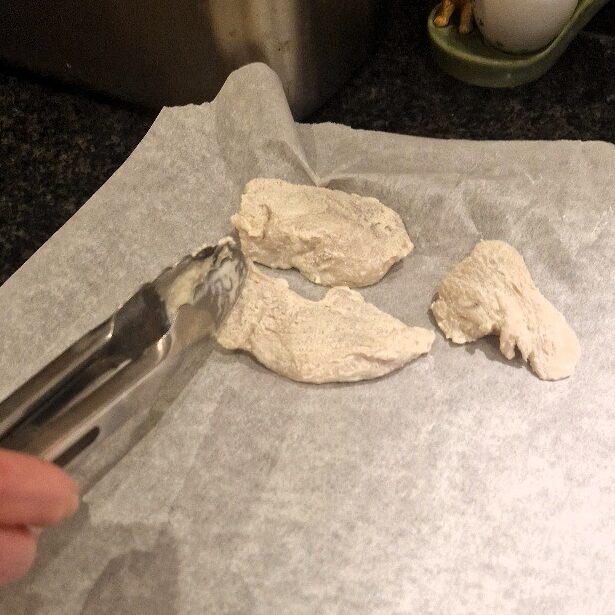
Remove the chicken from the marinade, shaking off as much of the liquid as you can. This is easiest using tongs. Place on some kitchen towel. Once some of the marinade has soaked off, turn the chicken over. You will probably need to do this onto new kitchen towel. You may also need to repeat this process, turning the chicken onto new kitchen towel, more than once.
Place the dried chicken onto a baking tray – we line it with baking paper. Bake in the hot oven until tender and well-cooked right to the centre.
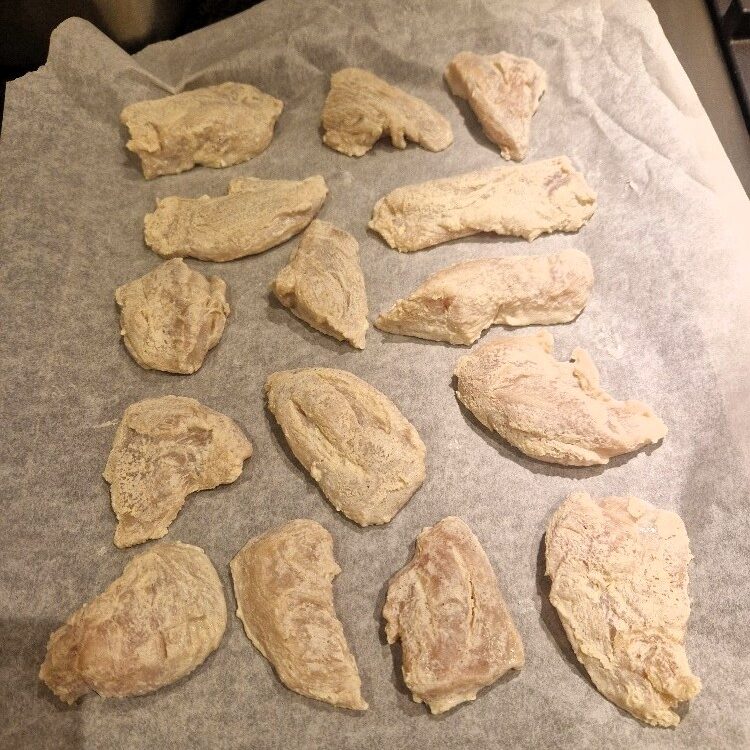
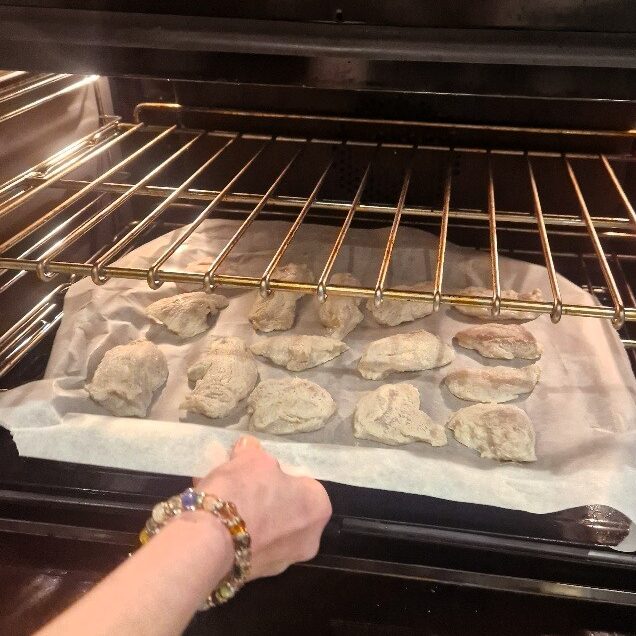
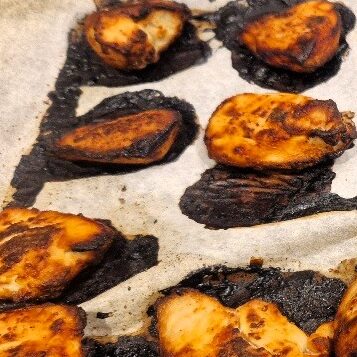
This will take anywhere between 25 to 40 minutes depending on the size of the pieces. It is best to check the chicken towards the earlier end of this range – cut into a piece or test with a fork if you want to be sure. There should be no pink or red juices, and the chicken should be white to the centre. The chicken should also look slightly charred.
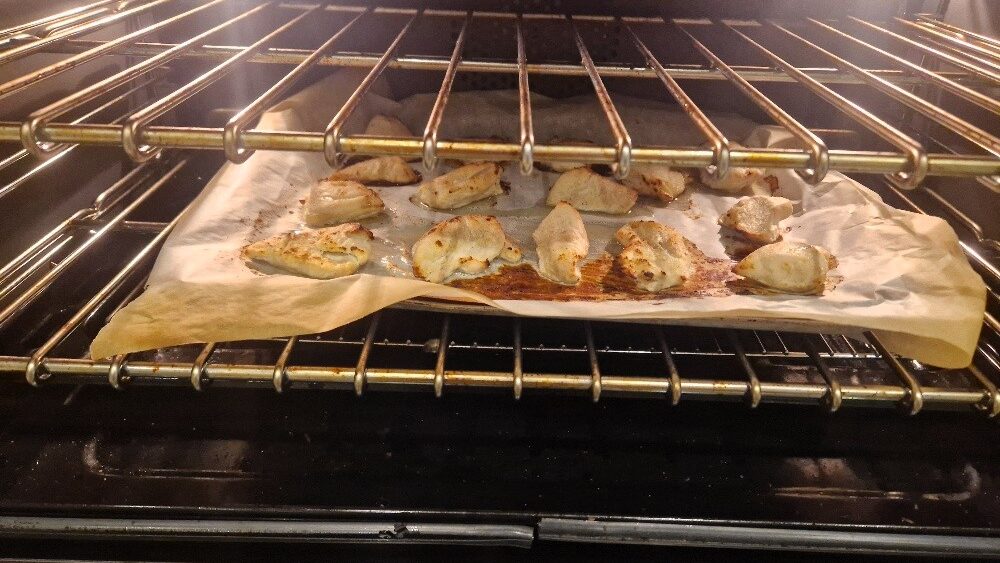
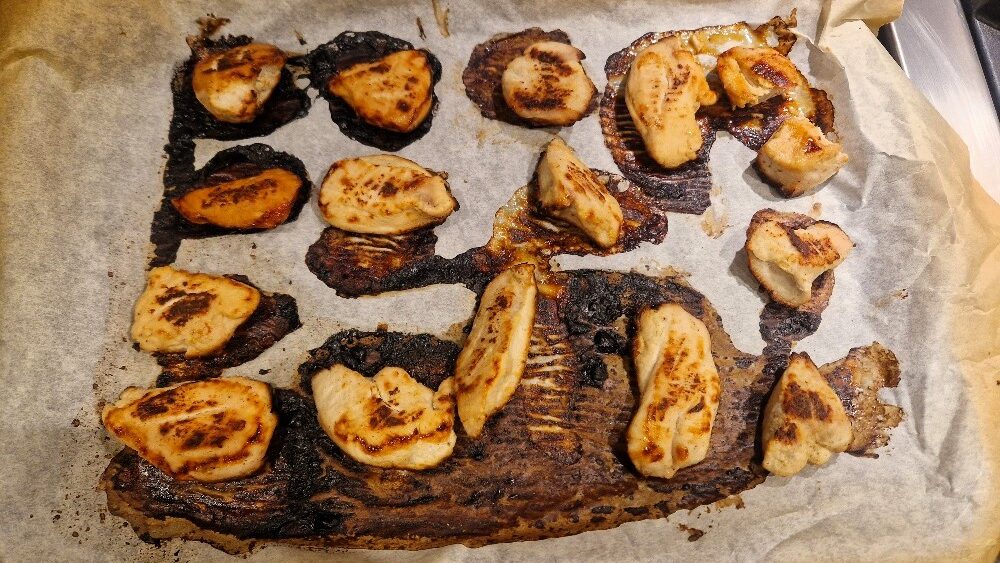
The char is part of what makes chicken tikka chicken tikka! These chicken pieces are not burnt, they are lovely and tender inside, but the char on top gives a perfect smokiness and a firm, crisp texture to the outside. The burnt areas around the chicken are normal (this is why we line the tray); it is the excess marinade that has burnt.
It’s better to allow more time for cooking the chicken than to allow too little – overcooked chicken is better than raw! Also, if your chicken cooks faster than you expect, you can keep it warm in the oven, wrapped in some foil – lower the oven temperature to 75C to 100C.
Finishing the makhani sauce
It’s best to make up the sauce in a large jug – not only can you measure directly into it, but it makes it easier to add to the butter later. You also only need to wash up one item!
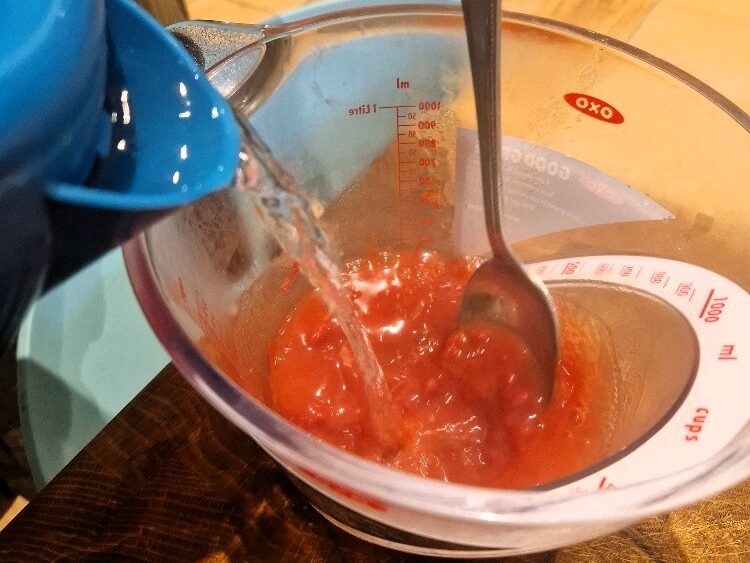
Add boiling water to the tomato puree, adding 125ml for every tablespoon of puree. Stir well to dissolve the puree, then add the spice mix and stir well again to combine.
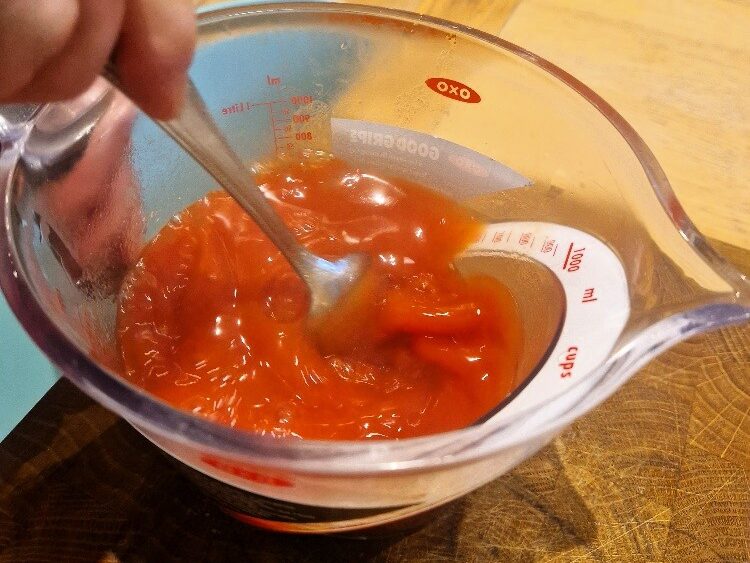
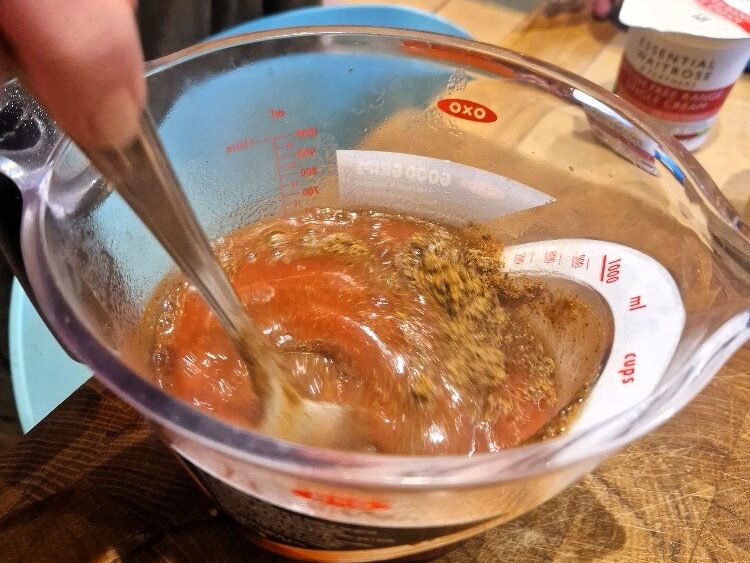
Now add the chilli & ginger, the chopped coriander and the lemon juice, plus a scant teaspoon of caster sugar and a good teaspoon of salt. Mix well again.
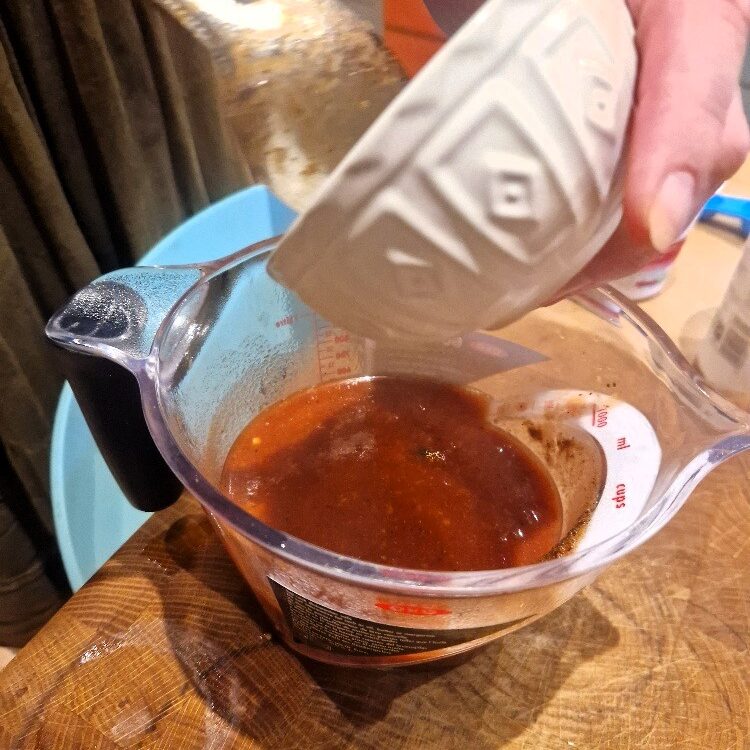
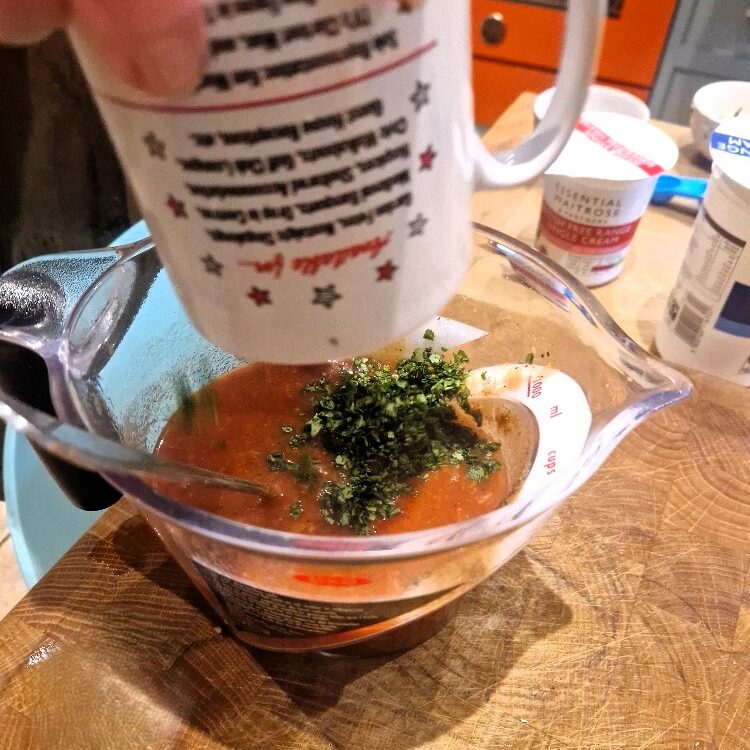
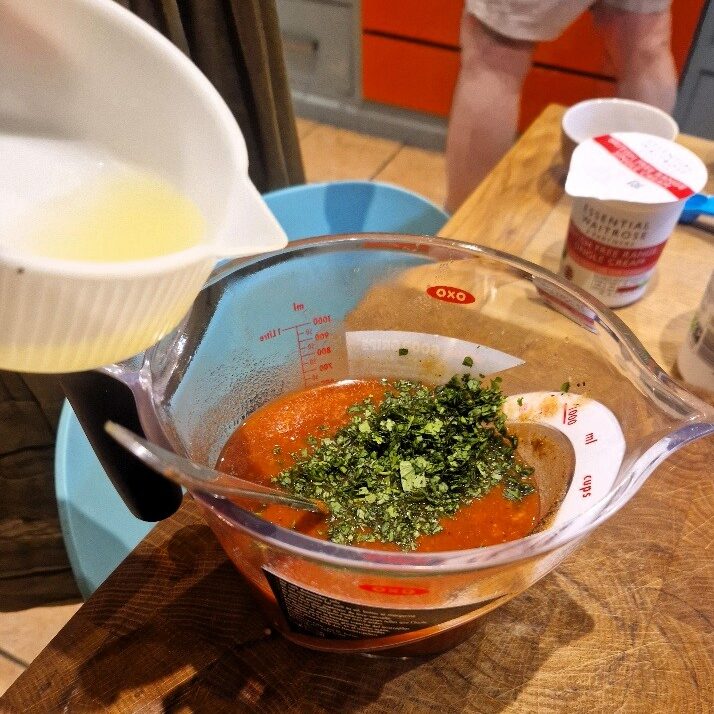
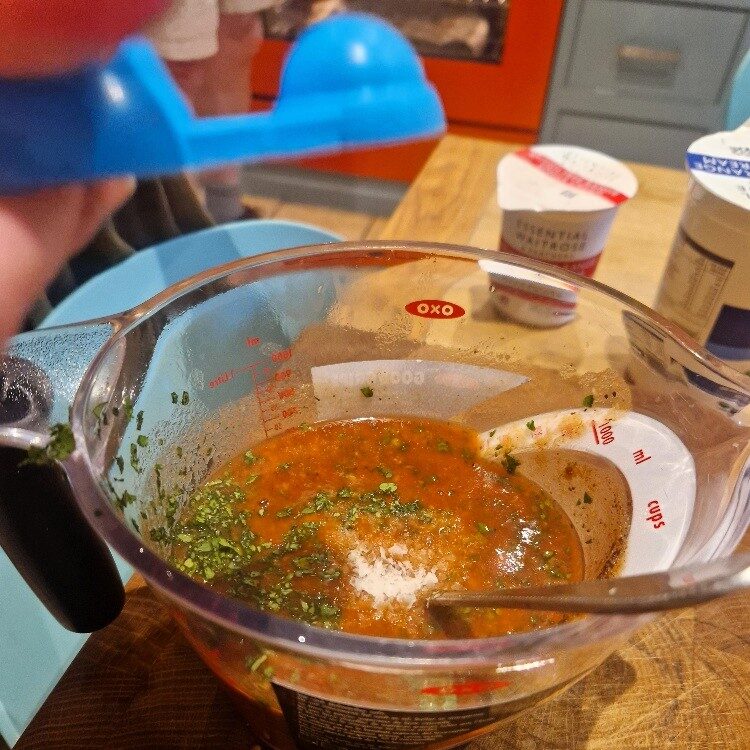
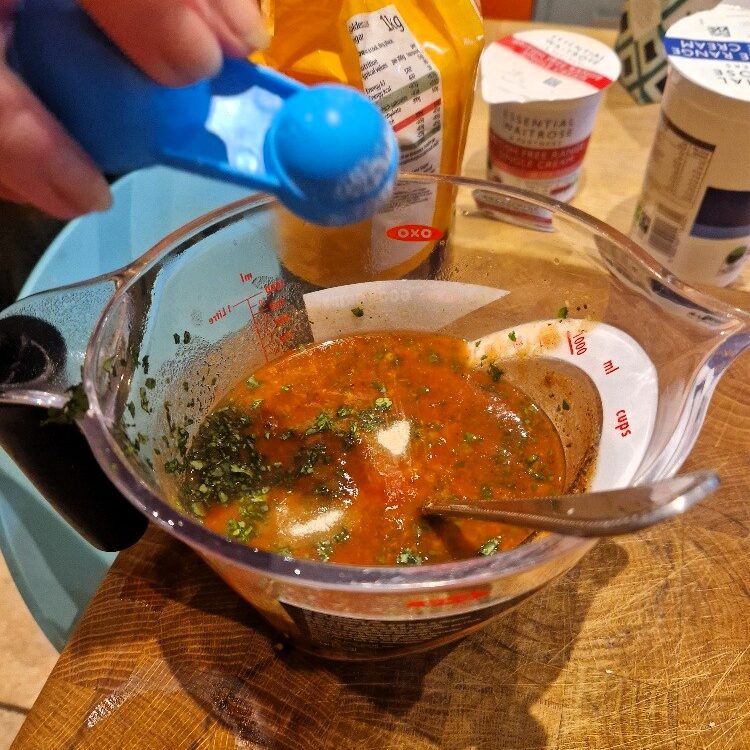
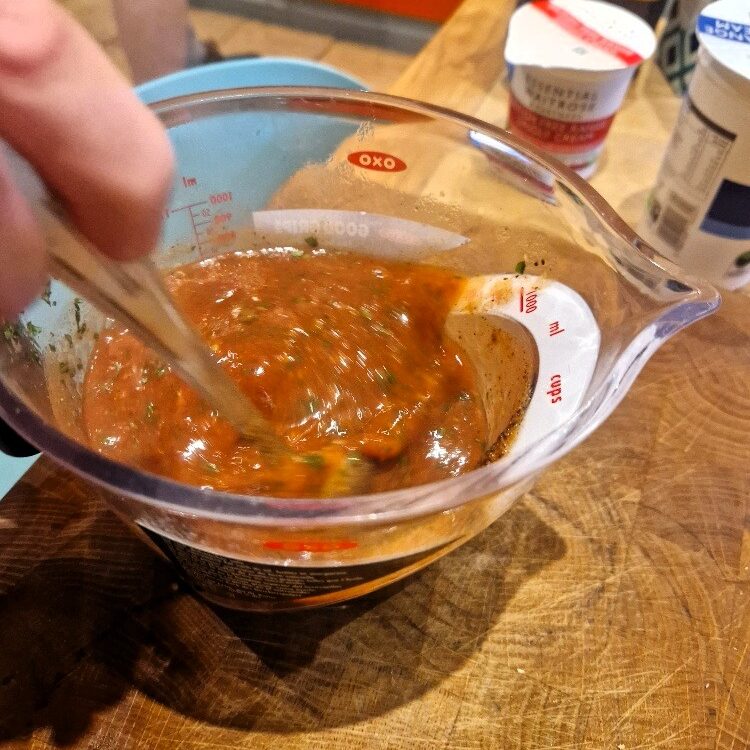
Now add some single cream – 75ml for each 125ml of water used. So for 6 tablespoons of puree and 375ml water this would be 450ml of cream. Stir well until you have a rich, evenly coloured creamy sauce.
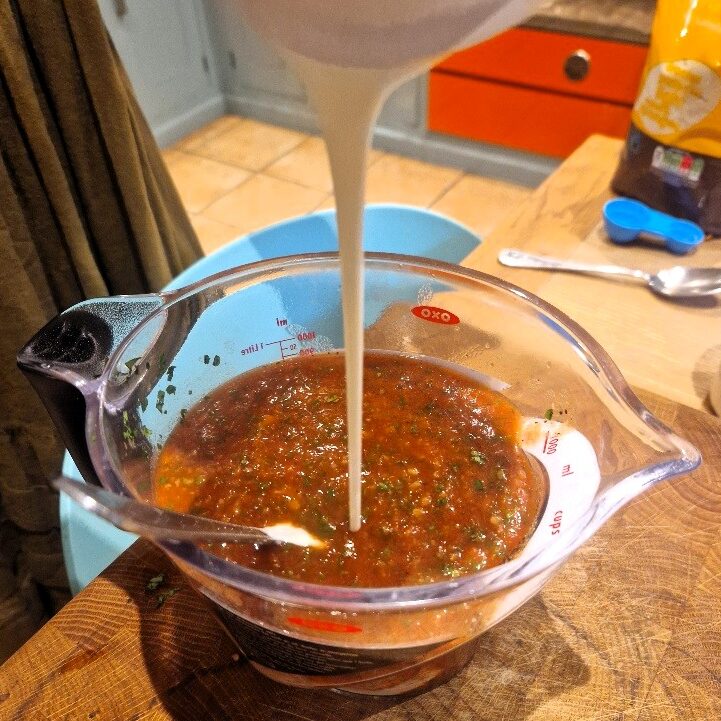
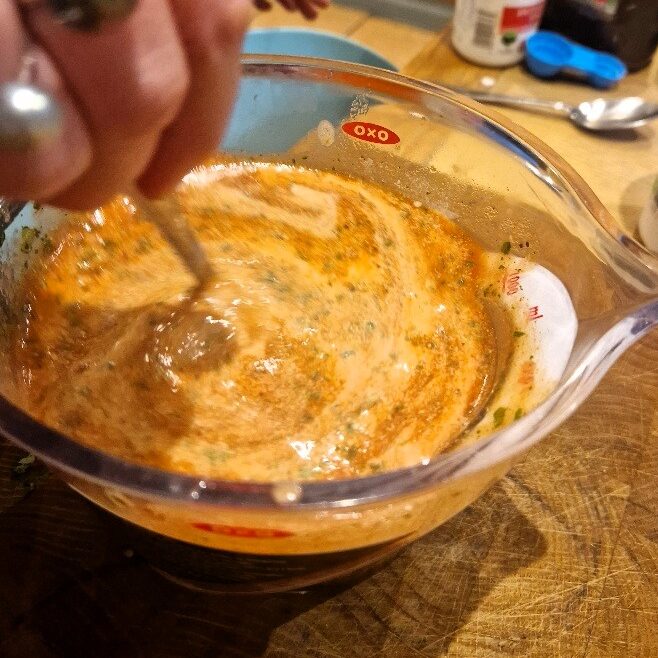
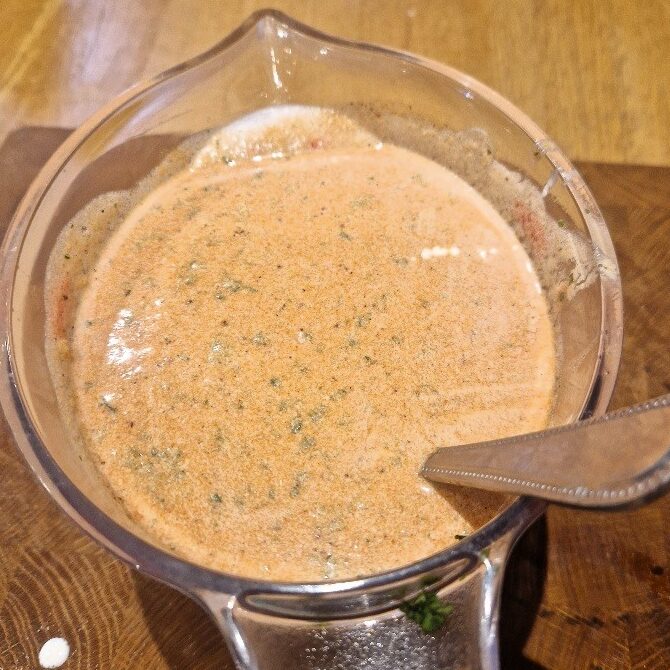
The sauce can be used immediately, or stored in the fridge until just before you are ready to serve.
Finishing & serving the butter chicken tikka
When the chicken and rice are cooked, and you are 5 minutes away from serving, melt some butter in a saucepan or high-sided frying pan to complete the sauce. This sauce requires a lot of butter! About 25g per 125ml of water used in your sauce mix. So for a 375ml sauce mix, use about 150g of butter.
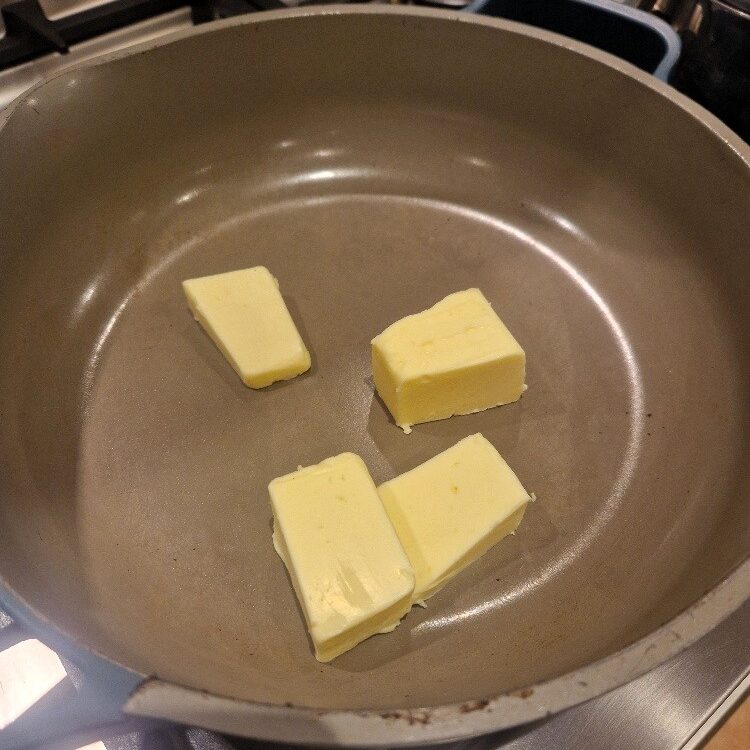
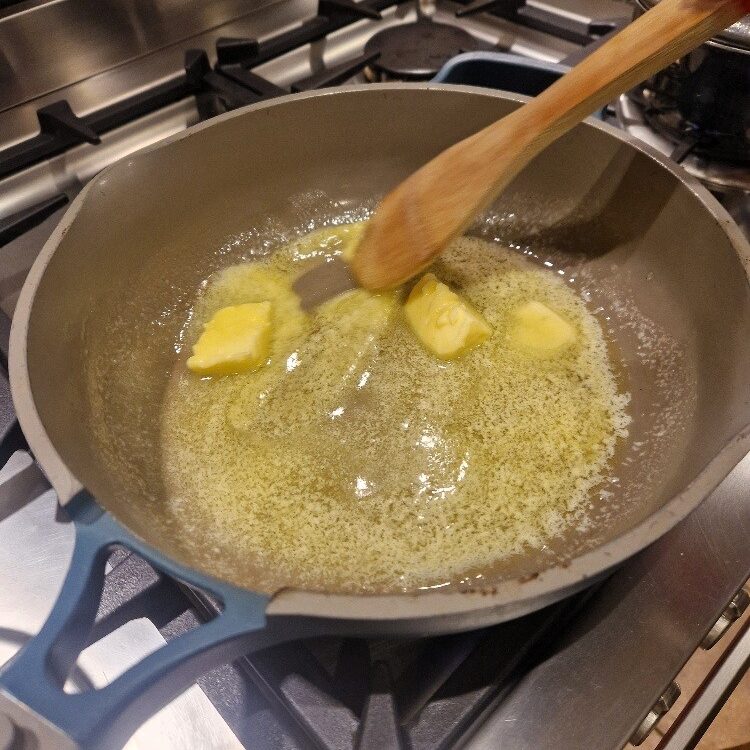
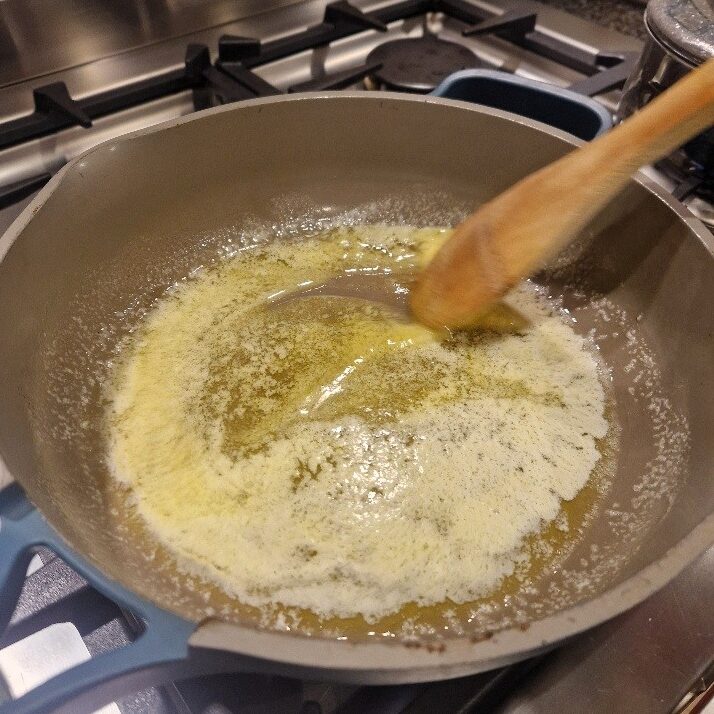
When the butter has melted, slowly add the sauce from the jug (give it a good stir first), stirring as you add. Keep stirring, over a medium heat, until the butter is fully amalgamated and the sauce is heated through. It should look smooth and glossy (and smell delicious!)
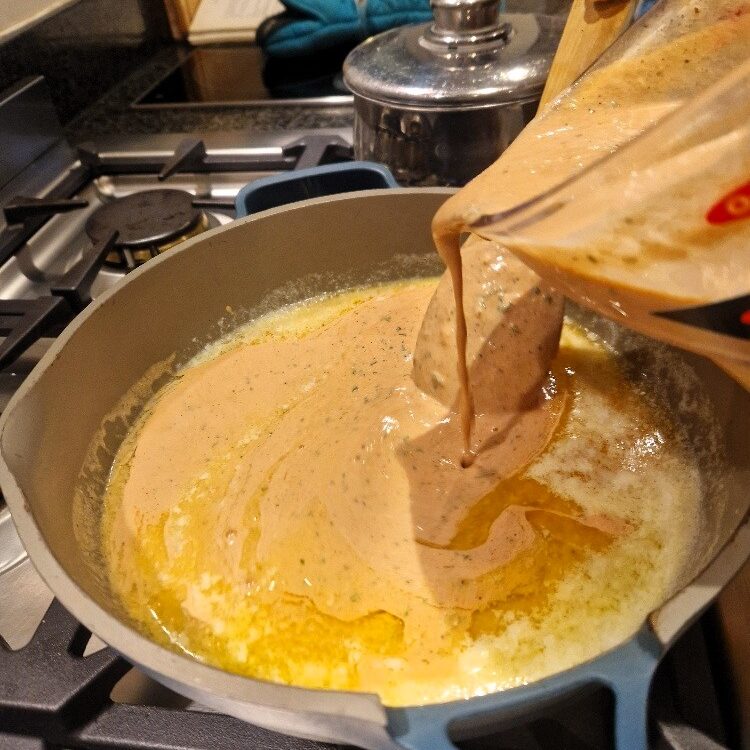
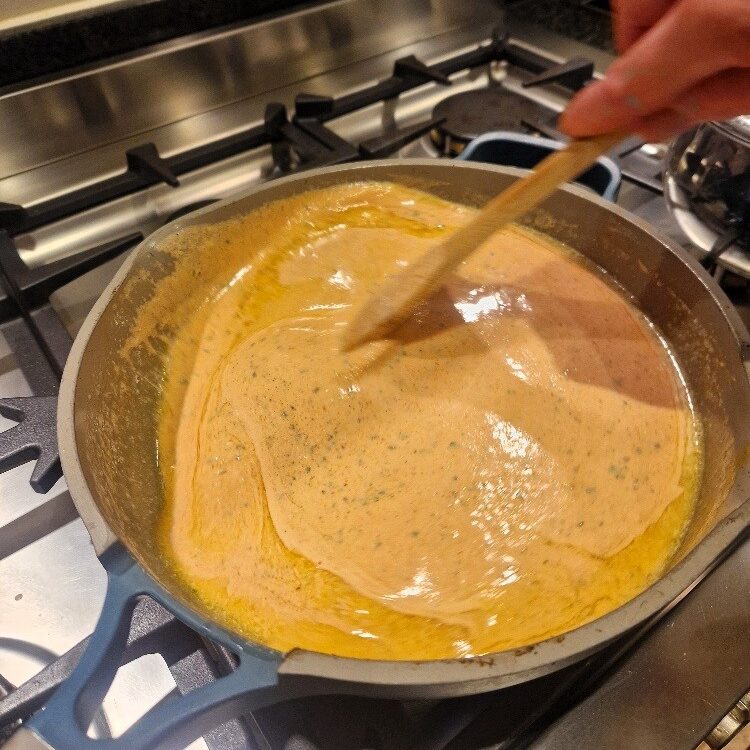
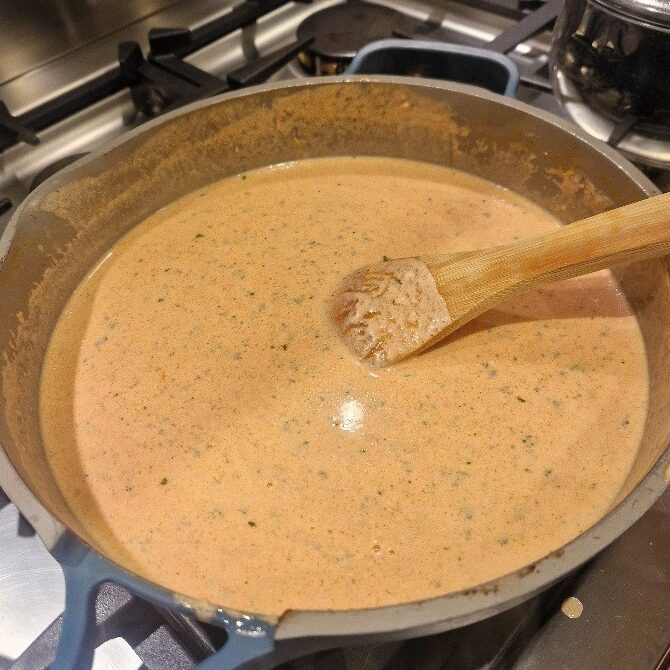
Add the cooked chicken tikka to the sauce, and stir well. You are ready to serve!
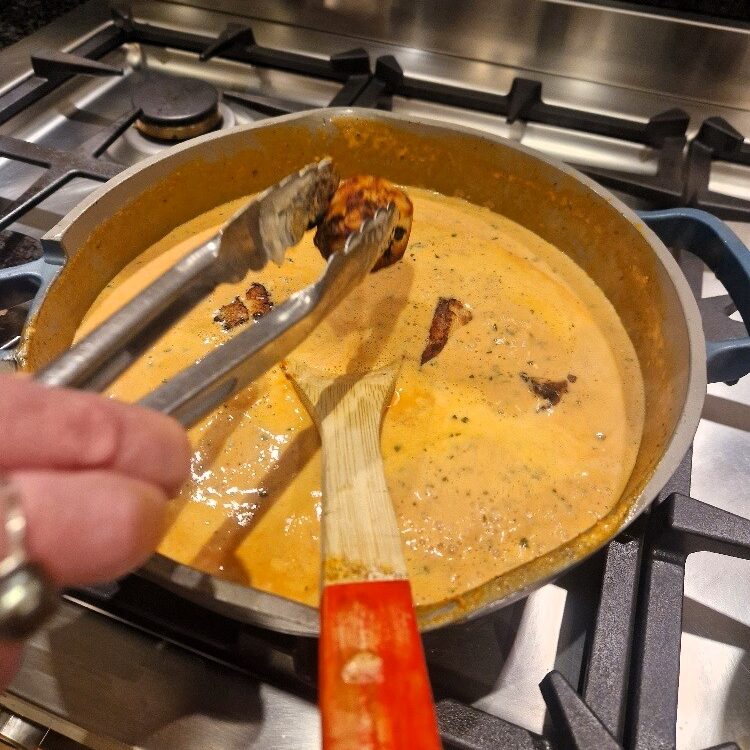
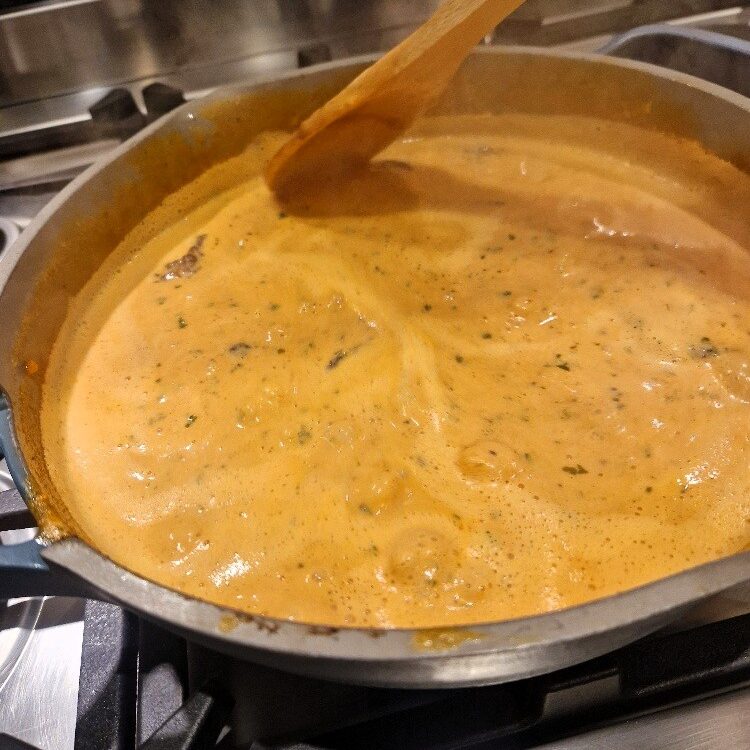
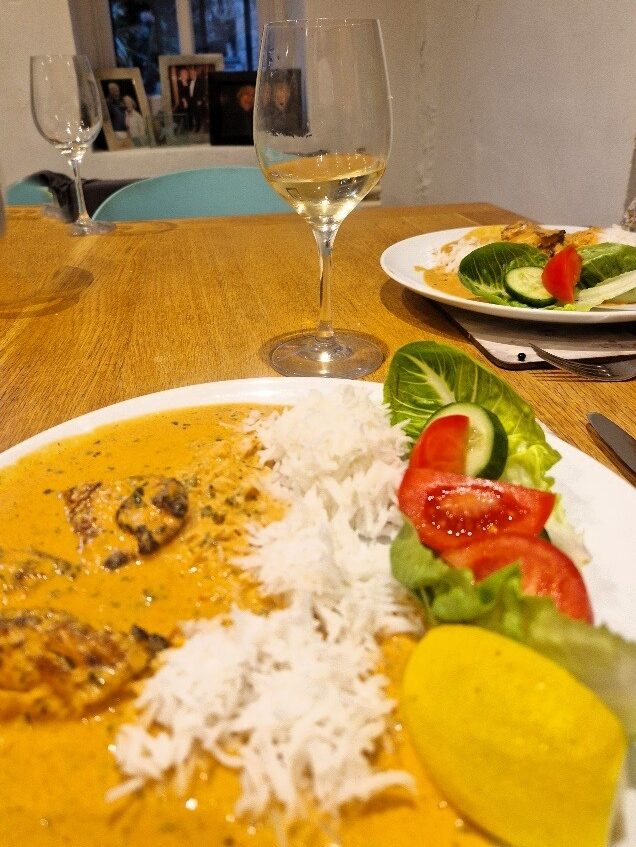
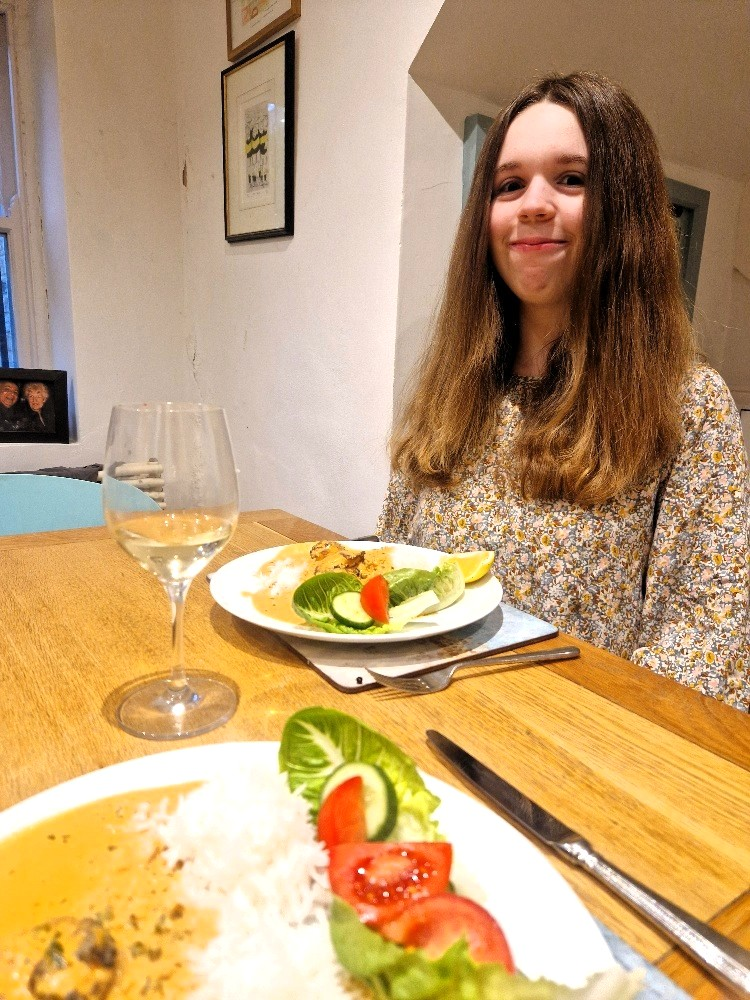
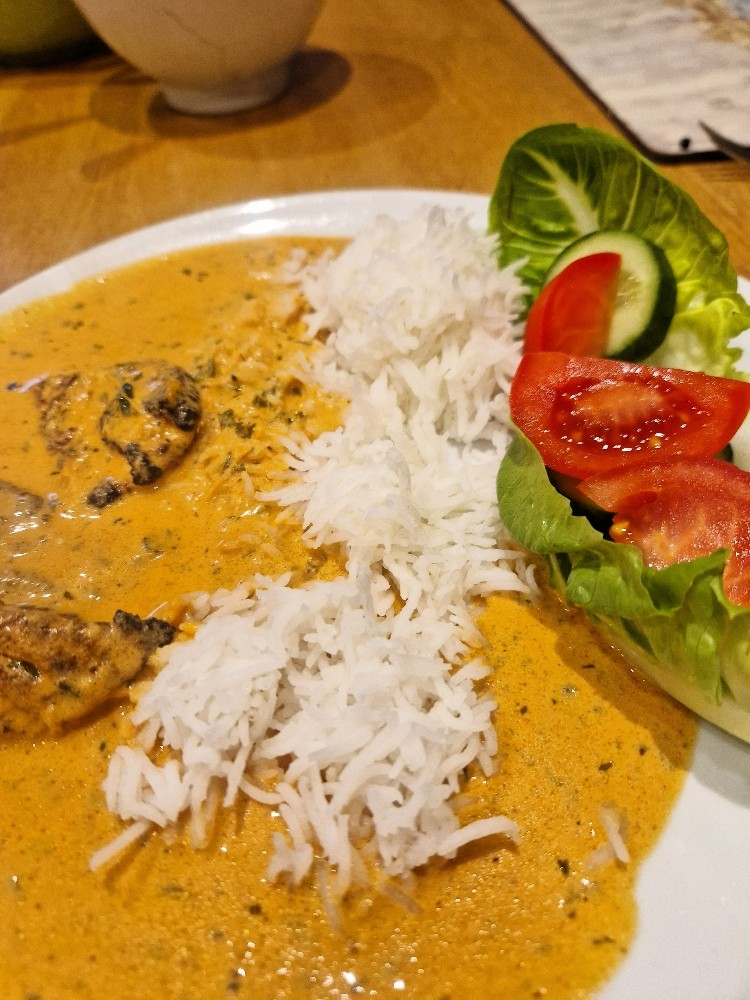
To serve, plate up the rice and salad, then spoon on the butter chicken. We like to separate the salad from the butter chicken with a strip of rice – it looks pretty on the plate, and stops the hot sauce from wilting the salad. Or you could serve the chicken directly on top of some rice, and serve the salad on a separate side plate.
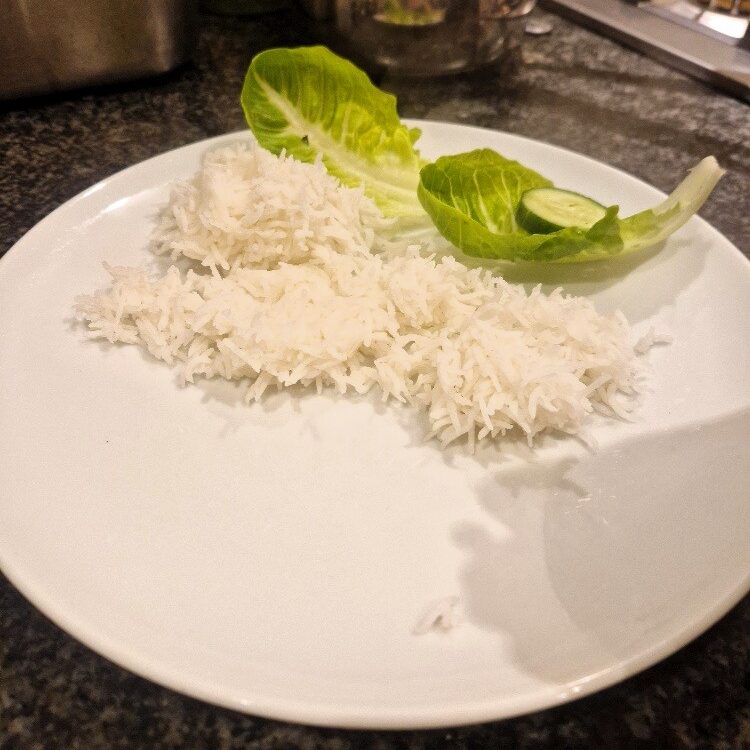
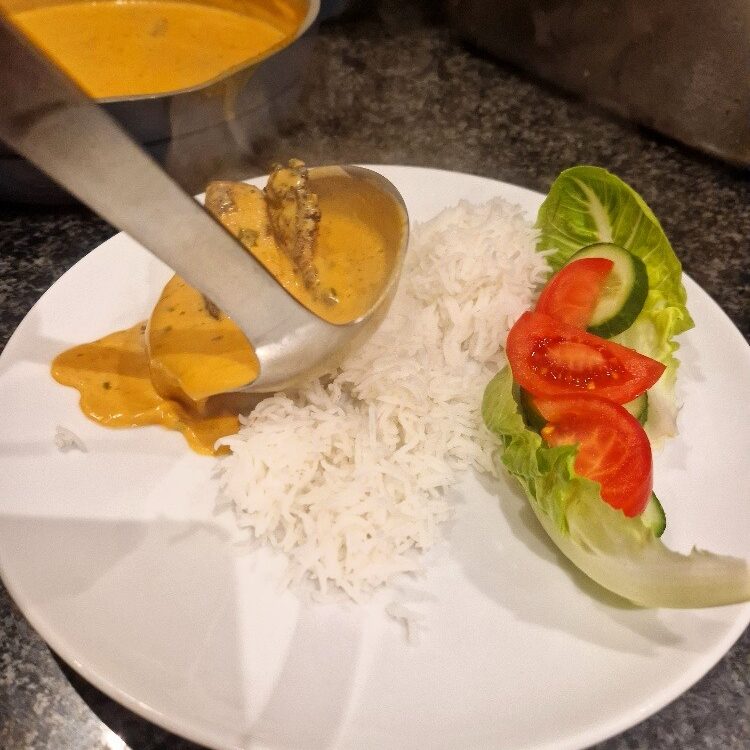
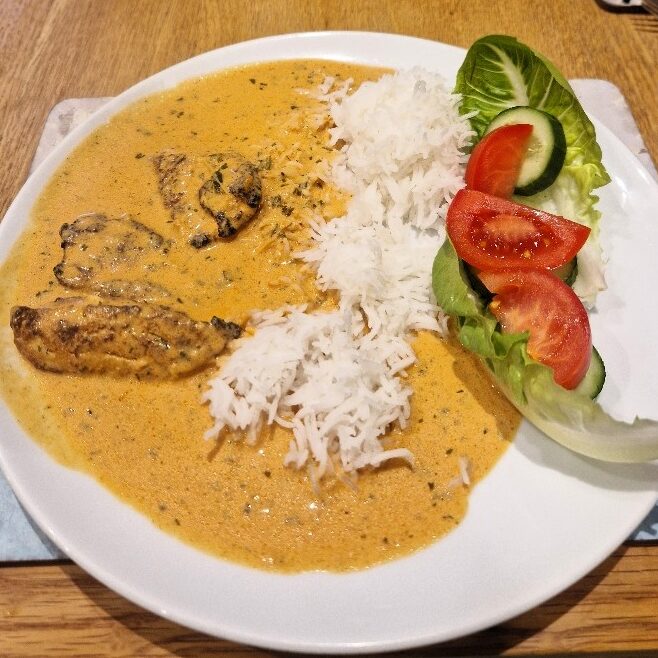
Serve with a wedge of lemon.
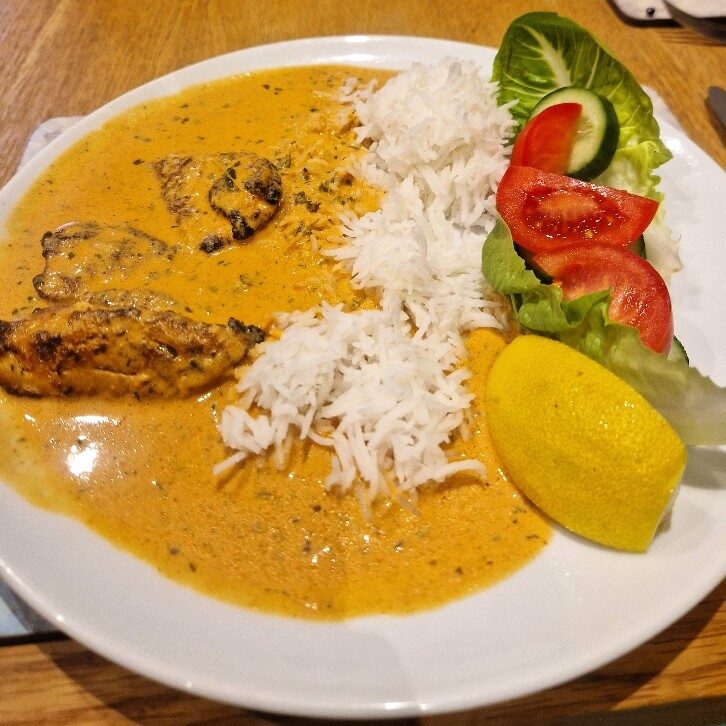
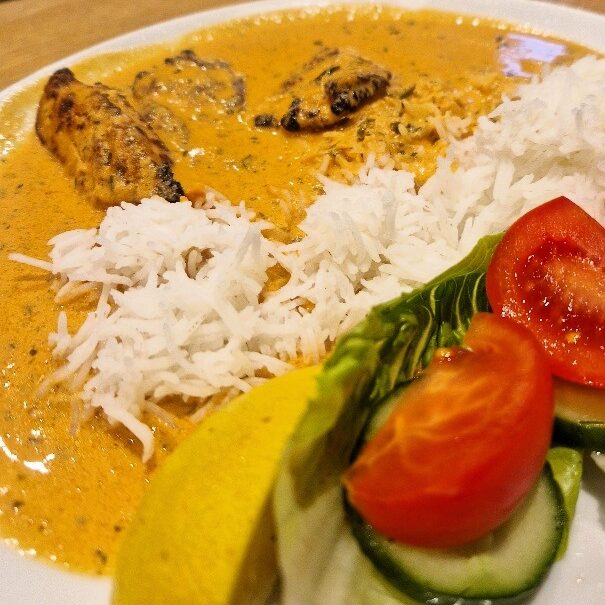
Enjoy!
21. Simple, Silky, Smoky Butter Chicken Tikka
Ingredients
Equipment
Method
- Plan ahead. The longer the chicken in marinated, the more flavourful and tender it will be – at least 6 hours, but ideally 24 hours. You can also make the sauce base ahead of time.
- Dry the chicken on some kitchen paper – do not wash. Trim off any sinew or traces of skin, and cut into pieces. This is easier with scissors. We cut the breast pieces into three or four, depending on size.
- Place on a large plate or baking tray. Cut two long slots into the middle of each piece. The slots should not extend to the sides, and should cut only part way through, to create narrow pockets.
- Juice one lemon. See our lemon Tip.
- Sprinkle the chicken pieces liberally with salt, then pour over the lemon juice. Rub the salt and lemon into the chicken, making sure as much as possible goes into the slots. Set aside while you prepare the marinade, about 15 to 20 minutes.
- Peel and roughly chop the onion. See our onion Tip. Peel and roughly chop the ginger. See our ginger Tip. Peel the garlic, and top & tail and roughly chop the chillies.
- Add the onion, ginger, garlic and chilli to the bowl of a food processor or blender. Pulse a few times to chop them slighlty.
- Add the garam masala and yoghurt and blend well until you have a smooth marinade. Next pass the marinade through a large sieve placed over a bowl. Keep pushing it through with a wooden spoon, scraping off the bottom of the sieve occasionally, until only a fairly dry, fibrous sludge remains in the sieve, and you have a light creamy liquid in the bowl. Discard the sludge.
- Add the chicken pieces, along with any accumulated juices, to the marinade and stir well. Try to get as much marinade into the slots as possible. Allow to steep, covered, in the fridge for at least 6 hours, and ideally 24 hours.
- When you are ready to cook the tikka, heat the oven to its maximum temperature – usually 250C to 270C. Remove the chicken pieces from the marinade and shake off as much of the liquid as possible. This is easiest with tongs. Place to dry on some kitchen towel. Once the chicken has dried a little, turn it over onto some new kitchen towel – you may need to repeat this more than once. If the chicken isn't dry, the marinade will burn on the skin before the chicken is cooked.
- Put the dried chicken pieces onto a baking tray lined with baking paper. Place in the hot oven until cooked right through – this will take between 25 and 40 minutes, depending on size. Check a piece by cutting into it – it should be white to the centre, with no red or pink, and the juices should run clear. It should also look slightly charred on top – which is what you want.
- Reserve, wrapped in foil, in a warm oven (75C to 100C) if your chicken cooks faster than you anticipated and before you are ready to serve.
- Peel & grate the ginger. See our ginger Tip. Top & tail then finely chop the chillies. See our chilli Tip.
- Roast the cumin seeds. To do this, set a small frying pan over a high heat. Add a few teaspoons of cumin seeds and keep stirring until the cumin smell rises and the seeds are lightly browned – a minute or two. Tip the seeds into a mortar or bowl, and grind to a fine powder.
- Now measure out your spice mix. We use 2 teaspoons coriander, 2 teaspoons garam masala, 1 teaspoon cayenne and 2 teaspoons of the roasted ground cumin.
- Juice a lemon. See our lemon Tip. Also chop the fresh coriander finely. See our herb Tip.
- Measure the tomato puree into a large jug. Use 1 tablespoon per 125ml of the water you will add later. 6 tablespoons is a good amount for four chicken breasts.
- You can now leave the sauce preparation at this stage, and make it up just before you serve, or make the sauce up now and store in the fridge – it will keep for a few hours. We tend to pause here if prepping ahead.
- To make the sauce base, first add boiling water to the tomato puree in the jug. For 6 tablespoons of puree add 375ml water. Stir well to dissolve. Add the spice mix, ginger & chilli, chopped coriander and the lemon juice and stir to combine, Add the salt & sugar and stir again. Add the cream and stir well until you have a smooth, uniform sauce. This can be used immediately or kept in the fridge until you are ready to serve.
- Cook the rice. See our rice Tip for detailed instructions.
- Cut the lemon into quarters, lengthwise. Trim off any stem or white pith from the ends.
- For the side salad, slice the cucumber into medium rounds and cut the tomatoes into bite-sized pieces. Separate some lettuce leaves.
- Just before you are ready to serve, finish the sauce. Melt the butter in a large saucepan or high-sided frying pan. Slowly pour the sauce from the jug into the hot butter, stirring as you add. Keep stirring until the butter is fully amalgamated and you have a smooth, rich, glossy sauce.
- Add the cooked chicken tikka to the sauce and stir. Heat through.
- Serve the butter chicken with the rice, and the salad on the side, plus a wedge of lemon.
- Enjoy!