


Skills you will learn in this recipe
Making a slow-cooked dal; using Indian spices
Links to the last recipe
Cooking with lentils; peeling fresh tomatoes
Taid loved lentils, and both Bibi and Taid enjoyed cooking and eating Indian food (a slightly unusual thing to make at home in Cardiff in the 1970s and 80s!). So Bibi would often make dals, using various types of lentils. This one, made with split red lentils, or masoor dal, is the one we most remember. We’re not sure where she got the recipe, probably half invented, with input from Taid, but also probably influenced, later at least, by Madhur Jaffrey’s famous cooking shows on TV, and her excellent books.
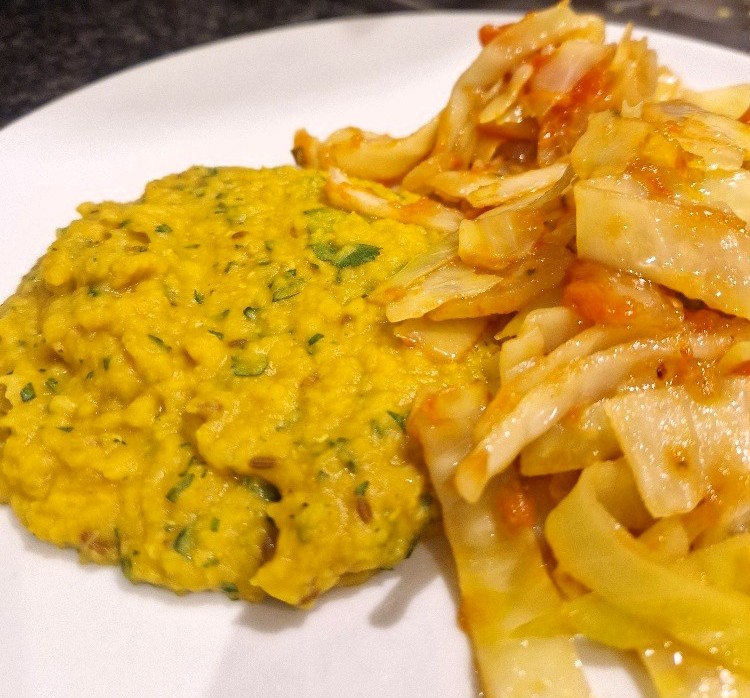
Dals come in so many forms – thick, thin, spicy, plain, with vegetables or without – you can follow a recipe, or just experiment with what you like! We personally like a dal that is simple, thick and comforting, and slightly at the bland end – the perfect foil to something spicier, or just a lovely satisfying accompaniment to Indian breads. And this is just what Bibi’s recipe is. Today we served it with some spicy cabbage, a favourite of ours, but you can pair it with any Indian recipe, meat or vegetarian. Philip today in fact had it with some leftover whole curried chicken and rice. But we wanted a simple vegetarian dish, and our cabbage with dal combo is a very good one – the creamy dal nicely offsetting the juicy, spicy, fresh cabbage.
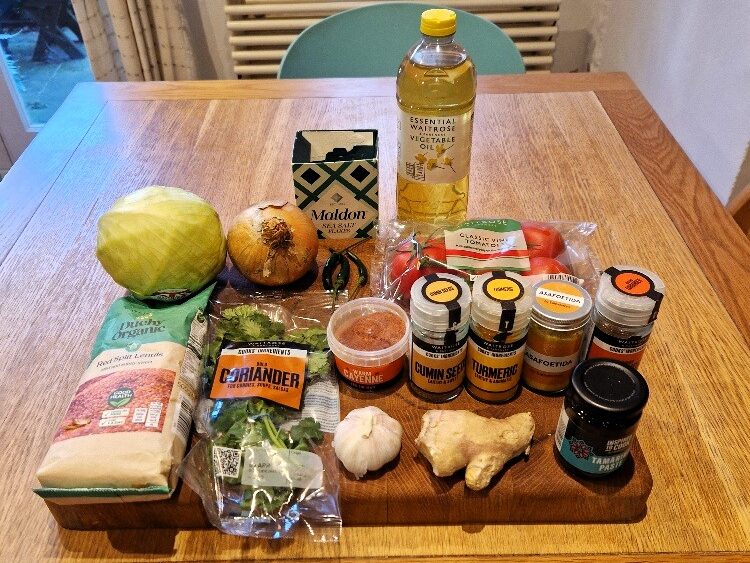
We find the key to a really smooth, creamy dal, particularly with this type of lentils, is a long, slow cook, so plan well ahead – you’ll need to cook the lentils for about 1h 30 minutes before finishing the dish. But until the last half hour or so they don’t really need any attention, just the odd check and stir. The cabbage can also be made slightly ahead of time, and reheated before serving. Don’t let it sit too long, as it will lose its crispness, but you can certainly use the lentil cooking time to get ahead with it.
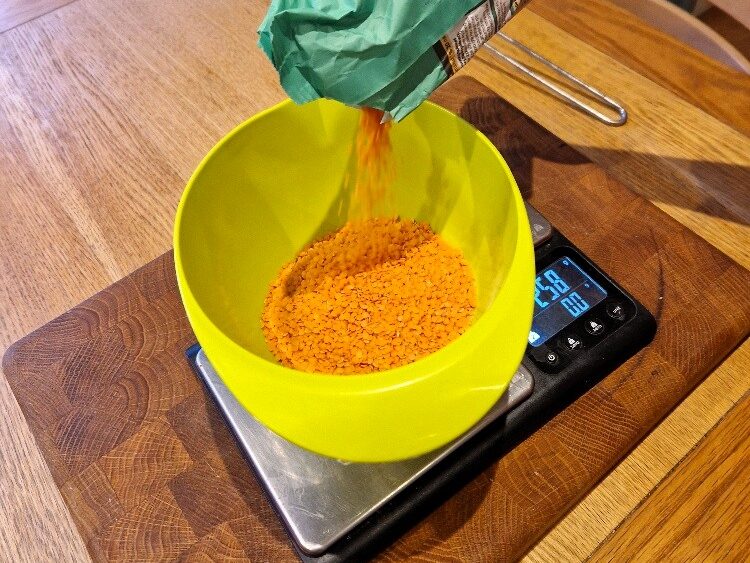
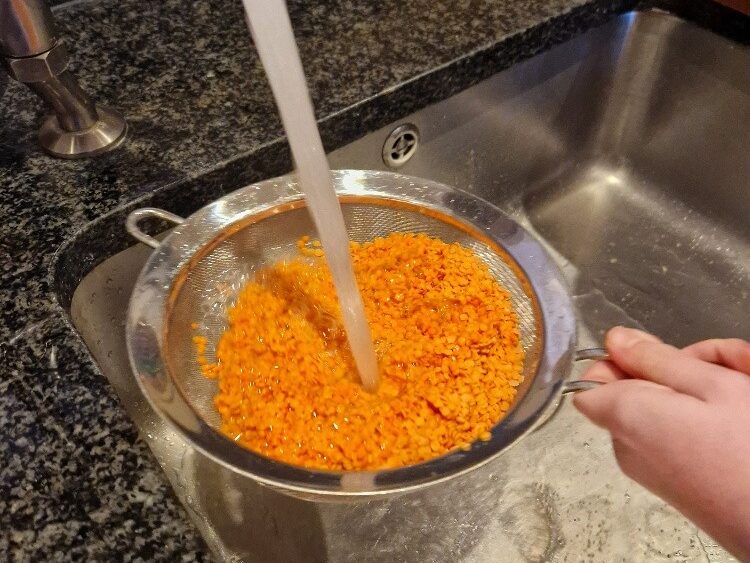
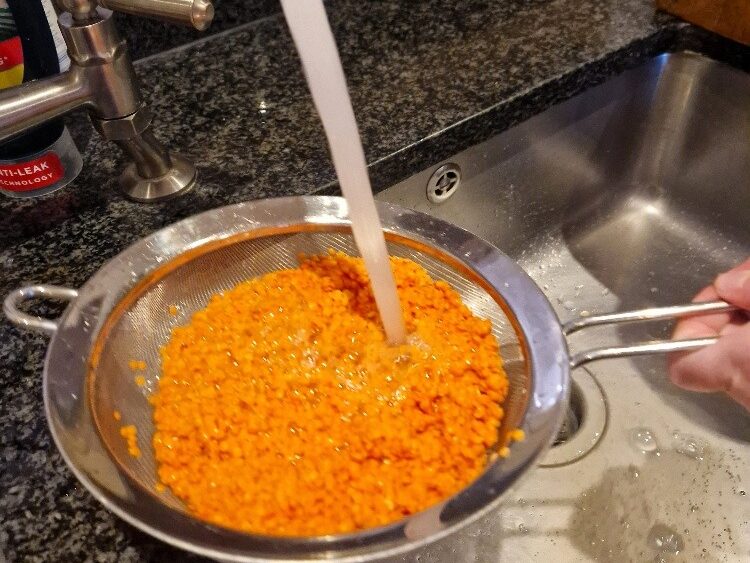
Start by weighing and prepping the lentils. You don’t need to soak split red lentils, especially if you are slow-cooking them, as here. You do, however, need to check them over for small stones, and give them a good wash in a sieve.

Jake sticks his nose in
Red or yellow lentils work well in dals, and you could use yellow here instead – or indeed use yellow split peas – if you prefer or have them in your store cupboard. See our previous recipe, Spanish Lentil Stew, for our guide to choosing lentils.
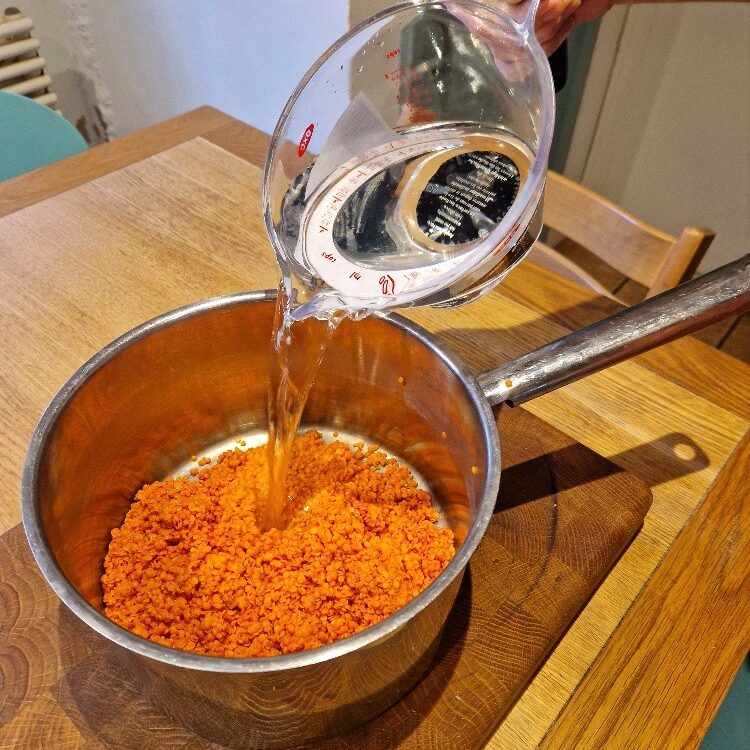
Place the washed lentils in a large saucepan, and add 1 litre of cold water for every 200g lentils. Today we wanted a generous side dish for three people, plus extra to keep, so we used 400g lentils and 2l water, which gave us plenty of leftover dal (at least another 2 to 3 portions). Set the pan over a medium to high heat, and bring to the boil.
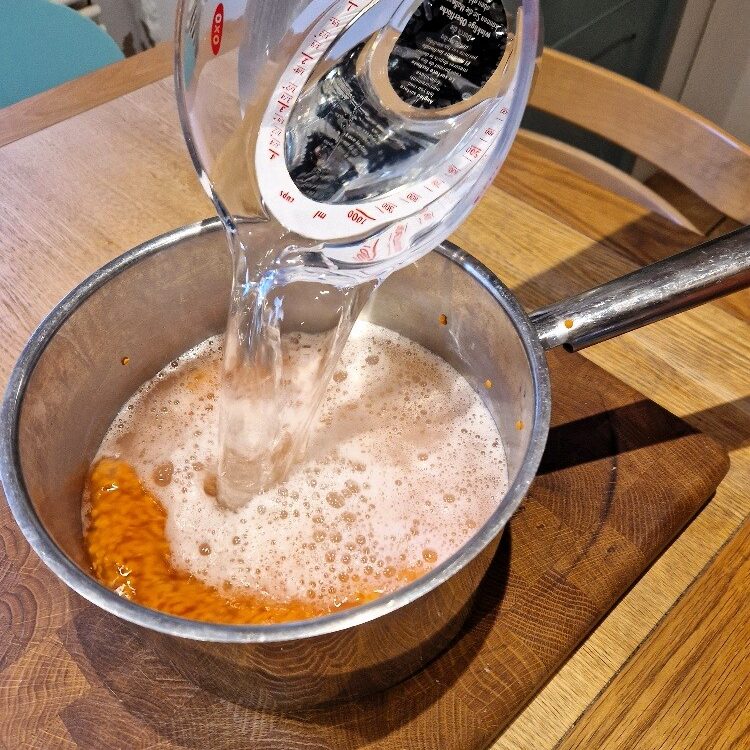
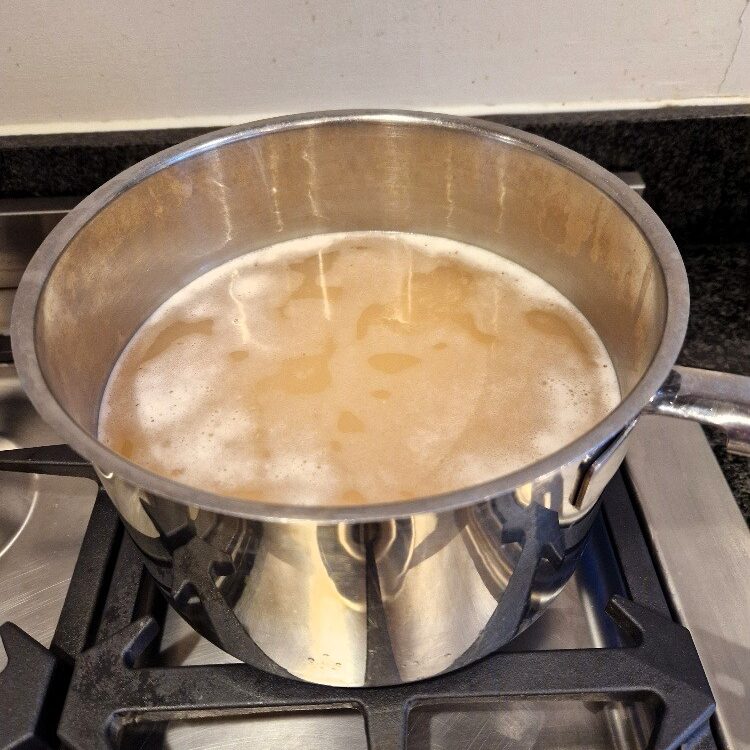
You may notice that the lentils look frothy and/or scummy. This is normal, but you will need to remove these impurities in the next stage.
While the lentils are coming to the boil, prep the ginger and garlic. First slice the ginger, leaving the skin on, into three or four large but thin pieces. Reserve a good knob of ginger for the cabbage dish.
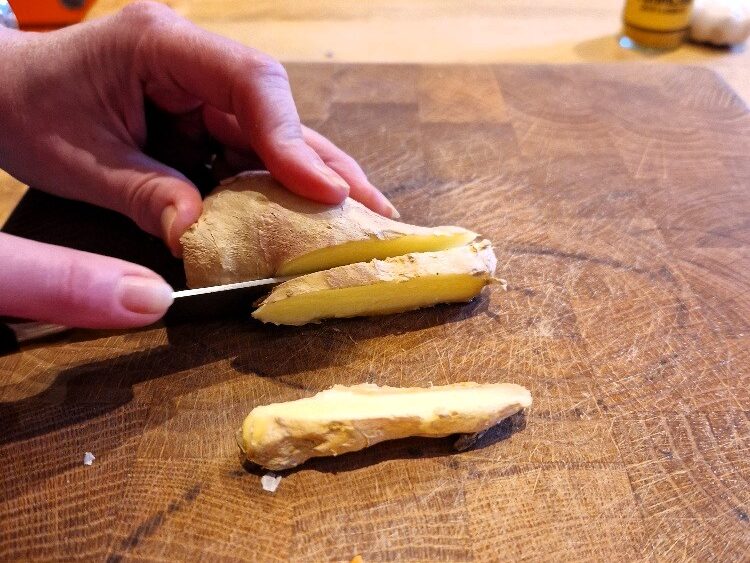
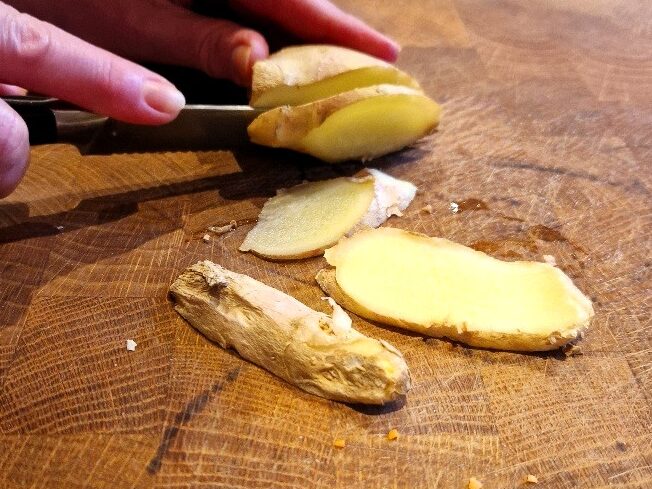
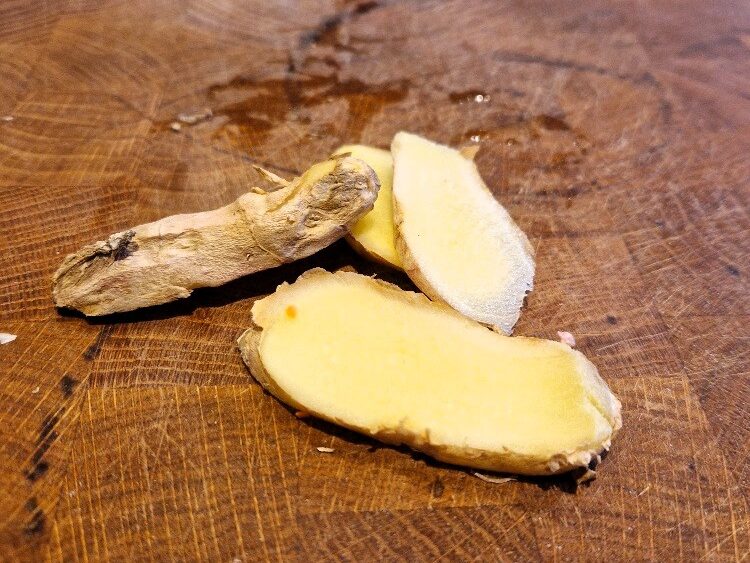
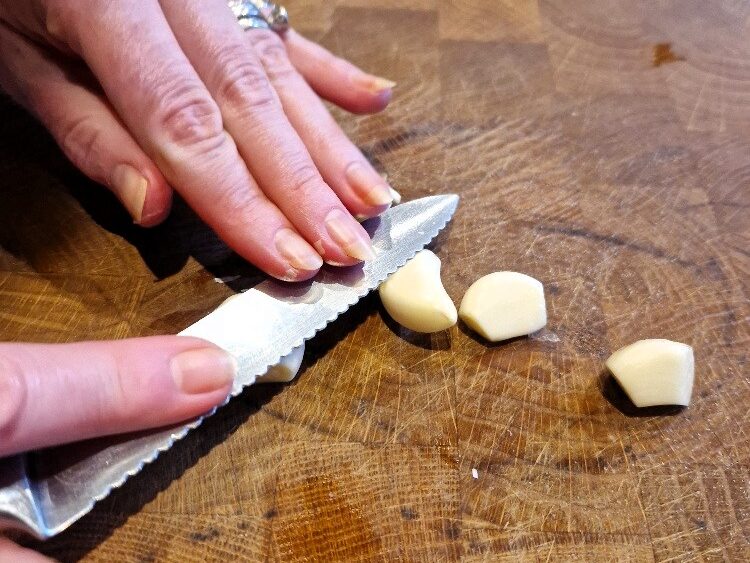
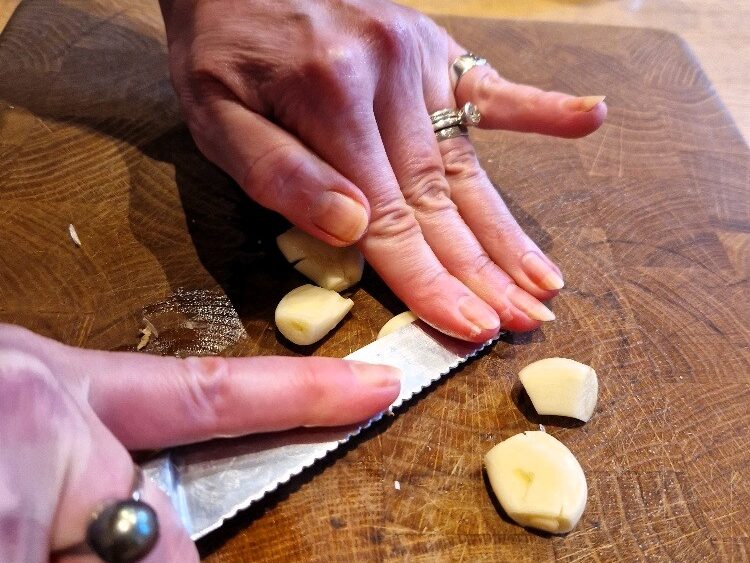
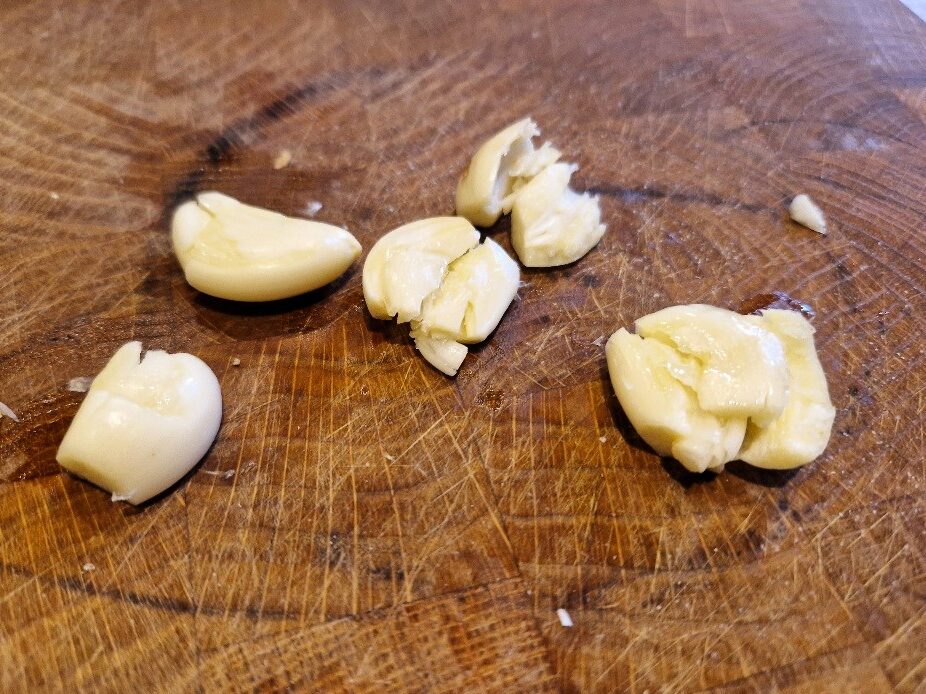
Remove the skins from a few cloves of garlic, and just lightly crush them with the side of your knife – you want to bruise them so the juices run, but not smash them up. Press down hard on the knife with your fingers until you feel the clove just yield.
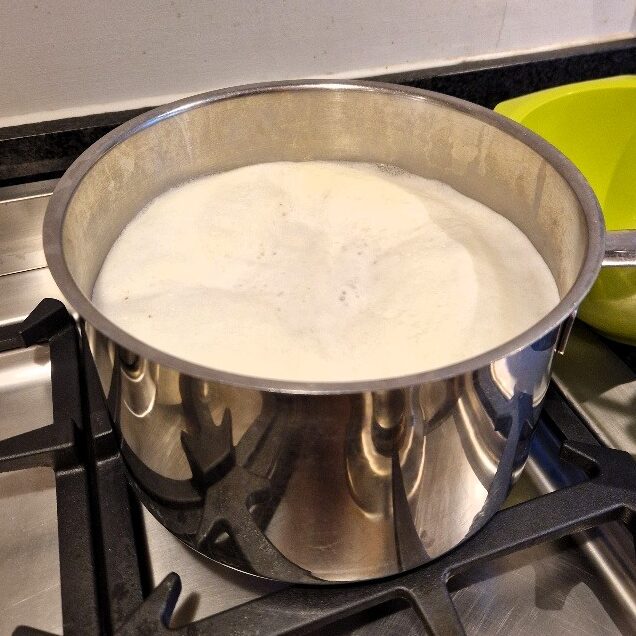
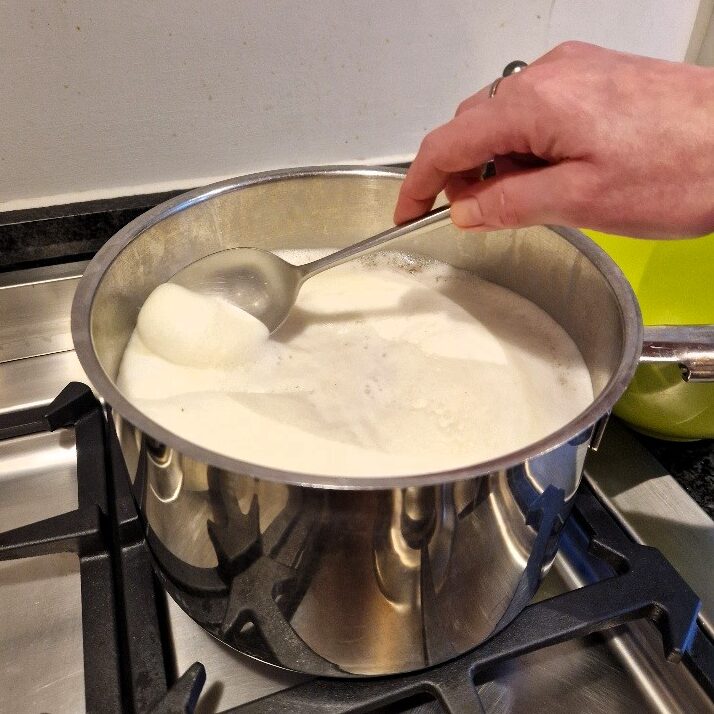
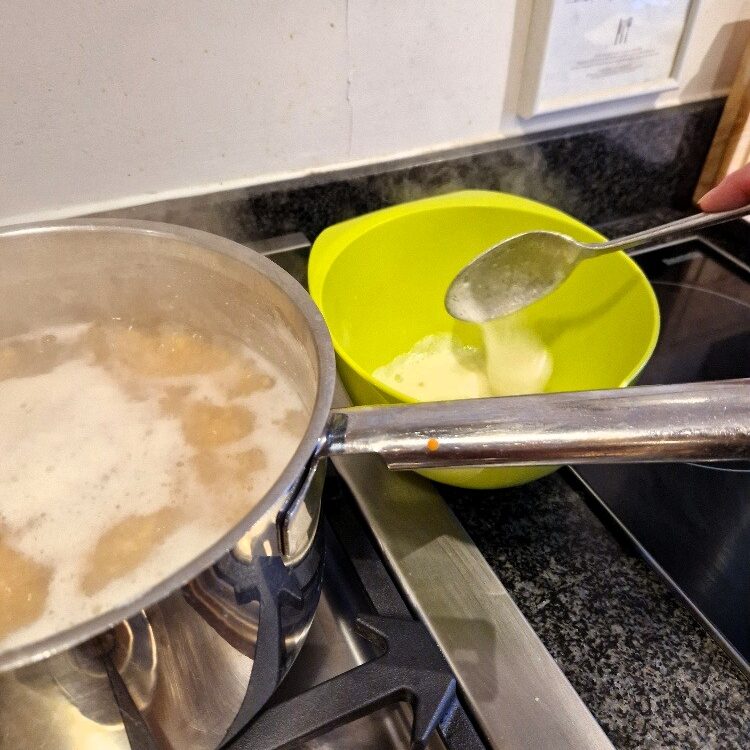
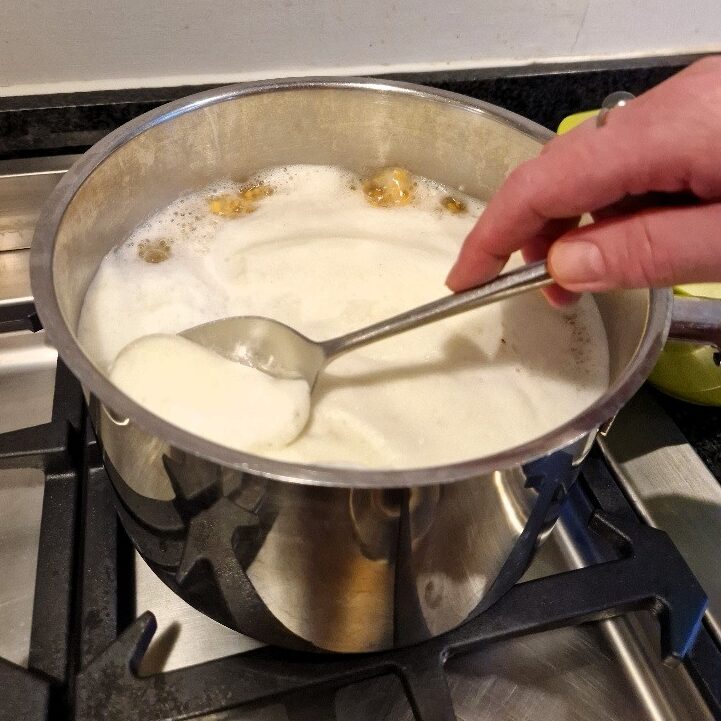
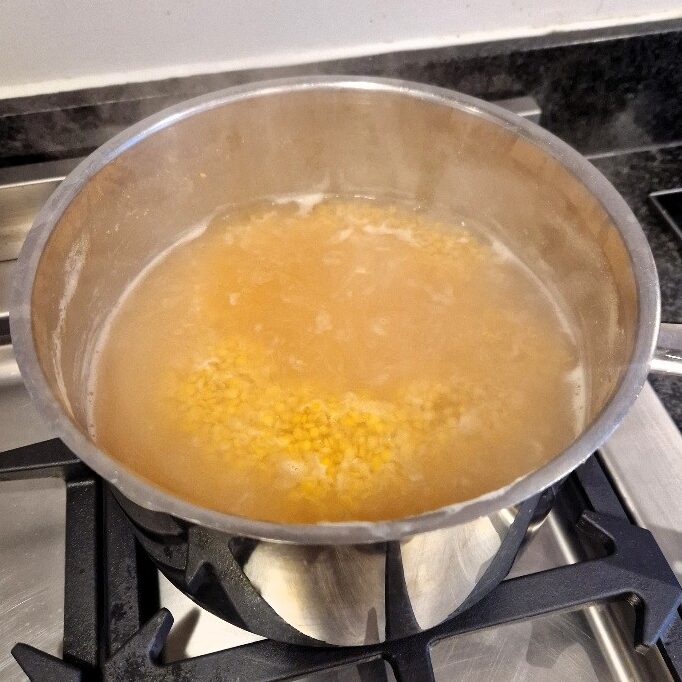
When the lentils are at a good rolling boil, a large layer of white foam will form on the top. You need to skim this off thoroughly or the lentils will be bitter. This is easy to do. Turn the heat down slightly (so the lentils don’t spit and scald you), and use a large spoon to lift off the surface foam. Place in a bowl and discard. Keep going until the top of your lentil water is relatively clear. It is definitely worth doing a thorough job, but a few strands left at the very edges are OK if you can’t quite catch them!
Jake sticks his nose in
A good tip is to play around with the heat when skimming. A lower heat will make it easier and safer to put the spoon in, but if you turn the heat back up, more impurities will probably rise to the surface – keep going!
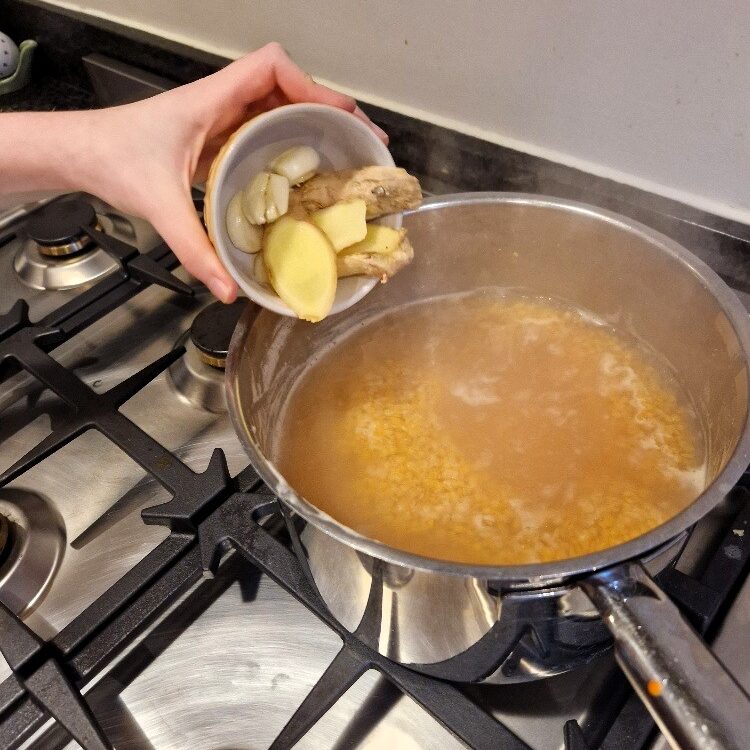
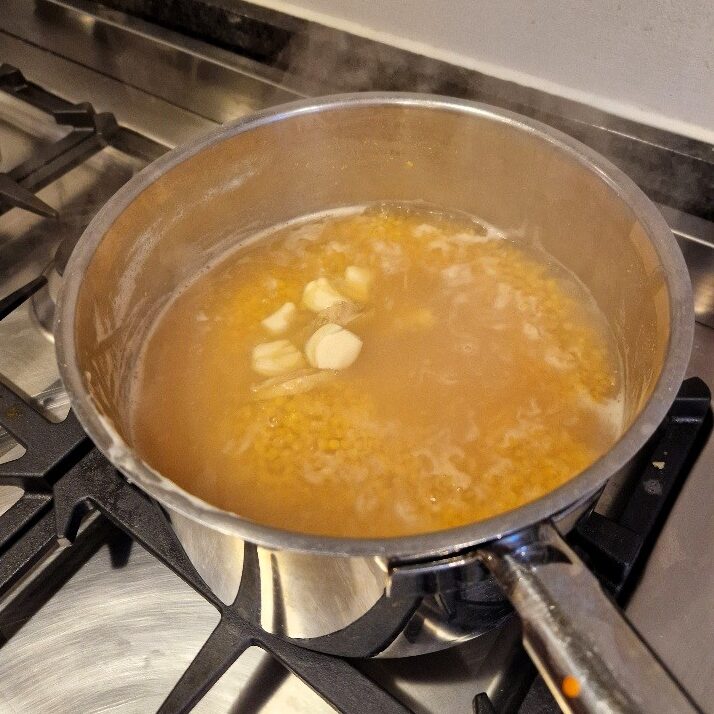
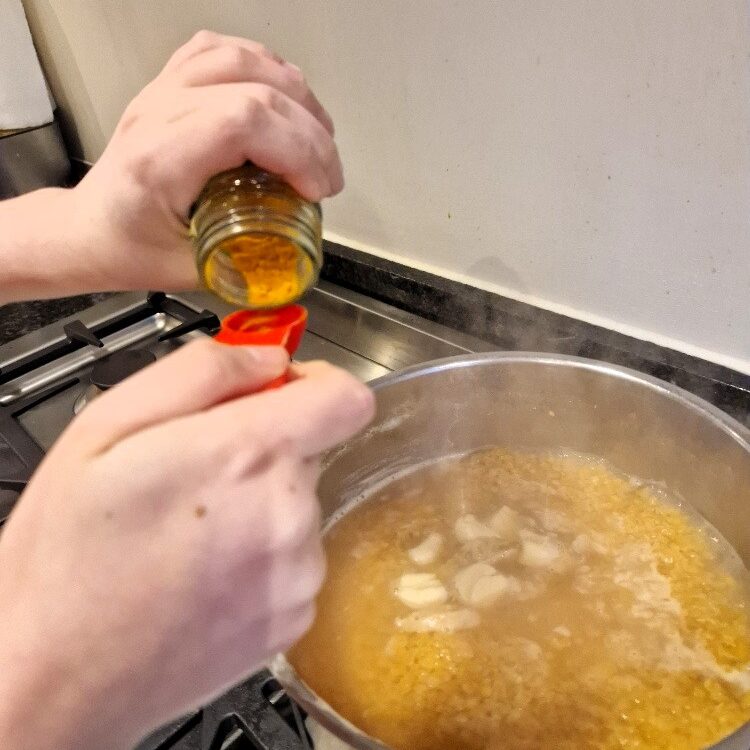
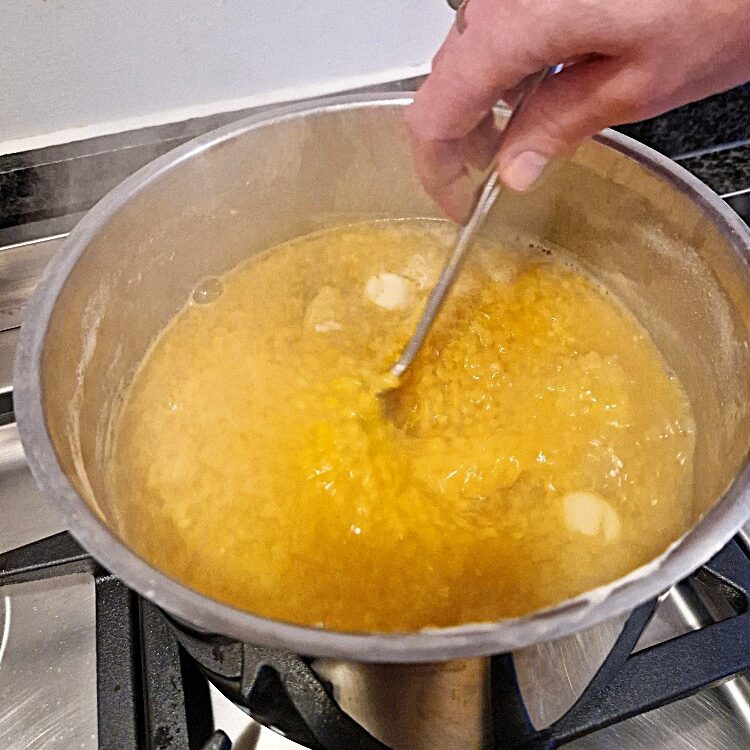
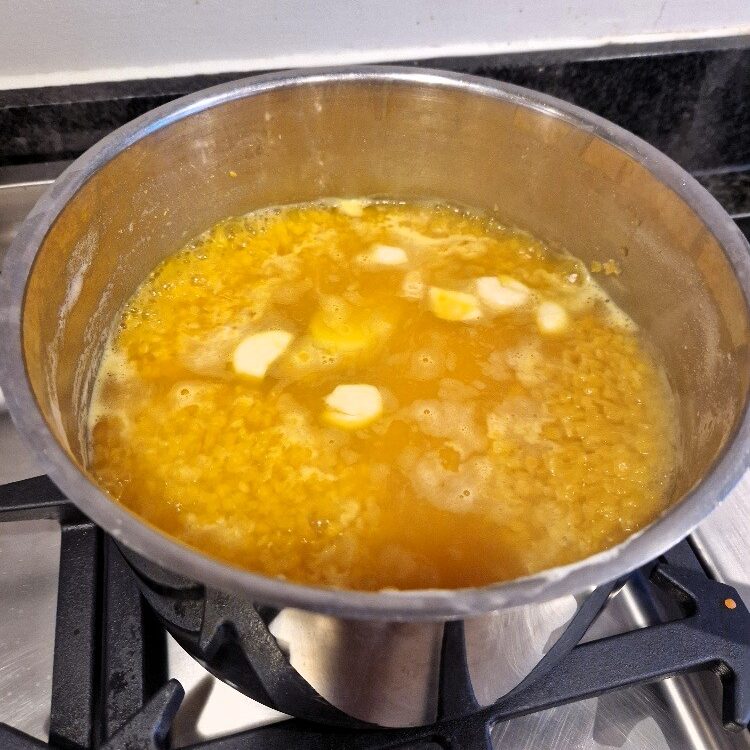
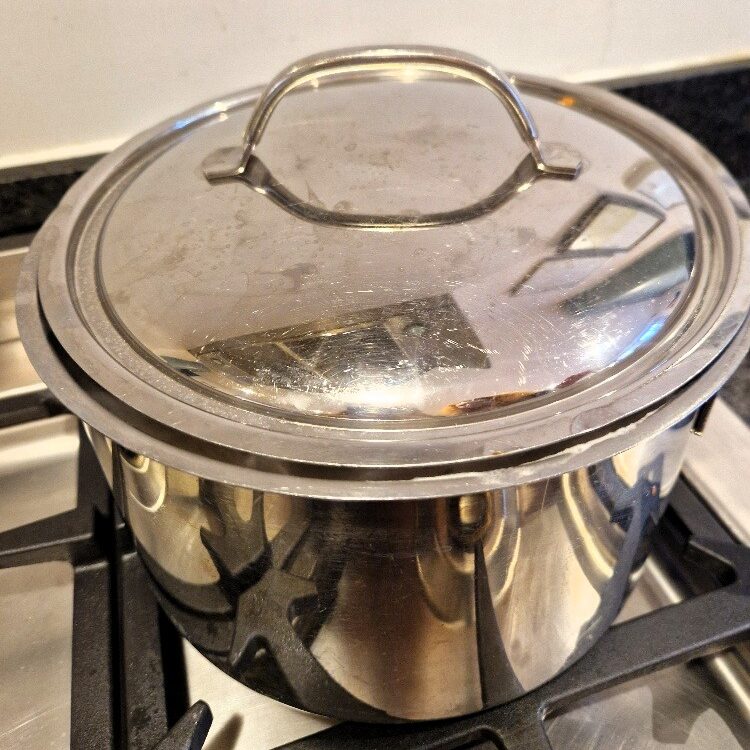
Next add the ginger slices, garlic, and turmeric. Bring the pan back to the boil, then turn the heat right down and cover with a lid. Leave a very small crack for a little steam to escape, as shown below. Do not add salt at this stage. Cook for about an hour, checking and stirring occasionally. During the last half hour you will need to give the lentils more attention, but for the first hour or so, you can pretty much leave them.
Jake sticks his nose in
The reason you don’t add salt now is that it is reputed to make the lentils tough. This is disputed, but we like to err or the side of caution, and do as Bibi did and add it later! Also be careful when using turmeric. It’s a lovely spice, but it can stain porous things like wooden spoons, plastic bowls (and you!)
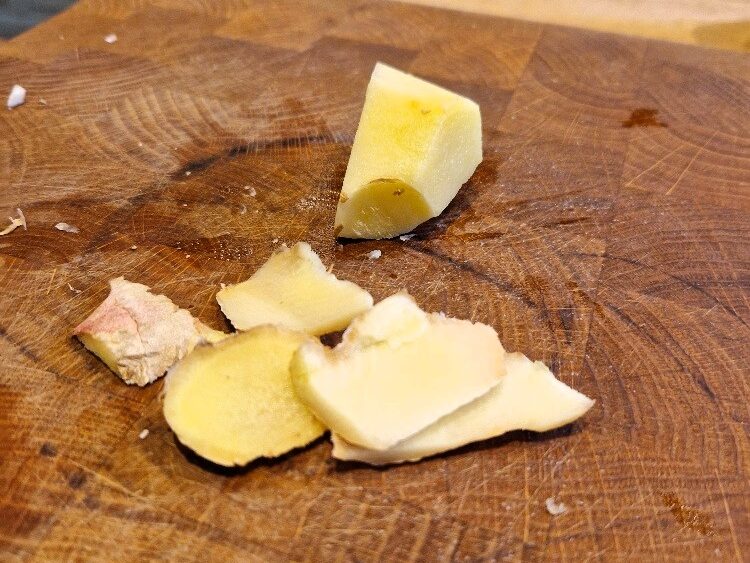
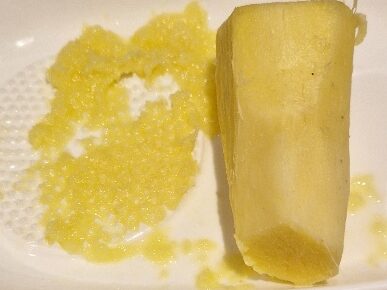
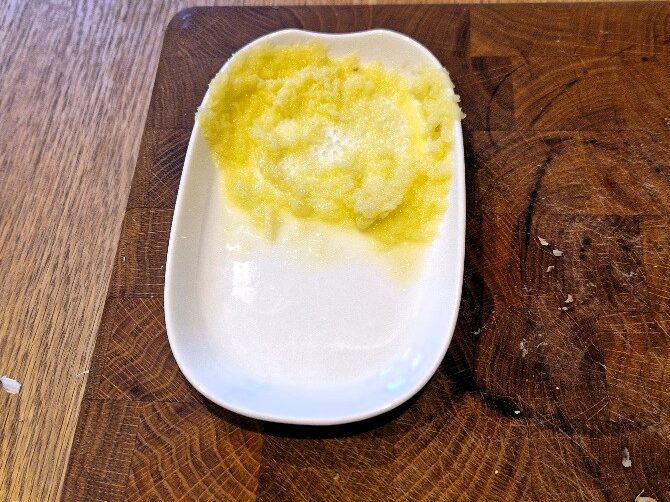
While the lentils are cooking, start the prep for any accompanying dish, in our case the spicy cabbage. First peel & grate the rest of the ginger, find out how in our ginger Tip.
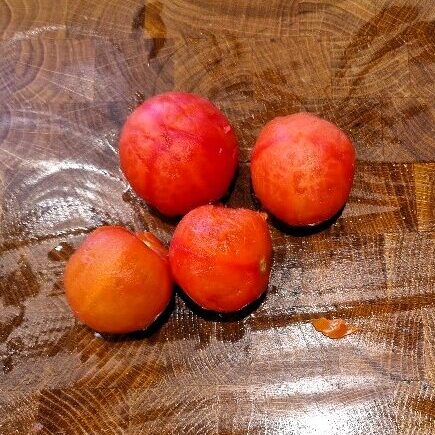
Next, peel the tomatoes, find out how in our tomato Tip. Stab them all over with a sharp knife, then soak in boiling water until the skins loosen. Cool and remove the skin – all the details are in our Tip.
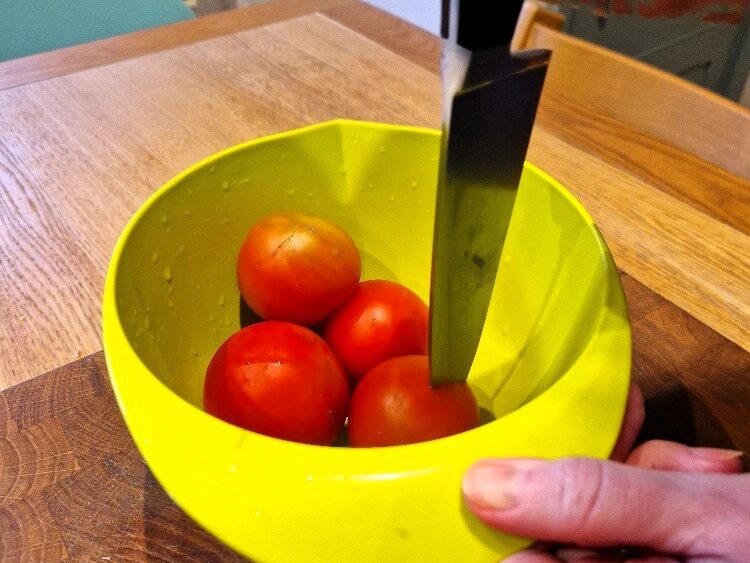
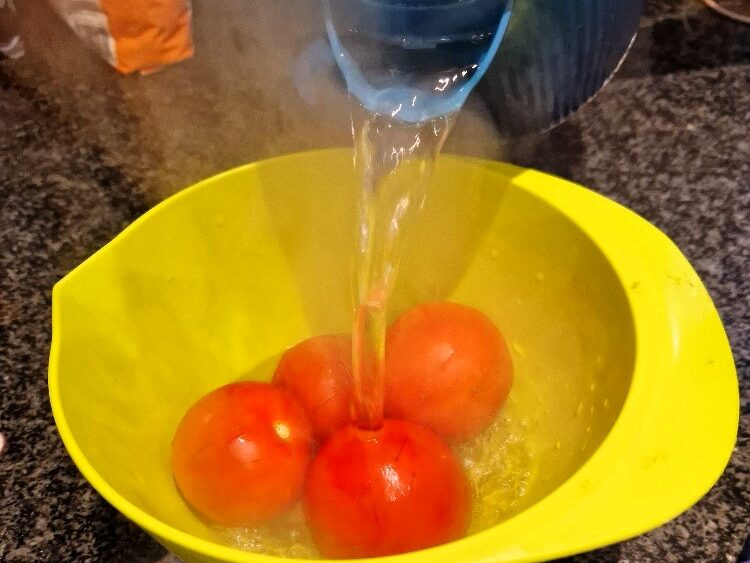
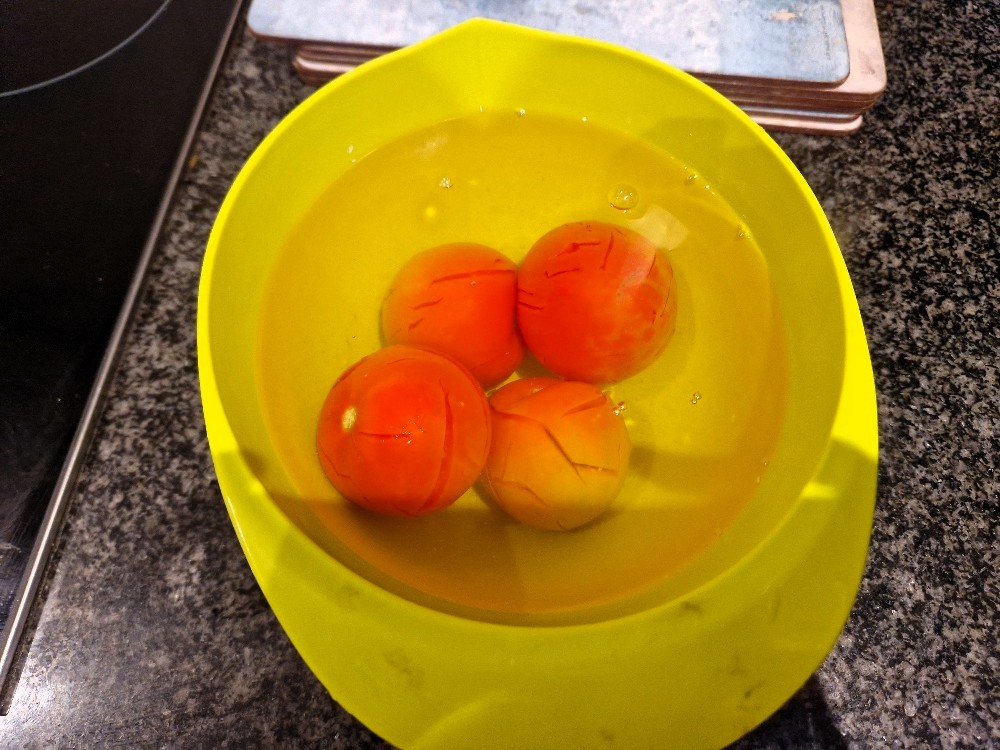
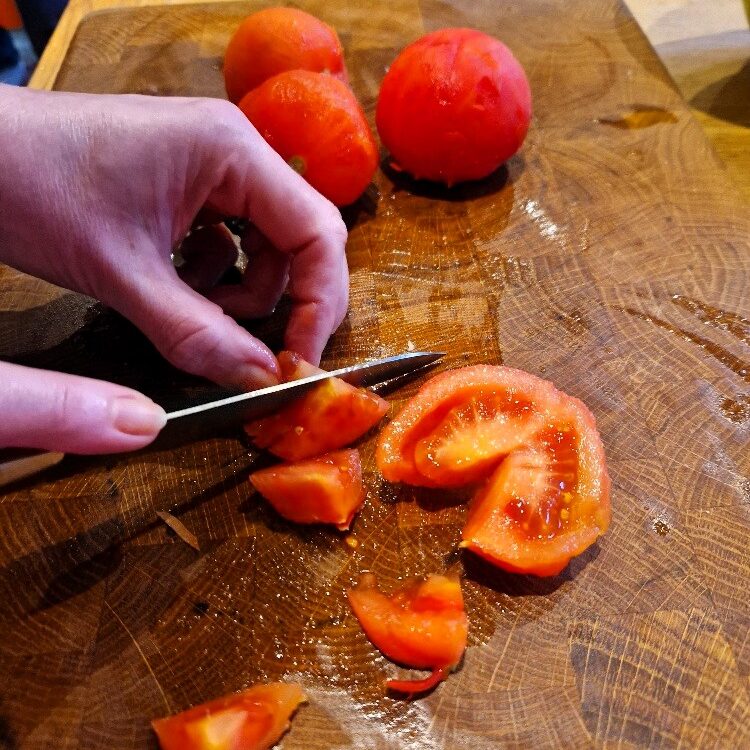
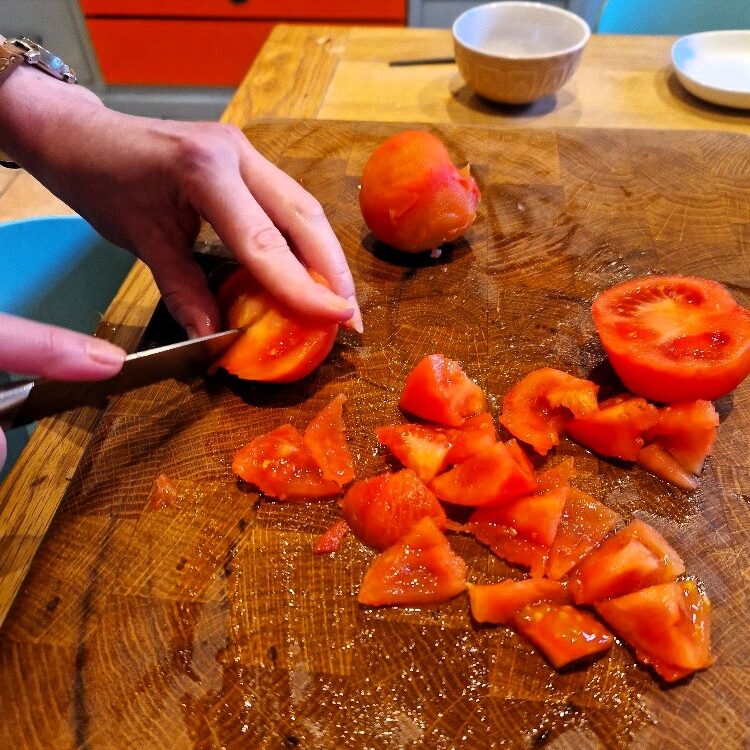
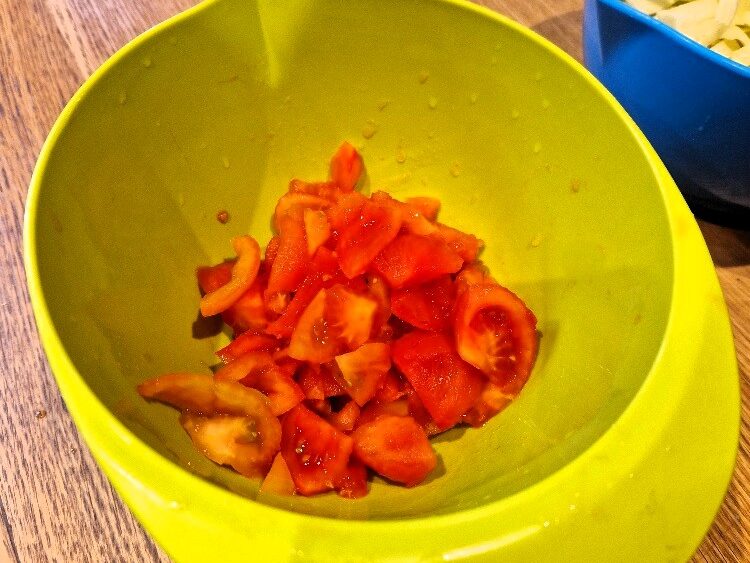
Chop the tomatoes roughly, removing the stem bed and any tough white core, but you don’t need to deseed them. Set aside. We think fresh tomatoes lend this dish a nice tang, but you could use tinned tomatoes if you prefer.
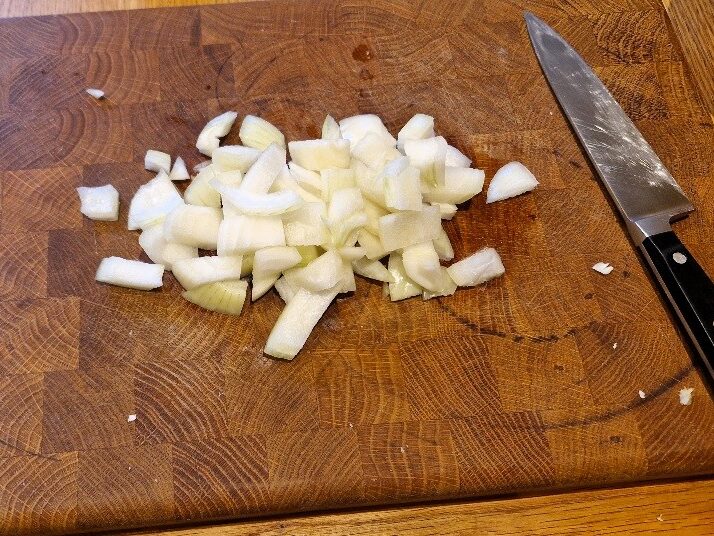
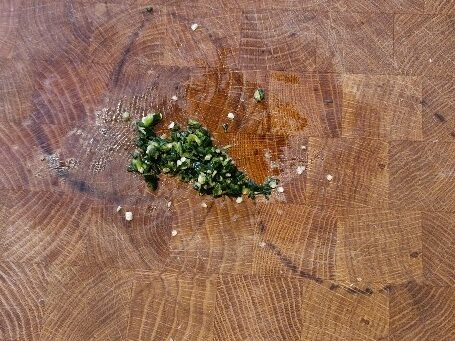
Peel and chop a large onion roughly. Find out how in our onion Tip. Also chop the green chillies finely – again see our chilli Tip. We like this cabbage dish spicy, so we used three hot birds eye chillies, and kept the seeds in. You can use larger, milder green chillies if you prefer, and/or remove the seeds – both will reduce the heat. But a really spicy cabbage is a lovely contrast with the subtly spiced dal.
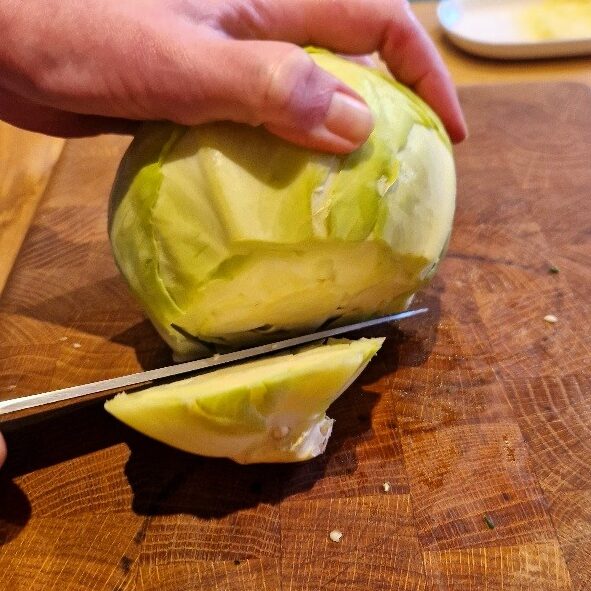
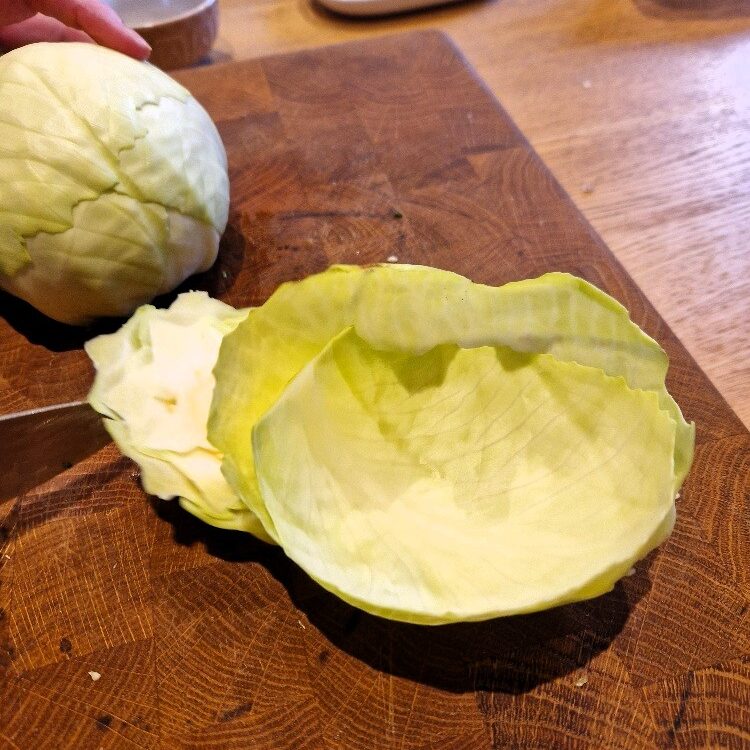
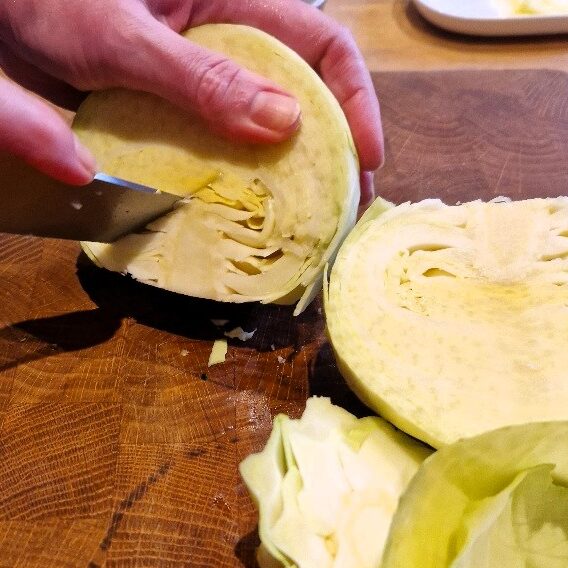
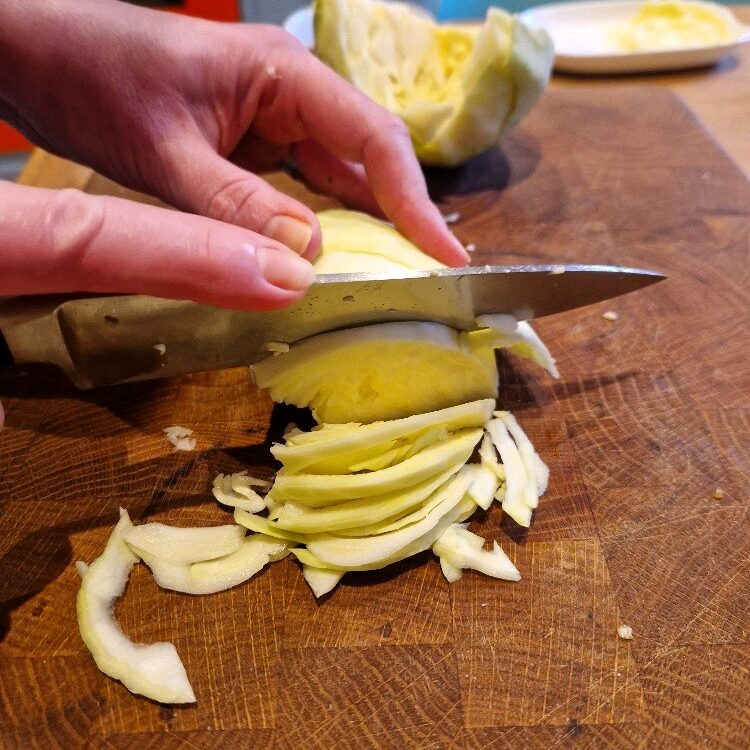
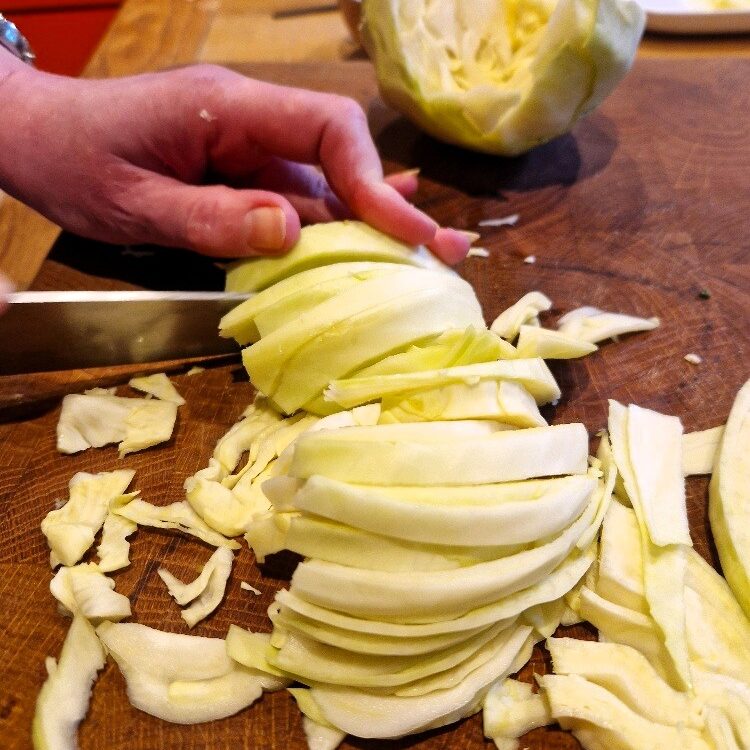
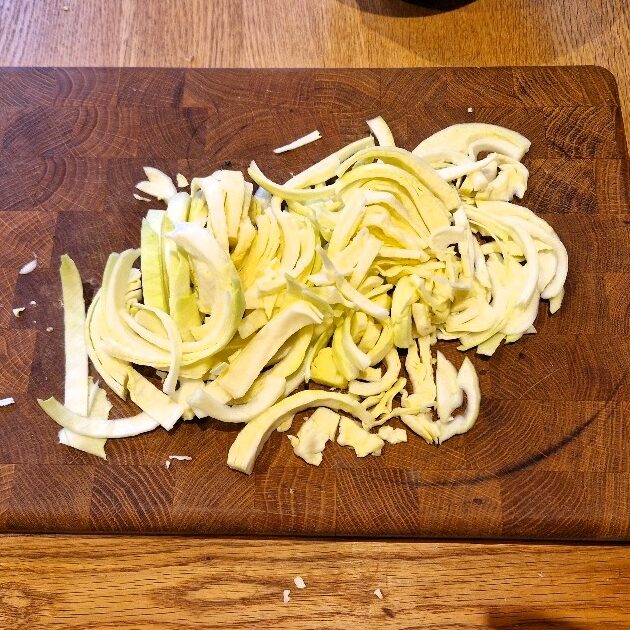
Next prepare and slice the cabbage. You can use any firm cabbage you like, but we think a white cabbage is particularly good in this dish. Cut off the stem and remove the outer leaves. Cut in half from top to bottom. Now cut out the core in a wedge shape. Shred the cabbage across each half to form nice long, medium width strips.
Jake sticks his nose in
Be very careful when cutting white cabbage – it can be hard and your knife can slip. It might be easier to use a bread knife if you are concerned the cabbage is too firm.
Your cabbage mise en place is now ready!
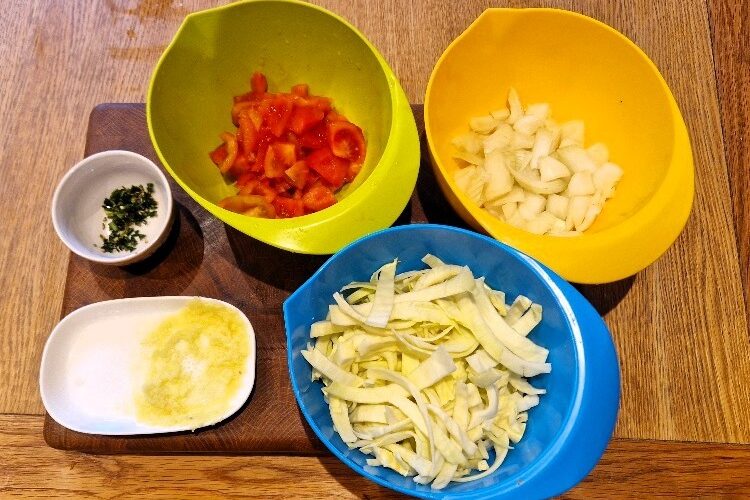
About 40 minutes before you are ready to serve, you’ll need to start paying a little more attention to your dal. After about an hour of cooking, the lentils should have started to break down, but the dal may still be very thin.
You now need to stir it frequently to prevent sticking, plus also play around with the heat/setting of the lid to get the consistency you want. High heat/lid off means it will reduce more. Low heat/lid on will keep it thinner. It is your choice what you prefer – we like it thick, so today we cooked the last half hour with the lid off, or part off, stirring frequently.
While the lentils are reducing, chop the coriander. Find out how to do this easily in our herb Tip. We used one small bunch.
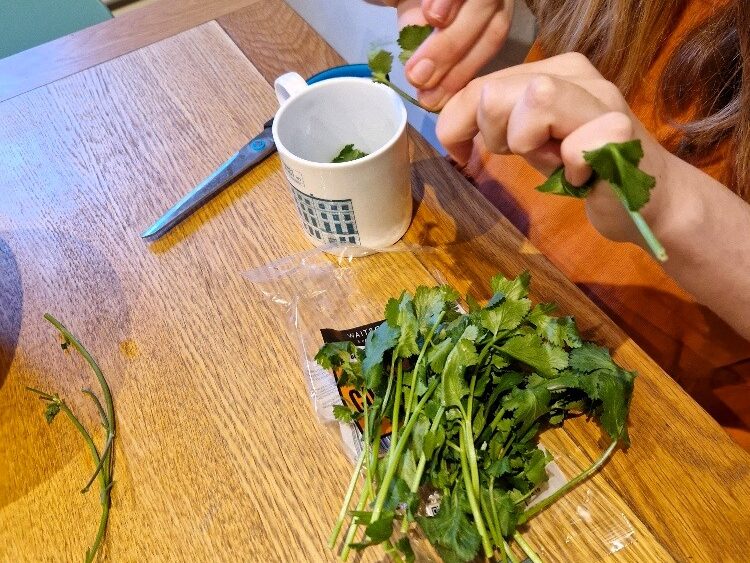

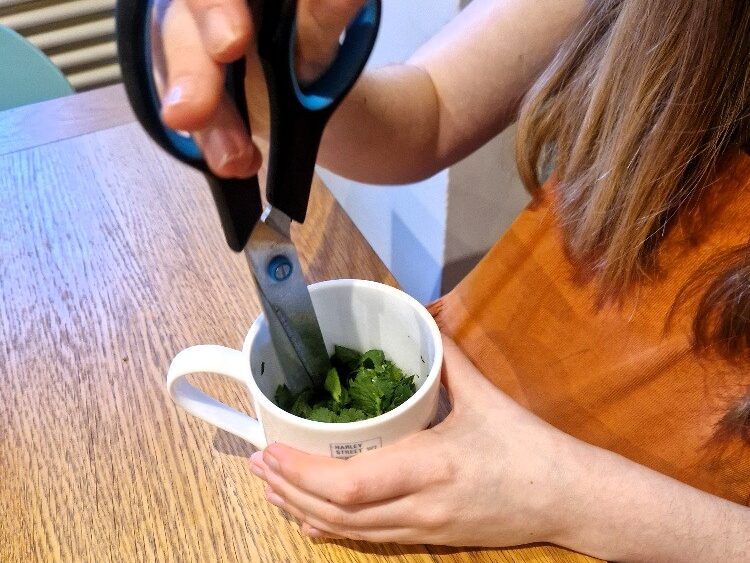
Jake sticks his nose in
We love fresh coriander, but not everyone does – some people find it soapy, due to a chemical in it that not everyone can taste. If you don’t like it, use flat leaf parsley instead. Also, if you like coriander but don’t want the flavour to be too strong, use only the leaves and discard the stems – this is where much of the ‘soapy’ flavour lives.
You can also start the cabbage while the lentils are cooking. Put a little vegetable oil into a small saucepan and set over a medium heat. Add the ginger and stir for a minute or two.
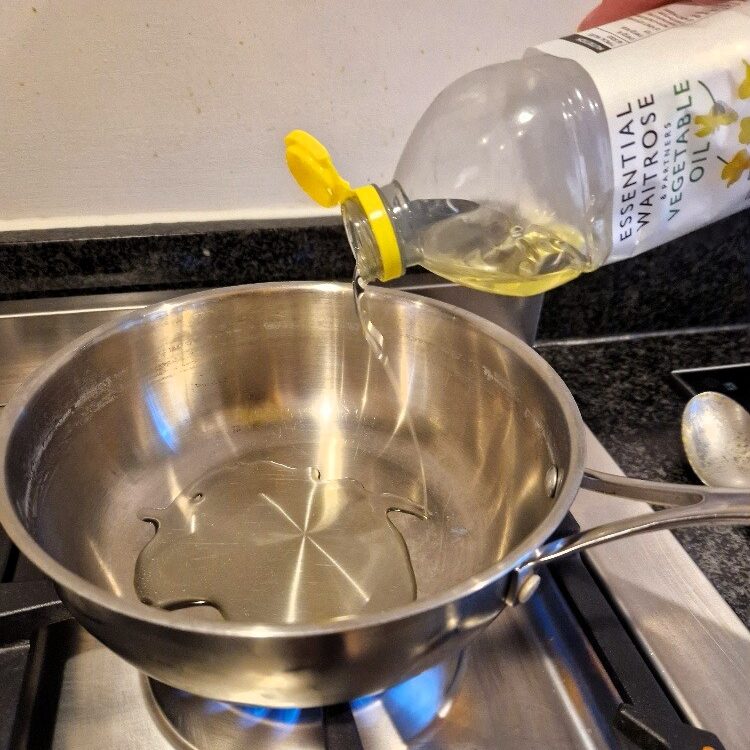
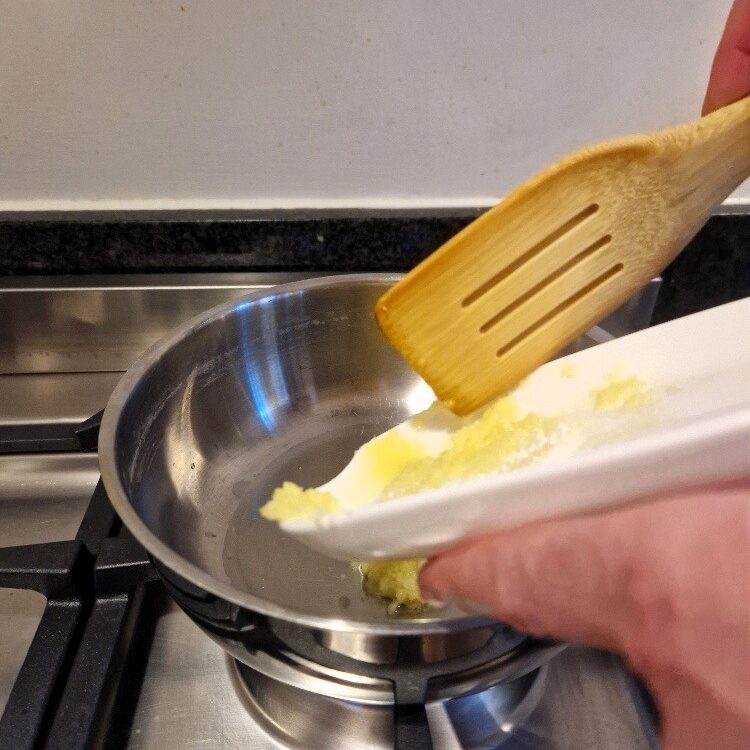
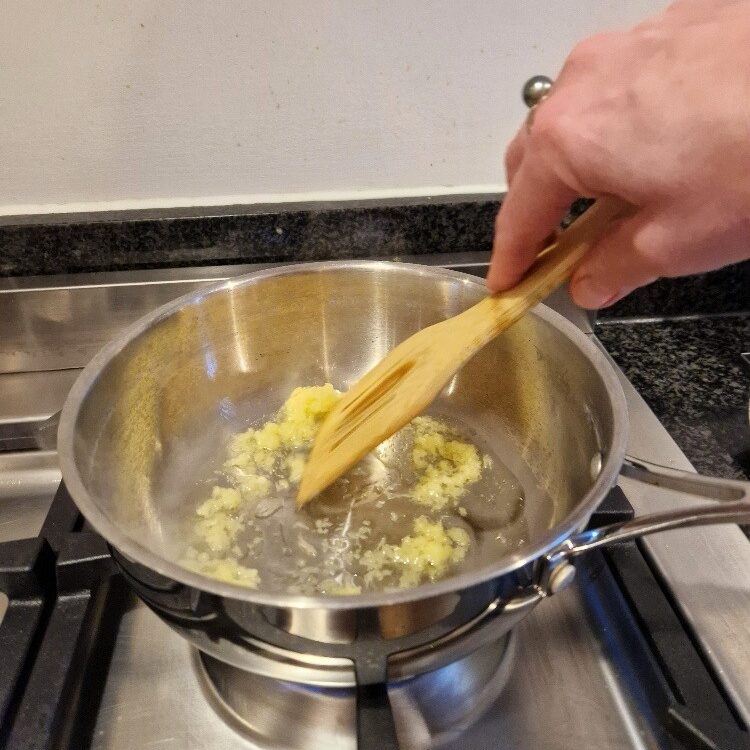
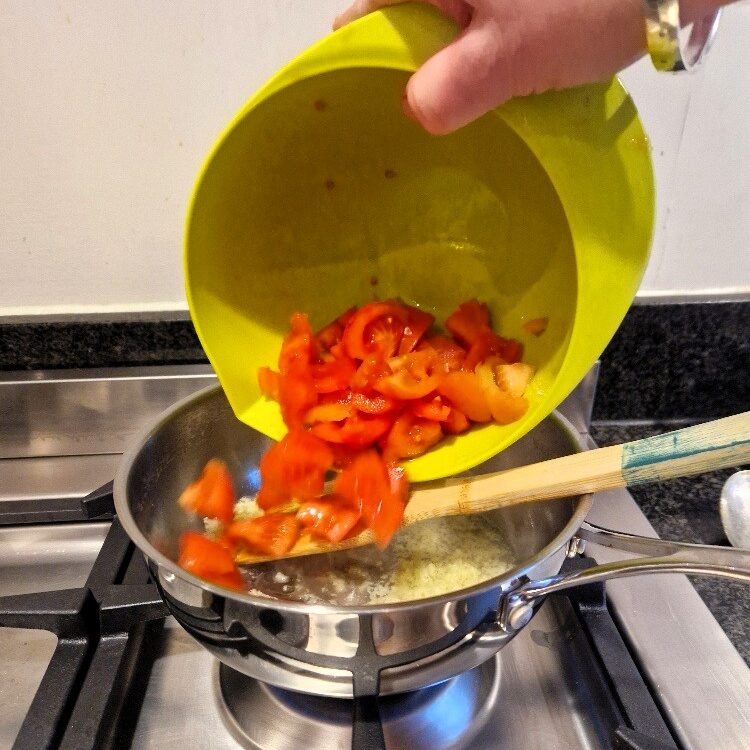
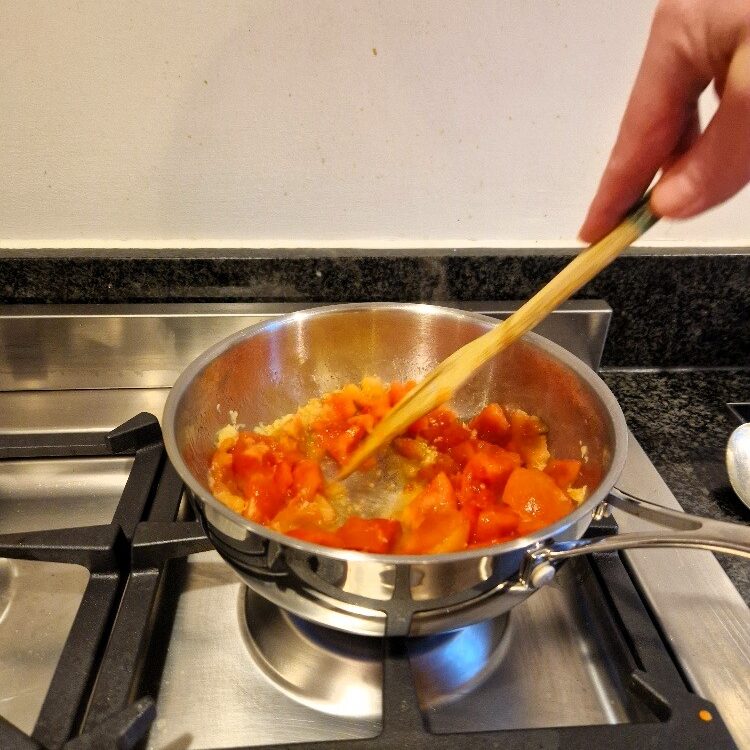
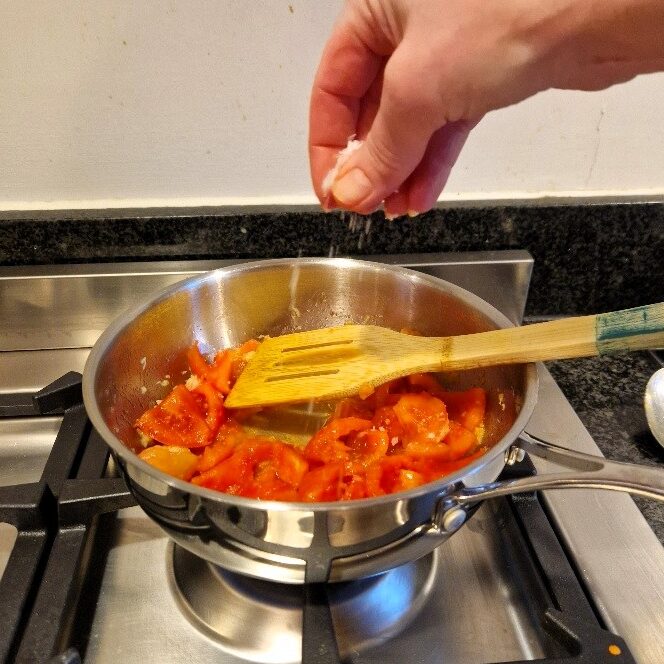
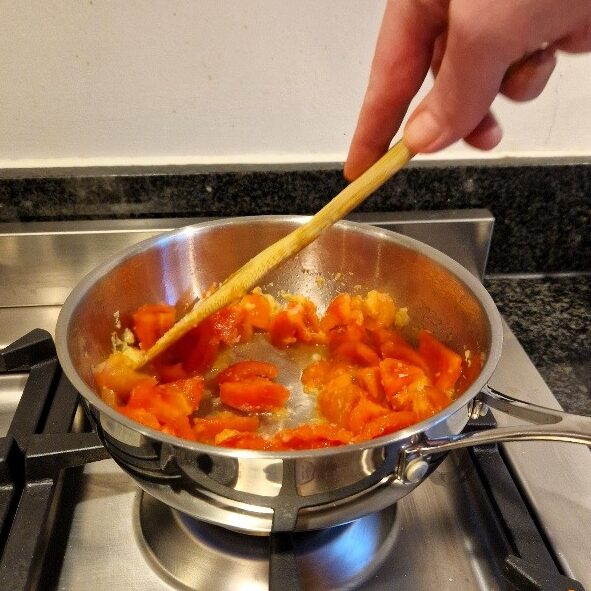
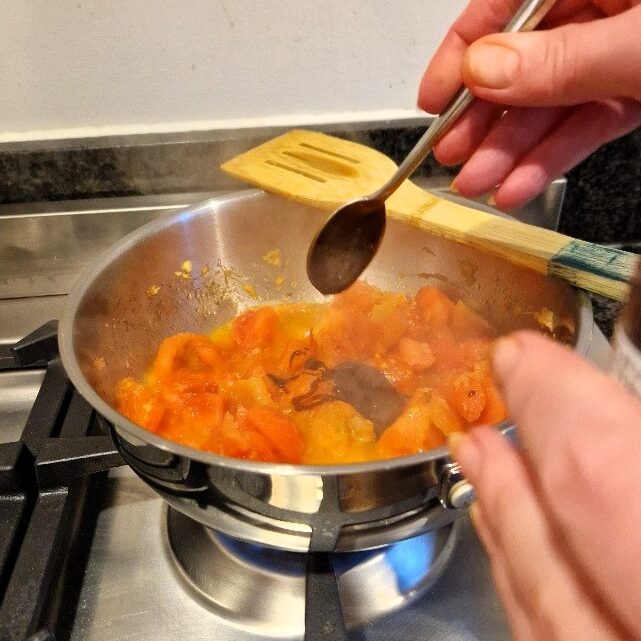
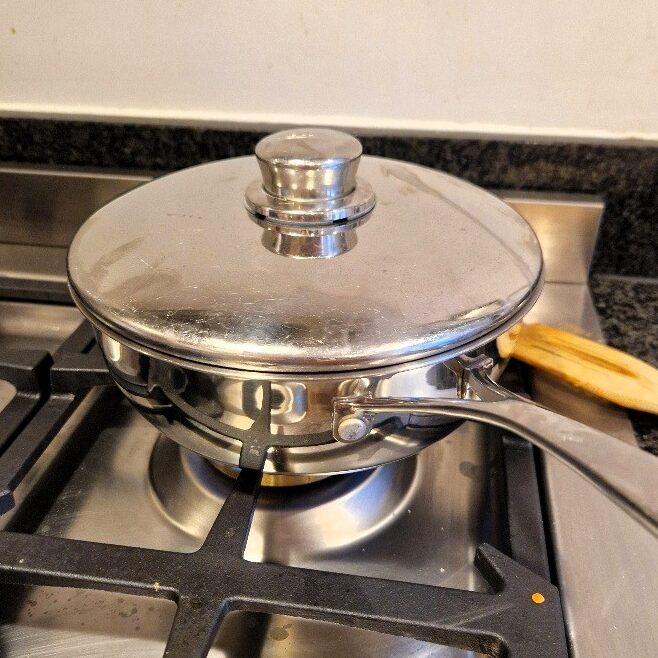
Now add the chopped tomatoes. Stir into the ginger and season with salt. Add the tamarind paste – we like the cabbage dish to be quite sour, so we add two to three teaspoons, but taste and add to your liking. Allow to reduce and break down a little, stirring, then cover with a lid and leave to stew over a low heat, about 10 minutes or until you have a rich sauce. Check and stir occasionally so they don’t reduce too much or stick – you want the sauce to remain slightly juicy.
Jake sticks his nose in
Tamarind is a lovely fruity, sharp paste with an almost smoky, caramelly undertone. It is widely available in larger supermarkets and specialist stores, and well worth searching out as the flavour is unique. If you can’t find it, pomegranate molasses is similar (but generally more expensive, so look for tamarind!), or lemon juice mixed with brown sugar will work.
While the tomatoes are stewing, cook the cabbage. Add a little more vegetable oil to a wok or large frying plan, and set over a medium heat. When the pan is hot, add the chillies, and stir to coat in the hot oil.
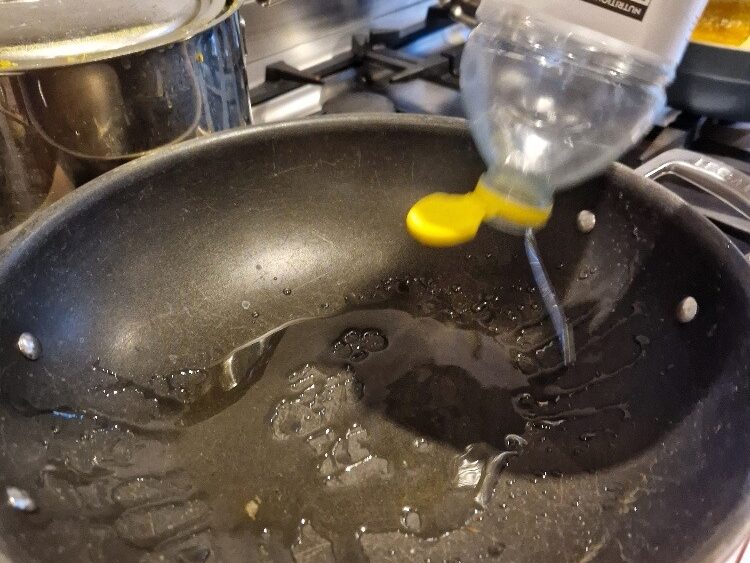
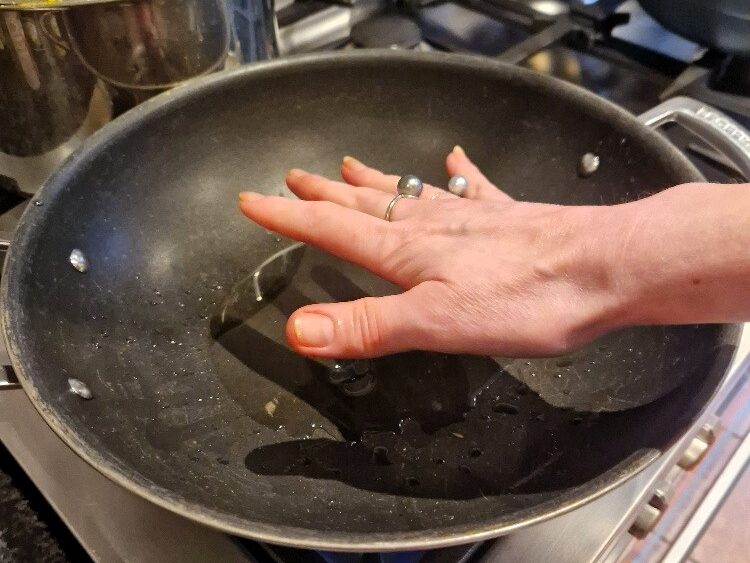
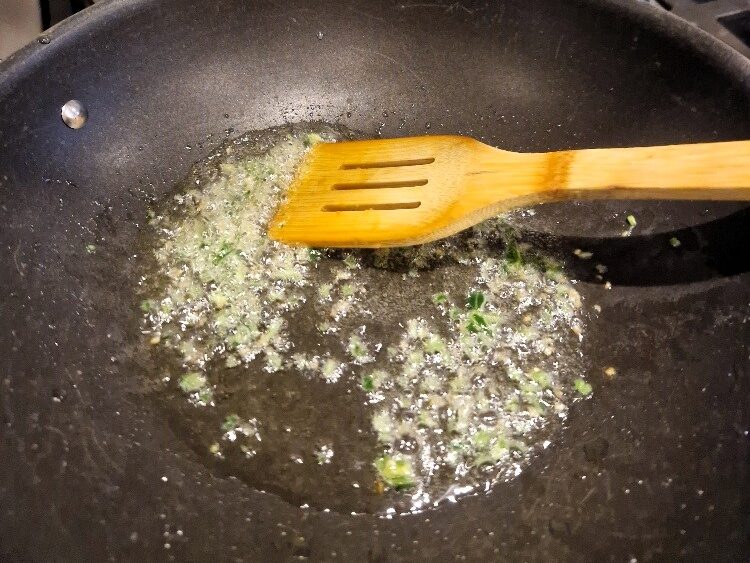
Now add the onions, and stir until just softened – you want them to retain some crunch, a few minutes.
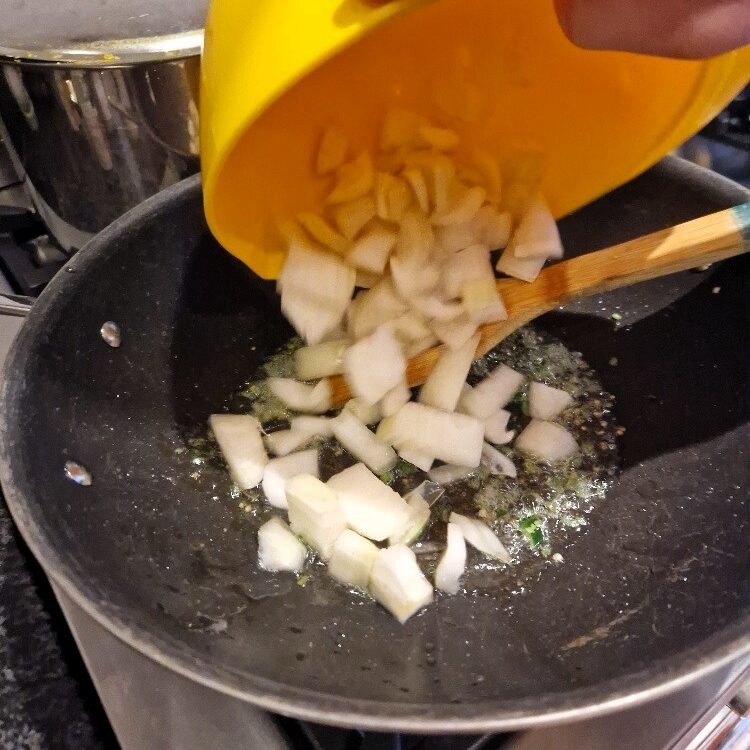
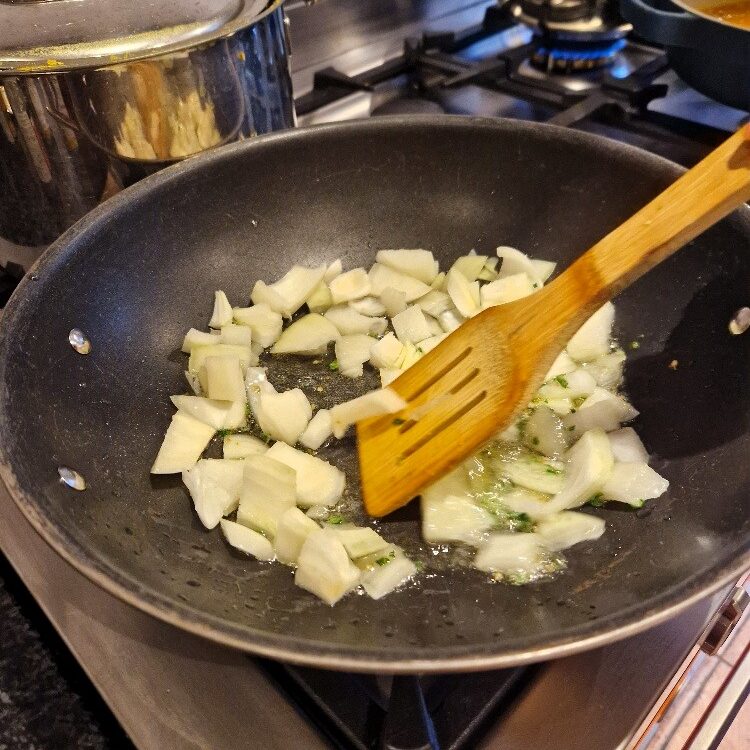
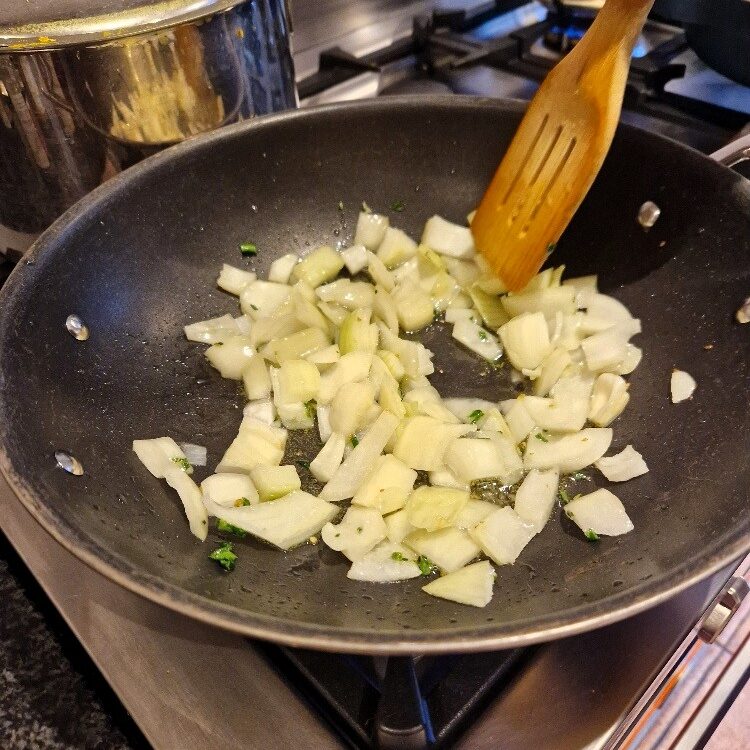
Next add the cabbage, and a little more oil if needed. Stir well and season with a little salt.
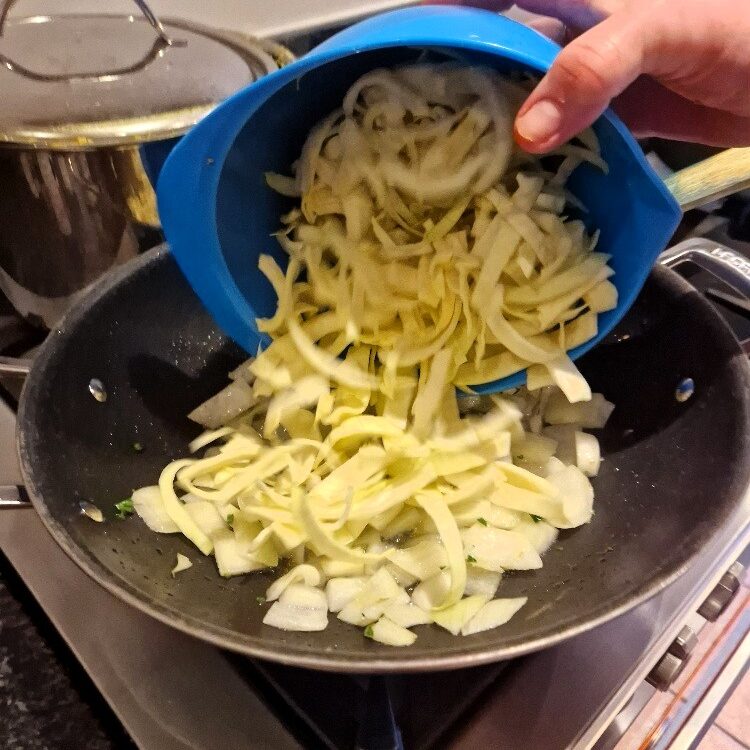
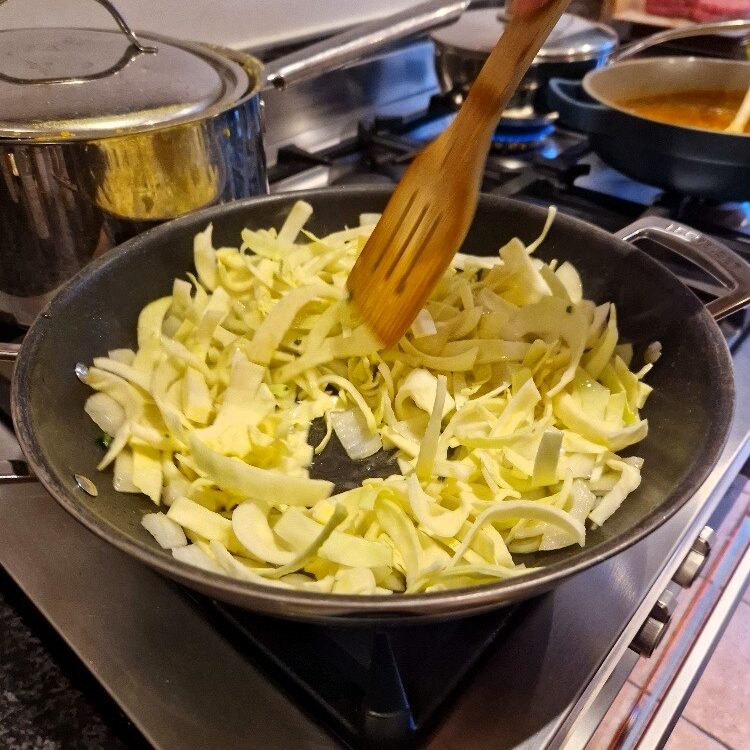
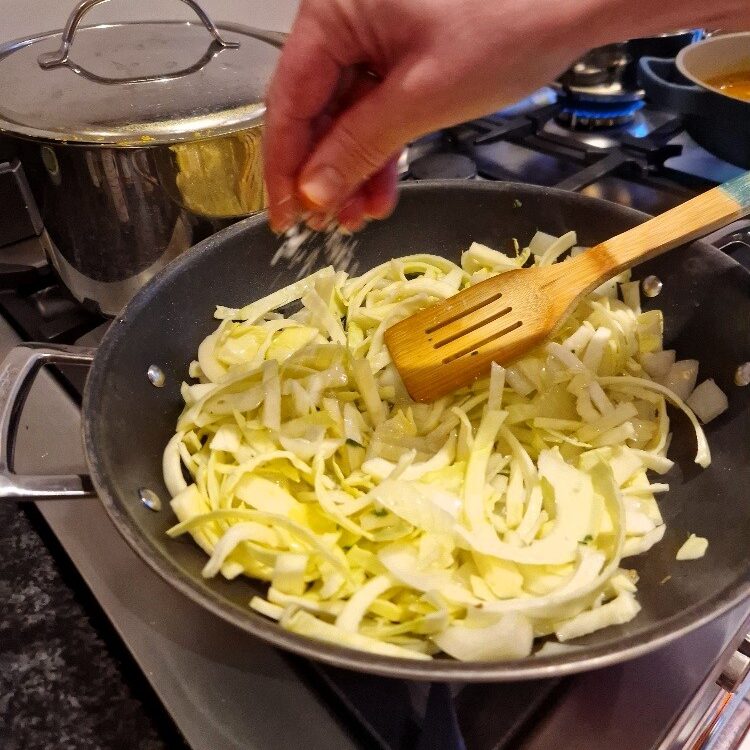
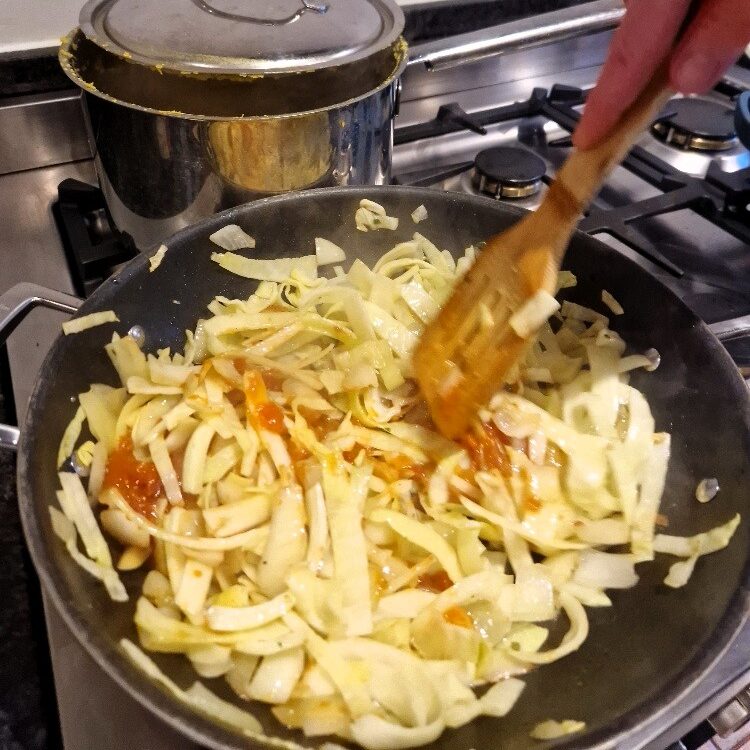
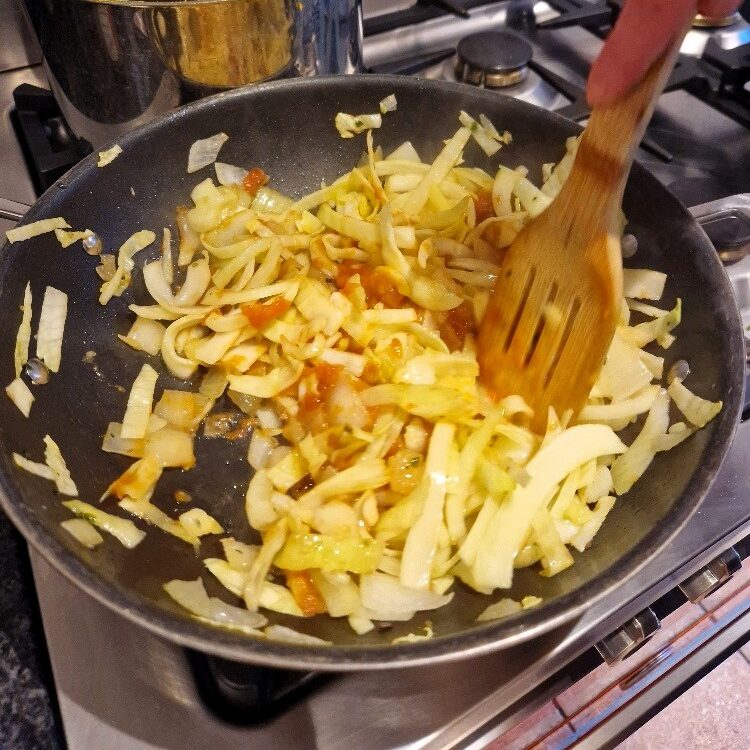
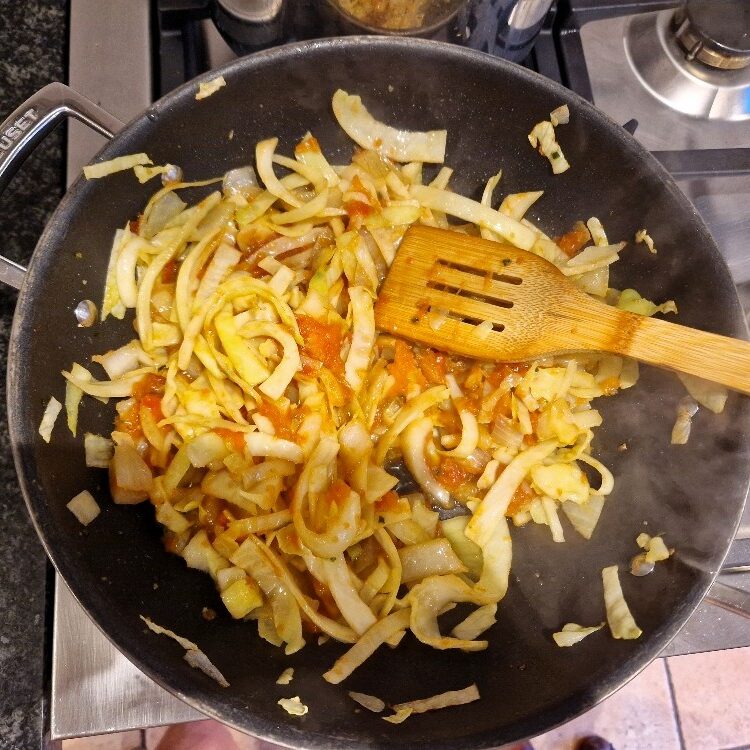
Stir fry the cabbage in the hot oil until it is just tender, but still has some bite – this won’t take long, about 5 minutes, but check the cabbage by biting into. Also check the tomato – when it has formed a rich but still juicy sauce, add to the cabbage.
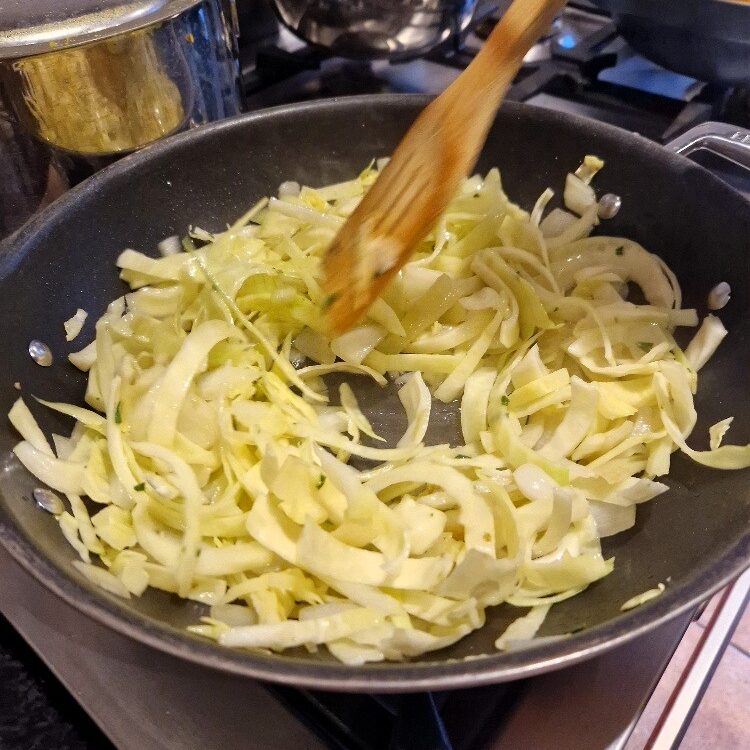
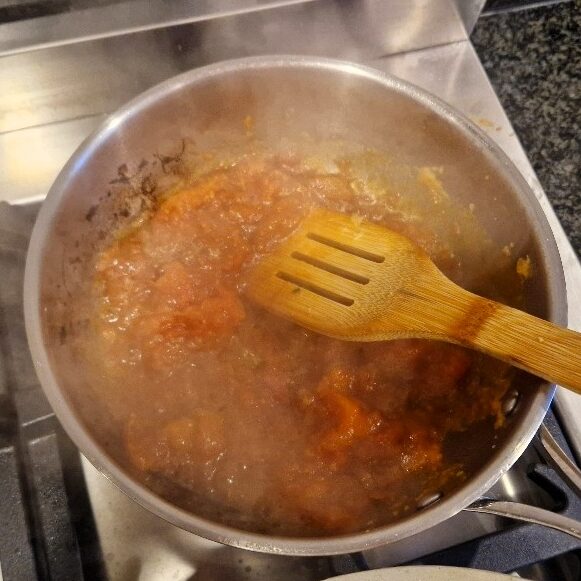
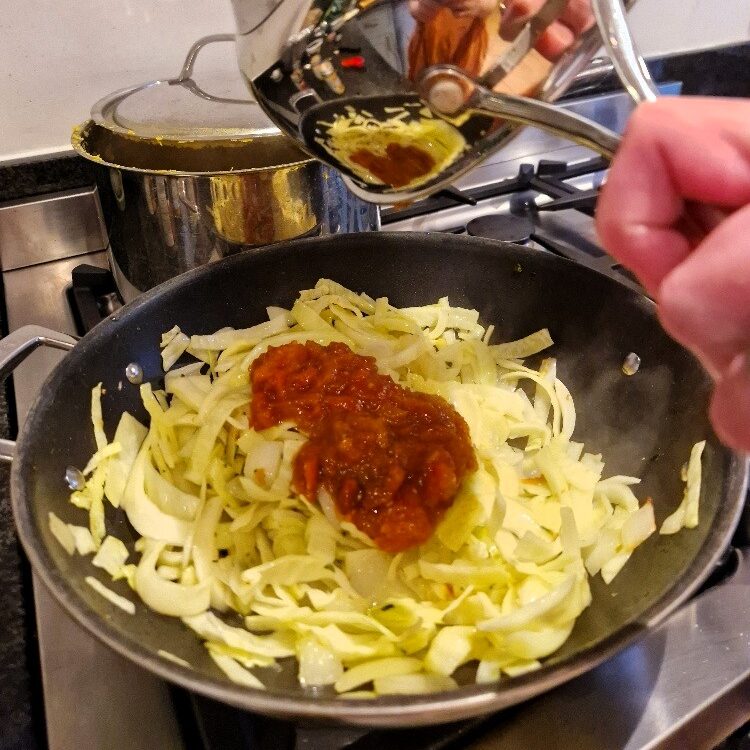
Stir well to combine. If you are preparing the cabbage slightly ahead, as we did today, remove from the heat. Do not cover with a lid until it is fully cooled, otherwise the cabbage will stew in the steam and lose its bite. If serving immediately, stir over a low heat until everything is nicely heated through, a minute or two.
When your lentils are done to your liking, season with salt and remove the pieces of ginger. If there are any large lumps of garlic, remove these too, but ours today had completely broken down into the sauce, as they should. Also measure out the spices, and put a little vegetable oil in a small frying pan.
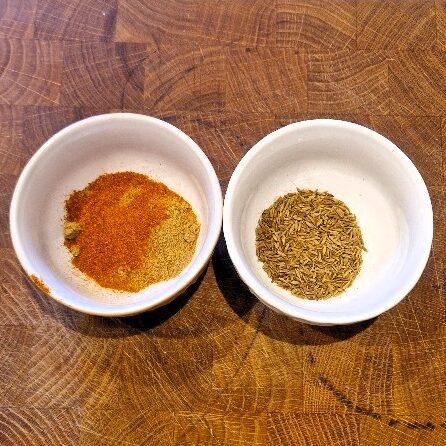
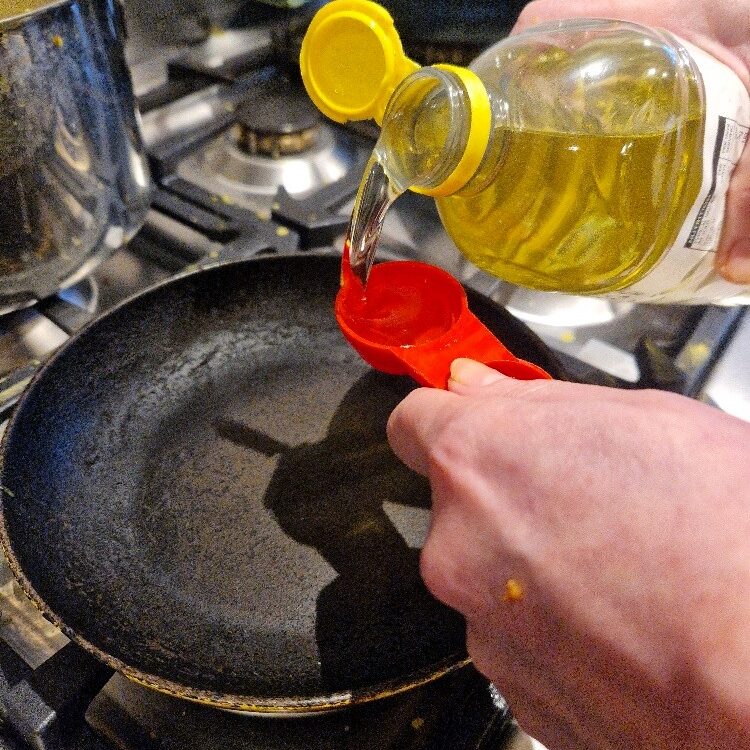
You are now ready to fry your spice mix, or tarka. Frying the spices releases essential oils and ensures you get a deep, spicy flavour not a powdery, dry one. You can use any mix of spices you like. Today we used whole cumin seeds, ground coriander, and cayenne pepper, plus a pinch of an unusual spice called asafoetida. But mustard seeds, dried chillies (or flakes or powder), peppercorns, cloves (use in moderation) or any dried spice you like will work – experiment with different blends. Do keep whole spices separate from the ground ones however.
Jake sticks his nose in
The asafoetida is optional, and a little goes a long way – it has a potent, garlicy flavour. It is often used in Indian lentil and other pulse dishes because of its reputed digestive benefits. You can leave it out or replace with garlic powder if preferred.
Heat the oil – about 2 tablespoons or so is enough – then, if using, add the asafoetida first. This spice is potent, so a small pinch is enough. Follow a few seconds later with the cumin or other whole spices, then finally add the ground spices. Stir briefly – the spice smell should rise when it is done, seconds rather than minutes.
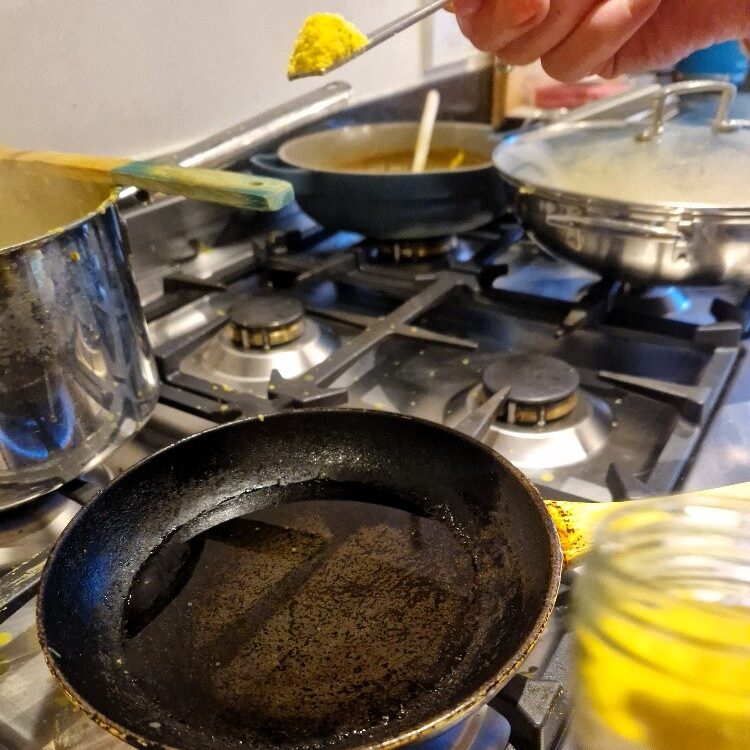
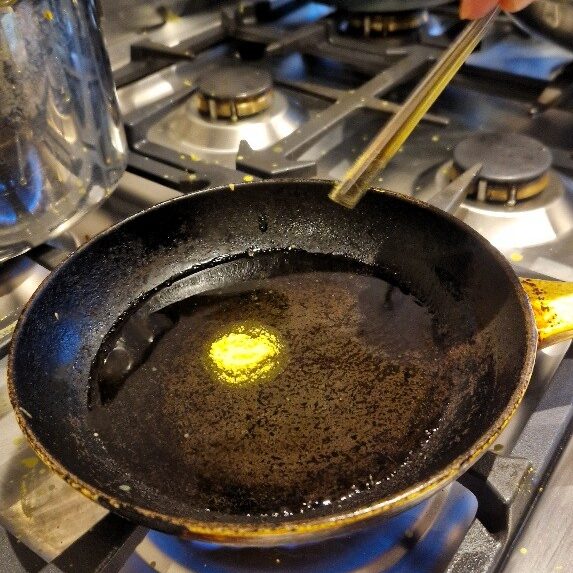
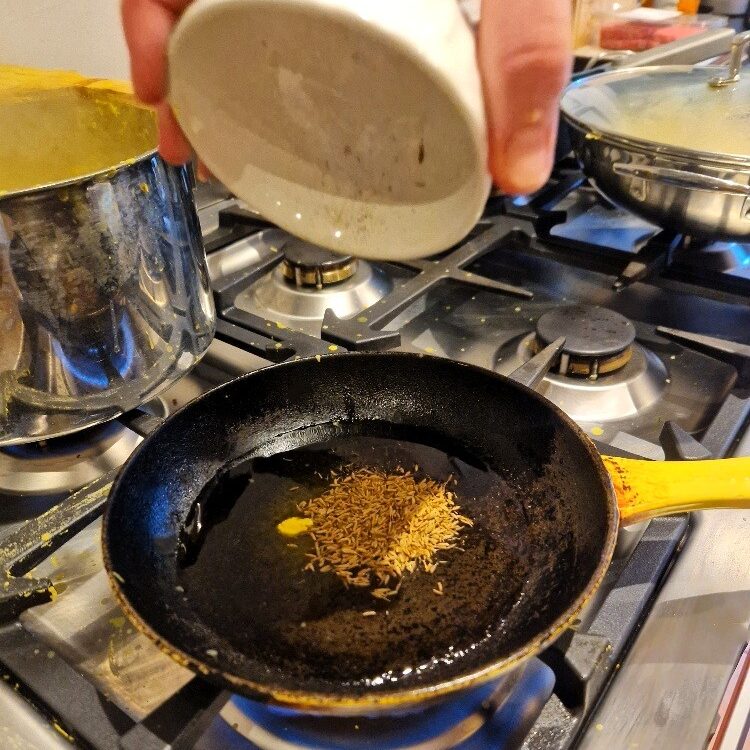
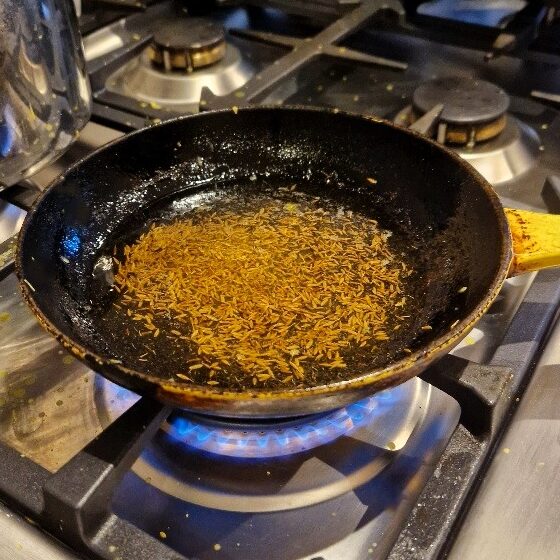
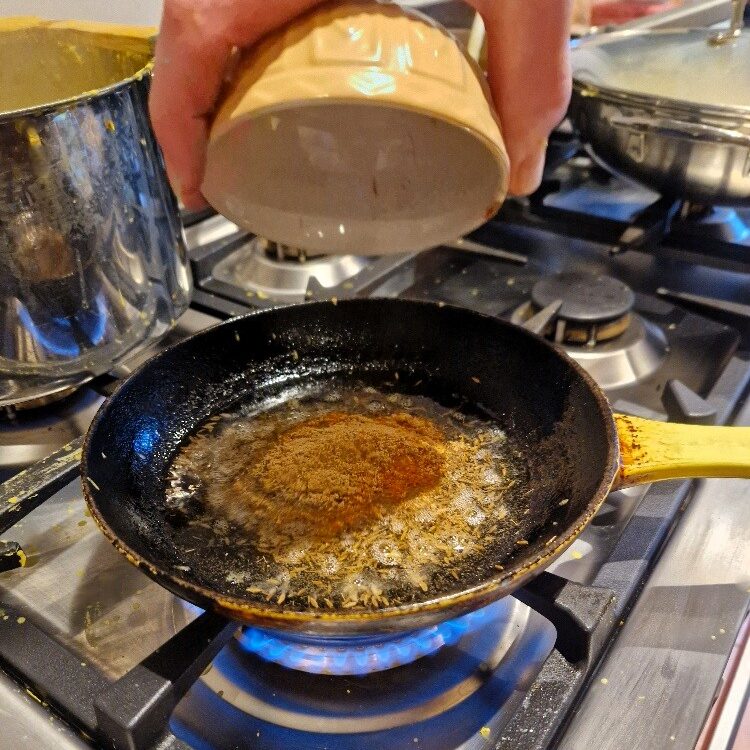
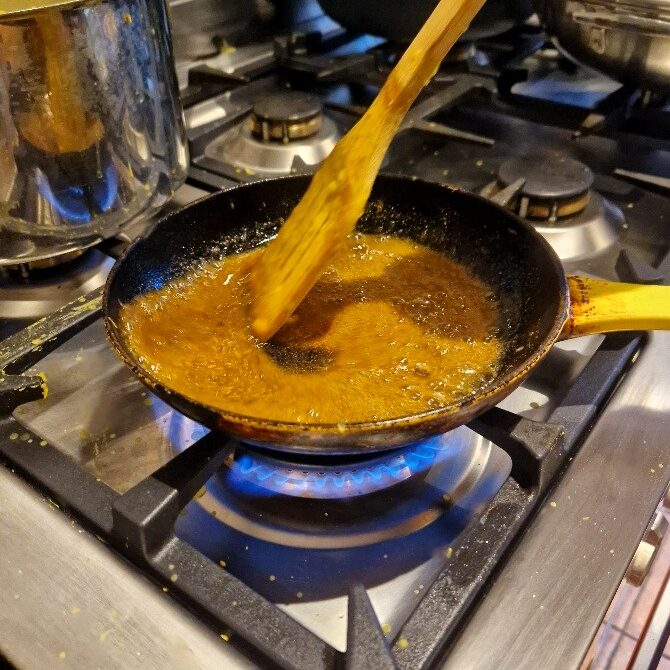
Tip the whole spice mix, including the oil, into the lentils and stir well.
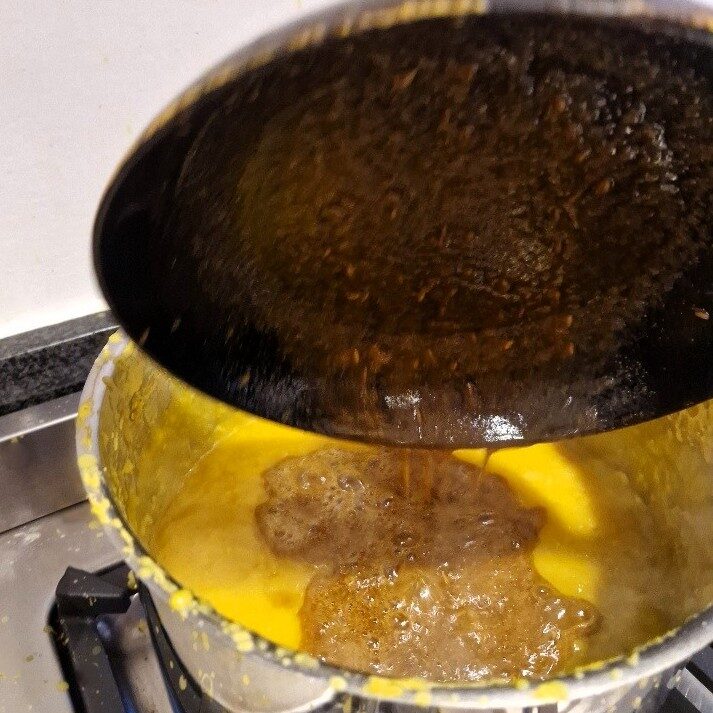
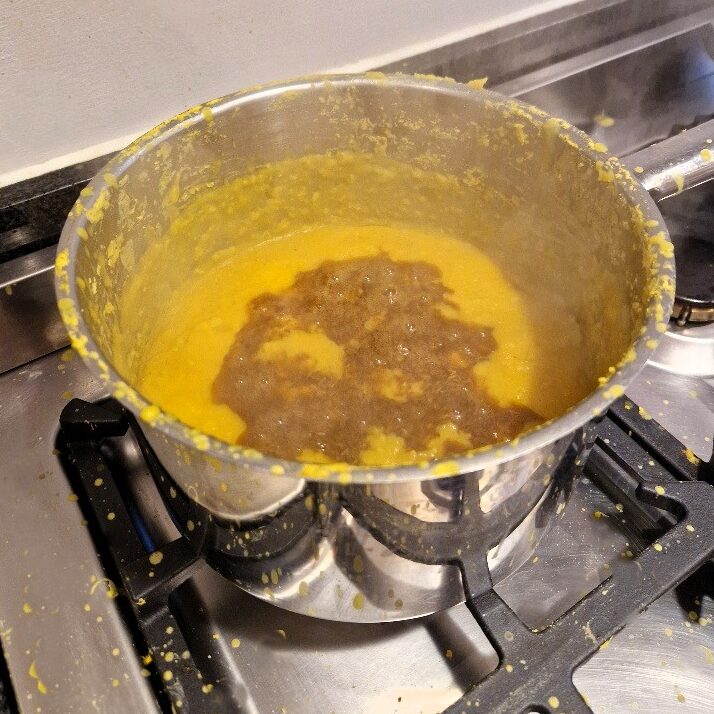
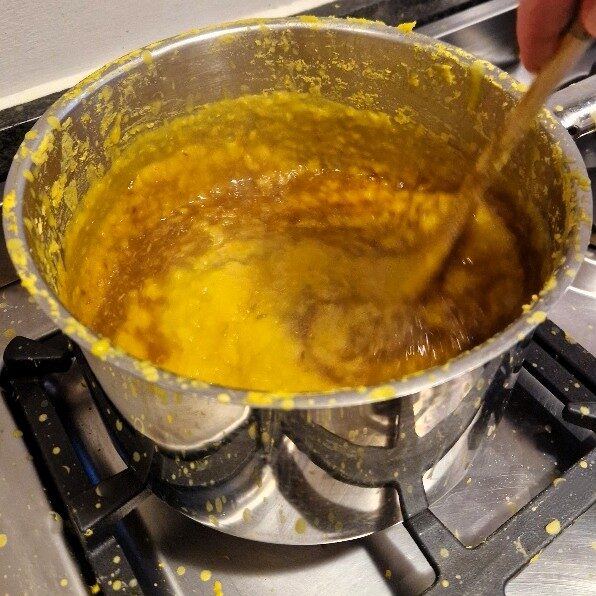
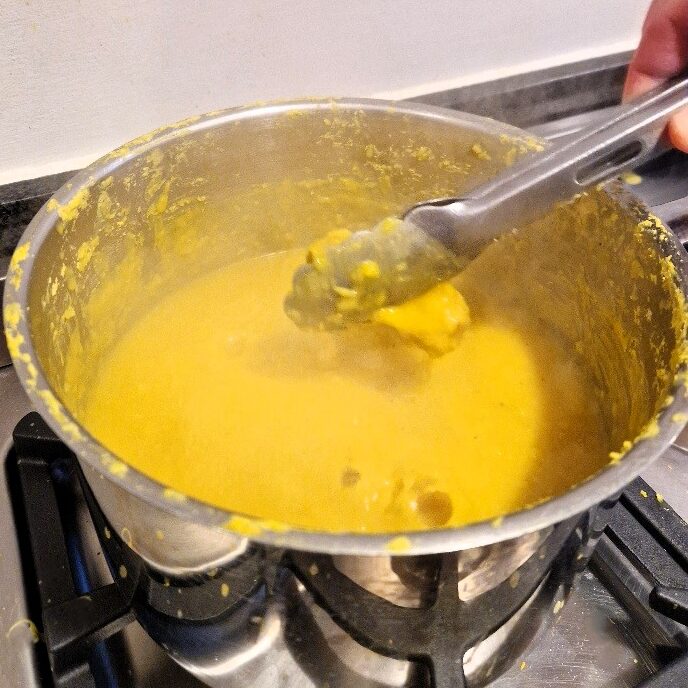
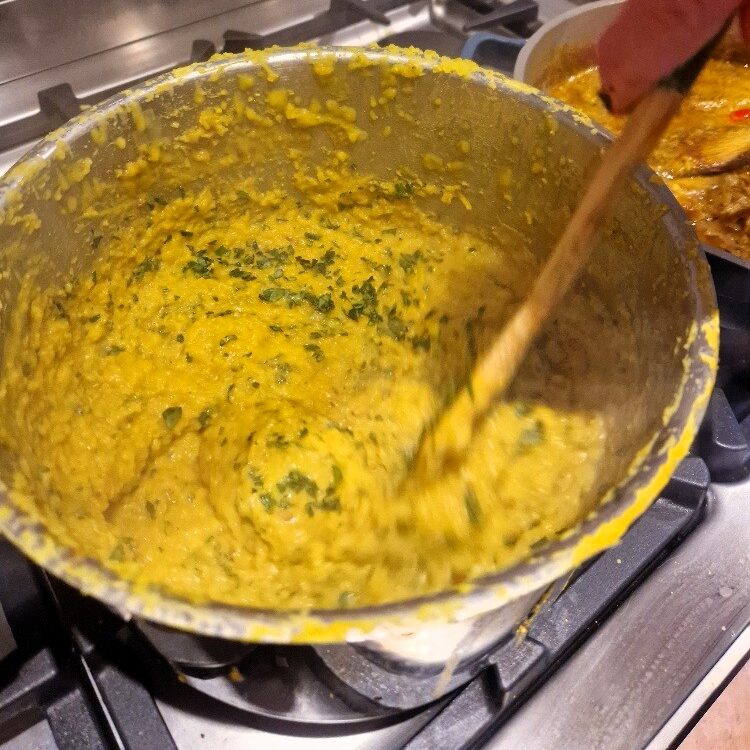
A word of caution about slow-cooked lentils – even when kept over a low heat at a simmer, they can become intensely hot. They also tend to bubble, gloop and spit. So be careful when stirring them – the ‘pops’ of hot lentil can burn your hand!
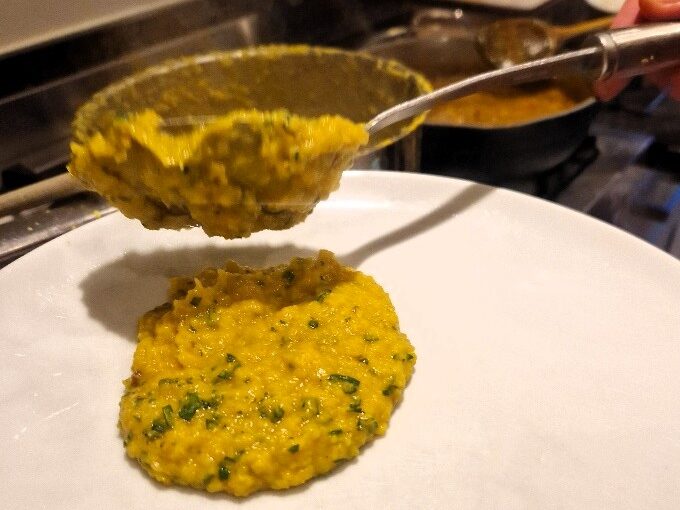
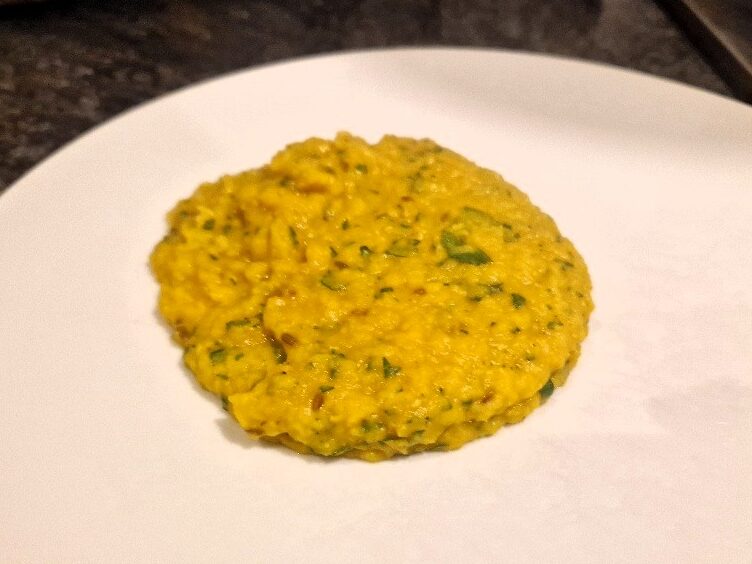
You’ll also notice from the pictures above and below that they can make a real mess of both their pot and your hob. We’ve learnt over the years not to get too precious about this. It will clean up easily, and trying to keep on top of the mess as you cook is a bit pointless – the lentils will create more. Just let the dal do its thing, and clean up at the end (it is also easier to clean the hob when it is cold). We’ve included the pictures below to show the texture we aim for, but also to make you feel less bad about your own messy dal pot!
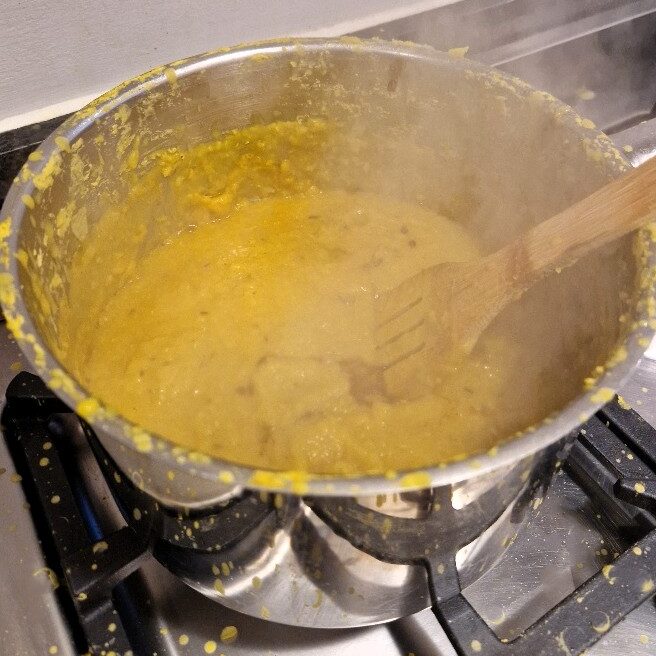
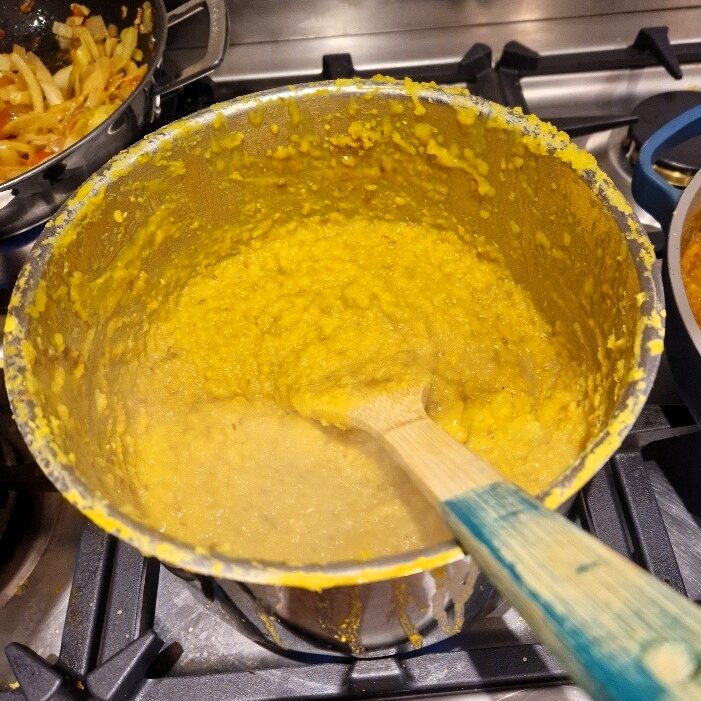
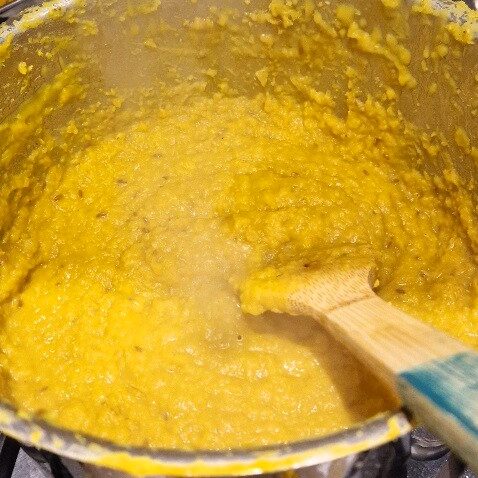
When you are ready to serve, warm the cabbage through, and stir the coriander into the lentils. Your dal is good to go!
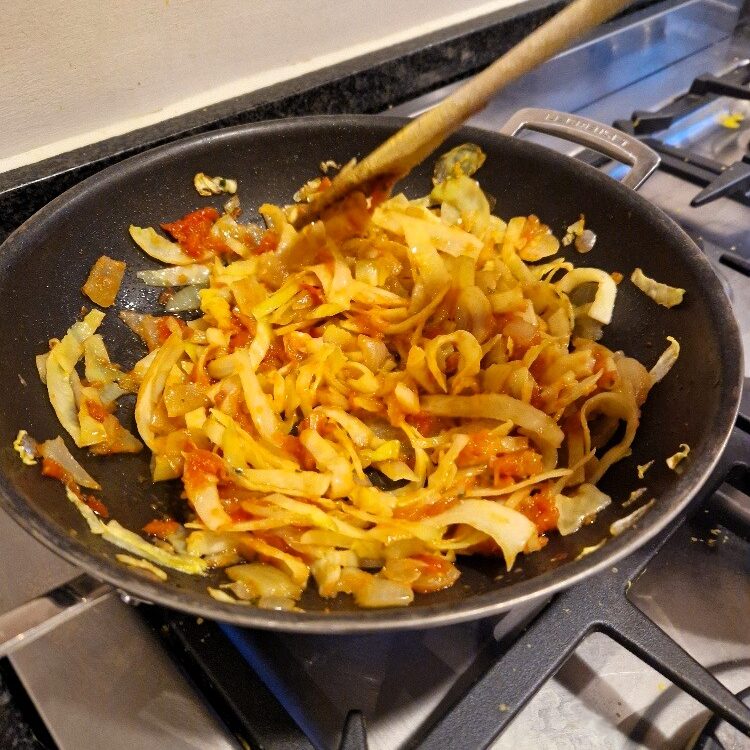
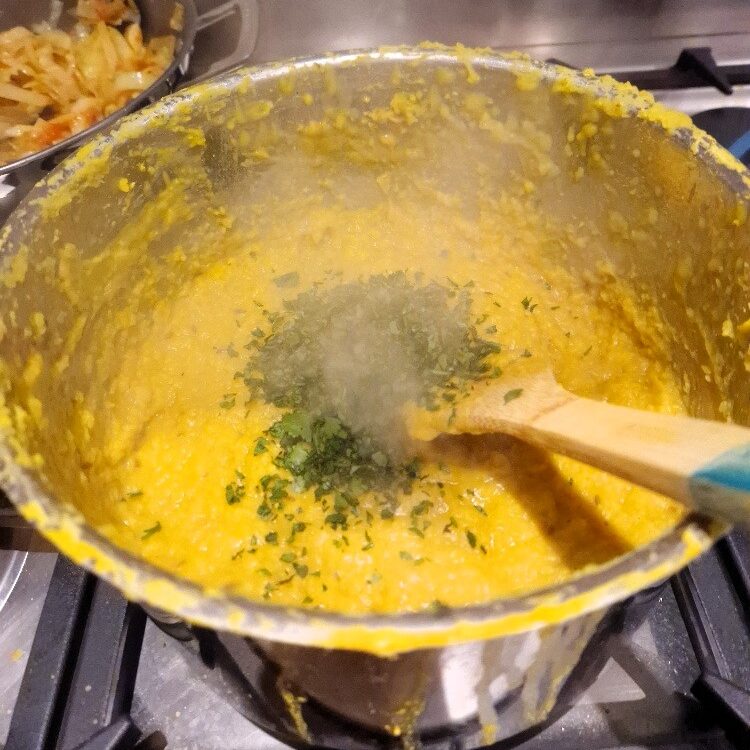
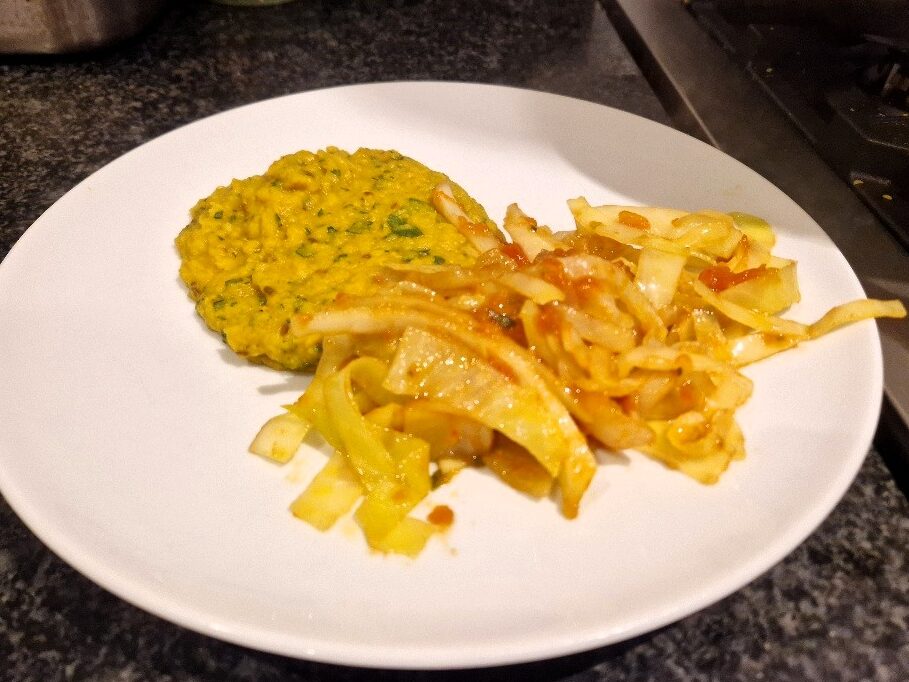
Serve the dal with the cabbage on the side. This makes a tasty, healthy and satisfying meal in itself, as we served it today, or you could add some rice or Indian bread.
Enjoy!
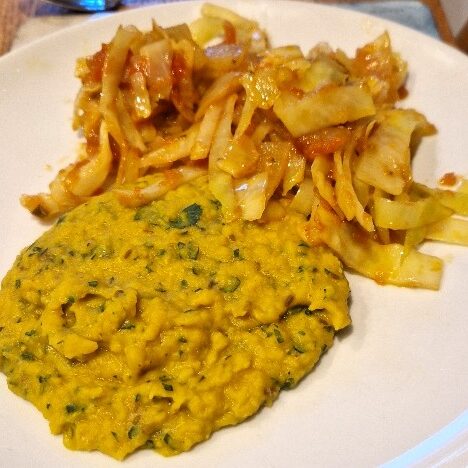
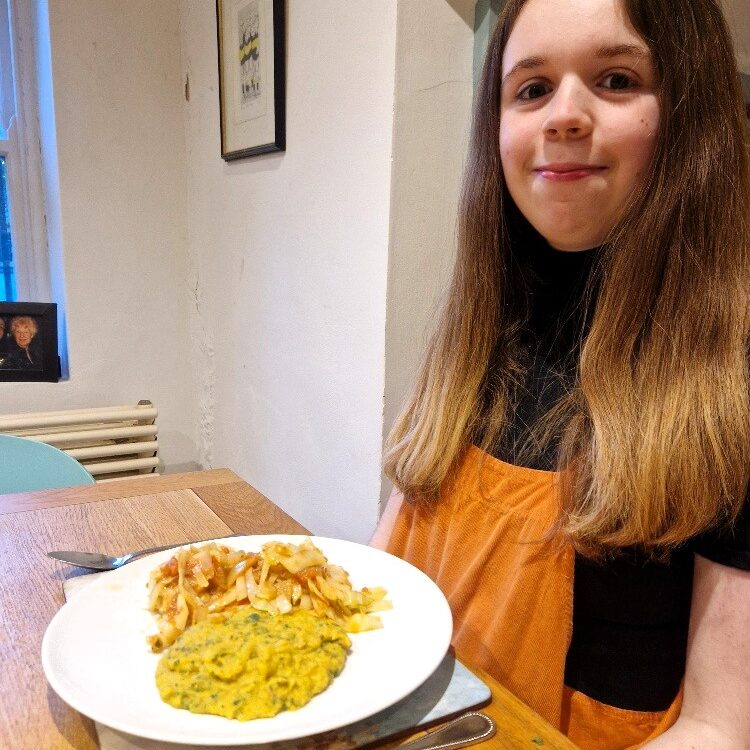
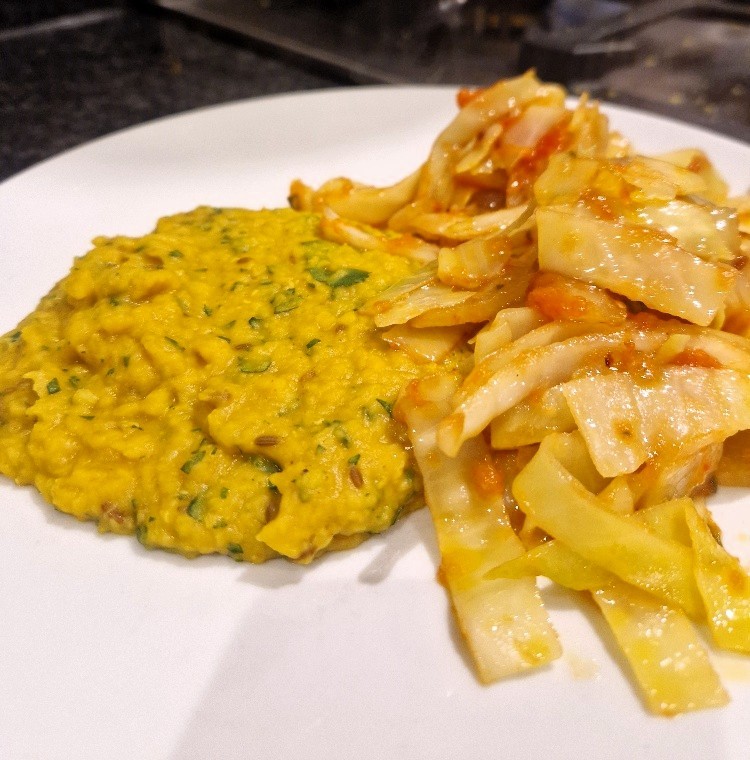
Bibi’s Best Dal with Spicy Cabbage
Ingredients
Equipment
Method
- Weigh the lentils, place in a sieve and wash thoroughly under the cold tap. Place in a large saucepan with the water (1 litre per 200g lentils), and set over a high heat. Bring to the boil.
- While the lentils are heating, slice the ginger into large but thin slices, keeping the skin on. Reserve a knob for the cabbage. Also peel the garlic and bruise it slightly by pressing down on it with the side of your knife.
- When the lentils are boiling, skim the surface with a spoon to remove the impurities – these will appear as a thick foam on the top. Remove this thoroughly, and discard.
- Add the garlic, ginger and turmeric to the lentils, and turn the heat down to low. Cover with a lid, leaving a small crack for some steam to escape. The total cook time is about 1h 30 minutes, but for the first hour or so you can leave the lentils to simmer, stirring occasionally, while you prep the cabbage.
- For the cabbage dish, first peel & grate the rest of the ginger. See our ginger Tip. Peel the tomatoes by slashing with a knife and soaking in boiling water. See our tomato Tip. Chop them roughly, removing the stem bed and any tough white core, but do not deseed.
- Chop the onion roughly. See our onion Tip, Also chop the chillies. See our chilli Tip.
- Remove the stem from the cabbage, then cut the cabbage in half. Remove the outer leaves, and cut out the core. Shred across each half to create medium strips of cabbage. Be careful as white cabbage can be hard, and your knife can slip.
- Chop the fresh coriander. See our herb Tip.
- To cook the cabbage, first place some vegetable oil in a small saucepan or high sided frying pan and set over a medium heat. Add the grated ginger, and fry a little in the hot oil. Add the chopped tomatoes and tamarind paste, to taste, and season with salt. Put a lid on and turn down to a simmer to stew the tomatoes, about 10 minutes, until you have a rich but still juicy sauce.
- Heat some more vegetable oil in a wok or large frying pan, and add the chillies. Fry briefly, then add the onion. Cook until just beginning to soften – you want them to keep some bite – a few minutes.
- Now add the cabbage and stir fry until just tender – you want it to retain some crispness, test a piece by biting into. When the tomatoes have reduced, add to the cabbage. Stir well to combine. If prepping ahead, remove from the heat and allow to cool fully before covering. If serving immediately, fry for a few more minutes so everything is well combined and warmed through.
- About 40 minutes before you are due to serve, stir the lentils well and check their consistency – they may still be quite thin. Stir frequently for the next half hour to prevent sticking, and adjust the heat and lid to get the consistency you like – we like them quite thick and creamy, so we mostly cooked with the lid off or part off for the final half hour.
- When the lentils are done, remove the ginger and any obvious large pieces of garlic (there may not be any) and season with salt.
- Measure out your spices keeping any whole spices separate from ground ones. If using asafoetida, you only need a small pinch, so use straight from the jar. Add two to three tablespoons of vegetable oil to a small frying pan.
- You can now make your spice mix, or tarka. Heat the oil, then add a pinch of asafoetida (if using), and a few seconds later add the cumin or other whole spices. Next add the ground coriander and cayenne, or other ground spices. Fry until the spice smells rise – seconds rather than minutes.
- Add the spice mix, including the oil, to the lentils and stir well to combine. Take care when stirring the lentils as they can spit and scald!
- When you are ready to serve, reheat the cabbage and stir the fresh coriander through the lentils. Your dal is ready!
- Serve the dal with the cabbage on the side, This makes a healthy, satisfying meal alone, or you can add some rice or Indian bread.
- Enjoy!