

Skills you will learn in this recipe
Making a roux; making white sauce & cheese sauce; assembling a pasta dish for baking
Links to the last recipe
Using cheese as the star; making a classic cheese & carb combo
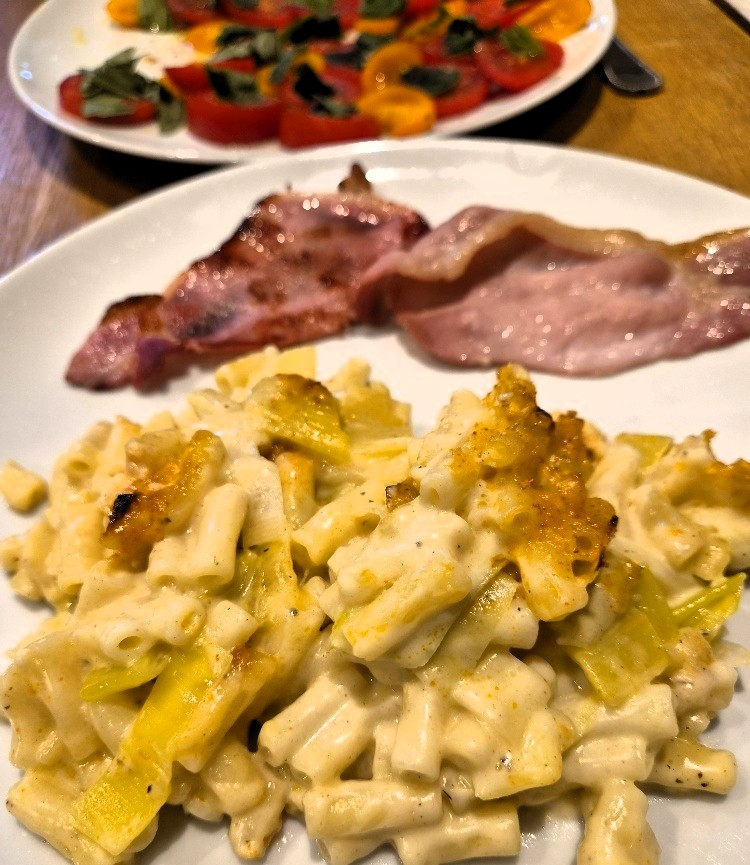
This is a classic macaroni cheese with a little Welsh twist of Bibi’s – leeks. They add a nice pop of colour & flavour that really lifts this so-familiar dish. Call it macaroni cheese (UK) or macaroni & cheese (US)? Either way, it’s simple and delicious!
We call it ‘macaroni cheese’ but we also sometimes make it with the slightly larger penne. You can use either, or any short tube pasta – macaroni gives a softer texture, and penne a firmer one.
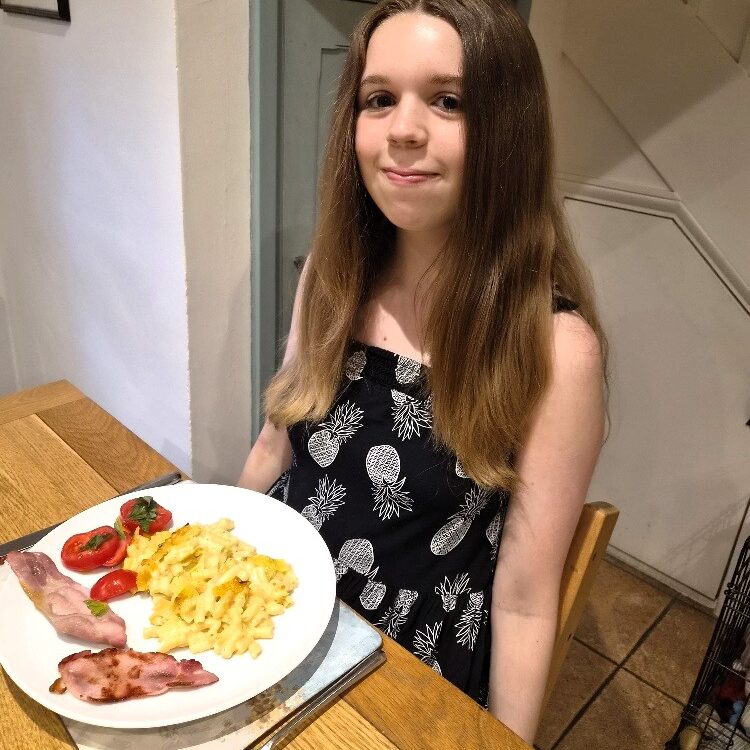
Bibi always served her macaroni cheese with some sliced tomatoes on top, added about 10 minutes before the end of the cooking time. We like the combination of macaroni cheese and tomato, but these days we tend to prefer a simple tomato salad on the side. The freshness & crunch of the salad goes so well with the rich macaroni. Today we also served it with some crispy bacon – another great pairing if you like it. Find out how to cook it in our Bacon Tip here.
Macaroni cheese is easy to make, but you will need to learn one new skill – making a roux – which is the base for a number of classic sauces, in this case white sauce, which we then make into cheese sauce. Roux & its associated sauces are simple enough to do, but you need a little patience & practice. Follow our Tip, with its detailed pictures & steps and you’ll be fine!
We use cheddar as the main cheese, but any firm melting cheese can work – we sometimes do a combination with red Leicester or Gruyère, for example. We flavour with nutmeg and top with a little Parmesan & cayenne – all three ingredients just lift the macaroni cheese to even greater tastiness.
The macaroni cheese can be made ahead and cooked to order – it takes about 30 to 40 minutes in the oven. In fact we think it is even nicer if it is left to rest for a bit before cooking, it seems to improve the texture.
Preparing the ingredients for macaroni cheese
There’s little to do by way of preparation, just some grating and chopping. The main event will be making the white sauce.
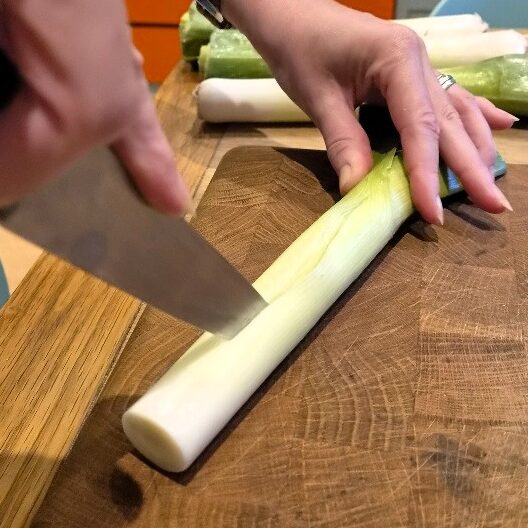
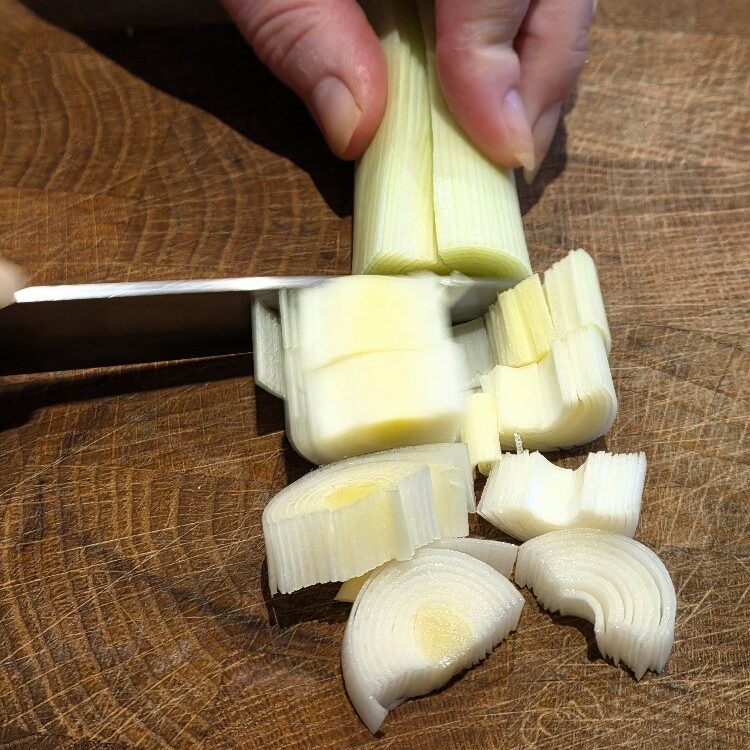
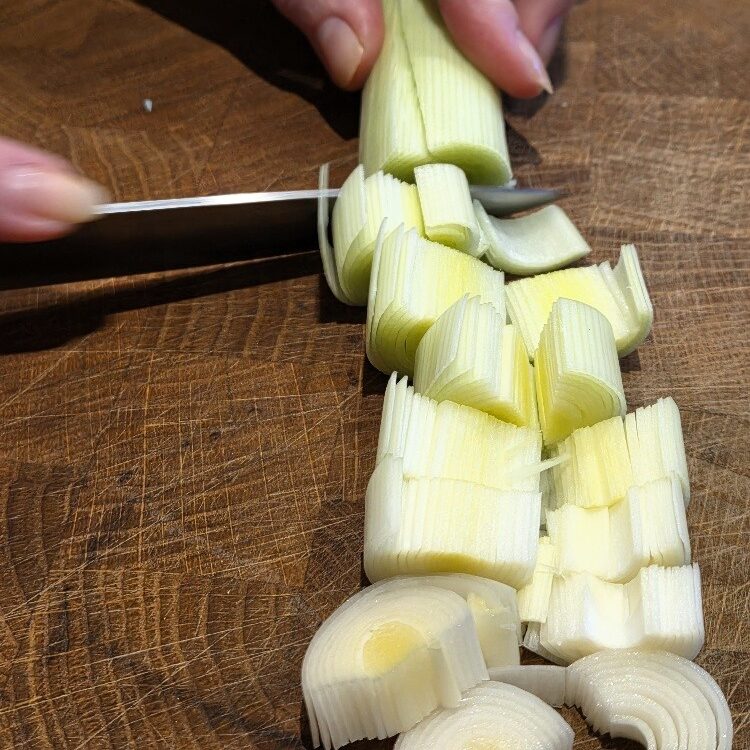
Start by slicing the leeks – we use about 3 or 4 in our macaroni cheese for four to six people. Cut off the rooty end, then slice the leek all the way down its length to the middle. Remove the outer layer or two, then slice the leek into medium rounds, including some of the green. Separate the pieces into a colander or large sieve.
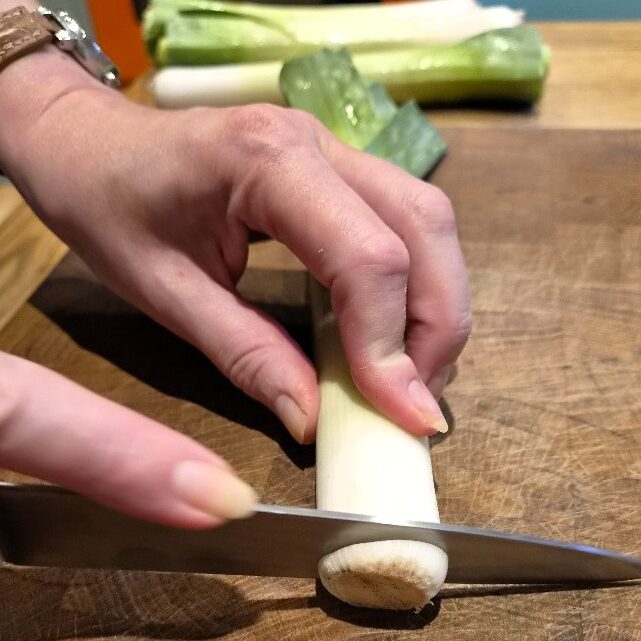
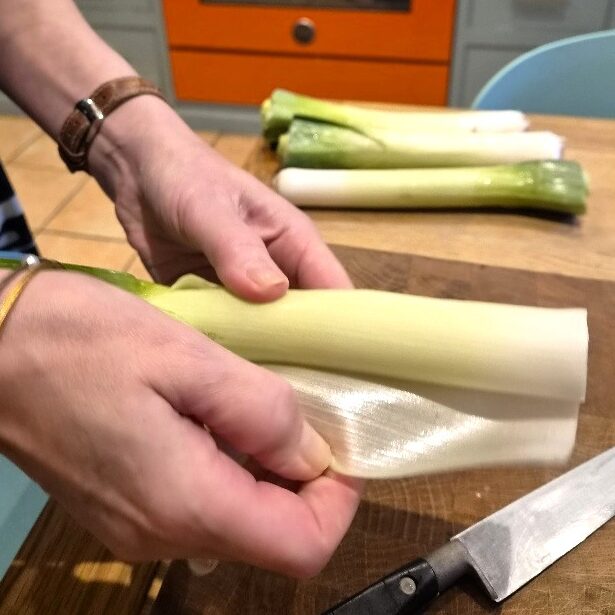
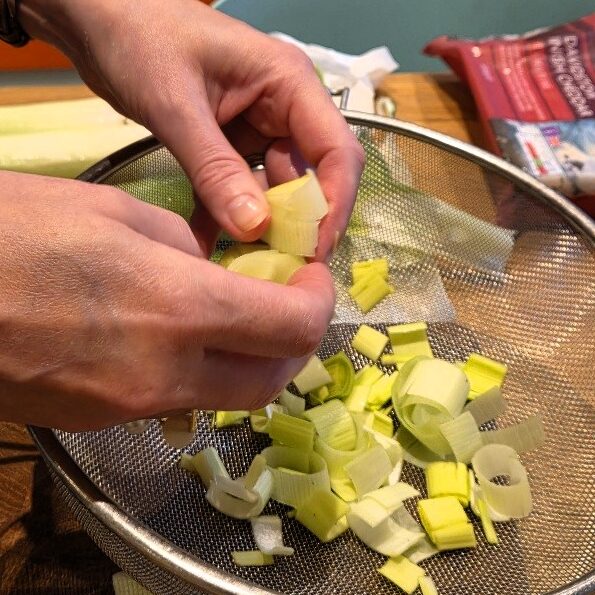
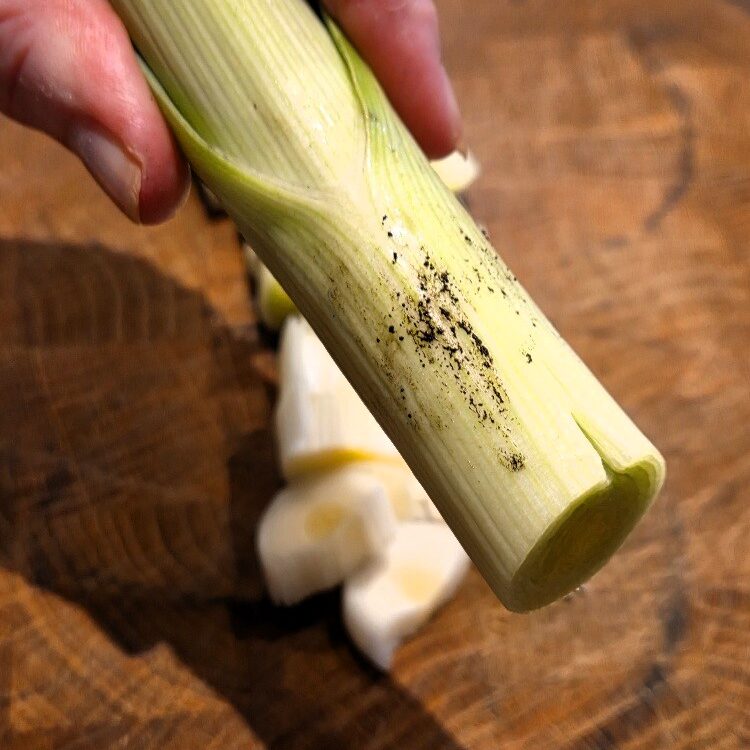
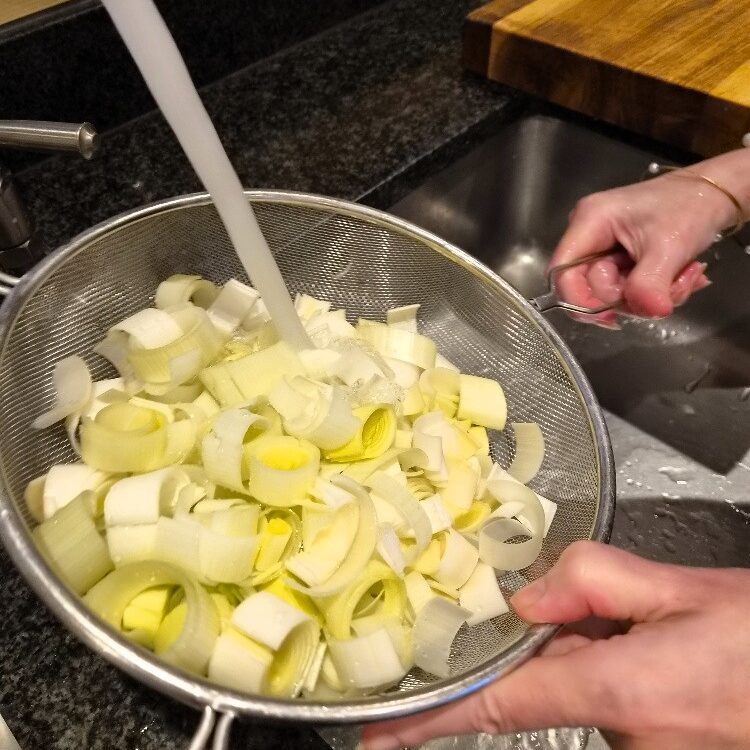
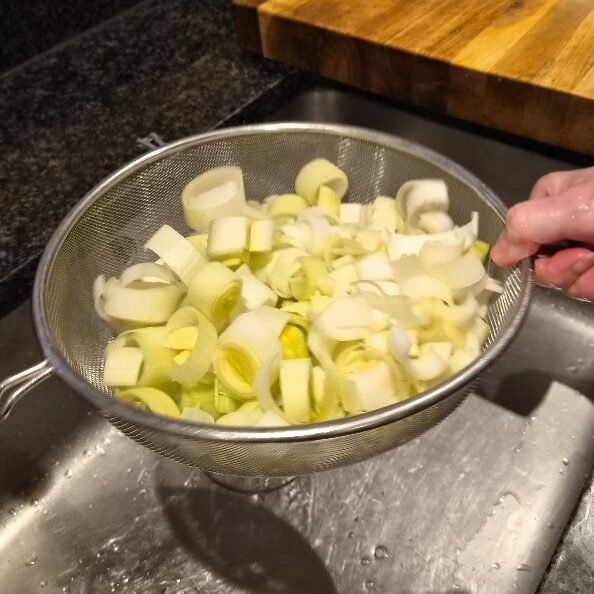
Leeks can be quite dirty, so wipe off any dirt you find between the layers as you go. But you’ll also need to wash your leeks well. Run them under the cold tap to remove any more dirt, then shake well to drain.
Jake sticks his nose in
Loose, bushy leeks tend to have the most hidden dirt, but even pre-packed trimmed leeks can still have dirt between the layers. Always wash your leeks well.
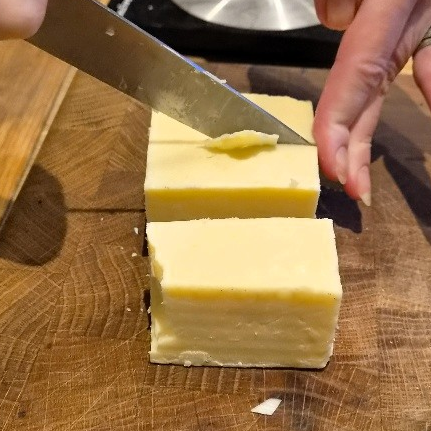
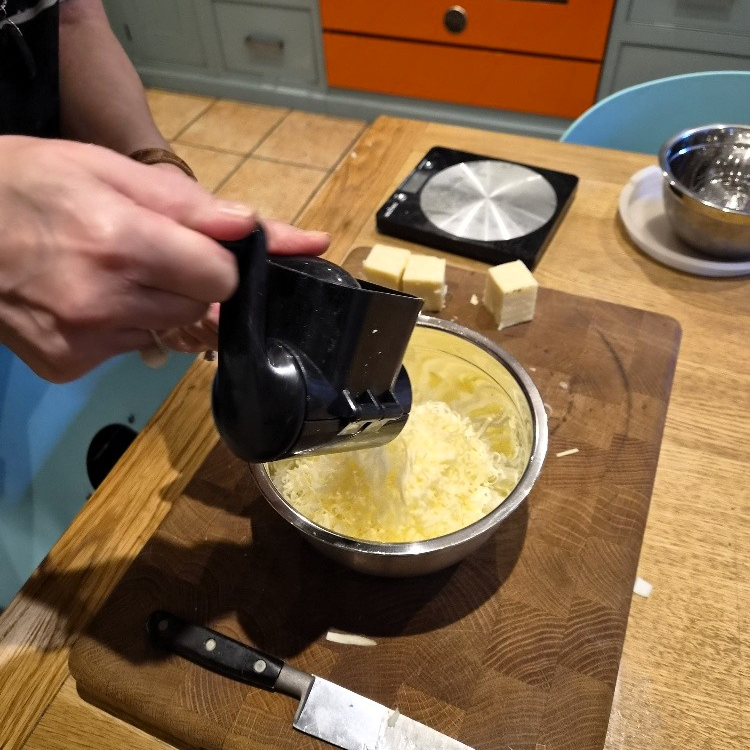
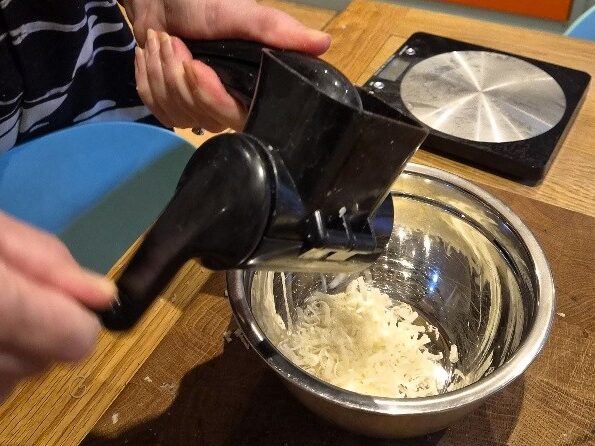
Now grate both cheeses, but keep them separate. We like a lot of cheddar, and mature is best for a good cheese flavour in the finished dish. We use about 230 to 250g. But you only need a small amount of Parmesan as it will be used as a topping, about 20 to 25g.
Jake sticks his nose in
You could use cheddar for the topping as well. But Parmesan works better. It is firmer, so doesn’t go oily when it melts, and adds a nice savoury-sweetness to the topping too.
Your preparation is done!
Cooking the pasta
For macaroni cheese you need to part-cook the pasta. It will finish cooking in the sauce in the oven. Look at the cooking time on the pasta shape of your choice. There are normally two times – one for al dente and one for well done. You need to cook the pasta for about 2 minutes less than the lower time on the pack. Today our cook time was 7 to 9 minutes, so we cooked our macaroni for 5 minutes.
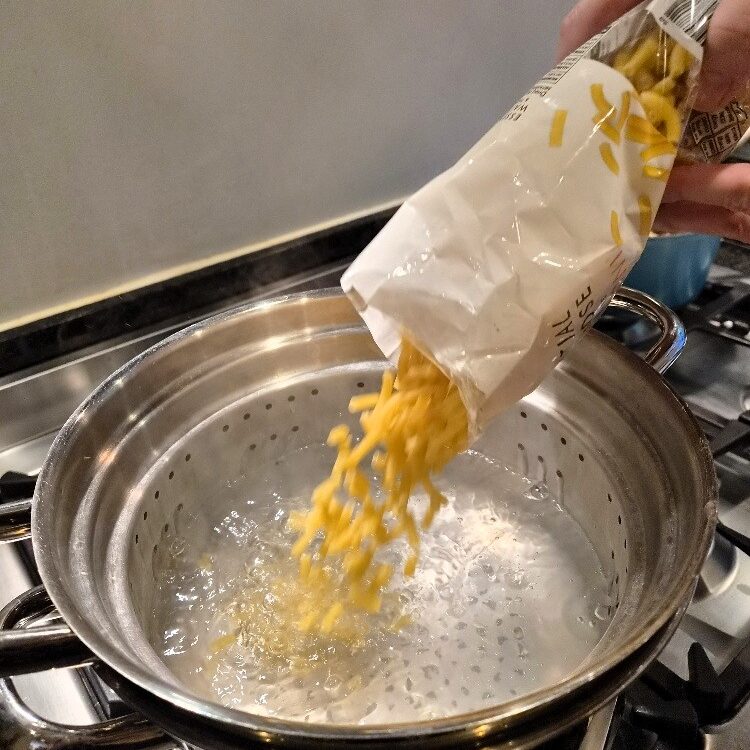
Get a large saucepan or pasta pan with a little water in on to boil over a high heat. Also boil a full kettle. Pasta has to be cooked in a lot of well-salted water at a rolling boil. Don’t overcrowd the pan, and make sure the water keeps at a strong boil, not a simmer. For this dish, you need about 90g of pasta for a generous portion per person (macaroni cheese is a rich dish!). Today we used 350g macaroni and it comfortably served four people and could have served six.
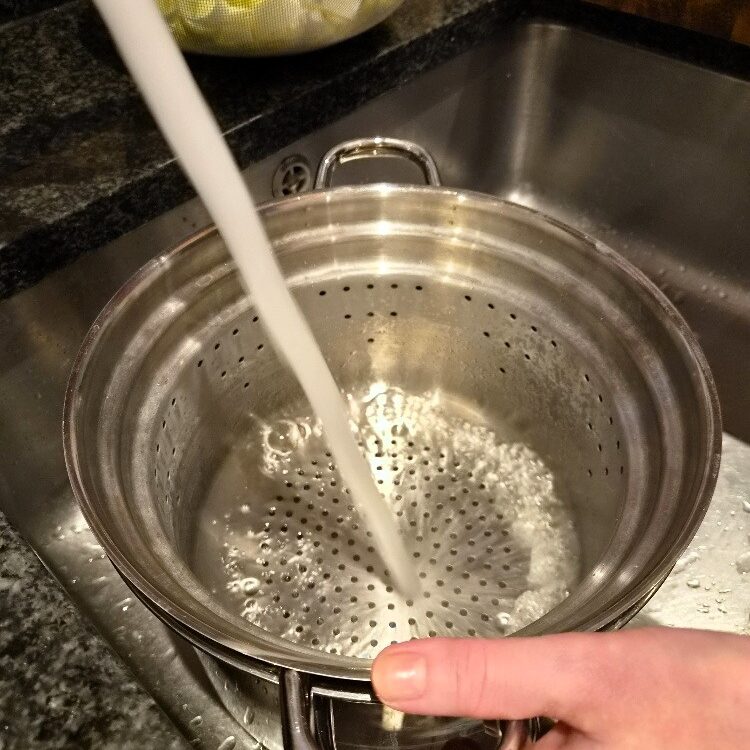
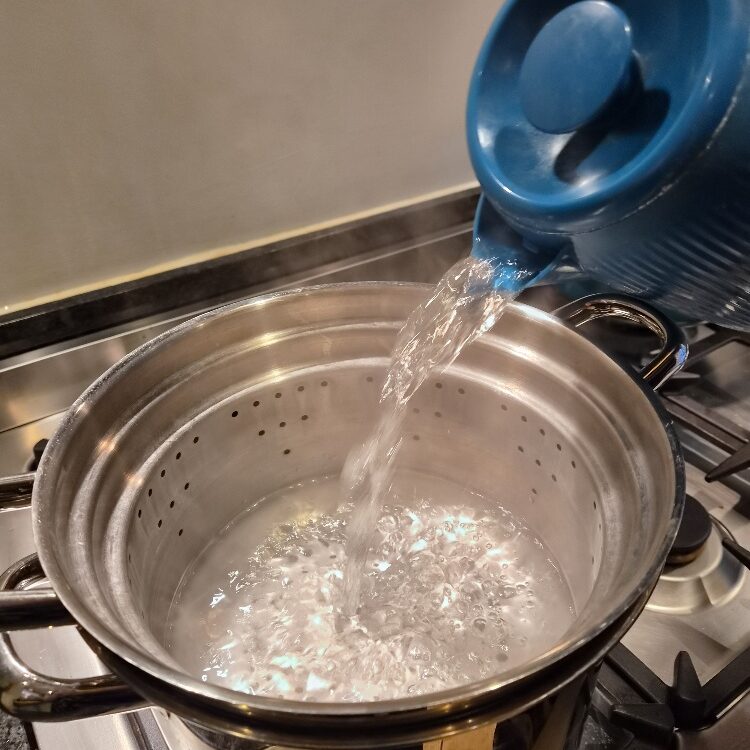
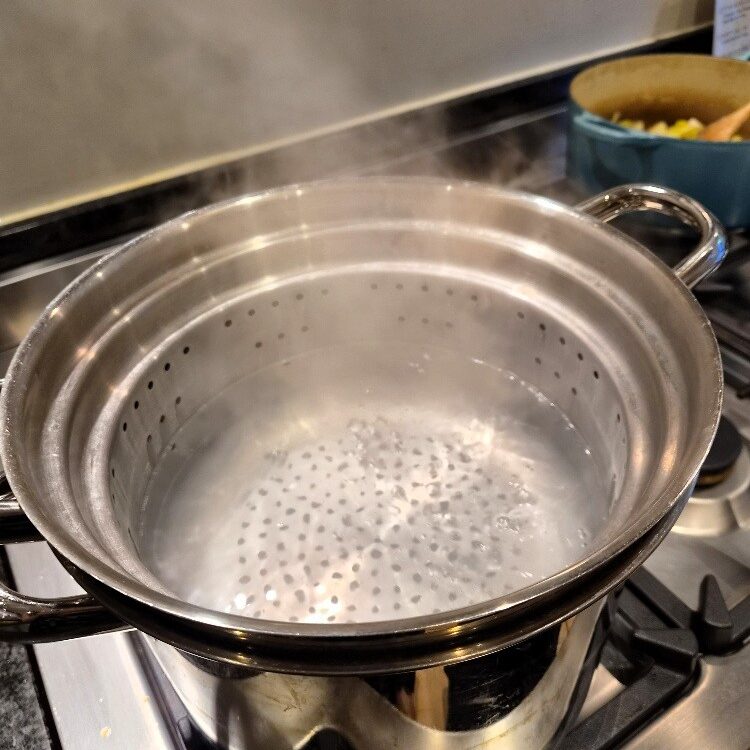
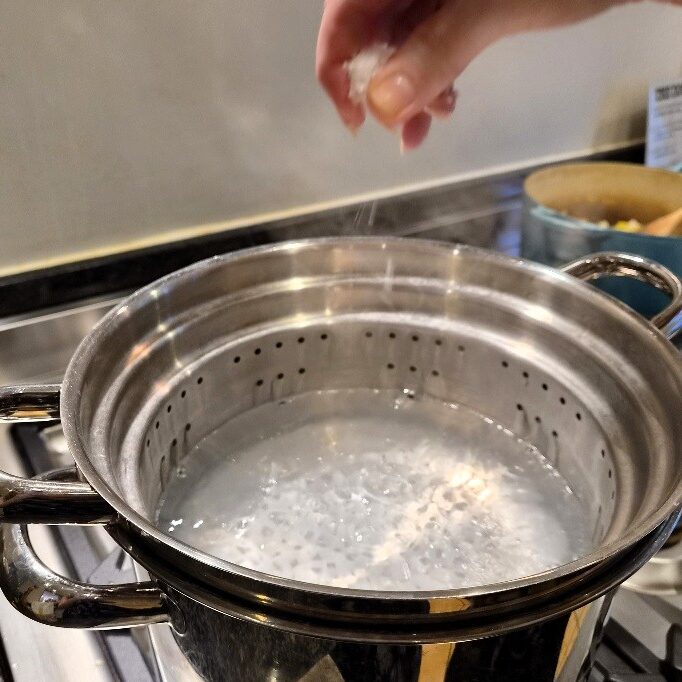
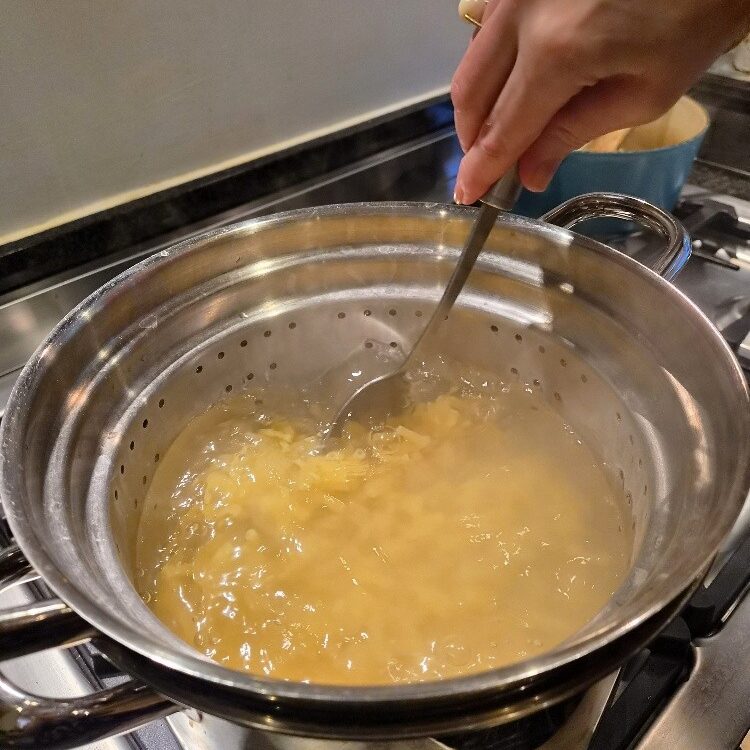
Salt the water well, then add the macaroni. Bring back to the boil, and also give the macaroni a stir. Set a timer to the part-cook time.
Jake sticks his nose in
Macaroni in particular has a tendency to clump together and stick. You can add a little oil to the pasta water, but we find it doesn’t make much difference. Just give it a good stir at first, and then stir occasionally through the cooking time, and it should be fine.
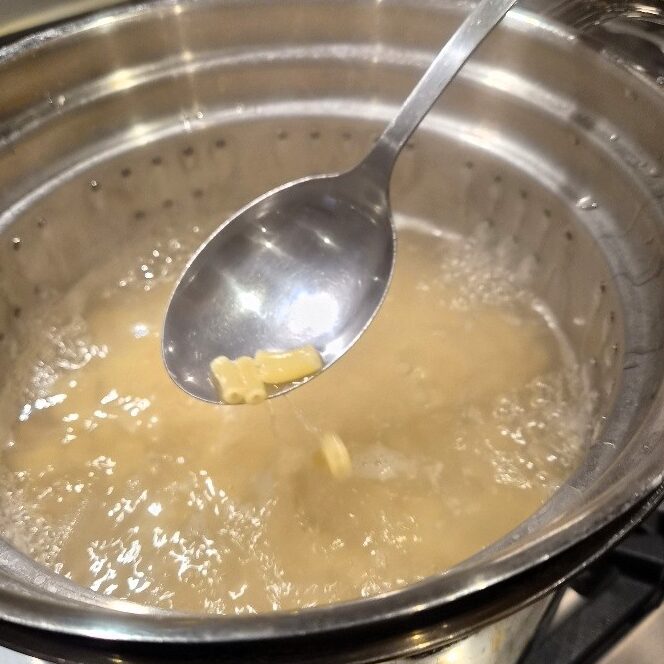
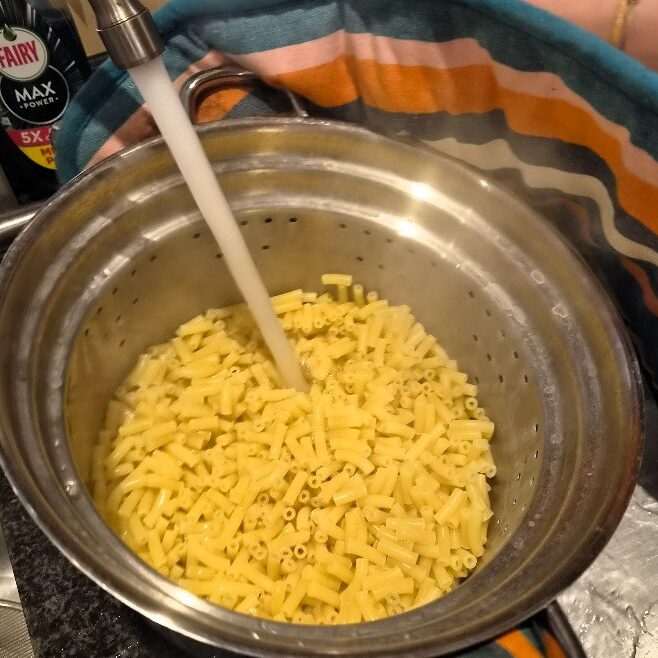
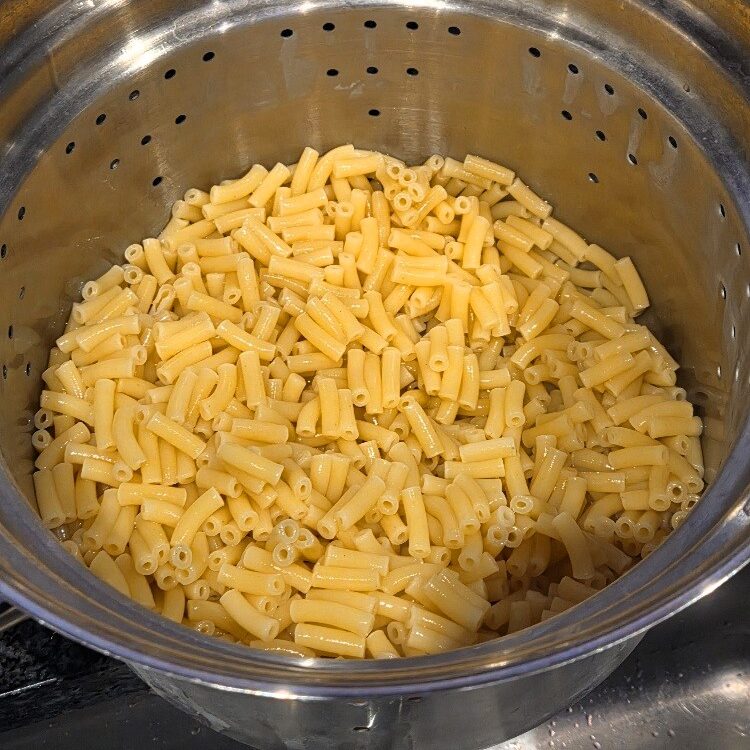
When the pasta cooking time is up you can test a piece. It should be soft enough to bite into but still quite firm. Drain the pasta in a colander or large sieve and then immediately drench it in cold water from the tap. You want the pasta to go completely cold as quickly as possible. This arrests the cooking, ensuring your macaroni won’t be soggy in the finished dish. Drain the pasta again, and set aside until you are ready to assemble the macaroni cheese.
Cooking the leeks
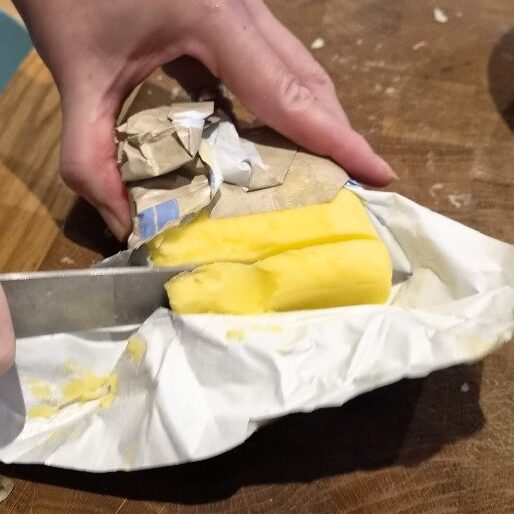
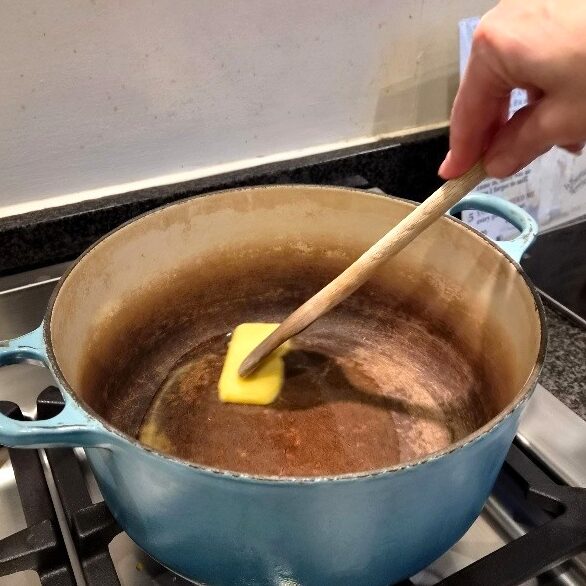
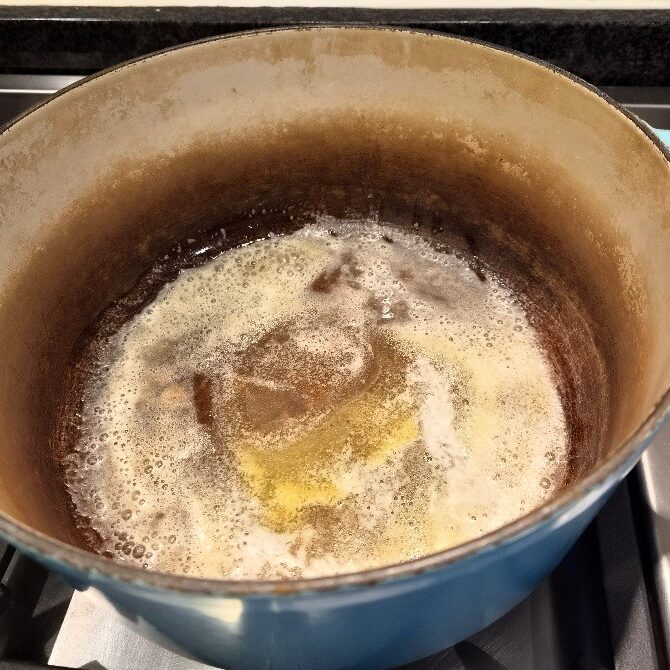
While the pasta is cooking, start frying the leeks. Add a good knob of butter to the casserole you intend to build the macaroni cheese in. Do make sure the casserole is hob-safe, however. Set the pan over a medium-low heat so the butter melts.
Jake sticks his nose in
Most metal, cast iron and some other casseroles can be used on both the hob & in the oven. But most glass, stone or clay casseroles are not hob-safe. Always check if yours is safe before using on a hob – it can shatter or explode on the hob if it is only oven-safe. If you don’t have a hob-safe casserole, cook the leeks in a frying pan, then add to the oven-safe casserole
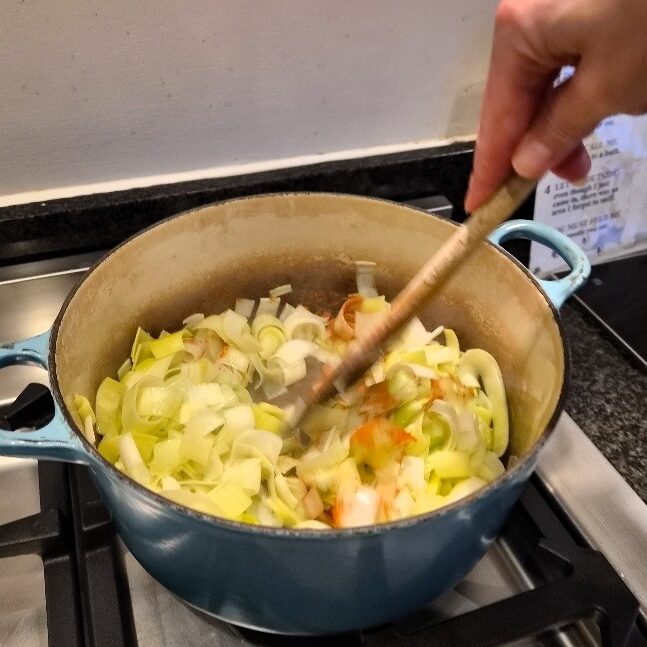
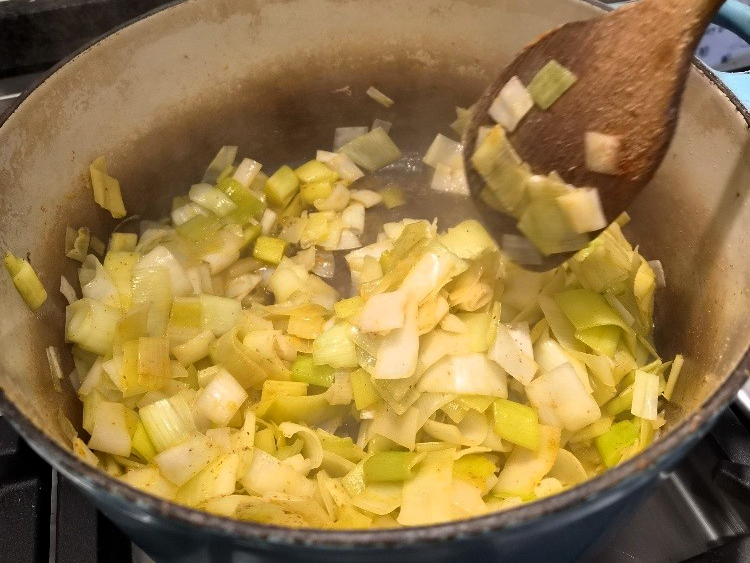
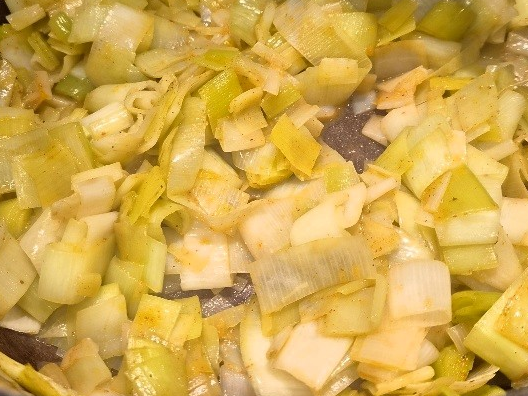
When the butter has melted, add the leeks and give them a good stir to coat them in the butter. Add a little more if you don’t think there is enough to coat them all. Fry the leeks over a medium heat until they just start to soften. Don’t worry if your casserole looks completley full of leeks at this stage – they will reduce down a lot!
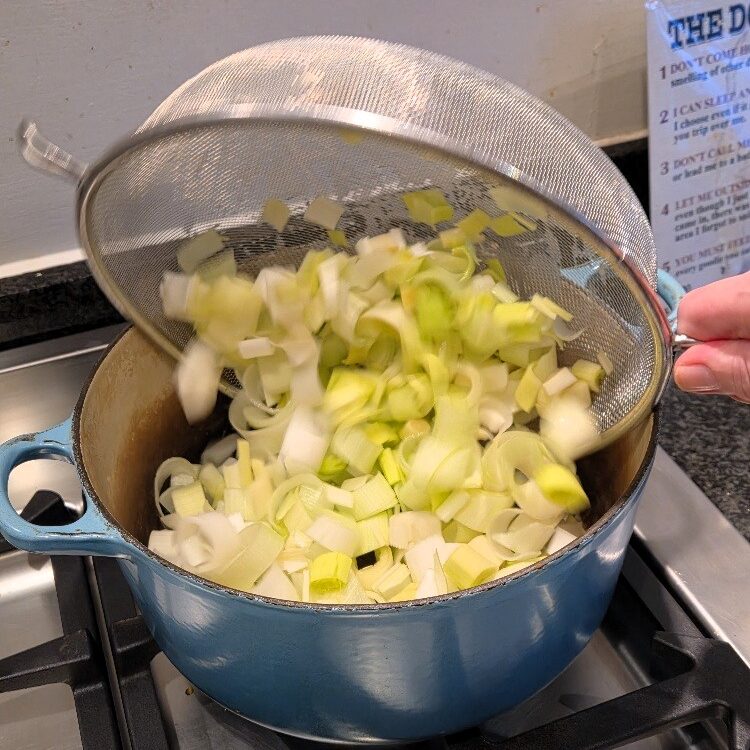
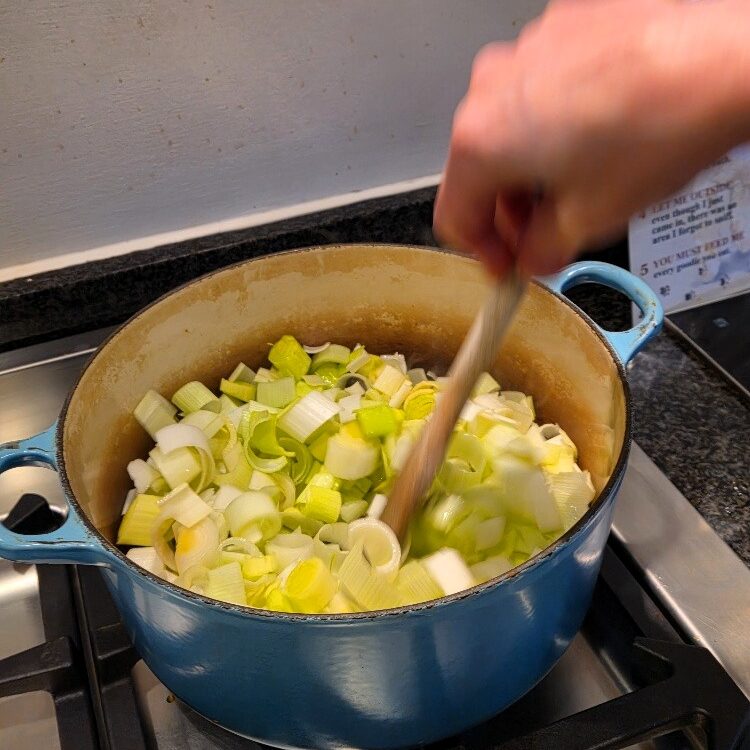
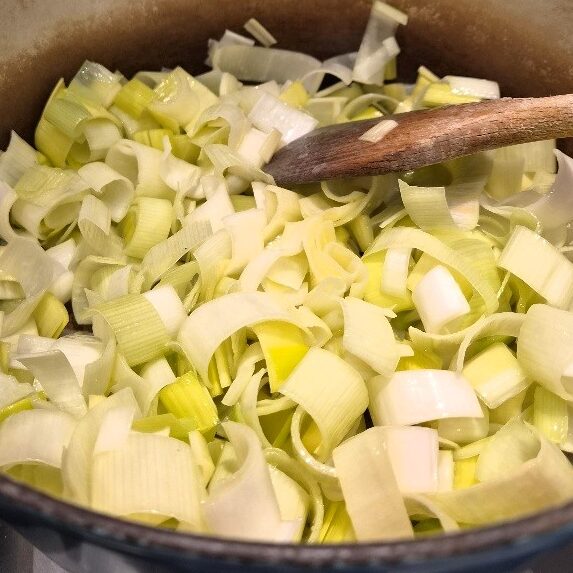
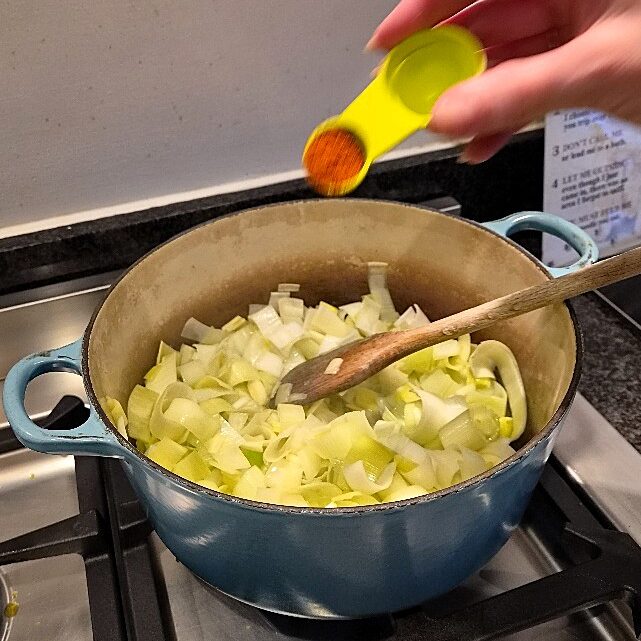
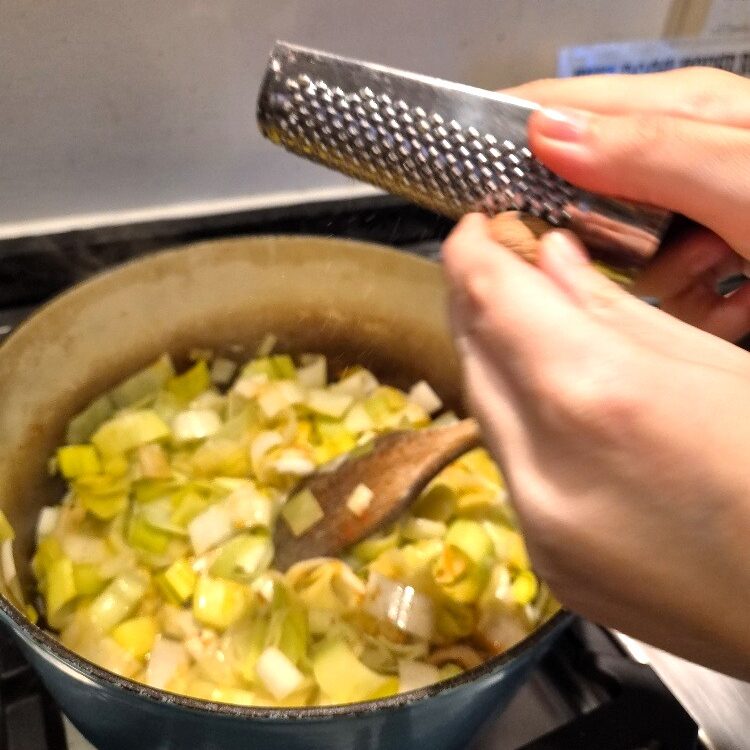
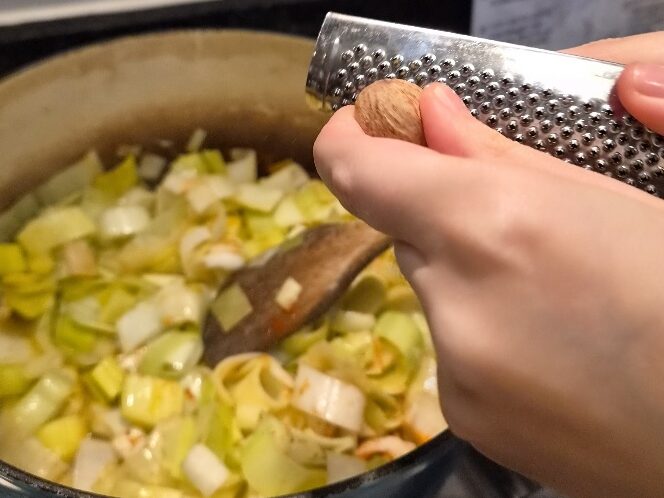
When the leeks are starting to soften, add some cayenne to taste – we use about a teaspoon – and season well with nutmeg. Both cayenne & nutmeg go extremely well with leeks, it’s a flavour combination we also use in Bibi’s Leek Quiche. But if you’re not a fan of spiciness, you can reduce the cayenne or replace with black pepper. Stir the leeks really well, and continue to cook over a low to medium heat until they are soft.
Making the roux & cheese sauce
It is best to wait until both the pasta & leeks are cooked before starting the sauce, especially if you are new to making roux-based sauces. You will want to work fast and give it your full attention.
The roux itself is extremely simple to make. You can find full details on how to do it in our Roux Tip, plus learn about the different types of roux. For cheese sauce, you want to make either a white or blond roux, depending on how nutty you like it. Ours today was somewhere in between.
Most roux use an equal quantity each of plain flour & butter. Measure this accurately, and your roux should work. Today, for an 850ml sauce (1 1/2 pints) we used 50g each of butter & flour.
Melt the butter in a saucepan large enough to hold your finished sauce. Once the butter has melted, keep the heat low and add the flour all at once. Stir immediately & keep stirring, making sure to incorporate all the flour, including any sticking in the edge of the pan. See the full method & pictures in our Roux Tip here.
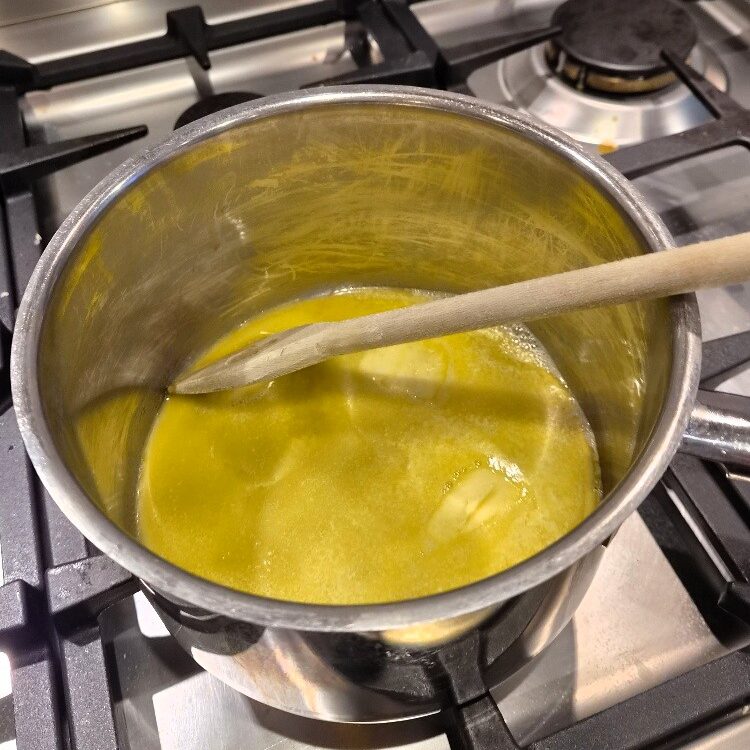
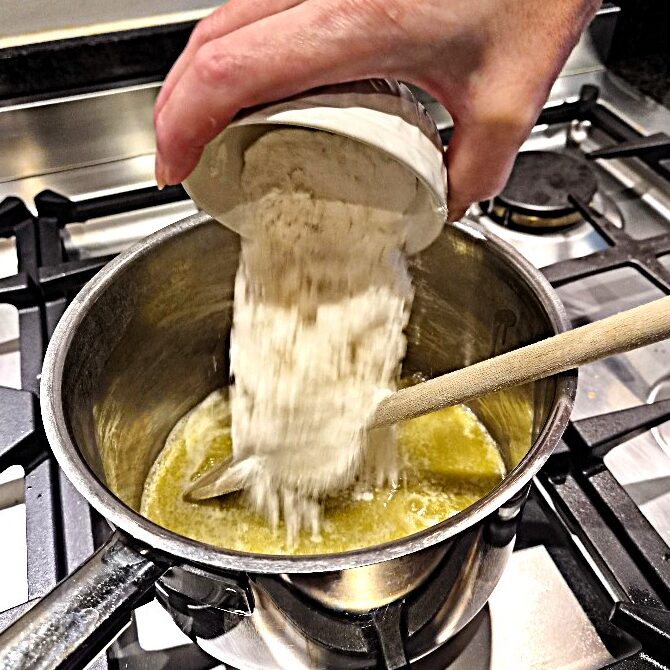
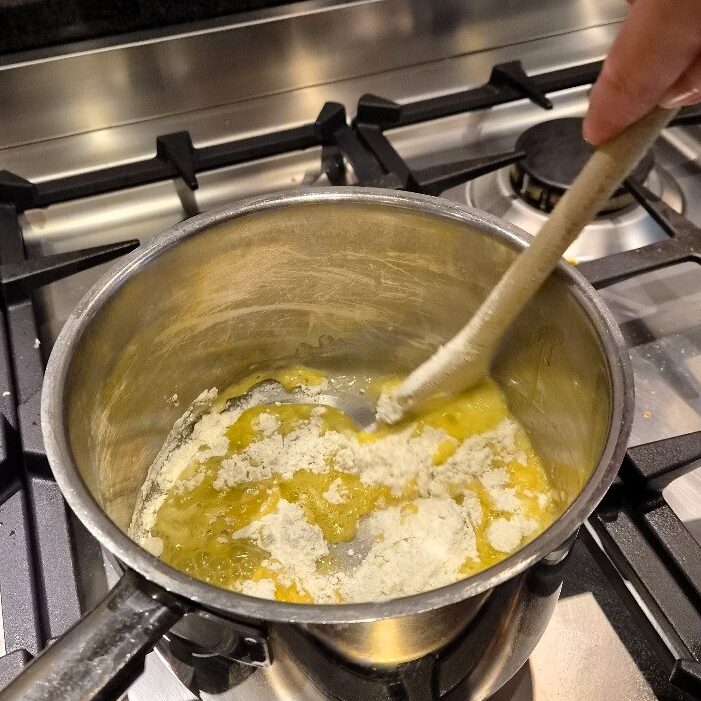
You need to keep cooking and stirring the roux until it is smooth and slightly glossy, and you reach the colour you need. Even for a very pale roux it is important to cook the flour out so you don’t get a harsh raw flour flavour in your sauce. This will take at least two minutes. We tend to judge our roux by smell – the flour is cooked when a nutty smell rises.
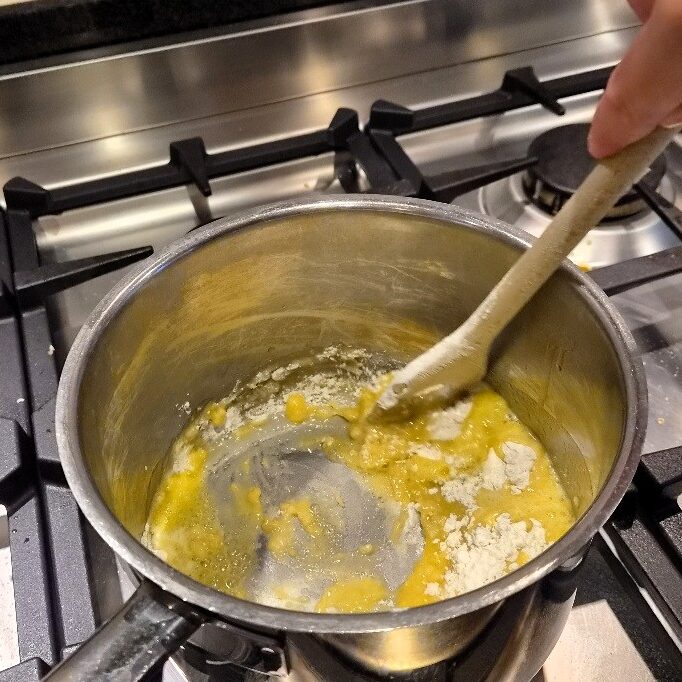
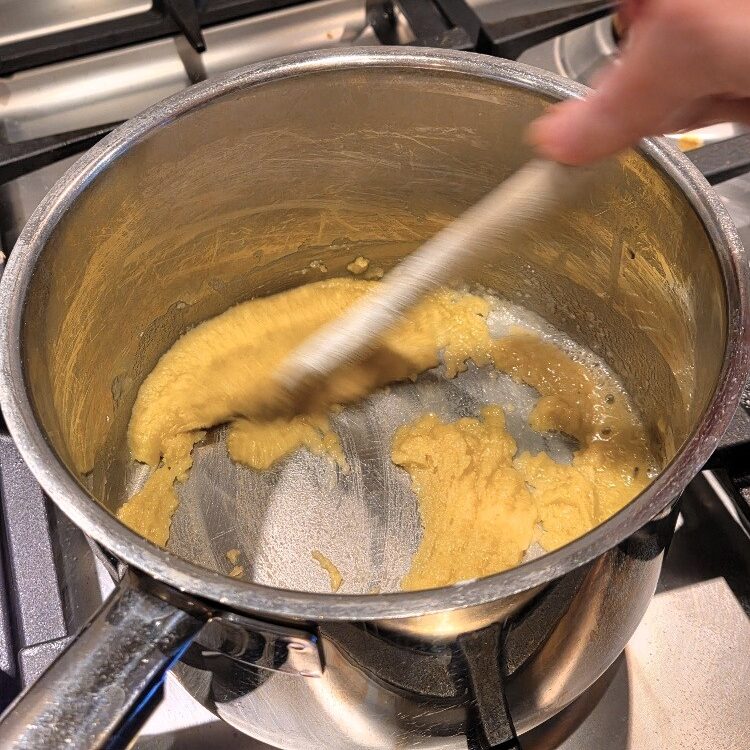
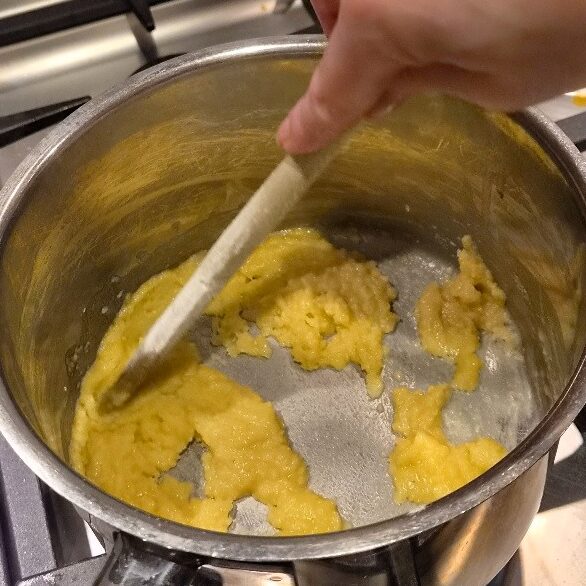
For a white roux, cook for about 2 to 5 minutes; slightly longer for a blond roux. See our Roux Tip for details. Today we cooked for about 6 minutes. When the roux is cooked to your liking you can set it aside for later – pull it off the heat immediately you are happy. Or you can make your sauce immediately.
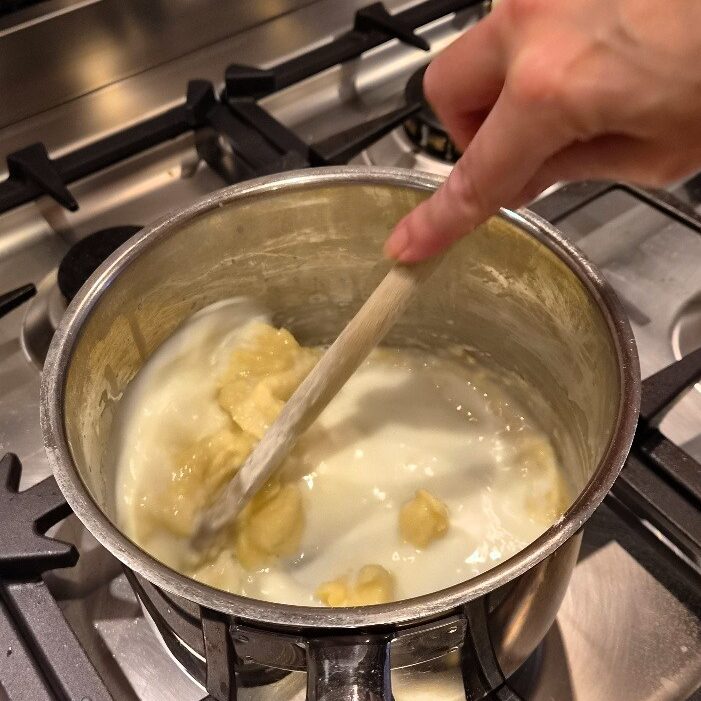
Making a white sauce, which is the base for a cheese sauce, is easy, but requires a little patience, diligence and some technique. See full details on how to do it in our White Sauce Tip here. The most important watch out is lumps – if they form, they are hard to get out later in the sauce-making. The key to avoid them is to add the milk very slowly, particularly at first, and to stir well between each addition.
Jake sticks his nose in
Having the milk at room temperature helps avoid lumps forming. So get your milk out of the fridge about 30 minutes before you are ready to make the sauce.
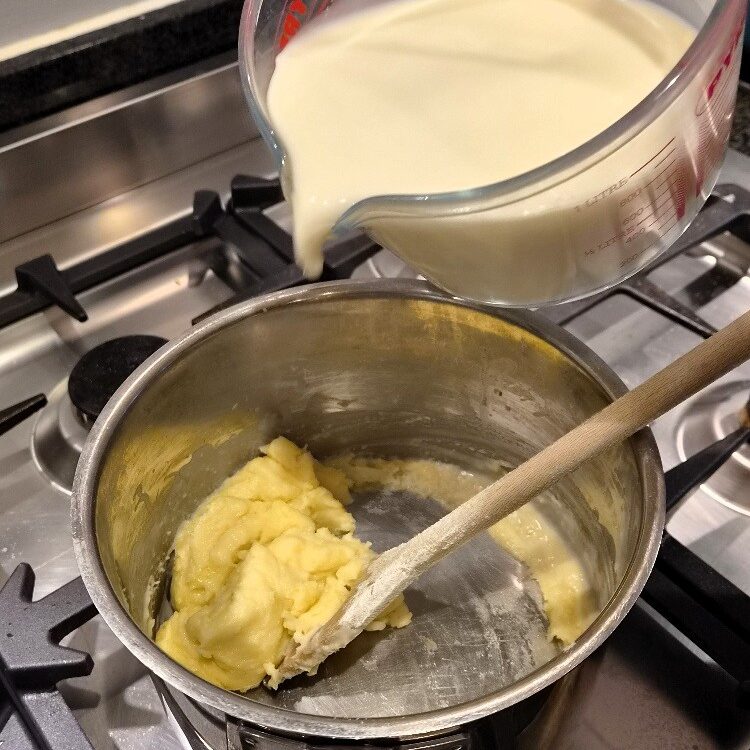
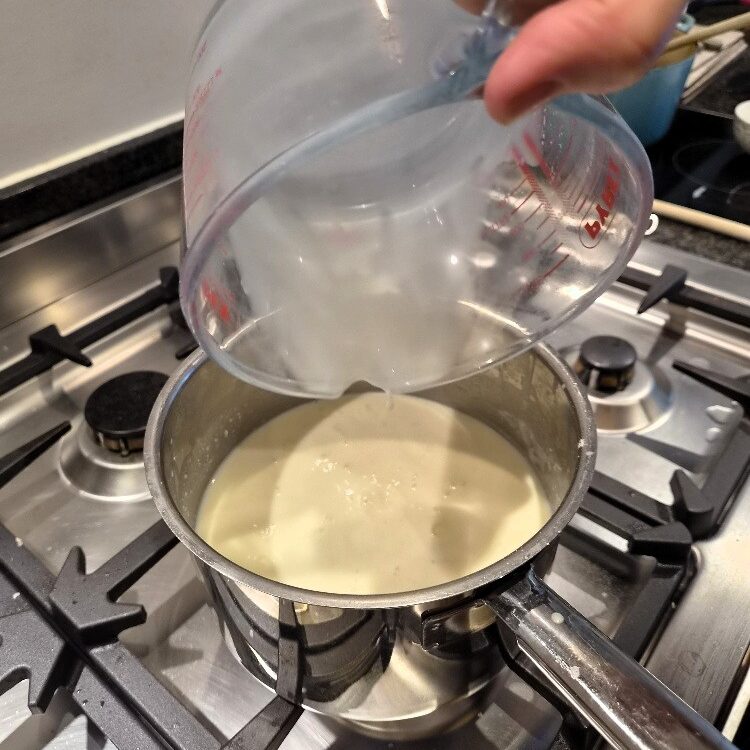
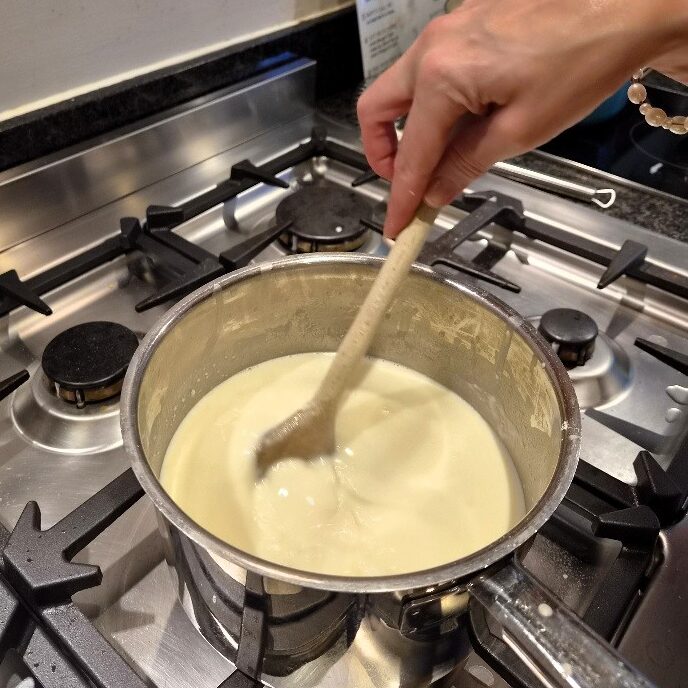
Measure out the milk and place the roux over a low heat. When it is warm, add one small splash of milk, and stir in well with a wooden spoon or spatula. One with a flat pointed end is best. Keep stirring until the milk is fully incorporated, and the roux looks smooth again. See our White Sauce Tip for more details.
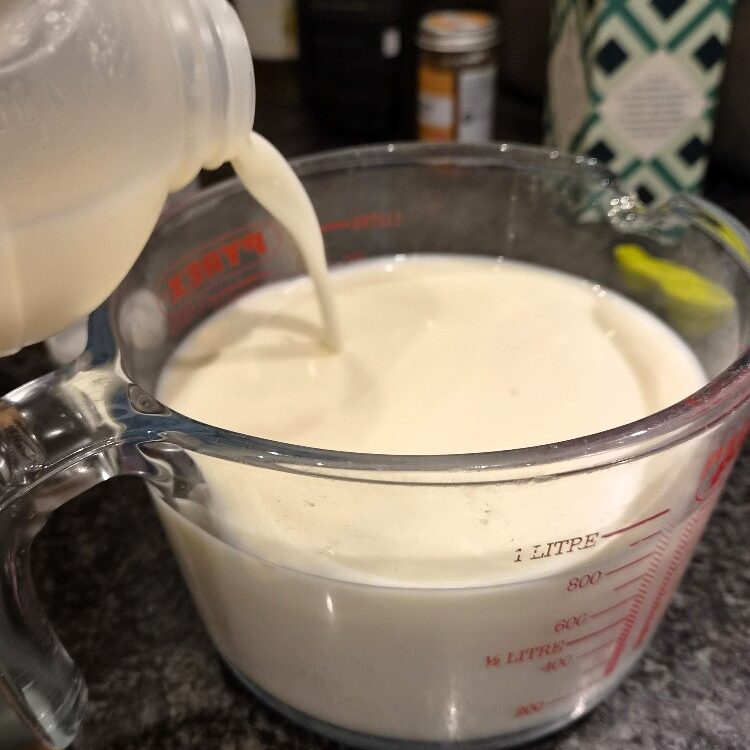
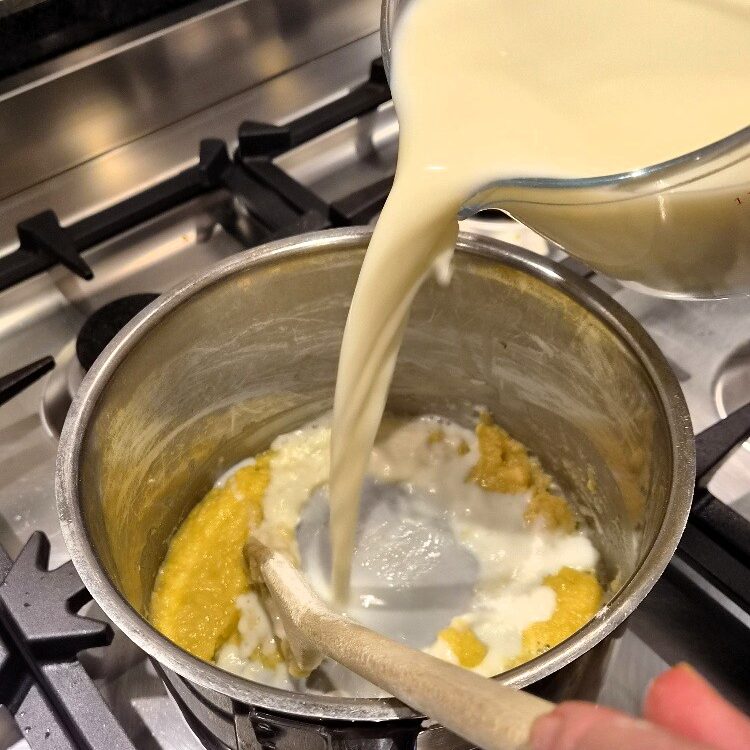
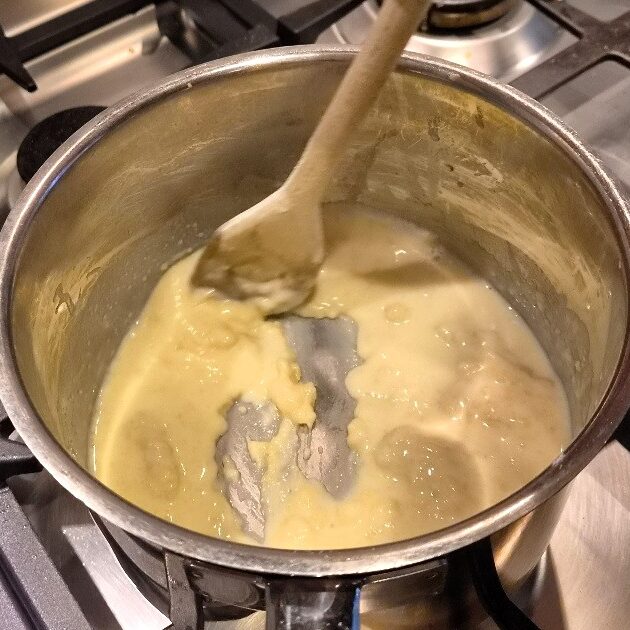
Once the milk is fully incorporated, add another small splash and stir well again until smooth.
Jake sticks his nose in
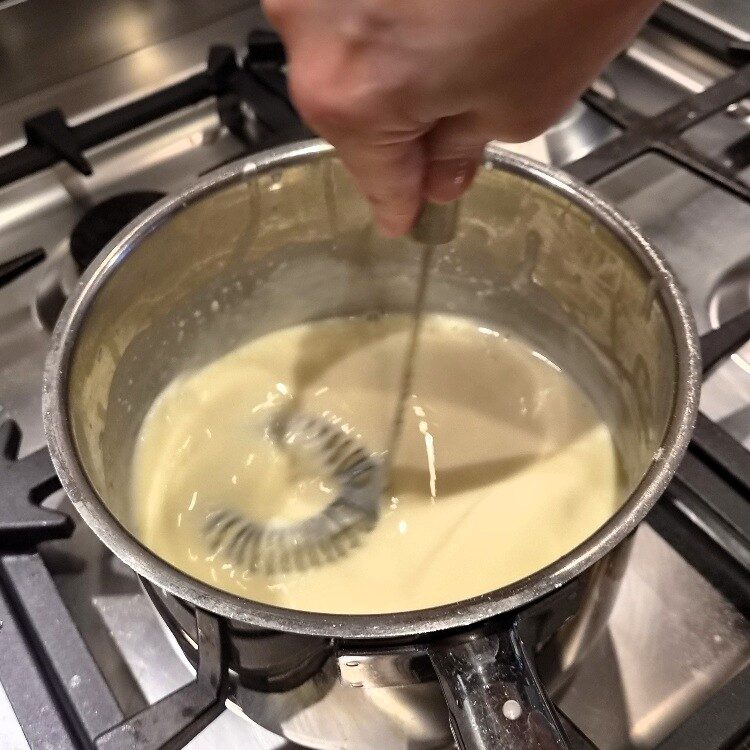
Keep stirring and add the milk very slowly to avoid lumps! You can continue using your wooden spoon, or use a sauce whisk – this is very good for getting out lumps. Or try a small regular whisk instead.
Keep going, adding a splash of milk and stirring well, until all the milk is incorporated. Then cook the sauce for another few minutes, stirring, until it thickens slightly – to the consistency of double cream. See our Tip for more details and pictures.
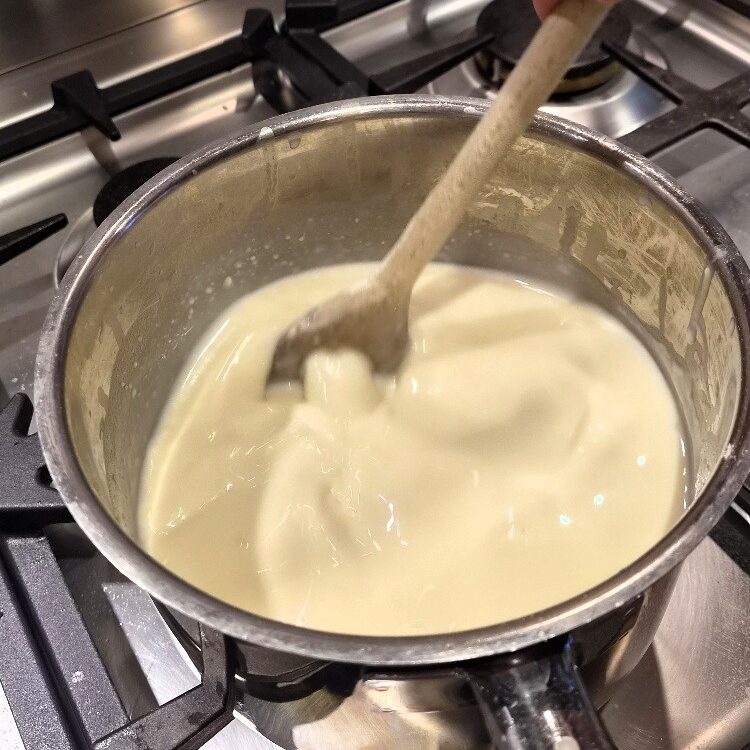
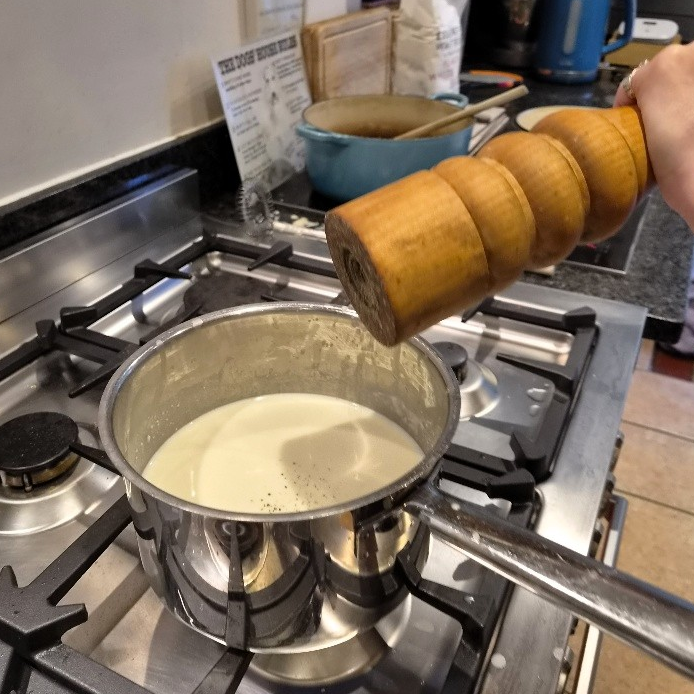
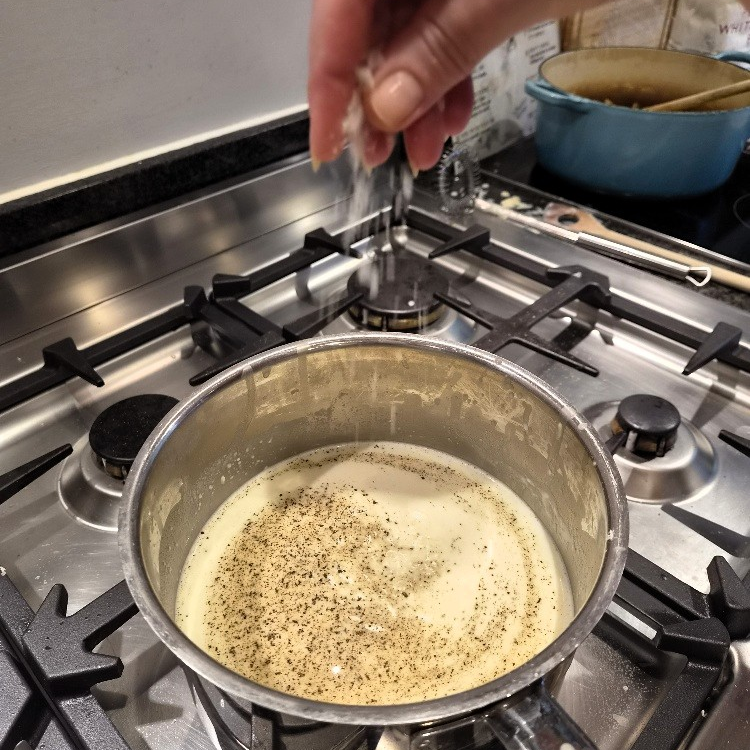
Season with pepper, salt (add less if your butter was salted) and grated nutmeg to taste.
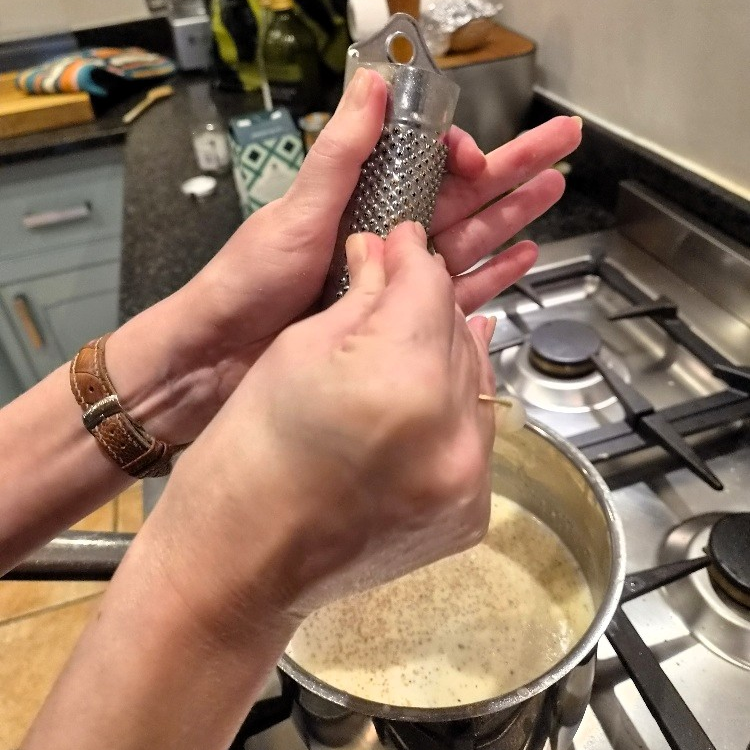
You now need to turn your white sauce into cheese sauce. See more in our Tip. Simply add the grated cheddar, and stir over a low heat until it melts. We also like to make it slightly richer with a little double cream – today we added about 100ml.
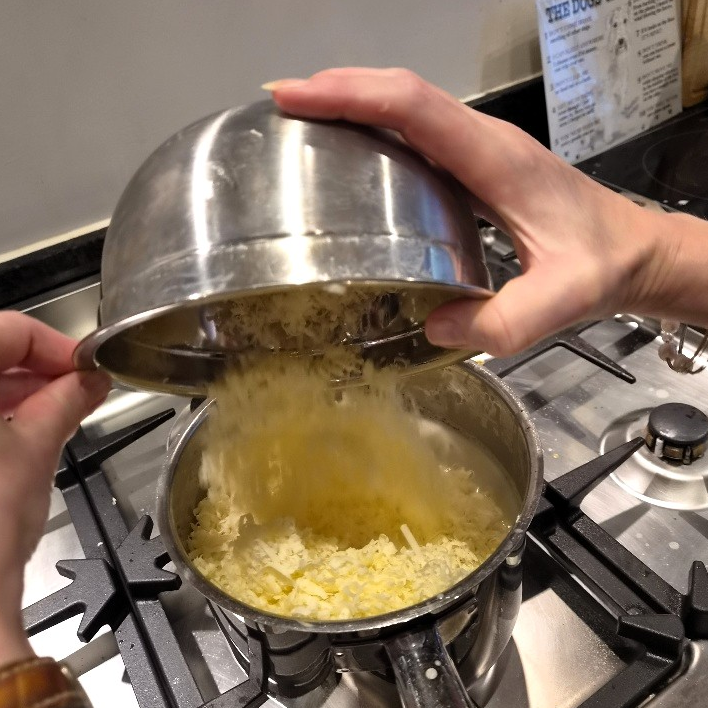
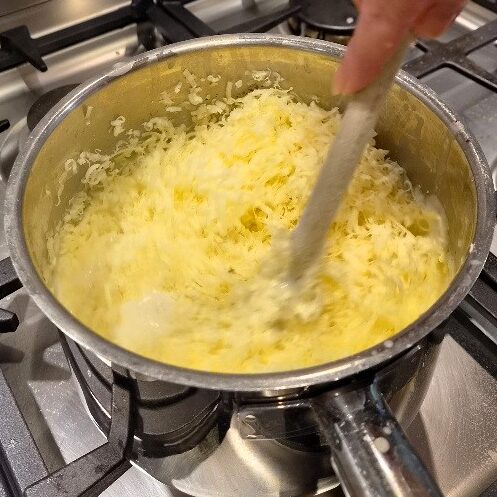
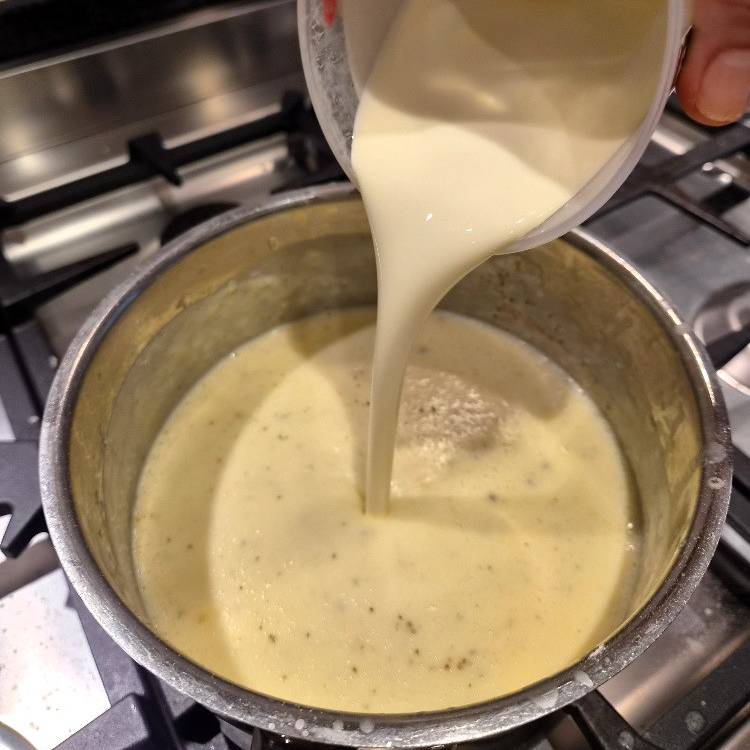
Your cheese sauce is done!
Assembling the macaroni cheese
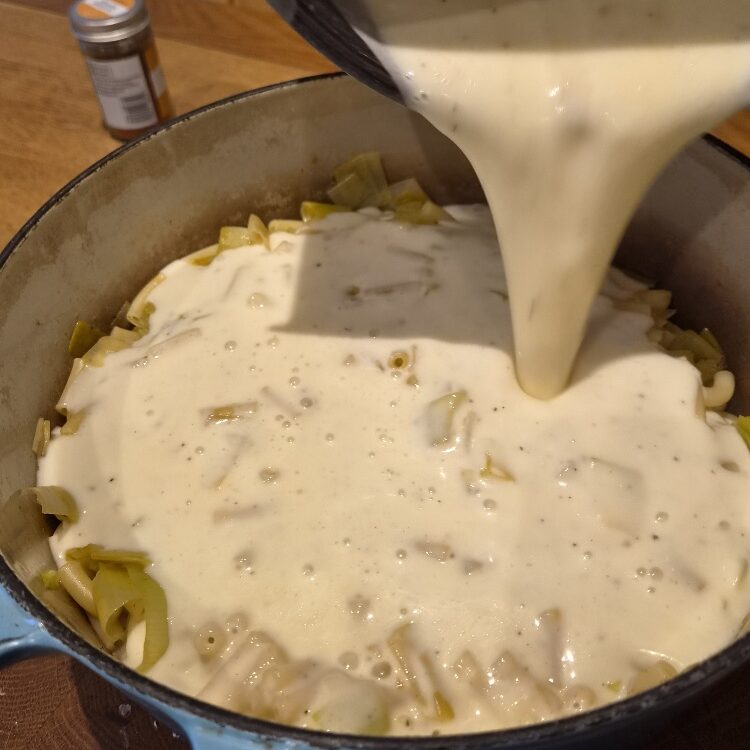
To assemble the macaroni cheese, add the cooled pasta to the leeks in the casserole, and stir well. Pour over the cheese sauce.
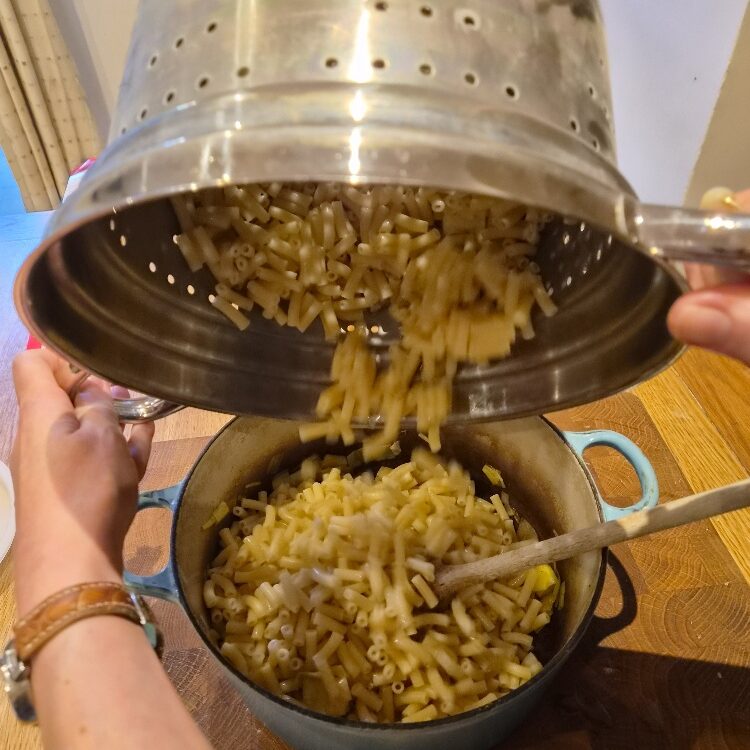
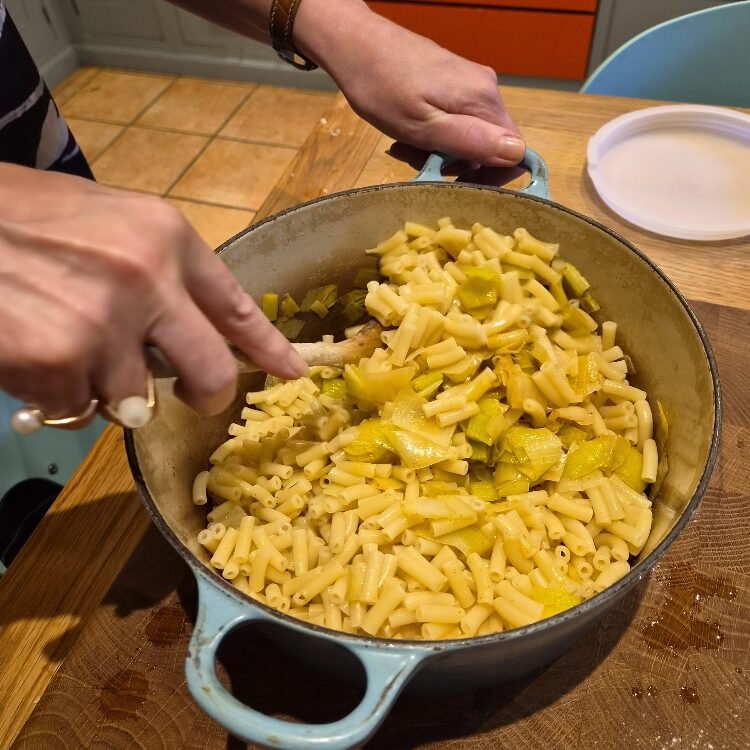
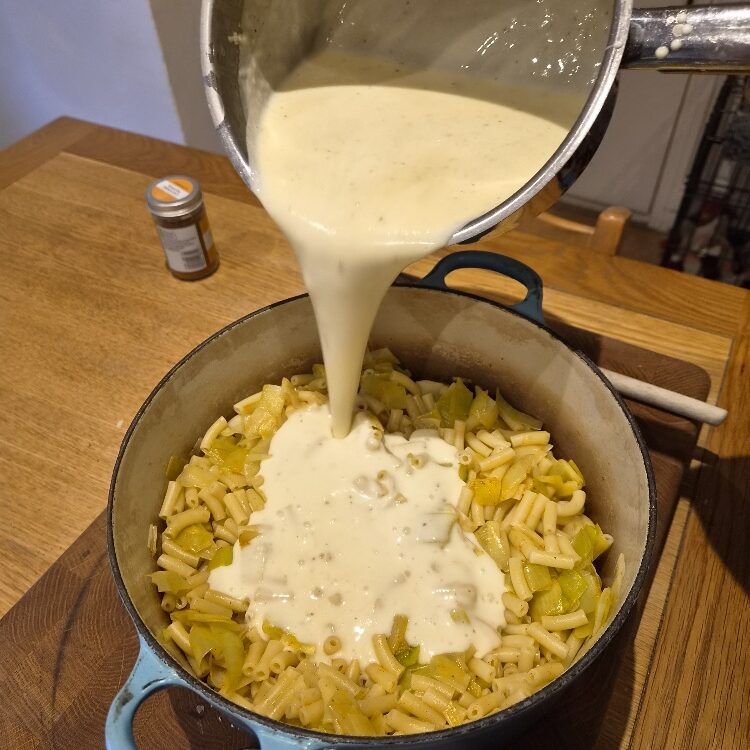
Stir well to combine, making sure the macaroni is well coated in the sauce.
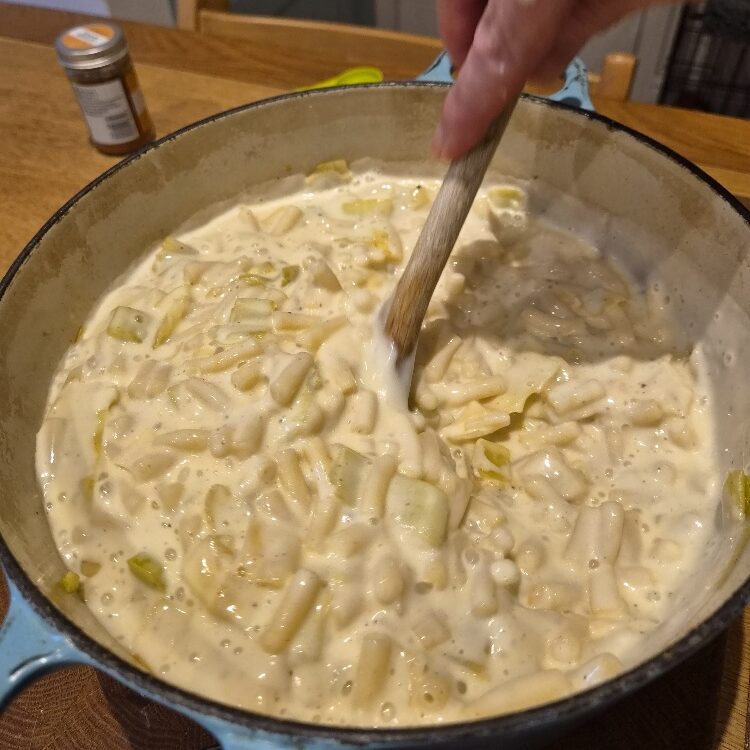
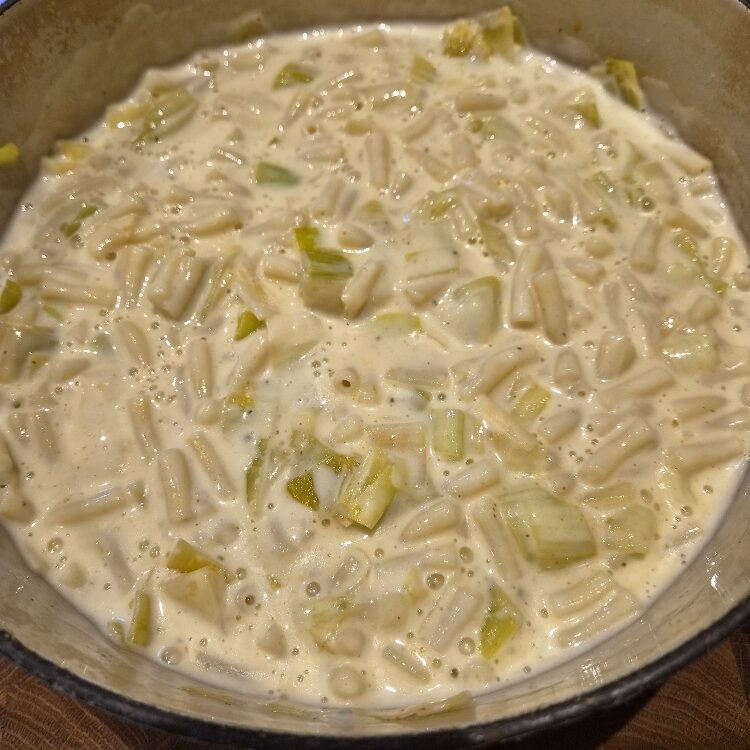
You can top & bake the macaroni cheese immediately, or keep until you are ready to cook it. We do think resting it improves the texture. Store, covered, in the fridge unless you plan to use it within an hour or so, but do remember to take it out of the fridge about half an hour before you are ready to bake. It will take 30 to 40 minutes to cook in the oven, so plan accordingly. Do not top until just before you are ready to put it in the oven.
Topping & baking the macaroni cheese
Heat the oven to 180C (160C fan). To make the topping, add a little cayenne, to taste, to the grated Parmesan and stir well. This adds a little heat, and also gives it an attractive pink/orange colour.
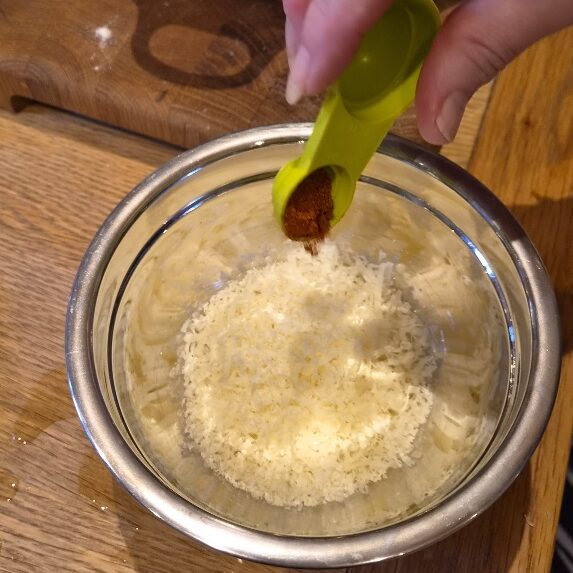
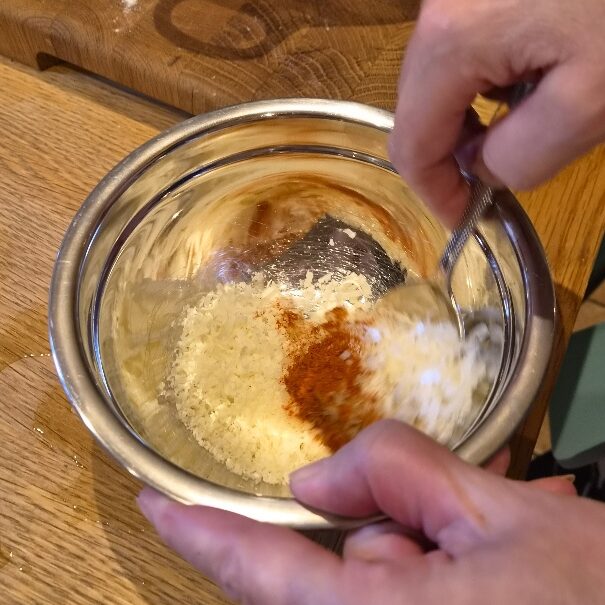
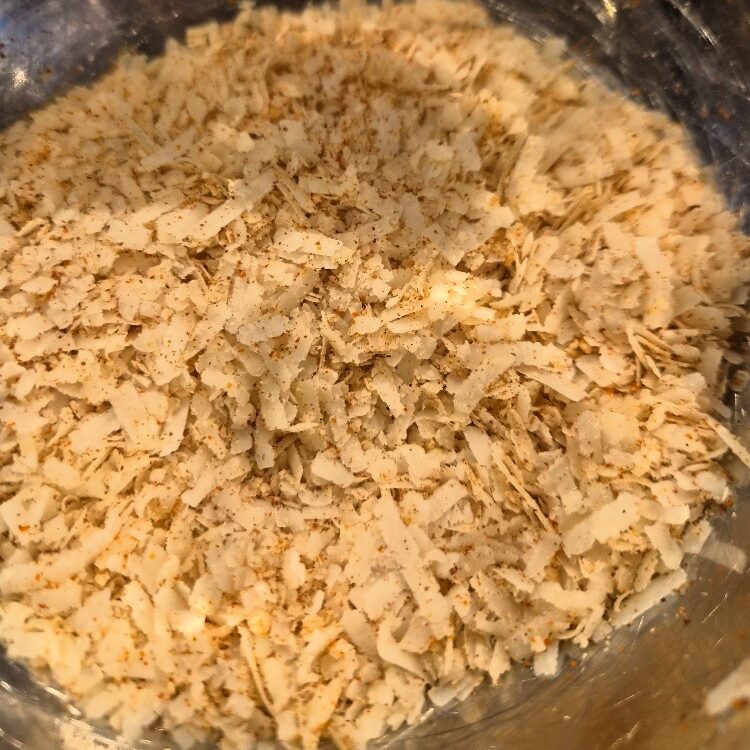
Sprinkle over the macaroni cheese in an even layer. Place the macaroni cheese into the hot oven.
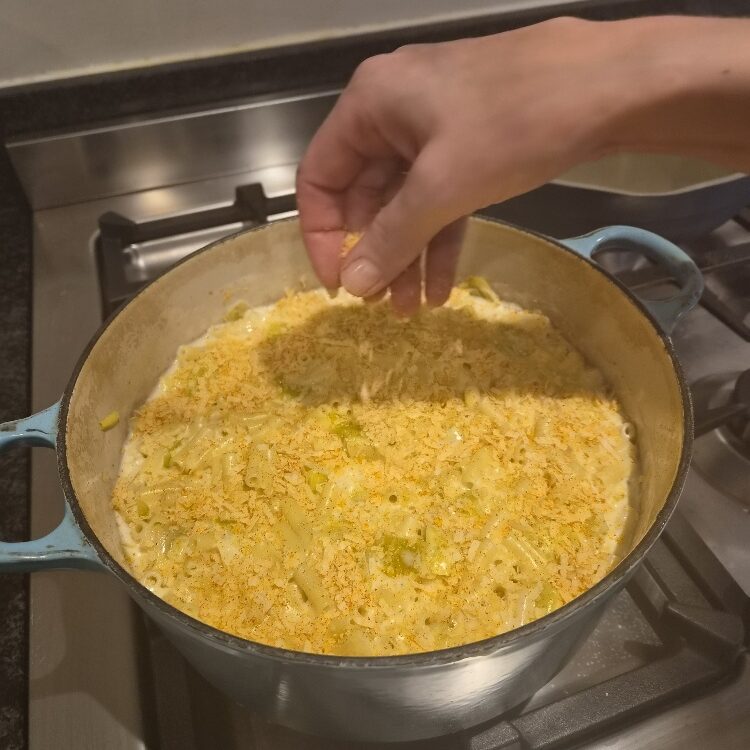
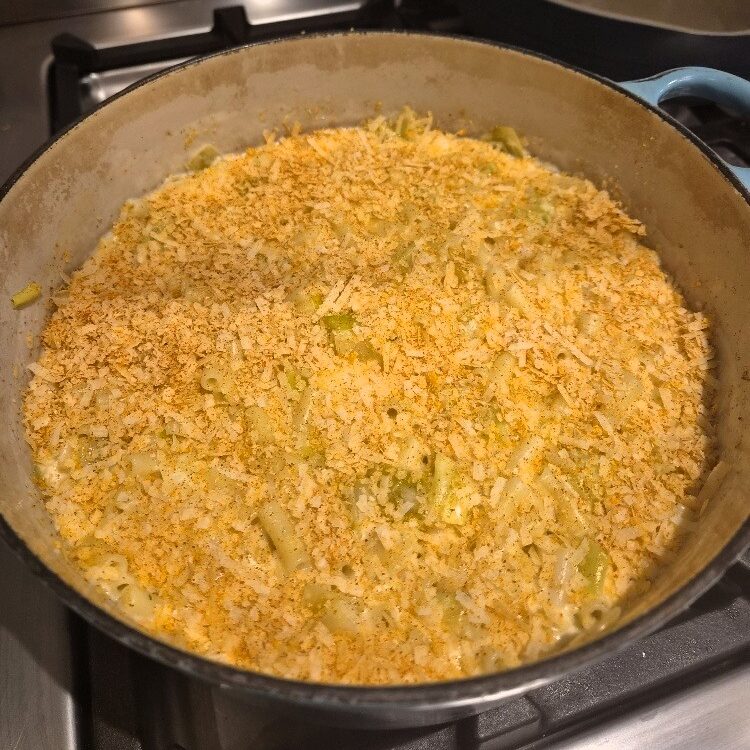
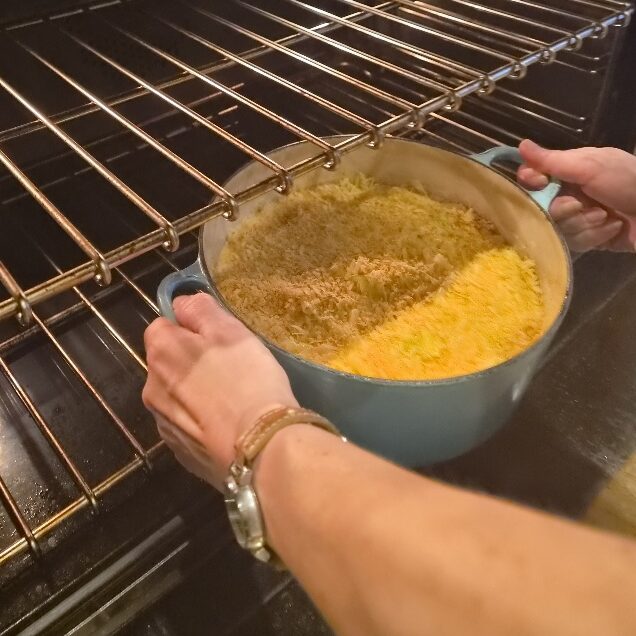
Bake for 30 to 40 minutes, until the top is golden and the sauce bubbles.
Making the tomato salad
While the macaroni cheese is cooking, make the tomato salad. We like to keep it simple. You can make a classic vinaigrette for it – see our Vinaigrette Tip here. But we usually dress it even more simply, with a splash of oil & vinegar.
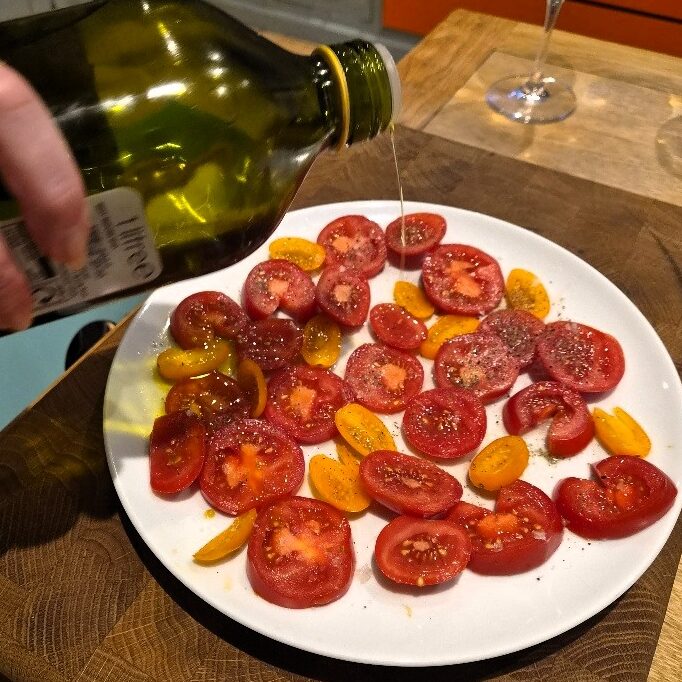
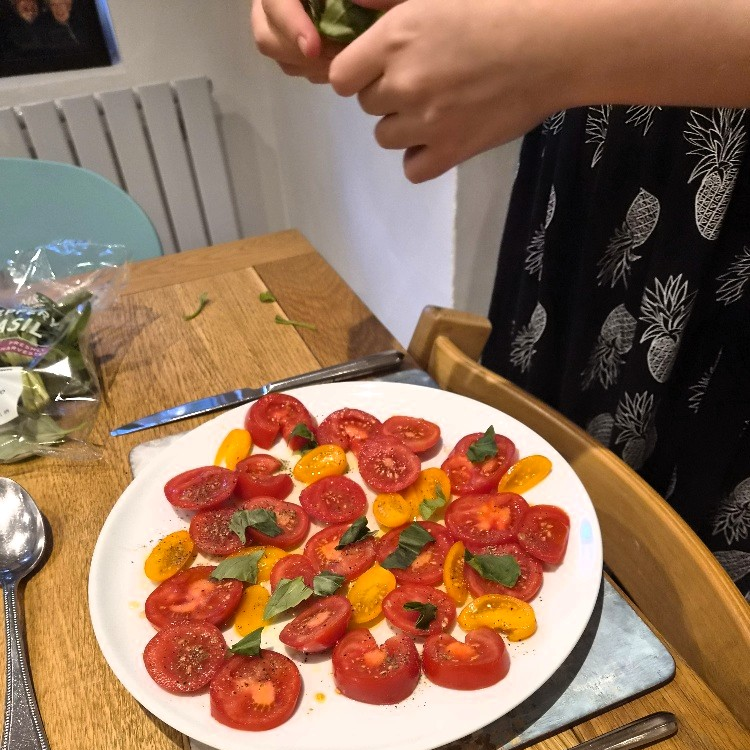
Slice the tomatoes, and remove the core. Arrange on a serving plate.
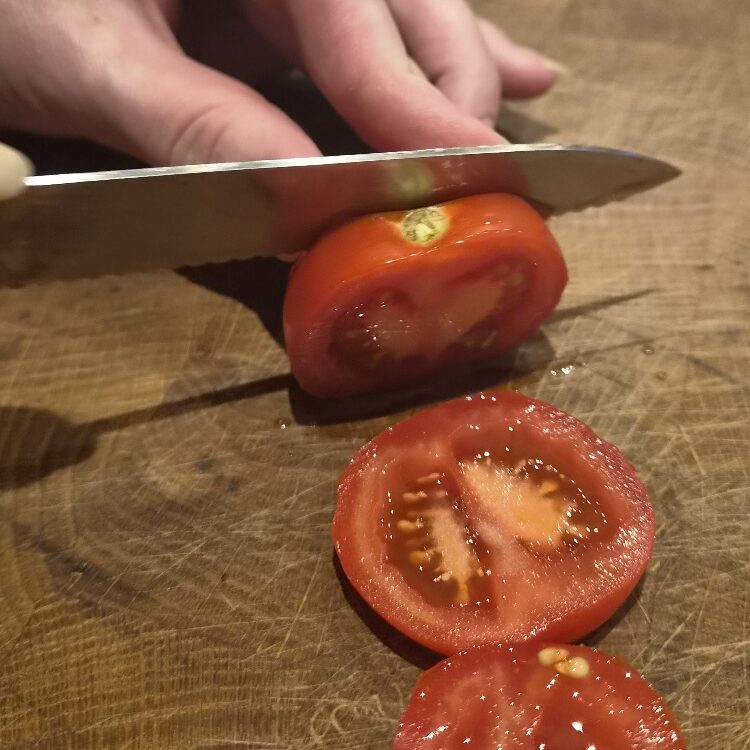
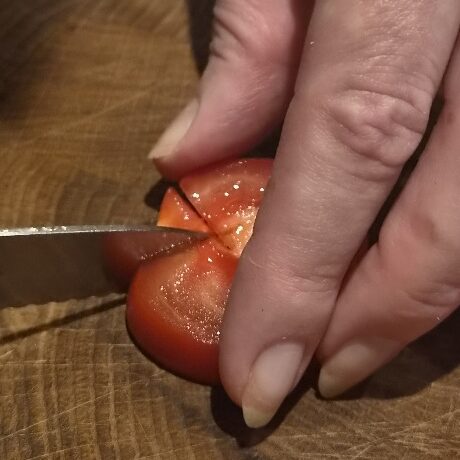
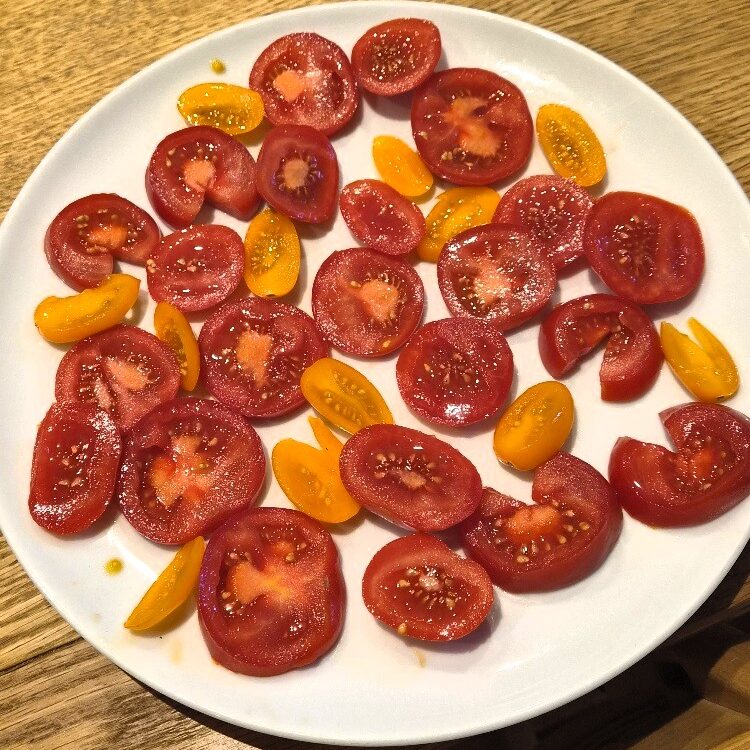
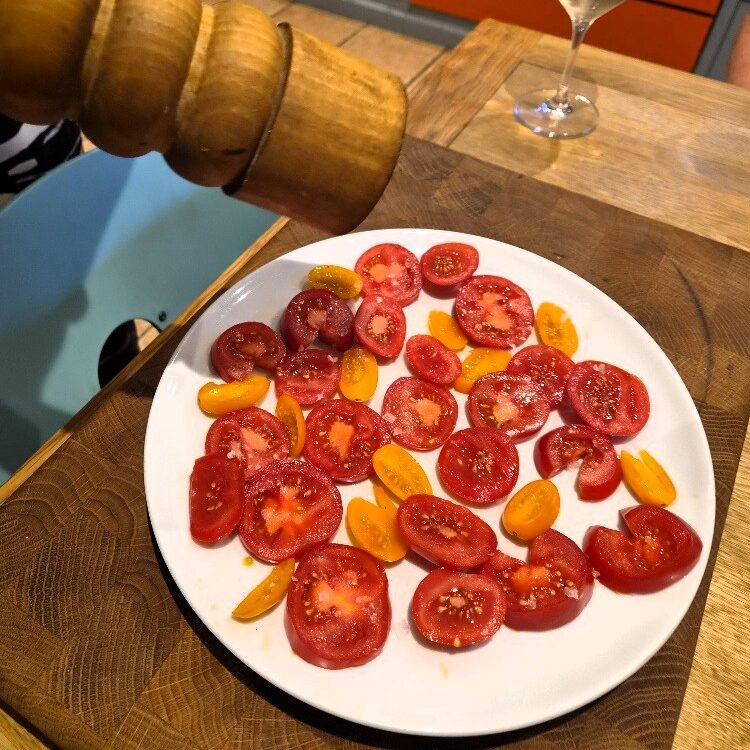
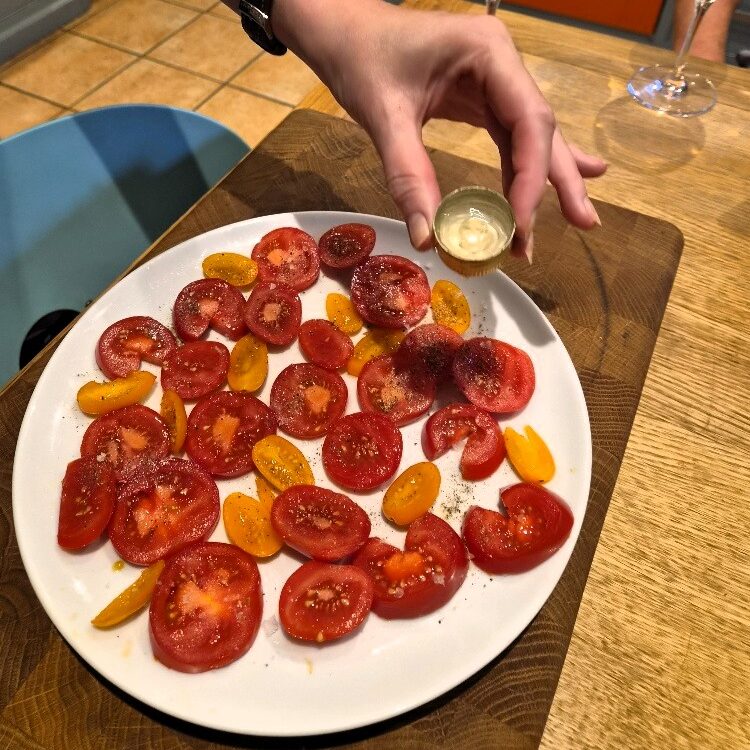
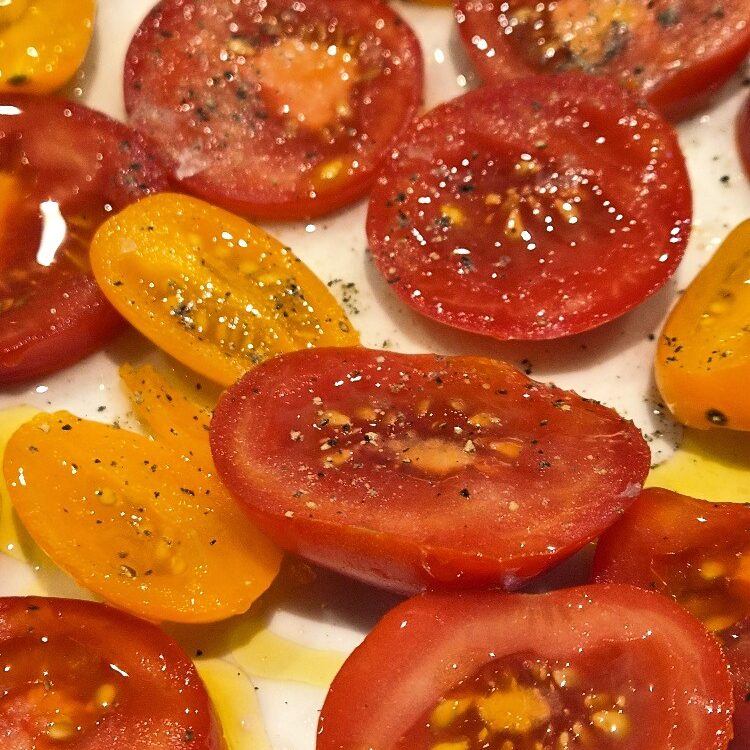
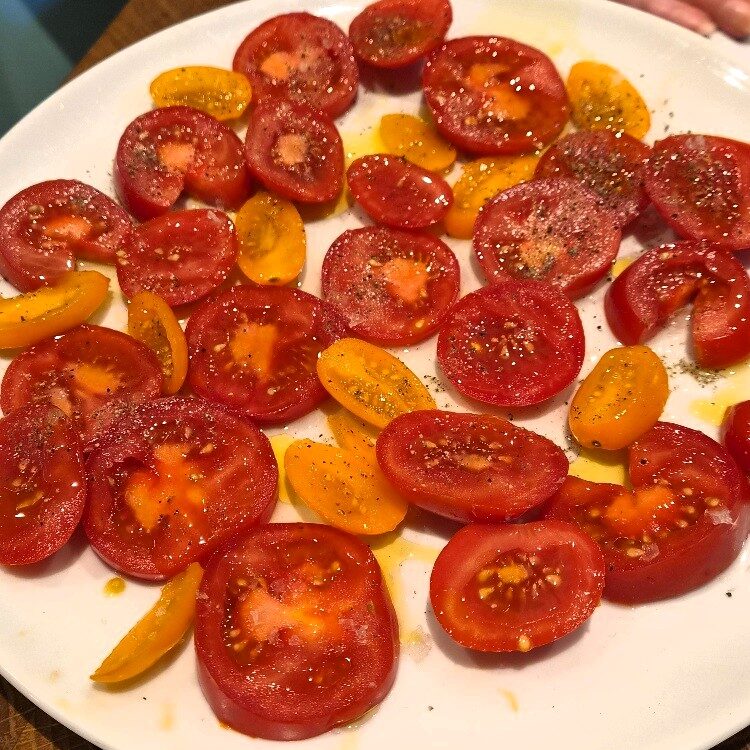
Season with salt & pepper, then add a splash (about a capful) of white or red wine vinegar, and drizzle generously with olive oil.
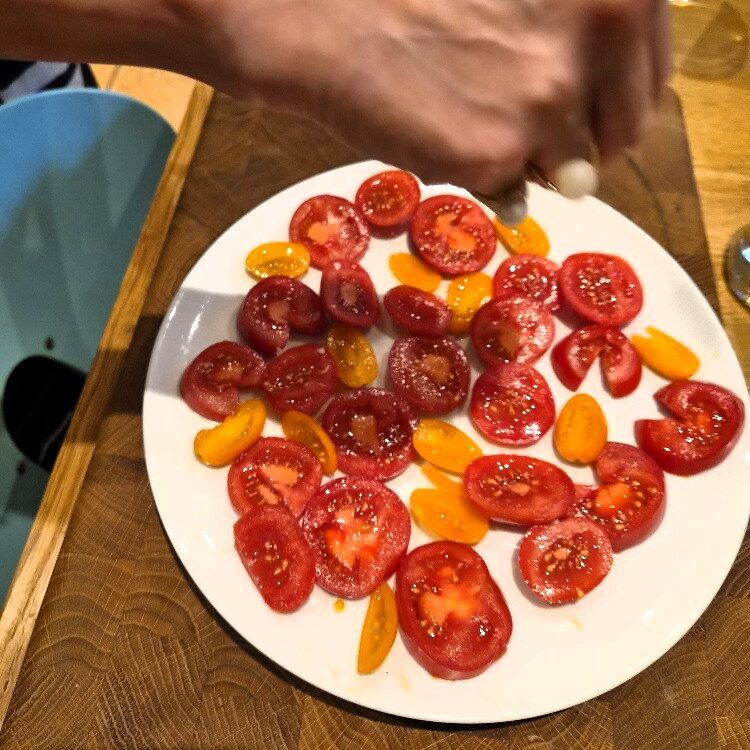
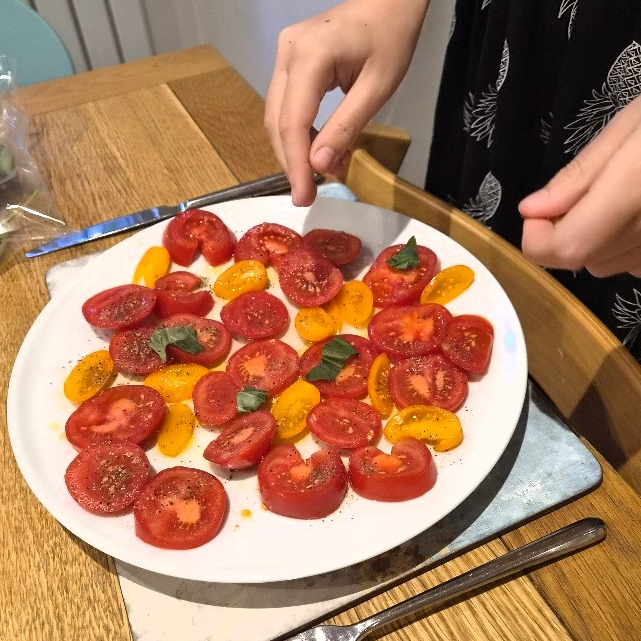
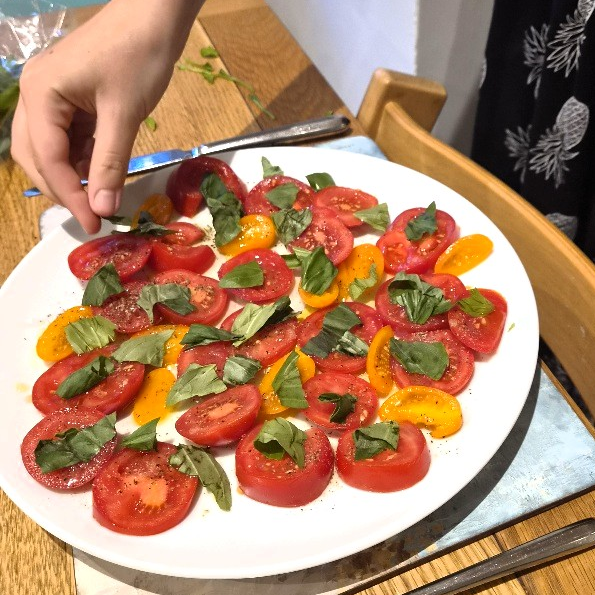
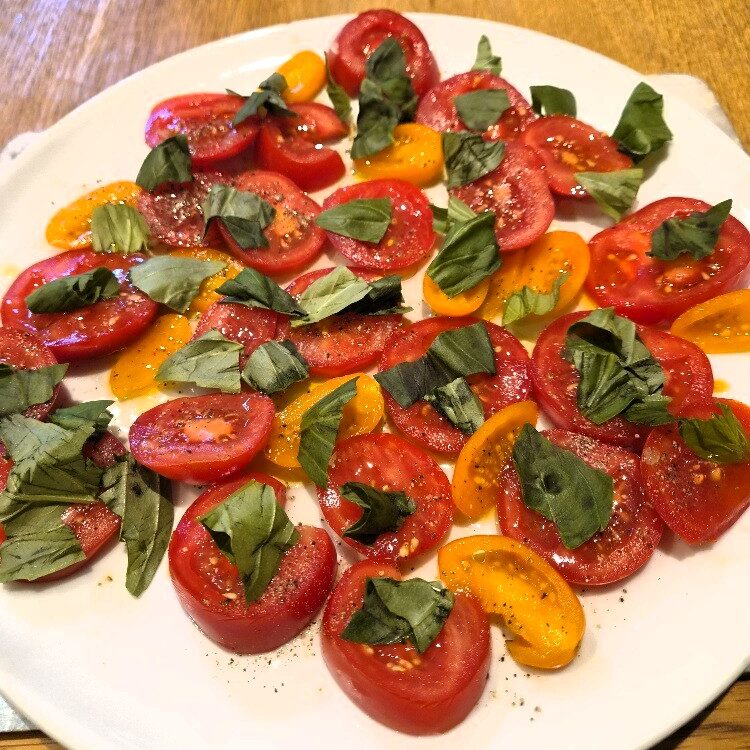
Just before you are ready to serve, rip up a little basil and top the tomatoes with it.
Jake sticks his nose in
Always rip basil by hand, not chop with a knife or scissors. Also add it at the last minute. Basil is delicate and can discolour easily once it is ripped.
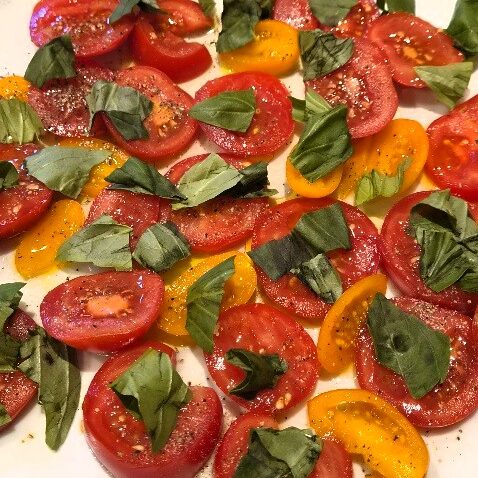
Your simple tomato salad is done!
Serving the macaroni cheese & salad
When the cooking time is up, serve the macaroni cheese.
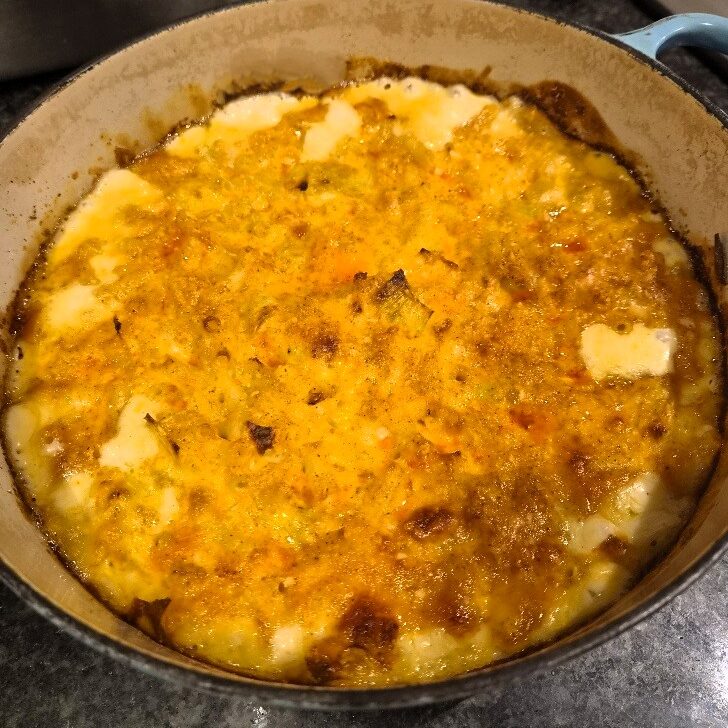
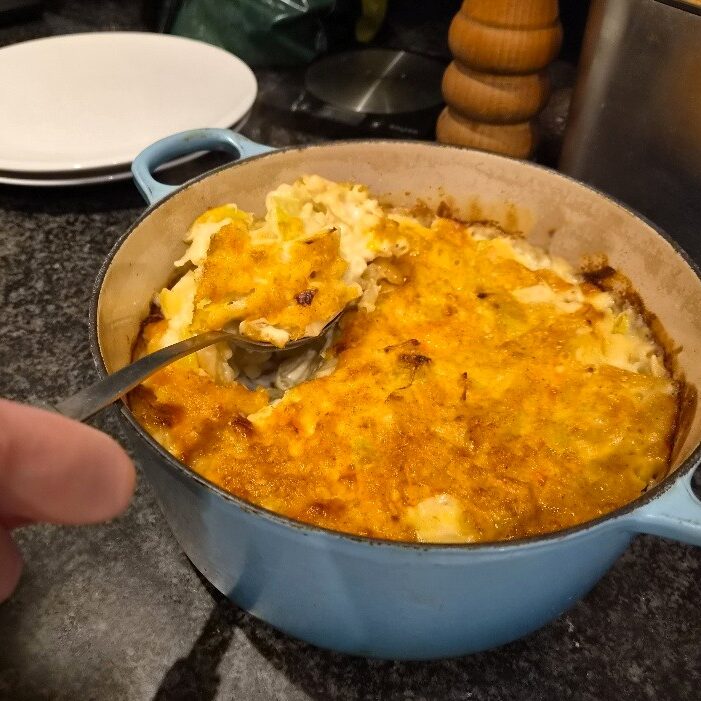
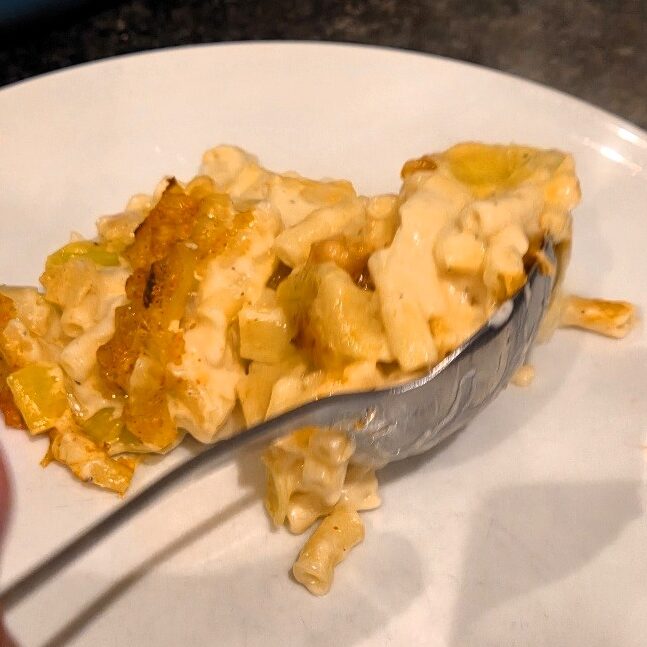
We keep the salad separate for people to help themselves. Today we also served our macaroni cheese with some crispy bacon. Find out how to cook it in our Bacon Tip here.
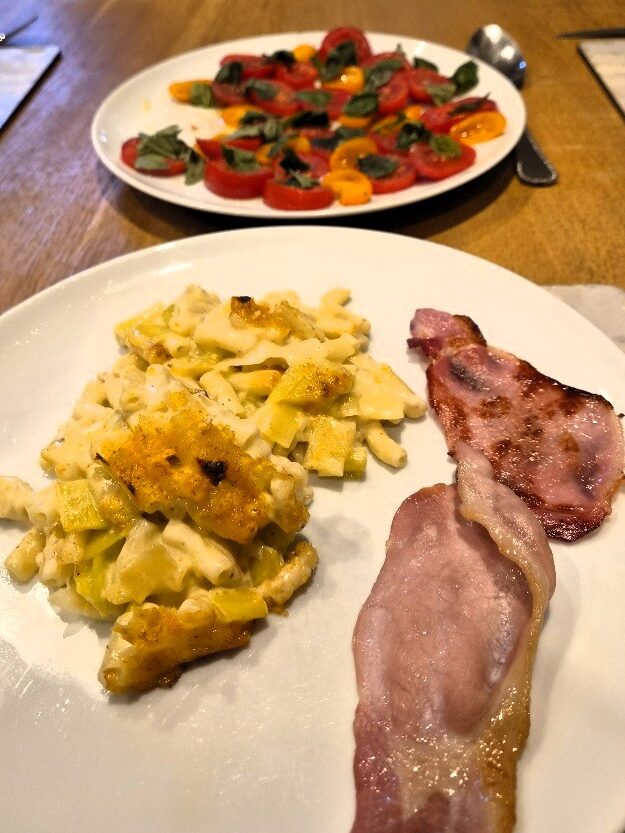
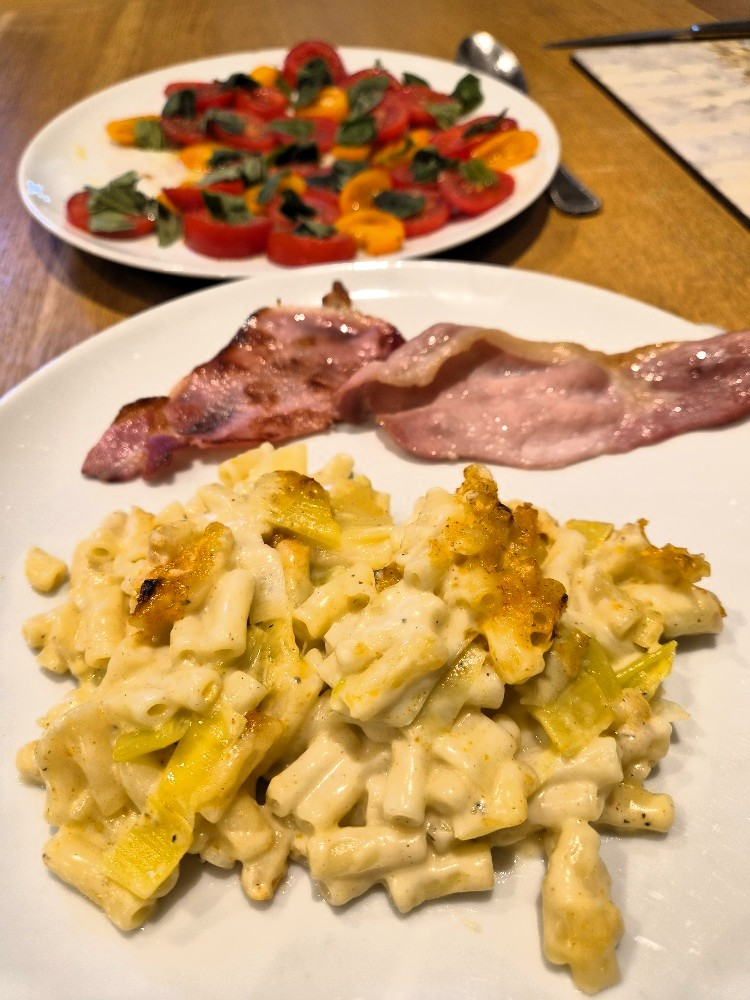
This really is a winning combination!
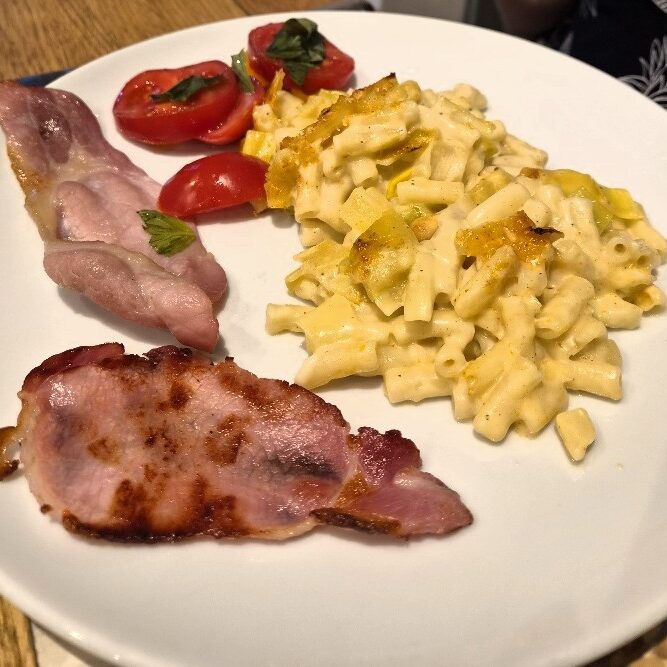
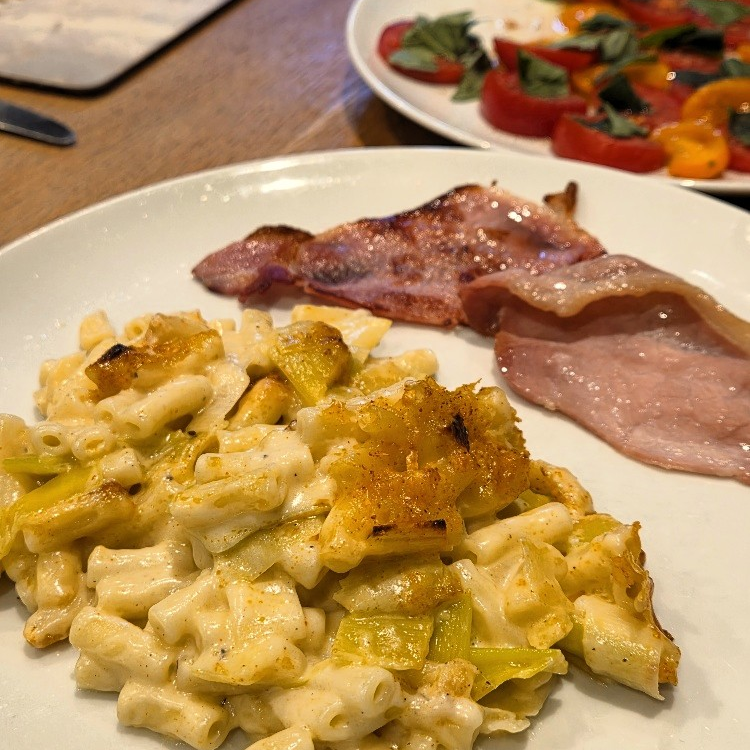
Enjoy!
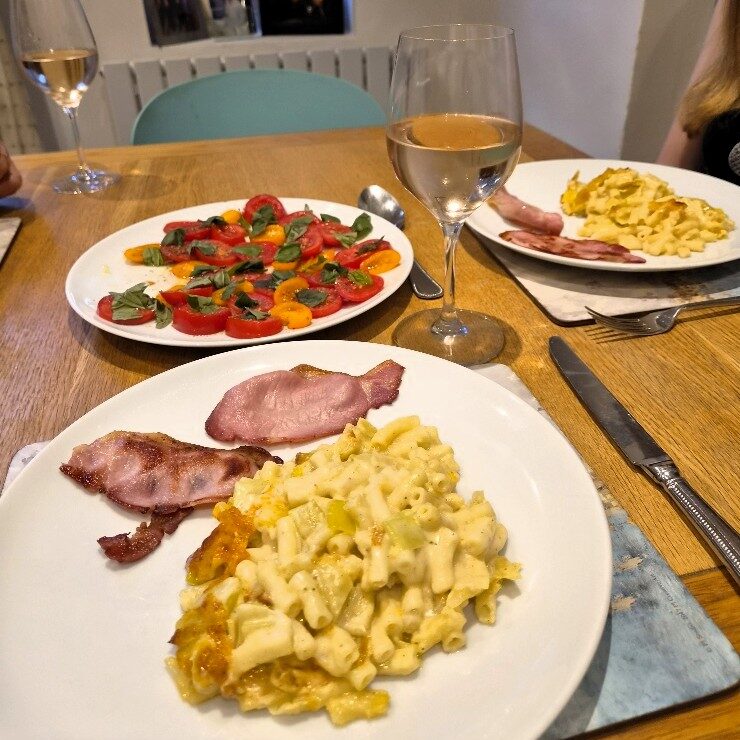
Bibi’s Best Macaroni Cheese with Tomato Salad
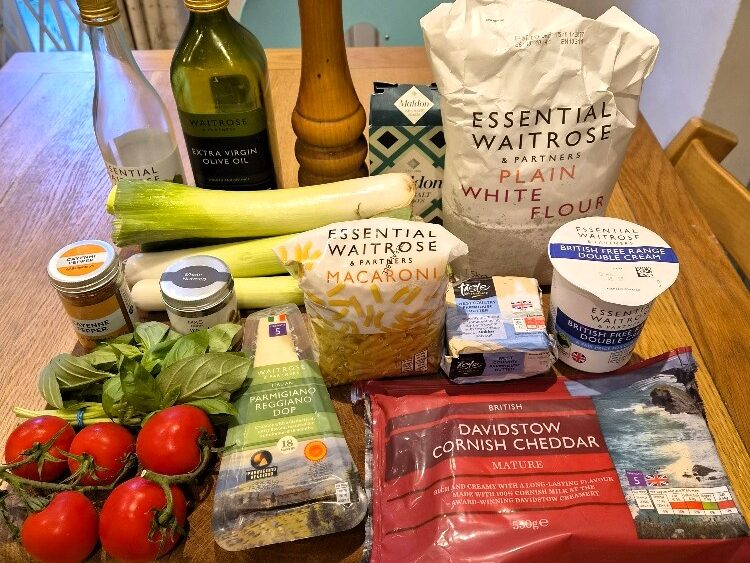
Ingredients
Equipment
Method
- Remove the rooty ends from the leeks. Slice lengthwise through to the middle, remove the outer layer or two, then slice into rounds. Separate the pieces and wash thoroughly under the cold tap to remove any dirt. Drain.
- Grate the cheddar. Also grate the Parmesan, but keep it separate from the cheddar.
- Part cook the pasta. To do this, get a large pan of salted water to a rolling boil. Add the pasta, stir, and then cook for 2 minutes less than the lower of the two cooking times on the pack. Our macaroni today said 7 to 9 minutues, so we cooked for 5.
- When part-cooked, drain the pasta in a colander or large sieve, and run under the cold tap until completely cold. This arrests the cooking to ensure your pasta isn't soggy in the finished dish. Drain & reserve.
- While the pasta is cooking, fry the leeks. Melt a large knob of butter in the casserole you will use to assemble the macaroni cheese, making sure it is hob-safe. When the butter has melted, add the leeks. When they start to soften, add cayenne & grated nutmeg to taste. Continue to fry until soft – they will reduce down a lot.
- Make a white or blond roux with the butter & flour. See our roux Tip. Melt the butter, then add the butter and fry, stirring, over a low heat for 2 to 6 minutes. Full detail in our Tip.
- Now make a white sauce. See our white sauce Tip. Measure the milk, and bring to room temperature (about half an hour out of the fridge). Add to the roux over a low heat in small splashes, stirring well with your wooden spoon between each addition. See full details in our Tip. Keep going, adding in splashes and stirring until all the milk is incorporated. A sauce whisk helps remove any lumps.
- Simmer the sauce over a low heat until it thickens slightly, to about the consistency of double cream. Season with salt, pepper and a little nutmeg, to taste.
- To make your white sauce into cheese sauce, add the cheddar and stir until it melts. See our cheese sauce Tip. Taste, and season with more pepper or nutmeg, if needed. It shouldn't need more salt. Add the cream, and stir to combine.
- To make the topping, add the cayenne to the Parmesan, and stir well.
- Add the cooled pasta to the casserole with the leeks and stir. Pour over the cheese sauce, then stir well to combine, making sure all the pasta is well coated.
- You can top and cook the macaroni cheese immediately, or let it stand and cook later. We think about an hour standing improves the texture. Keep in the fridge, covered, if you want to store it longer. Only top immediately before cooking.
- Slice the tomatoes and remove the cores. Arrange on a serving plate. Season with salt & black pepper, then sprinkle over about a capful of the vinegar, and a good glug of olive oil.
- Immediately before serving, rip some basil over the tomato salad.
- Heat the oven to 180C (160C fan).
- When you are ready to cook the macaroni cheese, sprinkle it with an even layer of the topping, and place in the hot oven. Cook for about 30 to 40 minutes until the top is golden and the sauce bubbles.
- Serve with the tomato salad on the side. Add some crispy bacon if you like it. Find out how to cook it in our bacon Tip.
- Enjoy!