



Skills you will learn in this recipe
Poaching fish; making a roux-based stock sauce
Links to the last recipe
Using a roux-based white sauce; having tomatoes as a side
When Emily was little, Bibi would often make a simple dinner of poached smoked haddock (“yellow fish” as we called it), boiled new potatoes & reduced tinned tomatoes. It was extremely plain, but an excellent combination of flavours, and a real family favourite. Today, we’re elevating this good idea with a lovely roux-based lemon cream sauce, and some homemade Roast Tomatoes.
We’ll be poaching our fish in milk, as Bibi did, and it’s a technique you can use for any firm-fleshed fish. Today we used smoked haddock to most closely replicate Bibi’s original, but you could use plain haddock, cod or hake instead. Or for a budget option, try pollock; or for a more luxurious take, try halibut. Today we had haddock loins, but any filleted fish pieces will do.
We serve the haddock with a delicious lemon & stock sauce, made with the same method as the white sauce we used in our last recipe, Macaroni Cheese. And instead of Bibi’s tinned tomatoes, we use some of our Roast Tomatoes, though tinned tomatoes would be fine if you are short on time. Bibi’s original plain boiled potatoes remain. Choose a small, firm variety. Today ours were small red ones. They turned out to be a little more floury then we would ideally have liked, so today we slightly crushed them. See our potato variety guide here for tips on choosing & boiling them.
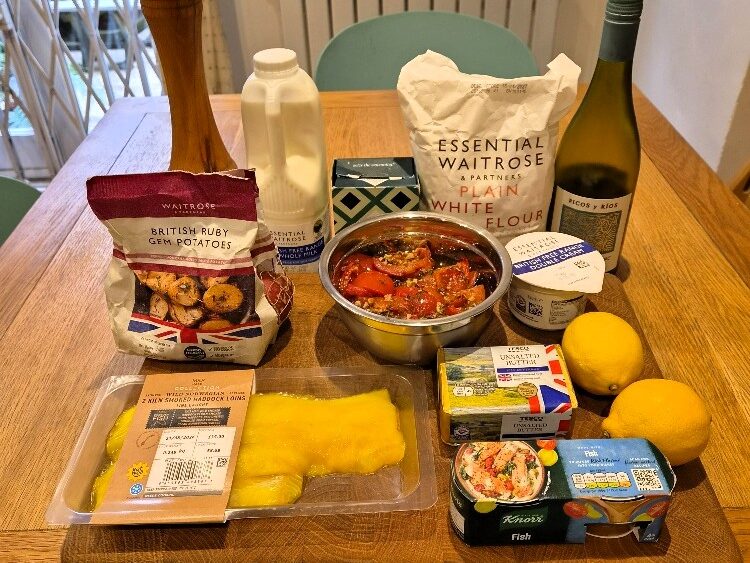
Preparation
There is very little to do in way of preparation for the haddock with lemon. However, if you are making the Roast Tomatoes from our Tips section, you will need to plan about an hour or so ahead, or make in advance. See the full detail and method for making them in our tomato Tip here.
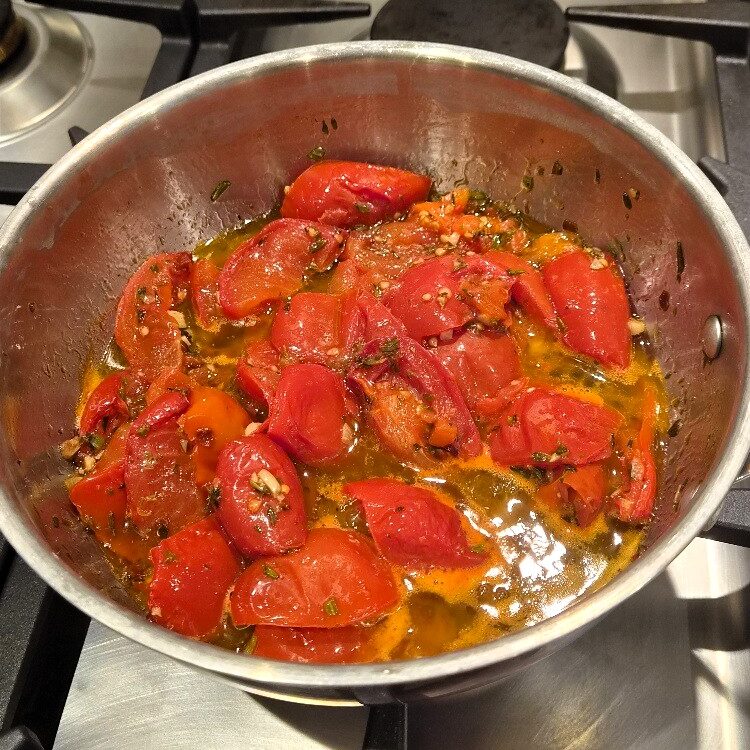
We roast the tomatoes with some garlic, rosemary, chilli & thyme for an hour at 120C (100C fan). See our Tip.
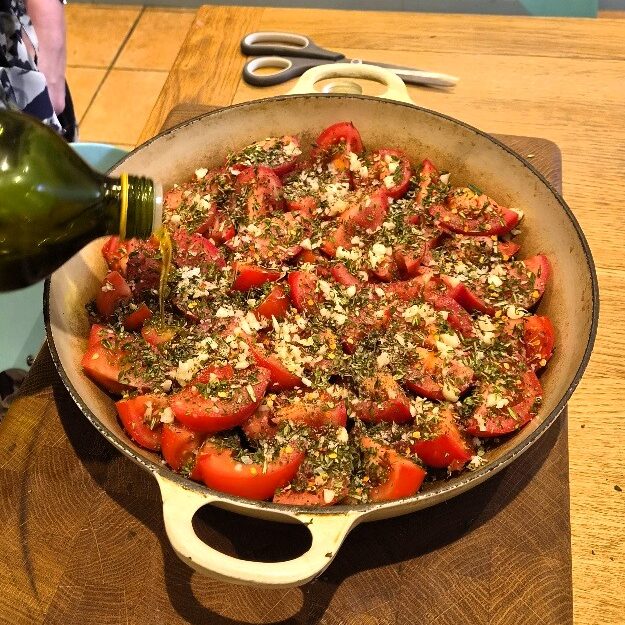
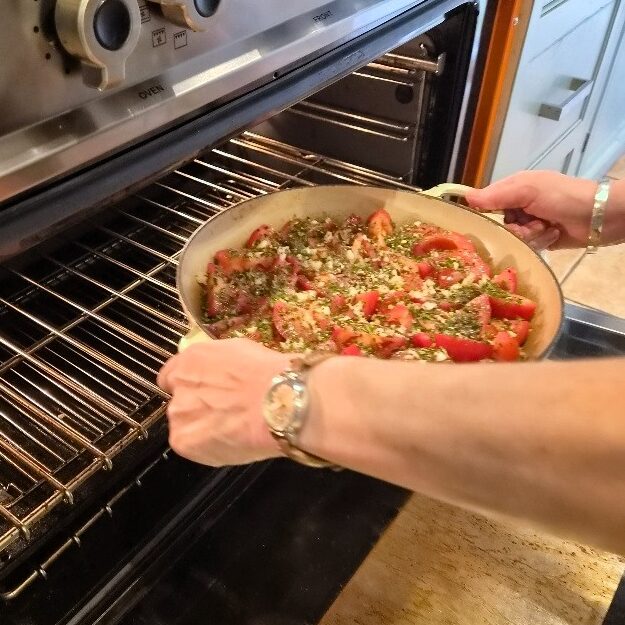

If using tinned tomatoes instead, we suggest you reduce them down on the hob at a simmer, and flavour them up with some garlic paste & mixed herbs, plus some chilli, if liked.
First zest & juice some unwaxed lemons – today we used two large ones. See our lemon Tip.
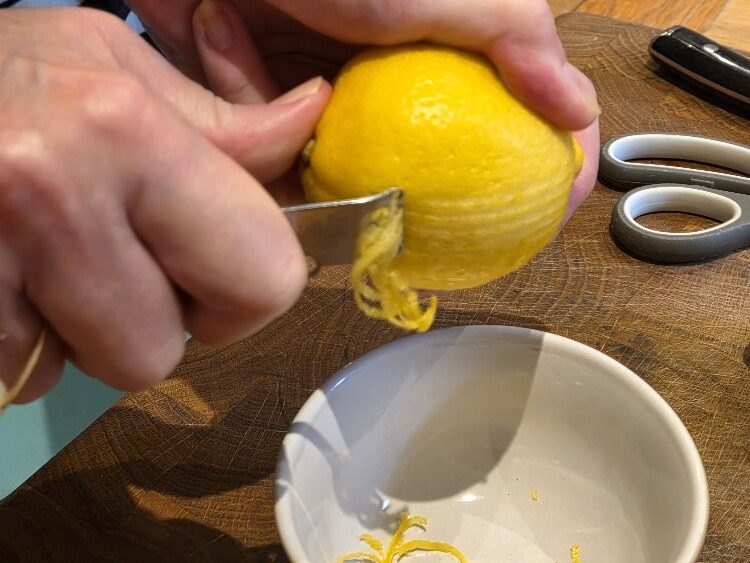
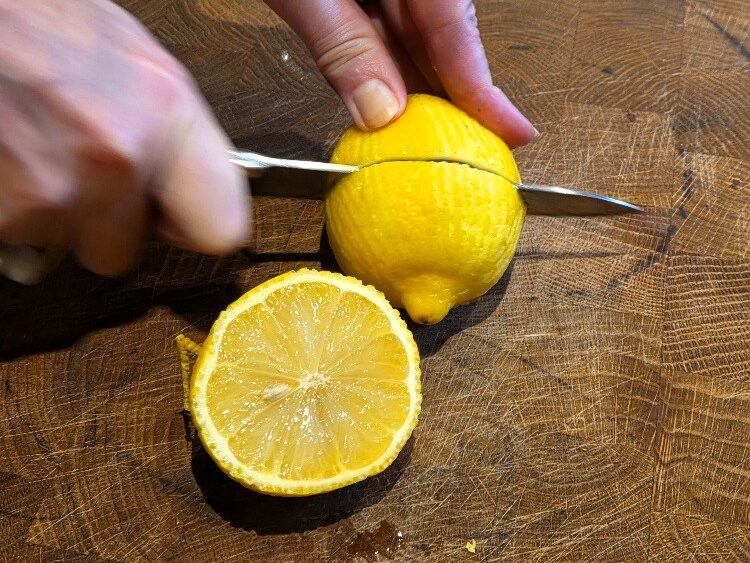
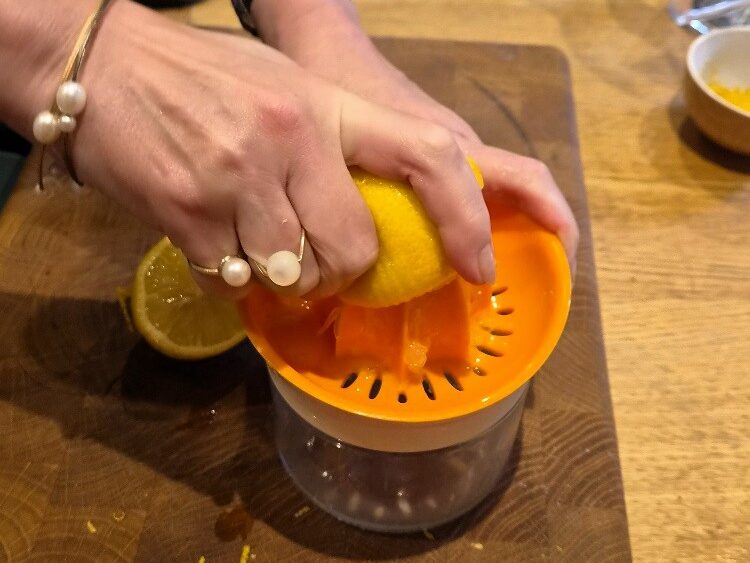
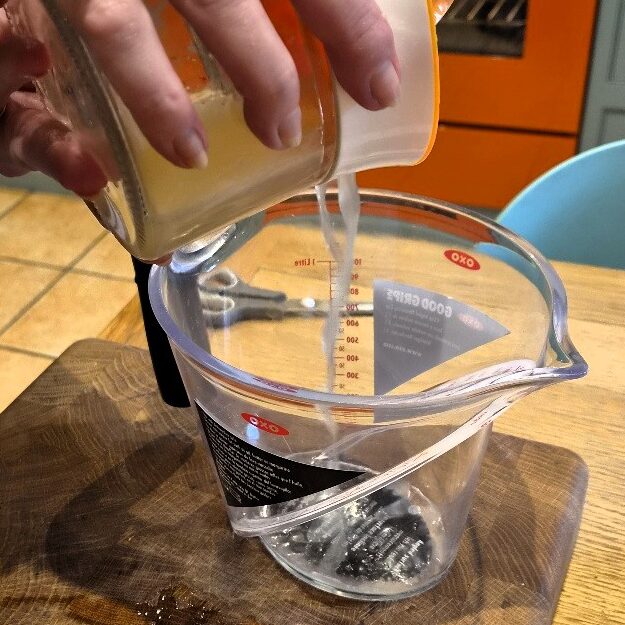
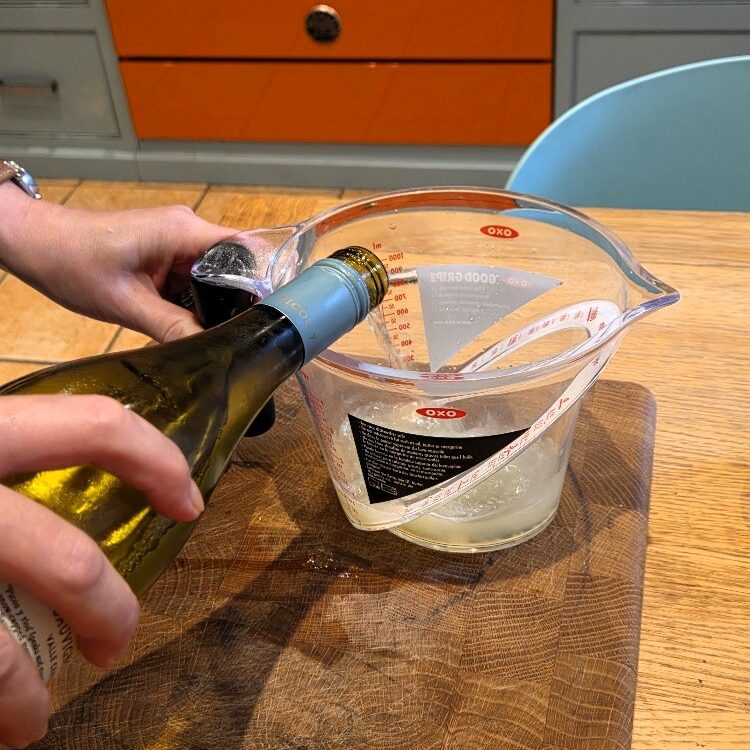
Also cut the zest smaller with scissors. Pour the lemon juice into a measuring jug large enough to eventually hold 600ml (1 pint) of liquid. Make up to 250 to 300ml with a little white wine. This adds a fruity sweetness & deeper complexity to the sauce.


Jake sticks his nose in
The alcohol in the wine will burn off when the sauce is cooked, so it is safe for children or non-drinkers, if they are happy. However, if you don’t have alcohol at all, just leave it out and make the quantity up with more milk later on.
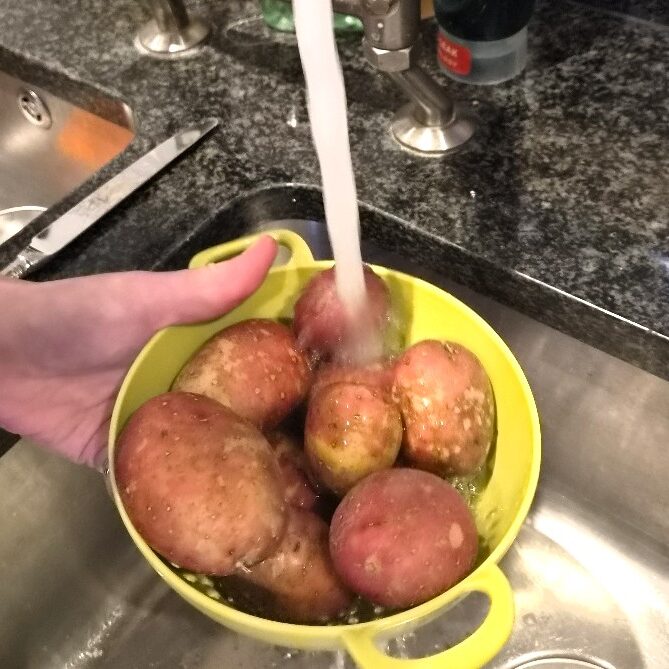
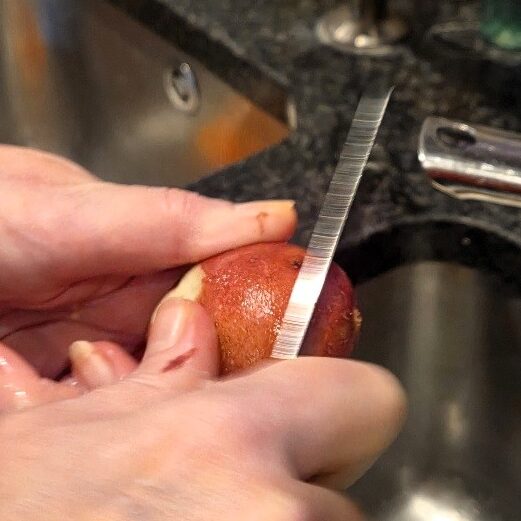
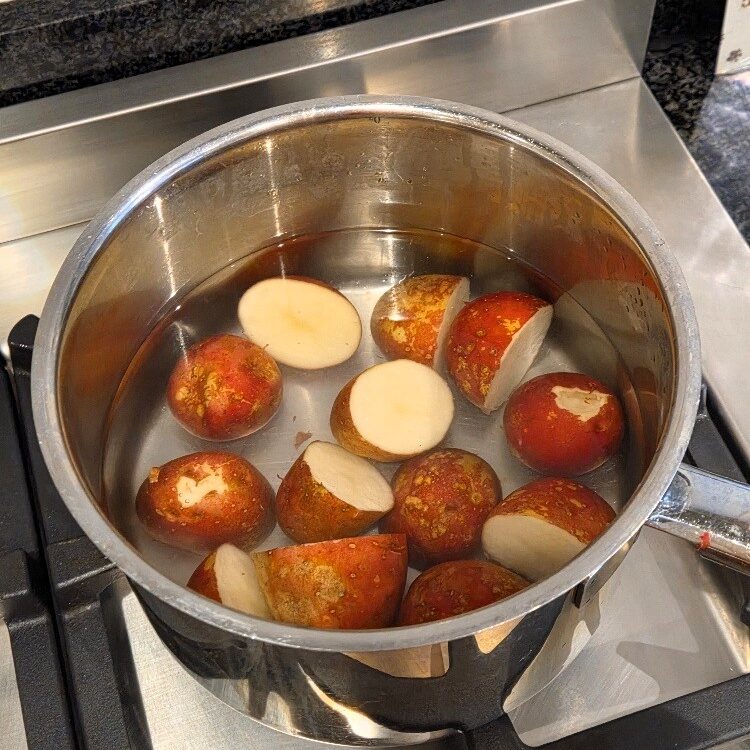
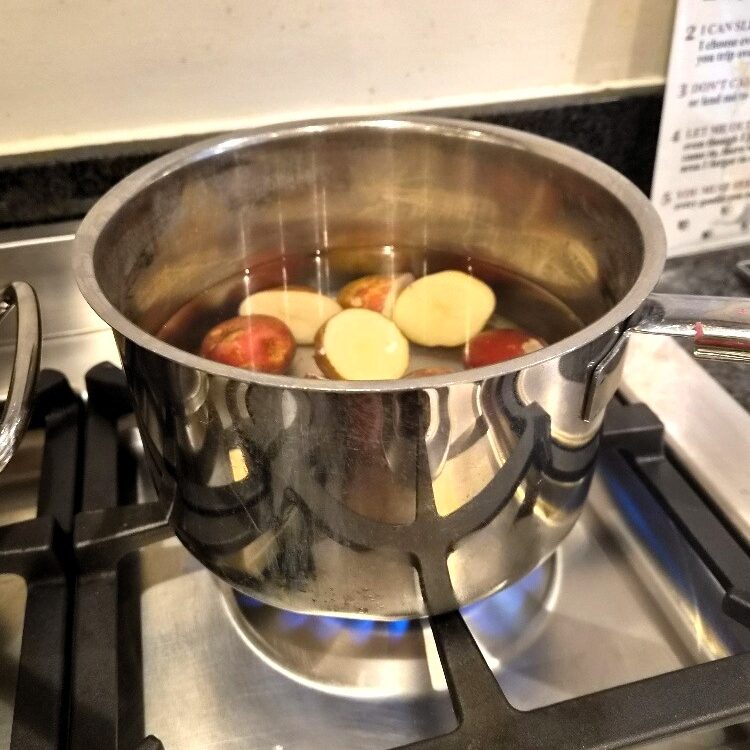
Now rinse the potatoes, and remove any small eyes with a knife if needed – just twist or cut them out with the point. Don’t peel, unless you prefer too – most small potatoes are better boiled skin-on. Halve any that are larger, but keep smaller ones whole. The idea is to have all the pieces about the same size, so that they cook at the same rate. Cover with cold water and set aside until about 30 minutes before you are ready to serve.
Jake sticks his nose in
Keeping the skin on the potatoes gives them a better flavour & texture, plus many of the nutrients are found in the skin too.
Next measure out the flour & butter for your roux. Today we were cooking for just two people, so used a smaller quantity than in our roux Tip. We used 35g of butter & 35g of plain flour for our 600ml sauce.
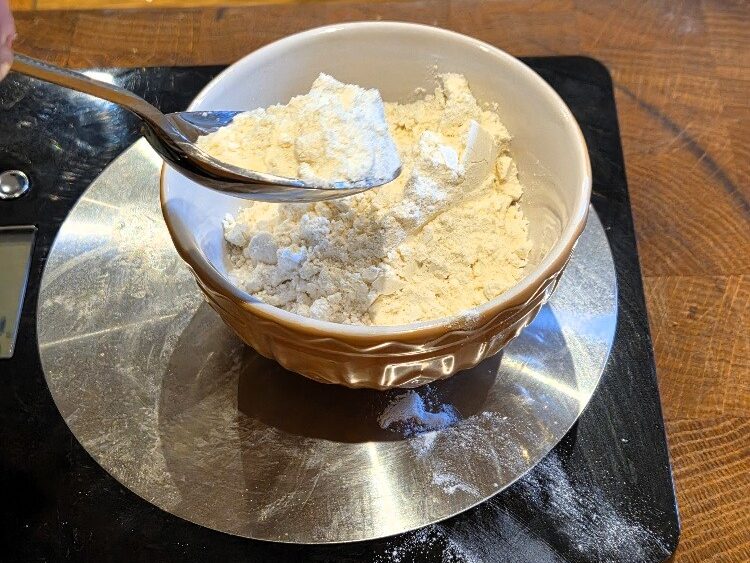
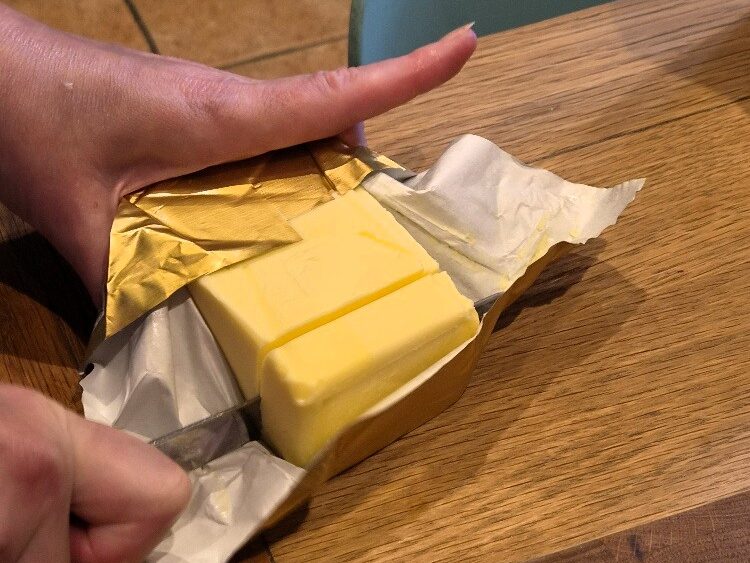
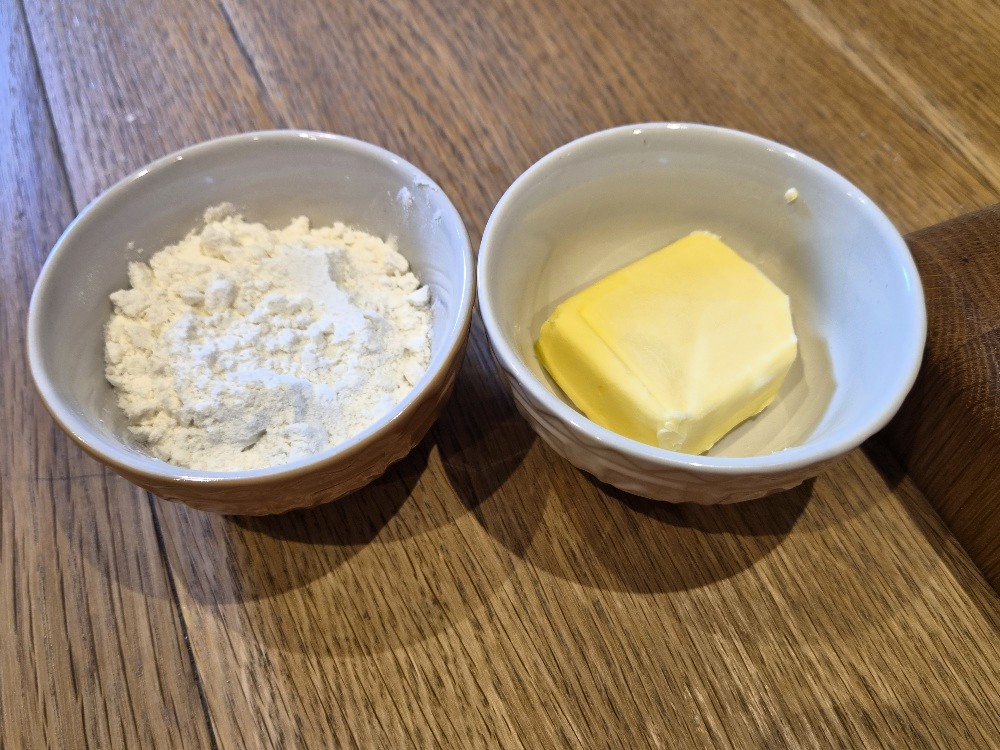
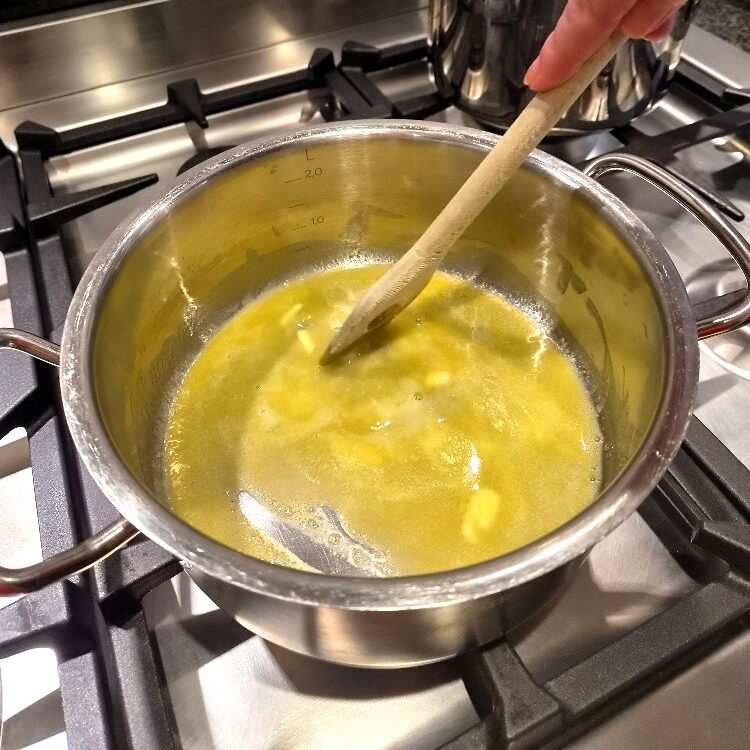
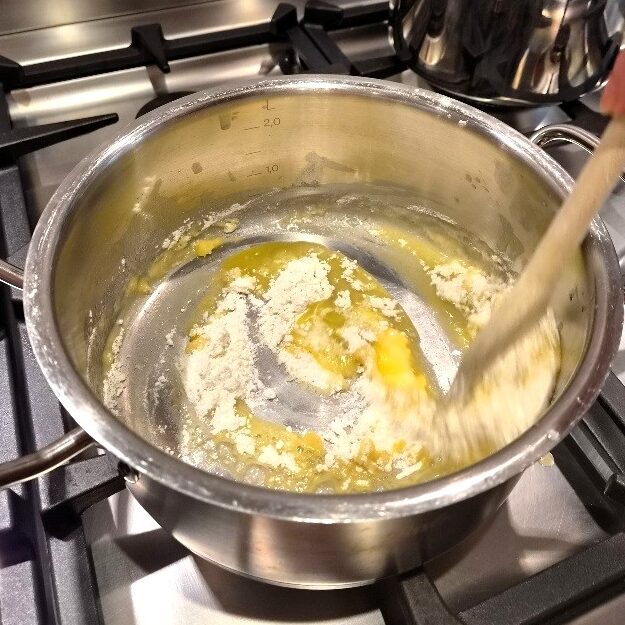
You can make the roux ahead of time and save it until you are ready to make the sauce. Follow the full steps in our roux Tip here. Today we made a blond roux. Melt the butter in a saucepan large enough to fit the finished sauce, then add the flour. Stir over a low heat until the roux smells nutty and is light golden in colour, about 5 to 8 minutes. See our roux Tip for more.
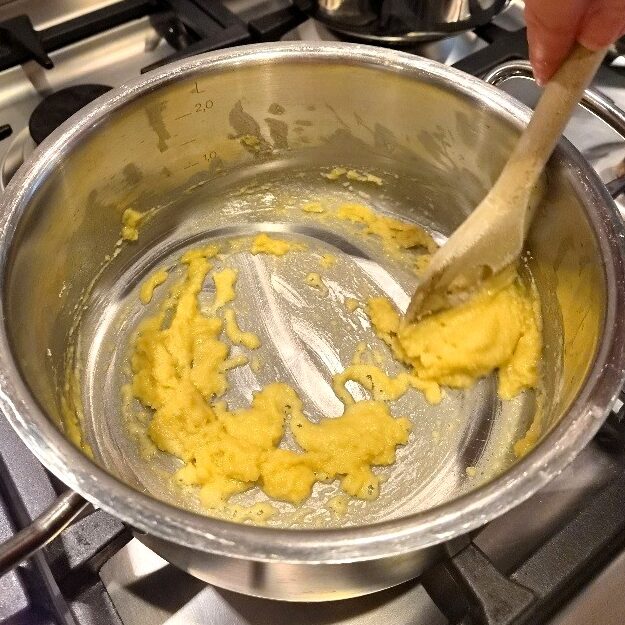
Your preparation is done.
Cooking the haddock, potatoes & tomatoes
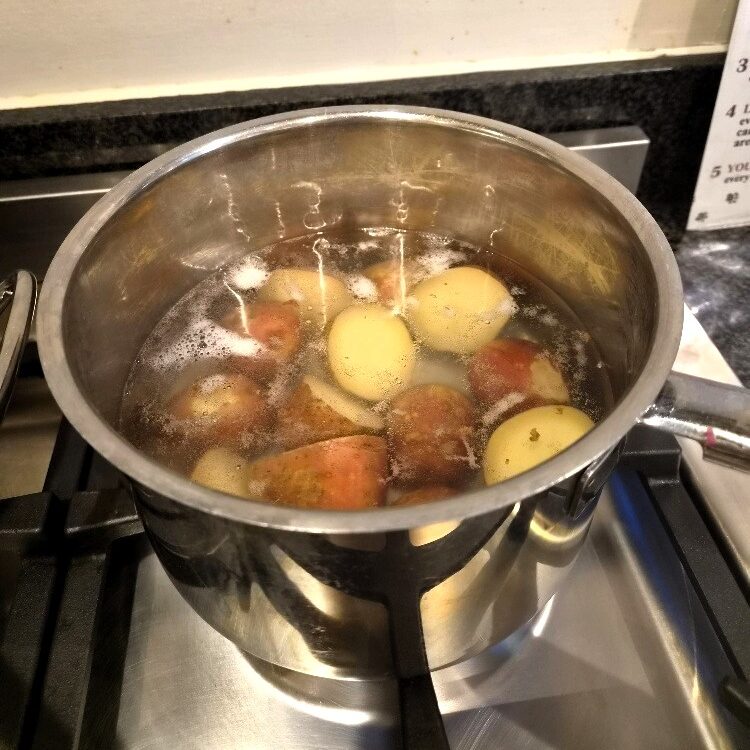
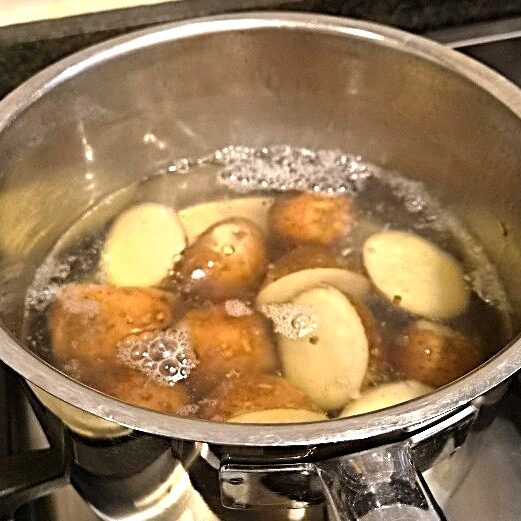
Unless you are making Roast Tomatoes from scratch the same day, most of this dish is quick-cooking or last minute. So your first job is to get the potatoes on, as these take the longest to cook. Check the cooking time on the packet for your particular variety, but boiling potatoes generally takes about 20 to 25 minutes, depending on size. See our potato Tip here for more detail.
Bring the potatoes up to the boil over a high heat. Once they are at a rolling boil, start to time them. Boil until tender – a sharp knife should go into them easily.
Jake sticks his nose in
Don’t worry if your potatoes seem done before you are ready to serve. Drain them and they will keep quite well in the pan with some butter on them, over a very low heat with the lid on.
Meanwhile cook the smoked haddock. It will only take about 5 minutes to poach (slightly depending on the thickness & size of your pieces). But as we need the poaching liquid for the sauce, the fish will be kept warm in a very low oven. Don’t cook too early, however, as even in a low oven the fish can easily overcook. We normally start poaching it about 10 to 15 minutes before we wish to serve, assuming we have already made the roux, to allow time to make the lemon sauce.
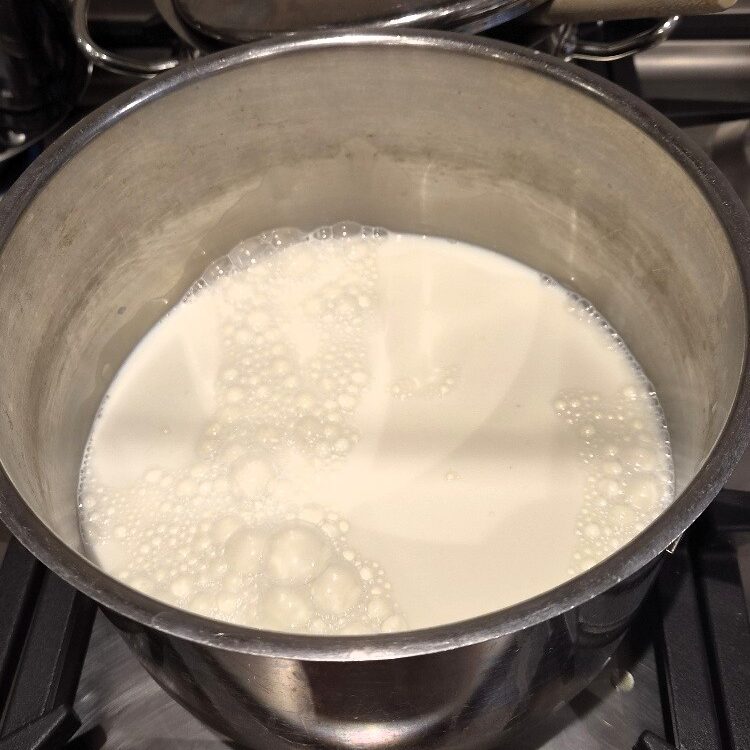
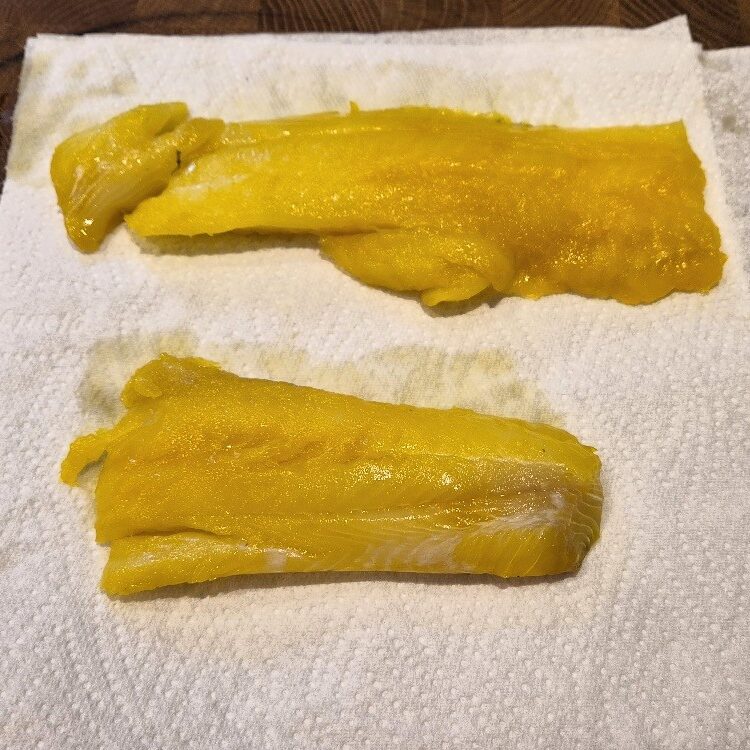
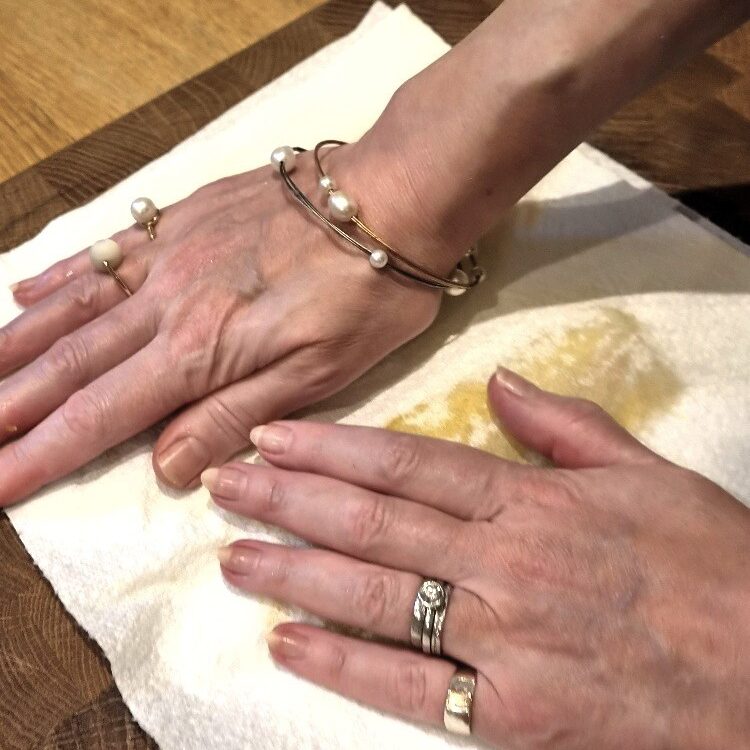
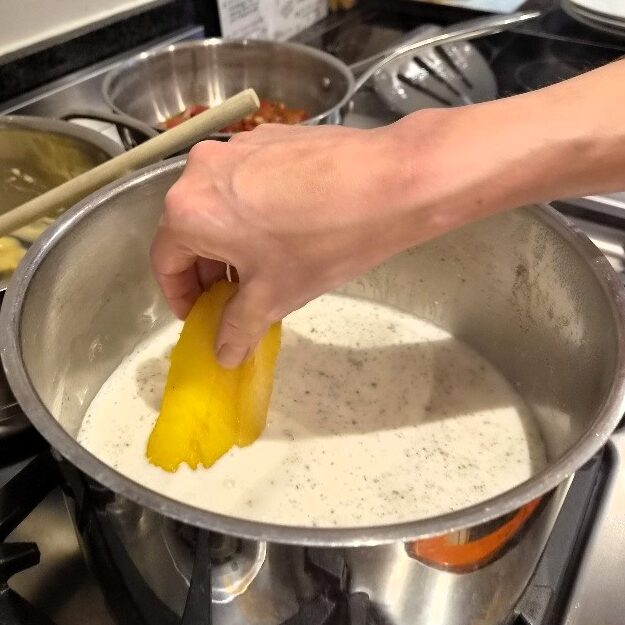
Bring some milk up to a simmer over a low to medium heat in a pan large enough to hold the haddock in one layer. You need enough milk to fully submerge the fish into – use more rather then less if you are not sure. Trim the haddock fillets or loins down if needed to remove any excess skin. Also remove any pin bones (pull them out with your fingers or tweezers). Pat dry on some kitchen towel; you shouldn’t need to rinse them.
Jake sticks his nose in
Smoked haddock comes in two broad types – yellow, which is dyed, and undyed. The dye does not change the flavour. Some cooks prefer to use undyed as it is more natural, though it can be more expensive. We just look for a good quality smoked haddock, irrespective of the colour (and we quite like the yellow on the plate, as did Bibi!).
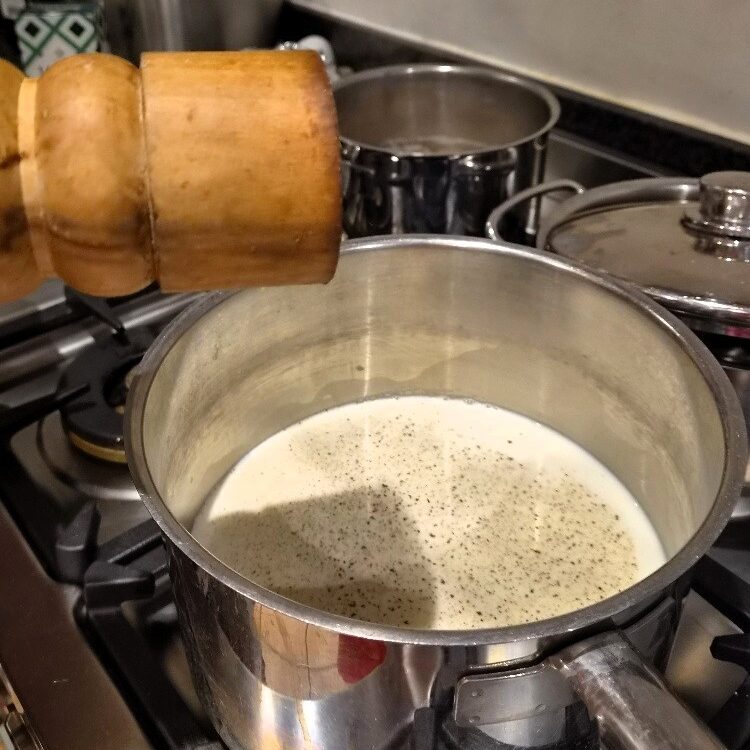
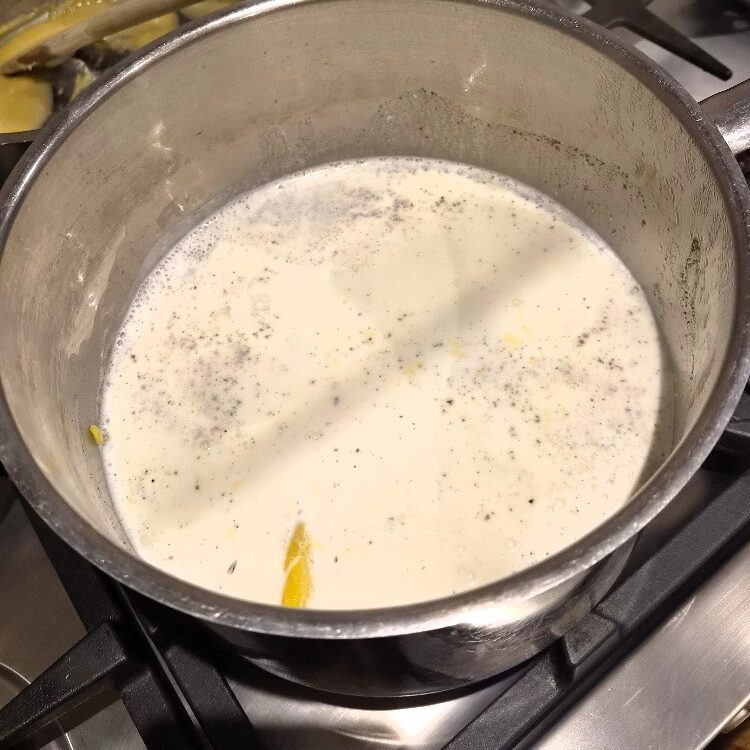
Pre-heat the oven to 60C (40C fan) or whatever is its lowest setting close to this. Season the milk with some black pepper, but do not add salt – the smoked fish is likely to be a little salty already. When the milk is just simmering – it should just bubble – and you are ready to cook the haddock, place it gently into the warm milk. It should be completely covered.
Jake sticks his nose in
Always watch milk carefully when heating it. Even over a low heat it can quickly boil over. This makes a really bad mess, and scalds the milk too!
When the potatoes are cooked – test them with a sharp knife, it should go in easily and the potatoes should feel soft – drain them in a colander or large sieve.
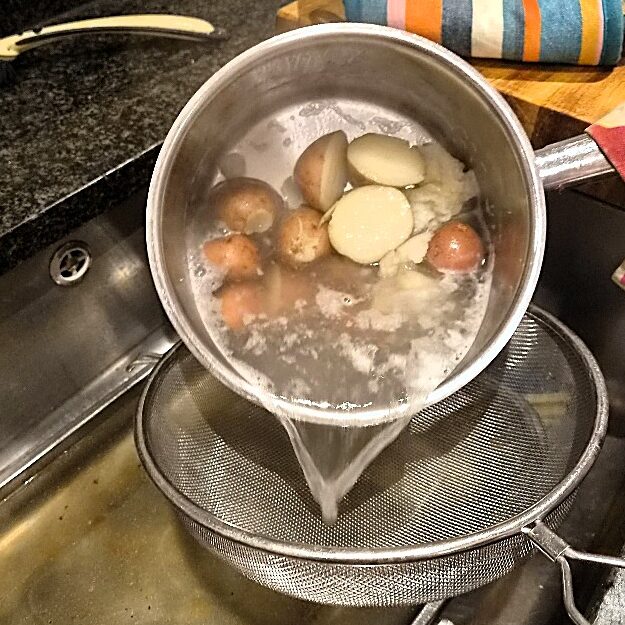


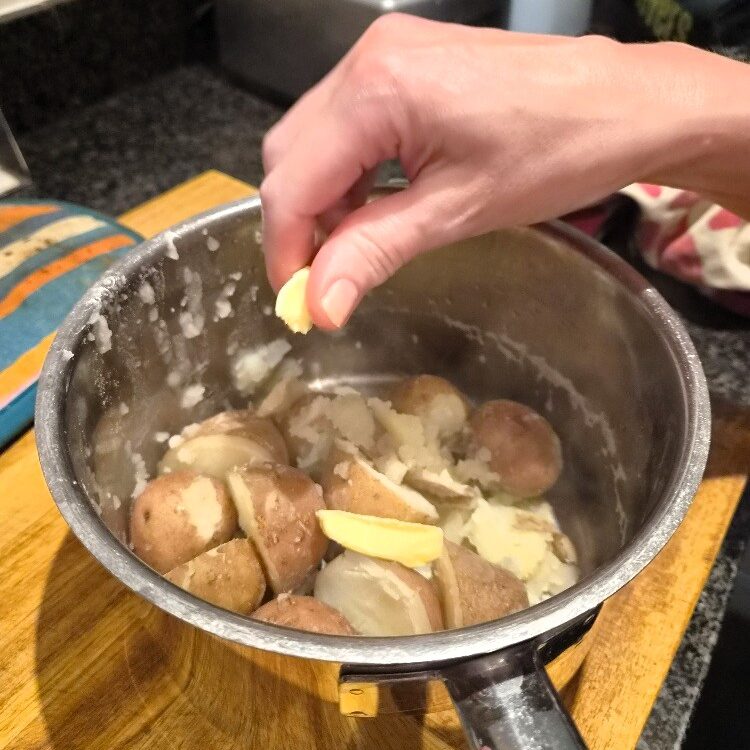
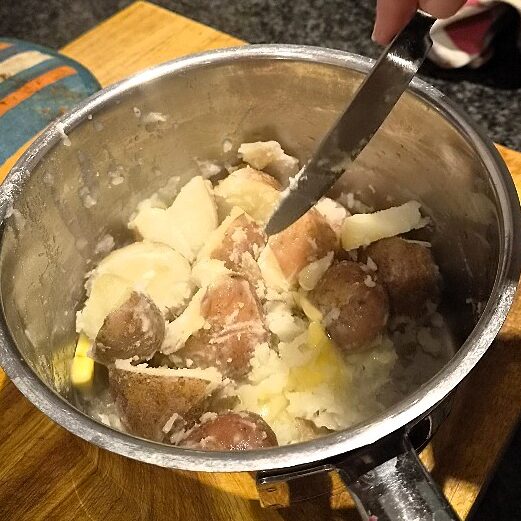
Return to the pan, and add a knob of butter, enough to coat them. If your potatoes are waxy you can leave them whole. Ours happened to be a little floury and broke slightly, so we decided to crush them a bit with a knife. And they were delicious! You can now keep the potatoes warm, covered, over a very low heat, until you are ready to serve.
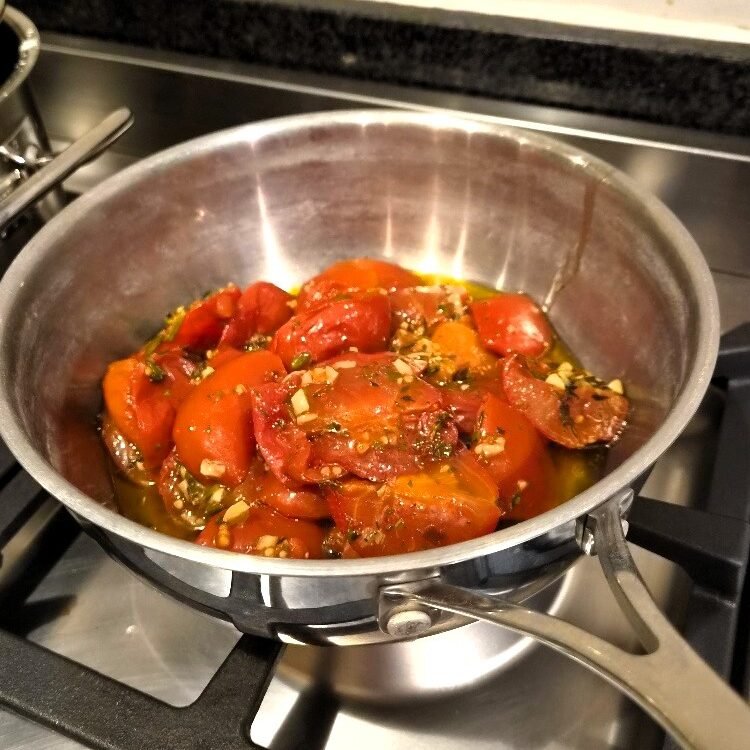
If you’ve pre-roasted the tomatoes, as we had today, you’ll also need to warm them through. Place them in a small pan over a low to medium heat until warmed, then turn down to low to keep them warm until you are ready to serve. If using tinned tomatoes you’ll need to reduce them over a medium heat with the flavourings of your choice. This can take about 15 minutes.
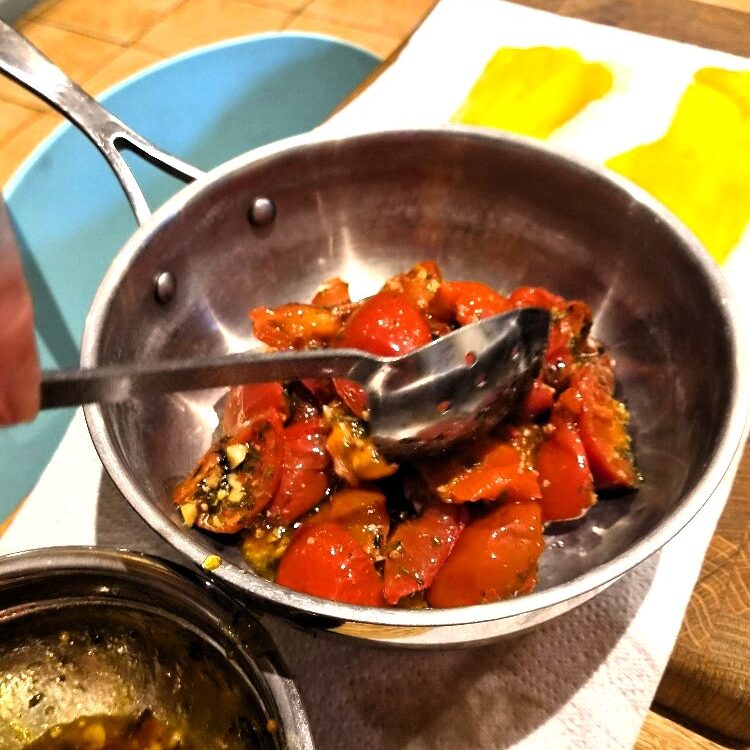
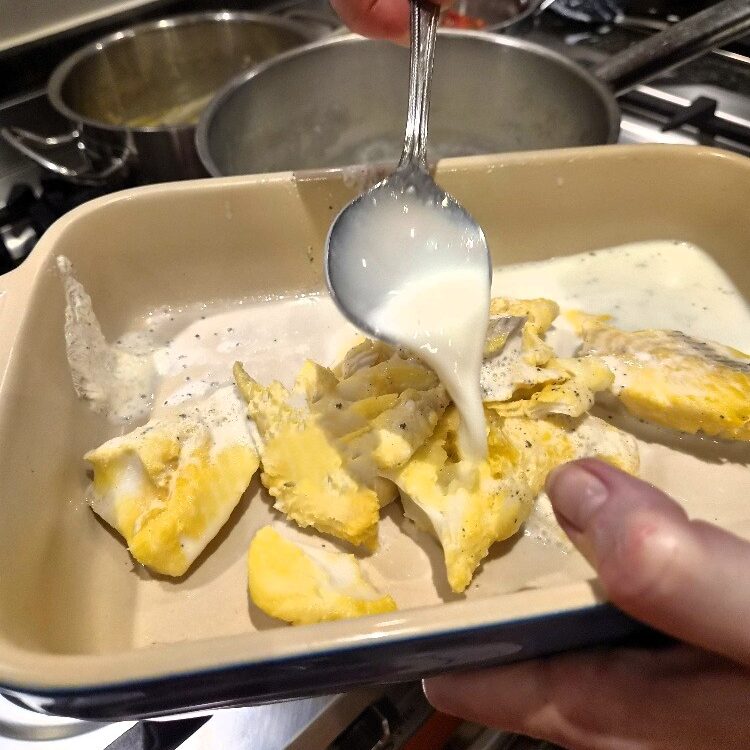
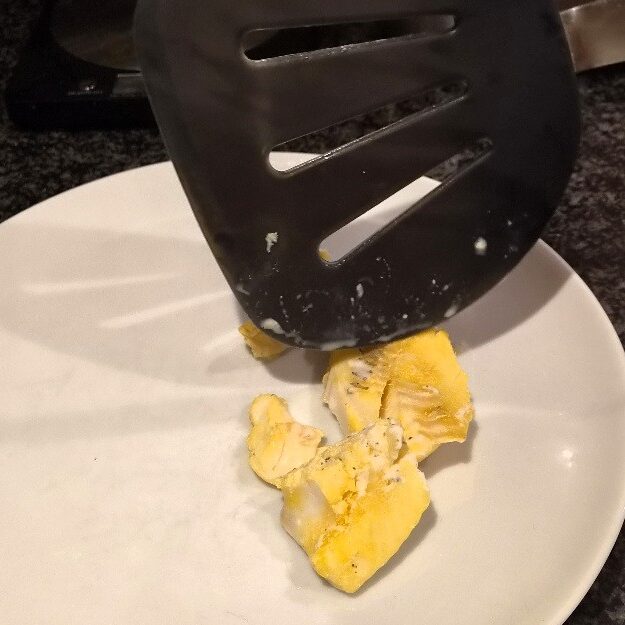
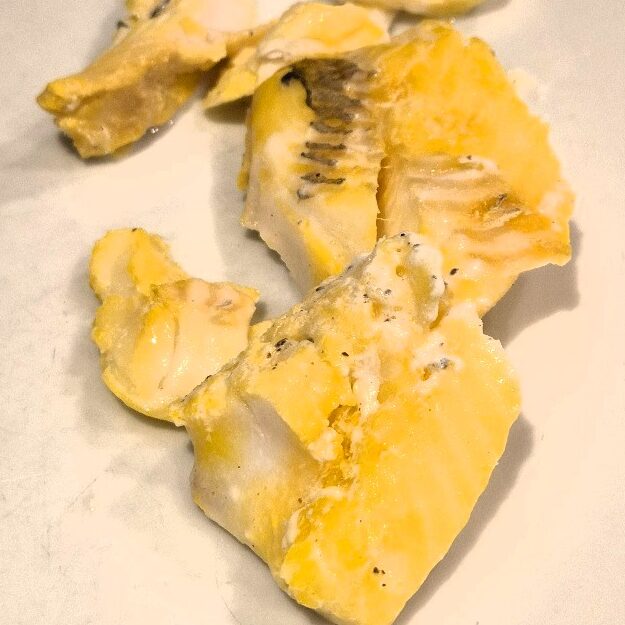
The fish is done when it looks opaque and starts to flake. This will likely take about 4 to 7 minutes, but it depends on the size & thickness of your haddock pieces. Ours today were quite small and thin, and took about 5 minutes. Remove the haddock using a fish slice or spatula to an oven-proof dish. Our fish today was quite grainy & flaky so it broke a little on removing, despite the short cooking time. This is fine – it was still perfectly cooked.
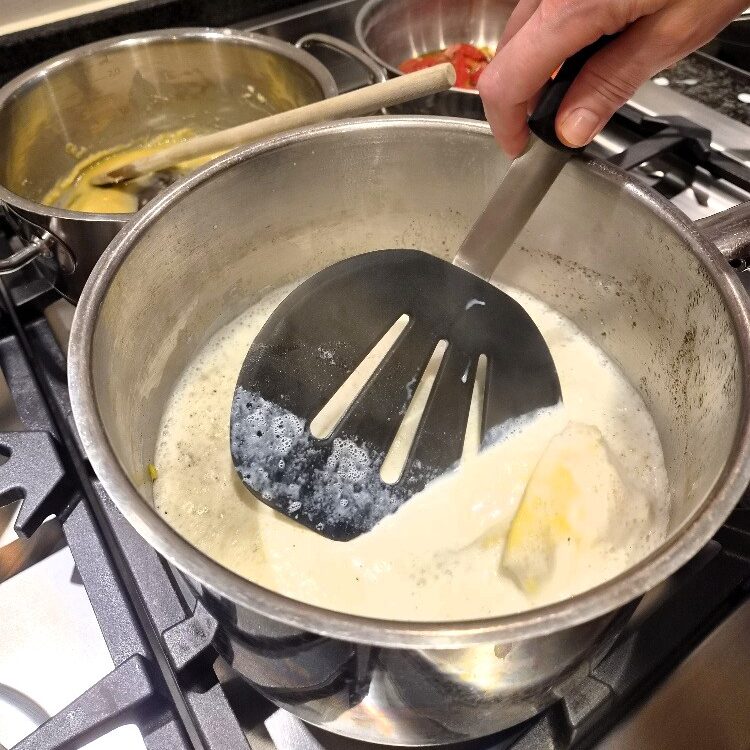
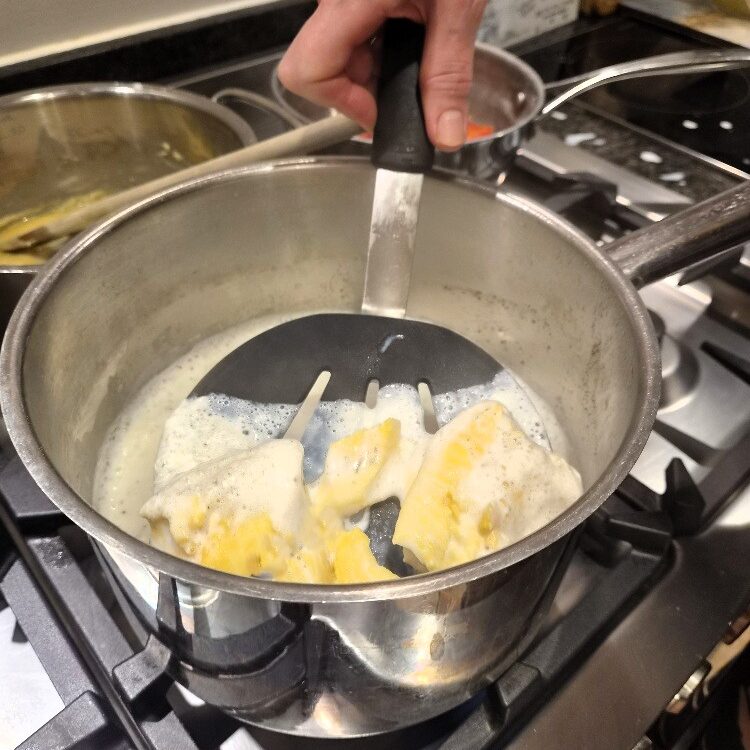
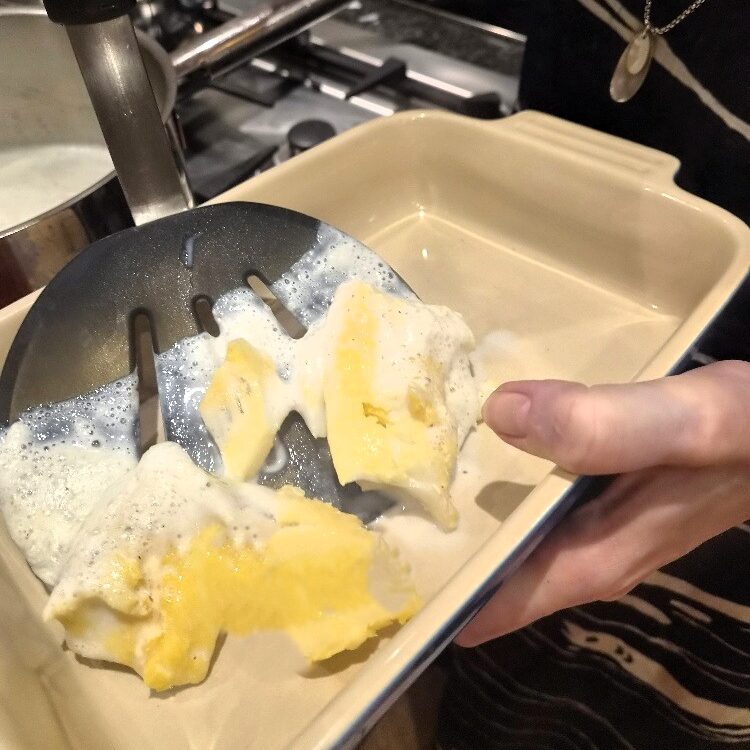
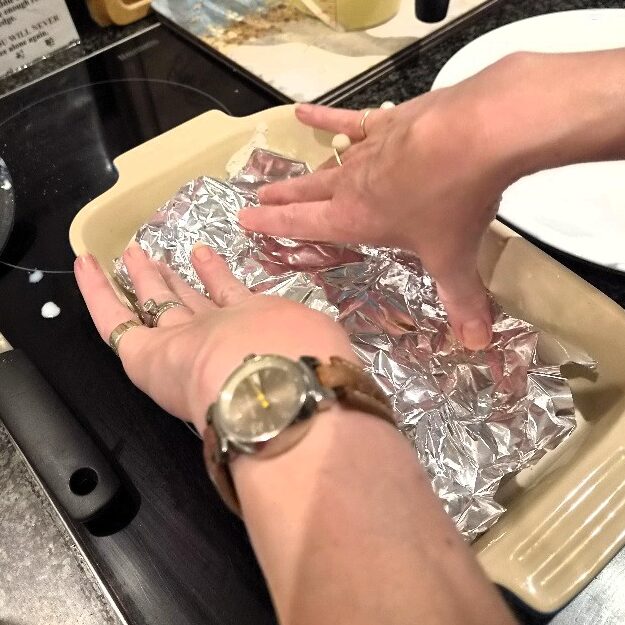
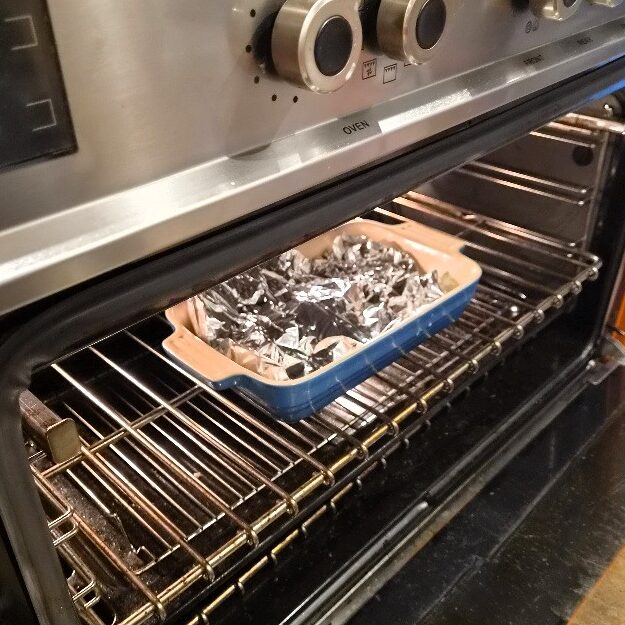
Spoon over a very little of the warm milk – this will help keep the fish moist – and cover tightly with foil. Place into the pre-heated oven, keeping the heat very low. It can now be kept warm until you are ready to serve, but try to serve within about 10 minutes so the fish doesn’t become over-cooked. The sauce won’t take long to make, especially if you have pre-made the roux.
Making the lemon sauce
We make the lemon sauce using the same method we use for white sauce. See full details & pictures in our white sauce Tip here. The only difference is the liquid. Here we use a mixture of lemon juice, wine & the poaching milk from the fish. We also add stock to it. Use fish stock cubes; we prefer the gel stock pot type, but any fish cube will do. This stock, lemon, wine & milk mixture really makes a delicious sauce!
Keeping the poaching liquid over a low to medium heat, add two stock cubes plus the lemon zest and stir well so the cubes fully dissolve. Remove the pan from the heat, and allow to cool slightly for a minute or two.
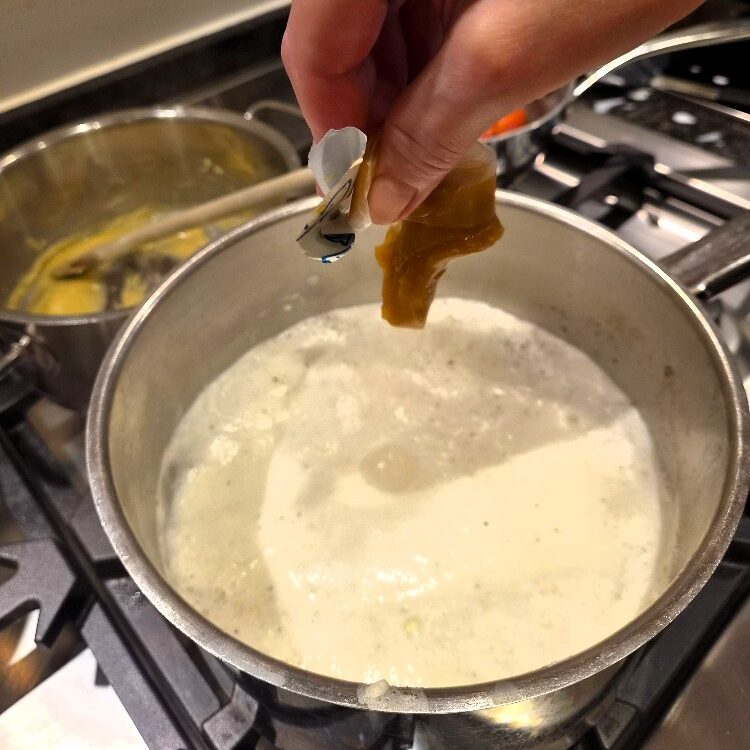
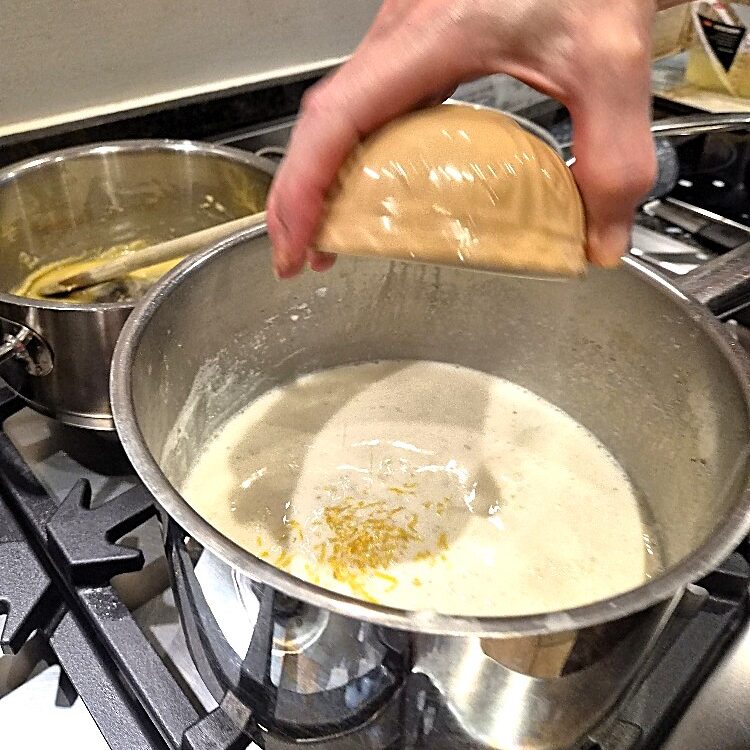
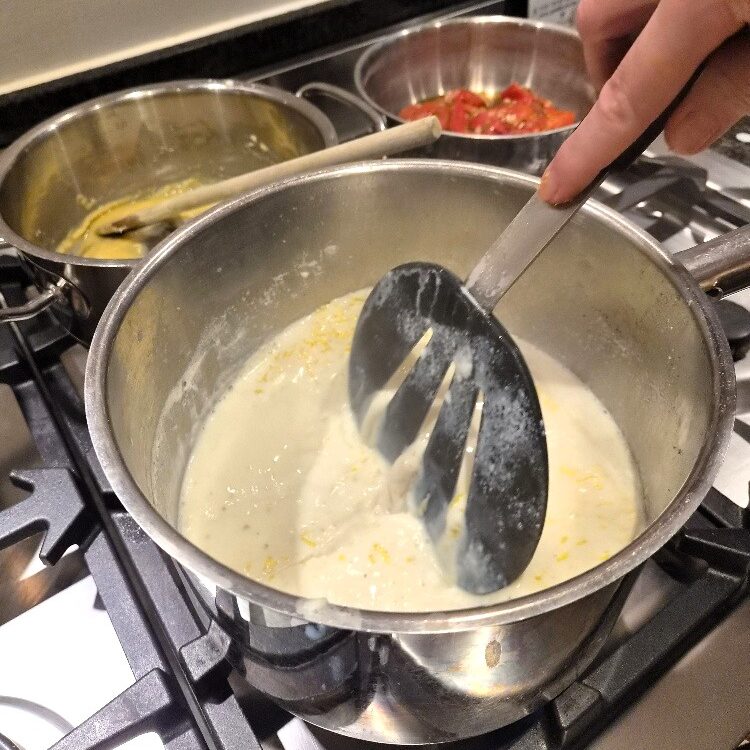
While the milk is cooling, warm up the roux over a low heat. Now add the milk to the lemon juice & wine in the jug, making the total up to 600ml (1 pint). Stir well to combine.
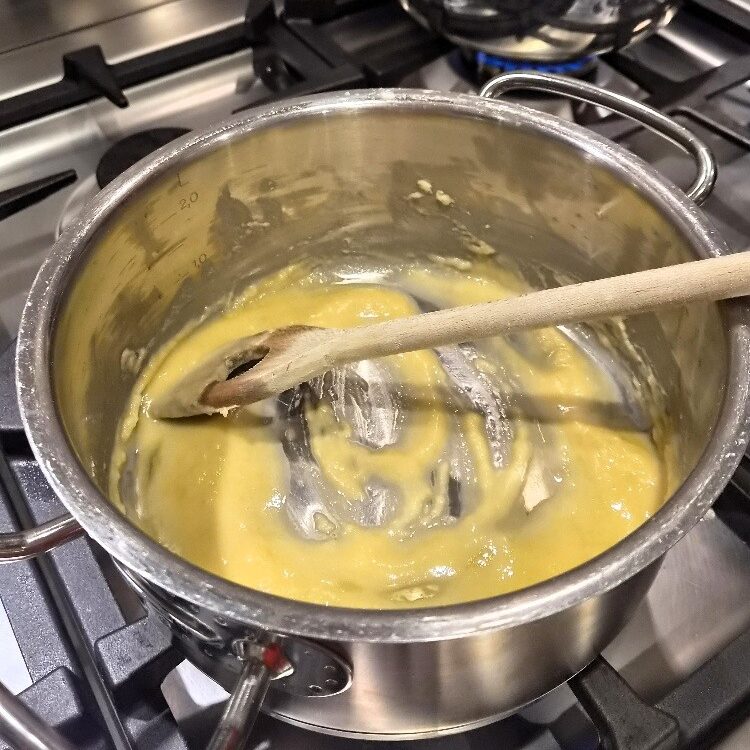
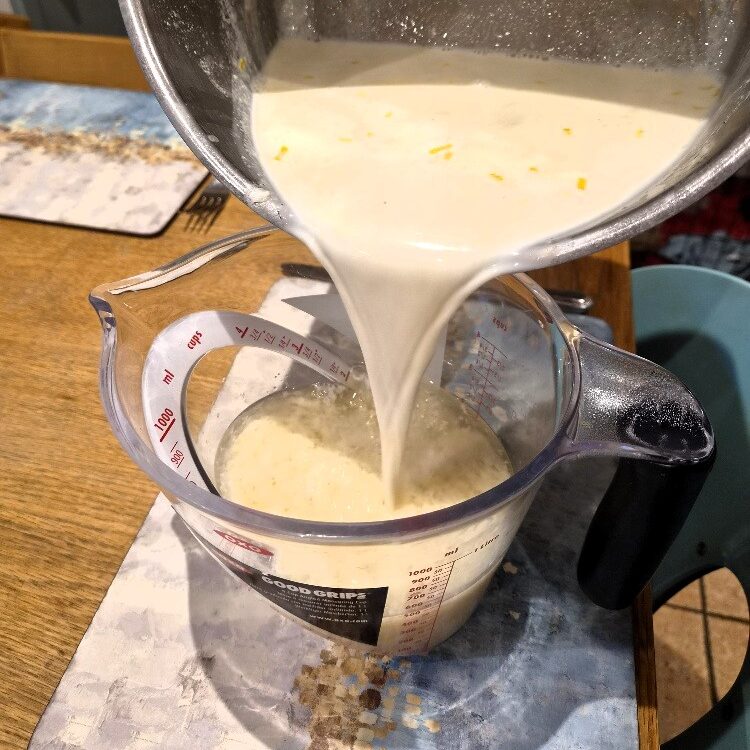
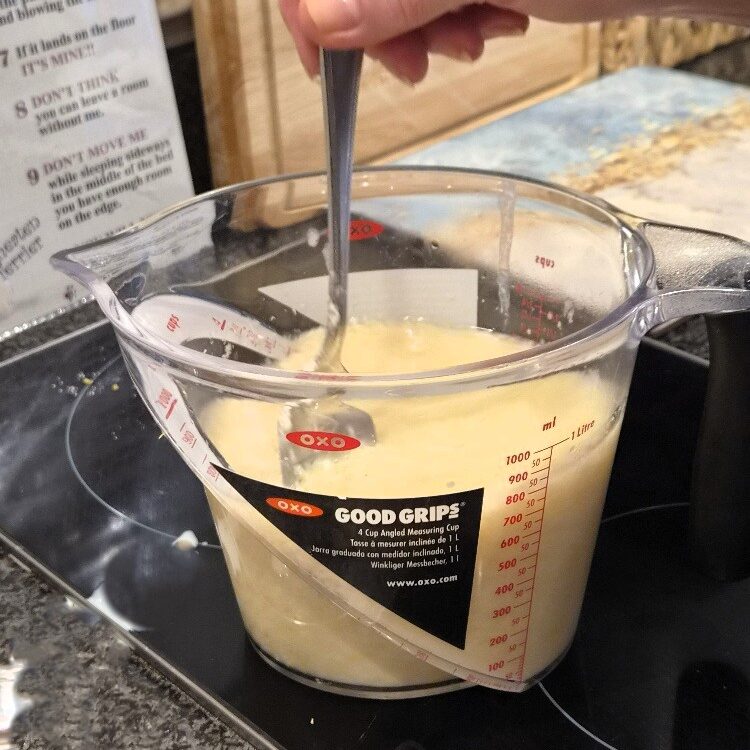
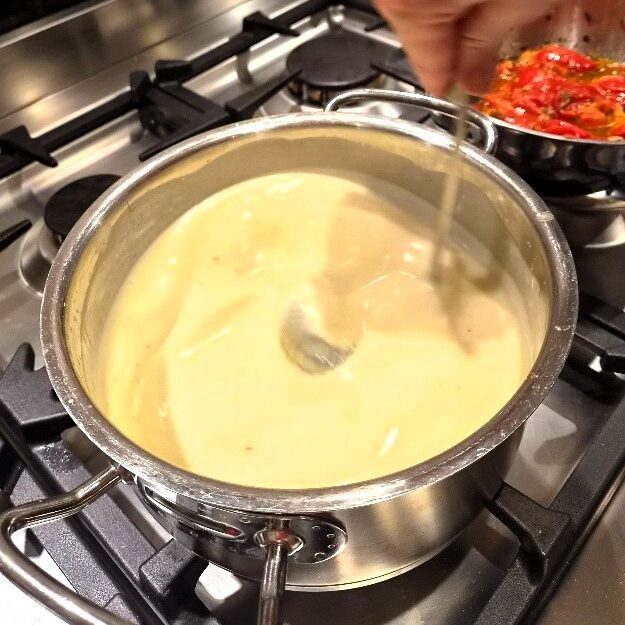
You are now ready to make the lemon sauce. Using the method in our sauce Tip, and keeping the roux over a low heat, add the milk mixture in very small amounts, stirring well between each addition. The sauce base needs to be really well mixed and as smooth as possible before the next addition. A spoon or spatula with a flat pointed end works best. A sauce whisk makes it even easier to blend, particularly later in the sauce. See more detail in our Tip.
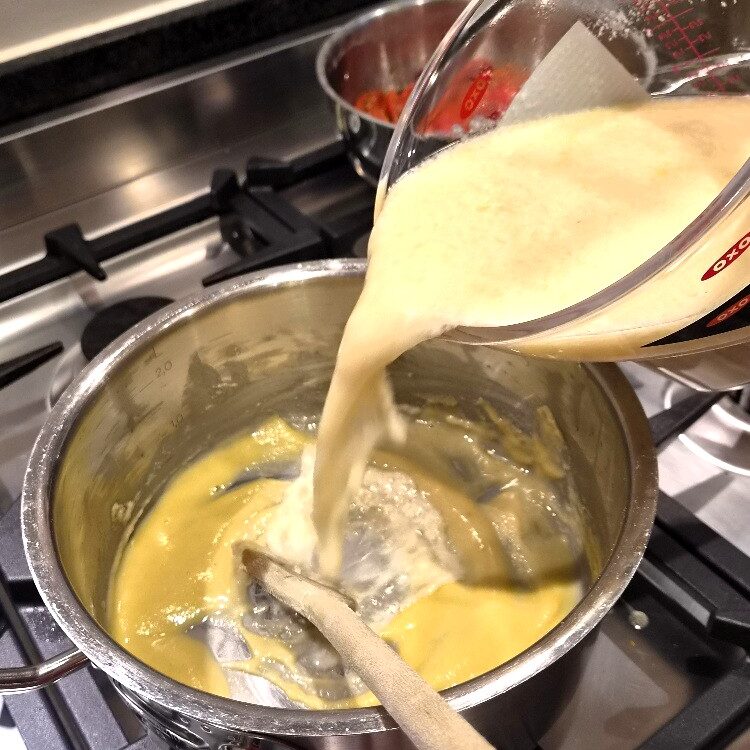
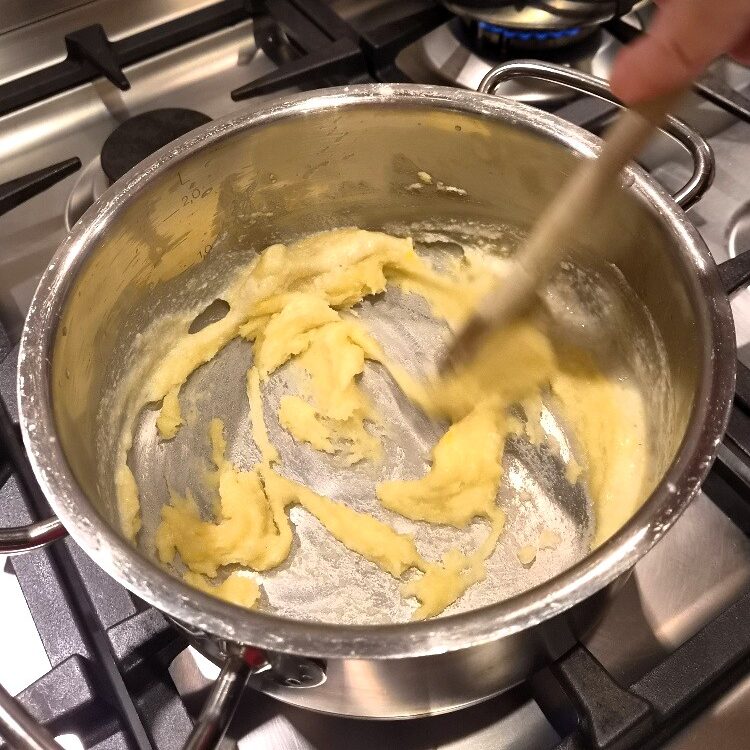
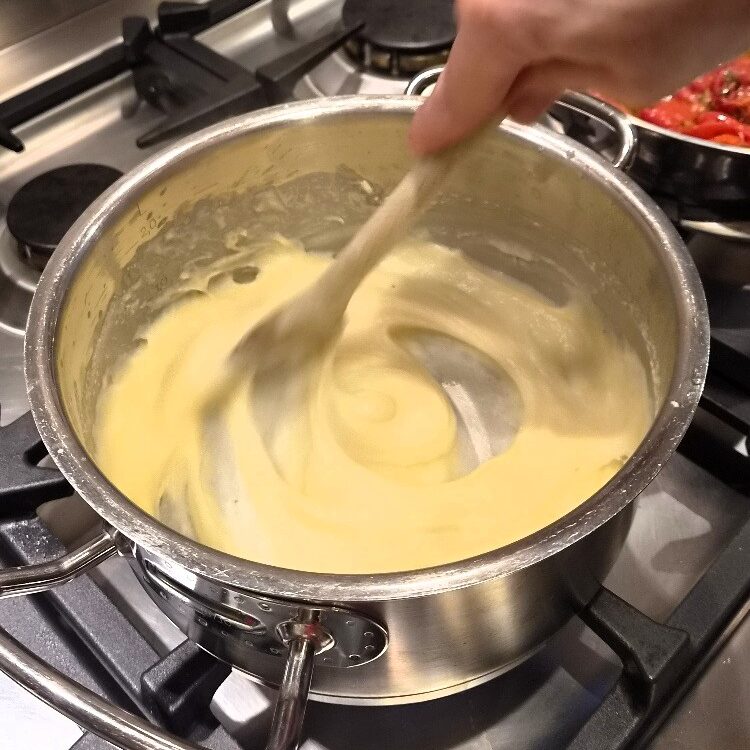
Keep going, adding the milk mixture and stirring well. When the sauce has thinned a little you can start to go in with the sauce whisk, if you have one, or use a normal whisk if not, to really beat out any lumps.
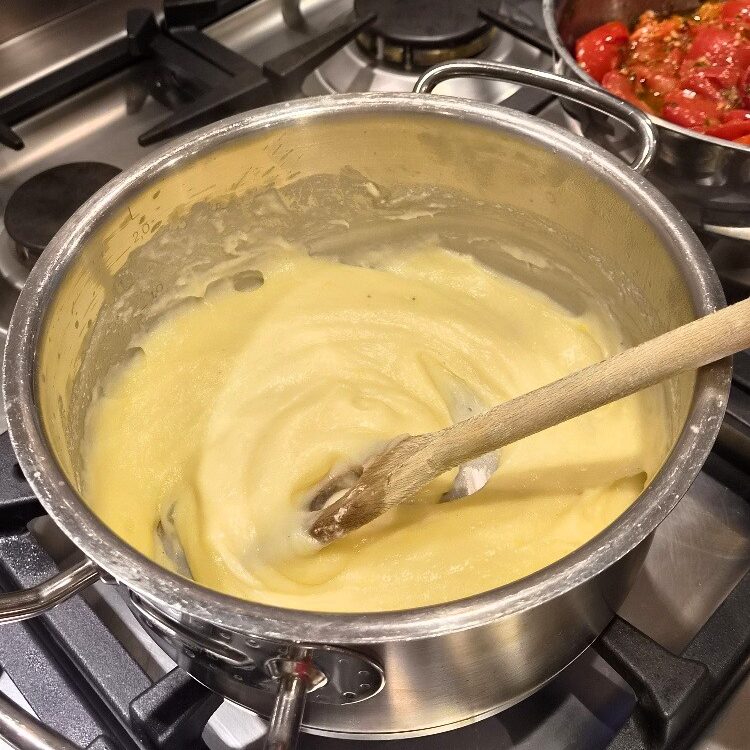
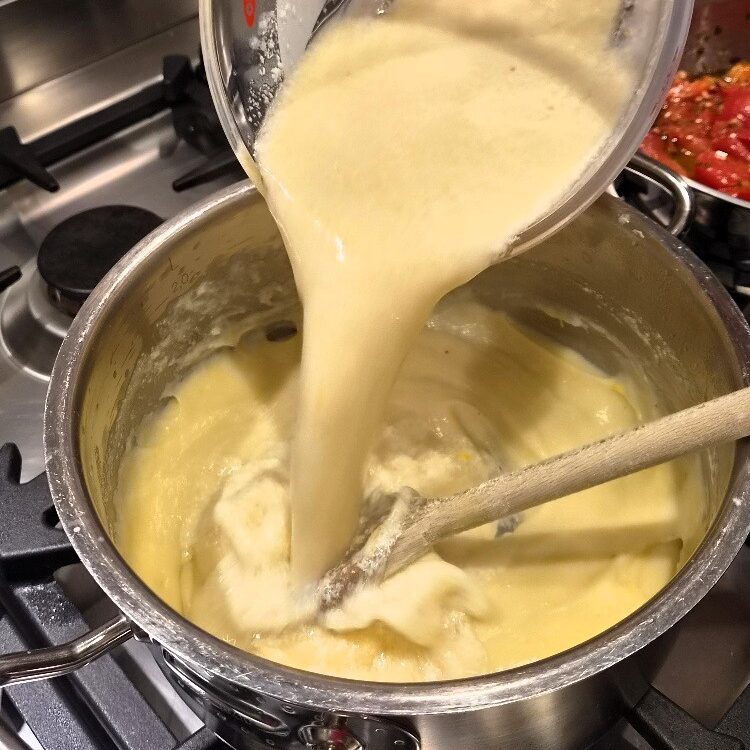
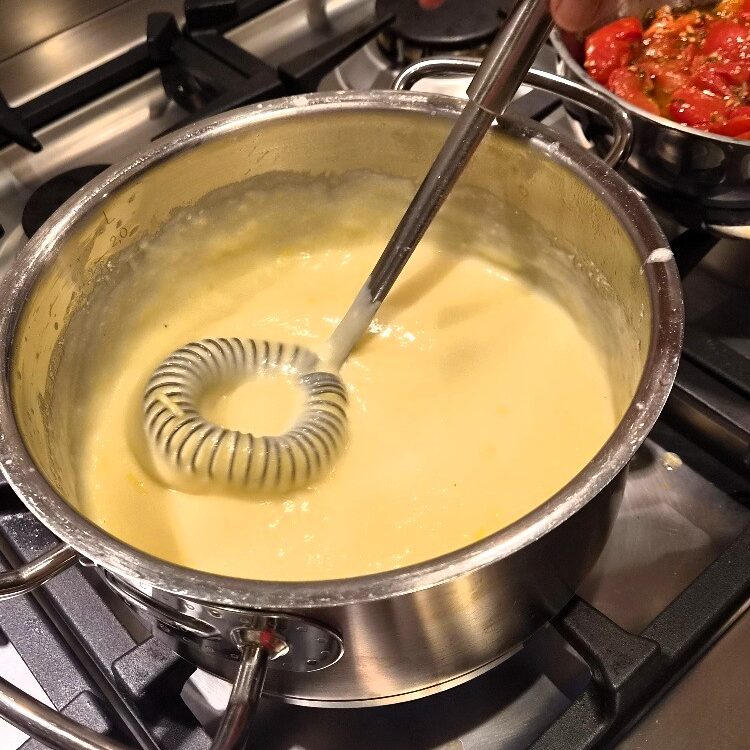
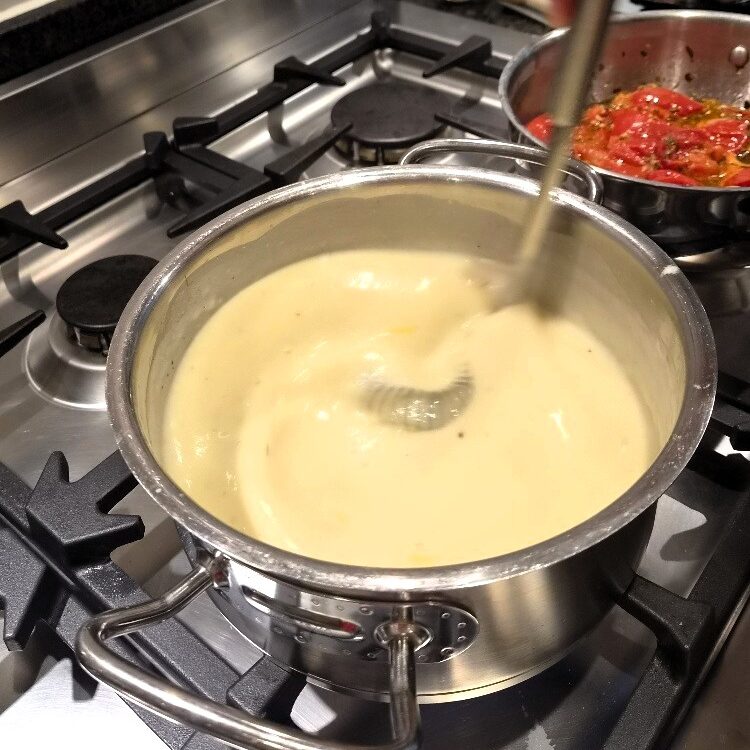
The sauce is done when all the milk is incorporated and the sauce is smooth & glossy and slightly thickened. It improves the texture to simmer it for a few minutes once all the liquid is in – it will thicken up. Taste it and season with black pepper and a little salt, if needed. The fish stock cube will already have added some saltiness. Stir well.
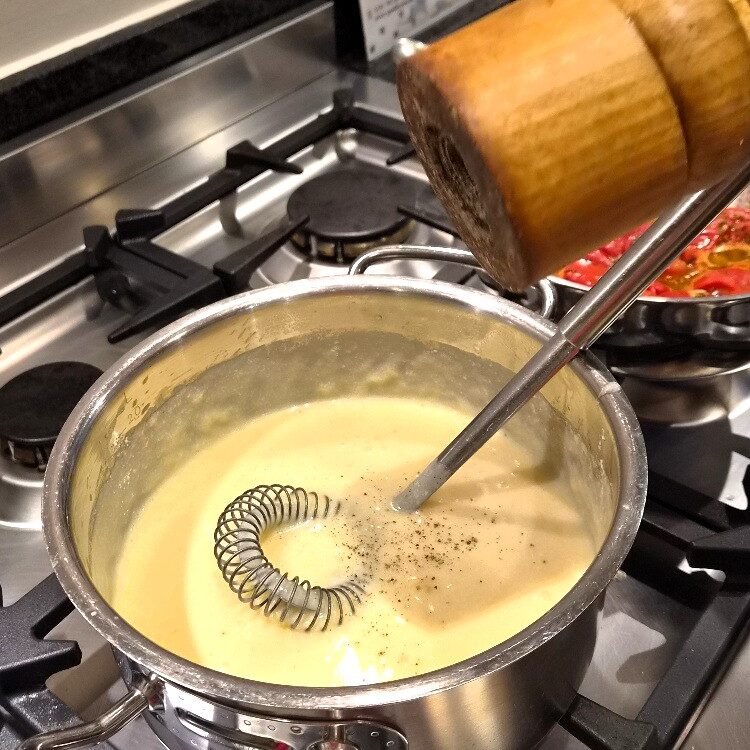
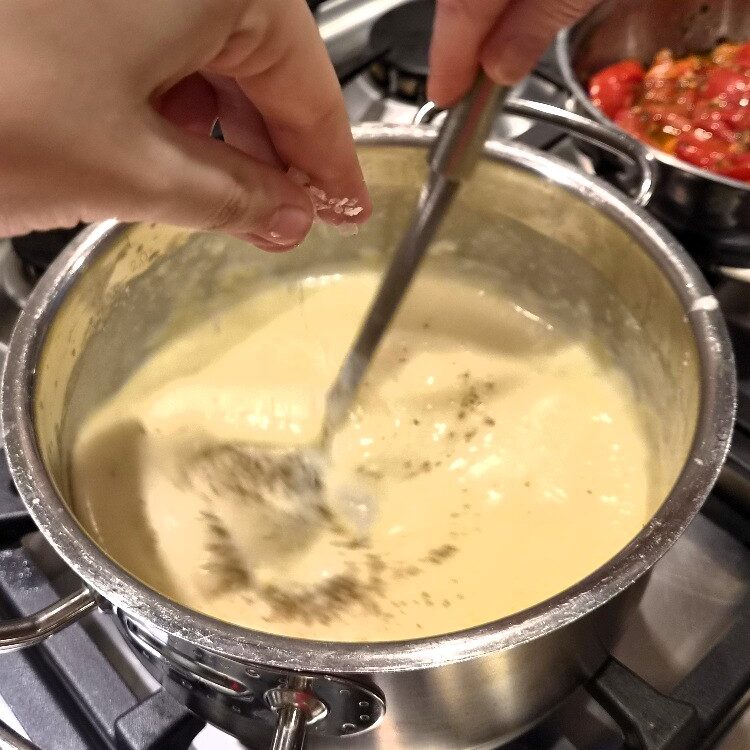
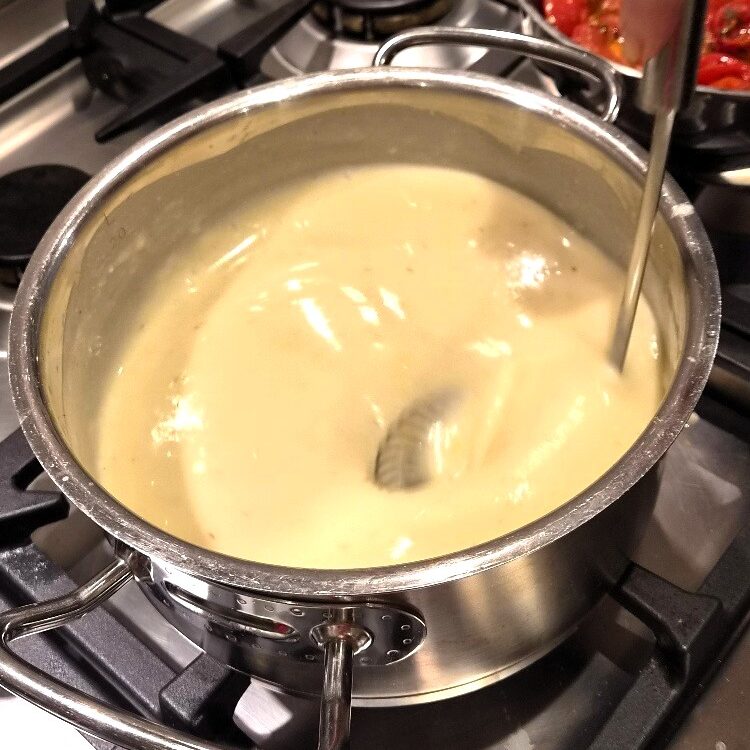
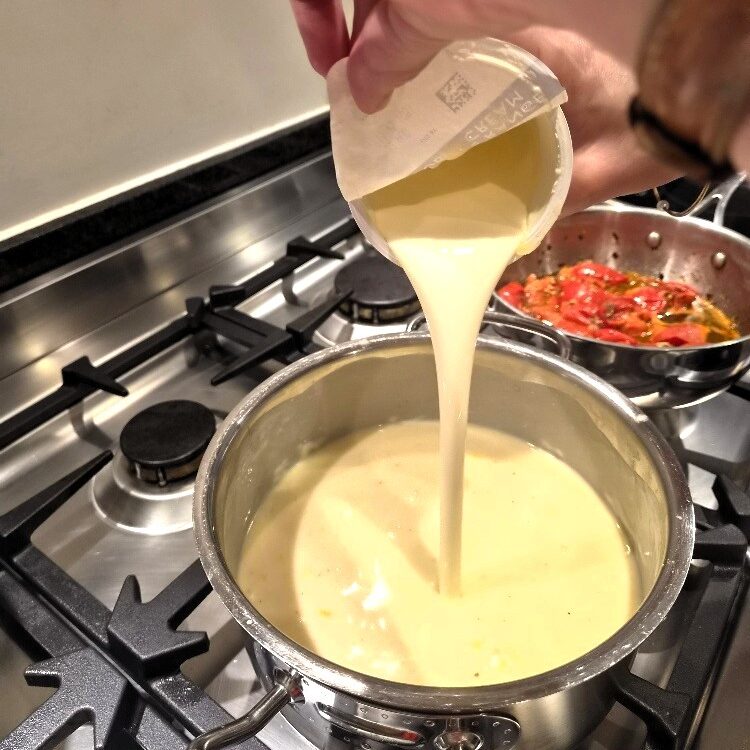
You can serve the sauce as it is, but we like to add a little cream for extra richness and to soften the flavour slightly. Add to taste, but you won’t need much. Today we added about 100ml of double cream. Stir in and your delicious sauce is done!
Serving the haddock with lemon, tomatoes & potatoes
To serve, remove the haddock from the oven and plate using a slotted spoon or fish slice so none of the poaching liquid comes with it. Add the potatoes on the side.
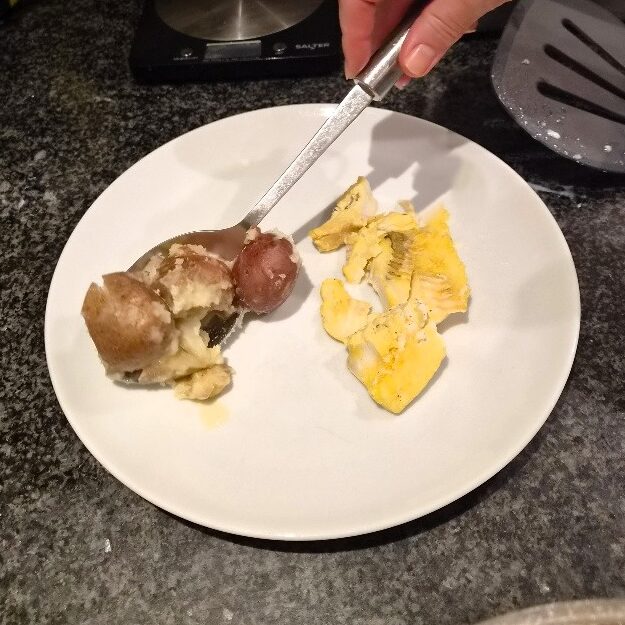
We like to serve the lemon sauce over both the fish and the potatoes, but you can just serve it over the haddock if you prefer.
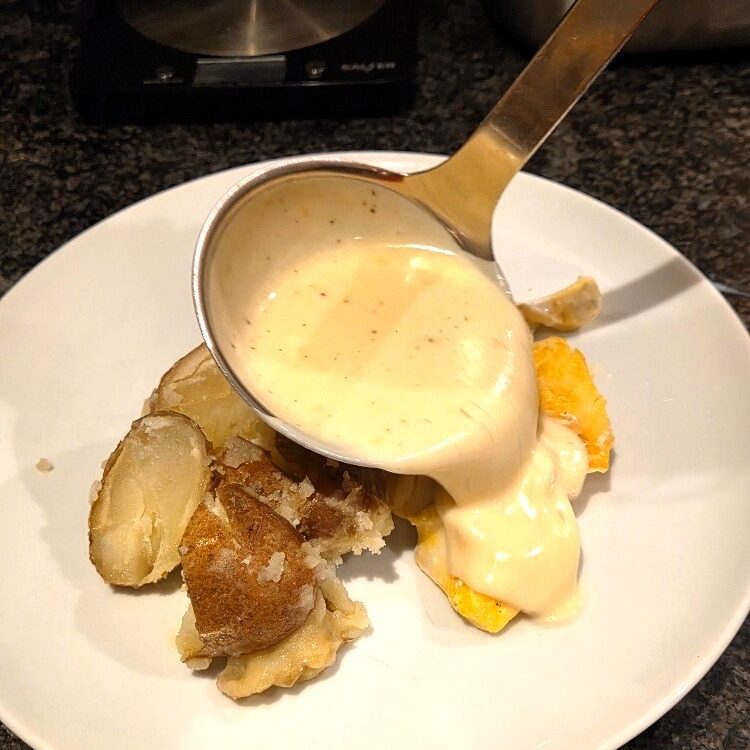

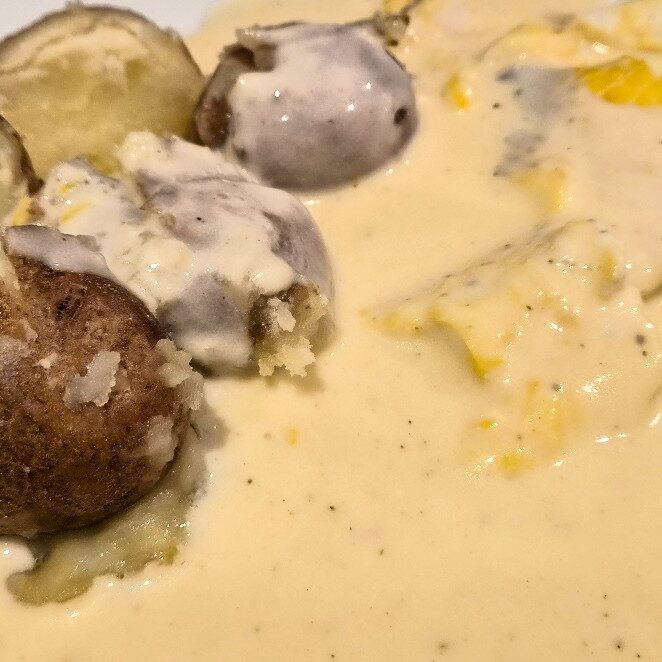
Serve the tomatoes on the side. This is a colourful but rustic-looking dish by its nature (which we rather like!), but its simple appearance belies its very complex & delicious flavour profile.
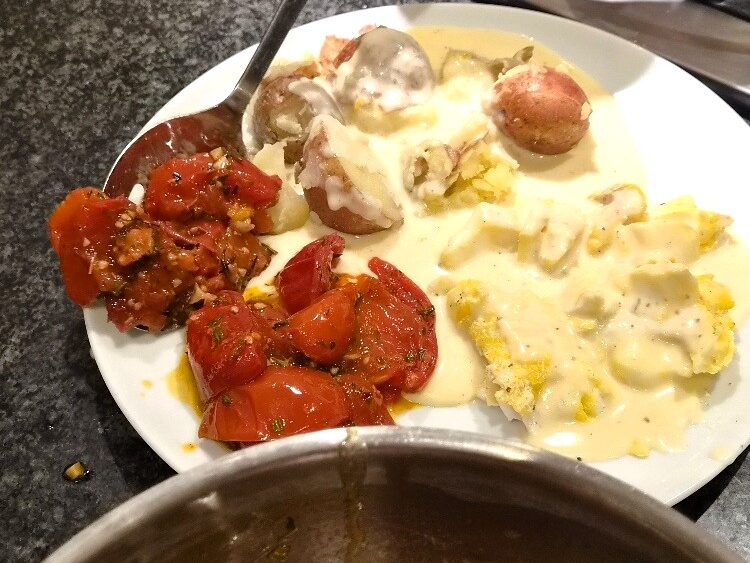
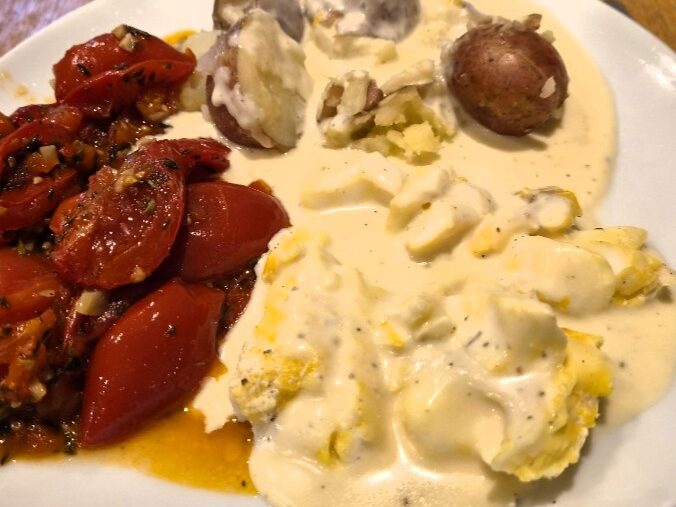

Enjoy your smoked haddock with lemon sauce, tomatoes & potatoes. Bibi would approve!
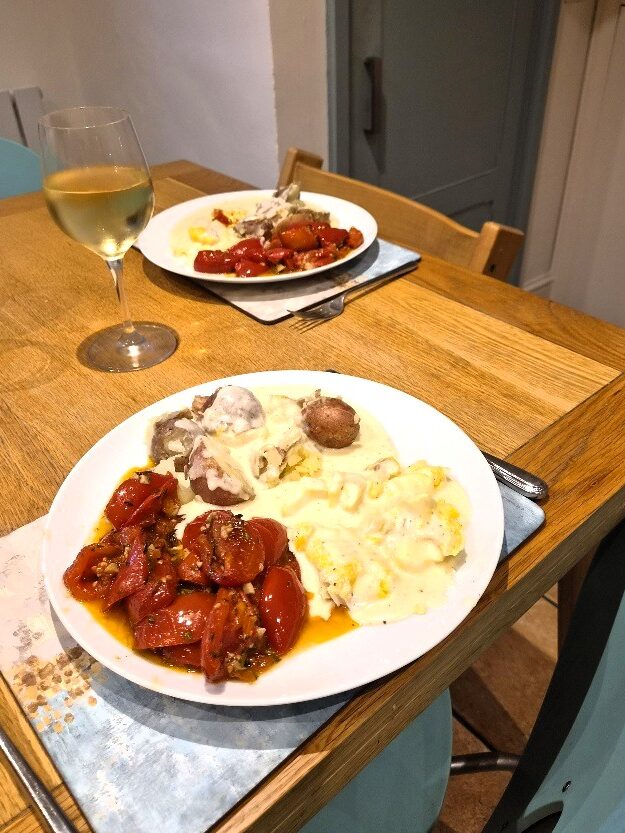
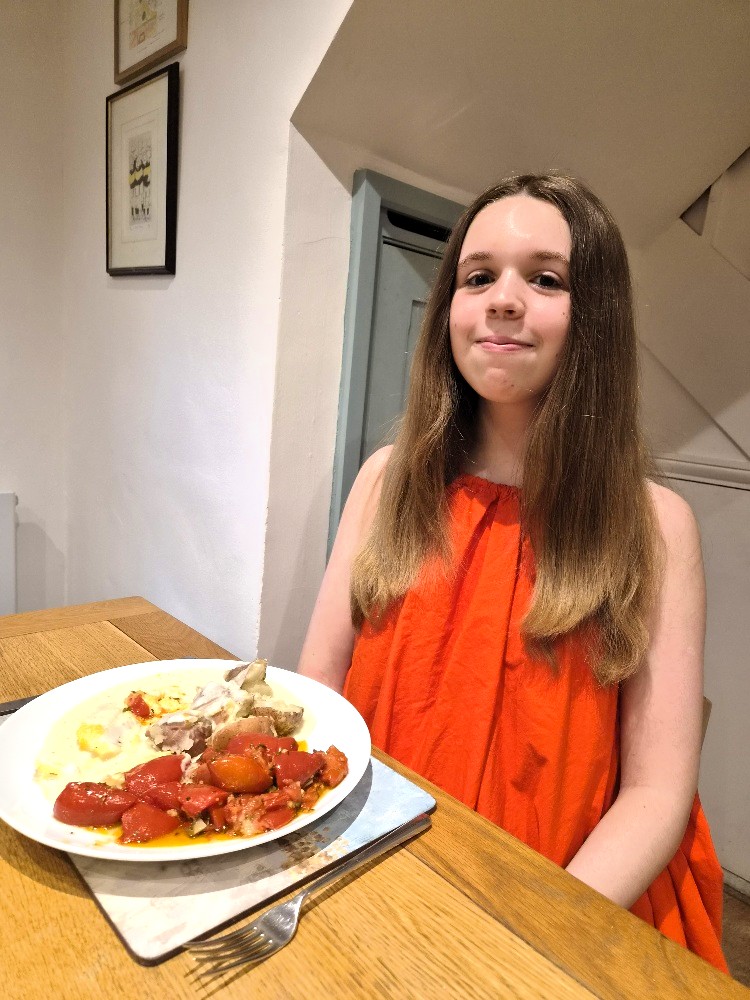

Heavenly Haddock with Lemon, Tomatoes & Potatoes
Ingredients
Equipment
Method
- Zest & juice the lemons, and cut the zest smaller. See our lemon Tip. Add the juice to the measuring jug, and make up to 250-300ml with white wine.
- Rinse the potatoes, and scrub or cut out any eyes if needed. Place in a large saucepan & cover with completely with cold water.
- Weigh out the flour & butter to make the roux. This can be made ahead & kept until you are ready to make the sauce. Melt the butter in a saucepan large enough to fit the finished 600ml sauce. Add the flour, and stir over a low heat until it smells nutty and looks golden, about 5 to 8 minutes for a blond roux. See our roux Tip.
- About 30 minutes before you wish to serve, get the potatoes on to boil over a high heat. When at a rolling boil, turn down to simmer and cook until tender. How long depends on the variety & size of your potatoes, normally about 20 to 25 minutes. They are done when a sharp knife goes in easily. See our potato Tip.
- Drain the potatoes. They can be kept warm back in the pan with a little butter on, covered, over a low heat, until you are ready to serve.
- The Roast Tomatoes take about an hour in a low oven – see how to make them here. If you have pre-made the Roast Tomatoes, you will also need to warm them in a pan over a low to medium heat. See our Roast Tomato Tip here for the full recipe & method to make them. If using tinned tomatoes, flavour them to your taste (we suggest garlic paste, mixed herbs and a little chilli, if liked) and allow time for them to reduce down on the hob on a medium heat, about 15 minutes.
- Pre-heat the oven to 60C (40C fan) or its lowest setting close to this. About 10 to 15 minutes before you wish to serve, you can start poaching the fish.
- Add enough milk to eventually cover the haddock to a pan large enough to hold the fish pieces in one layer. Bring the milk just to a simmer over a low to medium heat and season with black pepper, but don't add salt.
- Trim any excess skin from the fish and remove any pin bones if needed. Pat dry on some kitchen paper, but you shouldn't need to rinse.
- Once the milk is simmering, turn the heat down low and add the haddock in one layer, making sure it is completely submerged. The fish will only take between about 4 to 7 minutes to cook; ours today took 5 minutes. It is ready when it looks opaque and starts to flake.
- When cooked, remove the fish to an oven-proof dish. Spoon over just a very little of the poaching milk to help keep it moist, then cover tightly with foil. Place into the heated oven, keeping the heat very low. It will keep warm for about 10 to 15 minutes, but don't leave in longer or it will overcook, even in a low oven.
- Reserve the poaching liquid in its pan to make the sauce.
- If you have pre-made the roux, warm it over a low heat. Keep the poaching liquid over a low to medium heat and add the lemon zest and stock cubes, and stir well so they dissolve. Remove from the heat and allow to cool for a minute or two.
- Add some of the poaching liquid to the jug with the lemon juice & wine, making the total up to 600ml.
- To make the sauce, follow the method for white sauce. See full details in our white sauce Tip here. Add the mixture from the jug to the roux, keeping the heat low, in small splashes. Stir well with a wooden spoon or spatula between each addition; the sauce base should be well-mixed and smooth before adding the next splash. A sauce whisk helps with this. Keep going until all the liquid is incorporated. See our Tip.
- Once the liquid is all in, simmer the sauce for a couple of minutes – it will thicken slightly. The finished sauce should look smooth & glossy. It can be served as it is, or you can add cream to taste. This softens the flavour & adds even more richness – today we added about 100ml.
- Remove the fish from the oven, and serve with a fish slice or slotted spoon so none of the liquid comes with it. Add the potatoes on the side.
- Pour over the lemon sauce. We like it on both the fish and potatoes, but you can just serve it over the fish if you prefer.
- Serve the Roast Tomatoes on the side.
- Enjoy!