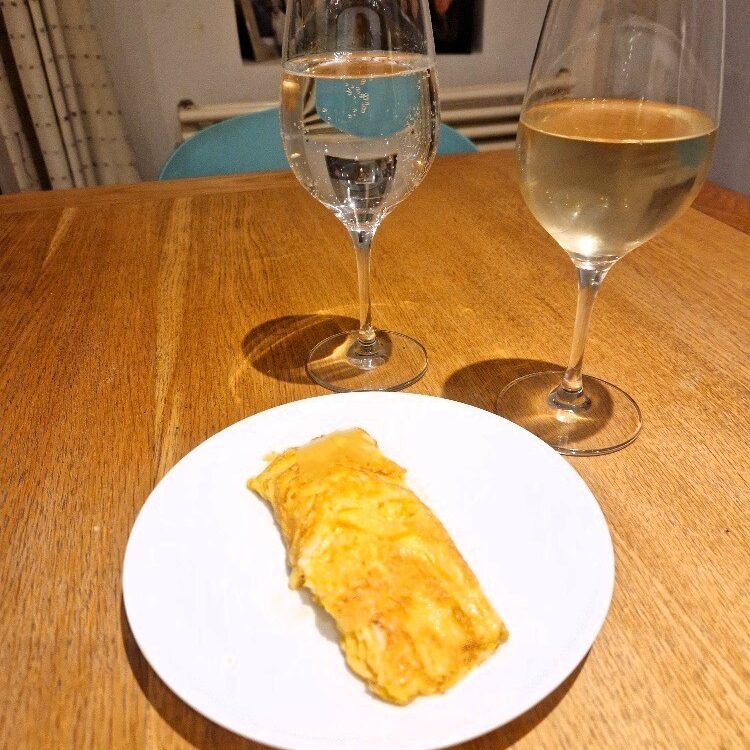


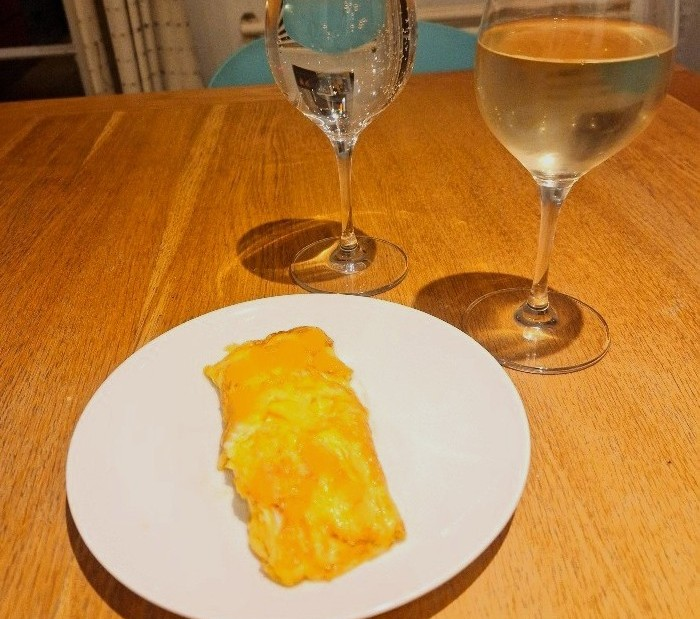
The famous cookery writer Elizabeth David called out ‘an omelette and a glass of wine’ as the ultimate in keeping food simple and delicious. Emily is happy to keep the wine, but Estella opts for elderflower!
There are just two ingredients in this dish, eggs and salted butter, but it is important that both are fresh and good quality. Neither needs to be expensive, but free range eggs that are well in date, and a decent quality supermarket salted butter will make a big difference to the taste. When things are this simple, the flavour IS the two ingredients – there is nowhere to hide in sauces, seasonings, or fillings. And a well made plain omelette is a thing of beauty and a joy to eat.

Jake sticks his nose in
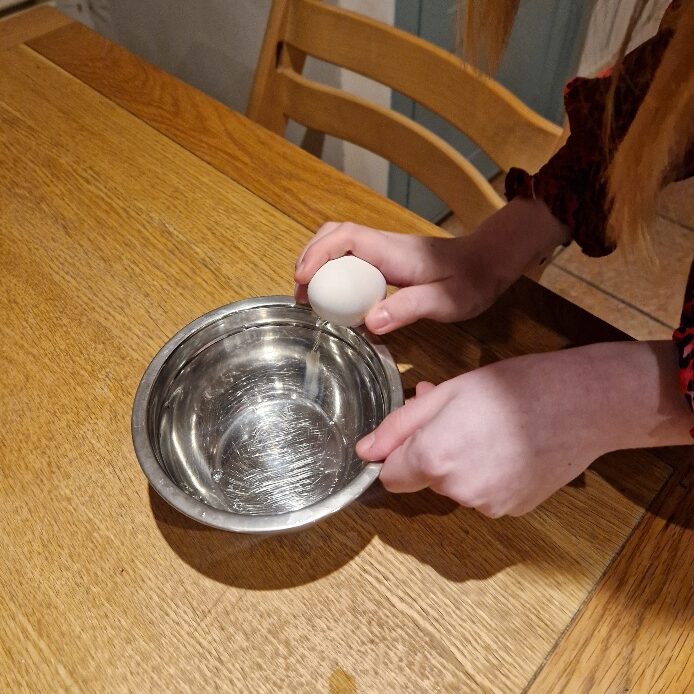
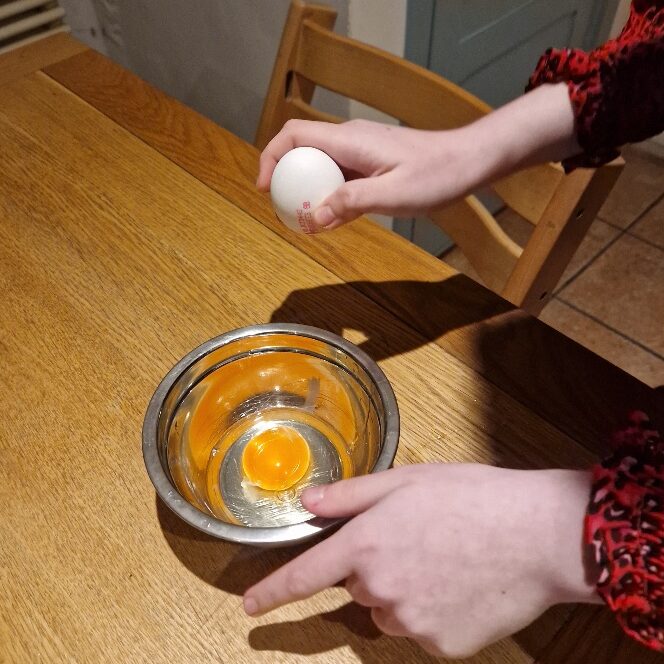
Use Bibi’s tip to check if an egg is fresh. Put the egg in a deep bowl or jug of cold water. A really fresh egg will sink and lie flat on its side; a less fresh one will stand up on its end; a stale one will float. Fresh eggs will have yolks that look nice and bright and domed in your bowl too, less fresh ones will look flat or break and look pale – avoid!
Omelettes take a little practice (particularly rolling them), but follow our steps and you’ll soon be cooking them like a pro. Don’t worry if your first few are a bit scruffy or messy, they will probably still taste good and you’ll soon master it with practice.
And it really is just two ingredients! Some omelette recipes will advocate adding cream or milk; some add a little water (as we do for scrambled egg, see our Supper). But keeping it this simple is definitely best – as confirmed by Elizabeth David’s famous omelette chef, Madame Poulard: “I break some good eggs in a bowl, I beat them well, I put a good piece of butter in the pan, I throw the eggs into it, and I shake it constantly.” We agree!
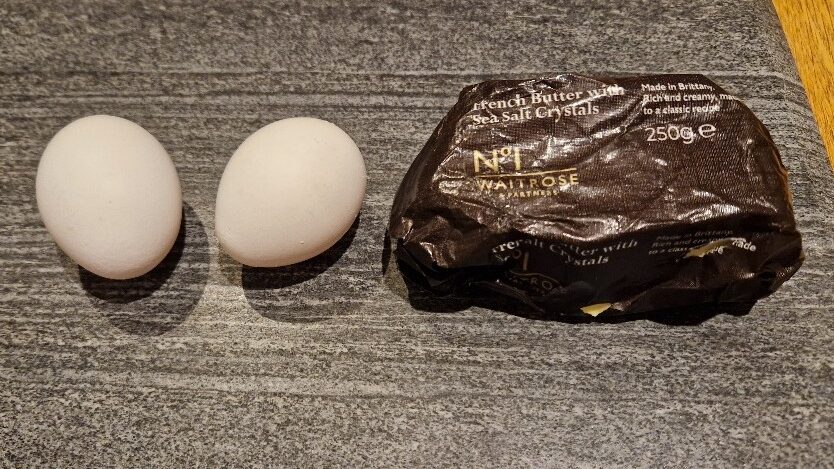
Today we are making an individual omelette. We think two eggs is plenty for a light lunch or supper for one; some might say use three eggs, but we find that a little too rich for one person.
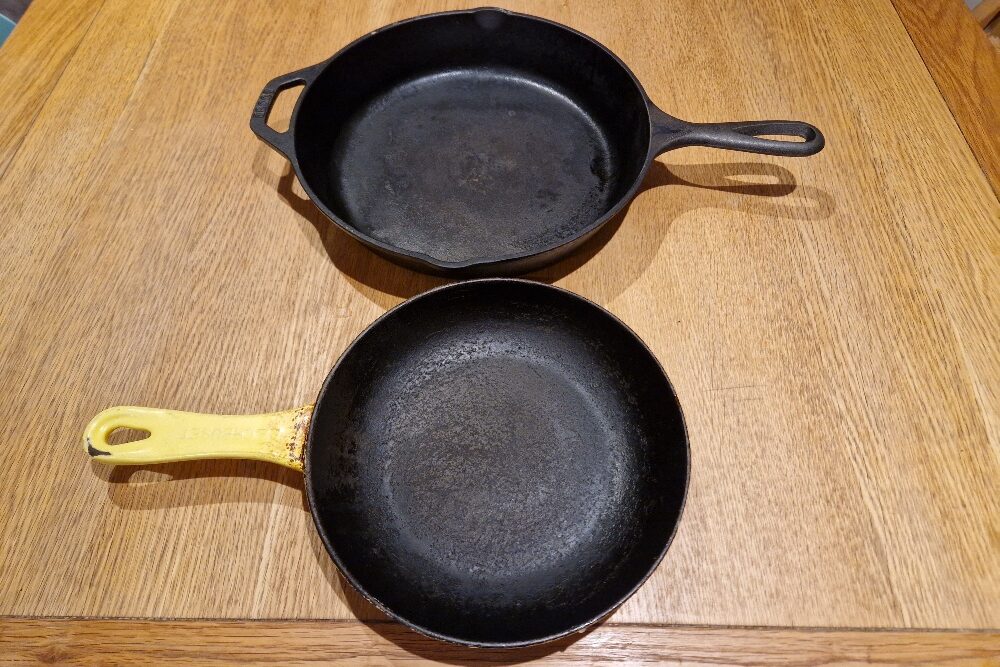
The size of the pan is important too. For a one person (2 egg) omelette we use an 8 inch (20cm) pan, like the yellow one below. When we do a sharing omelette for two (4 egg) we use a 10 inch (26cm) pan, like the black one. We find a heavy cast iron pan works best, but you can make a successful omelette in any half decent frying pan (the size is more important than the material).
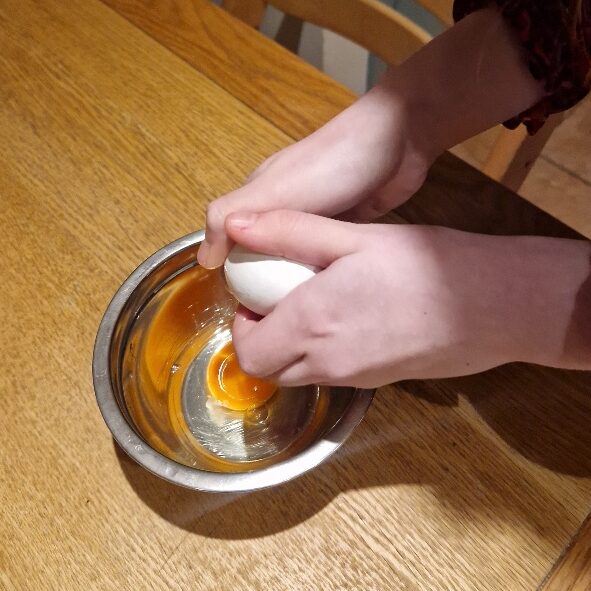
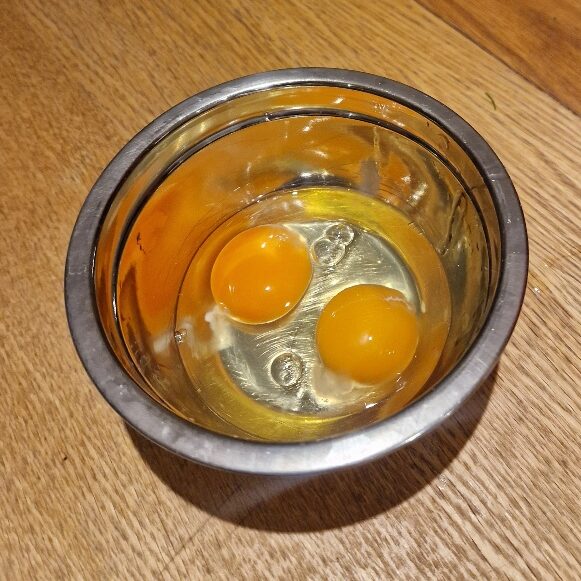
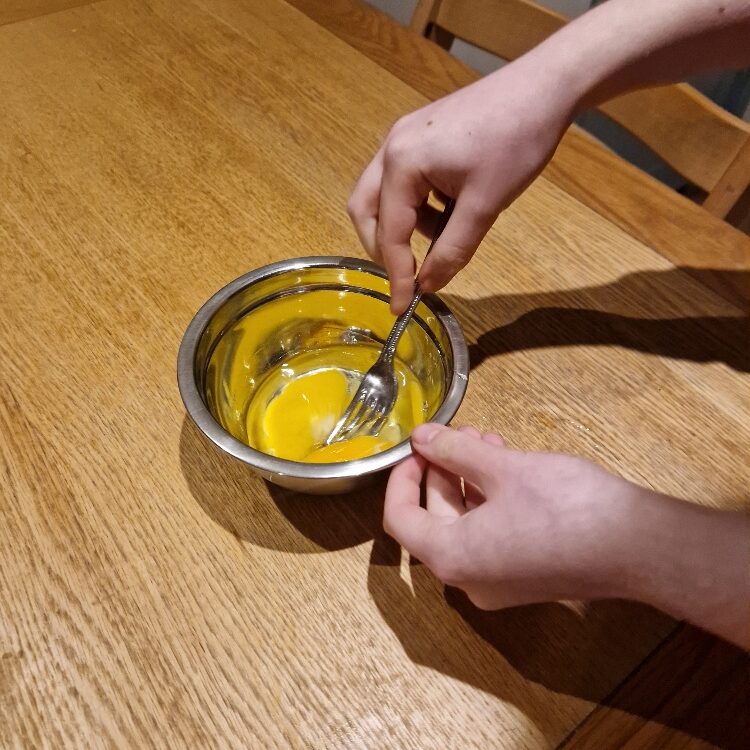
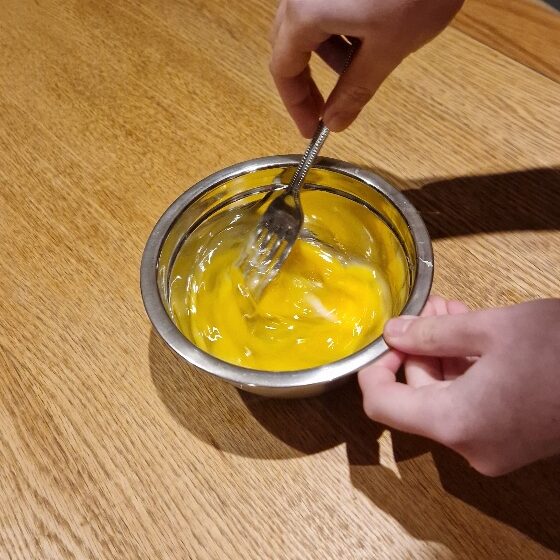
Start by cracking the eggs into a small bowl – see our egg Tip. Beat them really vigorously with a fork until well combined and smooth (you shouldn’t be able to see any visible strands of the white). You can add a little black pepper at this point if you wish. We prefer an omelette without it, and also we like the fully pale appearance that is traditional. Do not add salt. This can make the omelette tough, but also the salt flavour will come from the butter.
Jake sticks his nose in
Traditionally some chefs might use white pepper to get a kick of heat but without the black flecks (this is why white pepper is also used in many white sauces etc). But we don’t really like the mustier white pepper flavour.
Add a really generous knob of butter to the pan, then place over a medium high heat until the butter is fully melted and starting to foam. It is really important to use a large amount of butter, both for flavour and so your omelette doesn’t stick to the pan.
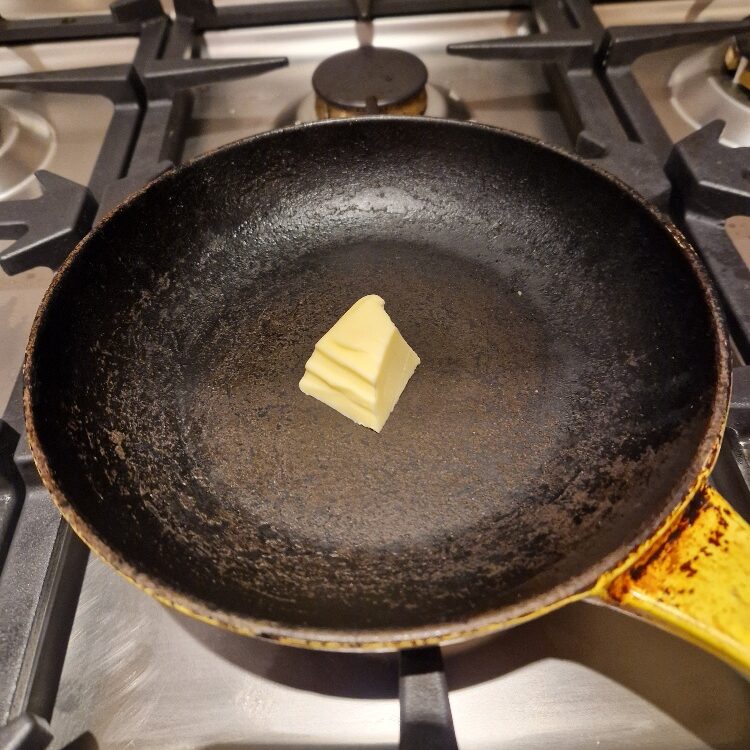
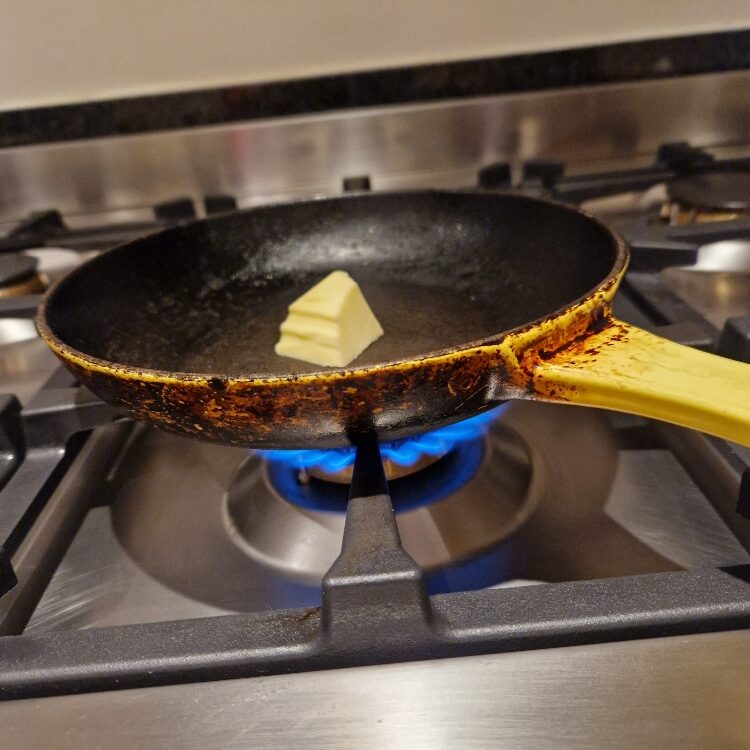
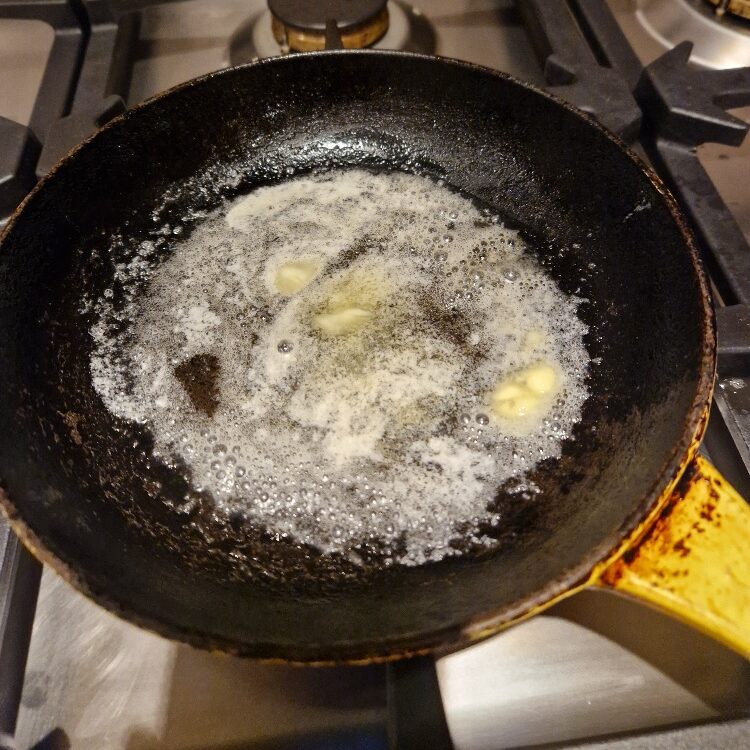
Swirl the pan to make sure it is evenly coated with the butter and set back on the heat.
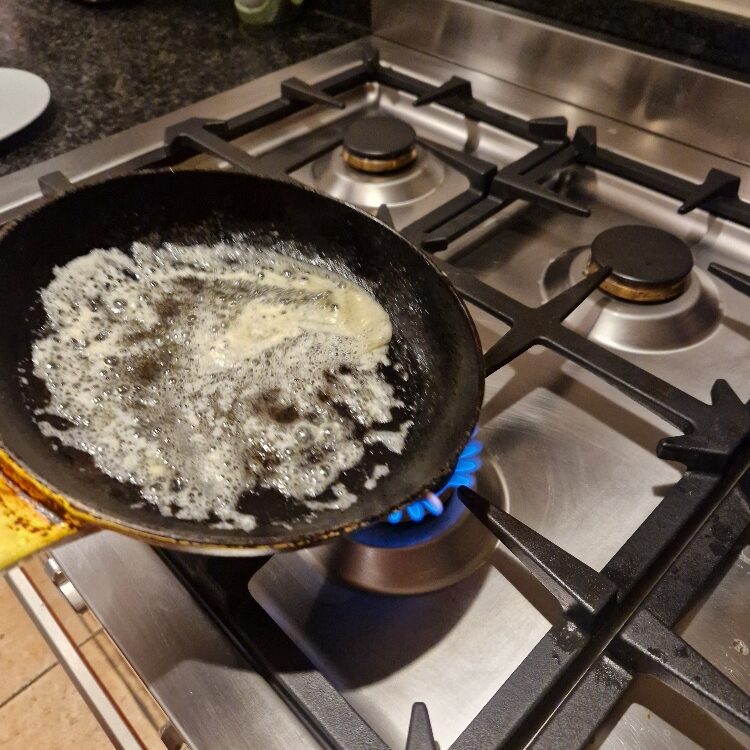
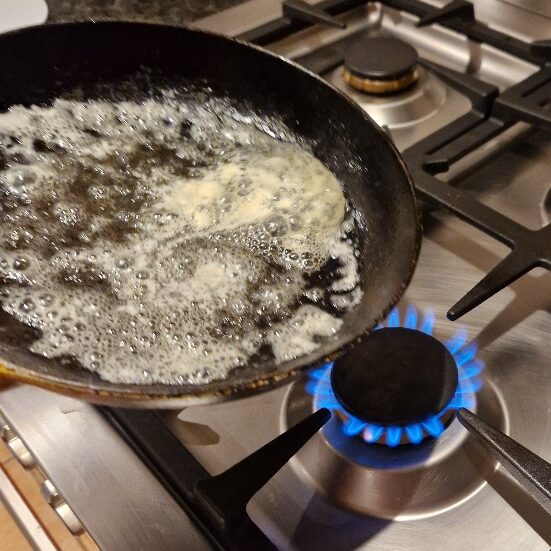
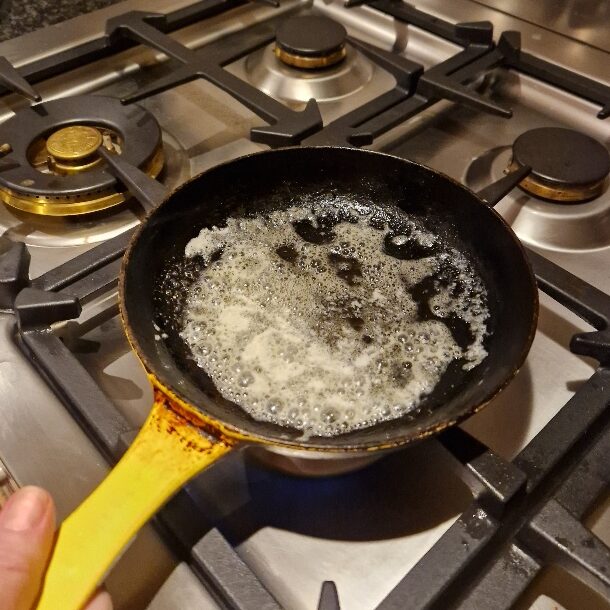
You will now need to work very quickly as your omelette will set in minutes! Give the egg one last whip with the fork then pour it all into the pan, making sure it evenly covers the bottom. Leave for 20 seconds without touching it (we count in our head). The omelette will start to look slightly frilly at the edge and a few bubbles may form, as in the last picture below.
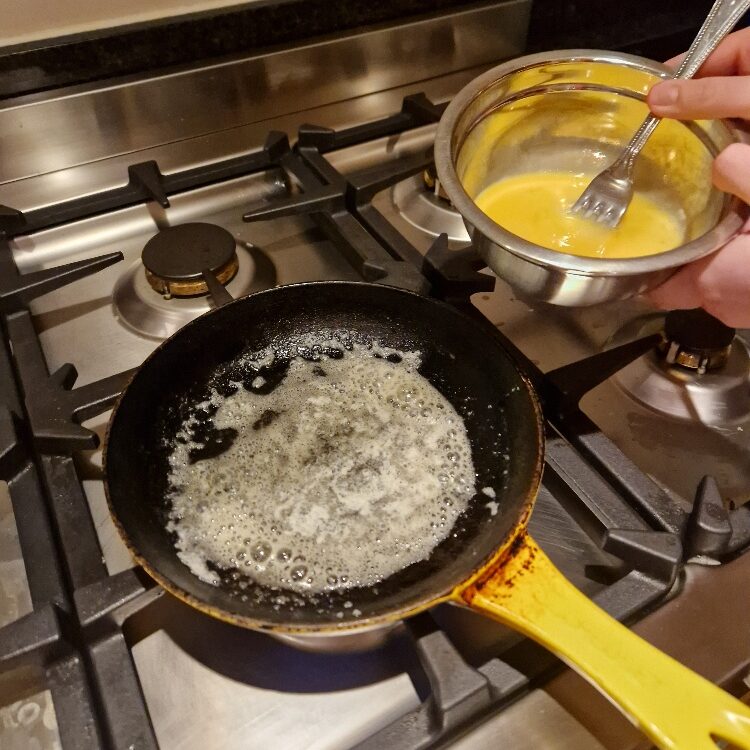
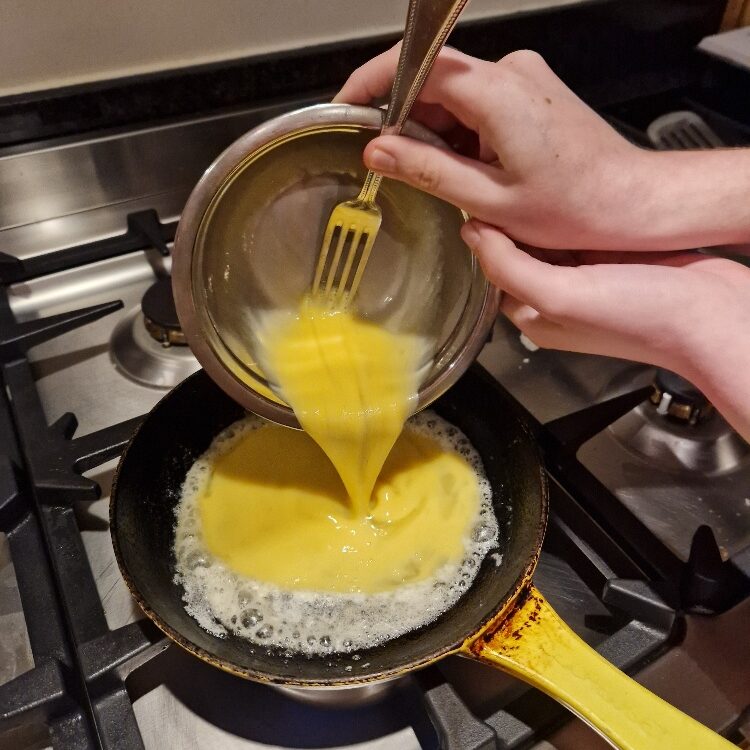
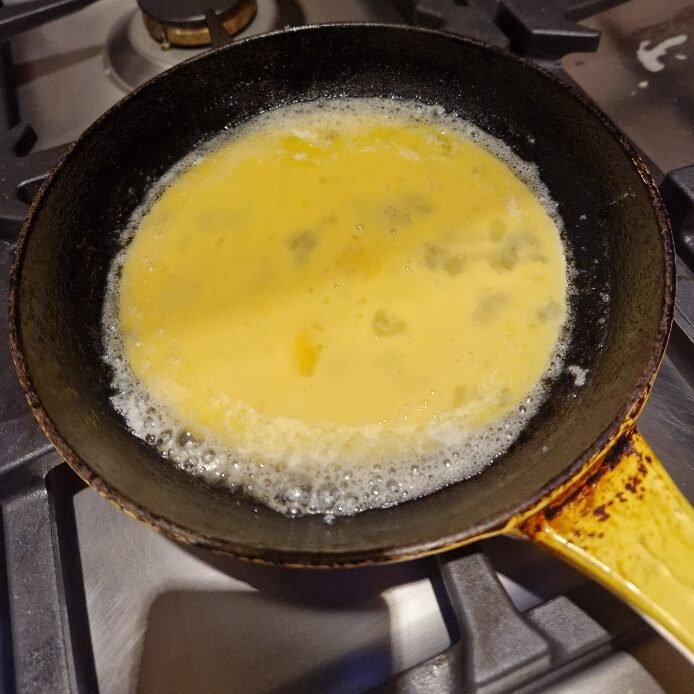
When the 20 seconds are up start to drag the edges into the centre, a fish slice is a good tool to use here as it is also helpful later when rolling. Keep dragging the edges in and shake and tilt the pan so the runny egg coats the surface and fills any gaps. Don’t let the centre get too lumpy, keep it moving.
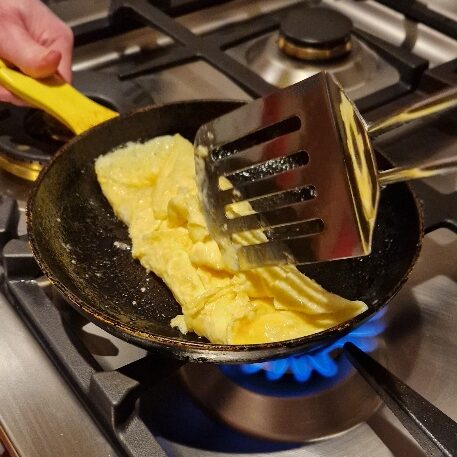
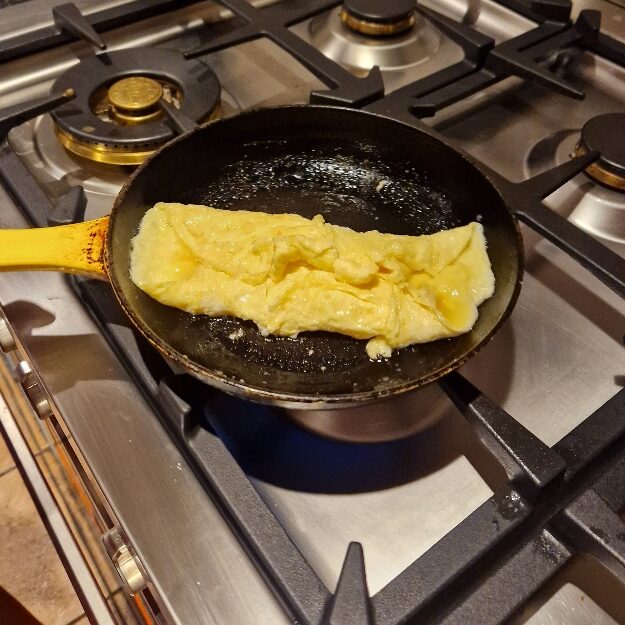
When the centre looks like rough scrambled egg, but the omelette is still quite runny, test the edge with the fish slice, shaking the pan to stop the omelette from sticking. If the edge starts to come away cleanly and it feels like the omelette can move in one piece in the pan it is time to roll! And yes the omelette still should look quite runny in the centre (known as ‘baveuse’) – this is what you want! An overcooked omelette will be tough and rubbery; if you keep it slightly runny it will be fluffy and light. See the pictures below to help understand the technique and look.
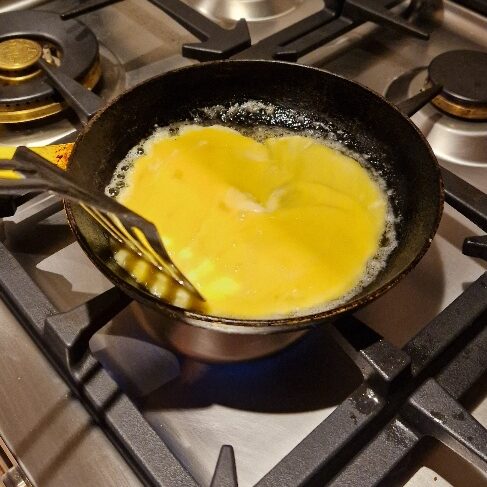
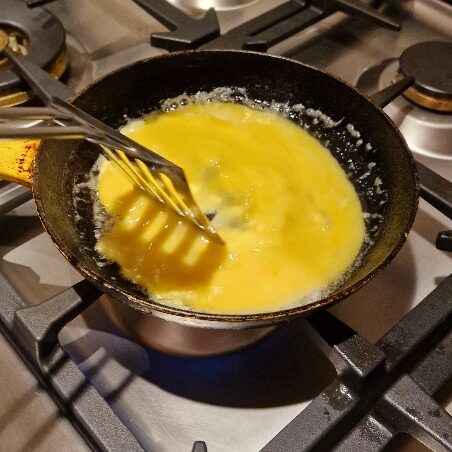
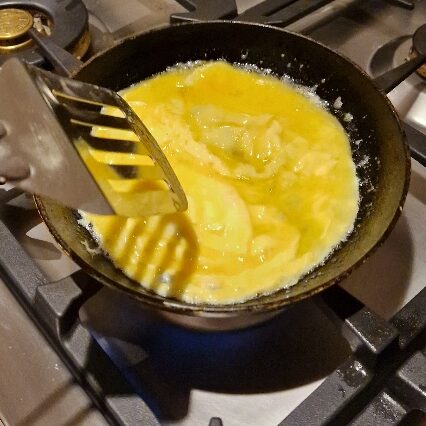
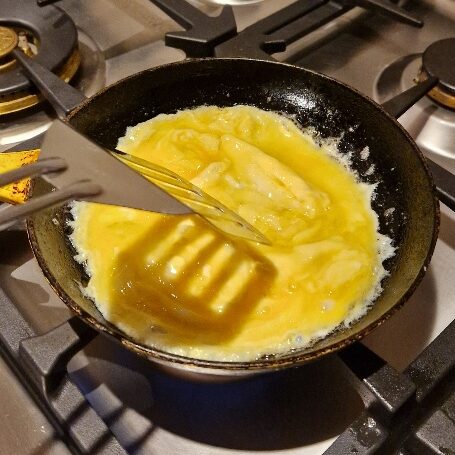
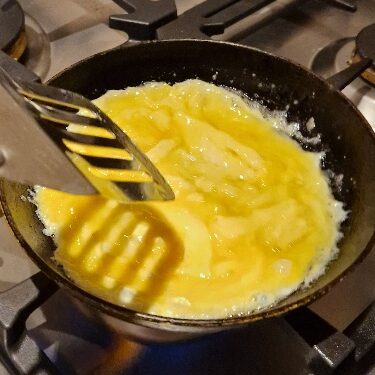
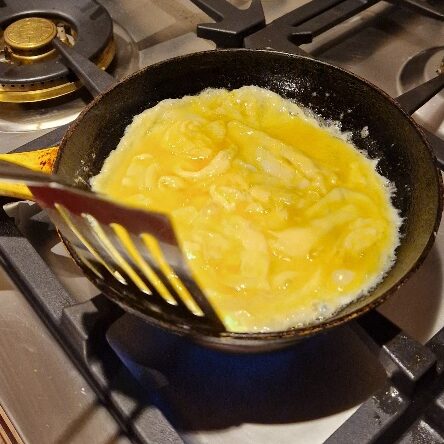
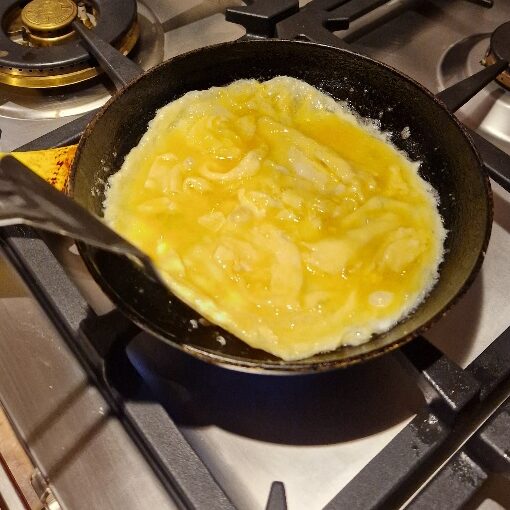
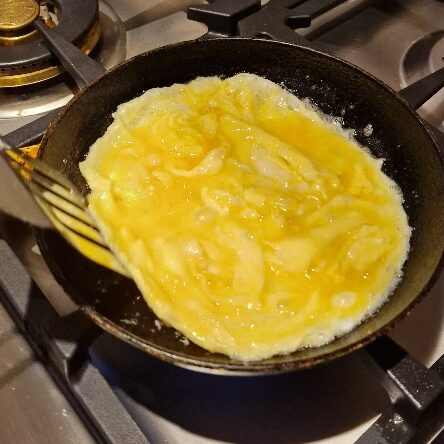
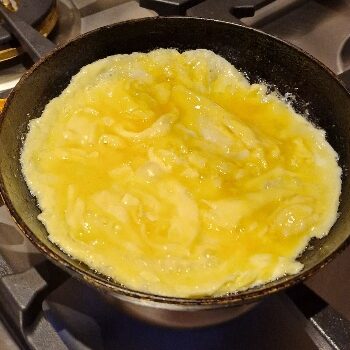
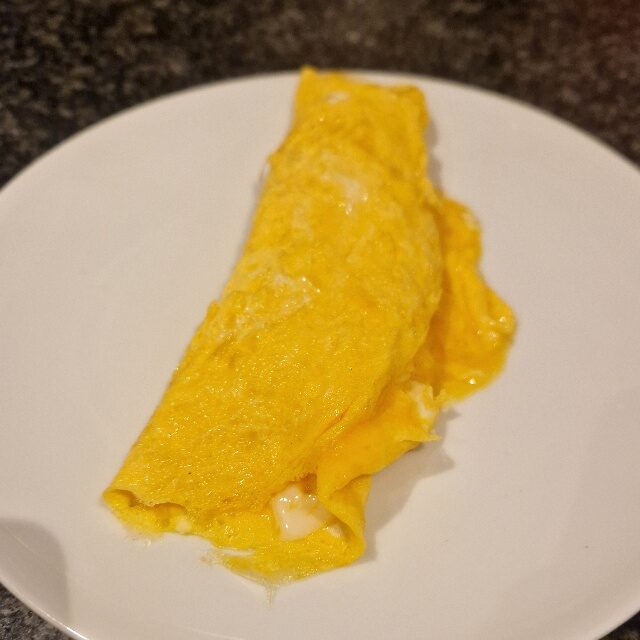
The whole cook time will be about 2 to 3 minutes if that – a small omelette cooks really fast. To roll it there are various ways you can try, but we think it is easiest to fold one side over in the pan and then fold the other side in too, before rolling the whole thing out on a plate – this is what we show below. But you can also try folding just one side in, then rolling the omelette onto itself as you plate, or fully rolling it in one direction in the pan – the latter only really works if your omelette is a bit too firm, we find a properly runny omelette breaks.
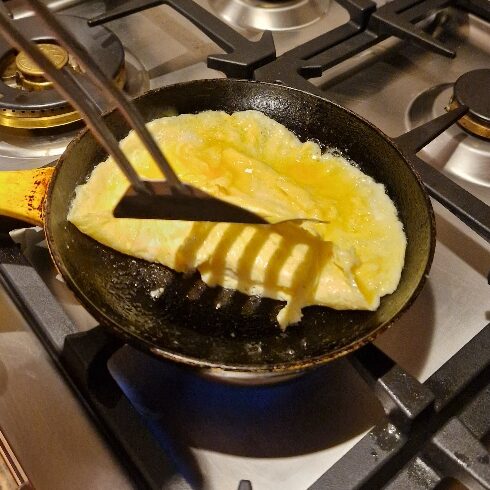
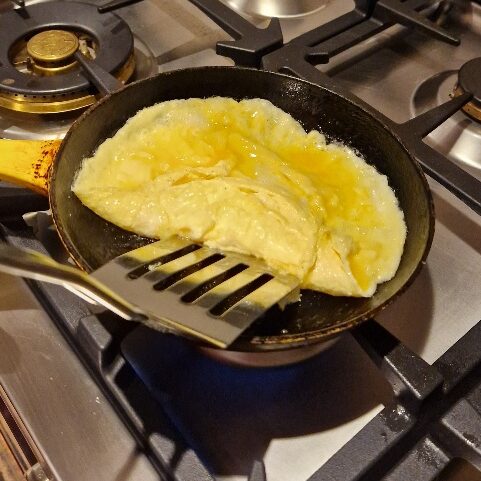
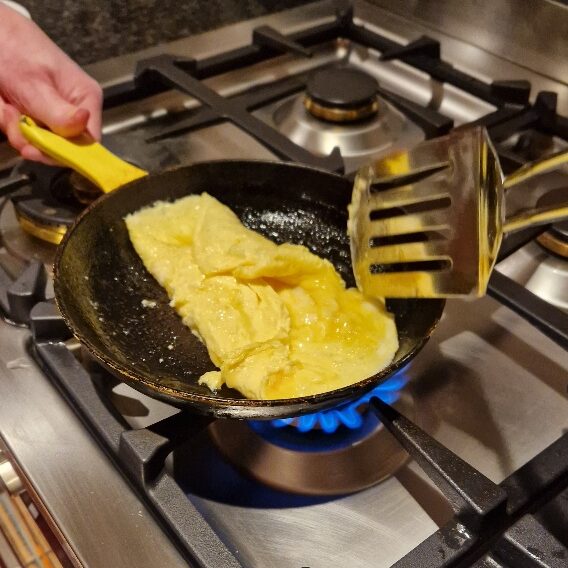
Serve immediately with your drink of choice. Bon appétit!