
We love pancakes and they are one of the first things Emily remembers cooking with Bibi – the whole family would get involved in making the batter and taking turns at flipping pancakes on Pancake Day (Shrove Tuesday), a tradition we have kept up since Estella was a toddler.
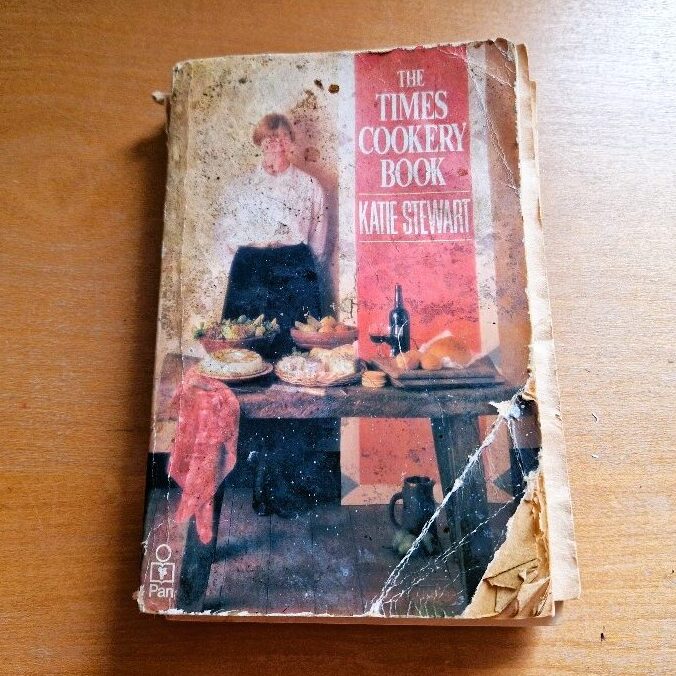
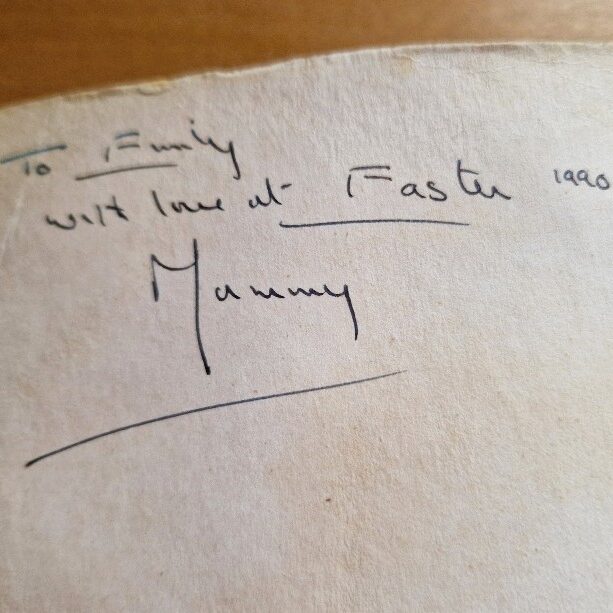
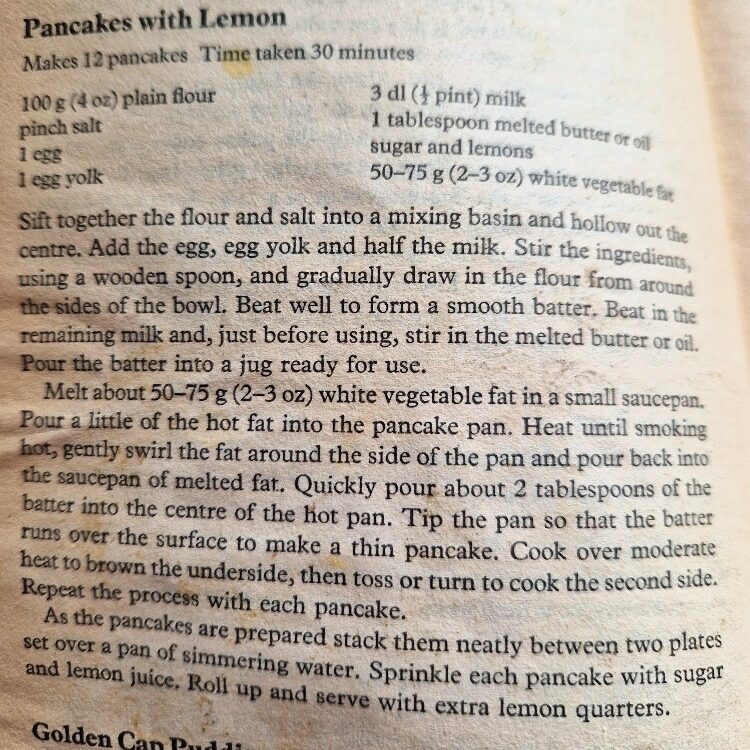
This is the recipe Bibi used and the one we use too – it can’t be bettered. It comes from one of Emily and Bibi’s favourite cookbooks and favourite cooks: The Times Cookery Book by Katie Stewart, now sadly out of print and the source of many family favourites. Emily was given this copy by Bibi when she went to university, and you can see how well used and how loved it is!
We love to have pancakes very simply with just a little lemon juice and a sprinkle of sugar – a warm pancake straight from the pan which is both sweet and sharp is truly a treat! But to make pancakes into a supper or indulgent breakfast treat you can fill or top with a vast range of options – whatever you personally like, really. We give ideas for some of our favourites at the end of this post.
You can make the batter ahead of cooking and keep in the fridge, just remember to get it out to warm up a little (20 mins or so) before you need it, and give it a good stir before using. We find the batter is nicer for some reason if you do rest it, so we always make ahead. Our top tip for cooking the pancakes is to use melted vegetable fat, or lard, as your cooking medium and to get it, and the pan, really hot (smoking, as Katie says) before adding the batter.

Jake sticks his nose in
The reason we use lard, or vegetable fat if preferred (as we do) or vegetarian, is that it can take on very high heat without burning. You can use oil instead, but don’t use olive – rapeseed, groundnut, grapeseed or sunflower are better for hot frying. Never use butter, it will burn. But vegetable fat or lard are the best!
Katie’s recipe says it makes 12 pancakes, but we have never managed to stretch it that far, even using a small pan and making quite thin pancakes. But the recipe below should be enough for about 8 or 9 pancakes.
**Our usual illustrated step-by-step guide will follow after we have made the pancakes on Pancake Day. But for now we wanted to get the recipe up so you can make them yourself on the day – do give them a try! And have fun flipping, our top tip is to get the pancake nicely brown and spotty on the underside – check by easing up a corner with a spatula – and then to shake the pancake right to the end of the frying pan before flipping… But if you are worried about ruining lots by tossing them into the air and missing, just flip over with a fish-slice or spatula.**
The batter is very easy to make. Start by sifting the flour into a large mixing bowl, then add a pinch of salt and stir to combine. Crack one whole egg into a small bowl, then separate the other egg and add the yolk, find out how in our egg Tip. Whip well with a fork. Measure the milk in a jug.
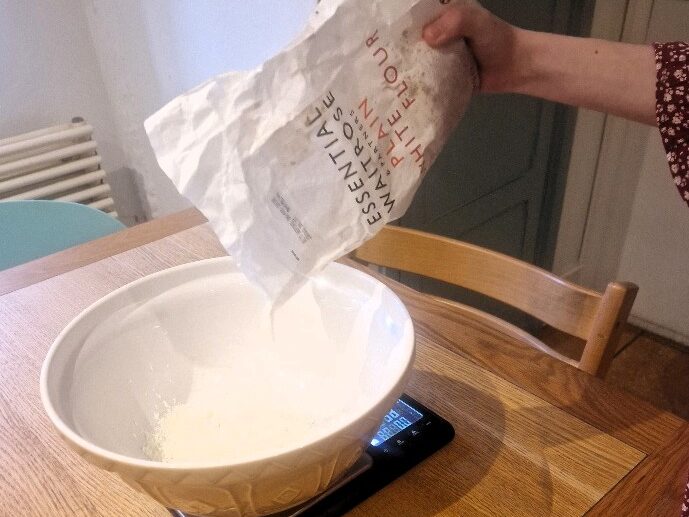
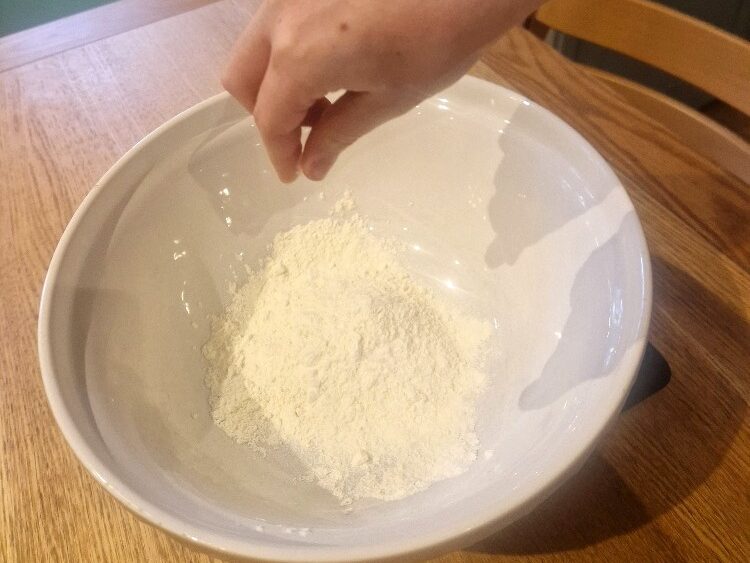
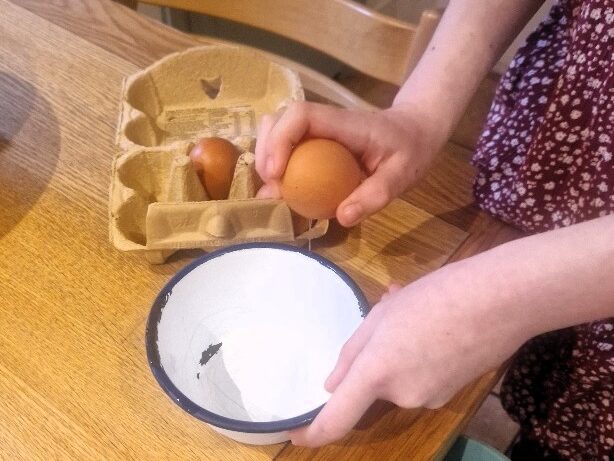
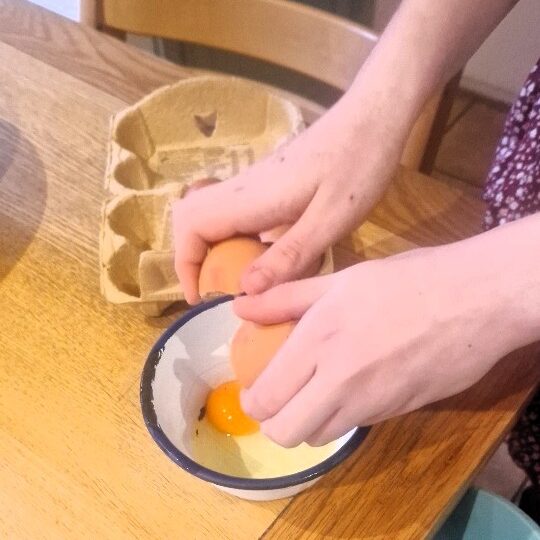
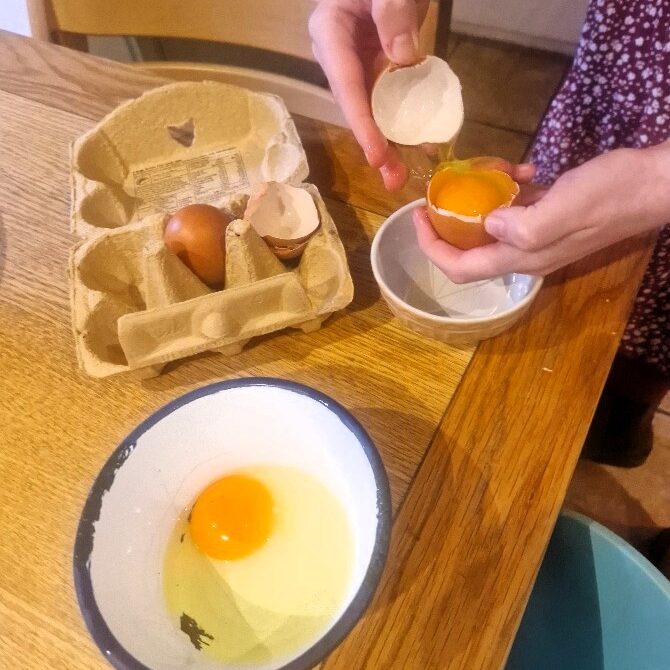
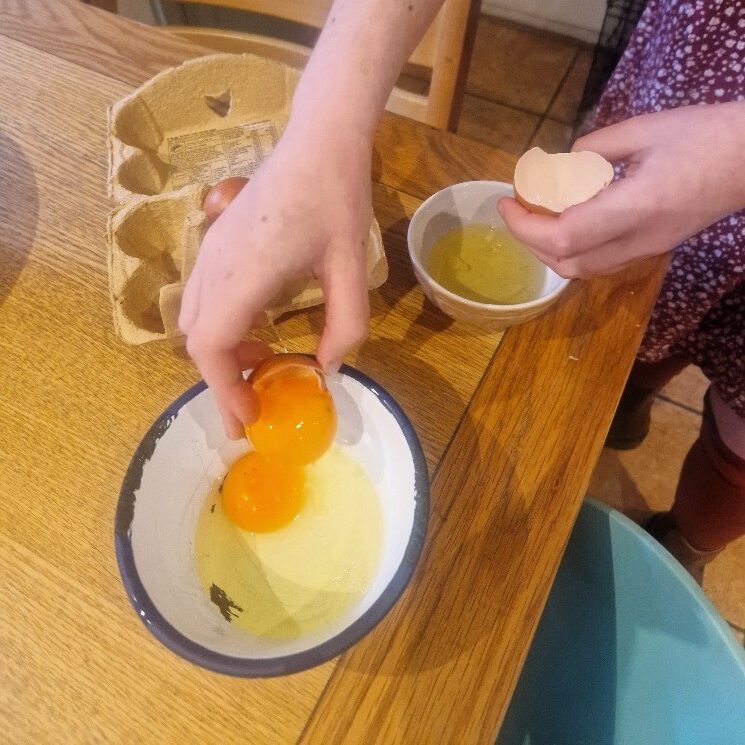
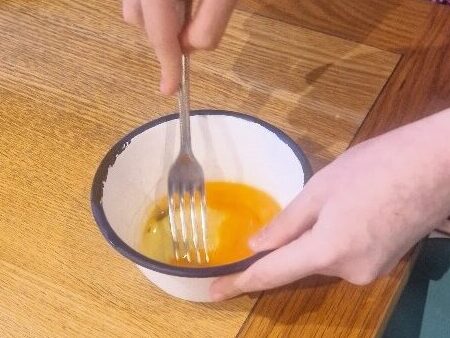
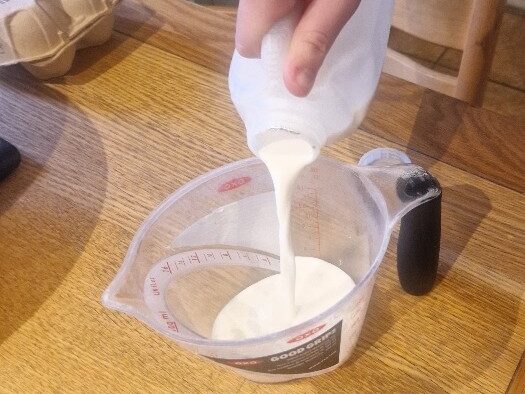
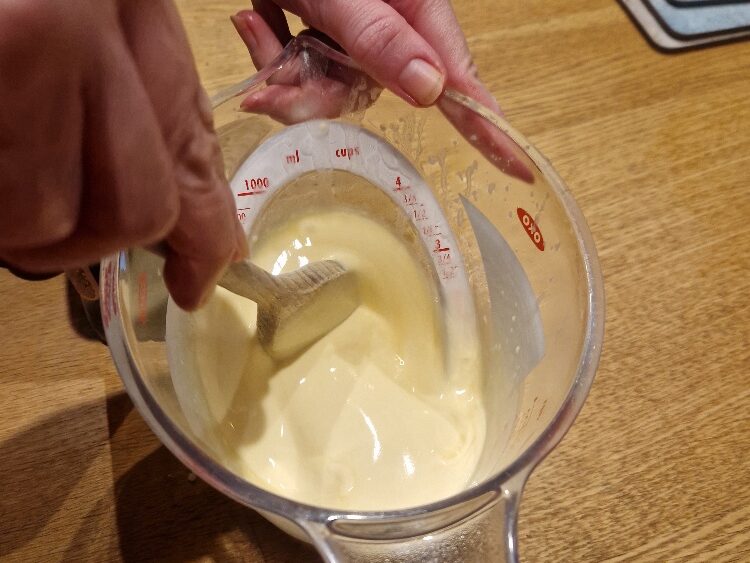
Next make a hollow in the centre of the flour and pour the egg mix into this, followed by half the milk. Beat well with a wooden spoon, drawing in the flour from the sides as you go, until you have a really smooth mixture.
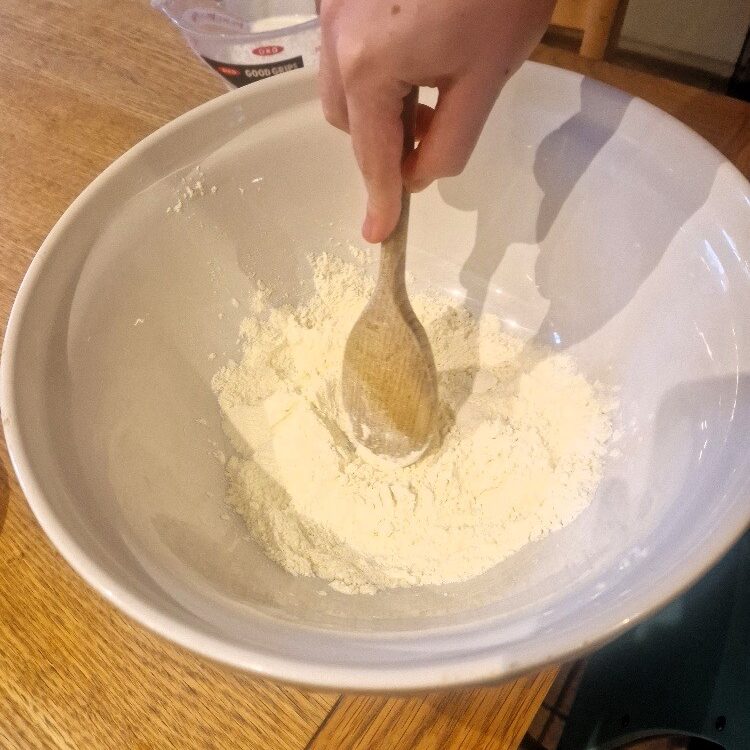
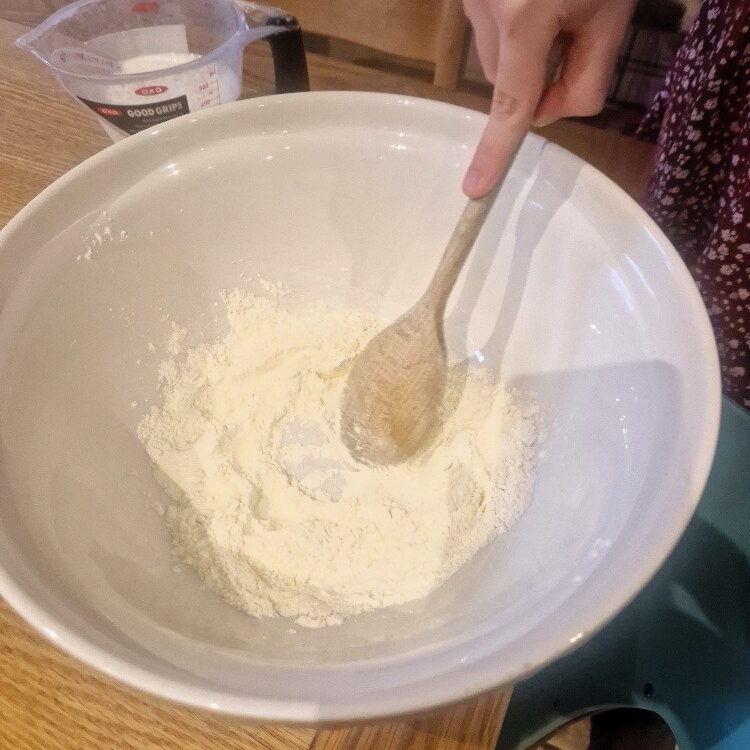
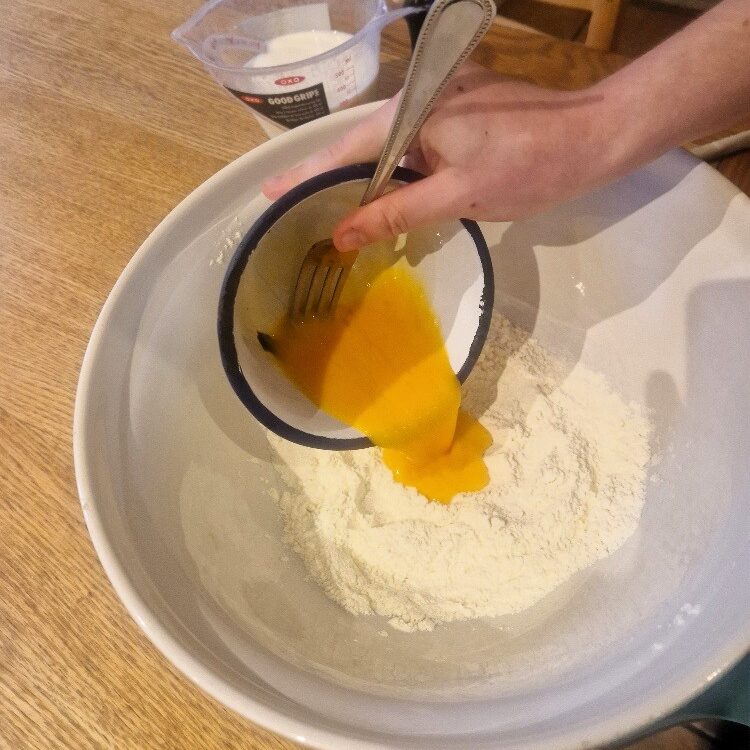
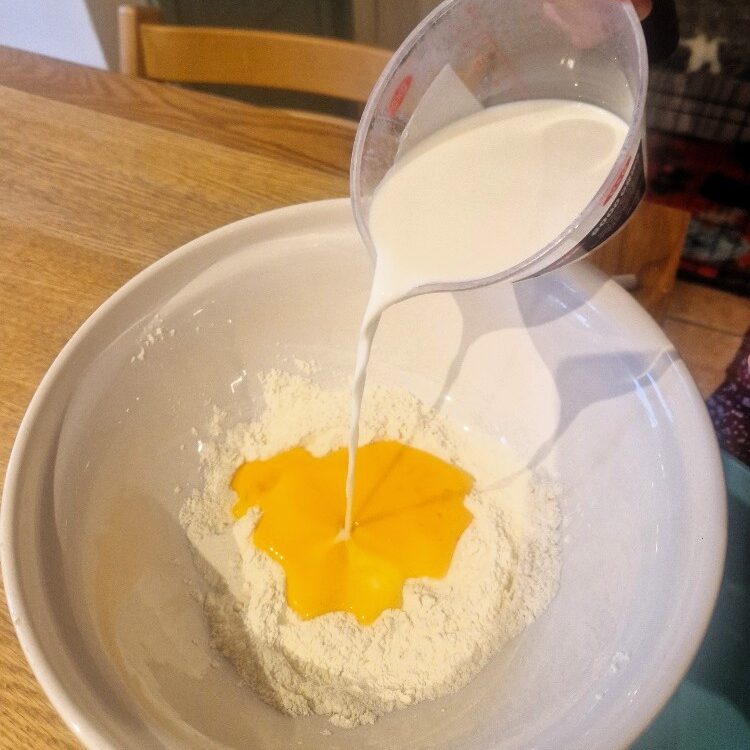
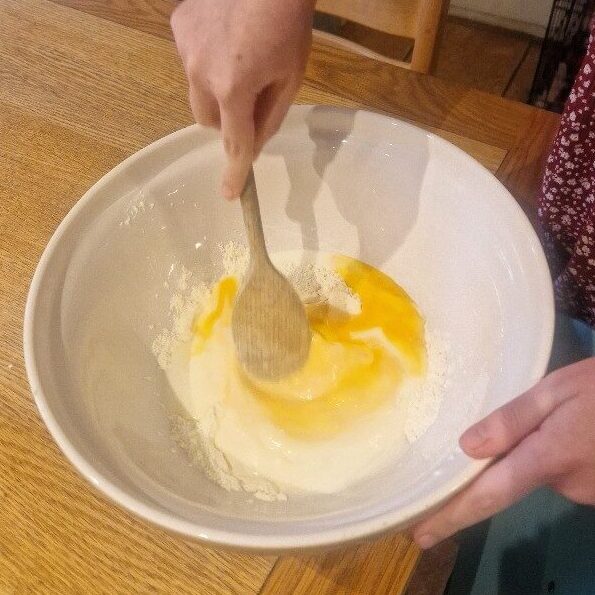
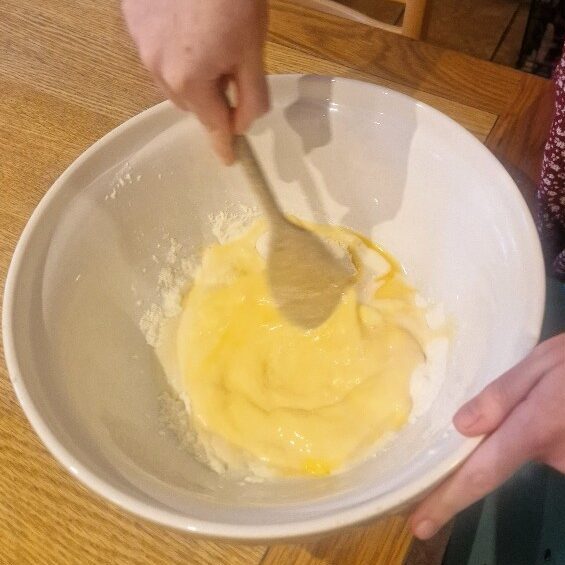
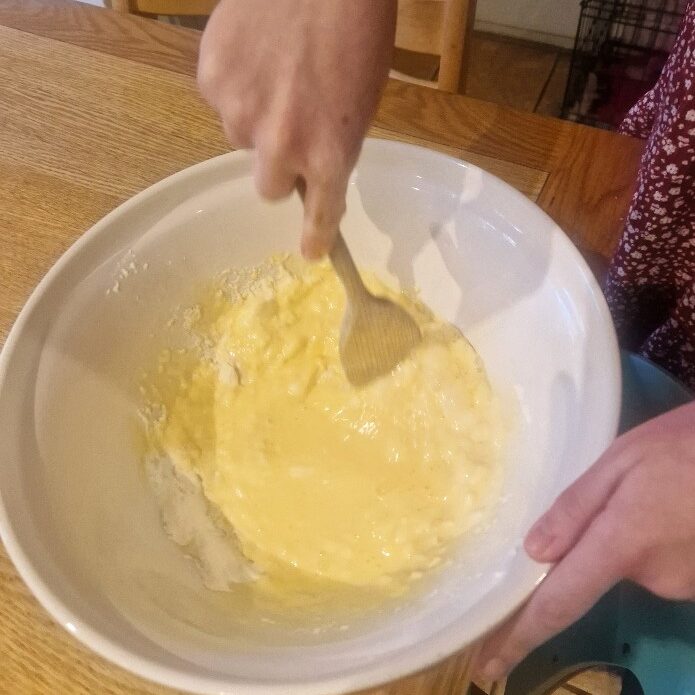
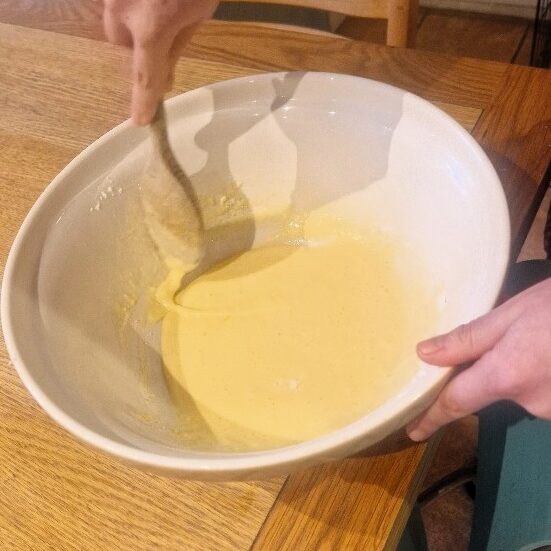
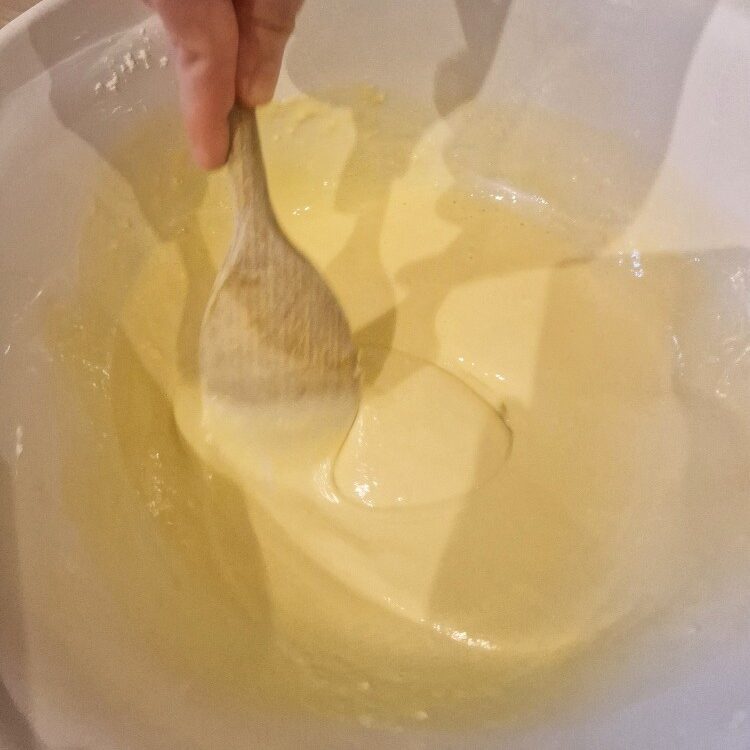
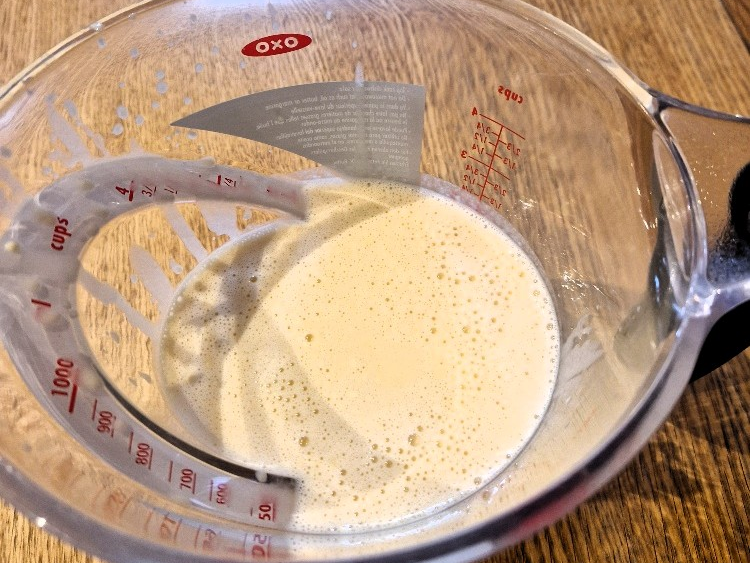
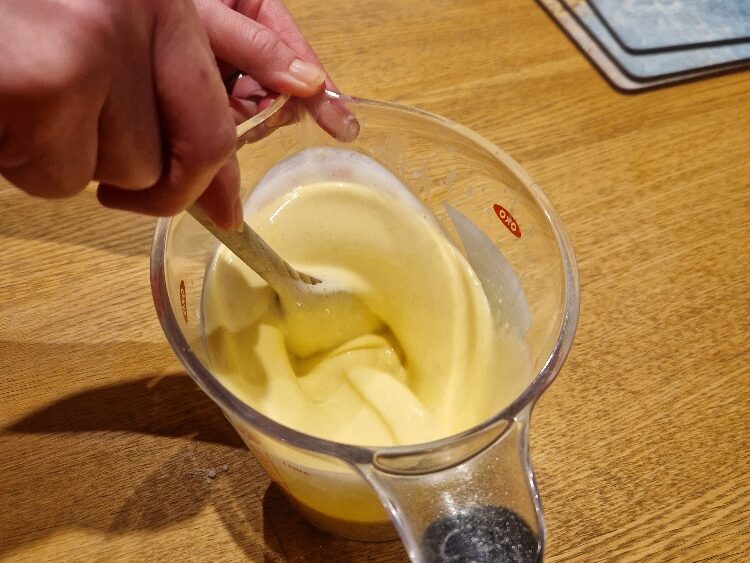
Next beat in the remaining milk. The resulting batter should be pourable, but still with some body – it should make a satisfying ‘gloop’ noise when beaten.
Jake sticks his nose in
Bibi used to say that you can tell when your batter is the right consistency by the noise it makes – she said it should sound like ‘horses hooves galloping’!
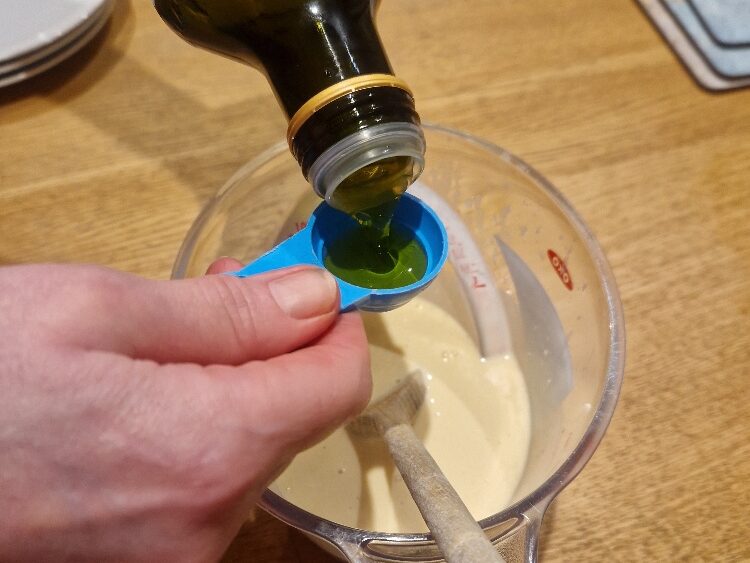
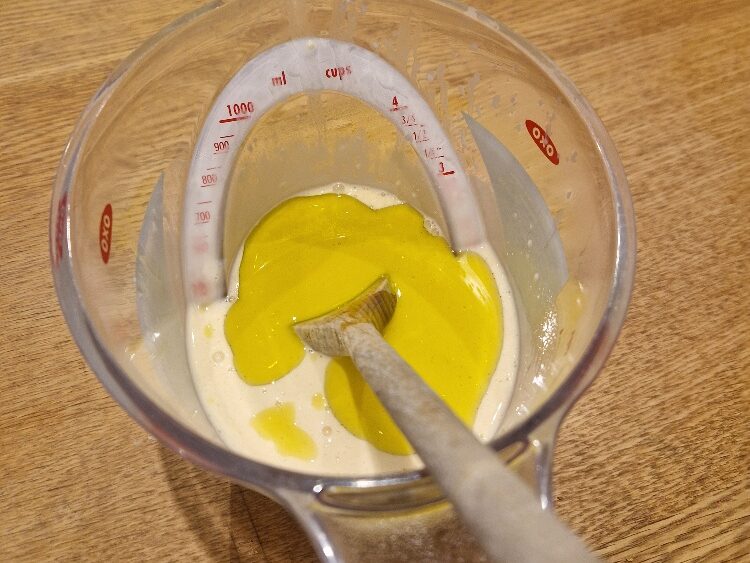
Set the batter aside for ideally at least 30 minutes in the fridge. We are not sure why, but resting does seem to improve it. Remove from the fridge about 20 minutes before you need it so it warms up a little. When you are ready to use it, stir in one tablespoon of oil or melted butter (we use olive oil) and give the mixture another good beat. Pour into a jug, which will make it easier to use.
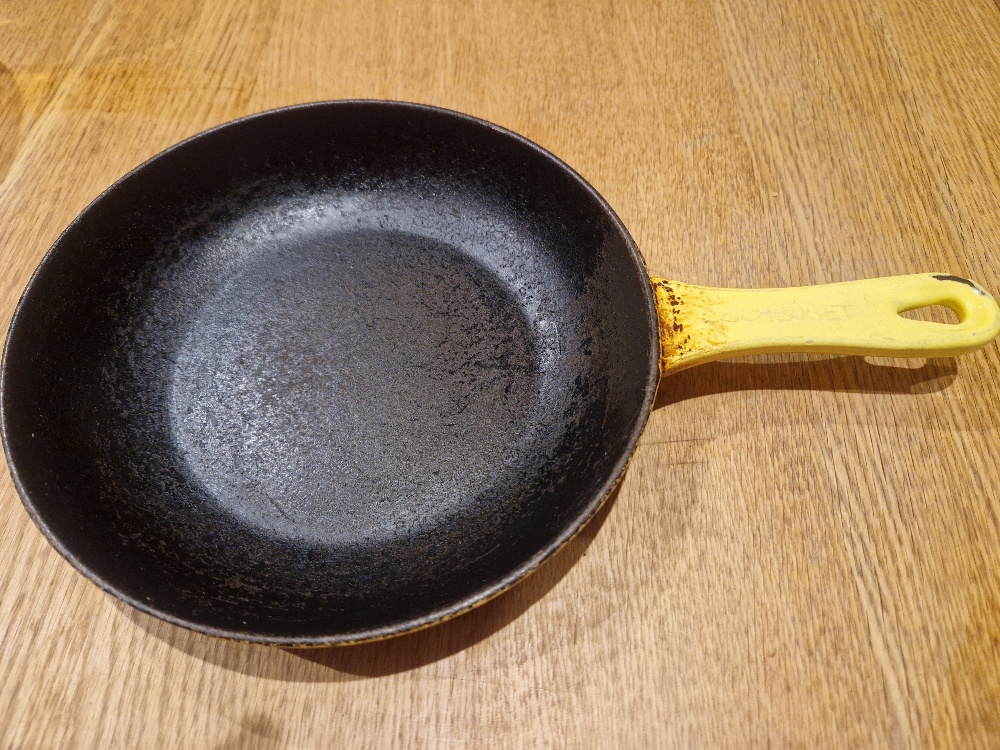
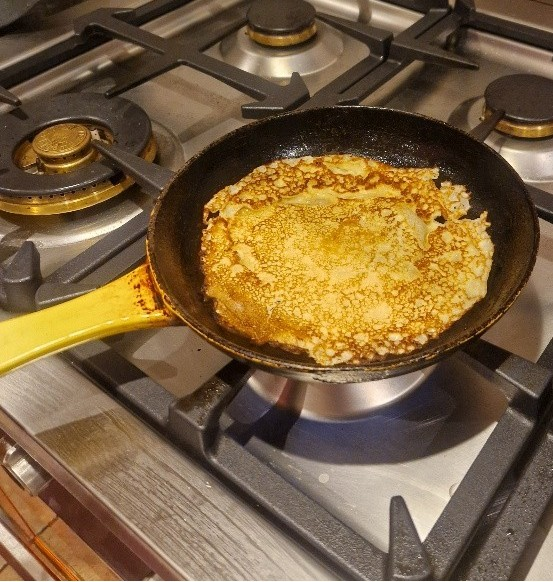
The best pan for making pancakes is one with shallow sides. We also find a small pan is best, which means the pancakes are easier to toss or flip. A heavy iron pan is best, like the one shown below but whatever small frying pan you have is fine. When you are ready to cook, melt the vegetable fat or lard in a small saucepan and keep over a low heat.
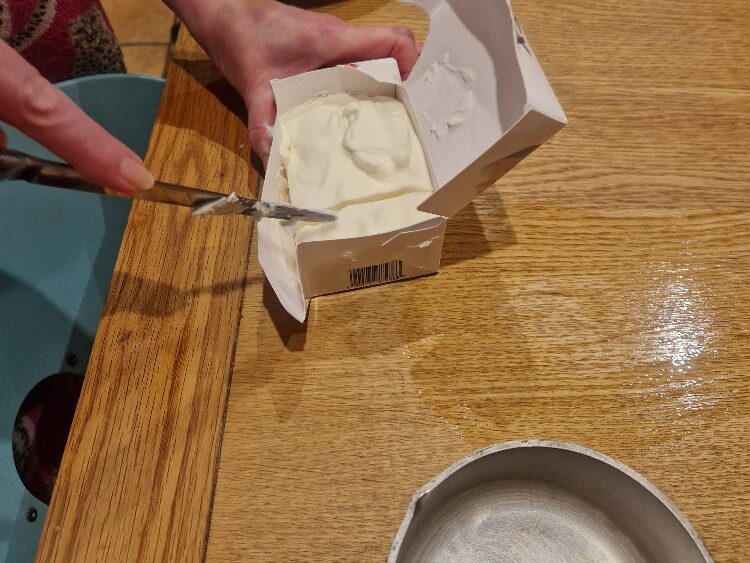
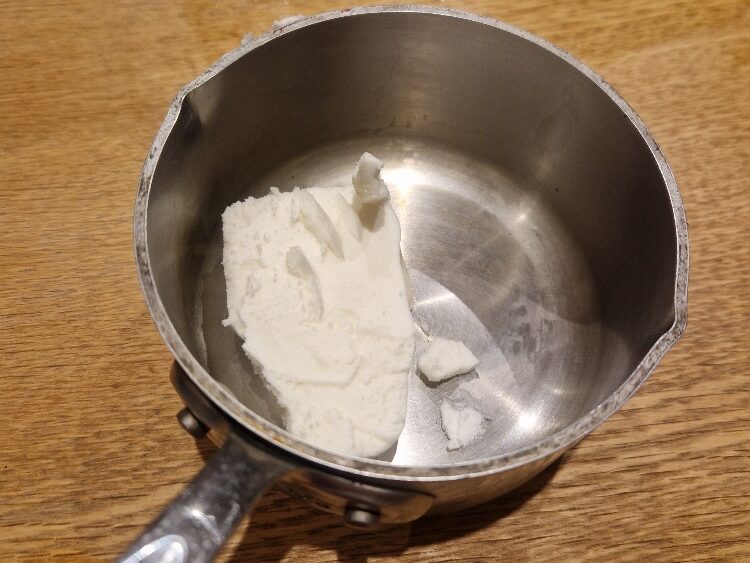
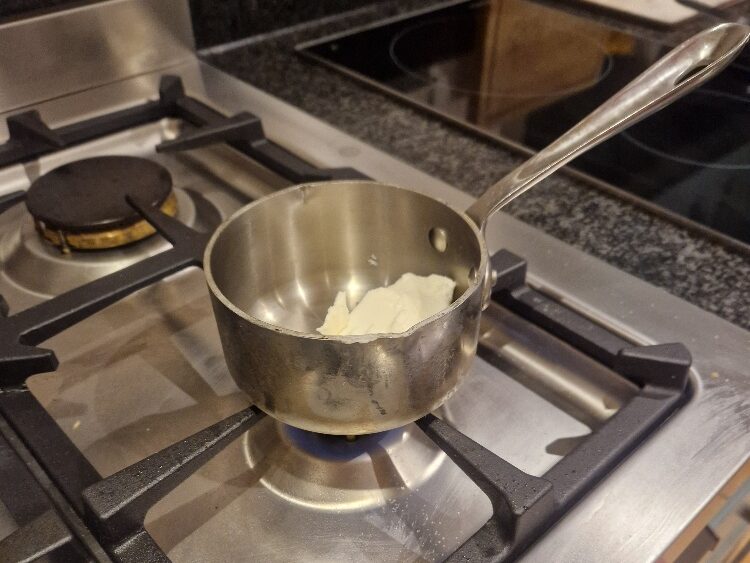
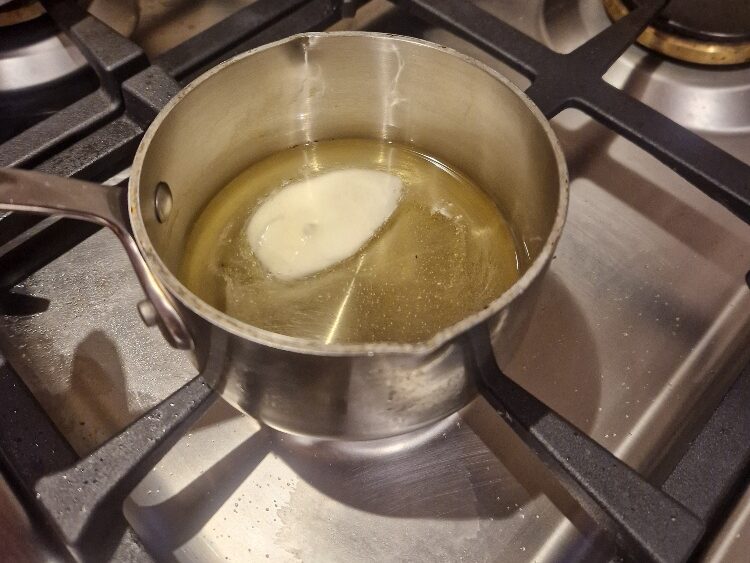
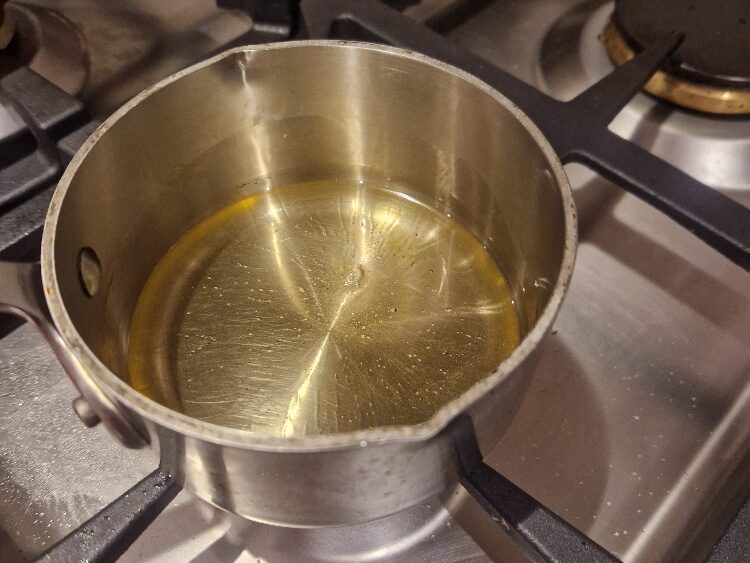
Then add a little of the hot fat to your pancake pan, and place over a high heat, swirling the pan to really coat it with the fat. When the frying pan is well coated, pour the excess fat back into the saucepan. This is a top tip – you want the pan well-coated but you don’t want too much fat in it. Too much fat will make the pancake greasy, but also cause it to cook unevenly – you want it to sear on the hot metal for a golden brown finish, not fry in lots of fat.
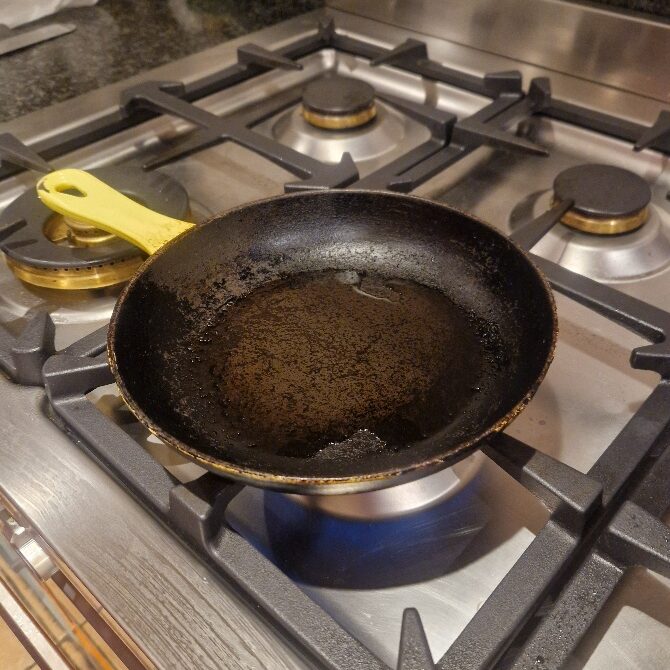
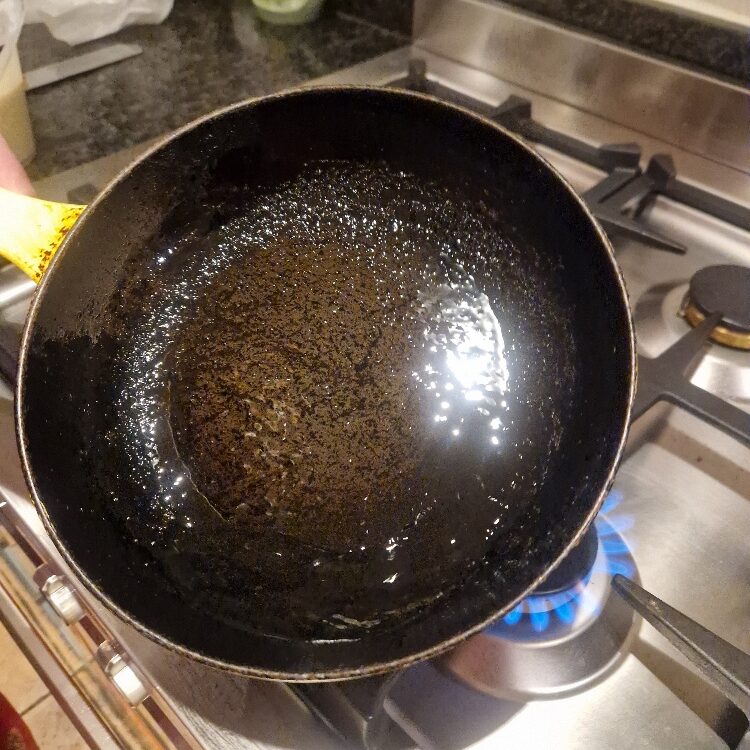
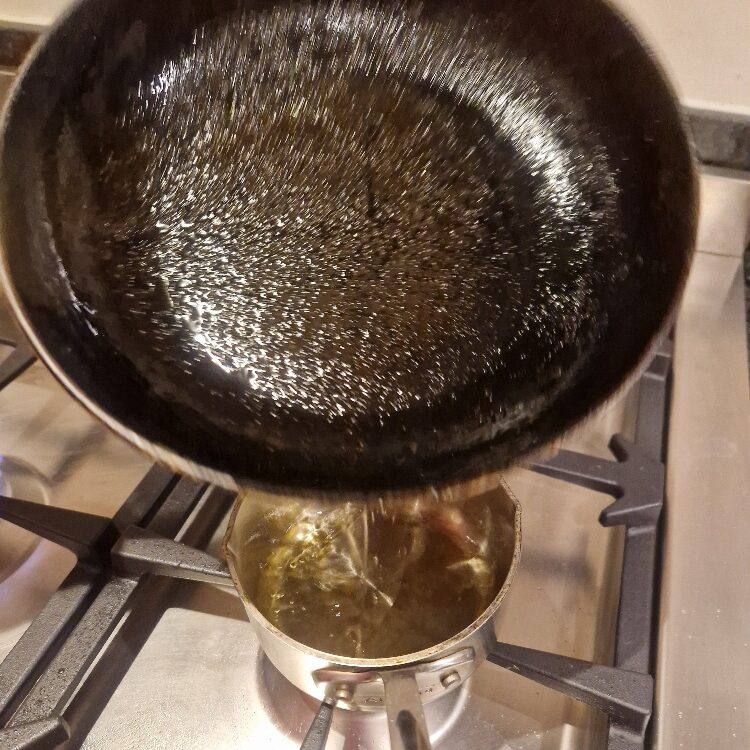
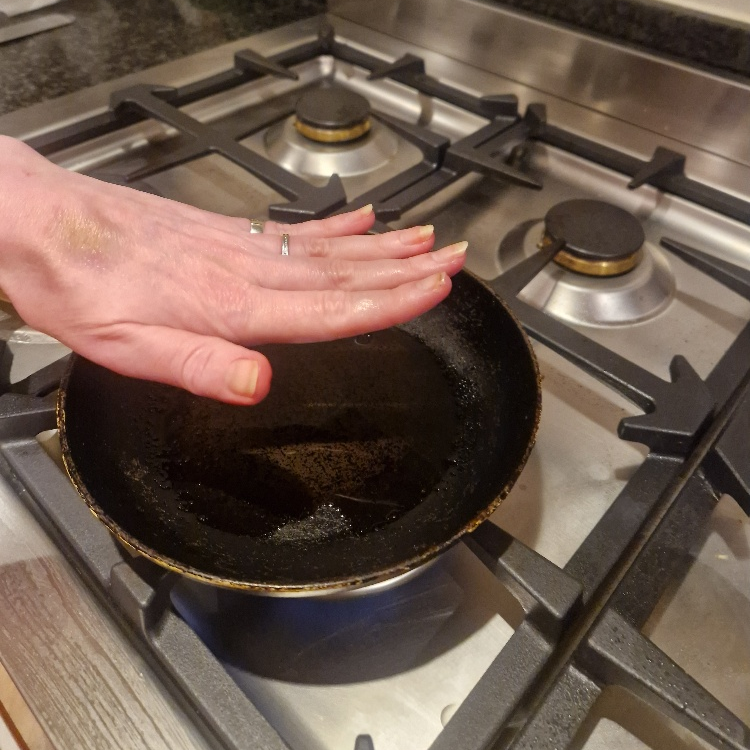
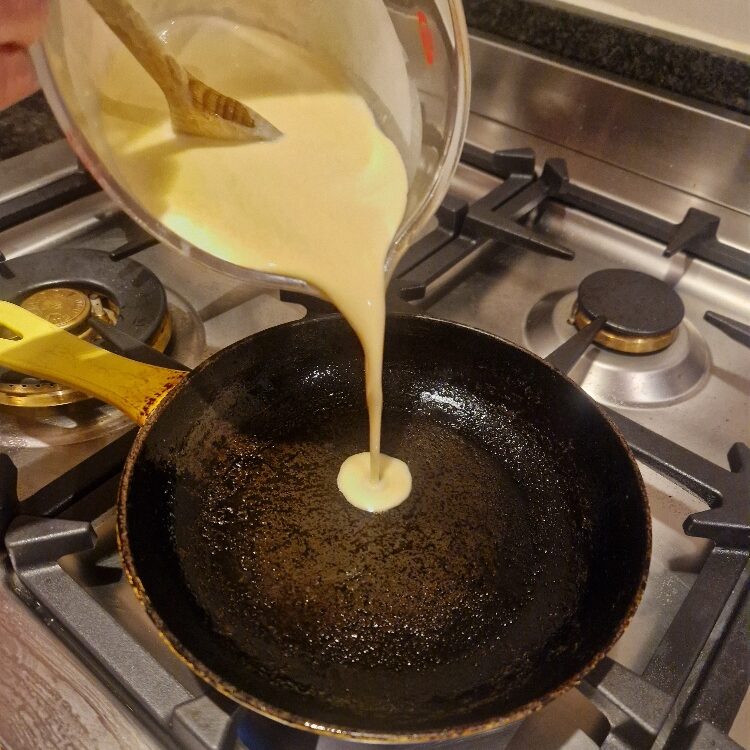
When the pan is really hot – smoking hot, you should be able to see the heat trails rising plus feel the heat with your hand – quickly add about two tablespoons of batter to the pan and swirl slightly to coat the bottom. Do not make the pancakes too thick or they will be stodgy and difficult to cook evenly. Leave the pancake without touching it until it looks like the bottom is firming (a minute or so) then shake the pan to stop it sticking – when it moves freely on the bottom of the pan and has a golden, lacy brown look (check by lifting up a side with a spatula) you are ready to flip it over.
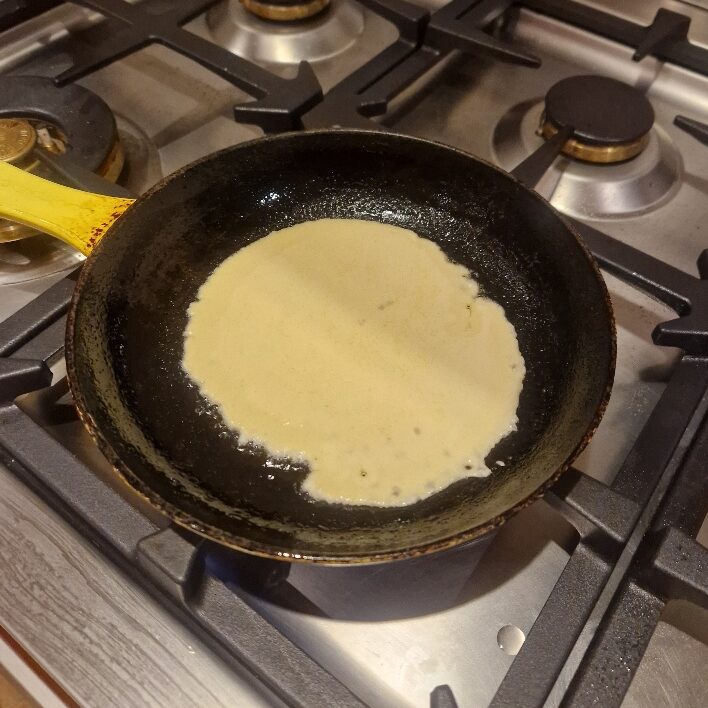
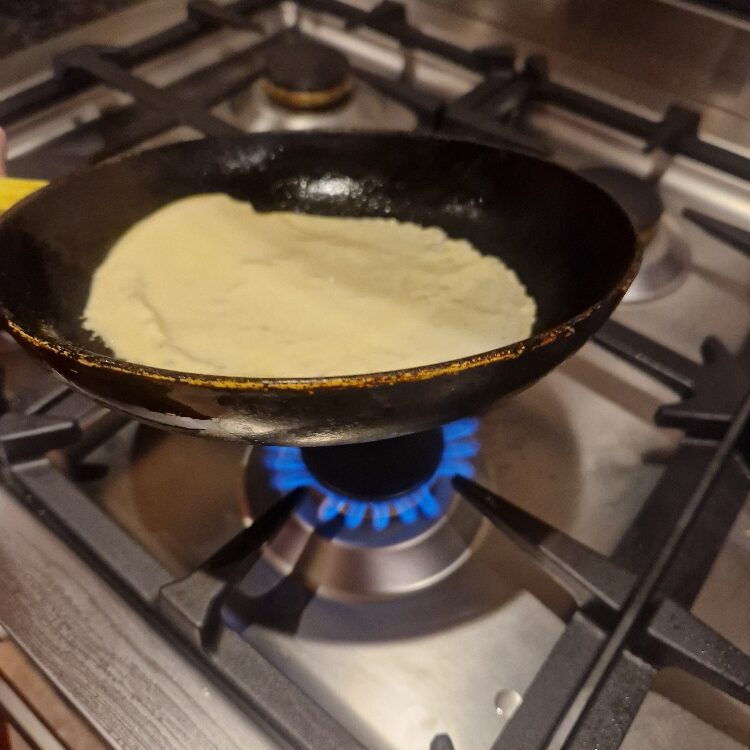
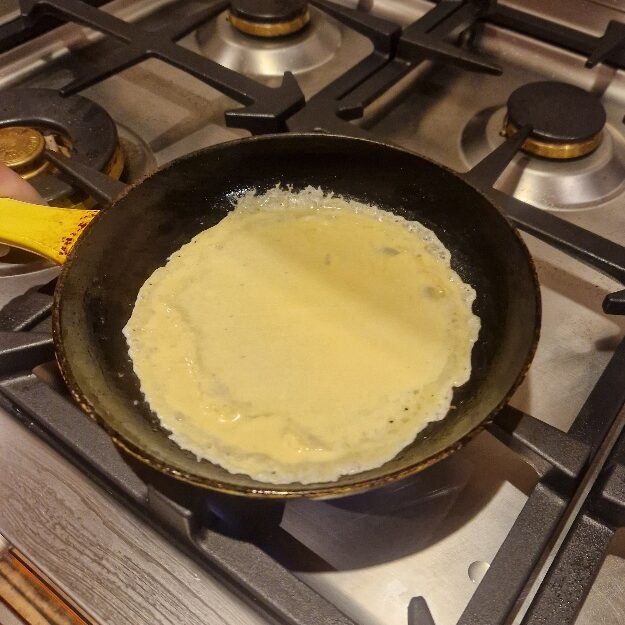
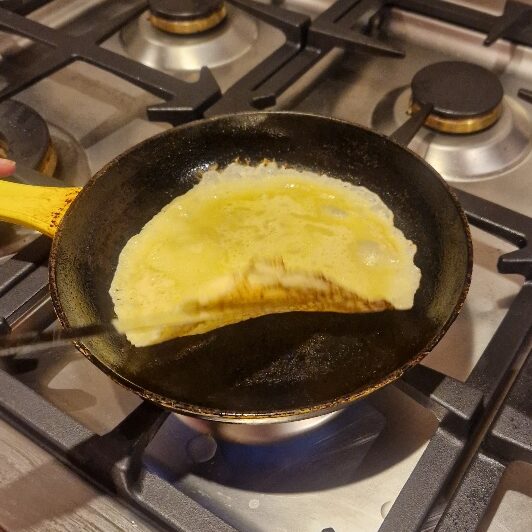
The ‘safest’ way to flip a pancake is to lift it over with a spatula or fish slice, being careful that it doesn’t fold onto itself on the uncooked side or it will stick. And if you want to do it this way, it will work great – we show this in the images below. But is it not as much fun as tossing them! Be brave and give it go – if you get it right it is very satisfying! And if you don’t, so long as you didn’t drop it on the floor it will probably still taste great. And you have plenty of batter so just make another one!
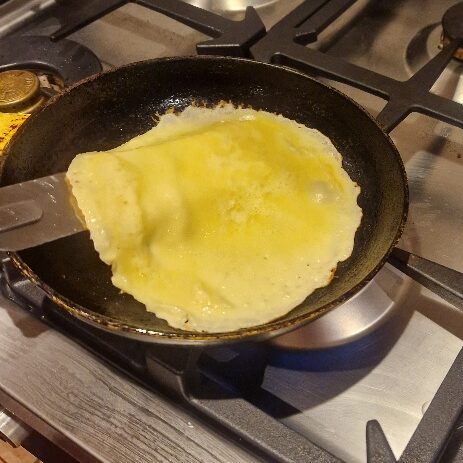
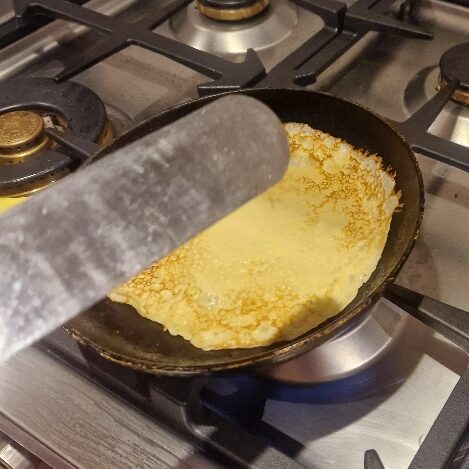
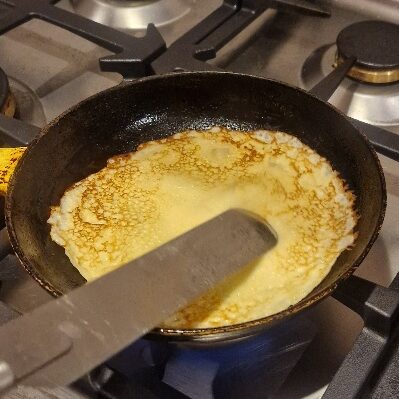
Our best tip for tossing pancakes is to shuffle the pancake to the very end of the pan by tipping the pan forward – get it as far as you dare, it should be hanging over the edge, see the picture below. Then flip firmly up and slightly towards yourself to turn the pancake over and catch it again in the pan. See your short video below. The idea here is not height of throw – quite the reverse, you want to flip the pancake just slightly up and back on itself. Forget any comedy images of chefs throwing pancakes high into the air – this is a small, controlled movement.
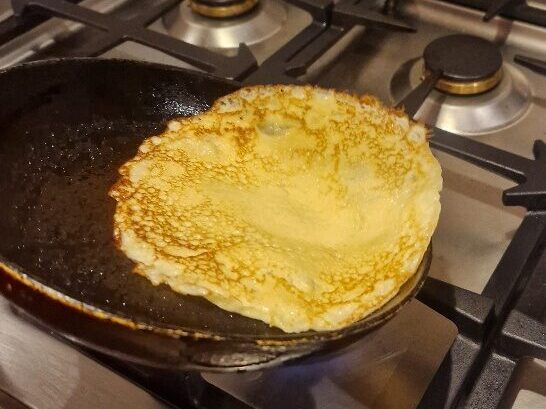
Cook the pancake just a little longer until the underside browns slightly – this will be much quicker than with the first side, much less than a minute. Serve the pancake immediately, or keep warm. To do this, either stack and keep under a clean tea towel or two (as we do), or follow Katie’s advice and stack between two plates over a pan of simmering water if you want to keep them really hot.
Jake sticks his nose in
It is a rule of hot frying that your first pancake will be by far your worst – your pan will be the least hot; you won’t get the quantity of batter quite right; and your technique will be the least confident. Don’t worry! Regard your first one as a test pancake and share as ‘chef’s perks’. Your next ones will be much better!
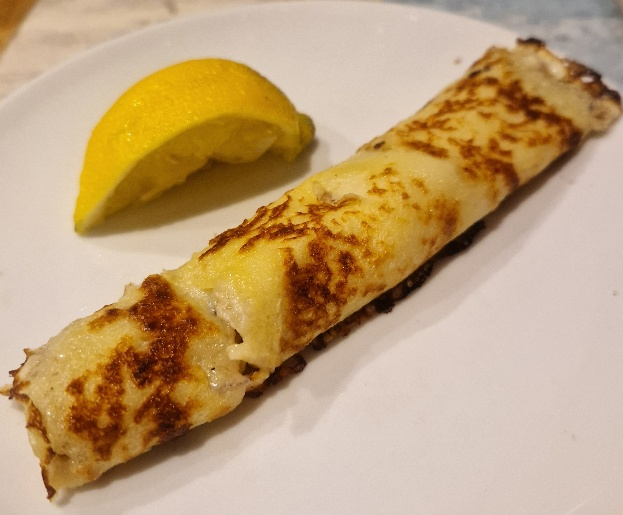
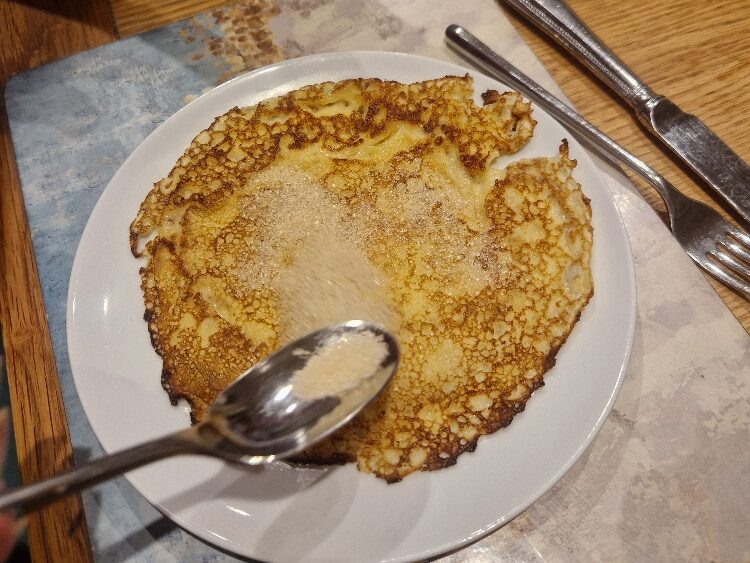
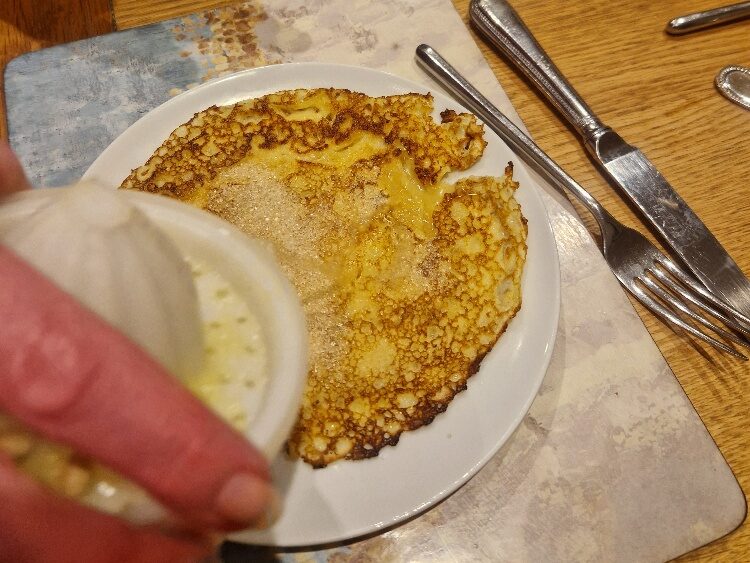
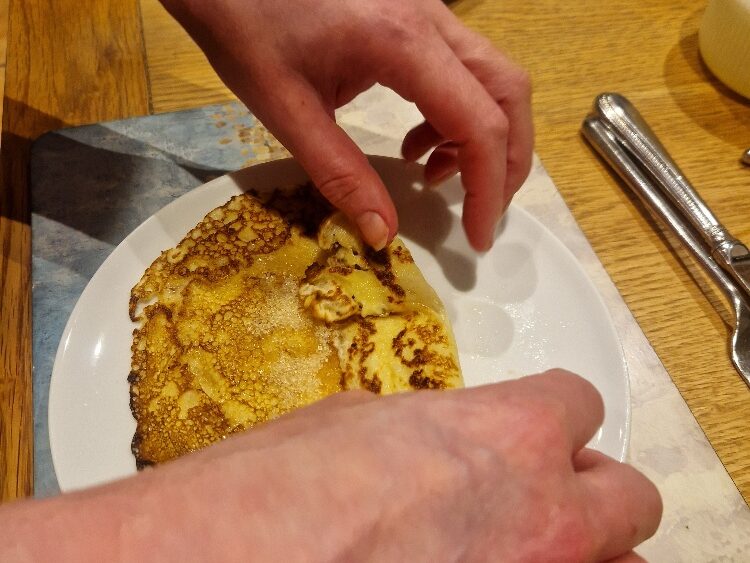
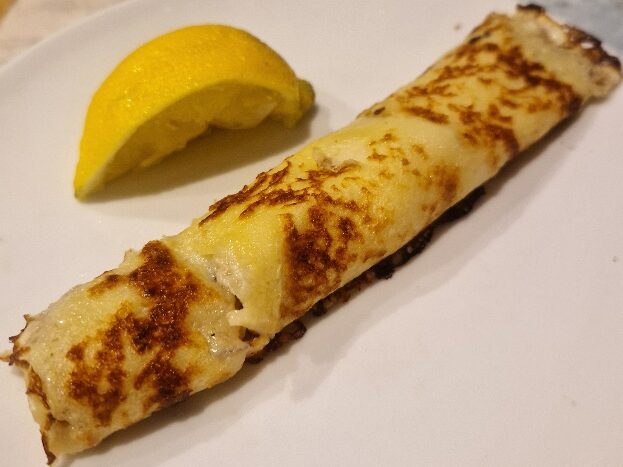
Serve with the topping or filling of your choice – see some ideas below. We like pancakes very simply with lemon and sugar. Slide the pancake flat onto a plate, sprinkle with caster or light brown sugar, then add a little lemon juice. Roll the pancake up and serve with a lemon wedge to add more juice if you like.
Have fun and enjoy!
Ideas for fillings & toppings
- Lemon & caster or light brown sugar
- Chocolate, hazelnut or Biscoff spread
- Whipped cream & fruit e.g. strawberries, blueberries or raspberries
- Peanut butter & banana
- Maple syrup
- Maple syrup & bacon
- Grated cheese (cheddar or Gruyere are good) & ham
- Spinach & ricotta
- Salmon & cream cheese
- Mushroom & herbs
Pancakes & Various Fillings
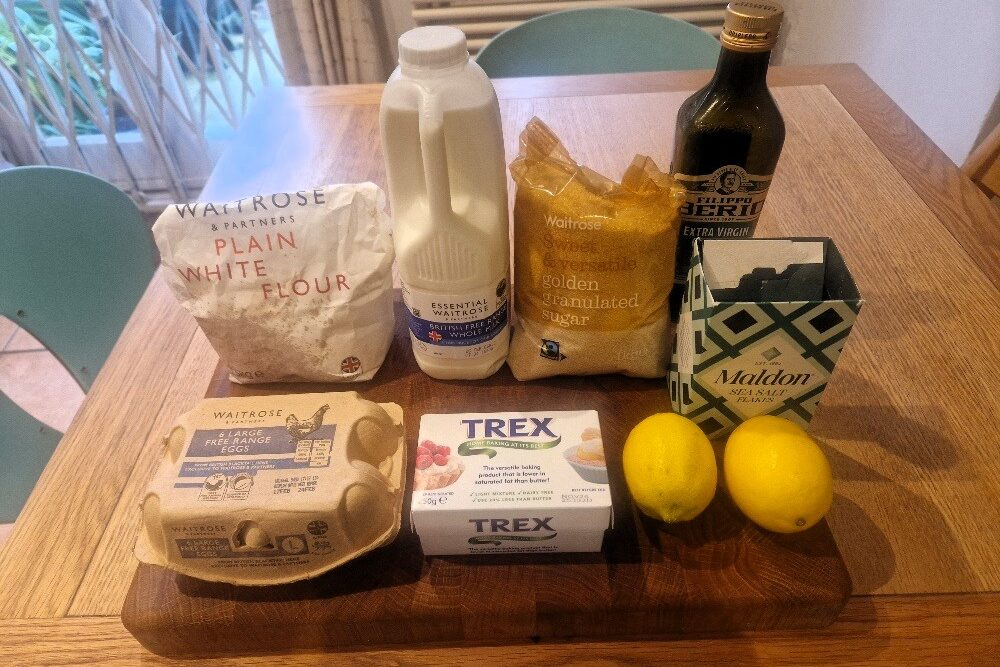
Ingredients
Equipment
Method
- Sift the flour into a mixing bowl and add a pinch of salt. Mix to combine. Make a hollow in the centre, and add the egg, egg yolk and half the milk. Stir with a wooden spoon, drawing in the flour from the sides of the bowl, and beat well to form a smooth batter. Beat in the remaining milk. Set aside in the fridge until needed, ideally resting for at least 30 minutes.
- Allow the batter to come back to room temperature, about 15/20 minutes, Just before using, stir in the oil or melted butter. Stir again well to combine. Pour the batter into a jug ready for use.
- Melt the vegetable fat or lard in a small saucepan. Pour a little of the hot fat into the pancake pan and set over a high heat until smoking hot. Gently stir or swirl the fat around the sides of the pan and pour any extra fat back into the saucepan.
- Quickly pour about 2 tablespoons of the batter into the centre of the hot pan. Tip and swirl the pan slightly so the batter fills the surface to make a thin pancake.
- Cook over a medium heat until the underside is browned – it should be speckled with lacy brown lines when ready. Then toss or flip with a spatula to cook the second side. Repeat the process for each pancake.
- Keep the pancakes warm if not serving immediately one by one (as we normally do). To keep warm, stack and cover with some clean tea towels. Or stack between two plates over a pan of simmering water, as in Katie's original recipe, to keep them really hot.
- Serve with your chosen filling. We like to sprinkle with sugar and a little lemon juice, rolling them up and adding extra lemon quarters to serve.
- Flip and enjoy!