

When Estella was little, Emily told her that Bibi would sometimes make her bacon ‘with a big pile of beans’ as a treat because she loved both bacon and runner beans. Estella then started to ask for ‘a big pile of beans’ for dinner!
We still love runner beans, and still sometimes serve them with bacon. But more often, we now have the ‘big pile of beans’ with some simply baked fish. You can bake most fish this way, but we usually do salmon trout – a favourite fish – or salmon. You can’t always find salmon trout (also sold as loch trout) – it’s basically a pink-fleshed trout that looks like salmon, but has a milder taste that we prefer. But salmon itself is ubiquitously available, and almost as good. We used it today as we couldn’t find the loch trout.
You can bake the fish very simply, just with a little oil in foil. But we like it with some lemon and jalapeños. The lemon makes the fish juicy, and cuts through the oil; the jalapeños add a subtle kick of heat that doesn’t overpower the delicate fish. You’ll need about one lemon, ideally unwaxed, and one jalapeño per fish fillet. Cooking the fish in foil both locks in the juices, and means you have an easy no-mess, no-smell fish dish – a bonus. Try it – you may not want to cook fish any other way!
Runner beans are best in the UK season, which is broadly July to October. If you can’t get them, you can use any long flat bean such as helda beans or stringless beans. You can steam or boil them – we boil. Then serve them topped with a generous knob of butter. It’s a very low effort light meal, and a lovely simple summer supper.
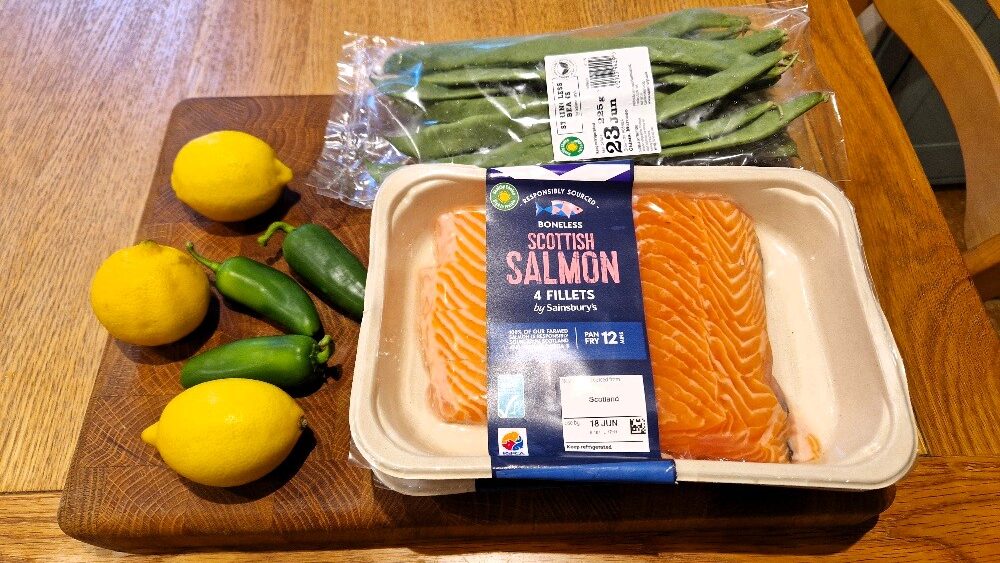
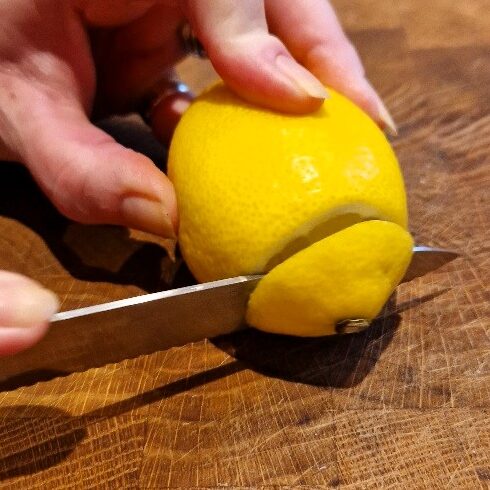
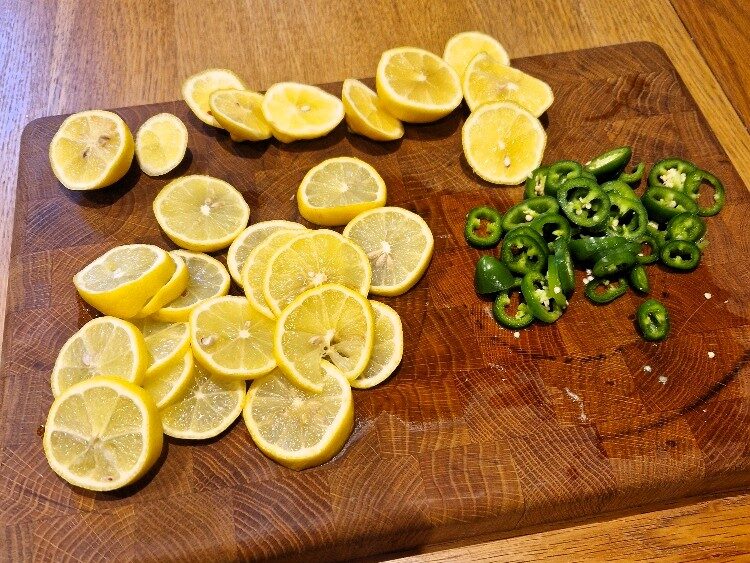
First slice the lemon into thin rounds. Reserve both pointed ends.
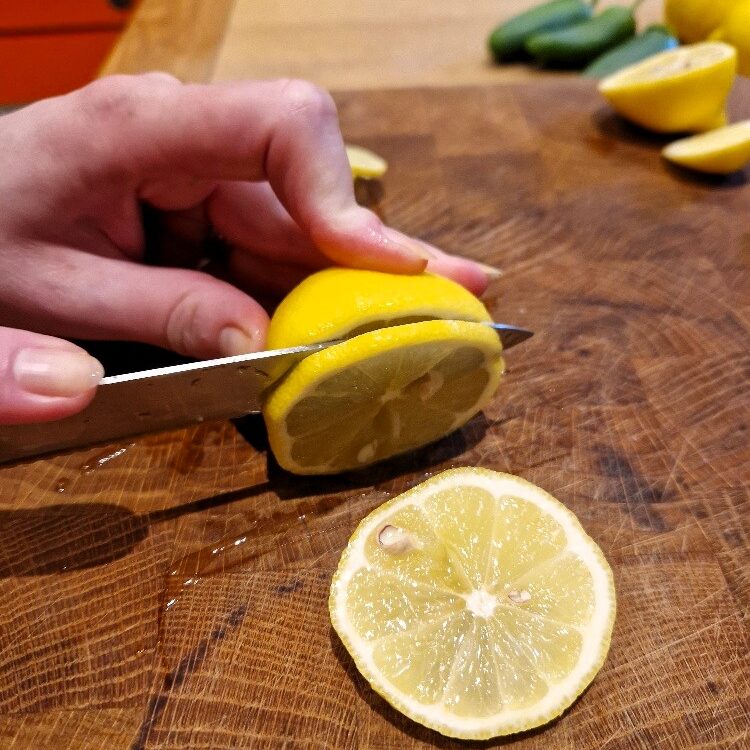
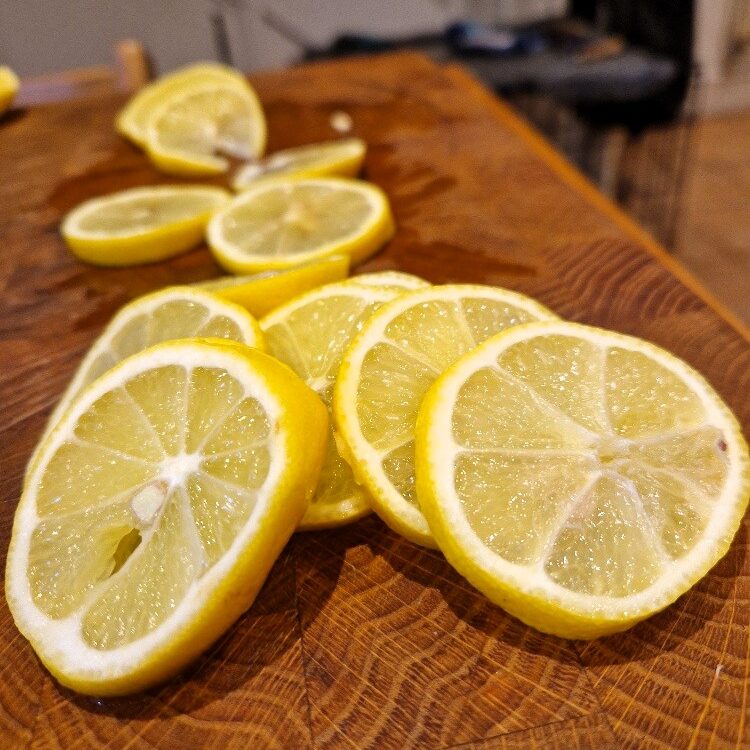
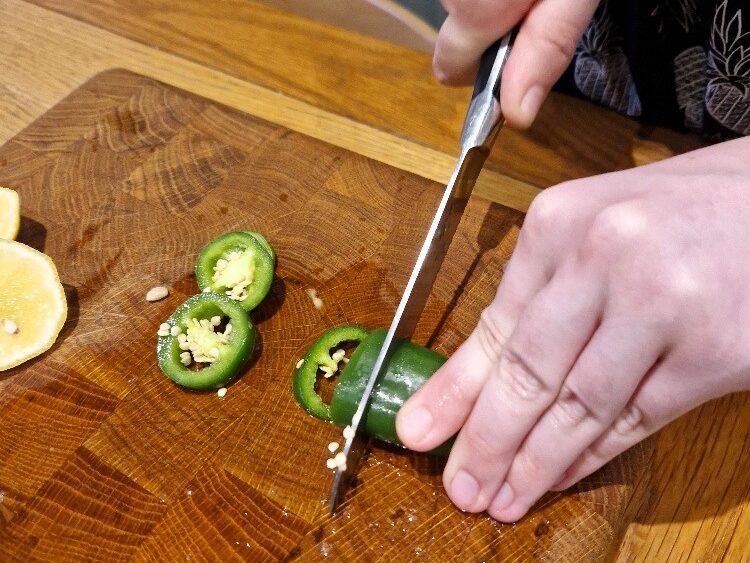
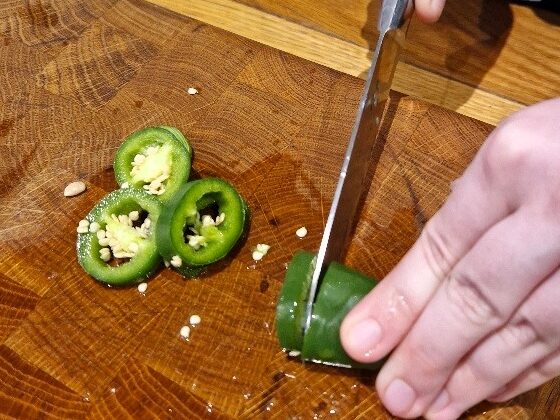
Next top & tail the jalapeños, then also slice into thin rounds. If you can’t find jalapeños, any large mild green chilies will do.
How much fish you need per portion depends on both the size of the fillets, whether you are serving with any additional vegetables, and your appetite! One fillet per person makes a light lunch or supper; two fillets each is a more generous serving.
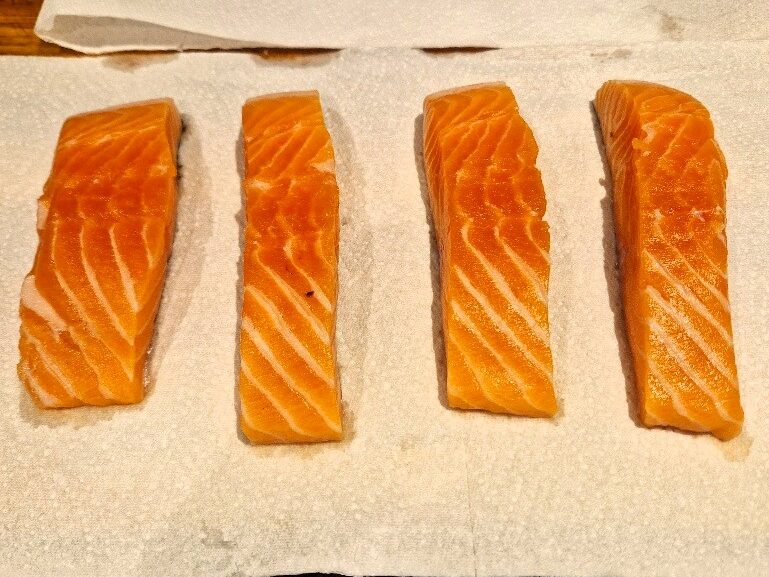
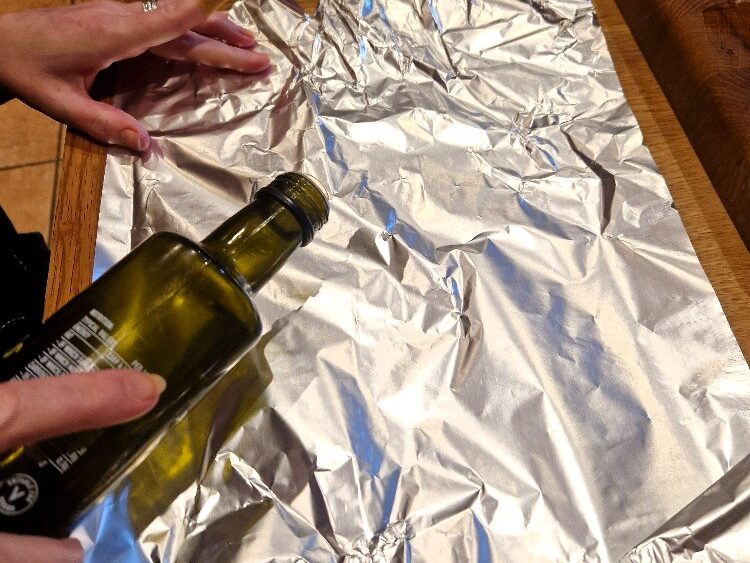
You can wash the fish if you prefer, but it shouldn’t need it and can make it too wet. We just tend to pat it dry on some kitchen towel, and cut off any excess skin or dark areas if needed. If you are using a bony fish, you may want to also look out for any pin bones and remove them. Our fish today was quite clean, and didn’t need much attention. Rip a large piece of kitchen foil, big enough to fully wrap the fillet, and moisten it with a little olive oil.
Jake sticks his nose in
We like olive oil with fish, as the flavours pair well. But it needn’t be a very expensive one – in fact, virgin oils are a bit of a waste here. You can also use any other cooking oil you prefer. Or butter.
You are now ready to assemble the packets for your fish with a big pile of beans! We normally wrap each fillet individually, and we do recommend this. However, today we were making a large batch of fillets (8, to serve 3 people, with leftovers for lunch the next day). So we decided to wrap them in pairs to save space. With hindsight, this was a mistake – the fish did not cook as evenly as normal. It was still lovely, but next time we will go back to wrapping individually, and suggest you do too.
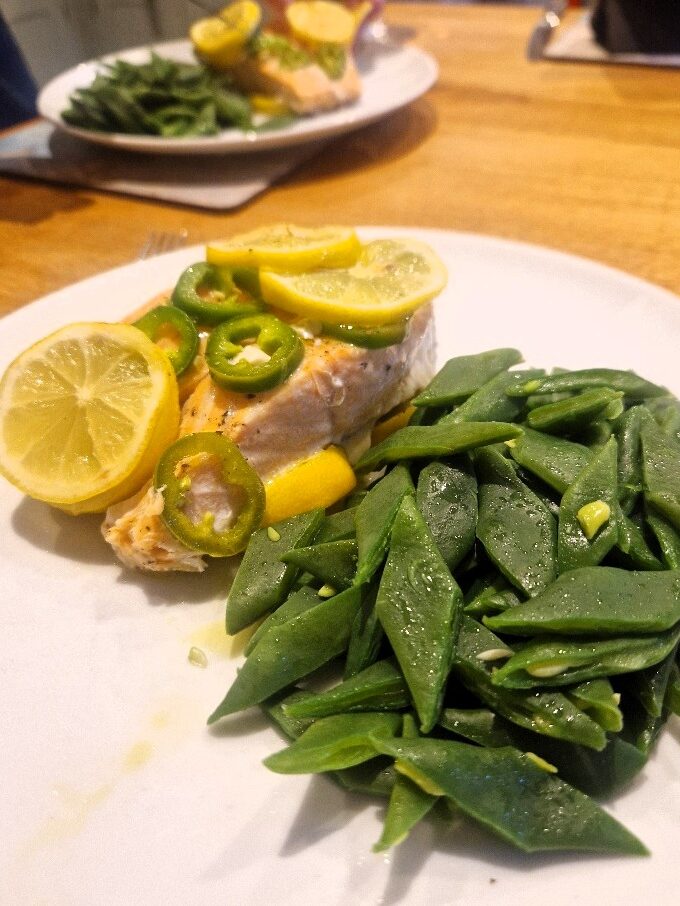
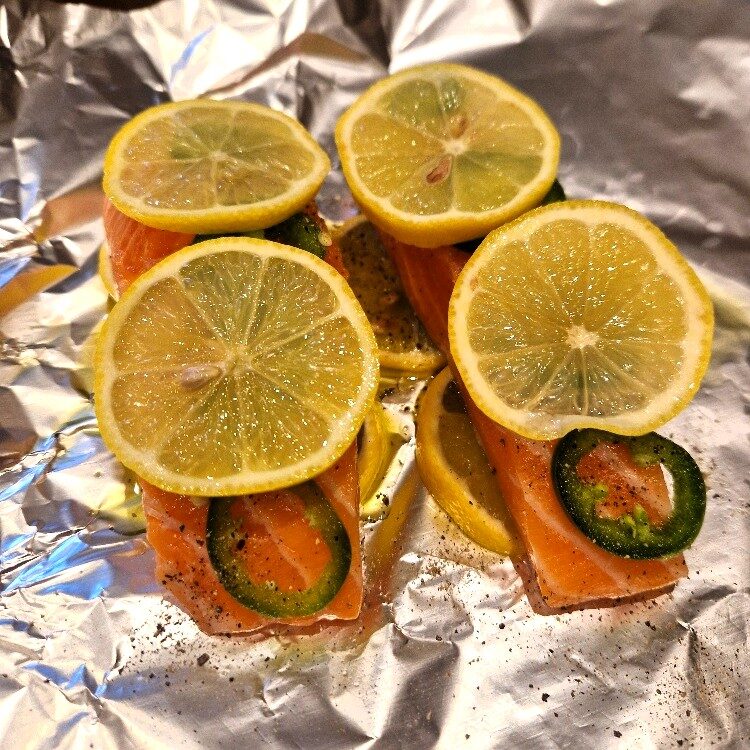
First place one or two slices of lemon per fillet centrally on the oiled foil. Place the fish on the lemons – if your fish has skin, put it skin side down. Top with a few jalapeño slices, to taste. We like it a little spicy so use quite a few slices per fillet. Season with a little black pepper.
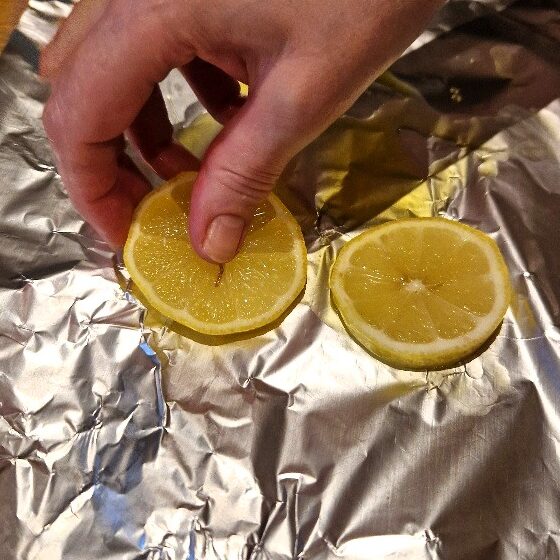
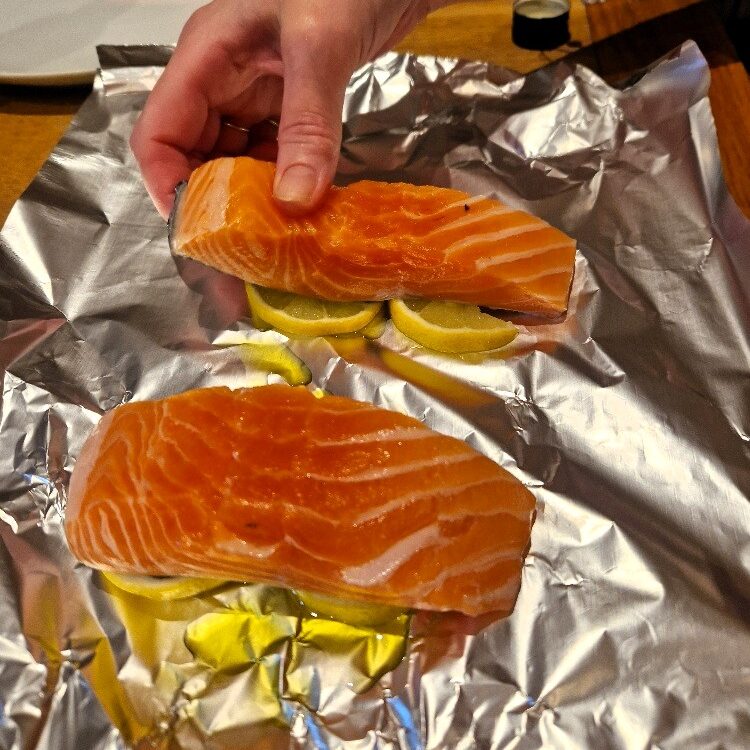
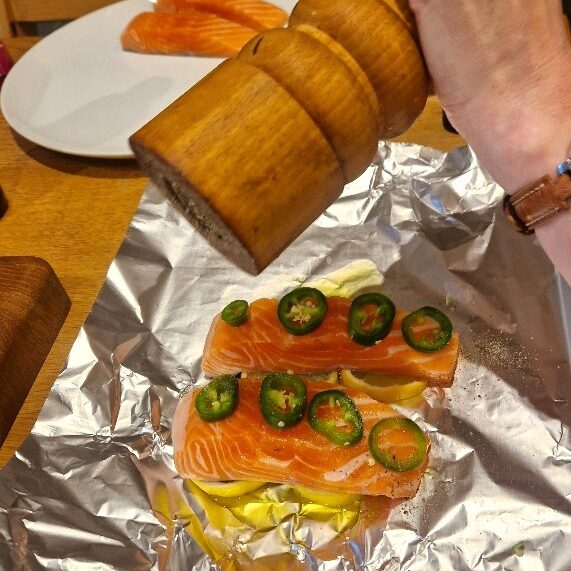
Top with more lemon slices, then squeeze over the juice from the reserved lemon ends. Add another small drizzle of olive oil.
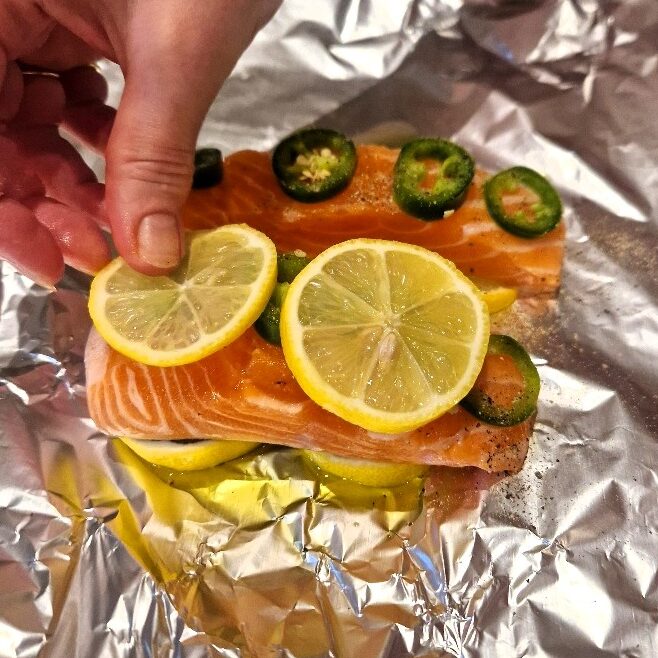
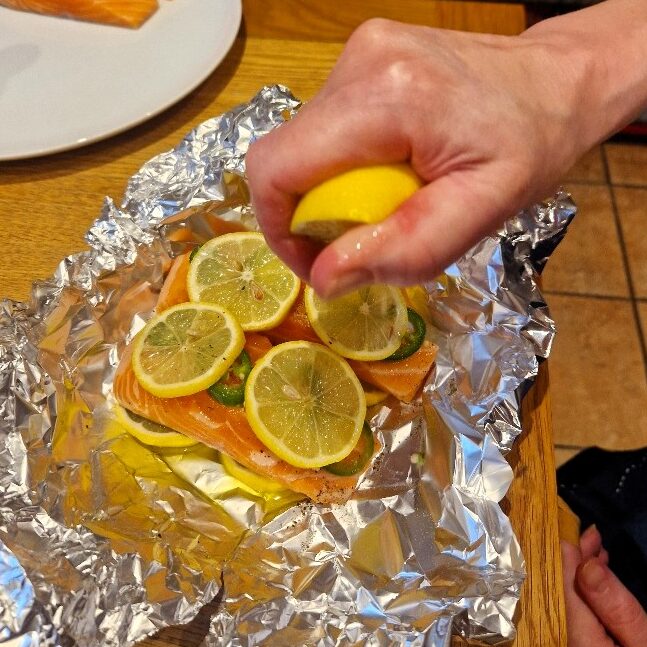
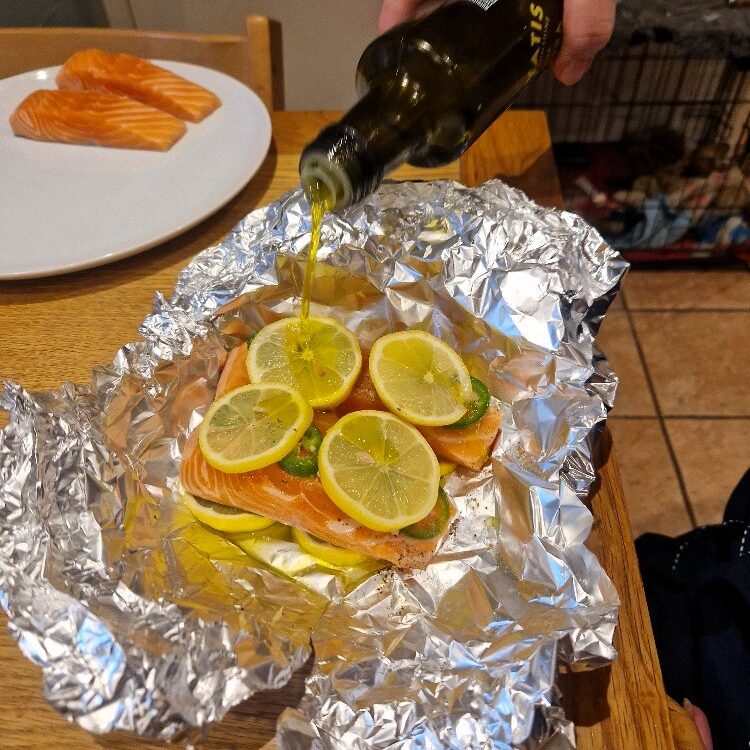
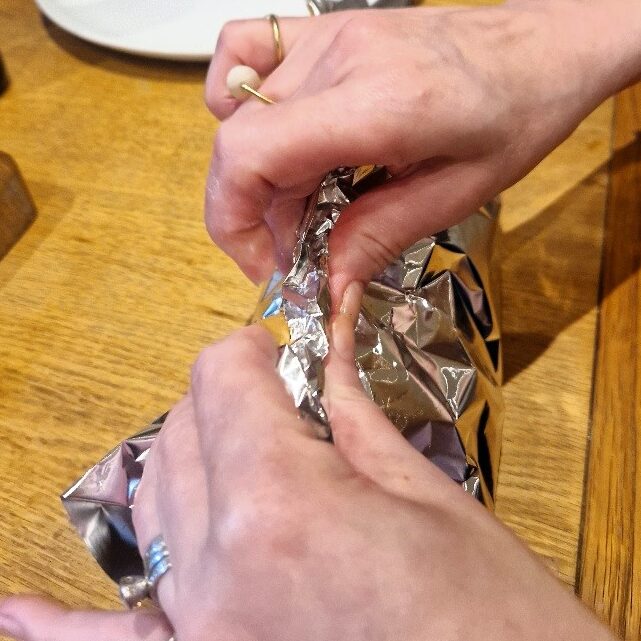
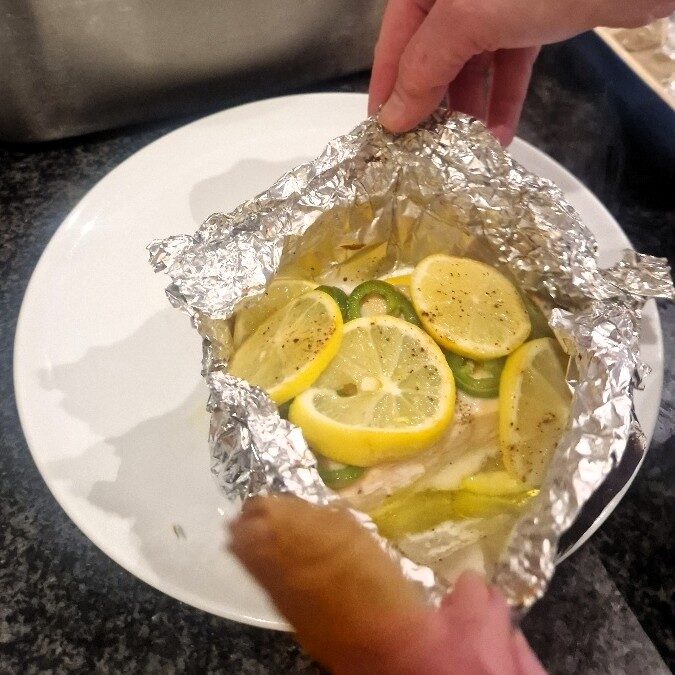
You now need to wrap your parcels up carefully. This is the only slightly skilful step in this simple recipe – you really need to seal the parcel fully to keep the juices in and perfectly cook the fish. Start by bringing the edges of the foil together, and pleat it. To do this, roll both edges down over one another to seal the top. Then twist both ends to fully seal the parcel. You should end up with nice, neat, fully-sealed parcels as below. Place on a baking tray or in a roasting tin.
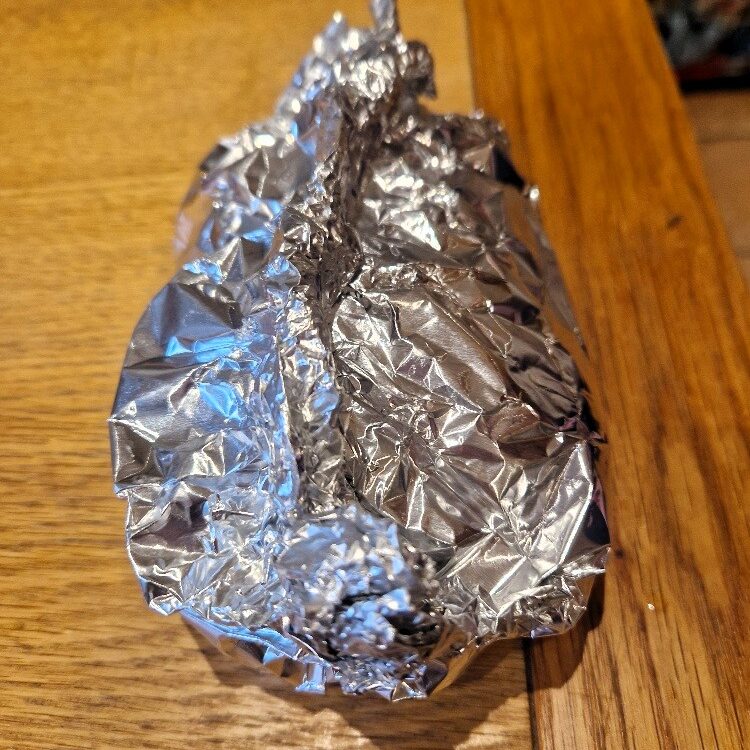
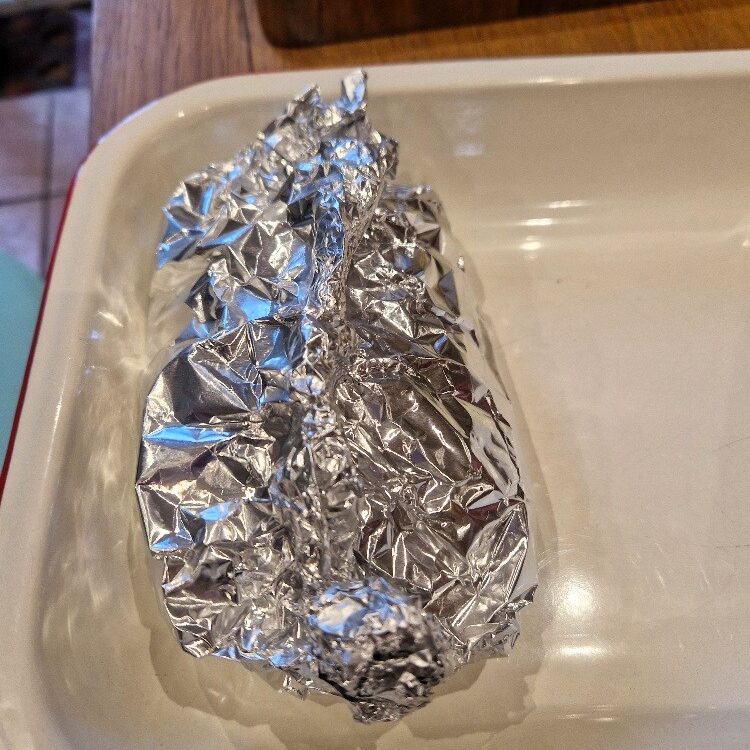
You fish is ready for the oven! You can prepare it ahead and keep in the fridge until shortly before you are ready to cook – remove from the fridge and allow it to warm up at room temperature for 20 minutes or so before cooking. Or you can cook immediately, in which case you will have needed to pre-heat your oven to 200C (180C fan) beforehand.
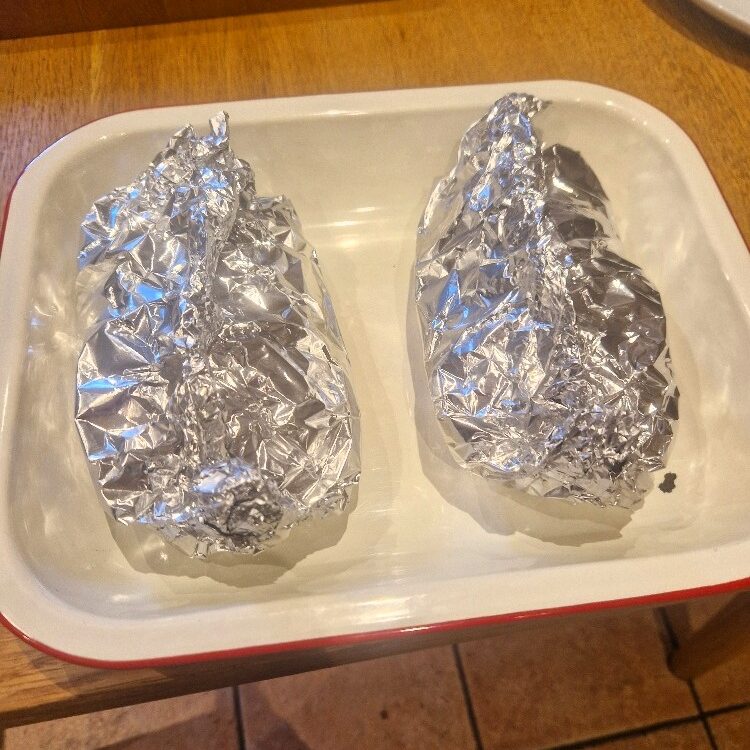
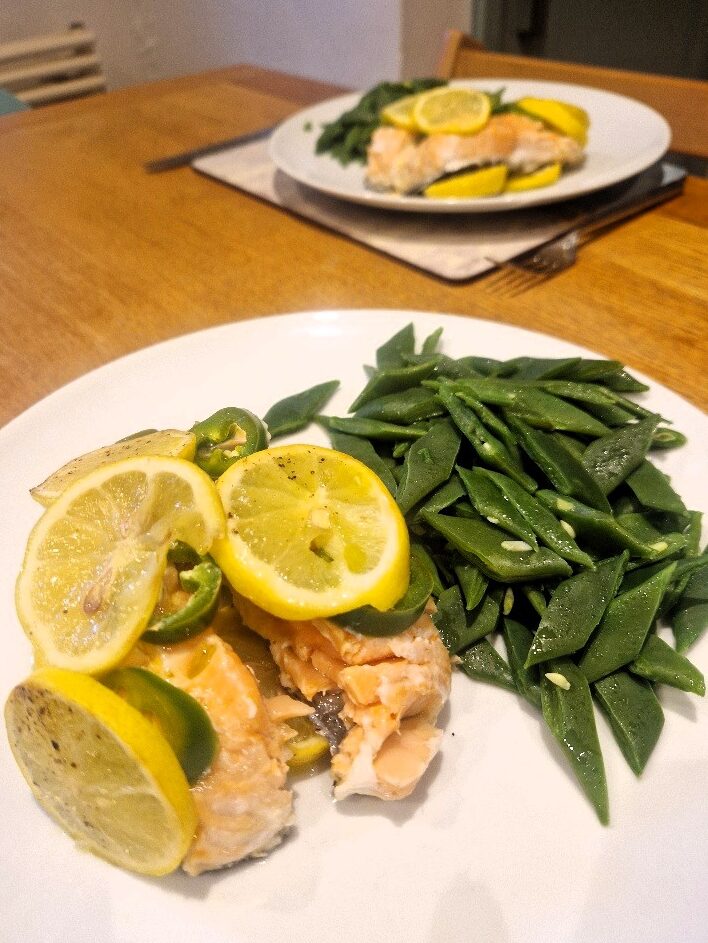
Bake in the preheated oven until the fish flakes easily with a fork. This will take about 15 to 20 minutes depending on the size and thickness of the fillets. We like salmon and salmon trout cooked to the centre, so usually allow the full 20 minutes before checking. If you prefer your fish slightly rare, you can check it after 15 minutes.
Jake sticks his nose in
As we mentioned, we don’t recommended cooking the fish in pairs now we have tried it! But if you do, you’ll need to allow a longer cooking time. At least an additional 5 minutes, and possibly 10.
While the fish is cooking, prepare the beans. To do this, cut off each end – you just want to remove the very pointed bits – and discard. Now cut the beans into pieces; scissors make this easier. We like to cut our runner beans as Bibi did, on the diagonal. It looks pretty on the plate. We cut into pieces about 1cm wide. But you can cut them any way you want, or even slice into long, thin strips. But we find the latter more difficult, and also prefer the way the beans eat when cross cut; they stay a little firmer.
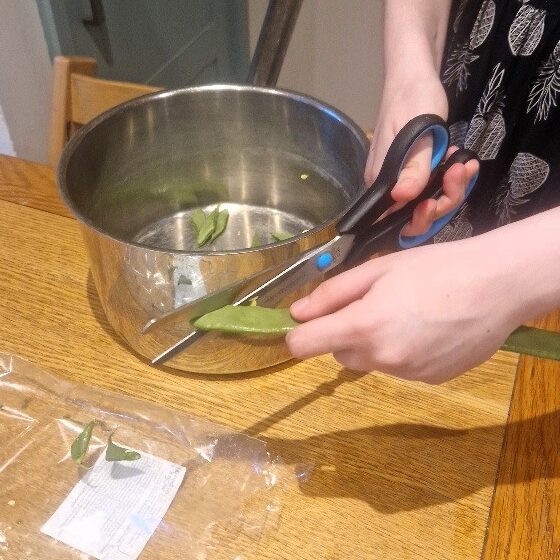
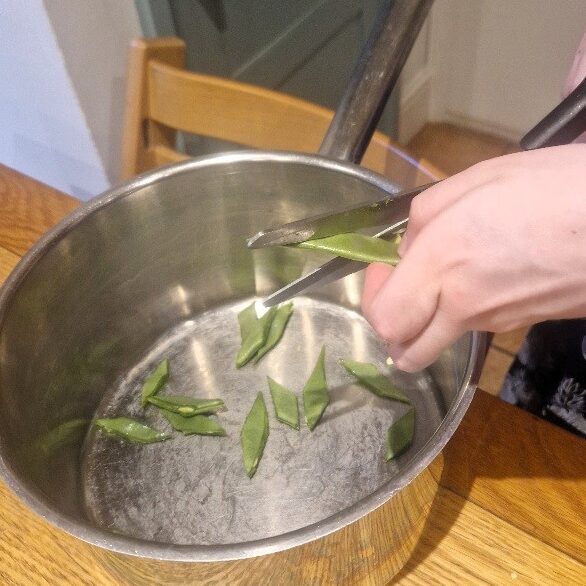
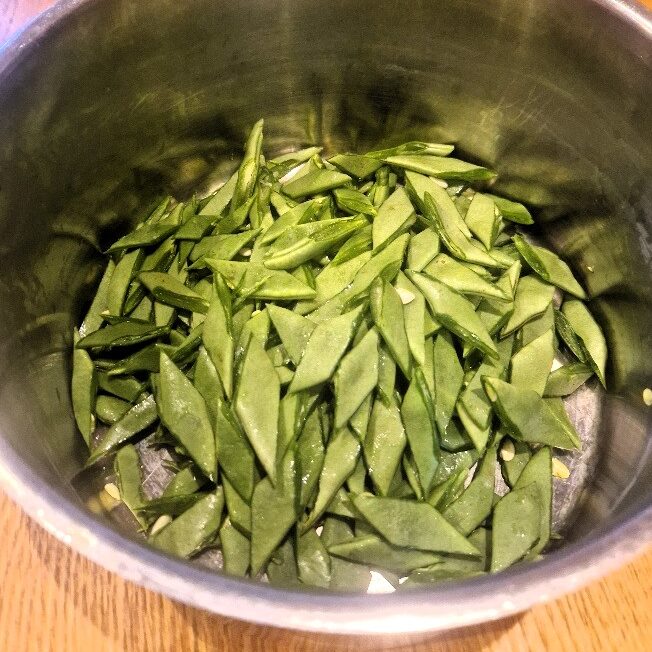
How long the beans take to cook will depend on which variety you have, and how firm they are. Runner beans tend to take a bit longer than, say, helda beans for example. But we normally test them after boiling for 5 minutes. So we’d get the beans on the go slightly before this – you’ll need to co-ordinate with your fish cooking time, too.
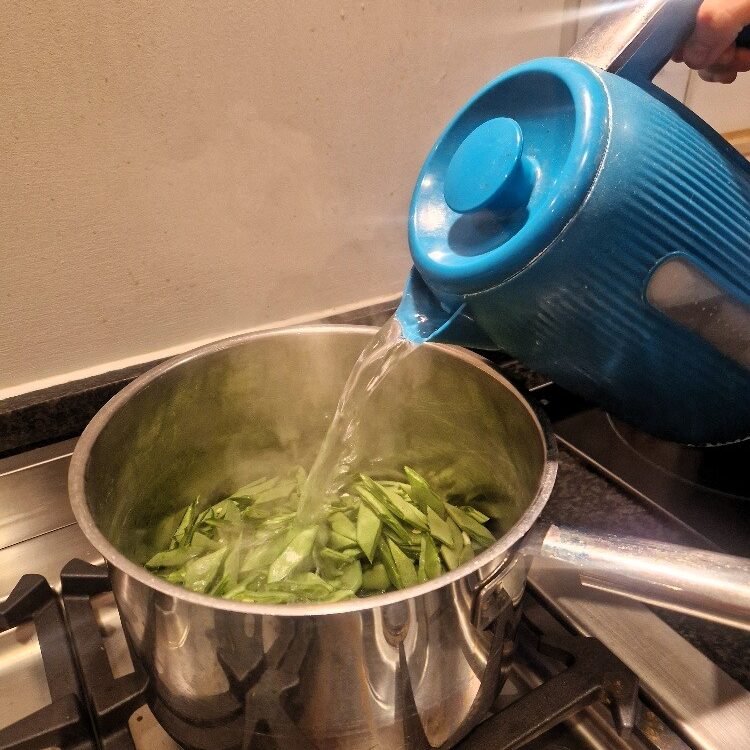
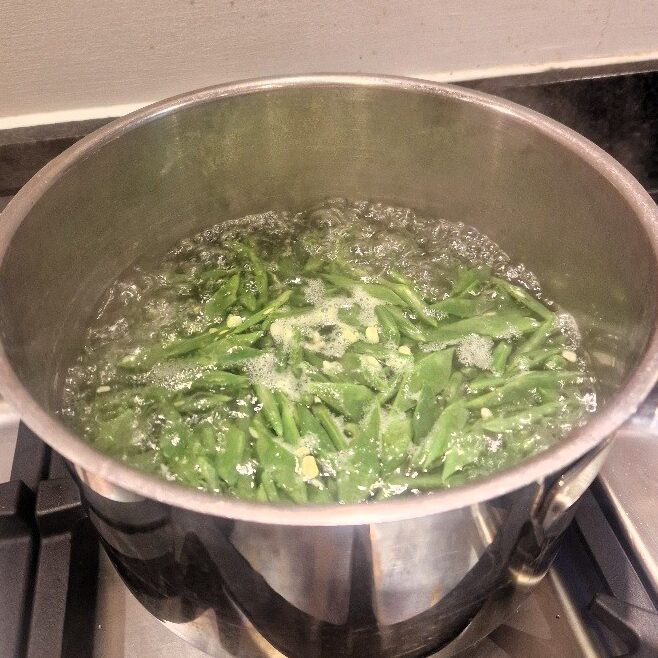
Add boiling water to the beans, and set on a hob over a medium to high heat. Bring to the boil; boil until the beans meet your desired tenderness. Check by removing one and biting into it. 4 to 8 minutes it is the norm.
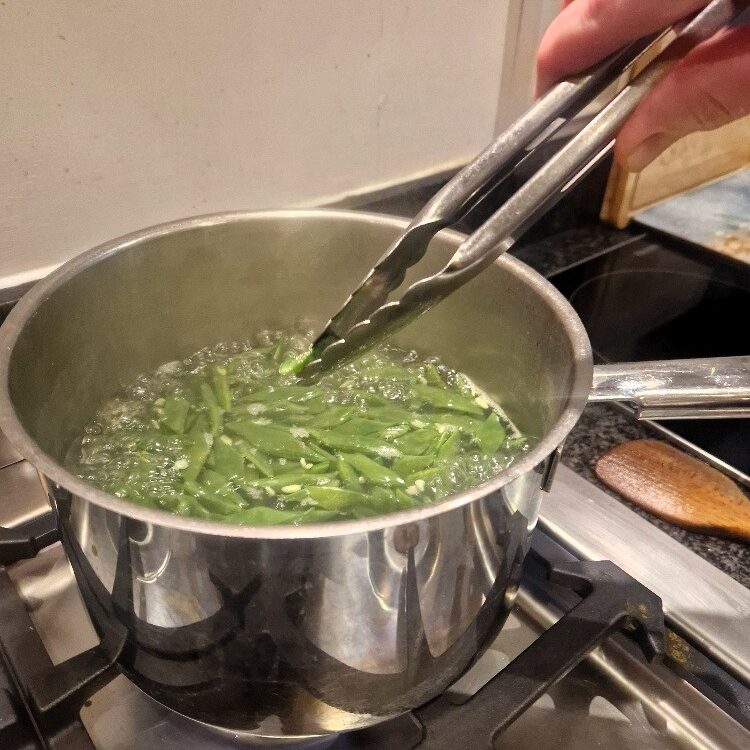
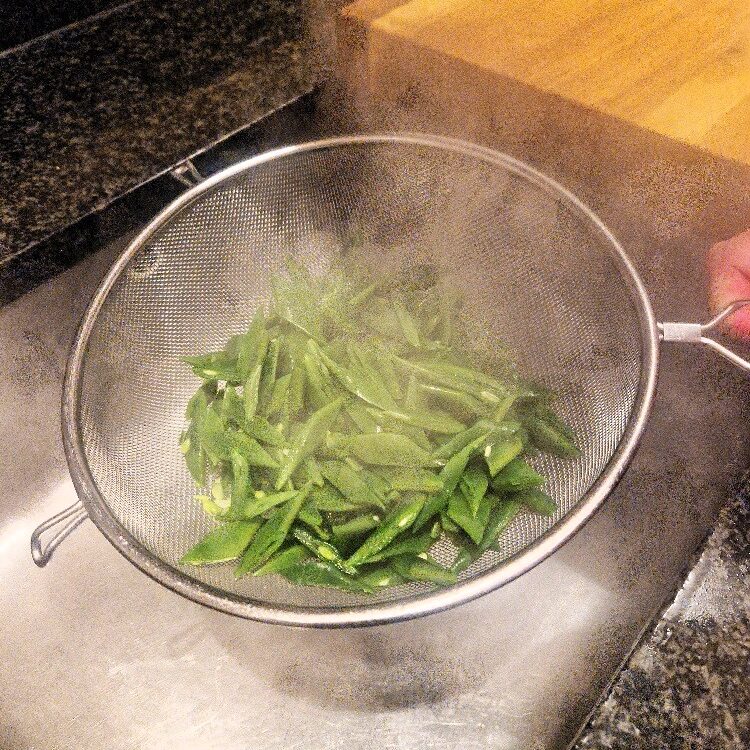
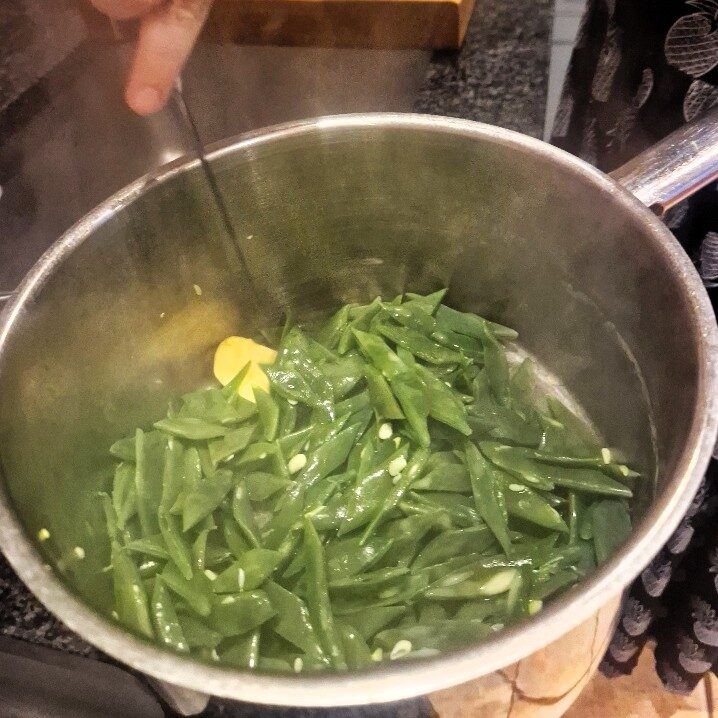
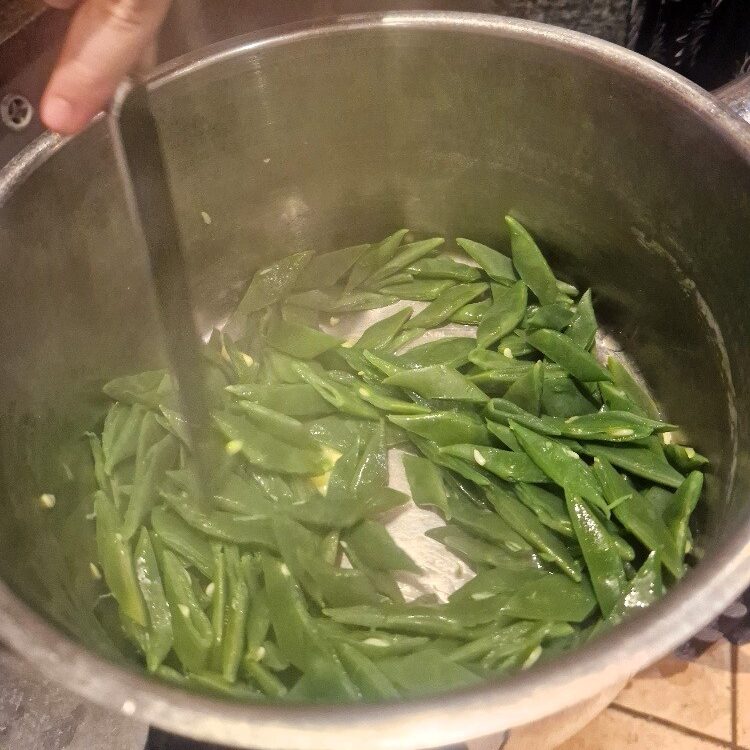
When the beans are done, drain them in a colander or large sieve, and return to the pan. Add a generous amount of butter – we like a lot! Stir the beans to allow the butter to melt. They can be reserved for a few minutes with the lid on while you serve the fish.
Jake sticks his nose in
You can steam the beans if you prefer. They will cook a little faster than boiling. Also, if you want to make the dish even healthier you can add less butter, or drizzle over a little olive oil instead.
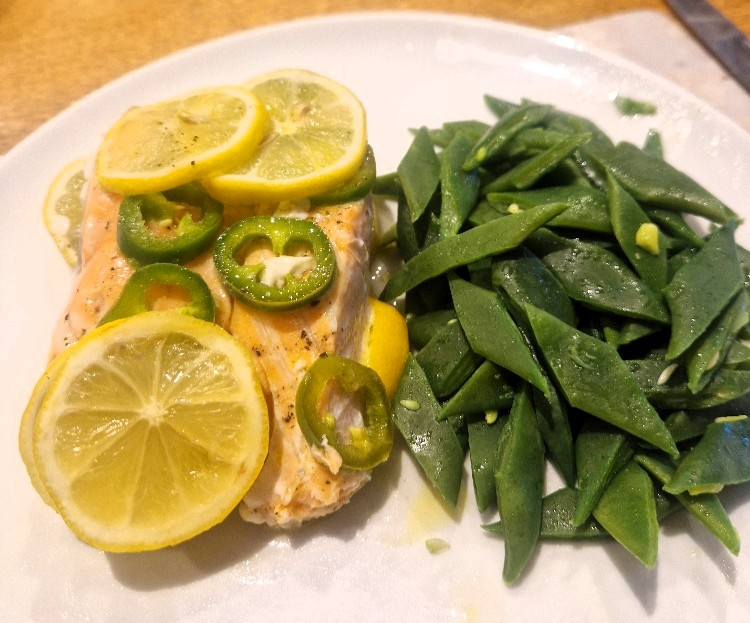
To serve the fish, undo the foil – you should get a lovely lemony, fishy smell. Carefully lift the fish from the foil – a fish slice or large palate knife is helpful – along with the lemons and jalapeños. Pour over a little of the juices from the foil.
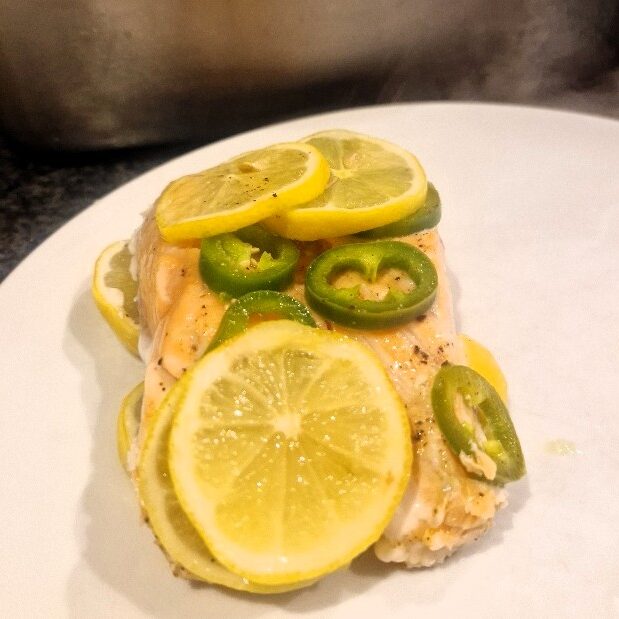
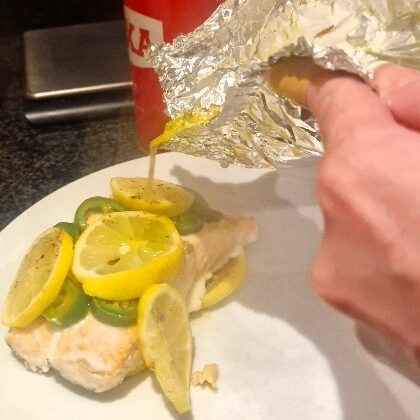
Serve the fish with the big pile of beans on the side.
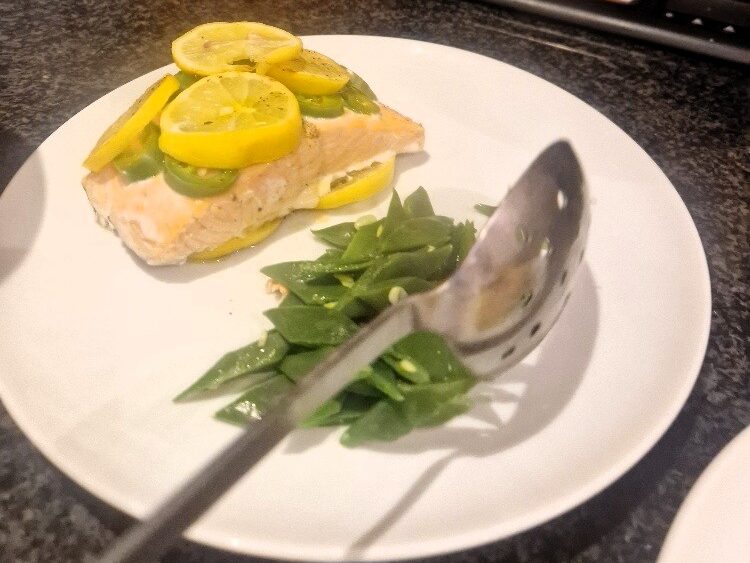
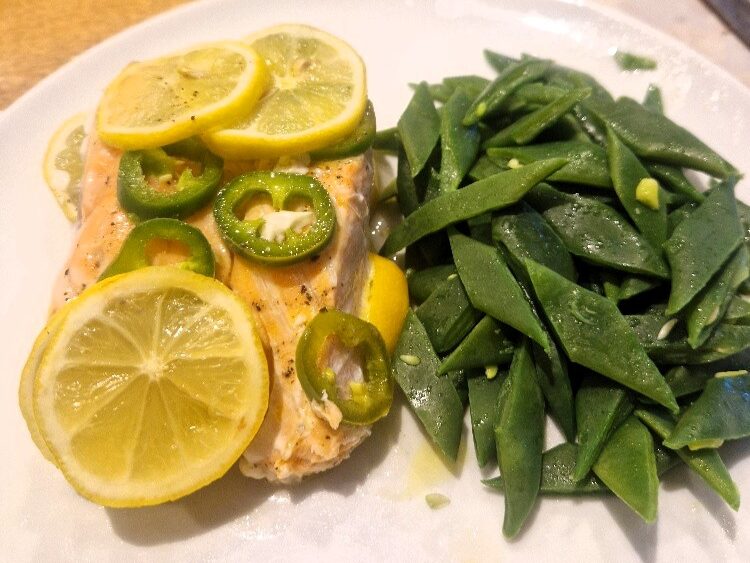
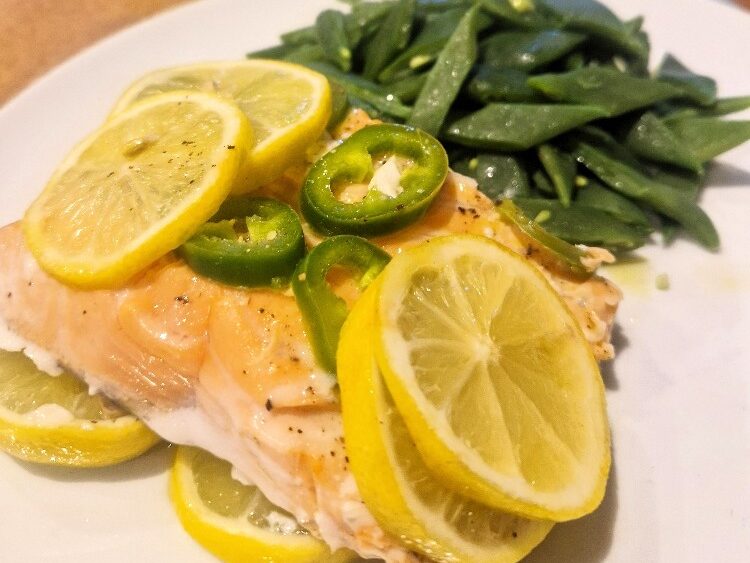
We like our salmon or salmon trout just with the ‘big pile of beans’! But if you are really hungry you can also serve with a jacket potato. You can learn how to make them in our baked potato Tip.
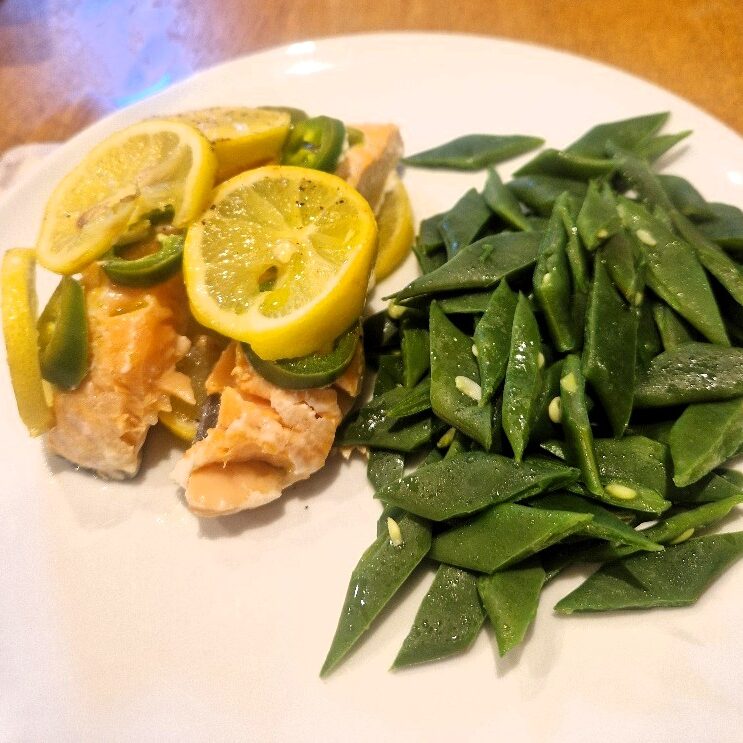
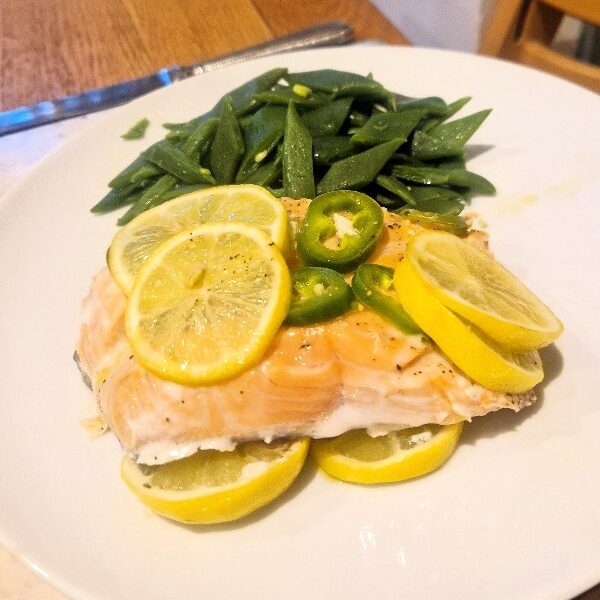
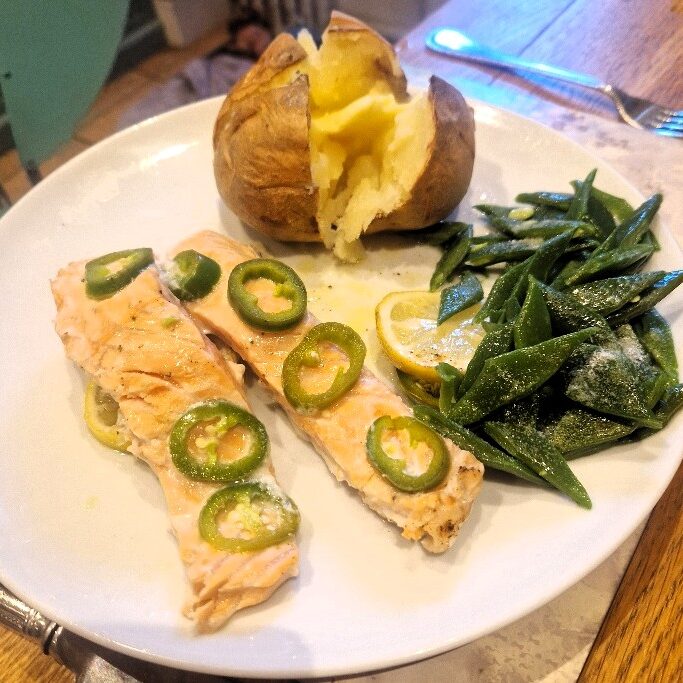
Enjoy your fish with a big pile of beans!